


The U.S. Government Doesn’t Care About Afghan Women
Posted by M. C. on August 15, 2019
Make no mistake: The well-being of Afghan women hardly motivated the architects of the American invasion and occupation. Need proof? Here’s an ever-so-brief history lesson. During the Soviet war in Afghanistan (1979-89), the CIA not-so-secretly backed some of the worst Islamist theocrat “freedom fighters” against the Soviet-backed secular communist government then in power.
You gotta break a few eggs to build an empire.
https://www.truthdig.com/articles/the-u-s-government-doesnt-care-about-afghan-women/
Maj. Danny Sjursen
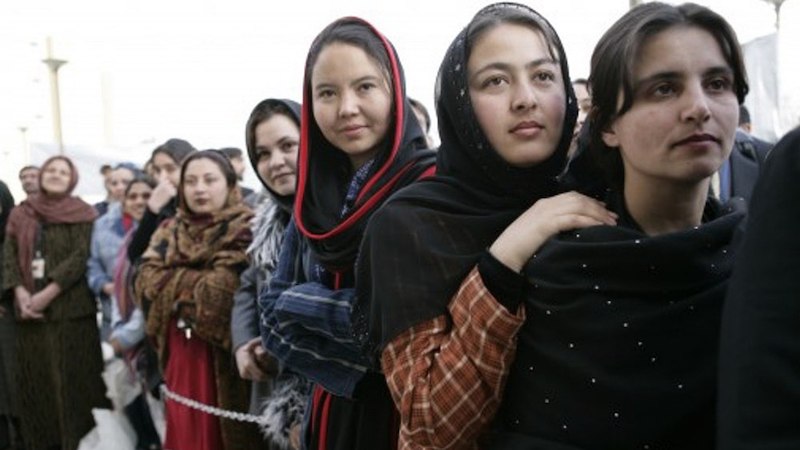
In once, and to some extent still, relatively cosmopolitan Baghdad, Iraq, I once saw three young female college students from Mustansiriyah University walking home from class. They couldn’t have been more differently clothed. One wore a full burqa that exposed only her eyes; another a hijab, a more modest head scarf without a facial veil, and a pair of jeans; the third sported a pink miniskirt and a revealing tank top with her long hair fully exposed. Still, they chatted like old friends.
By early 2007, this range of women’s clothing was already highly rare in all but the safest Baghdad neighborhoods, yet it did still happen. I remember woefully realizing that I, a 23-year-old American lieutenant, had been treated to a rare glimpse of Saddam’s largely secular (if brutal) regime that had preceded the U.S. military’s ill-fated invasion. Before Uncle Sam fractured Iraq and empowered Islamist zealots, I was often told by locals that men and women could go on dates and drink alcohol publicly in cafes along the Tigris River. But those days were gone.
Four years later, and even further east in the proverbial Greater Mideast, while patrolling rural Kandahar, Afghanistan—birthplace of the Taliban movement—I hardly even saw a solitary grown woman. There, in the backwater of a country full of backwaters, adult women were rarely seen outdoors and never without a male family member as an escort.
It was all rather archaic and made Baghdad seem as liberal as Boston. I remember one young girl with shocking blue eyes, maybe twelve, playing close to my patrol base in the nearby village of Pashmul. Watching her skip a strange, improvised jump rope gave me rare moments of innocent joy in an altogether dangerous place I shouldn’t have been in in the first place.
Then one day, she disappeared, this (to me) nameless, joyful girl, never to be seen again. Eventually I asked a village elder, who probably played both sides—Taliban and America—against the other, what had happened to the blue-eyed Afghan girl. His answer was simple: puberty. She had had her first period, was immediately deemed a “woman,” and cloistered away behind the mud walls of her family home until her father decided to marry her off—likely to a much, much older man. Such was life in rural southern Afghanistan. It seemed most of the ethnic Pashtun villagers wanted it that way.
I think about that striking young girl occasionally as I repeatedly argue for the full and rapid withdrawal of the U.S. military from Afghanistan—which is, after all, the gold standard of hopeless wars. As I’ve predicted, it seems likely the Taliban will either conquer much of the country outright in the near future or at least maintain de facto control of Afghanistan’s Pashtun-dominated south and east indefinitely. That means Afghan women in those regions, and potentially many others, will suffer.
Yet, here’s the nasty truth: When I (and some 100,000 other U.S. troops) occupied much of Afghanistan, rural women still suffered. We could scarcely alter the longstanding cultural traditions of these regions. If, at the height of Obama’s Afghan surge, the status of most (largely pastoral) women didn’t change, what hope do the remaining 14,500 or so American soldiers still there have to protect these women? And after 18 years of stalemate, if—as now seems obvious—the U.S. can’t meaningfully win this war, what point is there in pining over the fate of human rights in this landlocked Central Asian time warp?
Sure, it’s disturbing, but it’s also a solid fact of life. What’s more, militarist, interventionist mainstream foreign policy wonks’ sudden feigned concern for the fate of Afghan women is cynical bunk meant only to prolong America’s longest ever war. It was never about women’s rights or humanitarianism in general. The U.S. military and CIA invaded Afghanistan out of vengeance for the 9/11 attacks, out of a degree of uncertainty about what else to do. Someone had to pay, someone had to be bombed, and bin Laden was, well, in Afghanistan.
Treating the terror attacks as an act of war rather than an international crime was then the original sin of these forever wars. The rapid decision to shift strategy in Afghanistan from limited counter-terror operations to nation-building, counterinsurgency and prolonged military occupation ought to be considered the second sin…
Be seeing you

 MCViewPoint