


A Picture (of a War Crime) Is Worth a Thousand Words – Antiwar.com Original
Posted by M. C. on October 1, 2019
“I want no prisoners, I wish you to kill and burn, the more you kill and burn the better you will please me.”
– General Jacob Smith to subordinates on Samar Island during the Philippine-American War (1902)
As U.S. induced Afghan civilian casualties spiked this month (and year), few Americans noticed these veritable atrocities. This wasn’t always the case. Consider the Philippine War.
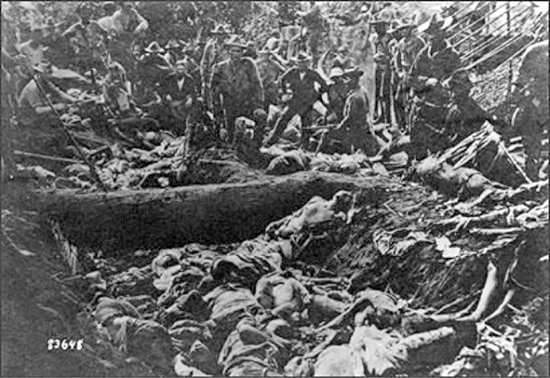
Not so long ago, in November 2010, I took command of B Troop, 4th Squadron, 4th US Cavalry in a ceremony at Fort Riley, Kansas. It was, for me, a proud day. Army officers are taught to revel in their unit’s history, and the 4th Cavalry Regiment had a long, storied past indeed. On that cool, late fall day, the squadron’s colors – a flag with battle streamers – fluttered. One read: Bud Dajo, Philippine Islands – a reference to one of the regiment’s past battles. The unit crest pictured on the flag and pinned on our uniforms included a volcano and a kris – the traditional wavy-edged sword of the regiment’s Moro opponents in the Philippines – but hardly a trooper in the formation knew a thing about that war, battle, or the 4th Cavalry’s sordid past in the islands.
Bud Dajo was hardly a battle at all. It was a massacre. Some 1,000 Moro separatists, including their families, who opposed the US military occupation of Jolo Island, had fled to the crest of a volcano to avoid American conquest and retribution. Then, from 5-8 March 1906, the 4th Cavalry, along with other army formations, bombarded the overmatched Moros – few had firearms at all – then rushed the summit. The Moro men fought desperately and managed to inflict some 20 deaths on the charging American troopers, but they’d never stood a chance. Reaching the volcanic top, the cavalrymen fired down into the crater until all but six defenders and occupants were dead, a 99% casualty rate. The victorious troopers then proudly posed for a photograph, standing above the dead – which included hundreds of women and children – as though they were naught but big game trophies on a safari hunt…
Back home in the states, many prominent consciences were indeed shocked by the massacre, and, in particular, the trophy photo taken by the victorious troopers. The image flooded the papers, the 1906 version of going viral…
The photograph also galvanized African-American civil rights activists. W.E.B. Du Bois declared the crater image to be “the most illuminating I’ve ever seen,” and considered displaying it on his classroom wall “to impress upon the students what wars and especially wars of conquest really means.”
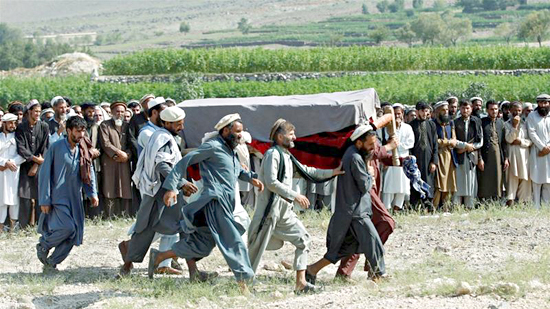
Nothing even approaching that level of intellectual outrage exists now, as the American Empire spreads its tentacles the world over. Few public intellectuals – to the extent that endangered species even exists these days – even notice the extent of their nation’s ongoing war crimes in the Greater Middle East. Take Afghanistan, for example, the only war longer than the American debacle in the Philippines. After 18 indecisive and bloody years of combat, the US military and its Afghan allies now kill more civilians annually than the vicious Taliban. That ought to be cause for pause, reflection, concern. Only it isn’t, not in Washington, not even in most universities. We’re a long way from Du Bois posting the Bud Dajo picture on his classroom wall…
So consider this modest piece of mine, this brief history lesson and connection to contemporary US empire, a plea of sorts to the teachers of America. Want to be a true patriot, a forceful educator, and decent human being? Well, do your students a favor: post the photos of recent US military airstrikes upon civilians in Afghanistan – the war crimes of the 21st century – on your classroom walls. Du Bois, and Twain, would be proud…and that’s hardly bad intellectual company to keep…
Be seeing you
 MCViewPoint
Leave a comment