


TGIF: Why Is Government Stuff Called “Public”?
Posted by M. C. on October 14, 2023
Similarly, private security companies watch over shopping malls, factories, colleges, and other facilities. It’s also a big business. The government’s “services” are inadequate despite high taxes, so people find alternatives, and businesses respond, fully liable when they screw up. That doesn’t happen with government police.
So we’re taught to believe that the government’s motives are purer — the unselfish pursuit of the “public interest” by “public servants.” That supposedly makes them superior to the profit-seekers, no matter how effective real producers of wealth — entrepreneurs, investors, managers, and workers — are.
https://libertarianinstitute.org/articles/tgif-government-stuff-public/
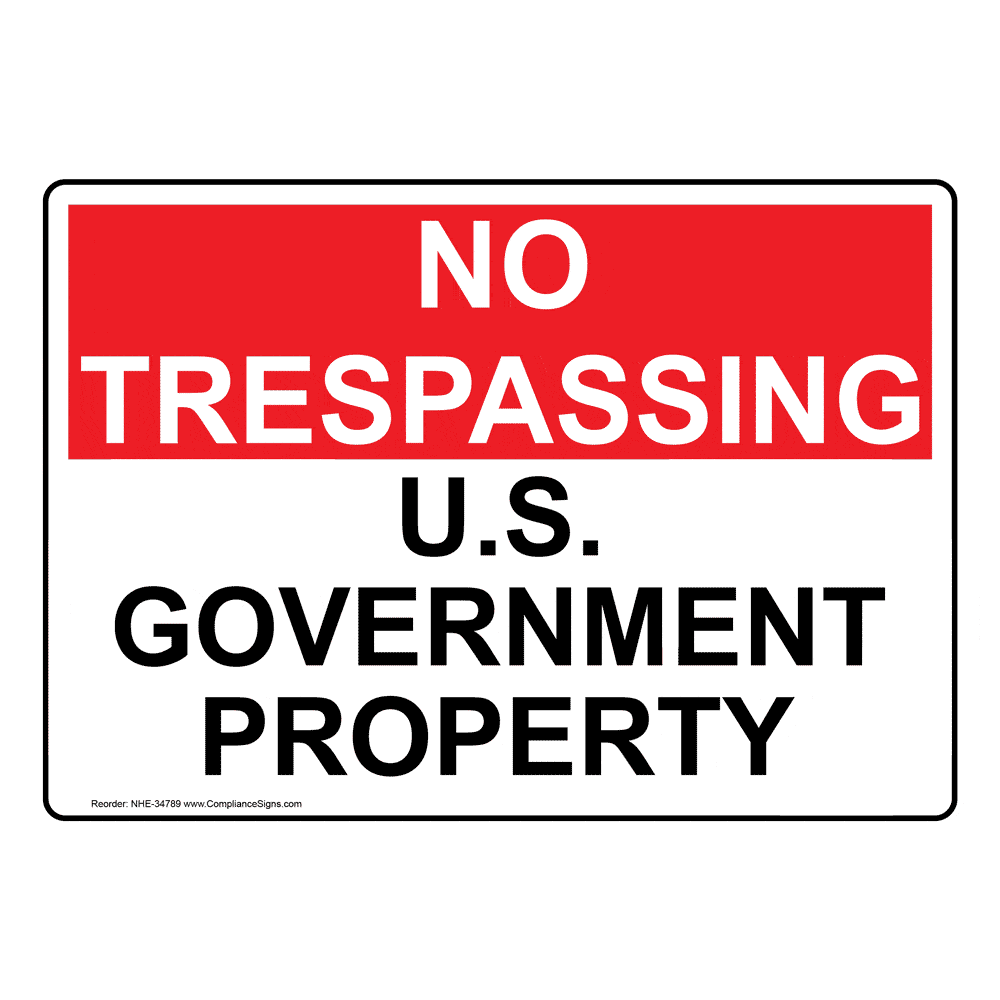
Government facilities and services — which are actually disservices overall — are called “public” while services that are efficiently responsive to the public are dubbed “private.” Why is that?
That way of framing the distinction could be intended to subtly denigrate the marketplace, or “private sector,” where profit “selfishly” motivates people who, in the process, improve strangers’ lives every day. That sector’s record is noticeably better than the “public sector’s.” So we’re taught to believe that the government’s motives are purer — the unselfish pursuit of the “public interest” by “public servants.” That supposedly makes them superior to the profit-seekers, no matter how effective real producers of wealth — entrepreneurs, investors, managers, and workers — are.
The Public Choice school of political economy has established the more common-sense view that people don’t become morally superior to the rest of us when they take government jobs. They’re just people, except that the perverse incentives unique to the political/bureaucratic realm differ drastically from the productive incentives that distinguish the enterprise realm. We should call government jobholders “public” self-servants to lay bare that basic fact. They may be sincere in their rationalizations about helping people, but that doesn’t change what they do — coerce people, starting with the taxpayers. In contrast, people in the market have to ultimately satisfy free consumers or find something else to do.
Think about what we know as the public schools. Has anyone ever heard of a school that wasn’t open to members of the public? Who else is there? Great Britain has it closer to the truth. Public schools are called “private schools,” and government schools are called “state schools.” Since everywhere you look, parents have to pay for the lousy and expensive government system whether or not they send their kids there, and many parents can’t afford to pay twice, we might call the government’s facilities “conscript schools.”
But they are called “public” because that’s who owns them — theoretically, but not realistically.
Be seeing you
 MCViewPoint
Leave a comment