


The Drug War’s Banking Blowback
Posted by M. C. on November 14, 2023
Deeply afraid of the feds, bank officers decided that it would be safer to simply get rid of Delaney and Maslanka. The bank closed their bar’s account as well as their personal checking and credit-card accounts. They were given only a “handful of weeks to make other banking arrangements.”
REMINDER: This Thursday, November 9, at 7 p.m. Eastern. Austrian economics star Richard Ebeling will be our sixth and final presenter in our online Austrian conference: “How Austrian Economics Impacted My Life.” Register here to receive your Zoom link. I hope to see you there!
****
At the end of the great 1988 movie Midnight Run, which stars Robert De Niro and Charles Grodin, Grodin hands De Niro a small pouch containing $300,000. How could a small pouch contain so much money? Because it was filled with $1,000 bills.
So, where are the $1,000 bills today? They are gone. The feds withdrew them from circulation. The reason? They felt that such large bills were making it easier for drug cartels to transport and hide their money. So, the idea was that by limiting everyone to $100 bills, the cartels would be impeded in their efforts to launder their money.
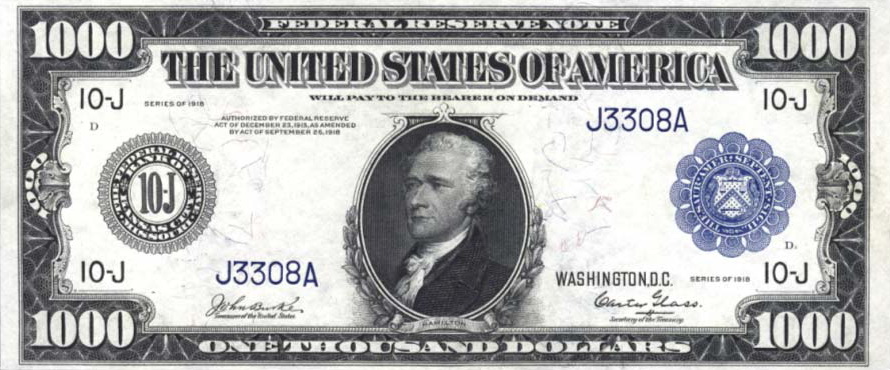
Question for the federal drug warriors: How has that scheme worked out for you all? Because it sure seems to me that the drug trade is still going strong despite the lack of $1,000 bills.
As we all know, the drug war has brought violence, death, drug gangs, drug cartels, official corruption (e.g. bribes to law enforcement personnel, prosecutors, and judges), an enormous federal bureaucracy that feeds at the public trough, massive violations of civil liberties, and other negative consequences. I suppose I should also point out that it has brought nothing but failure from the standpoint of eradicating or significantly reducing drug consumption in the United States.
But there is another negative aspect to the drug war, one that has been aggravated by the “war on terrorism.” That negative aspect pertains to banking operations.
In 1970, the feds enacted the Bank Secrecy Act with the aim of fighting money laundering. The act requires banks to file reports with the federal government on any customer who deposits or withdraws $10,000 from his account. The idea was that the feds would now be able to catch all those drug dealers who were depositing their enormous black-market profits into their bank accounts.
But that’s not all. The banks are also required to report any “suspicious” activity on the part of their customers.
The law, however, ended up converting bankers into loyal spies for the feds. Since bank officers know that the federal government will come down on them like a sledgehammer if banking regulators discover that a bank didn’t report some “suspicious” activity, especially if it later turns out that the activity was conducted by a drug dealer, banks now bend over backwards to be loyal agents of the federal government.
Be seeing you
 MCViewPoint
Leave a comment