


TGIF: Efficient Bureaucracy?
Posted by M. C. on January 10, 2025
The real bosses, in the capitalist system of market economy, are the consumers. They, by their buying and by their abstention from buying, decide who should own the capital and run the plants. They determine what should be produced and in what quantity and quality. Their attitudes result either in profit or in loss for the enterpriser. They make poor men rich and rich men poor. They are no easy bosses.
https://libertarianinstitute.org/articles/tgif-efficient-bureaucracy/
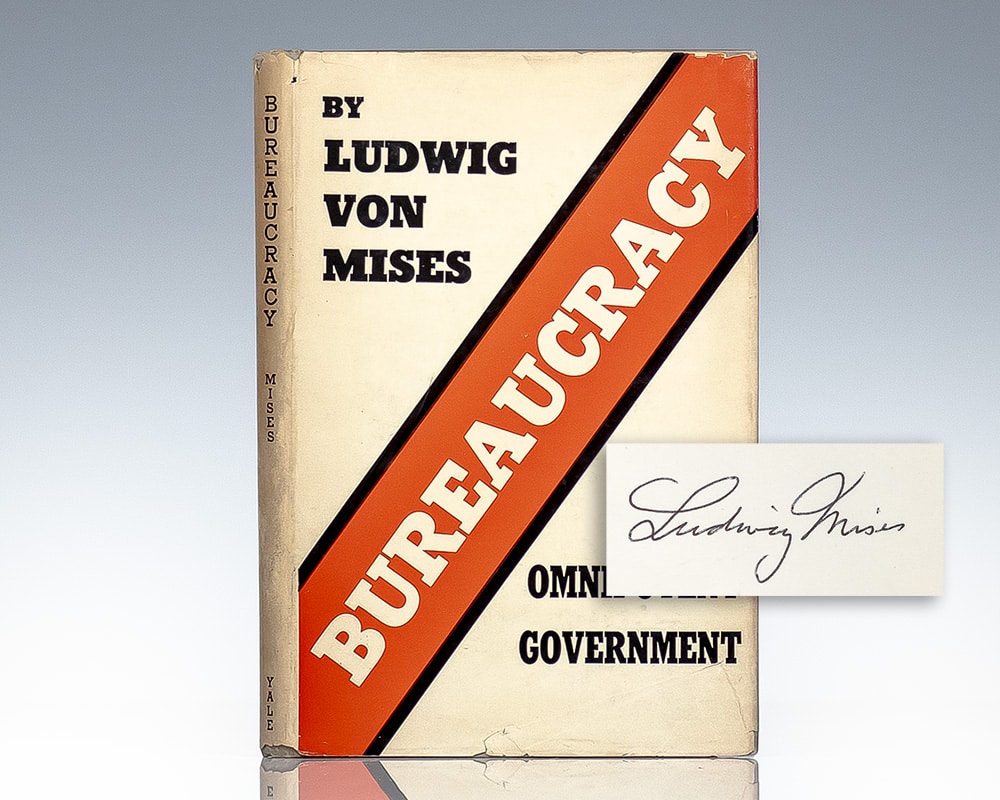
With all the talk about government efficiency, it would be useful to remind ourselves why bureaucracies differ radically from for-profit businesses. Ludwig von Mises devoted a short but enlightening volume to this subject in 1944, Bureaucracy. Elon Musk and Vivek Ramaswamy, who will co-chair the nongovernmental Department of Government Efficiency, should do some homework by reading that book.
Mises, as an advocate of limited government, did not argue that bureaucracy has no place in a free society. In contrast to anarcho-capitalists, he thought government and therefore some bureaucracy was necessary to protect what he valued most: peaceful social cooperation through the division of labor—that is, the market economy. Violence against persons and property was clearly antithetical to the continuing welfare-enhancing collaboration we call the market process. But Mises did not want bureaucracies trying to do what free, private, and competitive enterprises could do better. Moreover, if the government went beyond its mere peacekeeping duties, it would undermine the market process and make us all less well off despite any good intentions.
Mises began by reminding readers (or perhaps teaching them from scratch) what the free market is and what it accomplishes. It’s a great primer for those who lack the time to read his longer works. He wrote:
Capitalism or market economy is that system of social cooperation and division of labor that is based on private ownership of the means of production. The material factors of production are owned by individual citizens, the capitalists and the landowners. The plants and the farms are operated by the entrepreneurs and the farmers, that is, by individuals or associations of individuals who either themselves own the capital and the soil or have borrowed or rented them from the owners. Free enterprise is the characteristic feature of capitalism. The objective of every enterpriser—whether businessman or farmer—is to make profit.
The uninitiated might ask who runs things. He replied: “The capitalists, the enterprisers, and the farmers are instrumental in the conduct of economic affairs. They are at the helm and steer the ship.”
However, let’s not jump to conclusions about who really runs things, Mises advsed:
But [the capitalists, etc.] are not free to shape [the ship’s] course. They are not supreme, they are steersmen only, bound to obey unconditionally the captain’s orders. The captain is the consumer.
Neither the capitalists nor the entrepreneurs nor the farmers determine what has to be produced. The consumers do that. The producers do not produce for their own consumption but for the market. They are intent on selling their products. If the consumers do not buy the goods offered to them, the businessman cannot recover the outlays made. He loses his money. If he fails to adjust his procedure to the wishes of the consumers, he will very soon be removed from his eminent position at the helm. Other men who did better in satisfying the demand of the consumers replace him.
All the conventional controversy about bosses and workers overlooks the critical point:
Be seeing you
 MCViewPoint
Leave a comment