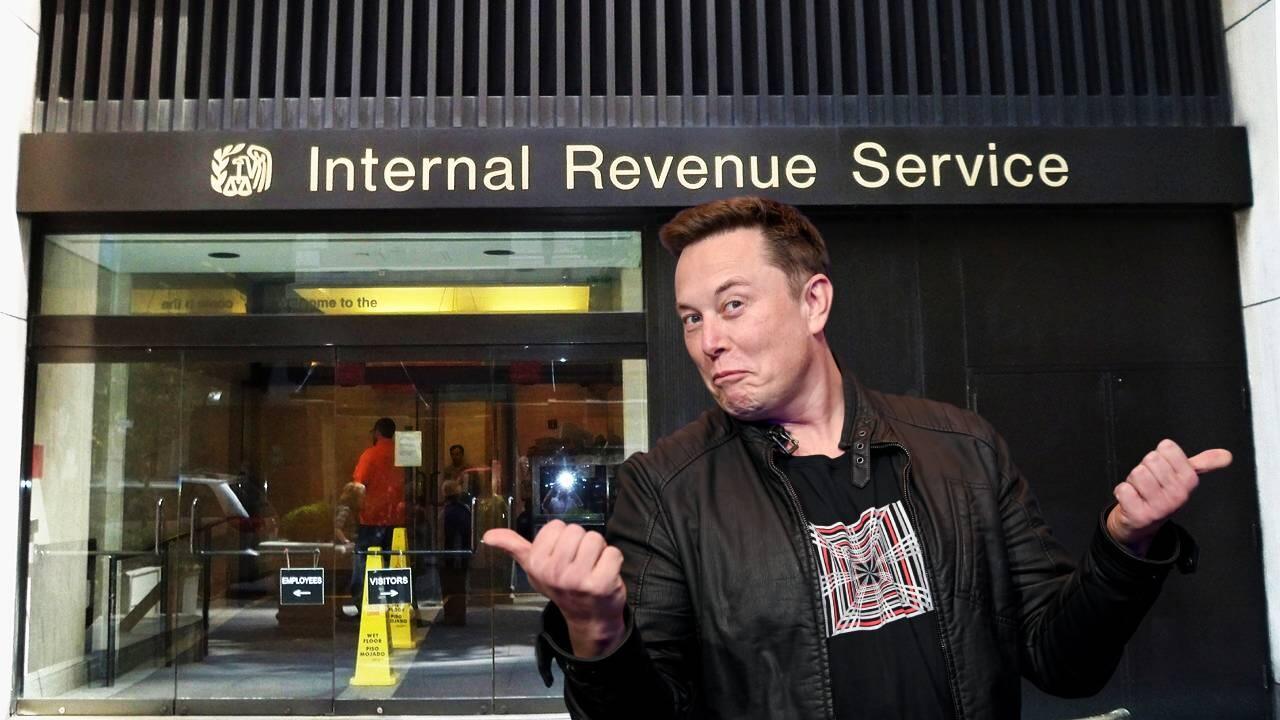
Elon Musk, new co-head of the Department of Government Efficiency declared this week that the new outfit will seek to audit the IRS.
It started with Musk asking X users what they think should happen to the IRS budget, given that it just asked for an increase of $20 billion.
Due to an error in legislative language, $20 billion in IRS funding is locked up.
If it is not unlocked, the IRS will have to go on a hiring freeze. (oh no)
The IRS is trying desperately to get this fixed in the next funding legislation which must pass by December 20th. They… pic.twitter.com/20DHzHqKY4 — Wall Street Mav (@WallStreetMav) November 28, 2024
The IRS just said it wants $20B more money.
Do you think it’s budget should be: — Elon Musk (@elonmusk) November 27, 2024
Stage #6: The populace bears the brunt of debt repayment as empires raise taxes and debase the currency—to the maximum extent—until it causes internal instability.
Stage #7: Empires cannot finance their militaries because of their debt burden. This is usually the tipping point.
“The US federal government has the biggest debt in the history of the world. And it’s continuing to grow at a rapid, unstoppable pace.”
Debasing currency, a 50c way of saying printing money.
One of the most potent and underappreciated forces responsible for the downfall of the most powerful empires throughout history has been debt.
While military defeats, political upheavals, and external invasions often dominate historical accounts of the fall of great powers, excessive debt—the “Empire Killer”—has quietly but relentlessly eroded the foundations of empires across the centuries.
From Rome to the Soviet Union, the over-extension of resources, poor financial management, and the inability to service massive debts have led to economic collapse, social unrest, and, ultimately, the demise of these once-mighty empires.
Understanding how debt has played a role in the fall of these empires gives us insight into the role it could play in the collapse of the US Empire.
Here is a summary of some prominent historical examples of this clear pattern.
The Roman Empire
One of the most iconic examples of debt’s destructive force is the Roman Empire.
At its height, Rome was the center of the known world, controlling vast territories, including much of Europe, North Africa, and parts of the Middle East.
Maintaining a vast empire required immense financial resources. The Roman government needed to fund its sprawling military, build infrastructure such as roads and aqueducts, and support the grandeur of its capital city.
Emperors financed the resulting debt by debasing the currency—reducing the silver content in Roman coins.
However, this led to rampant price increases and economic instability.
The more the Roman government tried to print its way out of debt, the worse the problem became.
As debt and inflation strangled the Roman economy, the empire struggled to pay its soldiers, undermining military morale and effectiveness.
Weakened by internal financial collapse, Rome became vulnerable to external threats. The combined weight of financial mismanagement, social unrest, and military decline led to the empire’s collapse.
The Spanish Empire
In the 16th century, the Spanish Empire was a global superpower.
The discovery of the New World brought an influx of gold and silver, filling the Spanish government’s coffers beyond imagination.
However, this newfound wealth bred complacency and extravagance.
The Spanish monarchy became embroiled in costly wars across Europe—including the Eighty Years’ War with the Dutch and conflicts with France and England—and indulged in lavish expenditures without regard for fiscal sustainability.
Spain borrowed heavily from European bankers to finance its ambitions, accruing enormous debts.
At first, the influx of colonial wealth allowed Spain to service its debts, but as wars dragged on, the costs began to outstrip the income from the New World.
Spain’s creditworthiness diminished as the debts mounted, and the economic decline became irreversible.
The inevitable consequence was a series of bankruptcies in 1557, 1575, and 1596.
Each bankruptcy weakened Spain’s creditworthiness, making it more difficult to borrow money on favorable terms.
The once-dominant empire lost its influence, illustrating how an abundance of wealth, when mismanaged and coupled with excessive debt, can precipitate a rapid descent from power.
Funny how the Brits are always falling behind the Yanks, as they pejoratively call them. No sooner had the Americans woken up and voted Trump to power, those in Britain wielding power are arresting and jailing people for using…non-woke language, such as “asylum seeker.”
Yes, you read that right, calling someone an asylum seeker will land you in the pokey in the country where shoplifting has been decriminalized, with supermarkets going broke as a result. The Brits are known for thieving, and they now practice it with abandon. But stealing aside—along with buggery, known as the British disease—what is truly unbelievable, actually it is Stalinist, is the fact that a woman can be arrested and held for 31 hours for using those two words.
Better yet, another woman got 31 months (the fuzz and the bewigged buffoons who sentence innocent people for non-woke language seem to like the number 31) for demanding mass deportations and writing online that she felt like burning down asylum houses. Incitement was the reason given for the imprisonment. Can you imagine spending 31 months in the pokey for writing to persons unknown that you feel like burning down asylums? How can anyone in their right mind accept that fool Charles as King, never mind all those politicians who have allowed the fuzz and the bewigged buffoons to jail people for saying such things?
And did you know that a hate post online or on paper is now considered by police on a par with rape and child abuse? This is modern Britain, where George Orwell was born—Eric Blair was his real name—and where he wrote the definitive book, 1984, about the state turning its citizens into obedient robots. Orwell had Big Brother watching over us and punishing us if we strayed. Today we have technology as Big Brother and the state with the fuzz dishing out punishment. The present, of course, is worse because back in fictional 1984 one could sort of escape from the TV cameras. No longer. And what makes it even more incredible than fiction is the British fuzz playing along and leading the fight to enslave the people.
The methods of the state today make Stalin and Mao look like innocent 7-year-olds playing cops and robbers. Every accuser is now seen as a victim, and the presumption of innocence is ignored. Write something against woke, or call some immigrant who has illegally entered the country an asylum seeker, and two or at times as many as six coppers arrive and put you through hell by not telling you who your accusers are, but only what you are accused of. But if you see them coming and you escape through the back door, feel free to go to the supermarket and help yourself to everything your heart desires. For free.
How did we get to this? Easy. The left-dominated, nihilistic pop culture and academic establishment, supported throughout by the laughable “mainstream media” that has pushed our culture way to the left. The cultural Marxists are everywhere, especially in the fields of education, entertainment, and mainstream media. One of the reasons that the Donald wiped out the Democrats this month was woke. America has become a nation of identity politics and grievances. Everyone speaks the language of oppression. Many feel they are victims. Many more claim that they are. They learned that early in life, and it is confirmed daily by their schools and the media. Long ago, one was considered a racist by one’s actions, spoken words, or thoughts. At present one is judged by the color of their skin, which makes the majority racists.
The IDF dramatically increased its bombing campaign in Lebanon on Tuesday in the hours preceding an expected ceasefire with Hezbollah.
Israel always does this, and it’s so gross. Normal people get a ceasefire agreement and think “Good, this means we can finally stop fighting.” Israel gets a ceasefire agreement and goes, “This means we have to hurry up and kill as many people as possible before it takes effect.”
❖
The Biden administration is now pushing Ukraine to lower its minimum draft age from 25 to 18 in order to provide more cannon fodder for the war against Russia.
Polls say that both Ukrainians and Americans want this US proxy war to end, but instead of ending it Washington is pressuring Kyiv to throw teenagers into the threshing machine of an unwinnable conflict.
And we were told this war was all about protecting democracy.
Saying Ukrainians are fighting for our freedom is even dumber than saying US soldiers are fighting for our freedom. You’ve somehow come up with an even dumber lie. https://t.co/DZ0eV9jFbn— Caitlin Johnstone (@caitoz) November 26, 2024
❖
Russia keeps getting hit by Ukraine with US-supplied long-range missiles and is now saying that “retaliatory actions are being prepared.” This happens as Trump appoints virulent Russia hawk Keith Kellogg as his envoy to the conflict, adding further weight to my concerns that these soaring tensions may continue to escalate after Trump gets into office.
I’ll say right now that if all this insane brinkmanship results in Russia hitting Ukraine with a tactical nuke or something I’ll be a lot more enraged at the western power structure I live under for giving rise to that horror than I’ll be at Vladimir Putin.
“A nation is only as strong as the individual families therein. The fearmongering about population numbers obscures the fact that we should live the same when there is demographic decline as when there is population growth: we should serve our families well…”
A diverse coalition is concerned with our demographic decline, but we need to be careful not to choose solutions that create worse problems.
There is a surprising coalition dancing in the streetsfollowing the reelection of Donald Trump. We cannot say that the group of political actors involved with Trump’s victory are “conservative” generally. The Republican Party has come to include such a wide range of diverse worldviews, many of which bear no resemblance to a conservative social outlook and lack sound moral philosophy. If this is conservatism, it is a new brand.
A common thread developing between previously disparate political groups is concern with demographic decline. As of 2022, the birth rate in the United States is 1.66, well below the 2.1 needed for replacement. This is concerning for many reasons. One, which has brought together an interesting assortment of tech millionaires and economists, is that the basis for our economy is growth. As the population contracts, economic systems as we know them become untenable and international tensions will likely escalate as countries compete for immigration.
The concern is not only economic, however. A nation that is aging has a different character. The populace becomes more risk averse and less likely to produce technological advancement. As I heard from someone who visited South Korea—where the birth rate has dropped to .78 per woman—a place with few children can feel sterile; the streets are clean and quiet but lifeless.
You don’t have to fly to Korea for that experience; a trip to a “gray” parish in the United States, a parish where the median age at Sunday Mass hovers around 70, will show you what an aging population feels like. This observation is not meant as an ageist slight against people in such parishes but a recognition of the importance of children in a healthy society.
What is the response to this crisis from the new Right?
In the frenzy of the presidential campaign trail, both sides made extravagant promises for entitlements. Disturbingly, Trump promised to fund in vitro fertilization (IVF) through tax dollars. His casual support for this morally unacceptable medical technology reveals the likely opinion of the majority of Americans. The focus for many is on the psychological suffering of infertile couples, pain that is real and undeniable. As one mother confused about IVF told me, “How can it be wrong to bring new life into the world?”
Yet, a desire to alleviate a couple’s suffering cannot come at the expense of the moral order. Separating the conception of a child from his natural parents is an injustice to the child. This fact reveals the challenges in partnering with elites who share a concern about the immanent demographic collapse but lack moral formation to address it in a humane way.
Is President Joe Biden out to start a war? Or are his shadow warmongers Anthony Blinken and Jake Sullivan responsible? War can potentially explode regardless of who pulled the pin on the grenade.
Russia fired a hypersonic intermediate-range ballistic missile at the Ukrainian city of Dnipro on Thursday in response to the U.S. and UK’s allowing Kyiv to strike Russian territory with advanced Western weapons, in a further escalation of the 33-month-old war.
This was a shorter-range weapon, “U.S. officials and NATO echoed Putin’s description of the weapon as an intermediate-range ballistic missile, which has a shorter range of 3,000–5,500 km (1,860-3,415 miles).”
Moscow to New York is about 4,600 miles, meaning that this missile does not threaten the continental U.S., but the rest of Europe and NATO are at risk. This explains why Sweden and Finland are preparing for possible war.
Major EU capital cities could be minutes from obliteration by this Russian missile. With its hypersonic speed, the missile could reach Berlin in 15 minutes and London and Paris in 20 minutes.
Is Russian President Vladimir Putin the instigator, or did the U.S. and NATO poke the bear one too many times? Signs at the zoo warn visitors not to tease or provoke the animals. Those who disregard such advice often learn of their folly the hard way.
How many such missiles does Russia have? Our intel community may or may not know. Government intelligence is often used to create a narrative rather than reflect reality, so we may be in for a future surprise.
Is the Russian missile launch a gambit toward a negotiated peace with a future President Trump? Perhaps. Remember that chess is a national pastime in Russia. Moves and countermoves.
Chess, however, is played with wooden pieces on a small board, not with nuclear weapons capable of destroying civilization. In Dirty Harry fashion, Russia and the U.S. may ask each other, “Do you feel lucky today?”
Unfortunately, Trump cannot negotiate anything until January 20. All communications from Trump and his entire team are likely being monitored by the same agencies that spied on his 2016 transition, looking for any opportunity to invoke the Logan Act as an excuse not to certify his election. Remember that the president-elect is not simply “any citizen” corresponding with a foreign government.
In politics, a lame duck or outgoing politician is an elected official whose successor has already been elected or will be soon.
A lame duck is free to make decisions that exercise the standard powers with little fear of consequence, such as issuing executive orders, pardons, or other controversial edicts
Does this include starting a war? Let’s look at the U.S. Constitution.
The Constitution’s Article I, Section 8 specifically lists as a power of Congress the power “to declare War,” which unquestionably gives the legislature the power to initiate hostilities. The extent to which this clause limits the President’s ability to use military force without Congress’s affirmative approval remains highly contested.
Most people agree, at minimum, that the Declare War Clause grants Congress exclusive power. Presidents cannot, on their own authority, declare war.
But that is just what Biden did, not by name but by deed. As the NY Times reported,
Ukraine’s military used American-made ballistic missiles on Tuesday to strike into Russia for the first time, according to senior U.S. and Ukrainian officials, just days after President Biden gave permission to do so in a major shift of American policy.
These are highly complex missiles. It’s not like handing Ukraine a handgun to shoot at Russia. These missiles require sophisticated guidance and launch procedures beyond the capability of the Ukrainian military.
The purpose of bank-created inflation is to extract wealth from the populace.
By regularly increasing the amount of currency in circulation, banks create an environment in which the concept of debt appears to be beneficial. As a result, virtually everyone in today’s society not only has debt; he actually believes that he couldn’t improve his life except through debt.
Traditionally, inflation has been defined as “an increase in the amount of currency in circulation.” Such an increase almost always causes an increase in the cost of goods and services, since, more plentiful currency units lowers their rarity, as compared to the supply of goods and services, which remains roughly the same. Therefore, it shouldn’t be surprising if a 20% increase in the amount of currency units translates into a 20% increase in the price of goods and services.
Unfortunately, in recent decades, even dictionaries have been offering a revised definition of inflation, as “an increase in the price of goods and services.” This is a pity, as it makes an already confusing subject even more difficult to understand.
This is especially true for the average guy who has a minimal understanding of economics, but does realise that, even if his wages increase (which he regards as a good thing), he never seems to get ahead. In the end, he always seems to be worse off.
Let’s say that you’re paid $4000 per month. You budget for housing, food, clothing, transportation, etc. Let’s say that that adds up to $3800 per month, and you’re hoping to put $200 per month into savings. Often that doesn’t happen, as unplanned expenses “pop up,” and must be paid for. So, in the end, you save little or nothing.
In the meantime, you’re daydreaming about buying a new car, but it can’t be bought, because you don’t have any money to allocate to it.
Then, your boss says that the recent prosperity has resulted in a big new contract for the company that allows him to give you a raise of $200 a month.
This is your big chance. You go to the car dealership, buy the car, and arrange for time payments of $200 per month to pay for it.
However, what’s rarely understood is that the theoretical “prosperity” is the result of governmentally induced inflation. What appears to be prosperity is merely a rise in costs and, along with it, a rise in your wages.
You appear to be “getting ahead,” but here’s what really happens…
“Fischel further argues that childless voters are less inclined to care about state-level school policy because “as long as they own homes that they can sell to someone with school-age children, childless voters are interested in the quality of schools and other local public goods…at the state level, this interest is nearly zero.”
“But if the state governments do not serve the interests of homeowners, then whom do they serve?”
Hardly a minute has gone by without the media sounding off about President-elect Donald Trump’s cabinet nominations. However, one department has garnered more attention than others: the Department of Education).
Trump has stated that eliminating the Department of Education and devolving governance of education to the states would be one of the first actions of his second administration, and his choice for secretary, Linda McMahon, may or may not share Trump’s goal. The Heritage Foundation’s Project 2025 has also called for the elimination of the Department of Education
This alarms leaders of teacher advocacy organizations. The president of American Federation of Teachers (AFT)—the second largest teacher’s union in the country—stated, “Donald Trump and Republican elected officials have said they want to eliminate the Department of Education, which oversees programs that invest in low-income schools and help fund education for students with disabilities, but if they listen to what the voters have said, they will work to strengthen public schools, not dismantle them.”
Given Trump’s comments, the AFT has good reason to fear the incoming administration. If the Department of Education is eliminated, then the stranglehold teacher unions have on education policy would be greatly diminished. This reform promises significant benefits.
“Local funding provides a benefit-cost discipline on local voters who own homes in the district. Consider a local superintendent’s proposal to improve schools by adding more teachers. Under local property tax funding, this has a positive and a negative effect on voters. If the additional teachers raise the quality of education, home values will rise, which pleases most homeowners in the same way that capital gains please stockholders. But the additional need for funds will raise property taxes, and it is widely established that higher taxes will reduce home values. Thus local voters have an incentive to adopt cost-effective school measures, which makes their schools more efficient.”
This same effect is not felt at the state level. Fischel explains:
“State officials cannot rely on the housing market to guide them. Capitalization of the net benefits of school spending in home values, which guides (at least in part) local officials, does little to influence state officials. States are too large for the statewide housing market to give much systematic evidence about school quality compared to other states. Homeowners seldom search for homes among states like they do among the scores of local governments that characterize most metropolitan areas.”
Fischel further argues that childless voters are less inclined to care about state-level school policy because “as long as they own homes that they can sell to someone with school-age children, childless voters are interested in the quality of schools and other local public goods…at the state level, this interest is nearly zero.”
But if the state governments do not serve the interests of homeowners, then whom do they serve?
Fischel answers:
“Teachers’ unions displace homeowners as the most influential group at the state level. Unions may be effective in raising average spending per pupil, but at the same time they make that spending less efficient by insisting on work rules that they would not be able to obtain at the local level. Local boards have to deal with the union, too, but its influence is mitigated in most districts by the fact that local voters, who are mostly homeowners, monitor the board’s spending more closely. At the state level, homeowners are far less influential because state spending affects home values much less than local spending.”
Economist Ludwig von Mises made a similar argument with public enterprises in his treatise Human Action. Mises writes:
The only real surprise in all this is that The Wall Street Journal would dare to broach such a topic as secession in a manner that was not explicitly condemnatory. Those interested in learning more should consult the Ludwig von Mises Institute’s Ryan McMaken and his great book on the subject of secession.
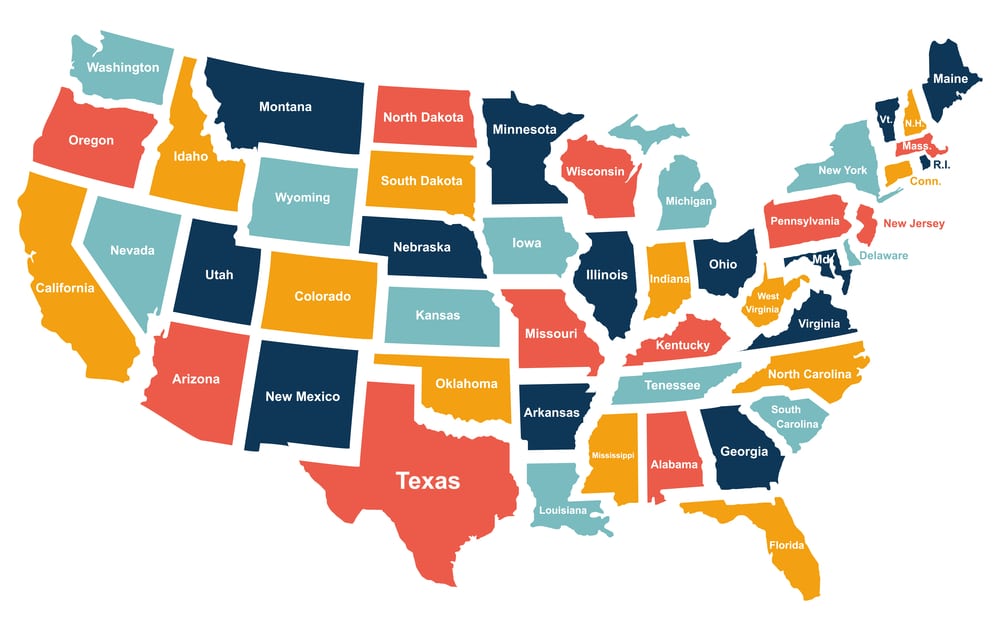
In a recent and rather surprising piece, The Wall Street Journalhighlighted growing frustrations among rural residents of states like Illinois, solidly Republican regions who feel disenfranchised by the political dominance of urban metropolises like Chicago and the wider Cook County. The article described sentiments among rural Illinoisans who increasingly view their state government as an unrepresentative body, one that governs in the interests of urban elites while neglecting or outright opposing the values, interests, and livelihoods of those living in less densely populated areas.
This frustration is not unique to Illinois; it resonates in states like California, Oregon, and New York, where rural and small-town residents feel marginalized by overwhelmingly urban legislatures and policies crafted by political majorities in the cities. It raises an important question: why should sparsely populated regions be bound indefinitely to the political dominance of a few, highly concentrated urban areas?
The idea that rural regions might seek autonomy from urban majorities has an intuitive appeal, especially when considering the arbitrary nature of state boundaries in the United States. Unlike France, England, or other nations rooted in medieval kingdoms and centuries-old cultural identities, states like Illinois and California are constructs of relatively recent history, products of political compromises and expedient geographic delineations. Many boundaries of these states reflect no natural or inherent connection among their inhabitants. This arbitrariness invites comparisons to the imperial cartography of the late nineteenth and early twentieth centuries, where colonial powers carved up Africa and the Middle East into artificial nations that still grapple with the consequences of their incoherent borders. Why, then, should we expect places as disparate as Chicago and rural Illinois, or San Francisco and the farmlands of California’s Central Valley, to share common governance without conflict or resentment?
The argument for rural secession from urban-dominated states rests on several principles. First, it is fundamentally undemocratic to force people into perpetual political subjugation because they happen to live within arbitrarily drawn borders. Unlike democracy, properly republican government depends not just on majority rule but on the protection of minority rights, including the right to self-governance. When rural communities are systematically outvoted and overruled by urban majorities, they are effectively disenfranchised within their own states.
Take California, for example. The state’s Democratic supermajority is overwhelmingly driven by votes from urban centers like Los Angeles, San Francisco, and San Diego. Policies on taxation, land use, energy, and firearms, among others, reflect urban priorities that often clash with the values and economic needs of rural Californians. Yet rural residents have no realistic avenue to influence these policies.







 MCViewPoint
