
I think “Billion” should be “Million”.
Be seeing you

Enemy of the State-Read the Book-Know the Man
This is not a Safe Space but Baby, I don't care.

"I am not a number, I am a Free Man" - No. 6
 Information Liberation Alex Jones’ Prison Planet Gary North Specific Answers Antiwar The Daily Bell Tenth Amendment Center Economics Policy Journal The American Thinker The New American Lew Rockwell
Posted by M. C. on October 11, 2022
Posted in Uncategorized | Tagged: food stamps, Ukraine, US military | Leave a Comment »
Posted by M. C. on October 11, 2022
There are no such stories to be told about Biden because there is no longer anything funny to be said about him. Meanwhile, the ongoing challenge is to get him to stop talking at all, so painfully disjointed from reality has his speech become. In fact, it is more than just painful to watch. It is downright frightening,
By Regis Martin
Crisis Magazine
On hearing the news that Calvin Coolidge had just died, the humorist Dorothy Parker, whose wit could be pitiless, asked in mock surprise, “How could they tell?” Old Silent Cal, 30th President of the United States—the Sphinx of the Potomac, Washington insiders called him—had passed on. And nobody noticed.
Remind you of anyone today? The current occupant of the White House perhaps? Who may well be dead, too, but how can we tell? How can anyone tell? Leaving aside his handlers, media shills and sycophants who’ve been frantically propping him up for years, most of us simply can’t be sure. But those in the know are certainly aware of the hollow shell they’ve kept on life support since before the election of 2020—going all the way back to the Biden basement where this whole charade began.
How completely unlike Calvin Coolidge, who, for all that he didn’t do during the years he spent running the country, managed nevertheless to do it brilliantly. In fact, he was such a blooming genius at it that Walter Lippmann, who rejected most of his politics, was so impressed by his “active inactivity” that he could see at once how it perfectly suited “the mood of the country.”
It really wasn’t, you see, so much a matter of what he did or didn’t do as who he was that did it. Alfred E. Smith, an admiring member of the opposition who very nearly became president himself, said of Coolidge that what distinguished him was “character more than heroic achievement. His great task was to restore the dignity and prestige of the Presidency when it had reached the lowest ebb in our history…in a time of extravagance and waste.”
Character. It is what enables a man to stand tall in the saddle, to make choices that are the result of a life long-habituated to the practice of virtue. It is what gives voters confidence in the leaders we elect, knowing that, as Plato put it, here is someone who actually does not covet the job we’ve given him. Allow only those who disdain the exercise, Plato taught, to lord it over the rest of us. When getting and keeping power becomes the consuming passion, it’s time for voters to pull the plug, lest the office holder be tempted to tyrannize over others.
How we’ve come to miss that quality among the moral pygmies who govern us now, their lust for full control of our lives having turned them into addicts. Not since Coolidge, it seems, the quality of whose character impressed even his political opponents, have we moved so far from Sphinx to Jinx. Which pretty much describes the arc of our nation’s current decline and fall. And we’ll not need the resources of an Edward Gibbon to tell the tale.
Just check out any Presidential Q&A to get a full and proper sense of the disaster we’ve got on our hands—Biden’s latest lapse being the deceased congresswoman whose name he repeatedly called out from the podium. “Jackie, you here? Where’s Jackie?” Biden asked as he haplessly scanned the crowd for signs of Rep. Jackie Walorski, who had perished more than a month ago in a car crash. “She must not be here,” he concluded forlornly.
This is pure bathos, for which there are no comparisons to be found this side of Monty Python. And for this we’re not permitted even to consider invoking Article Twenty-Four of the U.S. Constitution, which provides for emergency removal of a president when circumstances indicate he’s incapacitated? Or is it only Donald Trump we’re allowed to accuse of being off his rocker?
If the unfolding lunacy we see day after day coming out of Washington doesn’t lead to a red wave in November, then the whole country has gone crackers. We might as well all be pod people sleepwalking our way into the dustbin of history. Because we haven’t got a future as a country. In fact, we won’t even have a country, or at least not one any of us would care to recognize as our own. Is it possible that we’re all brain-dead? That we’ve fallen into a black hole, only we don’t yet know it? Who will tell us?
One of the funniest stories told about Coolidge comes from a White House supper in which an intrepid young lady sought to engage him in conversation, announcing that she could tease out at least three words. “You lose,” he told her without looking up from his plate.
Be seeing you
Posted in Uncategorized | Tagged: Calvin Coolidge, Jackie Walorski, U.S. Constitution | Leave a Comment »
Posted by M. C. on October 11, 2022
It should first of all be said that drug decriminalization, even if it applies only to certain drugs, even if it applies only to possession, even if it applies only to a certain amount of drugs, even if still results in a small fine, and even if it comes with unwelcome government regulations and restrictions, is still much better than drug prohibition that can result in heavy fines, imprisonment, loss of employment, disintegration of families, financial ruin, and a permanent criminal record for those ensnared by laws against “illegal” drugs.
Critics are calling Oregon’s Drug Addiction Treatment and Recovery Act a failure. According to Oregon’s ABC affiliate KATU: “Oregon still has among the highest addiction rates in the country. Fatal overdoses have increased almost 20% over the previous year, with over a thousand dead. Over half of addiction treatment programs in the state lack capacity to meet demand because they don’t have enough staffing and funding.”Drug freedom is the complete absence of laws and regulations concerning the manufacture, distribution, buying, selling, and possession of drugs of any kind.
[Click to Tweet]
The real disaster, however, is that Oregon instituted a drug decriminalization and treatment program instead of drug freedom.
In 2020, Oregon voters approved—by a vote of 58.46 to 41.54 percent—a ballot initiative (Measure 110) to decriminalize controlled substances and establish a drug addiction treatment and recovery program. A “yes” vote on the Drug Addiction Treatment and Recovery Act “supported making personal non-commercial possession of a controlled substance no more than a Class E violation (max fine of $100 fine) and establishing a drug addiction treatment and recovery program funded in part by the state’s marijuana tax revenue and state prison savings.”
The measure reclassified the personal noncommercial possession of a controlled substance in Schedule I-IV, such as heroin, cocaine, and methamphetamines, from a Class A misdemeanor to a Class E violation resulting in a $100 fine or a completed health assessment. The health assessments, which must be completed within 45 days of the violation, “are conducted through addiction recovery centers and include a substance use disorder screening by a certified alcohol and drug counselor.”
The manufacture or distribution of “illegal” drugs are still subject to a criminal penalty.
The measure also “established the Drug Treatment and Recovery Services Fund that would receive funds from the Oregon Marijuana Account and state savings from reductions in arrests, incarceration, and official supervision.” Every quarter, all revenue in excess of $11.25 million must be transferred to the fund for grants “to government or community-run organizations to create addiction recovery centers,” which “are required to provide immediate medical or other treatment 24 hours a day, health assessments, intervention plans, case management services, and peer support and outreach.”
GOP gubernatorial candidate Christine Drazan called Measure 110 a “terrible idea” that “made our addiction crisis worse, not better.” Betsey Johnson, another former lawmaker turned gubernatorial candidate, termed Measure 110 a “failed experiment.” Both candidates want voters to repeal it.
Be seeing you
Posted in Uncategorized | Tagged: Drug Decriminalization, Oregon | Leave a Comment »
Posted by M. C. on October 11, 2022

BY TYLER DURDEN
Authored by Tsvetana Paraskova via OilPrice.com,
“This divestment is necessary to protect Louisiana from mandates BlackRock has called for that would cripple our critical energy sector,” said Schroder.
“I refuse to spend a penny of Treasury funds with a company that will take food off tables, money out of pockets and jobs away from hardworking Louisianans.”
https://www.zerohedge.com/energy/republicans-withdraw-1-billion-blackrock-due-its-esg-policies
Multiple U.S. states governed by Republicans are withdrawing state funds from BlackRock’s management, as they disapprove of the ESG investment policies of the world’s top asset manager, the Financial Times reports.
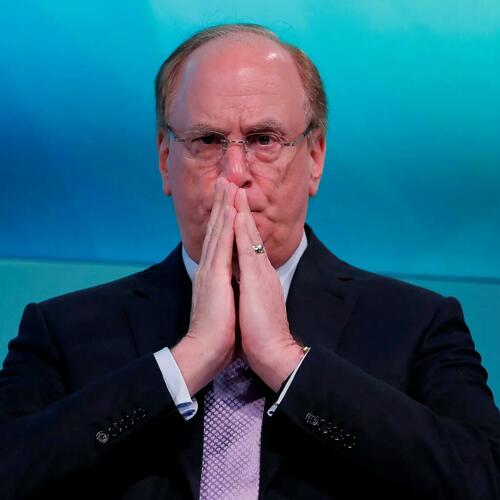
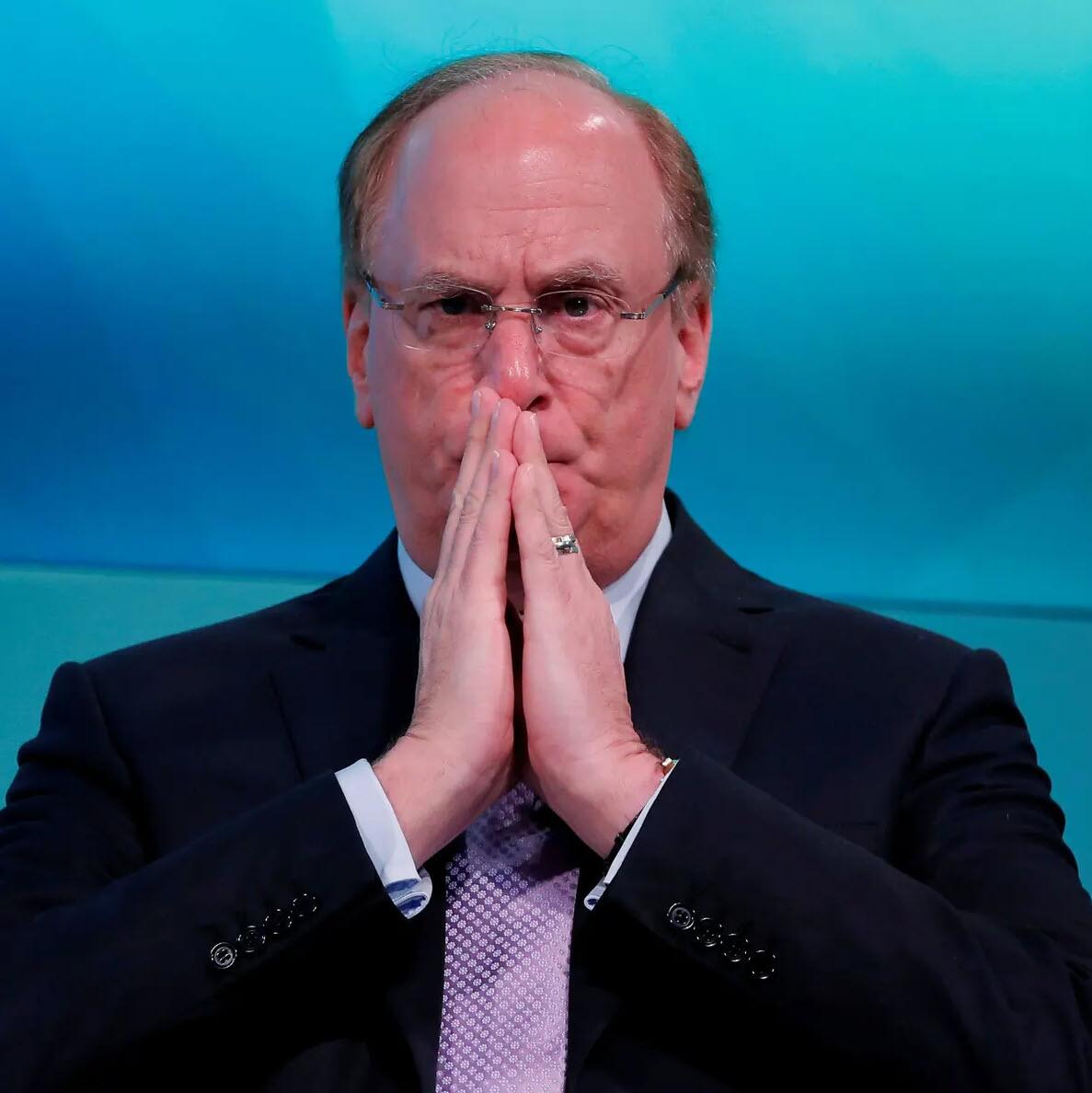
In recent weeks, Louisiana, South Carolina, Utah, and Arkansas have announced they would divest funds from BlackRock totaling more than $1 billion.
Last week, Louisiana State Treasurer John Schroder announced in a letter to BlackRock’s CEO Larry Fink that he would divest all Treasury funds from BlackRock. Louisiana has removed $560 million to date and will pull out a total of $794 million by year’s end, Schroder noted.
“This divestment is necessary to protect Louisiana from mandates BlackRock has called for that would cripple our critical energy sector,” said Schroder.
“I refuse to spend a penny of Treasury funds with a company that will take food off tables, money out of pockets and jobs away from hardworking Louisianans.”
South Carolina will pull $200 million from BlackRock by the end of the year, State Treasurer Curtis Loftis told FT in an interview.
For months now, Republican states have said they would not do business anymore with asset managers who have ESG-aligned investment policies, which, the states say, show that those financial firms are boycotting the oil and gas industry.
Be seeing you
Posted in Uncategorized | Tagged: BlackRock, ESG, Larry Fink | Leave a Comment »
Posted by M. C. on October 11, 2022
By Ron Unz
“I chaired the commission for the Lancet for 2 years on Covid. I’m pretty convinced it came out of a US lab of biotechnology […] We don’t know for sure but there is enough evidence. [However] it’s not being investigated, not in the US, not anywhere.”
https://www.unz.com/runz/jeffrey-sachs-as-righteous-rogue-elephant/
Until just a few months ago, I doubt there were many American academics more solidly situated in the topmost ranks of our elite mainstream establishment than Prof. Jeffrey Sachs of Columbia University.
In 1983 he gained Harvard University tenure at the remarkably young age of 28, then spent the next 19 years as a professor at that august academic institution; by the early 1990s the New York Times was already hailing him as the world’s most important figure in his field. Lured to Columbia University in 2002, he has spent the last couple of decades teaching there and also directing a couple of its research organizations, most recently the Center for Sustainable Development. TIME Magazine has twice ranked him among the world’s 100 most influential individuals, and for nearly twenty years he served as Special Advisor to several Secretary-Generals of the United Nations, while publishing many hundreds of articles and op-eds on a wide variety of subjects in our most influential media outlets.
It would be difficult to construct a more illustrious and establishmentarian curriculum vitae for an international academic figure, so in 2020 he was a natural choice to serve as chairman of the Lancet‘s Covid Commission, established to investigate all aspects of the deadly worldwide pandemic.
Yet as he has subsequently explained in his interviews, over the course of the last couple of years he became increasingly suspicious that the true origins of the viral disease were being concealed. More than eighteen million people have died worldwide including over a million Americans, and rather than acquiescing in what he came to believe was an ongoing official cover-up, he broke with the establishment and made the courageous decision to bring the true facts to widespread public attention.
Although he has retained the subdued manner and careful phraseology of a mild academic, in recent months the incendiary content of his published articles and his public statements have exploded across the global landscape, reaching many millions who might otherwise never have questioned what they were so uniformly being told by all our mainstream media organs. His critics defending that orthodoxy must surely believe that he has gone dangerously rogue, and given the enormous weight of his past credibility, I suspect that the phrase “rogue elephant” has sometimes entered their thoughts.
From the earliest days of the Covid epidemic, an official narrative was promoted that the virus was natural and editors of the leading scientific journals closed their pages to any submissions that suggested otherwise. With no reputable academic papers challenging their perspective, the natural origins advocates were able to cite this silence as proof that their position represented the overwhelming scientific consensus, thereby intimidating most mainstream journalists into toeing that same line. A massive propaganda-bubble had been inflated and maintained by such administrative means.
However, as a member of the National Academy of Sciences, Prof. Sachs had publication privileges in the prestigious PNAS journal, so in May he and a co-author published an important article documenting the highly suspicious characteristics of the Covid virus and calling for further investigation. This constituted a breakthrough, becoming the first and only paper published in a major journal that presented the very strong evidence of Covid bioengineering.
Given his role as chairman of the Covid Commission, Sachs’ paper should have been treated as a bombshell, reaching the headlines of all our leading newspapers. But instead, it was almost totally ignored, as was the author’s public statements on the subject. However, the following month, Sachs attended a small Spanish thinktank gathering, whose proceedings were soon made available on Youtube. Russia’s RT eventually ran a brief item highlighting Sachs’ presentation, and a short clip of his remarks soon went super-viral, retweeted out almost 11,000 times and accumulating over a million views.
Be seeing you
Posted in Uncategorized | Tagged: biotechnology, covid, Jeffrey Sachs | Leave a Comment »
Posted by M. C. on October 10, 2022
Be seeing you
Posted in Uncategorized | Tagged: Polka Dots | Leave a Comment »
Posted by M. C. on October 10, 2022
By Ryan McMaken
On an instinctive level then, many people recognize that something more local is necessary. Partly because of this instinct, radical decentralization in the form of many diverse polities has been the norm throughout human history.
https://mises.org/wire/secession-and-small-states
[This article was adapted from a talk delivered at the 2022 Supporters Summit in Phoenix, Arizona.]
The international system we live in today is a system composed of numerous states. There are, in fact, about 200 of them, most of which exercise a substantial amount of autonomy and sovereignty. They are functionally independent states. Moreover, the number of sovereign states in the world has nearly tripled since 1945. Because of this, the international order has become much more decentralized over the past 80 years, and this is largely due to the success of many secession movements.
The new states are smaller than the ones that came before them, however, and this all reminds us that there is a basic arithmetic to secession and decentralization in the world. Since the entire surface of the world—outside of Antarctica, of course—is already claimed by states, that means that when we split one political jurisdiction up into pieces, those new pieces will necessarily be smaller than the old state from which they came.
During the decolonization period following the Second World War. Dozens of new states were formed out of the territories of the old empires they left. This meant the new status quo had a larger number of smaller states. The same thing occurred after the end of the Cold War. As the Soviet Union collapsed, it left 15 new smaller states in its wake.
So in the current world, secession—when successful—is an event that reduces the size and scope of states. It reduces the territory and the populations over which a single central institution exercises monopoly power.
So, if we’re going to talk about secession, then, it’s also important to explicitly to address the issue of “what is the correct size of states.” Is smaller better?
Now before we go further, I know my audience here, so there’s no need to come up to me afterward and say “well, states are bad so the correct size of states is that they don’t exist at all.” I get it. I agree that’s the end goal. Moreover political communities don’t have to be states at all. They could be other types of non-state polities. But that’s all for another speech.
For now, we’ll stick to talking about states, as we are already saddled with living in a world composed of states right now. Until the day comes that a majority of the population wants to abolish all states, it makes sense in the meantime to look to ways that will reduce the power of states, localize that power, and take at least some of it out of the hands of some of the most powerful ruling state elites.
And the reason we have to address the issue of the size of states, is because many people do believe that bigger is better. They believe that larger states are essential for economic success, for peace, and for trade. Also, many people think that state size doesn’t matter at all. They think every problem of conflict within a political jurisdiction can be solved with democracy. Just let people vote, and there is no need for people to have political independence or a separate polity of their own. People who believe that are going to heartily oppose secession.
And, of course, states’ agents themselves will oppose it because states want to be big. Being big and getting bigger is an important goal of every state. It’s a major part of what we call state building. States want to consolidate power, annex territories, increase their taxable population. What we want is the opposite of that. We want state unbuilding. State demolition.
For many in the public, however the idea that bigger is good, or at least that size doesn’t matter, has its limits. For example, most people already have in their minds some upper limit as to the “correct” size of states. To see this, simply ask a person if he or she wants to live under a single global state.
Most people—not all, but I would suggest a sizable majority of people worldwide—would be opposed this. Most people, just from casually observing the world, suspect that placing global governing power in the hands of some distant elite from another culture, a different continent, and which uses a different language, might not actually produce a desirable result.
Be seeing you
Posted in Uncategorized | Tagged: Decentralization, secession, Small States | Leave a Comment »
Posted by M. C. on October 10, 2022
The guidance requires the president to approve strikes outside of Iraq and Syria with exceptions for ‘self-defense‘
In other words…all for show
“…But the guidance has a loophole by allowing strikes to be ordered without White House approval in the name of “self-defense” of US troops or other partner forces. Many US airstrikes in Somalia in recent months were claimed to be done in defense of Somali government forces….”
Be seeing you
Posted in Uncategorized | Tagged: Drone Strike, Somalia, US airstrikes | Leave a Comment »
Posted by M. C. on October 10, 2022
But there’s something even more profound that is a taboo in the United States. NATO expansion represents for the Russians American hypocrisy and a dual standard. They see it this way, and I can’t think of any way to deny their argument.

In this clip from an event held by the Carnegie Council called, “Soviet Fates and Lost Alternatives: From Stalinism to the New Cold War,” on May 19, 2010, Stephen Cohen examines the history between NATO and Russia, detailing how NATO has consistently broken their word and expanded further closer to Russia. Cohen’s analysis is especially topical following the war in Ukraine and the unfolding current state of foreign affairs involving NATO, Russia and the rest of the world.
The late Stephen F. Cohen was a professor emeritus of Russian studies and politics at New York University and Princeton University as well as a contributing editor to The Nation magazine. He was one of the leading experts on contemporary Russia and the Soviet Union, writing 10 books and often speaking with many intellectuals and Russian and Communist Party government leaders including, most notably, Mikhail S. Gorbachev.
Below is a transcript of the video clip. If you’d like to watch the entire talk, you can find it here.
NATO expansion is not over for the Russians. It’s a reality. NATO is sitting on its borders. It’s not about future NATO expansion; it’s about current.
NATO expansion represents the following to Russia: It represents a profoundly broken promise to Russia, made by the first Bush, that in return for a united Germany in NATO, NATO would not expand eastward. This is beyond any dispute.
People say they never signed a treaty. But a deal is a deal. If the United States gives its word—unless we’re shysters, and if you don’t get it in writing, we’ll cheat you—we broke our word. When both Putin and Medvedev say publicly, to Madeleine Albright and others, “We, Russia, feel deceived and betrayed,” that’s what they are talking about.
So NATO represents on the part of Russia a lack of trust: You break your words to us. To what extent can we trust you?
Secondly, it represents military encirclement. If you sit in the Kremlin and you look out at where NATO is and where they want to go, it’s everywhere. It’s everywhere on Russia’s borders.
Be seeing you
Posted in Uncategorized | Tagged: NATO Expansion, Russia, Stephen F. Cohen | Leave a Comment »
Posted by M. C. on October 10, 2022
Its goals include a shift to a central bank digital currency (CBDC), including a consolidated centralization of banking and bank accounts, the possibility of immediate real-time taxation, negative interest rates, and centralized surveillance and control over spending, debt, and savings.
In my recent conspiratorial rant about CBDC I did not consider “the possibility of immediate real-time taxation“
We all know, to our cost, how the enemies of humanity used the so-called covid “pandemic” to try to destroy us. They imposed draconian shutdowns on the economy, pressured and in many cases ordered us to take killer vaccines and blocked young people from the contact with their friends they need to grow up properly. Some people, such as the monster “Dr.” Anthony Fauci, would like to shut us down again. See the great book on him by Robert Kennedy Jr, , and my review of it here.
But the situation is even worse than we thought. Michael Rectenwald has written a brilliant new book, The Great Reset and the Struggle for Liberty: Unraveling the Global Agenda, and in it he shows how the anti-human plotted to use a pandemic to impose totalitarianism on us. I’m going to talk about some of his findings, and then combine this with evidence that the “pandemic” was made in America. The implication of this is mind-blowing.
Rectenwald first identifies a person and the group he founded behind the “Great Reset.” The person is Klaus Schwab and the group is his World Economic Forum. Here is what Rectenwald says; ““The Great Reset means, at the very least, reduced standards of living and carbon use for the vast majority. But Schwab and the WEF also define the Great Reset in terms of the convergence of economic, monetary, technological, medical, genomic, environmental, military, and governance systems. The Great Reset involves vast transformations in each of these domains, changes which, according to Schwab, will not only alter our world but also lead us to ‘question what it means to be human.’ In terms of economics and monetary policy, the Great Reset amounts to a great consolidation of wealth, on the one hand, and the planned issuance of universal basic income (UBI) on the other.
Its goals include a shift to a central bank digital currency (CBDC), including a consolidated centralization of banking and bank accounts, the possibility of immediate real-time taxation, negative interest rates, and centralized surveillance and control over spending, debt, and savings. The Great Reset consolidates capital flows from central banks and investment firms into the hands of preferred producers through ‘stakeholder capitalism.’ This would amount to a virtual oligopoly on top with ‘actually existing socialism’ for the majority below. How else are we to explain the promise, ‘you’ll own nothing, and you’ll be happy?’”
How does this tie in with the “pandemic.”? Rectenwald explains: ““The WEF organized two events that eerily anticipated the covid-19 crisis. Covid-19 became the proximate inspiration for launching the Great Reset project. In May 2018, the WEF collaborated with the Johns Hopkins Center for Health Security to conduct the CLADE X Exercise, a ‘tabletop’ simulation of a national response to a pandemic. The exercise simulated the outbreak of CLADE X, a novel strain of a human parainfluenza virus with genetic elements of the Nipah virus. According to Homeland Preparedness News, the CLADE X simulation demonstrated that ‘[t]he lack of both a protective vaccine and a proactive worldwide plan for tackling the spread of a catastrophic global pandemic resulted in the death of 150 million people across the Earth.’ Clearly, preparation for a global pandemic was in order. A little over a year later, in October 2019, the WEF’s uncanny prescience was again on display, only this time with greater precision. Along with the Bill and Melinda Gates Foundation, the WEF teamed up with Johns Hopkins University to stage another pandemic exercise, called Event 201. Event 201 simulated the international response to the outbreak of a novel coronavirus—just two months before the covid-19 outbreak became international news and a mere five months before the World Health Organization (WHO) declared it a pandemic. The Johns Hopkins Center for Health Security’s summary of the exercise closely resembles the actual covid-19 scenario, including apparent foreknowledge of socalled asymptomatic s Event 201 simulates an outbreak of a novel zoonotic coronavirus transmitted from bats to pigs to people that eventually becomes efficiently transmissible from person to person, leading to a severe pandemic. The pathogen and the disease it causes are modeled largely on SARS, but it is more transmissible in the community setting by people with mild symptoms. The CLADE X and Event 201 simulations anticipated practically every eventuality of the covid crisis, notably the responses by governments, health agencies, conventional media, social media, and elements of the public. The responses and their effects included worldwide lockdowns, the collapse of businesses and industries, the adoption of biometric surveillance technologies, an emphasis on social media censorship to combat ‘misinformation’ and ‘disinformation,’ the flooding of social and legacy media with “authoritative sources,” widespread riots, and mass unemployment. These premonitory exercises and other covid curiosities have contributed to the ‘plandemic’ narrative—speculation that the covid-19 crisis may have been staged by global elites centered around the WEF as an alibi for initiating the Great Reset. . .
Be seeing you
Posted in Uncategorized | Tagged: Anthony Fauci, Disasters, Klaus Schwab, pandemic, World Economic Forum | Leave a Comment »


.jpg)