MCViewPoint

Opinion from a Libertarian ViewPoint

Archive for the ‘Uncategorized’ Category

6 Reasons Why the Wrong Party Will Win the Most Important US Election

Posted by M. C. on October 5, 2020

https://internationalman.com/articles/six-reasons-why-the-wrong-party-will-win-the-most-important-us-election/

by Doug Casey

The upcoming election may be the most important in US history. At least as important as that of 1860, which led directly to the War Between the States. In 2016 I believed Trump would win and placed a money bet on him. This time I’m not so sure, despite Trump’s “incumbent advantage” and the fact the Democrats could hardly have picked two worse candidates.

I see at least six reasons why this is true, namely:

  • The Virus
  • The economy
  • Demographics
  • Moral collapse of the old order
  • The Deep State
  • Cheating

The consequences of a Democrat victory will be momentous. Let’s look at why it’s likely.

1. The Virus

See the rest here

Be seeing you

Posted in Uncategorized | Tagged: , , , , | Leave a Comment »

The Police Are Requesting Data from People’s Smart Speakers at an Alarming Rate –

Posted by M. C. on October 5, 2020

Whitfield says police are becoming more savvy about the information in the smart speakers’ activity logs. He recalls a case where police found drugs in a household with multiple residents. Officers identified a suspect after seizing data from a smart speaker. Its log not only listed recent queries related to drugs but identified who spoke them. Google and Amazon speakers let users create profiles so the devices recognize their individual voices. This information helped police identify the suspect.

https://www.theorganicprepper.com/police-smart-speaker-data/

by Robert Wheeler

Remember all those conspiracy theorists and Luddites who told you they didn’t want Echo or Alexa devices in their home because those gadgets were spying on them? Well, they were right. That’s not even up for debate. 

If you were one of those friends who mocked them and called them crazy, you were wrong. Just admit it.

If you are bewildered by what you just read, please, read on.

Nearly ten years ago, writers like Brandon Turbeville and others were warning that “smart technology” and the “internet of things” were being developed for surveillance and manipulation purposes. (Despite the companies’ claims of greater convenience.) We’ve been in a virtual dragnet for years.

Those devices and technologies are ubiquitous and are being used to soak up data, private and personal conversations, interactions, and even movement. All of this openly discussed in mainstream outlets. Lately, this website has reported on the Nest, your phone’s location tracker, and other “smart” technology. We’ve even talked about how we all have “surveillance scores.“

Take a look at WIRED’s article by Sidney Fussell, “Meet the Star Witness: Your Smart Speaker.” In this article, Fussell details a murder case in which an Amazon Echo device was presented as evidence.

He writes, 

In July 2019, police rushed to the home of 32-year-old Silvia Galva. Galva’s friend, also in the home, called 911, claiming she overheard a violent argument between Galva and her boyfriend, 43-year-old Adam Crespo. The two lived together in Hallandale Beach, Florida, about 20 miles from Miami.

When officers arrived, Galva was dead, impaled through her chest by the 12-inch blade at the sharp end of a bedpost. Police believe Crespo tried to drag Galva from their bed. She held onto the bedpost to resist, but the sharp end snapped, somehow killing her. Police charged Crespo with second-degree murder. He pleaded not guilty and was released on $65,000 bail, awaiting trial. In the months since the arrest, Crespo’s lawyer has presented a surprising piece of evidence in his defense: recordings from a pair of Amazon Echo speakers.

“I had a lot of interviews where people said, ‘Oh, are you aware that this could be the first time Alexa recordings are going to be used to convict somebody of murder?’” says Christopher O’Toole, Crespo’s lawyer. “And I actually thought of it the opposite way, that this could be the first time an Amazon Alexa recording is used to exonerate somebody and show that they’re innocent.”

When police and prosecutors collect smart home or speaker data, it’s typically used as evidence against suspects. The Hallandale Beach Police Department filed a subpoena for Crespo’s speakers, as they may have picked up audio of the argument Galva’s friend overheard.

The incident shows the growing role of smart home devices and wearables in police investigations.

In 2016, police in Bentonville, Arkansas, requested Amazon Echo data in connection with a man’s death, believed to be the first such request. Amazon initially tried to block the request, but later handed over the data. A murder charge against the defendant was later dropped, but the speaker, smart home, and wearable data has figured into multiple cases since then.

Requests for smart and wearable data has increased rapidly.

Fussell continues,

Earlier this month, Amazon said it had received more than 3,000 requests from police for user data in the first half of this year, and complied almost 2,000 times. That was a 72 percent increase in requests from the same period in 2016, when Amazon first disclosed the data, and a 24 percent jump in the past year alone.

Amazon doesn’t provide granular data on what police are seeking, but Douglas Orr, head of the criminal justice department at the University of North Georgia, says police now look for smart home data as routinely as data from smartphones. Data on a smartphone often points officers towards other devices, which they then probe as the investigation continues.

By amending a search warrant, police can “keep going to keep collecting data,” Orr says. “That usually leads to an Echo or at least some other device.”

As Orr explains, officers are getting more savvy about smart home devices, creating templates that simplify requesting data. Police departments often share these templates, he says, tailoring requests for the specifics of the case they’re investigating.

Google’s Nest unit reported increasing police demands for data from its smart speakers through 2018. Google then stopped reporting Nest data separately, including such requests in its broader corporate transparency report, which shows increased requests for Google user data.

In their terms of service, most major apps and websites include a clause warning users that companies may hand over their data if requested by the government. Law enforcement agencies file subpoenas or search warrants for data, detailing to judges what evidence they expect to find on the devices and how it may serve the investigation. Amazon and Google both notify users of a request for data unless the order itself forbids it. Any number of entities can request user data, but the companies say they prioritize requests based on urgency.

“Things like Homeland Security, they’re going to take high priority,” explains Lee Whitfield, a forensic analyst. “Other law enforcement requests will come in under that. And then things like divorce cases or civil cases, they have a lower ranking.”

In an emailed statement, an Amazon spokesperson said the company “objects to overbroad or otherwise inappropriate demands” from law enforcement and referred WIRED to its policy on government requests. A Google spokesperson also referred WIRED to its updated policy on requests.

Forensic experts tell WIRED that information from the devices is valued because it can offer a timeline of a person’s activities, their location, if they’re alone, and can verify statements made during questioning.

. . . . .

Orr has studied the types of data police can pull from smart speakers like the Amazon Echo. “Voice clips are only the beginning,” he says. Speakers keep time-stamped logs of user activity. Police can examine these logs to get a sense of what someone was doing around the time of an alleged crime.

Fussell then provides another example of how these devices are used by law enforcement.

He writes,

Consider a potential suspect who can’t prove where they were at 11 pm on a Thursday, because they live alone. Something as simple as ordering pizza through a speaker would show the time and location of the request and, if voice recognition is enabled, who made the request. “It might be benign information that someone was ordering a pizza, but it might also be an alibi for somebody,” Orr says.

Police increasingly rely on wearables and smart devices to verify the claims people make during an investigation. Sometimes, the tools can reveal a lie.

Heather Mahalik, a forensics instructor, recalls a Florida case in which a man killed his wife, then tried to impersonate her. The husband sent texts and Facebook messages from his wife’s phone in an attempt to blur the timeline of her disappearance. While the woman’s phone activity continued, her Apple Watch showed a sudden drop in heart rate activity that the husband claimed was due to a dead battery. Activity on the man’s phone synced perfectly with when he used the wife’s phone to post to Facebook. Her phone showed no activity except for when the husband picked it up to post, with timestamps matching his activity to the use of the wife’s phone.

“We were able to tell from his device that he would pick up the phone, take 18 steps, and it corresponded with the time he posted a Facebook post,” Mahalik says.

Connecting information from multiple devices is a common practice, analysts say. Information on one device can suggest evidence on another. This ability to string together discoveries leads to what another expert calls a phased approach to digital forensics.

“They ask for something, the investigation moves along, they find something else interesting, and then they request the next thing,” says Whitfield, the forensic analyst.

O’Toole, Crespo’s lawyer, says police subpoenaed Crespo’s social media accounts right away, then requested his voice recordings about four weeks later. Officers wrote in the search warrant that the speaker data may include “audio recordings capturing the attack on victim Silvia Crespo.”

O’Toole says he intends to introduce the smart speaker recordings in his client’s favor. Via email, a spokesperson for Hallandale Beach Police confirmed the case was still active but did not provide further comment.

O’Toole says smart speaker recordings are part of several cases he’s working on, including a divorce in which a woman subpoenaed data from a smart speaker that may have picked up the sounds of her husband with another woman..

Whitfield says police are becoming more savvy about the information in the smart speakers’ activity logs. He recalls a case where police found drugs in a household with multiple residents. Officers identified a suspect after seizing data from a smart speaker. Its log not only listed recent queries related to drugs but identified who spoke them. Google and Amazon speakers let users create profiles so the devices recognize their individual voices. This information helped police identify the suspect.

“I just don’t see this going away,” Whitfield says. “I think this is going to be more and more prolific as time goes on.”

Whitfield is right.

It will never go away.

Advertisement of these technological devices as a tool for convenience was a manipulative tactic to introduce technological devices for their real purpose – the tracking, monitoring, and recording of citizens so that no action – no matter how small – goes unnoticed. We are already living in a surveillance state and it’s only going to get worse.

Once begun, this bell cannot be unrung.

What are your thoughts on things you said in your own home being used against you by the police? Are you taking any steps to protect yourself from this type of data being collected? Share your thoughts in the comments.

The Police Are Requesting Data from People\'s Smart Speakers at an Alarming Rate

Be seeing you

Posted in Uncategorized | Tagged: , , , , | Leave a Comment »

Why COVID Kids May Grow Up To Be Libertarians | Intellectual Takeout

Posted by M. C. on October 5, 2020

https://www.intellectualtakeout.org/why-covid-kids-may-grow-up-to-be-libertarians/

By Emma Freire

The Coronavirus crisis hit children as hard as any other segment of the population. All familiar routines were suddenly ripped away from them. Thousands are still doing school online. Many state mask mandates include young children.

For children old enough to remember it in the future, the year of Coronavirus, will be a significant event in their childhoods. They will probably tell their own children and grandchildren stories about what it was like to live through this time.

But how will they look back on this crisis when they reach adulthood? And how will it shape their worldview?

For adults, the debate about handling the pandemic has been highly politicized for some time. However, we are now moving into a phase of the reopening where different standards about what is allowed and what isn’t will be obvious even to children.

For example, last week a kind friend wanted to organize a picnic for my three small children. She prepared little sandwiches and lots of fun snacks, yet, when we arrived at our local park a guard approached us to tell us we couldn’t bring food in. This is normally allowed, but it is forbidden during COVID-19 because eating requires removing one’s mask. My children burst into tears. My friend and I tried – in vain – to convince them that having a picnic in the living room is also fun.

The worst part of this situation, however, is that we constantly walk by restaurants in our neighborhood that are open for business – both with indoor and outdoor seating. What’s the difference between us having a picnic in the park and buying an ice cream cone and eating it on the restaurant terrace? Why is one a health hazard and not the other? I was at a loss to explain this discrepancy to my children. It is simply unfair. As young as they are, my kids intuit that.

Children have a deep-rooted sense of fairness. Peter Gray, a professor of psychology, writes in Psychology Today that children grasp early on that fairness is necessary in order to play with each other.

Anyone who has spent much time observing children play independently of adult control knows that they are very concerned with fairness. ‘That’s not fair’ is among the most common phrases you will hear.…

There is a simple reason why play must be fair. The fairness doesn’t come from some highfalutin moral philosophy nor from deep-seated altruism. Children are neither philosophers nor angels. … Fairness comes from the simple reality that play with others is only possible if it is fair.

American children are seeing that their schools are still closed, but that other types of gatherings are allowed. Some activities are permitted while others – despite being essentially the same thing – are forbidden. Depending on their age, these observations will impact them deeply. Kids realize this is unfair. Not everyone is playing by the same rules.

Future research will likely tell us a great deal about which government imposed restrictions actually combatted the virus and which were pointless. We will also have a much better understanding of the side effects of these measures. Adults who were children during this pandemic will likely follow these developments with great interest.

Articles about the impact of the pandemic on children tend to focus on the education they have lost due to school closures. But it is also worth noting that children are witnessing repeated violations of their innate sense of fairness. This may well leave them with a sense of mistrust towards institutions and authorities. Is COVID-19 going to raise up a generation of libertarians?

Emma Freire

Emma Freire is a writer living in Sao Paulo, Brazil. She has also been published in The Federalist and The American Conservative.

Be seeing you

Posted in Uncategorized | Tagged: , , | Leave a Comment »

WATCH: Is the UK heading toward medical martial law? – OffGuardian

Posted by M. C. on October 5, 2020

He specifically mentions “managing the narrative”, which is no surprise considering his role as a former Army officer, a current reserves officer, and his known affiliation with the 77th Brigade. For those who don’t know: The 77th is the British army’s team of “facebook warriors”. An information warfare unit whose job is to “counter misinformation”, “manage the narrative” and generally corral and control the internet conversation.

https://off-guardian.org/2020/10/02/watch-is-the-uk-heading-toward-medical-martial-law/

WATCH: Is the UK heading toward medical martial law? We are hearing frequent calls for the UK’s coronavirus “pandemic” response to become a military operation

On the 28th September Tobias Ellwood, Tory MP for Bournemouth East, stood up in Parliament and suggested that the British Army and the Ministry of Defense be in charge of distributing and administering “millions of doses” of the Sars-Cov-2 vaccines, as well as issuing “vaccination certificates” which will “allow travel”.

And that’s just the highlights, there’s a lot more vaguely sinister language, camouflaged in his rather drab monotone voice. (You can watch the whole speech here, go to 20:24).

This is a concerning development, one very much worth keeping an eye on. The BBC don’t think so, of course, because the call for what would easily amount to medical martial law didn’t even make it into their “Today in Parliament” programme.

This is not new behaviour for Ellwood. He has always been a consistent voice for use of the military in response to the “pandemic”. On the 18th of September he requested the Prime Minister make “greater use of our fine armed forces”.

He specifically mentions “managing the narrative”, which is no surprise considering his role as a former Army officer, a current reserves officer, and his known affiliation with the 77th Brigade. For those who don’t know: The 77th is the British army’s team of “facebook warriors”. An information warfare unit whose job is to “counter misinformation”, “manage the narrative” and generally corral and control the internet conversation.

That’s not a “conspiracy theory”, their existence is readily acknowledged by both the government and the mainstream media. Considering they’re currently employed “countering covid misinformation“, they will likely be in the comments of this post (Hi guys!).

Other countries around the world have already moved on to this “war footing”, and the UK is likely not far behind.

Be seeing you

Posted in Uncategorized | Tagged: , , , | Leave a Comment »

Doug Casey Debunks Four Myths About Trump, Taxes, & The Economy | Zero Hedge

Posted by M. C. on October 4, 2020

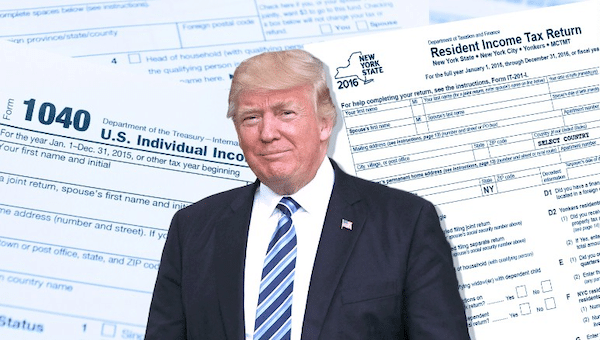
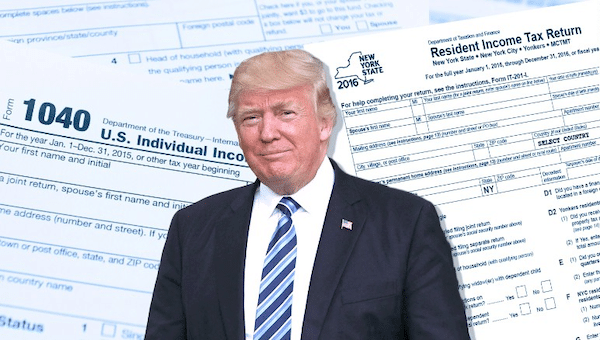
As far as Trump minimizing his taxes, congratulations to him. The object should be to cut the size of the US government in half, and cut it in half again, and again. And along with it, cut the tax burden that it imposes on the average American.

Trump should be proud of himself for cutting his taxes. It’s your patriotic duty as an American citizen to deny revenue to the State and the kind of people that are drawn to it and populate it.

The fact that some people resent others for not paying taxes is just evidence that they’ve been consumed by the vice of envy, which is one of the worst of the vices.

https://www.zerohedge.com/personal-finance/doug-casey-debunks-four-myths-about-trump-taxes-economy

Profile picture for user Tyler Durden

by Tyler Durden

Via InternationalMan.com,

International Man: For many years, President Trump has made no apologies for trying to pay the least amount of taxes possible. He’s clearly stated this in many interviews.

His desire to minimize his taxes has brought scorn from many in the mainstream media, and politicians from both sides of the aisle. These people are of the opinion that paying taxes is an honorable and necessary responsibility. It brings to mind the wrongheaded saying “taxes are the price we pay for a civilized society”, which came from US Supreme Court Justice Oliver Wendell Holmes. Many people believe this.

But if that’s true, how come low tax locales like Singapore, the Cayman Islands, Monaco aren’t backward hell holes, but rather sophisticated and civilized?

Doug Casey: Almost any lie can be accepted as truth if it’s said often enough and with enough certainty. That absolutely applies to what Holmes said. It’s shameful how people don’t think about its meaning, but slavishly repeat it.

Taxes aren’t the price we pay for civilized society. They’re a sign of the fact that society is becoming uncivilized. A civilized society is based on voluntarism. Taxes are all about coercion.

People don’t seem to recognize or remember that before 1913 there was no income tax in the US. There was no reporting of any kind to the US government. It was a much more civilized and far freer country then.

As far as Trump minimizing his taxes, congratulations to him. The object should be to cut the size of the US government in half, and cut it in half again, and again. And along with it, cut the tax burden that it imposes on the average American.

Trump should be proud of himself for cutting his taxes. It’s your patriotic duty as an American citizen to deny revenue to the State and the kind of people that are drawn to it and populate it.

The fact that some people resent others for not paying taxes is just evidence that they’ve been consumed by the vice of envy, which is one of the worst of the vices. Jealousy says “if you have something that I want, I’ll try to take it from you, just because I want it.” Envy says “if you have something that I want, and I can’t take it from you, I’ll destroy it and hurt you.”

It’s speaks poorly of the ethics of the average American, that they’ll self-righteously shame their neighbors for not paying “enough” taxes to the State.

International Man: We often hear from politicians and the media that some people aren’t paying their “fair share” in taxes. Who gets to define what “fair” is, and based on what justifications?

Doug Casey: Whenever you hear the word fair, start running the other way. Everybody has a different idea of what’s “fair”— it’s an arbitrary concept. People manipulate its definition to their advantage. The only way to determine what might be fair is voluntary mutual agreement. That’s not possible with taxes—there’s no voluntarism involved. They are, in fact, a levy enforced at the point of a gun.

The most creative and productive people tend to have the highest incomes—unless they’re crony capitalists, which means they’re basically using the government to steal from everybody else.

Productive people shouldn’t be penalized for supplying more goods and services to their neighbors—to the market. The money they give to the government in taxes would have otherwise been used to create more wealth for the whole world. When it’s taken from them by taxes it’s mostly squandered on welfare and warfare.

The bottom half of the US really doesn’t pay any income tax. They only pay Social Security taxes, roughly a flat 15%. It’s theoretically a pension program, although in fact it’s a Ponzi scheme. Social Security is bankrupt. If anyone gets it in the years to come it will be at the expense of future taxpayers—not because any capital has been set aside.

Social Security is, and always has been, a swindle. It makes it harder for people to save on their own. And makes them feel they don’t have to. But it’s not a real pension plan; it’s a highly politicized welfare program. People have been propagandized into believing not just what isn’t true, but actually believing the opposite of the truth. The situation is actually pretty hopeless from a philosophical point of view and it’s getting worse. The average American believes Social Security and the income tax are both moral and necessary.

International Man: Doesn’t this system—which diverts wealth from productive use into government, which is naturally unproductive—make everyone worse off? You would think the lower and middle classes would be clamoring for more wealth creation that would also benefit them. Instead, many are asking for more wealth to be destroyed.

It seems this sort of thinking helps solidify a backwards system.

Doug Casey: Absolutely. The US government and its welfare programs are actually cementing the lower classes to the bottom of society.

You get what you encourage. When you give people free money for doing nothing, that’s what they’ll do. Take personal responsibility away from a man, and he’ll tend to act irresponsibly. The next step seems to be a guaranteed annual income for everybody where—presumably—where everybody can just sit around Starbucks all day sipping latte and playing with their iPhones, and be paid for it.

This trend has been building almost 100 years, and the curve is starting to go parabolic. To use a fashionable word, it’s “unsustainable” for everyone to try living at the expense of everyone else.

International Man: Another misnomer we often hear is that “deficits don’t matter”, a saying popularized by Dick Cheney, an ostensible fiscal conservative.

Doug Casey: Well, deficits do matter. In order to become wealthy you have to produce more than you consume and save the difference. Saving the difference builds capital. And you need capital to create more wealth.

Countries without capital are poor. Places like Zimbabwe, Cuba, and Mauritania. The only capital they have is sticks and stones.

The US government is in effect training people to consume more than they produce. Now, you can do that in basically two ways. One, by borrowing capital that’s been saved and created in the past, and consuming it. Or, two, you can do it by mortgaging your future.

It’s not a pro-survival policy to consume more than you produce. It’s possible for a while, of course, but will wind up in disaster. The US government is encouraging people to do just that, however, directly and indirectly.

International Man: Yet another misguided, yet popular, saying is that we shouldn’t worry about the national debt because “we owe it to ourselves.” What’s your take Doug?

Doug Casey: It’s another glib, gigantic, lie. “We” don’t owe it to ourselves. Some people owe it to some other people. If it’s not paid back somebody is going to walk away disappointed.

In fact, most of the debt is owed to non-Americans. Directly, in the form of the national debt. And indirectly, in the form of US dollars outside the US. For many years the major export of the US hasn’t been Boeings, or IBMs, or wheat. It’s been US dollars. We run a trade deficit of about $800 billion every year. In exchange, foreigners send us electronics, Mercedes, cocaine, and other real goods. This has artificially propped up the average American’s standard of living.

Those dollars circulate in other countries; the US dollar is the de facto currency of 50 other countries around the world.

At some point—since the US dollar is backed by nothing—if confidence goes away, those foreigners are going to want to get rid of their dollars. They’ll necessarily come back to the US where legal tender laws force Americans to accept them.

There are many trillions of dollars that are now abroad are a liability. Someday they’re going to be traded for US shares of stock, US real estate, US technology, and US labor.

Americans, who have grown accustomed to an artificially high standard of living for many years, are going to have a very real drop in their standard of living when those dollars come home.

We’re sending dollars to the Chinese and other foreigners. We’re also selling US government debt to the Federal Reserve, which then credits the government’s accounts at commercial banks with dollars. But that’s another story. It’s all a moving paper fantasy. It’s going to end badly, and end soon.

It could easily destroy everybody’s savings. And that, in turn, could destroy the very basis of society.

*  *  *

The days of the US Dollar as the reserve currency are numbered. When that happens, the US will experience an economic crisis unlike we’ve seen before. The window to prepare yourself is still open. That’s why Doug’s Casey and his team have created this urgent new report on what to expect and how to protect yourself. Click here to download it now.

Be seeing you

Posted in Uncategorized | Tagged: , , , | Leave a Comment »

The Idiotic Claim That Other Nations Are “Disrupting The Public Conversation” On US Politics | Zero Hedge

Posted by M. C. on October 4, 2020

The idea that any of this could have any effect worth mentioning on the gibbering vortex of irrational vitriol that is American political discourse makes no sense whatsoever, and again Twitter itself admits that it “did not make an impact on the public conversation”. Twitter’s response is a melodramatic swinging at shadows which did nothing but help manufacture the US State Department-friendly narrative that Iran is working to interfere in American democracy.

https://www.zerohedge.com/political/idiotic-claim-other-nations-are-disrupting-public-conversation-us-politics

Profile picture for user Tyler Durden

by Tyler Durden

Authored by Caitlin Johnstone via Medium.com,

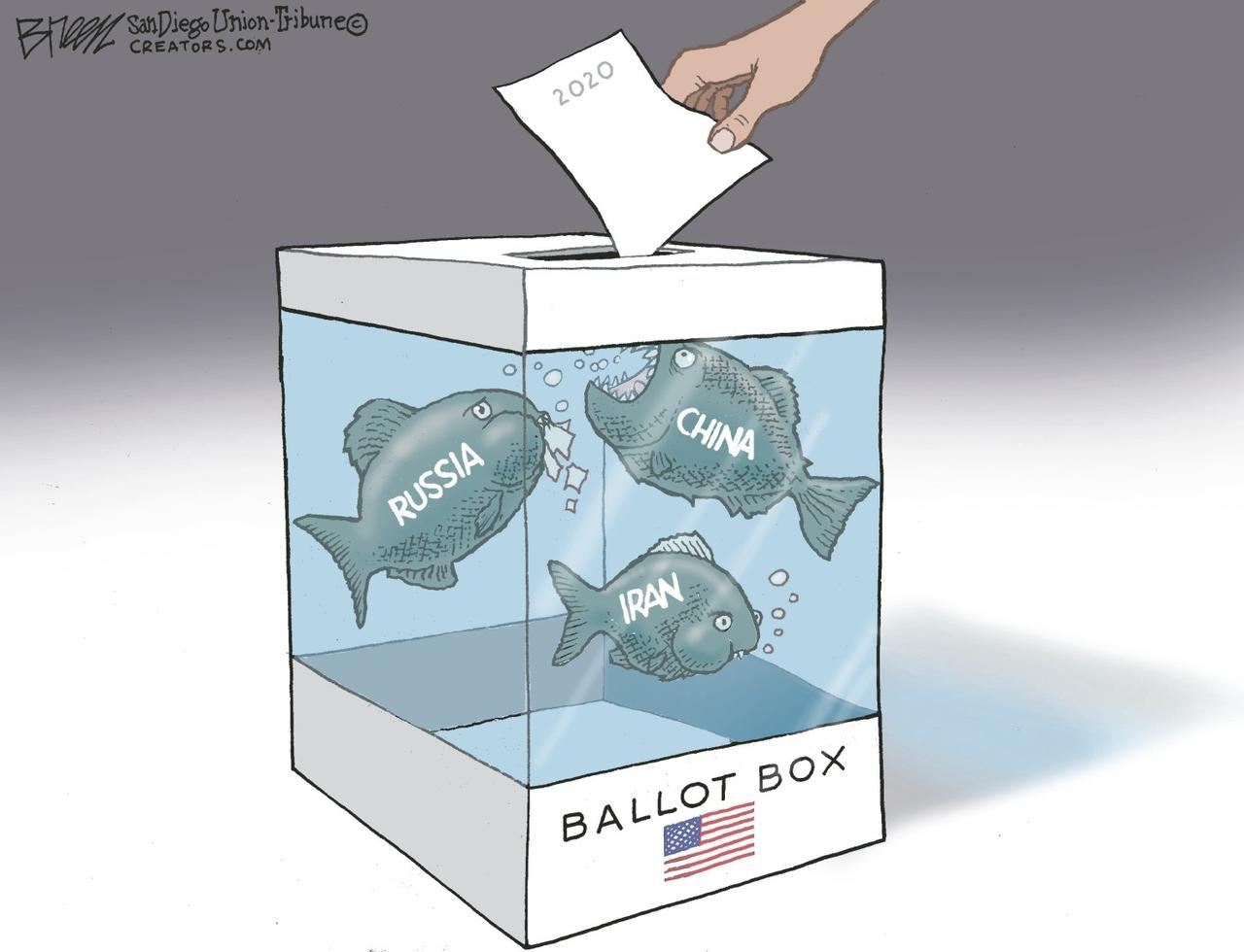
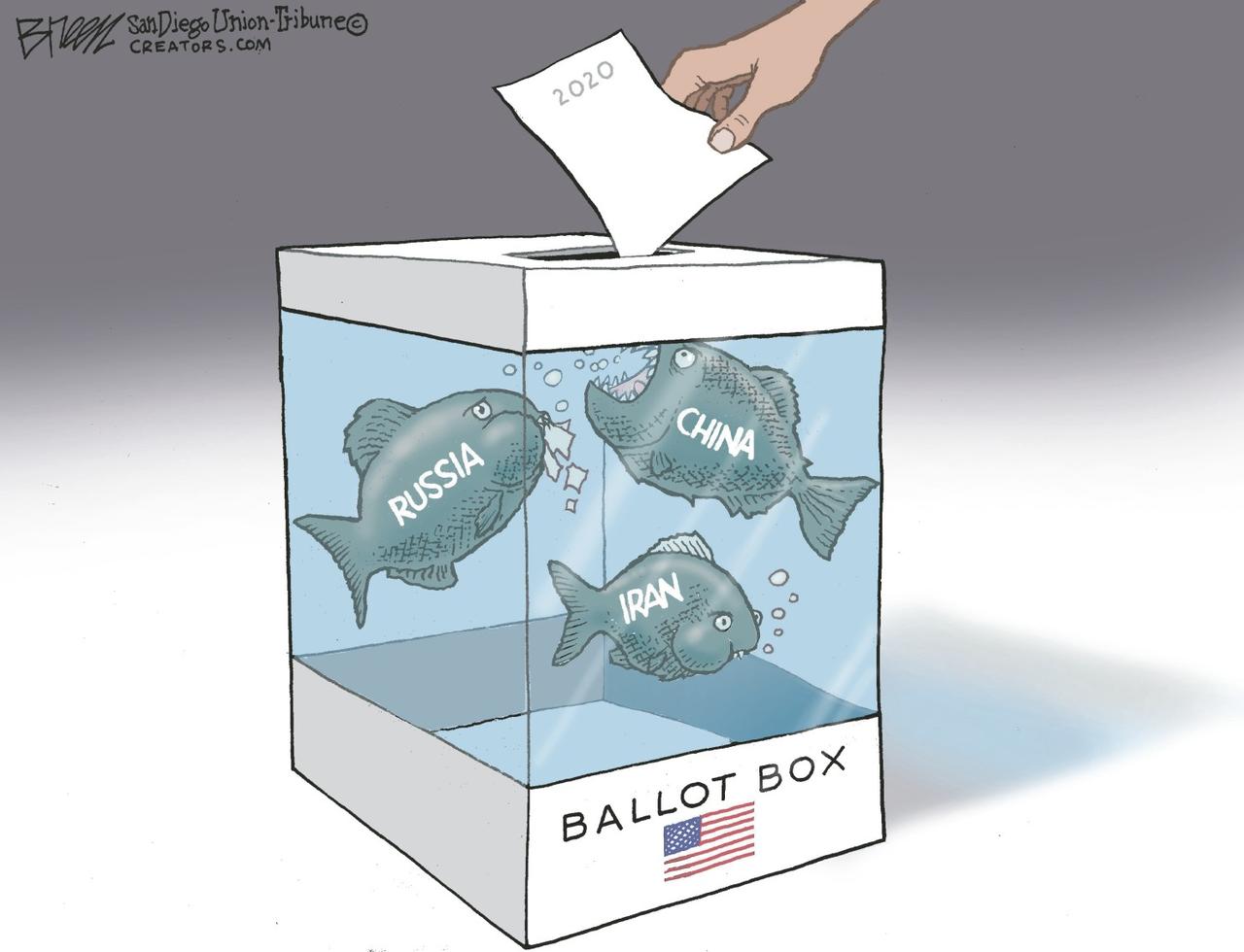
Twitter claims that it has suspended 130 Iranian accounts for “attempting to disrupt the public conversation” during the US presidential debate.

“Based on intel provided by the FBI, last night we removed approximately 130 accounts that appeared to originate in Iran,” a thread by the Twitter Safety account reads. “They were attempting to disrupt the public conversation during the first 2020 US Presidential Debate. We identified these accounts quickly, removed them from Twitter, and shared full details with our peers, as standard. They had very low engagement and did not make an impact on the public conversation. Our capacity and speed continue to grow, and we’ll remain vigilant.”

Based on intel provided by the @FBI, last night we removed approximately 130 accounts that appeared to originate in Iran. They were attempting to disrupt the public conversation during the first 2020 US Presidential Debate. — Twitter Safety (@TwitterSafety) October 1, 2020

This evidence-free claim aligns with the narrative popularized by the Russiagate conspiracy theory that foreign governments seek to “sow discord” in the United States by amplifying controversial political opinions from both sides of mainstream US discourse, and it is idiotic for a number of reasons.

Firstly, anyone who watched America’s trainwreck of a first presidential debate knows the argument that a few social media accounts could make the US political conversation any more polarized, hostile and toxic than mainstream news outlets and elected officials have already made it is like saying a tsunami was exacerbated by someone throwing a thimble full of water in the ocean.

The much-touted Russian social media election interference in 2016 was shown to be a joke, consisting of a few thousand dollars going toward silly memes and posts amplifying both sides of the political conversation, and much of it happening after the election itself. The few sample tweets provided by Twitter in this latest so-called attempt to disrupt the public conversation from Iran are vastly less significant than even that, saying nothing particularly noteworthy and bizarrely appearing to side with Trump.

The idea that any of this could have any effect worth mentioning on the gibbering vortex of irrational vitriol that is American political discourse makes no sense whatsoever, and again Twitter itself admits that it “did not make an impact on the public conversation”. Twitter’s response is a melodramatic swinging at shadows which did nothing but help manufacture the US State Department-friendly narrative that Iran is working to interfere in American democracy.

Iran hawks want to pretend that regime collapse is just one sanction away – yet it is Iran’s civilian population that is the target and would absorb the pain of new, callous US sanctions that have been proposed: https://t.co/zim6HzD37m — Ryan Costello (@RyeCostello) September 29, 2020

Secondly, the entire premise is bogus because other nations have every right to influence US political discourse. The US uses its military and economic might to bully and manipulate the world into compliance with its agendas; this by itself is an outrage, and at the very least people around the world should be allowed to exert influence on the political conversation of people who, unlike themselves, are able to cast votes which influence the US government. Anyone in any nation on earth is well within their sovereign boundaries to influence the political discourse of a nation whose government does not honor the national sovereignty of any other nation.

This is especially true of nations like Iran, because it is no exaggeration to say that US politics affect Iranians more than they affect Americans. The lives of Americans have been impacted by the Trump administration far less than the people of Iran, for example, as more starvation sanctions are being pushed while crucial goods are already skyrocketing in price, sick Iranians are having difficulty obtaining life-saving medicine, and life in general has been getting much more difficult for the poorest and frailest Iranian civilians.

When Trump nearly started a war with Iran earlier this year, Americans worried about the price of oil while Iranians worried about their children getting ripped apart by explosives dropped from the sky. These things are not equal, and it’s not even close.

To claim that Iranians — or even the Iranian government — should not be allowed to exert any influence over how people are talking about the government that did this is absurd. Such a viewpoint only looks acceptable through the American supremacist worldview which sees Americans as better, more worthy, and more important than the people who live in other nations.

“Heshmat Alavi” is itself known to be a fake Twitter account for a fictional persona that has for years been used to influence US political discourse (https://t.co/uhEXXFjXVY), but its influence promotes anti-Iran narratives so @Twitter has no problem with it. https://t.co/bmMibdR3Yz — Caitlin Johnstone ⏳ (@caitoz) October 1, 2020

Thirdly, it is not legitimate for monopolistic tech corporations to align themselves with the US government and then censor speech in a way which always benefits that government. These mass social media purges consistently target accounts from nations which have resisted absorption into the US-centralized power alliance, while known troll operations like the fake “Heshmat Alavi” Twitter account from the MEK terror cult are left free to influence US political discourse because its anti-Tehran focus aligns with the US government.

When you’ve got monopolistic tech giants aligning with government agencies like the FBI to implement censorship which aligns with the US government, what you have is government censorship. There is nothing else you could reasonably call it. We learned back in August that Twitter, Facebook, Google and other massively influential platforms are collaborating with the US government to prevent foreign influence in the lead-up to the US election, and there’s no reason to believe this corporate-state relationship will get any less cozy after November third.

In a corporatist system of government, where corporate power is inseparably intertwined with state power, corporate censorship is state censorship. Every horrible thing the US government accuses other nations of doing is something it itself does as a matter of routine. Increasingly authoritarian control over information and communication is just one more example of this.

*  *  *

Thanks for reading! The best way to get around the internet censors and make sure you see the stuff I publish is to subscribe to the mailing list for at my website or on Substack, which will get you an email notification for everything I publish. My work is entirely reader-supported, so if you enjoyed this piece please consider sharing it around, liking me on Facebook, following my antics on Twitter, throwing some money into my tip jar on Patreon or Paypal, purchasing some of my sweet merchandise, buying my books Rogue Nation: Psychonautical Adventures With Caitlin Johnstone and Woke: A Field Guide for Utopia Preppers. For more info on who I am, where I stand, and what I’m trying to do with this platform, click here. Everyone, racist platforms excluded, has my permission to republish, use or translate any part of this work (or anything else I’ve written) in any way they like free of charge.

Be seeing you

Posted in Uncategorized | Tagged: , , , | Leave a Comment »

EconomicPolicyJournal.com: New Medication Given Trump Appears to be For Patients Who Have “Not Mounted Their Own Effective Immune Response”

Posted by M. C. on October 4, 2020

Mask people- Vitamin D and zinc. How much do you take daily?

https://www.economicpolicyjournal.com/2020/10/new-medication-given-trump-appears-to.html

President Trump’s White House physician, Navy Commander Dr. Sean Conley, reports that Trump is being treated with a Regeneron monoclonal antibody cocktail and has been taking zinc, vitamin D, famotidine, melatonin and a daily aspirin.

Just this Tuesday,  George D. Yancopoulos, M.D., Ph.D., President and Chief Scientific Officer of Regeneron Pharmaceuticals, Inc. stated about the still in test phase new monoclonal antibody cocktail:

After months of incredibly hard work by our talented team, we are extremely gratified to see that Regeneron’s antibody cocktail REGN-COV2 rapidly reduced viral load and associated symptoms in infected COVID-19 patients. The greatest treatment benefit was in patients who had not mounted their own effective immune response, suggesting that REGN-COV2 could provide a therapeutic substitute for the naturally-occurring immune response. These patients were less likely to clear the virus on their own, and were at greater risk for prolonged symptoms. We are highly encouraged by the robust and consistent nature of these initial data, as well as the emerging well-tolerated safety profile, and we have begun discussing our findings with regulatory authorities while continuing our ongoing trials. .

There were 275 individuals enrolled in the test and no unexpected safety findings have been reported by the Independent Data Monitoring Committee. –RW
UPDATE 1
Dr. Yancopoulos reports that Trump was given “the larger dose” of REGN-COV2.

Be seeing you

Posted in Uncategorized | Tagged: , , | Leave a Comment »

What ‘Experts’ Miss About Economic Inequality | The Libertarian Institute

Posted by M. C. on October 4, 2020

Of course, that’s not what we have. But instead of advocating for a more free economy to address inequality, the “experts” consulted by USA Today advocate for more state interference that would likely make inequality worse, while ignoring perhaps the largest source of inequality, the Federal Reserve.

https://libertarianinstitute.org/articles/what-experts-miss-about-economic-inequality/

by Bradley Thomas

How can the U.S. reduce economic inequality?

That’s a question USA Today posed to three “policy experts on the left and the right” in this recent article. The responses, while unsurprising, were nevertheless disappointing.

For libertarians, economic inequality itself is not problematic, as long as it is in the context of an unfettered market economy free of government privileges and interference.

Of course, that’s not what we have. But instead of advocating for a more free economy to address inequality, the “experts” consulted by USA Today advocate for more state interference that would likely make inequality worse, while ignoring perhaps the largest source of inequality, the Federal Reserve.

First up is Scott Winship of the American Enterprise Institute, who focuses on income mobility. Winship points out that if every child had equal economic opportunity, then we would see an equal percentage among races of children remaining in the bottom fifth of income when they become adults.

Winship notes that roughly 30% of white children remain in the bottom fifth in adulthood, while the percent for black children exceeds 50%.

Absent from Winship’s observation, however, is the recognition of why this might be the case.

According to Pew Research, 30% of single mothers and their families are living in poverty compared to 8% of married couples and families. In other words, children are nearly four times as likely to be living in poverty in a single mother household compared to a household headed by a married couple. Meanwhile, 58% of black children are living with an unmarried parent, compared to 24% of white children and just 13% of Asian children.

Moreover, the welfare state has facilitated a dramatic rise in single-parent homes. Nationally, since LBJ’s Great Society ratcheted up government welfare programs in the mid-1960s, the rate of unmarried births has tripled.

Single parenthood fueled by the welfare state is an outsized source of inequality, but the welfare state escapes any blame by the “expert” Winship.

To his credit, Winship in his recommendations mentions in passing that “shoring up marriage where it has become an anomaly” would help reduce inequality, but fails to target the welfare state as the major culprit.

His other recommendations include the vague notion of “expanding access to high opportunity neighborhoods,” perhaps a nod to government programs to inject affordable housing projects in middle class suburbs, along with increased government spending on early childhood programs. Encouraging more state involvement in child rearing while ignoring the glaring problem of single parenthood caused in large part by the welfare state sounds like a recipe to exacerbate inequality, not combat it.

Next up is American Compass research director Wells King, who blames growing economic inequality on the fact that the “labor movement has lost power.”

King overlooks basic economic analysis while giving labor unions undeserving credit for boosting worker wages on a broad scale. As Henry Hazlitt wrote, “the blunt truth is that labor unions cannot raise the real wages of all workers.”

As Hazlitt explained, “whenever the unions gain higher wage rates for their own members than free competition would have brought, they can do this only by increasing unemployment,” in that industry, because the above market wage rates decrease employer demand.

As a result, more workers are forced to compete for other nonunionized jobs, and the increased supply of workers in other industries drives down those wages. Therefore, Hazlitt concludes, “All union ‘gains’ (i.e., wage rates above what a competitive free market would have brought) are at the expense of lower wages than otherwise for at least some if not most nonunion workers. The unions cannot raise the average level of real wages; they can at best distort it.”

As Hazlitt explained, King’s calls for a more robust union movement as a means to reduce economic inequality are ill-founded.

Moreover, King’s blinkered focus on unions as being a force for growing worker wages blinds him to a far more potent force driving inequality.

“The steady erosion of unions over the past 50 years has been responsible” for growing inequality, King insists while noting a correlation between declining union membership and growing wealth inequality during that time.

But what else happened fifty years ago that might influence wealth inequality?

Of course it was Nixon’s severing the final ties of the dollar to gold in 1971, which has enabled the Federal Reserve to create fiat money completely unchecked.

As demonstrated in multiple charts at the website WTFhappenedin1971, there is a clear divergence in incomes between high and low earners beginning sharply in 1971.

According to this 2018 Mises.org article, the base (M1) money supply ballooned by an incredible 17 times, with more than $3.2 trillion being created from 1971 to 2018. And it’s only getting worse, with another 33% increase in the first 7 months of 2020 alone.

Why does Fed money printing increase economic inequality?

In short, the rich receive a significant share of their income from investments, while the middle class primarily relies on their income from labor, and the poor a combination of labor income and government welfare payments.

When the Fed creates new fiat money out of thin air, it isn’t distributed evenly throughout the economy. Instead, it is inserted at specific points, typically via credit to business investors. As the Fed inflates a bubble, speculation with the new money also increases—which inflates the stock market, benefitting the investor class.

Meanwhile, the fiat money creation creates price inflation that permeates over time throughout the economy. Some of the more highly skilled in the middle class may receive salary increases to keep up with the inflation, while many of the lower-skilled middle class will struggle to keep up with rising prices.

Meanwhile, the poor, who lack the bargaining power to raise their wages to keep pace with inflation, and otherwise rely on relatively fixed incomes, fall further behind.

The failure of King to recognize the Fed’s major role in growing inequality undercuts any credibility his recommendations should be given.

Lastly is Economic Policy Institute research director Josh Bevins who incredibly calls for more money printing to help reduce economic inequality.

“Policymakers should re-target genuine full employment (the Fed is making good steps in this direction)” Bevins implores. How this supposed “expert” believes more asset bubble inflating money creation will reduce economic inequality goes without explanation.

Bevins further calls for a “substantially increased” federal minimum wage, without acknowledging that pricing low-skilled workers out of the workforce and eliminating their first rung on the career ladder will reduce the ability for low-income people to increase their earning power and narrow economic inequality.

More generous unemployment benefits is another of Bevins’ recommendations. But increasing the incentive to not work will result in more people, especially those already on the margins of employment, staying out of the workforce for longer periods of time—a great recipe to stymie the steady career track needed to climb out of low-income status.

How disappointing that a national publication like USA Today can do no better than “experts” who recommend government interventions that would end up increasing, rather than shrinking, economic inequality.

Bradley Thomas is creator of the website Erasethestate.com and author of the book “Tweeting Liberty: Libertarian Tweets to Smash Statists and Socialists.” He is a libertarian activist who enjoys researching and writing on the freedom philosophy and Austrian economics. Follow him on twitter @erasestate.

Be seeing you

Posted in Uncategorized | Tagged: , , , , | Leave a Comment »

A Simple Way to Tell if Something Is Truly a Right – Foundation for Economic Education

Posted by M. C. on October 4, 2020

Answer: In the case of the first list, nothing is required of other people except that they leave you alone. For you to have a right to something in the second list, however, requires that other people be compelled to provide that something to you. That’s a monumental difference!

https://fee.org/articles/rights-and-non-rights-a-simple-way-to-distinguish-the-two/

Lawrence W. Reed
Lawrence W. Reed

“That all men are by nature equally free and independent, and have certain inherent rights, of which, when they enter into a state of society, they cannot, by any compact, deprive or divest their posterity; namely, the enjoyment of life and liberty, with the means of acquiring and possessing property, and pursuing and obtaining happiness and safety.”

George Mason, in the Virginia Declaration of Rights (1776)

“Rights” are in the news these days perhaps as much as they were in George Mason’s time. As a score of politicians prepares to announce their 2020 campaigns for President of the United States, we can expect “rights” to be in the news every day, as they are promised to us one after another. “You have a right” to this or that and “If elected, I’ll make sure you get it” will soon be monotonous refrains.

America is a nation founded on the notion of rights. Our independence was declared in 1776 on a foundation of “unalienable” rights granted to us not by mortal authorities but by the Creator himself. Our ancestors rebelled against the British because they believed that such rights as “life, liberty and the pursuit of happiness” were being thwarted by oppressors in London. Our founding documents were put forth specifically for the purposes of securing and protecting rights. Battles both intellectual and physical were fought in the ensuing decades to ensure that rights remained a priority of government or were extended to people not originally included.

So this business of rights is indistinguishable from the American experience; indeed, it is at the very core of that experience. Remove rights from the equation, and America is just one of countless countries—past and present—in which individuals possess nothing more than what those in power decide to give them or allow them to have.

Despite the centrality of rights in American history, it’s readily apparent today that Americans are of widely different views on what a right is, how many we have, where rights come from, or why we have any in the first place.

Does a document create rights, or do such paper instruments simply acknowledge rights that people inherently possess?

Is a right the same thing as a wish? Why or why not? Or if you need something, does that mean you have a right to it? If I require a kidney, do I have a right to one of yours? Is a right something that can or should be granted or denied by majority vote? Does a document such as the Constitution or an executive order or a law of Congress create rights, or do such paper instruments simply acknowledge rights (by either defending or eroding them) that people inherently possess?

If you walked down Main Street America today and asked random citizens these very questions, I’ll bet you’d hear a plethora of different and conflicting answers. Read over those questions again and think about how you would respond.

This essay doesn’t provide all the answers, nor does it raise all the relevant questions. Its purpose is more limited than that. If it prompts the reader to think of rights in a deeper, more thoughtful way than heretofore and then contribute to the public discourse on the subject in a meaningful way, then it’ll achieve my purposes. I’ll even include a recommended reading list at the end.

I’ve given this subject some thought over the years and feel confident in providing the reader with a couple of lists to consider. The first one itemizes what I personally think you have a right to; the second is a partial roster of things I personally think you don’t have a right to (and I readily grant that you have every right to disagree with me).

  1. Your life (unless compromised by taking or attempting to take that of another person without a self-defense justification);
  2. Your thoughts;
  3. Your speech (which is really a verbal or written expression of #2) so long as you don’t steal it from another without permission or credit;
  4. Material property you were freely given, that you created yourself, or that you freely traded for;
  5. Raise and educate your children as you see fit;
  6. Live in peace and freedom so long as you do not threaten the peace and freedom of others.
  1. High-speed broadband Internet access;
  2. Cheeseburgers, cheap wine (or even expensive wine, for that matter), or an iPhone;
  3. Somebody else’s house, car, boat, income, business, or bank account;
  4. The labor of another person you’ve not freely contracted with (you can’t enslave somebody, in other words);
  5. Medical care from a witch doctor or a skilled surgeon or anybody in between;
  6. Taxpayer-funded (i.e., coercively-appropriated) child daycare, college education, contraceptives, colonoscopies, or sports stadiums;
  7. Anything that’s not yours, even though you really want it and think you’re entitled to it;
  8. Conscript other people’s children into schools you think they should attend;
  9. Free stuff in general, unless the rightful owner chooses to offer it;
  10. Anything a politician flattered you with by claiming you have a right to it.

Of course, gray areas and reasonable qualifications exist. For example, while I believe you do have a right to raise and educate your own children as you see fit, abuse and neglect are not defensible. But let’s keep our eyes on the big picture, the broad principles here.

Now, look at those two lists again, carefully. How does the nature of the first list contrast with the nature of the second?

Answer: In the case of the first list, nothing is required of other people except that they leave you alone. For you to have a right to something in the second list, however, requires that other people be compelled to provide that something to you. That’s a monumental difference!

The first list comprises what are often called both “natural rights” and “negative rights”—natural because they derive from our essential nature as unique, sensate individuals and negative because they don’t impose obligations on others beyond a commitment to not violate them. The items in the second are called “positive rights” because others must give them to you or be coerced into doing so if they decline.

The late Tibor Machan, who wrote many articles for FEE in the 1970s and 1980s, elaborated on this distinction in “The Perils of Positive Rights”:

d12e9117613a1599144490-donate-thankyou-landscape.png

Posted in Uncategorized | Tagged: , , , | Leave a Comment »

The Pentagon Took Money for Covid-19 Relief and Bought… More Weapons – Antiwar.com Original

Posted by M. C. on October 3, 2020

The military says that the “health” of the defense industry is crucial to national security. But the CARES Act money was specifically allocated to protect the health of the people of this country – not the companies that build weapons.

Burn pits, agent orange and sacking a carrier captain for putting the health of his crew over government PR should tell you what the pentagram thinks of soldiers health.

https://original.antiwar.com/?p=2012341064

by Phyllis Bennis

As the pandemic continues to claim lives across the country, new information keeps coming out about how the Trump administration has made it harder for Americans to protect themselves.

We now know, for example, that early in the pandemic the U.S. Postal Service had planned to deliver five face masks to every US household. It could have made mask-wearing a lot more common a lot earlier – and maybe saved a lot of lives. But the White House scrapped the idea.

Now we also know that the Trump administration took $1 billion in stimulus funds that were supposed to go towards making masks and other protective equipment for the pandemic – and gave most of it to weapons manufacturers.

Those funds were part of $10.6 billion in CARES Act money allocated to the Pentagon – a staggering sum, especially since the bloated military budget already claims 53 cents of every discretionary federal dollar available to Congress.

The Pentagon’s CARES money was supposed to help military employees and military families survive the pandemic.

The $1 billion in question was granted under a special law that lets the Pentagon require companies to manufacture urgently needed goods in case of a national emergency. This time, it was to make sure companies producing Personal Protective Equipment (PPE), like N-95 masks, ventilators, and more, were making all they could.

But most of that money didn’t go to making PPE at all. Trump’s defense department gave it to corporations that make jet engines, drone flight controllers, and dress uniforms for the military. Two-thirds of it was distributed in big contracts worth more than $5 million each.

The military says that the “health” of the defense industry is crucial to national security. But the CARES Act money was specifically allocated to protect the health of the people of this country – not the companies that build weapons.

This comes at a moment when US military spending is already near all-time highs – and when military contractors are doing better than lots of other companies.

“Major defense contractors such as Lockheed Martin, General Dynamics, and Northrop Grumman,” the Washington Post reports, “have remained financially healthy despite some pandemic-related disruption, and have continued to pay stock dividends to investors.”

Indeed, the CEOs of those companies rank among the highest paid corporate executives in the country. Last year General Dynamics’s CEO raked in $18 million, Northrup Grumman’s made $20 million, and Lockheed-Martin’s pulled in a whopping $31 million.

Still, many of those same military corporations paid out of the $1 billion Pentagon slush fund also applied for – and received – funds from the federal Paycheck Protection Program that Congress designated specifically to prevent COVID-related layoffs. These extra Pentagon grants came on top of that, except without any requirements to protect jobs. Those companies could take the money and still fire as many employees as they want.

An additional $1 billion would have made a huge difference in the fight against COVID-19. My colleagues created a federal budget calculator. It shows that $1 billion could have funded nearly 28 million COVID-19 tests or purchased over 294 million N-95 respirator masks.

What makes us safer in the pandemic – access to more testing and a lot more face masks, or helping military corporations and their CEOs make a killing on our tax money?

Add that to the canceled Postal Service plan to distribute hundreds of millions more masks, and the record keeps getting more appalling. Make no mistake: The Trump administration’s heartlessness and militarism are costing lives.

Phyllis Bennis directs the New Internationalism Project at the Institute for Policy Studies. She’s the author of Understanding ISIS and the New Global War on Terror: A Primer. Reprinted with permission from OtherWords.

Be seeing you

Posted in Uncategorized | Tagged: , , , , , , | Leave a Comment »