MCViewPoint

Opinion from a Libertarian ViewPoint

Archive for the ‘Uncategorized’ Category

Virginia’s Second Amendment Attack – LewRockwell

Posted by M. C. on December 26, 2019

“Resolved, That the several States composing the United States of America, are not united on the principle of unlimited submission to their General Government … and whensoever the General Government assumes undelegated powers, its acts are unauthoritative, void, and of no force.”

https://www.lewrockwell.com/2019/12/walter-e-williams/virginias-second-amendment-attack/

By

Virginia Governor Ralph Northam apologized for his medical school blackface stunt, but he will have much more to apologize for if he signs into law a bill that attacks Virginia citizens’ Second Amendment rights. The measure is Senate Bill 16, which would ban “assault” firearms and certain firearm magazines. Since Democrats have seized control of Virginia’s General Assembly, they are likely to push hard for strict gun control laws. Those laws will have zero impact on Virginia’s criminals and a heavy impact on Virginia’s law-abiding citizens who own, or intend to own, semi-automatic weapons for hunting or their protection. As a friend once explained to me, “I carry a gun because I can’t carry a cop.”

I am proud of my fellow Virginians’ response to the attack on their Second Amendment rights. Firearm owners in the state have joined with sheriffs to form Second Amendment sanctuary counties. That means local authorities will be required to protect Second Amendment rights in the face of any attempt by Virginia’s General Assembly to abrogate those rights. Eighty-six counties — over 90% — in the Virginia commonwealth have adopted Second Amendment sanctuary resolutions. Spotsylvania County’s board of supervisors voted unanimously to approve a resolution declaring that county police will not enforce state-level gun laws that violate Second Amendment rights.

Sheriff Chad Cubbage said, “Be it be known that the Page Sheriff hereby declares Page County, Virginia, as a ‘Second Amendment Sanctuary,’ and that the Page County Sheriff hereby declares its intent to oppose any infringement on the right of law-abiding citizens to keep and bear arms.” Culpeper County Sheriff Scott Jenkins made a vow during a board of supervisors meeting, where the board unanimously agreed to declare the county a Second Amendment constitutional county, to “properly screen and deputize thousands of our law-abiding citizens to protect their constitutional right to own firearms.”

In an attempt to appease citizen resistance, Northam suggested there would be a ban on only the sales of semi-automatic rifles. He would allow gun owners to keep their current AR-15s and similar rifles as long as they registered them. Otherwise, they must surrender the rifles. I’d urge Virginians not to fall for the registration trick. Knowing who owns what weapons is the first step to confiscation. Governor Northam further warned, “If we have constitutional laws on the books and law enforcement officers are not enforcing those laws on the books, then there are going to be consequences, but I’ll cross that bridge if and when we get to it.” Some Democratic lawmakers on Capitol Hill say that local police who do not enforce gun control laws should face prosecution and even threats of the use of the National Guard.

Virginians must heed the words and capture the spirit of their two most distinguished citizens, Thomas Jefferson and James Madison, who wrote the Kentucky and Virginia Resolutions. These resolutions referred to the federal government but are just as applicable to state governments in principle. They said: “Resolved, That the several States composing the United States of America, are not united on the principle of unlimited submission to their General Government … and whensoever the General Government assumes undelegated powers, its acts are unauthoritative, void, and of no force.”

Too many Americans view the Second Amendment as granting Americans the right to own firearms to go hunting and for self-protection. But the framers of our Constitution had no such intent in mind. James Madison, in Federalist Paper No. 46 wrote that the Constitution preserves “the advantage of being armed, which the Americans possess over the people of almost every other nation … (where) the governments are afraid to trust the people with arms.” Thomas Jefferson wrote: “What country can preserve its liberties if its rulers are not warned from time to time that their people preserve the spirit of resistance? Let them take arms.” Similar quotations about our founders’ desire for Americans to be armed against the possible abuses of government can be found here.

Be seeing you


Posted in Uncategorized | Tagged: , , , , , | Leave a Comment »

Social Media and Social Control: How Silicon Valley Serves the US State Department

Posted by M. C. on December 26, 2019

…he presents the media as a bottleneck through which information about the world beyond the perception of our senses must pass.

https://www.mintpressnews.com/social-media-control-how-silicon-valley-serves-us-state-department/263267/

By Morgan Artyukhina

Facebook’s Mark Zuckerberg is in the spotlight for “dining with far-right figures,” and their influence over the information that appears in your feed is apparent. However, Facebook isn’t the only Silicon Valley firm that’s masquerading as nonpartisan as it curates the “facts” you see in ads, posts, or searches: Google, Twitter, Microsoft, and others are deeply wedded to the U.S. security state and the billionaires it upholds.

Walter Lippmann’s groundbreaking 1922 study of the news media, “Public Opinion,” begins with a chapter titled, “The World Outside and the Pictures in our Heads,” in which he presents the media as a bottleneck through which information about the world beyond the perception of our senses must pass. Aside from the question of which stories get passed through that bottleneck, which information about an event that survives the crucible of condensation into an article, news bulletin or wire is determined by the biases of the writer and editor. In turn, control over that information bottleneck gives the controller incredible power to shape the consciousness of readers about “the world outside” – the “manufacturing of consent,” as Lippmann originally described it.

The depth of information about the world made available by the internet seems to remove the bottleneck about which Lippmann fretted — indeed, a generation of techie evangelists tried to present it in just such a manner — but the truth is that it only further obscured both the bottlenecks and the crucibles that distill information for our consumption.

The media giants that control our access to information, from search engines like Google to social media like Facebook, have turned themselves into portals to the world and present themselves as impartial in that role. However, behind a facade of separateness, strong connecting links bind the tech giants to the oligarchy and security state on which they rely, giving the interests of the elite determinative influence over which information we access.

This article will expose and discuss some of the many ways this shady web of influence and oversight operates.

The revolving door between these tech companies and intelligence agencies, think tanks, defense contractors and security companies is constantly revolving, especially at the higher echelons of important departments, like cybersecurity. Notably, many of these companies cater along partisan lines depending on the political proclivities of their owners, in a bid to tip the scales toward their point of view.

They have embraced this role as an information portal, offering special “news” sections on their platforms. They are rolling out new apps to judge the trustworthiness of news sources. Facebook and Google, in particular, have also become two of the largest funders of journalism around the world, helping to further entrench State Department-approved models of truth in key hotspots of geopolitical interest.

This cyberpunk dystopia isn’t a new perversion of a previously free internet, though – in fact, it is the internet’s raison d’être in the first place.

It’s astory so old, it goes back to the very origins of computing, as a tool for census counting in pursuit of racist immigration policies, and the internet, born of the Pentagon’s attempt to model whole societies for the purposes of improving counterinsurgency warfare in Southeast Asia.


Right hook

Read the rest of this entry »

Posted in Uncategorized | Tagged: , , , , , , , | Leave a Comment »

Merry Christmas!

Posted by M. C. on December 24, 2019

Posted in Uncategorized | Tagged: , | Leave a Comment »

Watch “Table Manners – Ultimate How-To Guide To Proper Dining Etiquette For Adults & Children” on YouTube

Posted by M. C. on December 24, 2019

You still have time…

Posted in Uncategorized | Tagged: | Leave a Comment »

Christmas in Flyover Land – Kunstler

Posted by M. C. on December 24, 2019

It’s as if the entire world of aesthetics had died in the canebrakes of the Solomon Islands in 1944, and afterward nobody realized that something in America had gone missing. It’s particularly dismaying when you see the efforts that earlier generations made to instill some beauty in the things they built, with a few examples still standing for all to wonder at and dote on.

https://kunstler.com/clusterfuck-nation/christmas-in-flyover-land/#more-11480′

James Howard Kunstler

Last year, a local guy started renovating a restaurant on Main Street that has been shuttered for at least fifteen years. He’d retired from the army and started a company that made a fortune clearing landmines in faraway lands where US nation-building plans went awry. Wasn’t that a ripe business opportunity! He’s from here and loves the village and married his high school sweetheart — and would like the place to come back to life.

He’s partnered up with another guy who intends to open a bistro with a bar, a fireplace, and supposedly a boutique distillery operation in the back. That would give some people in town a reason to leave the house at 5 o’clock in the afternoon, when the day’s work is done — people like me who work alone all day. It could also give the citizens of this community a comfortable place to talk to each other about their lives and the place where we all live, and what we might do about things here. That’s called local politics.

I’ll refrain from tossing off judgments about the exterior treatment for now. Draw your own conclusions. I haven’t seen the inside and there’s butcher paper taped up on the windows while they finish in there. It looks like they’ll open early in the new year. There hasn’t been a comfortable public gathering place on Main Street in a long time. There’s a “tasting room” at a local small brewery down the block, but it’s hardly bigger than a couple of broom-closets and the New York Liquor Authority has an asinine regulation that literally forbids comfortable seating in such a designated establishment. Stools only. And only a few of those. What kind of culture does that to itself? Read the rest of this entry »

Posted in Uncategorized | Tagged: , , , , | Leave a Comment »

Tragically Unlearned Lessons from World War I: the Christmas Truce of 1914 – LewRockwell

Posted by M. C. on December 24, 2019

https://www.lewrockwell.com/2019/12/gary-g-kohls/tragically-unlearned-lessons-from-world-war-i-the-christmas-truce-of-1914/

By

(When Christian frontline soldiers on both sides of No Man’s Land saw the obvious futility of war and just stopped the killing, thus disobeying orders from the out-of-touch Christian Generals and Christian Bishops to whom they had pledged obedience.)

“Good morning; Good morning,” the General said
When we met him last week on our way to the line.
Now the soldiers he smiled at are most of ‘em dead,
And we’re cursing his staff – (those) incompetent swine.”
– An excerpt from Siegfried Sassoon’s poem “The General”, commenting on the standard use of World War I frontline soldiers as “cannon fodder”

“…the ones who call the shots (in war) won’t be among the dead and lame,
And on each end of the rifle we’re the same” —
John McCutcheon
, from his powerful antiwar (and therefore censored-out) song “Christmas in the Trenches”

“The first casualty, when war comes, is truth”. — Hiram Johnson (1866-1945) – a Progressive Republican US Senator from California, who died on Aug. 6, 1945, the day the United States dropped an atomic bomb on Hiroshima.

In World War I, as happens to be true in most wars involving Christian soldiers, the Christian church leadership joined in the patriotic fervor with very un-Christ-like, nationalistic and racial/religious superiority stances.

Astonishingly, religious leaders on every side of the conflict truly believed that God was on their particular side.

And so the pulpits all over Europe, including British, Scottish, French, Belgian, German, Austrian, Hungarian, Russian and Italian churches reverberated with flag-waving fervor, with clear messages to their doomed warrior-sons that it was their God-given Christian duty to march off to kill the equally brain-washed young Christian soldier-enemies, who were also certain that God was on their side.

Five months into the miserable death and destruction of the perpetually dead-locked trench war (featuring the now-infamous mass slaughter via the recently developed new technology weapons involving artillery, machine guns and poison gas), the first Christmas of the war came around.

Christmas was the holiest of Christian holidays, but in this time of homesickness, the first one had special meaning. December 24, 1914 reminded the soldiers of the good food, the safe, warm and dry homes and the beloved families that they had left behind – and which they now suspected they would never see again.

The physically exhausted, spiritually deadened, combat-traumatized soldiers on both sides of No Man’s Land desperately sought some respite from the misery of the war, especially the water-logged, putrid, rat-infested, corpse-infested and increasingly frozen trenches.

The frontline soldiers on both sides were at the end of their emotional ropes because of the unrelenting artillery barrages against which they were defenseless. If they weren’t killed or maimed by the bombings, what would eventually destroy them was the “shell-shock” (now known as posttraumatic stress disorder – PTSD), that caused sleep deprivation, horrifying nightmares, depression, suicidal thinking, hyper-alertness and other mental and neurological distresses. Other common “killers” were the bad and insufficient food, lice, trench foot, frostbite and gangrenous toes and fingers.

Poison gas attacks were yet to come but the futile and suicidal “over the top” assaults against machine gun nests were deeply demoralizing. Such attacks were stupidly and repeatedly ordered by senior officers like Sir Douglas Haig, who didn’t have to participate in the assaults themselves.

Winston Churchill, in his British naval command role at the time, had obviously learned nothing from Haig’s disastrous tactic when, a year later, he also ordered repeated suicidal charges against machine gun fire at the infamous massacre of Australian and New Zealand troops at Turkey’s Gallipoli peninsula, a blunder for which Churchill resigned his Admiralty commission in disgrace.

The day-to-day horrors of trench warfare were punctuated by the screams of pain coming from the wounded soldiers in No Man’s Land who were helplessly hanging on the barbed wire or lying in the bomb craters – their deaths often lingering on for days.

The effect on the troops in the trenches who had to listen to the desperate pleas for help was psychologically devastating. The morale of the troops on both sides of No Man’s Land had hit rock bottom by Christmas.

<<<Christmas in the Trenches>>> Read the rest of this entry »

Posted in Uncategorized | Leave a Comment »

The Rutherford Institute :: War Is Over If You Want It: Pointers for Spreading Some Christmas Cheer | By John W. Whitehead |

Posted by M. C. on December 24, 2019

https://www.rutherford.org/publications_resources/john_whiteheads_commentary/war_is_over_if_you_want_it_pointers_for_spreading_some_christmas_cheer

By John W. Whitehead

“And so this is Christmas
And what have we done
Another year over
A new one just begun.
And so happy Christmas
We hope you have fun
The near and the dear one
The old and the young.
A very Merry Christmas
And a happy new year
Let’s hope it’s a good one
Without any fear.
War is over, if you want it
War is over now.”

― John Lennon & Yoko Ono, Happy Xmas (War Is Over)

What a year.

It feels as if government Grinches and corporate Scrooges have been working overtime to drain every last drop of joy, kindness and liberty from the world.

After endless months of gloom and doom, it’s hard not to feel like Charlie Brown in A Charlie Brown Christmas as he struggles to feel happy and find the true meaning of Christmas in the midst of rampant commercialism, political correctness and the casual cruelty of an apathetic, self-absorbed, dog-eat-dog world.

Then again, isn’t that struggle to overcome the darkness and find the light within exactly what Christmas—the celebration of a baby born in a manger—is all about? The reminder that we have not been forgotten or forsaken. Glad tidings in the midst of hard times. Goodwill to counter meanness. Innocence in the face of cynicism. Hope in the midst of despair. Comfort to soothe our fears. Peace as an answer to war. Love that conquers hate.

As “fellow-passengers to the grave,” we all have a moral duty to make this world (or at least our small corners of it) just a little bit kinder, a little less hostile and a lot more helpful to those in need.

No matter what one’s budget, religion, or political persuasion, there is no shortage of things we can each do right now to pay our blessings forward and recapture the true spirit of Christmas.

For starters, move beyond the “us” vs. “them” mentality. Tune into what’s happening in your family, in your community and your world, and get active. Show compassion to those in need, be kind to those around you, forgive those who have wronged you, and teach your children to do the same. Talk less, and listen more. Take less, and give more. Stop being a hater. Stop acting entitled and start being empowered. Learn tolerance in the true sense of the word. Value your family. Count your blessings. Share your blessings. Feed the hungry, shelter the homeless and comfort the lonely and broken-hearted. Bridge bridges, and tear down walls. Stand for freedom. Strive for peace.

One thing more: make time for joy and laughter. Shake off the blues with some Christmas tunes, whatever fits the bill for you, be it traditional carols, rollicking oldies, or some rocking new tunes. Watch a Christmas movie that reinforces your faith in humanity.

Here are ten of my favorite Christmas movies and music albums to get you started.

First the movies. Read the rest of this entry »

Posted in Uncategorized | Tagged: , , | Leave a Comment »

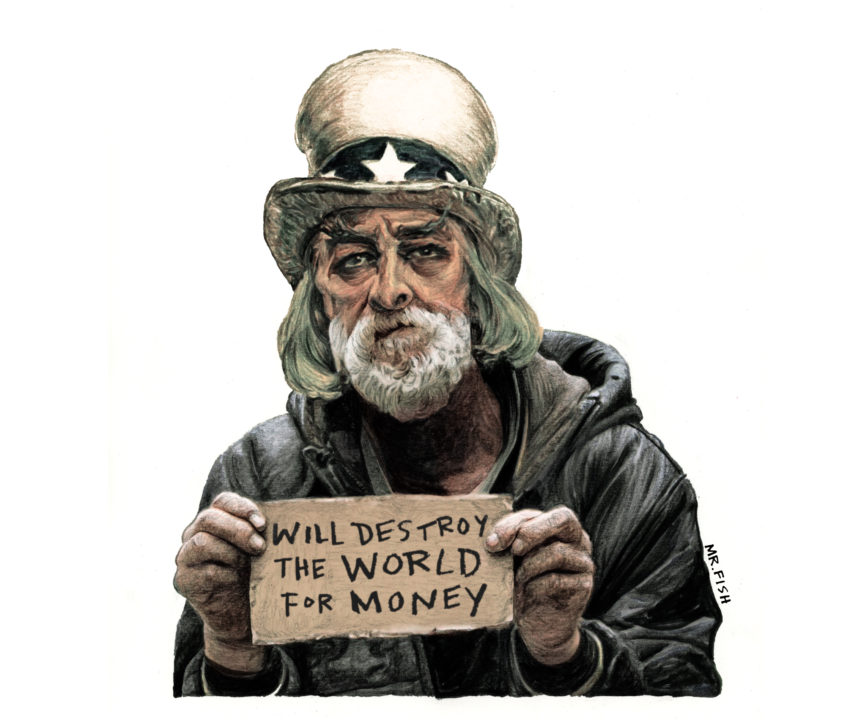
The Ron Paul Institute for Peace and Prosperity : How Congress and the Federal Reserve Stole Christmas

Posted by M. C. on December 24, 2019

Inflation is nothing more than a hidden and regressive tax. Auditing and ending the Fed should thus be a top priority of those concerned about rising income inequality and poverty, as well as those dreaming of a Christmas free of 2,000-page omnibus spending bills.

http://www.ronpaulinstitute.org/archives/featured-articles/2019/december/23/how-congress-and-the-federal-reserve-stole-christmas/

Written by Ron Paul

The bickering over impeachment did not stop the president and Congress from coming together last week to avert a government shutdown by passing a 1.4 trillion dollar spending package.

The bipartisan agreement has something for everyone — a 22 billion dollars increase to bring total spending on militarism to 738 billion dollars, and a 27 billion dollars increase to bring total spending on domestic programs to 632 billion dollars. It also imposes a national ban on selling tobacco products, including e-cigarettes, to anyone under 21.

The agreement was split into two bills. Both bills were unveiled last Monday afternoon. The bills passed the House on Tuesday, so only the House leadership and the members of the Appropriations Committee (and their staffs) who helped write the over 2,000-page deal had any idea what was in the bills. But most members voted for the spending bills because they were fearful of backlash over another Christmastime government shutdown. House leadership simply “waived” the rule requiring that all legislation be available at least three days before being voted upon.

The modern practice of funding the government via gigantic omnibus bills that are rushed into law puts the growth of government on autopilot. This practice also gives the president more influence over the budget, violating the spirit, if not the letter, of the Constitution’s grant of authority to Congress to appropriate funds, which was intended as a check on executive power.

Meanwhile, the Federal Reserve continues pumping billions into the repurchasing market. When the Fed began injecting money into the market in September, it said intervention was a temporary measure to address a short-term liquidity shortage. Three months later, the Fed is not only continuing to bail out the repurchasing market, it is preparing for other bailouts. This is further evidence that we are on the verge of another Fed-created economic crisis.

When the crisis hits, the best thing the Fed could do is not to lower interest rates below the levels set by the market. This would allow consumers, businesses, and government to liquidate their debt and restore a sound foundation for future growth. If the Fed did not interfere with the painful but necessary correction, it would only be a short time before a real economic boom commenced.

The Federal Reserve is unlikely to follow this path because of the short-term pain it would cause debt-ridden consumers and, more importantly, the pain it would cause politicians who would be forced to cut spending and/or raise taxes. But continuing to artificially lower interest rates will inevitably result in an economic crisis brought about by a rejection of the dollar’s world reserve currency status.

The Federal Reserve’s manipulation of interest rates depreciates the dollar’s value, enabling the growth of the welfare-warfare state while enriching the insiders who receive the new money before prices rise. The brunt of dollar depreciation is felt by middle- and working-class Americans whose paychecks do not keep up with the rising cost of living.

Inflation is nothing more than a hidden and regressive tax. Auditing and ending the Fed should thus be a top priority of those concerned about rising income inequality and poverty, as well as those dreaming of a Christmas free of 2,000-page omnibus spending bills.

Be seeing you

For-Money-Fish-1stOct2017-850x720.jpg


Posted in Uncategorized | Tagged: , , , , | Comments Off on The Ron Paul Institute for Peace and Prosperity : How Congress and the Federal Reserve Stole Christmas

Can God Speak to Us?

Posted by M. C. on December 24, 2019

http://fgfbooks.com/Sobran-Joe/2019/Sobran191223.html

A classic by Joe Sobran
Fitzgerald Griffin Foundation

Not to be outdone, Time assures us this week that “constantly evolving scholarship” casts doubt on the Gospel narratives. So what else is new? Scholarly attempts to diminish Christ through the “higher criticism” go way back. Thomas Jefferson simply edited all the miracles out of the New Testament and thought he’d produced Gospels that were fully factual.

Some more recent scholars, if that’s what they are, aren’t satisfied with getting rid of Jesus’ deeds; they also want to eliminate many of his words — the ones that don’t fit in with the Latest Thinking. It seems he wasn’t the Son of God, but a progressive-minded Unitarian.

Countless early Christians set off a huge chain reaction of martyrdom, converting even many of their torturers, who were immensely moved and impressed by this superhuman courage.

For some reason, Christ’s first disciples, the ones on the scene at the time, got it all wrong. He didn’t do all the things they thought they saw him doing, or say all the things they thought they heard him say. The truth isn’t to be found in the Scriptures, but in the inferences of modern experts, otherwise known as Constantly Evolving Scholarship.

But so certain were those disciples that countless early Christians bore witness to the truth of the Gospels by suffering the most excruciating martyrdoms imaginable. They set off a huge chain reaction of martyrdom, converting even many of their torturers, who were immensely moved and impressed by this superhuman courage.

Long before the printing press, the radio, movies, and television, the martyrs spread the good news of the risen Christ.

Even before the Gospels were written, the martyrs were God’s media, so to speak, for bringing men to Christ. Long before the printing press, the radio, movies, and television, the martyrs spread the good news of the risen Christ.

Some still reject that news, and one strategy of rejection is to water it down, mixing it with enough skepticism to make the Gospels seem archaic and alien. Once we reject the miracles because belief in the miraculous now seems “outdated,” it becomes easy to reject the message as outdated too. But G.K. Chesterton had the best answer to this: “Whatever else is true, it is emphatically not true that the ideas of Jesus of Nazareth were suitable to his time, but are no longer suitable to our time. Exactly how suitable they were to his time is perhaps suggested in the end of his story.”

Jesus remains the most hated as well as the best-loved man in human history. And as he predicted, his followers have been hated and persecuted too.

The resistance to his ideas, which got him crucified, has continued ever since. Jesus remains the most hated as well as the best-loved man in human history. And as he predicted, his followers have been hated and persecuted too.

Secularists use the mantra of “separation of church and state” as an excuse for keeping God’s word out of our public life. We are allowed to worship privately, but we mustn’t act collectively as if God has spoken to us. We are to act as agnostics, which means as virtual atheists.

Secularists use the mantra of “separation of church and state” as an excuse for keeping God’s word out of our public life. We are allowed to worship privately, but we mustn’t act collectively as if God has spoken to us.

There are two kinds of agnostics. One says modestly, “I don’t know.” The other says belligerently, “Nobody can know.” The first is understandable; nearly everyone has doubts at times. But the second is asserting a strange dogma.

To say that nobody can know whether God exists is to say something self-contradictory. God is by definition the omnipotent creator and ruler of the universe, the source of our being. It’s nonsense to say that this omnipotent being could exist without being able to communicate with his own creatures!

He does speak to us, and just as wonderfully, He listens to us — maybe a bit more keenly than we listen to Him, judging by the state of the world.

He can, he did, and he does. Plain atheism makes more sense than the arrogant agnostic’s “maybe, but we can never know,” which reduces God to a divine deaf-mute. He does speak to us, and just as wonderfully, he listens to us — maybe a bit more keenly than we listen to him, judging by the state of the world.

Are our souls open to Him, or are we tuning Him out?

The more modest sort of agnostic should ask not whether someone called “God” exists at all, but whether he has revealed himself to us, and whether we’ve been paying enough attention to hear him. Are our souls open to him, or are we tuning him out?

The deepest questions must be answered by each of us personally, not by scholars or even journalists. Our minds can save us from errors, but in the end only our hearts can recognize the Truth.

Be seeing you

Posted in Uncategorized | Tagged: , , , , | Leave a Comment »

Elizabeth Warren Shouldn’t Be So Proud that Her Big Plans Are Already “Paid For” | Mises Wire

Posted by M. C. on December 23, 2019

And ethically, paid-for-without-theft beats paid-for-by-political-predation. Over and over, Warren’s proposals reveal not superior ethics, but larger scale ethical violations. Such “paid for” predations remind me of Will Rogers’s quip, “I can remember way back when a liberal was generous with his own money.”

https://mises.org/wire/elizabeth-warren-shouldnt-be-so-proud-her-big-plans-are-already-paid?utm_source=Mises+Institute+Subscriptions&utm_campaign=7ba6707a8b-EMAIL_CAMPAIGN_9_21_2018_9_59_COPY_01&utm_medium=email&utm_term=0_8b52b2e1c0-7ba6707a8b-228343965

When Elizabeth Warren performs verbal, accounting, and economic distortions to claim that her cornucopia of government expansion plans will be paid for almost without any cost to anyone not tagged with the scarlet letter R (for Rich), she is following in President Obama’s footsteps. During his campaign, he derided John McCain’s tax and spending proposals for not adding up and claimed ethical superiority because his own plans were “fully paid for.” Of course, he then ramrodded through the largest unfunded government expansion in history.

Unfortunately, pushing allegedly “paid for” programs does not justify ethical preening. Even when the assertion is true, which is not even remotely possible in Warren’s case, since her plans’ central feature is taking large amounts from some to give to others, it violates universally accepted moral norms (e.g., “you shall not steal”), even if it identifies who will be victimized and the planned extent of the victimization.

It is true that in one sense, spending expansions that lay out how they would be financed are more honest than ones that don’t. Rather than leaving the question of who will bear the harm ambiguous (as with deficit spending), they reveal who will be forced to pay and how much. However, that does not make the imposition of financial harm — called robbery if done privately — ethical.

“Paid for” plans can be politically courageous, because they risk disadvantages that are avoidable with undefined funding. Notifying “mandated donors” can create more opposition than leaving the bearer of the burden vague. But Warren’s plans double down on Obama’s approach of minimizing that risk by going after those who can be demonized — corporations — or exploited through others’ envy — “the rich.”

“Paid for” plans, even if that description is accurate, to dispense benefits to political constituencies out of others’ pockets are only ethically superior to the extent that announcing the intended victims in advance makes theft less unethical. But slightly more forthcoming thieves are still thieves. Naming who will be plundered does not justify plunder. The ethical emphasis on “paid for” plans, which turn out not to be, merely contrasts the ethical high ground claimed with the ethical low ground actually pursued.

Warren’s plans, like Obama’s plans before her, are only “paid for” by way of heroically exaggerated assumptions. She cannot actually know what will happen under the yet-to-be-implemented plans, because she cannot anticipate all the responses to the many incentives that will change. Her hoped-for administration’s under-analyzed premises are frequently preposterous. And hyping plans as solutions, when one cannot actually know their effects, is also ethically questionable. That infirmity is amplified by the fact that by the time her proposals would be fully implemented, it might be all but impossible to undo the damage from misguided centralization.

Political posturing aside, whether a proposed expansion of government benefits for some is “paid for” is not the primary question. That question, made clear by the Preamble to the Constitution, is, will it advance Americans’ general welfare? When income redistribution is the primary result, that test cannot be met. Some citizens are intended to benefit by the imposition of harm on others, effectively buying their votes.

If Elizabeth Warren really believed that being “paid for” was the touchstone of successful policy, she would not be proposing to unprecedentedly balloon the scope of the federal government almost everywhere she turns. Further, she would not propose running roughshod over so many voluntary market arrangements for the simple reason that in the marketplace, absent fraud (whose prevention is a legitimate job that government routinely fails at, as recent experience amply demonstrates), benefits are actually “paid for.” No one can force harm on others when exchanges must be voluntary. All parties gain, which cannot be said of plans that intentionally take from their “targets” to give to those politically favored. And ethically, paid-for-without-theft beats paid-for-by-political-predation. Over and over, Warren’s proposals reveal not superior ethics, but larger scale ethical violations. Such “paid for” predations remind me of Will Rogers’s quip, “I can remember way back when a liberal was generous with his own money.”


Be seeing you

Faux

Identity Politics


Posted in Uncategorized | Tagged: , , , | Leave a Comment »