Nathan Congleton/NBCU Photo Bank/NBCUniversal via Getty Images via Getty Images
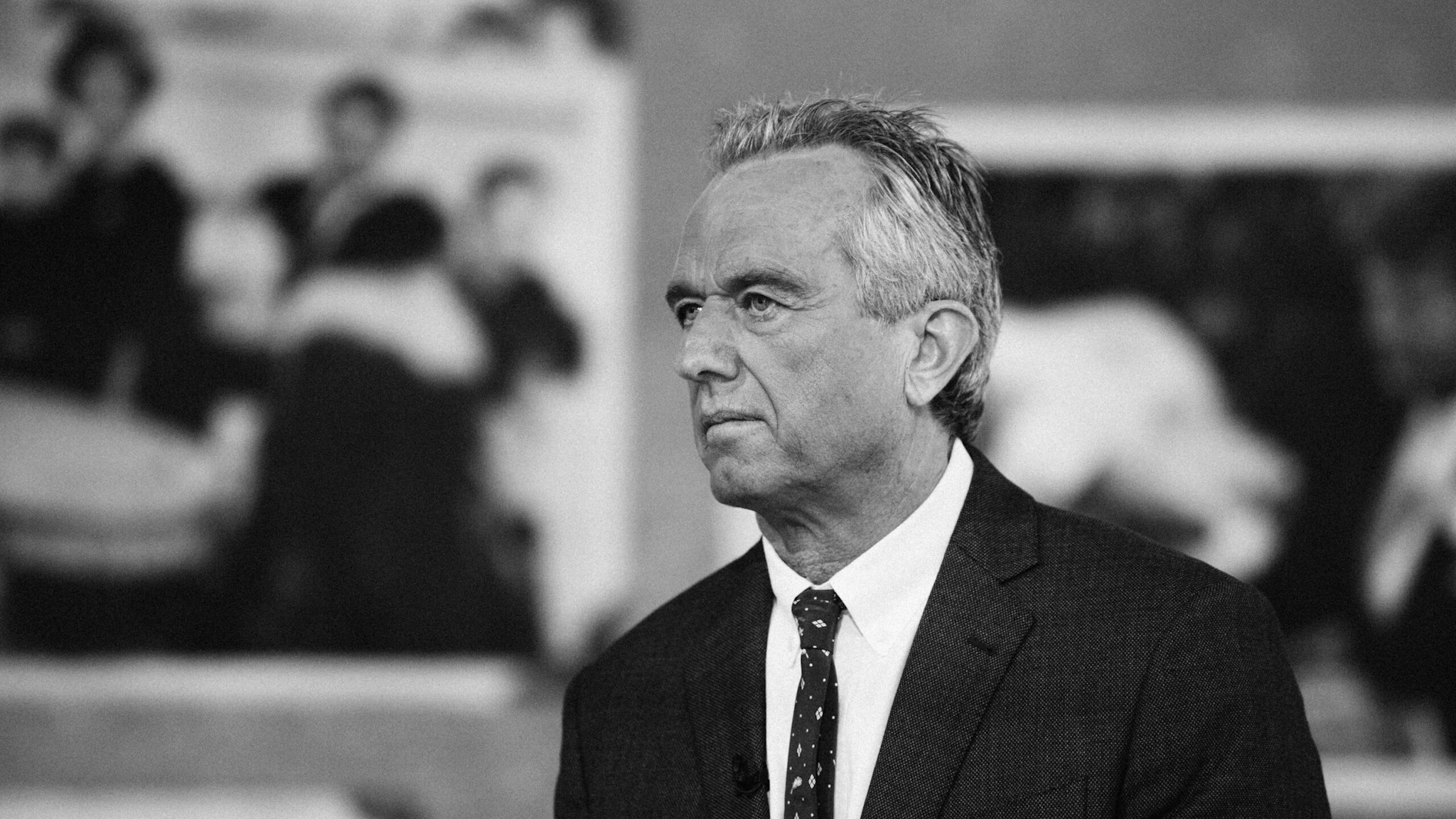
Robbert F. Kennedy Jr., the nephew of the late President John F. Kennedy, on Wednesday formally launched his 2024 Democratic presidential campaign, vowing to end the merger of state and corporate power.
Kennedy is the son of Robert F. Kennedy, a former U.S. attorney general and U.S. senator assassinated while running for president in 1968. Kennedy teased a 2024 campaign on Twitter last month, asking people to visit his website and contribute.
“I’ve come here today to announce my candidacy for Democratic nomination for president of the United States,” Kennedy said at the Park Plaza Hotel in downtown Boston, Massachusetts. “My mission over the next 18 months of this campaign, and throughout my presidency, will be to end the corrupt merger of state and corporate power that is threatening now to impose a new kind of corporate feudalism on our country.”
The Biden administration’s Department of Justice has just charged four members of the African People’s Socialist Party (APSP) for conspiring to act as agents of Russia by using speech and political action in ways the DOJ says “weaponized” the First Amendment rights of Americans.
Federal authorities charged four Americans on Tuesday with roles in a malign campaign pushing pro-Kremlin propaganda in Florida and Missouri — expanding a previous case that charged a Russian operative with running illegal influence agents within the United States.
The FBI signaled its interest in the alleged activities in a series of raids last summer, at which point authorities charged a Moscow man, Aleksandr Viktorovich Ionov, with working for years on behalf of Russian government officials to fund and direct fringe political groups in the United States. Among other things, Ionov allegedly advised the political campaigns of two unidentified candidates for public office in Florida.
Ionov’s influence efforts were allegedly directed and supervised by officers of the FSB, a Russian government intelligence service.
Now, authorities have added charges against four Americans who allegedly did Ionov’s bidding through groups including the African People’s Socialist Party and the Uhuru Movement in Florida, Black Hammer in Georgia, and an unidentified political group in California — part of an effort to influence American politics.
AFP reports that the conspiracy charges carry a sentence of up to ten years, with three of the four APSP members additionally charged with acting as unregistered agents of Russia which carries another five years.
“Russia’s foreign intelligence service allegedly weaponized our First Amendment rights – freedoms Russia denies its own citizens – to divide Americans and interfere in elections in the United States,” said Assistant Attorney General Matthew G. Olsen in the DOJ’s press release regarding the indictments, adding, “The department will not hesitate to expose and prosecute those who sow discord and corrupt U.S. elections in service of hostile foreign interests, regardless of whether the culprits are U.S. citizens or foreign individuals abroad.”
Looks like the United States has decided to dispense with those freedoms as well.
After decades of stewardship of the Middle East, during which the United States pursued the absurd policy of not talking to its enemies and creating and enforcing blocs to oppose and isolate those enemies, the predictable outcome occurred. The region was left with blocs and enemies who were not talking to each other. The result was horrid wars and the threat of even worse wars.
It has long been known that a key to opening those blocs and initiating diplomacy would be a negotiated peace between the heads of the two main rivals, Saudi Arabia and Iran. It has also long been known that the United States withheld that key. Unlocking the blocs is not in American interest. Hegemony in the region requires punishing and isolating countries that won’t follow you. That requires sanctions, threats of war, and isolation. Iran is such a country. So, the establishment and maintenance of a coalition against Iran is a key feature of U.S. policy in the region. At the heart of that coalition is Saudi Arabia, firmly in the U.S.-led anti-Iran camp.
But the emergence of China as diplomatic power has “blindsided” the United States and changed the diplomatic environment in the Middle East. China chose peace instead of sides and brought Saudi Arabia and Iran together for talks. Having the blocs talk to each other instead of enforcing their isolation shook the U.S. world order. On March 10, those talks resulted in an agreement between Saudi Arabia and Iran.
And the key to opening talks, ending wars, and bringing peace to the Middle East is already showing its promise. After years of region destabilizing enmity, Saudi Arabia and Iran signed “an agreement to resume diplomatic relations between them and re-open their embassies and missions within a period not exceeding two months.”
The agreement is showing signs of working. True to their word, on April 6 the foreign ministers of Saudi Arabia and Iran met in Beijing where they signed an agreement to reopen their embassies and consulates in each other’s countries. And Saudi King Salman bin Abdulaziz Al Saud has invited Iranian President Ebrahim Raisi for an official visit. Raisi has accepted the invitation and “stressed Iran’s readiness to expand co-operation.” The two countries have also agreed to hold a meeting of their foreign ministers. Peace is breaking out.
But the potential for peace is bleeding beyond the two countries.
The first to feel the effect of the change in environment was Syria. President Bashar al-Assad survived the war against Saudi-backed rebels in large part because of the support of his Iranian allies. Peace in Syria would also require peace between Saudi Arabia and Iran.
China’s facilitation of talks between Saudi Arabia and Iran opened the door for Russia to facilitate talks between Saudi Arabia and Syria. Within two weeks of the Saudi-Iran breakthrough, Saudi Arabia and Syria agreed to reopen their embassies.
The entire Arab world is ending its isolation of the Assad regime.
European farmers are furious over a bullshit plan by the European Union which would force then to be treated as industrial plants, similar to steel mills or chemical works, in order to force them to cut greenhouse gas emissions and other pollution, the Financial Times reports.
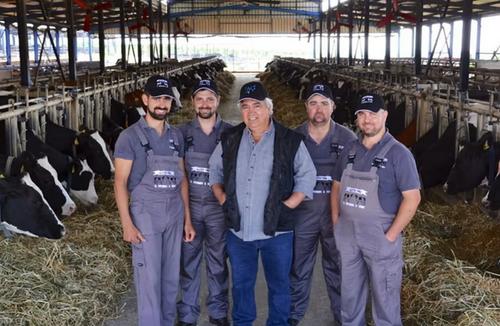
Greek farmer Takis Kazanas, 66, and his four sons run a 230-acre ranch with 300 cattle ranch in the mountains overlooking the Thessalian Plain. While the farmers already capture biogas from cow dung, and use homemade manure vs. chemical fertilizer, Kazanas is one of many farmers up in arms over environmentalist bureaucrats who want to impose crippling new rules on them in order to cut emissions by 55% by 2030 vs. 1990 levels.
Takis Kazanas with his four sons on their farm in northern Greece. Regulators in Brussels are discussing rules that will lead to farms like his being treated as industrial plants, akin to steel mills or chemical works
“That’s what the EU says and that’s what I do,” says Kazanas, regarding the ‘earth-friendly’ measures he already employs. “Today, everyone blames cattle for methane production and pollution . . . I have a different opinion.”
The sheer scale of the transformation that the European Commission is asking for in its Farm to Fork strategy — halving the amount of pesticides applied by 2030, cutting the use of fertilisers, doubling organic production and rewilding some farmland — would be remarkable even in less urgent times.
Yet it comes as the war in Ukraine has upended global food markets, and as farmers face a cut in subsidies in the Common Agricultural Policy, the €55bn-a-year programme that has underwritten Europe’s food security since 1962.
The EU argues that the agriculture sector is badly in need of environmental reforms. One senior EU official working on climate policy calls it “our problem child”. -FT
According to Brussels, nitrous oxides found in fertilizer, as well as animal urine and poop, are a large part of the problem.
Twitter CEO Elon Musk said during an interview Tuesday night that the government needs to have a plan to physically shut down the power grid in areas that house “heavy duty” artificial intelligence servers in case mankind ever lost control of the AI.
Musk told Fox News host Tucker Carlson that “really heavy duty intelligence” would be concentrated in only a limited number of areas on earth and that it’ll be so concentrated that they can be located from space using their heat signature.
“I’m not suggesting we go and blow up the service centers right now, but there may be some — it may be wise to have some sort of contingency plan where the government’s got an ability to shut down power to these service centers,” he said. “Like you don’t have to blow it up. You can just cut the power.”
When asked at what point it might be time to cut the power, Musk said if humans “lost control of some super AI, like for some reason, like the things that would normally work to do a passive shutdown, like the administrator passwords, if they somehow stop working where we can’t slow down or get out.”
Amid rampant corruption in Kiev and as US troops gather at the Ukrainian border, does the Biden administration have an endgame to the conflict?
What also is unknown is that Zelensky has been buying the fuel from Russia, the country with which it, and Washington, are at war, and the Ukrainian president and many in his entourage have been skimming untold millions from the American dollars earmarked for diesel fuel payments. One estimate by analysts from the Central Intelligence Agency put the embezzled funds at $400 million last year, at least;
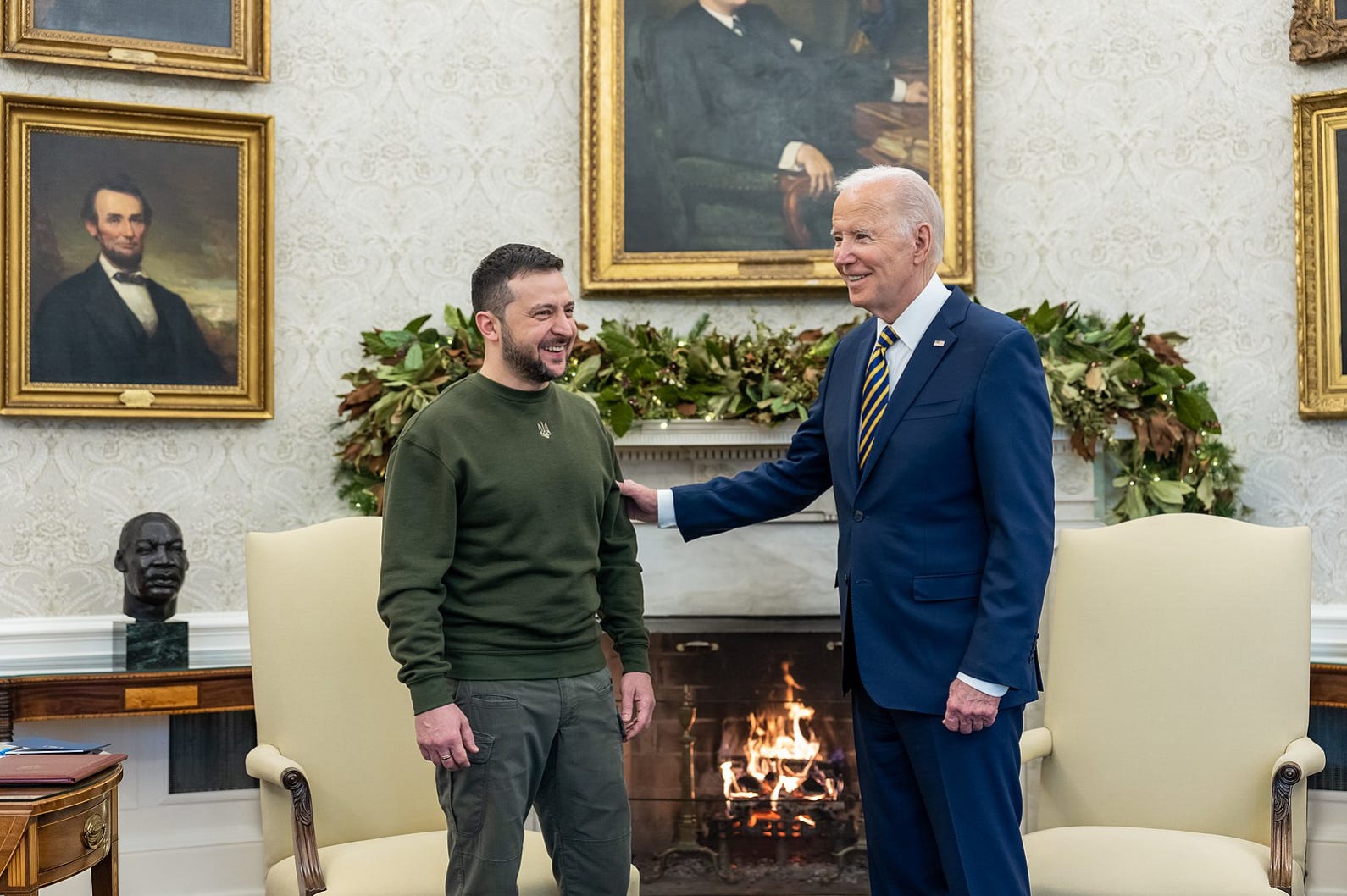
President Biden with Ukrainian President Volodymyr Zelensky, Wednesday, December 21, 2022, in the Oval Office. / Official White House photo.
The Ukraine government, headed by Volodymyr Zelensky, has been using American taxpayers’ funds to pay dearly for the vitally needed diesel fuel that is keeping the Ukrainian army on the move in its war with Russia. It is unknown how much the Zelensky government is paying per gallon for the fuel, but the Pentagon was paying as much as $400 per gallon to transport gasoline from a port in Pakistan, via truck or parachute, into Afghanistan during the decades-long American war there.
What also is unknown is that Zelensky has been buying the fuel from Russia, the country with which it, and Washington, are at war, and the Ukrainian president and many in his entourage have been skimming untold millions from the American dollars earmarked for diesel fuel payments. One estimate by analysts from the Central Intelligence Agency put the embezzled funds at $400 million last year, at least; another expert compared the level of corruption in Kiev as approaching that of the Afghan war, “although there will be no professional audit reports emerging from the Ukraine.”
“Zelensky’s been buying discount diesel from the Russians,” one knowledgeable American intelligence official told me. “And who’s paying for the gas and oil? We are. Putin and his oligarchs are making millions” on it.
Many government ministries in Kiev have been literally “competing,” I was told, to set up front companies for export contracts for weapons and ammunition with private arms dealers around the world, all of which provide kickbacks. Many of those companies are in Poland and Czechia, but others are thought to exist in the Persian Gulf and Israel. “I wouldn’t be surprised to learn that there are others in places like the Cayman Islands and Panama, and there are lots of Americans involved,” an American expert on international trade told me.
The issue of corruption was directly raised with Zelensky in a meeting last January in Kiev with CIA Director William Burns. His message to the Ukrainian president, I was told by an intelligence official with direct knowledge of the meeting, was out of a 1950s mob movie. The senior generals and government officialsin Kiev were angry at what they saw as Zelensky’s greed, so Burns told the Ukrainian president, because “he was taking a larger share of the skim money than was going to the generals.”
Burns also presented Zelensky with a list of thirty-five generals and senior officials whose corruption was known to the CIA and others in the American government. Zelensky responded to the American pressure ten days later by publicly dismissing ten of the most ostentatious officials on the list and doing little else. “The ten he got rid of were brazenly bragging about the money they had—driving around Kiev in their new Mercedes,” the intelligence official told me.
Hi n3epu@arrl.net
Keep reading with a 7-day free trial
Subscribe to Seymour Hersh to keep reading this post and get 7 days of free access to the full post archives.
Henry Ford astutely observed that a revolution would occur overnight if people truly understood the banking and monetary system.
That’s because modern banking is an elaborate illusion that deceives people into a false sense of security… until it’s too late.
Large banks can fail in hours, and life savings can evaporate overnight.
The US banking system is especially vulnerable, as recent events have shown.
Why do so many people put their confidence and life savings into an unstable system?
I would say it’s because they do not understand three fundamental truths about modern banking.
#1. The money isn’t yours.
#2. The money isn’t actually there.
#3. The money isn’t really money.
Truth #1: The Money Isn’t Yours
Many people are surprised to learn that they don’t truly own the money in their bank account.
Once you deposit money at the bank, it’s no longer your personal property. Instead, it belongs to the bank, and they can do whatever they want with it.
What you own with a bank deposit is a promise from the bank to repay you—an IOU.
Depositing money is like making an unsecured loan to the bank, with practically no interest to compensate you for taking such a risk.
It’s a terrific deal for the bank and a terrible deal for you.
That’s why a bank deposit is very different from cash in hand. Yet the vast majority of people wrongly conflate the two.
Further, the bank can freeze “your” money by pushing a button for whatever reason they find convenient.
Perhaps you bought something the bank didn’t like or made a politically incorrect statement on social media. Then, don’t be surprised to see your account frozen or worse.
For example, PayPal recently floated the idea of charging people $2,500 for promoting so-called “misinformation.” Expect much more of this stuff in the future from banks and financial institutions.
If your money can be easily frozen or seized, it was never really yours.
Journalists are entrusted by the public to reveal truth, not serve the powerful in a witch-hunt for sources of the truth, writes Elizabeth Vos.
Among many items of interest, the documents revealed that U.S. Special Forces as well as NATO forces are on the ground in Ukraine; that Ukraine is significantly unprepared for its planned spring offensive; as well as evidence of U.S. spying on its allies and António Guterres, the secretary-general of the United Nations.
It was impossible to imagine four years ago when WikiLeaks Editor Julian Assange was hauled out of the Ecuadorian embassy in London and thrown in Belmarsh Prison that corporate media, which had smeared Assange, could stoop to new lows of government servitude.
But it has now happened with the arrest of Jack Teixeira, a 21-year-old Air National Guardsman, for allegedly leaking top secret government documents. The leaks exposed a number of significant lies told by both the U.S. government and corporate media about the ongoing war in Ukraine.
Among many items of interest, the documents revealed that U.S. Special Forces as well as NATO forces are on the ground in Ukraine; that Ukraine is significantly unprepared for its planned spring offensive; as well as evidence of U.S. spying on its allies and António Guterres, the secretary-general of the United Nations.
“Several purported U.S. intelligence assessments paint a more pessimistic outlook for the Ukrainian military than the U.S. has provided publicly. They suggest Kyiv is heading for only ‘modest territorial gains’ in its much-anticipated spring counteroffensive.”
In other words, the content of these leaks expose lies told directly by the U.S. and NATO, as well as the corporate media that serve them.
Media on the Hunt
But how did major media react? The New York Times worked with Aric Toler, a U.S. and U.K. government-funded Bellingcat staff writer, to publicly expose accused leaker Teixeira less than a day after federal authorities had identified him.
But the Times and The Washington Post had described Texiera without naming him before the Department of Justice had, in effect doing the F.B.I.’s job for them by tracking down the leaker.
According to the affidavit supporting the prosecution of Teixeira, who held a top security clearance, the F.B.I. subpoenaed Discord, an application often used by gamers to communicate, and where the documents were alleged to have been originally leaked. The information handed over by Discord then lead to Teixeira’s arrest.
The leak itself and the arrest of the alleged source is significant enough, but what makes this story disturbing is the role of the media in actively finding and exposing Teixeira, revealing his identity instead of protecting him.
The media frenzy appeared unanimous in its focus on identifying the leaker more than reporting on the newsworthy content of the material.
The Exact Opposite of WikiLeaks
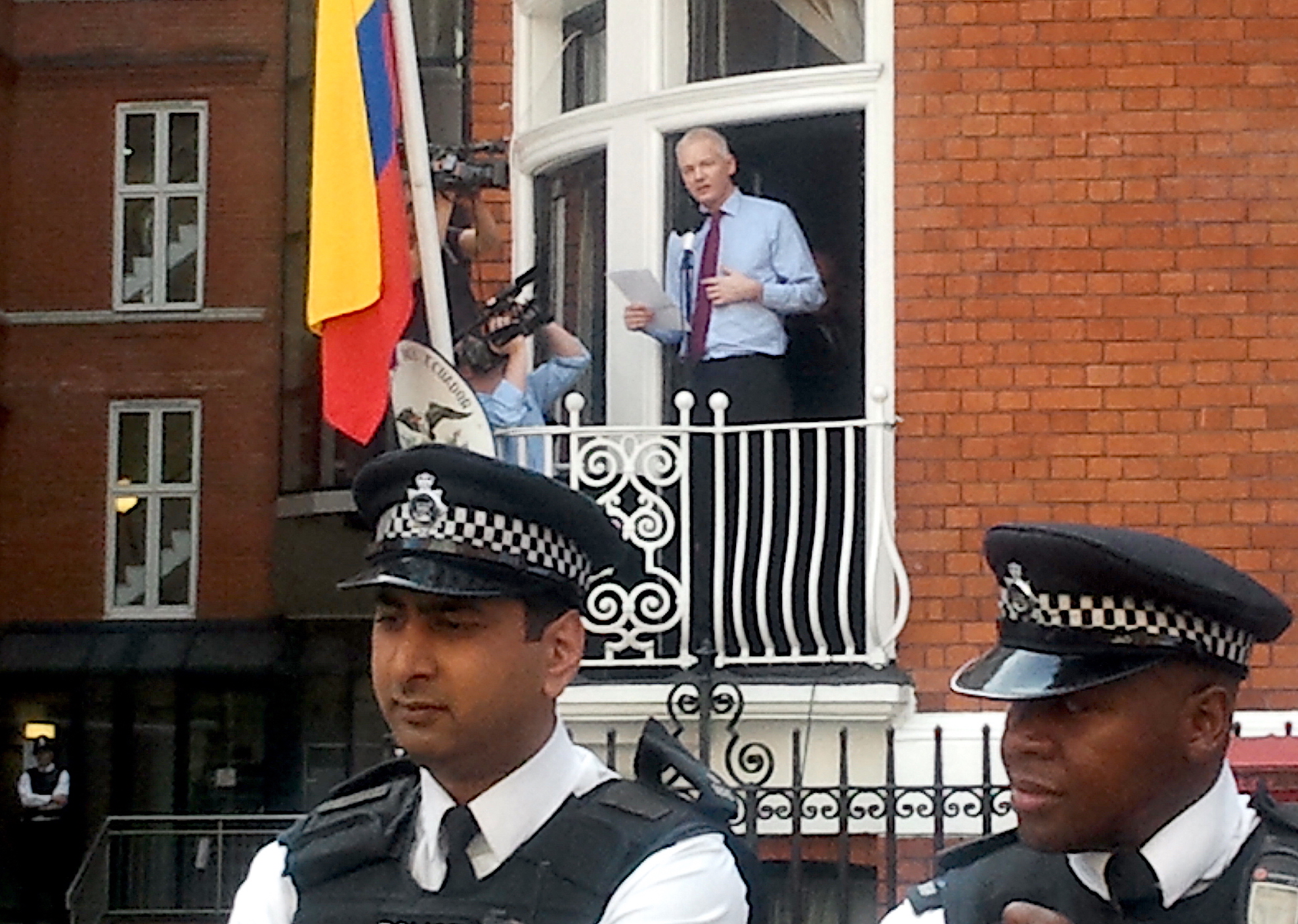
Julian Assange speaking from the balcony of the Ecuadorian embassy in London, August 2012. (wl dreamer, CC BY-SA 3.0, Wikimedia Commons)
In contrast, Assange went to the absolute limits of human endurance for the sake of protecting whistleblowing sources.
In 2017, early in the Trump Administration, Trump was reportedly willing to negotiate a pardon for Assange if he would out the sources of the DNC Emails and disprove Russiagate once and for all.
In August of 2016, Assange made comments on Dutch Television that all but admitted the source of the DNC emails was the murdered DNC staffer Seth Rich. So, why not admit the identity of a dead source, if it indeed was Rich, disprove Russiagate, and gain his freedom?
Because WikiLeaks’ obligation, according to Assange, was the absolute protection of sources no matter the cost. It is a principle that may prove to cost the award-winning journalist his life.






 MCViewPoint