MCViewPoint

Opinion from a Libertarian ViewPoint

Posts Tagged ‘Breathalyzers’

Don’t Trust the Government with Breathalyzers and other Forensic Evidence | Mises Wire

Posted by M. C. on November 18, 2019

In 2017, The Denver Post reported on how staff at the Colorado state Department of Public Health and Environment was actively forging “validation certificates” used to certify breathalyzers for use. In the rush to get the devices on the street, state workers were falsifying paperwork rather than doing due diligence.

This wasn’t the first time that state personnel was shown to be cutting corners on tests of this sort.

https://mises.org/wire/dont-trust-government-breathalyzers-and-other-forensic-evidence?utm_source=Mises+Institute+Subscriptions&utm_campaign=f2b07b5612-EMAIL_CAMPAIGN_9_21_2018_9_59_COPY_01&utm_medium=email&utm_term=0_8b52b2e1c0-f2b07b5612-228343965

Thanks to the proliferation of body cameras and security cameras attached to homes and businesses, police are far more frequently being caught lying.

For example, this month, NYPD cop Michael Bergmann lied about nearly being struck by a suspect’s car. Bergmann was convicted of perjury when a surveillance camera showed otherwise. Earlier this year, Florida cop Zach Wester was caught on his own body-cam of planting drugs on innocent people. He now is awaiting trial. This past summer, thanks to their own body cams, two police officers in Willis, Texas, were convicted of lying about a suspect “evading arrest.”

But at least there are some things we know are reliable when it comes to police investigations: those are the scientific tests conducted by prosecutors and police agencies used in forensic analysis. At least those things are done by reliable and impartial experts, right?

Wrong.

For example, last week, The New York Times released the results of a new study showing that so-called breathalyzer machines, long used as evidence against alleged drunk drivers, are not reliable.

According to The Times:

But those tests [i.e., breathalyzers] — a bedrock of the criminal justice system — are often unreliable, a New York Times investigation found. The devices, found in virtually every police station in the U.S., generate skewed results with alarming frequency, even though they are marketed as precise to the third decimal place.

Judges in Massachusetts and New Jersey have thrown out more than 30,000 breath tests in the past 12 months alone, largely because of human errors and lax governmental oversight. Across the country, thousands of other tests also have been invalidated in recent years.

The machines are sensitive scientific instruments, and in many cases they haven’t been properly calibrated, yielding results that were at times 40% too high. Maintaining machines is up to police departments that sometimes have shoddy standards and lack expertise. In some cities, lab officials have used stale or homebrewed chemical solutions that warped results. In Massachusetts, officers used a machine with rats nesting inside

The Times interviewed more than 100 lawyers, scientists, executives and police officers and reviewed tens of thousands of pages of court records, corporate filings, confidential emails and contracts. Together, they reveal the depth of a nationwide problem that has attracted only sporadic attention.

A county judge in Pennsylvania called it “extremely questionable” whether any of his state’s breath tests could withstand serious scrutiny. In response, local prosecutors stopped using them. In Florida, a panel of judges described their state’s instrument as a “magic black box” with “significant and continued anomalies.”

Devices meant to measure sobriety require the operator use the instrument properly, and that the devices be properly maintained and calibrated. Unfortunately, government agencies have no incentive to ensure that breathalyzers are used properly or that they yield proper results — so long as the results tend to lead to more arrests and more successful prosecutions.

While many cases can likely be chalked up to laziness and incompetence, other cases showed active efforts at fraud. An investigation of the Massachusetts forensic lab, for example, showed “the lab had hidden records of hundreds of failed calibrations.”

It’s not just front-line police officers who are using faulty devices. Other state agencies and staffers are actively attempting to cover up the shortcomings of these “scientific” instruments.

Nor are the misdeeds uncovered in the Times report the first time we’ve heard of similar problems with police agencies corrupting scientific tests.

In 2017, The Denver Post reported on how staff at the Colorado state Department of Public Health and Environment was actively forging “validation certificates” used to certify breathalyzers for use. In the rush to get the devices on the street, state workers were falsifying paperwork rather than doing due diligence.

This wasn’t the first time that state personnel was shown to be cutting corners on tests of this sort.

In 2016, for example, the Colorado Bureau of Investigation admitted “at least 56 of the DUI blood tests it conducted [4 percent of all tests] in the last six months were incorrect.” Of those 56 confirmed cases, all of them erred in favor of the police and of prosecutors. That is, “the initial results in each of those 56 cases showed lower alcohol levels for the drivers than when additional quality assurance retesting occurred.”

These are not roadside tests, mind you. These are blood tests performed in a controlled setting.

Not surprisingly, federal law enforcement organs also engage in similar types of fraud. In 2015, The Washington Post reported that admissions from the FBI and Department of Justice “confirm long-suspected problems with subjective, pattern-based forensic techniques — like hair and bite-mark comparisons — that have contributed to wrongful convictions in more than one-quarter of 329 DNA-exoneration cases since 1989.”

In other words, allegedly scientific and objective analysis is commonly distorted by a variety of law enforcement organizations and other state agencies.

Unfortunately, these lab workers and bureaucrats don’t wear body cams of their own at all times. But it seems they should.  After all, the behavior of these forensic “experts” and lab workers is no different than outright lying about the behavior of defendants at the time an arrest is made. Body cams might catch a crooked cop planting meth on hapless motorists. But the state’s scientific “experts” unfortunately have far more leeway.

Some police officers on the front lines testify that defendants did things they didn’t do. Meanwhile, some state lab workers lie about what’s found in the blood of defendants. Or they’re just too lazy to bother using their own tools properly.

In any case, the result is often ruined lives, and immense court costs for innocent defendants.

This is the other side of the failed “social contract” we live under. The state claims it has a right to extract taxes from residents and taxpayers because the state provides “safety” in return. Yet the courts have established police agencies are not actually required to protect citizens from violence at all.

As if that weren’t bad enough, taxpayers also pay state analysts and lab workers — some of them quite handsomely — to help prosecute citizens based on faulty forensic evidence.

This social contract increasingly looks like it’s a pretty bad deal for many of us, after all.

Be seeing you

fbd65970e5519a3c42439a3218536150

Posted in Uncategorized | Tagged: , , , , , , | Leave a Comment »

FAKE SCIENCE for COPS: Alcohol level breathalyzers based on sham science, shocking investigation discovers – NaturalNews.com

Posted by M. C. on November 13, 2019

A Pennsylvania county judge said that it was “extremely questionable” whether or not any of the breathalyzer results from his state could stand up to real scrutiny.

Breathalyzer and radar-ask to see the calibration sticker. You won’t make a friend but you already have a ticket.

https://www.naturalnews.com/2019-11-11-alcohol-breathalyzers-based-on-sham-science-investigation.html

FAKE SCIENCE for COPS: Alcohol level breathalyzers based on sham science, shocking investigation discovers

(Natural News) Breathalyzer test results have long been considered a lynch pin of the criminal justice system. About a million people are arrested every year for drunk driving in the United States — but a shocking investigation has revealed that many of these arrests were likely made in vain. As it turns out, breathalyzer testing is based on sham science, and most often, the results they produce are inaccurate. These devices can be found at just about every police station in the United States, and are commonly used during road-side traffic stops.

The way a breathalyzer works seems pretty simple: After you get pulled over, police will ask you to blow into the device. If the devices registers your alcohol levels as 0.08 or above, you’re probably going to jail. But as a special investigation by The New York Times reveals, nothing is ever as simple (or accurate) as it seems.

Breathalyzers are a scam

According to the Times, breathalyzers produce skewed results with “alarming frequency.” While these devices are marketed as being accurate to the third decimal point, many thousands of test results have been thrown out of court, largely due to human error and poor government oversight. In Massachusetts and New Jersey, judges have thrown out over 30,000 breathalyzer tests over the course of just the last year.

Breathalyzers are extremely sensitive devices. If they haven’t been calibrated properly, big trouble can follow. The Times reports that in instances where a breathalyzer isn’t calibrated correctly, the results may be up to 40 percent higher than they should be.


This means that quite a lot of people have probably gotten arrested or fined for no reason.

Add this to the fact that most police departments are in charge of maintaining their machines — and that most lack the expertise and high standards necessary to keep these devices accurate — and you’ve got a recipe for disaster.

Lab techs from some cities even use “homemade” chemical solutions, which further skew breathalyzer test results. Some police stations will actually disable features that are meant to ensure the device’s accuracy. States have chosen breathalyzers that their own experts cautioned against. Tech experts also say that many of these devices have grievous problems with their software.

And after all the human error is set aside, there is still the ridiculous fact that breathalyzers proclaim to provide an accurate assessment of blood alcohol content based on your breath. You cannot accurately measure blood alcohol levels without a blood test. It’s common sense, and yet, for some reason, civilians continue to be persecuted thanks to corrupt police tactics.

Enter the police state

The Times reportedly interviewed over a hundred scientists, lawyers, executives and police officers. Thousands of court filings, corporate records, confidential emails and other documents were reviewed. And together, they paint a very disturbing picture.

A Pennsylvania county judge said that it was “extremely questionable” whether or not any of the breathalyzer results from his state could stand up to real scrutiny. In Florida, officials described their state’s chosen device as a “magic black box” with “significant anomalies.”

And yet, in spite of the various and numerous complaints with these devices, breathalyzers continue to be used by police at a national level. The test results from these devices are used in our court systems as undeniable proof of guilt and drunkenness.

Industry veteran John Fusco, who ran the breathalyzer manufacturing company National Patent Analytical Systems, told the Times, “The tests were never meant to be used that way.”

While drunk driving is obviously a serious issue, and drunk drivers should be arrested, breathalyzer tests cannot be the only source of proof that puts people in jail. Police are using these devices incorrectly, sometimes intentionally, and at that point, breathalyzers become more of a nuisance than a savior.

Be seeing you

Fuel Cell VS Semiconductor Breathalysers - AlcoDigital

Posted in Uncategorized | Tagged: , , , | Leave a Comment »

Automotive Pre-Emption – EPautos – Libertarian Car Talk

Posted by M. C. on October 21, 2019

Volvo – which is not-coincidentally owned by the control-freak Chinese – intends to include an upgraded version of its “Volvo on Call” technology in its cars within the next couple of years. What it means is that your Volvo will make a call – about your driving. If the car doesn’t like it – based on data gleaned from sensors which monitor how you drive – the car will slow itself down and park. Where you’ll wait until the car decides to let you drive again.

Assuming it hasn’t called the cops.

One assumes the sensors will (somehow) be savvy enough to separate the exhalations of passengers from those of drivers.

https://www.ericpetersautos.com/2019/10/18/automotive-pre-emption/

New cars do lots of things cars didn’t do in the past – which isn’t necessarily a bad thing. Convenience has its merits.

But what about pre-emption?

Cars once did as they were told by their owners – and no more. If you didn’t want the doors to lock or the lights to come on they didn’t – until you locked them or turned them on. You could spin the tires – and lock up the brakes – as you liked.


New cars take those choices away from you – like a parent schooling a child.

It is about to get much worse.

Volvo – which is not-coincidentally owned by the control-freak Chinese – intends to include an upgraded version of its “Volvo on Call” technology in its cars within the next couple of years. What it means is that your Volvo will make a call – about your driving. If the car doesn’t like it – based on data gleaned from sensors which monitor how you drive – the car will slow itself down and park. Where you’ll wait until the car decides to let you drive again.

Assuming it hasn’t called the cops.

Volvo isn’t the only car company intending to install such technology, either. In fact most cars sold since about 2015 already have the technology to monitor – and stymie – your driving.

Soon, they may have even more technology.

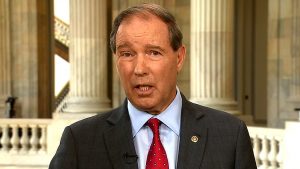
New Mexico Senator Tom Udall – along with Senator Rick Scott of Florida – are “calling” for  a new federal law (see here) requiring that all new cars be equipped with passive and active technology to prevent the car from being driven – and stop it while it’s being driven – if sensors detect the presence of alcohol, the amount of that presence tunable to nil by the government-corporate nexus.

Right now, the legal threshold defining presumptive “drunk” driving in most states is a Blood Alcohol Content (BAC) of .08 – but several states – such as Utah – want to lower it to .05 or even less. For those under the legal age to drink alcohol, which is 21, any alcohol – even if not actually in the person – constitutes “drunk” driving if it is found inside the car, under “zero tolerance” laws in every state.

Of course, the laws above are antiquated in that they require the overt act before punishment is imposed. No state has yet required that a person who hasn’t been convicted of DWI be required to have alcohol detectors – and ignition interlocks – built into his vehicle just in case he might attempt to drive after drinking.

So old fashioned! The guilty might escape – so let’s make sure the innocent don’t.

That, at any rate, seems to be the thinking of Inner Party members Udall and Scott and (of course) Mothers Against Drunk Driving, which has become Mothers Against Drinking – period.

Which may have merit but then one could just as easily “call” – as they style it – for the abolition of all these distracting touchscreens in cars, which could almost certainly be proved a hazard to concentration at least equal to having had a single beer, glass of wine or mixed drink with dinner – the amount of alcohol sufficient to approach the .05 BAC standard.

Probably more of a hazard, since alcohol may blur one’s vision – when consumed in large quantities – but doesn’t make you take your eyes off the road, as using a touchscreen necessarily does.

Never mind. The usual cognitive dissonance – and selective persecution – applies.

“The issue has a real urgency to it,” Udall asserts – though where the “urgency” he says exists is emanating from is hard to divine. To borrow a phrase delivered once upon a time by The Chimp: Rarely is the question asked  . . . If something is such a needful and good idea, why is it  necessary to force it on people?

Breathalyzers in cars used to be forced on people who had at least been convicted of drunk driving. Udall and Scott want to convict everyone a priori – and punish proactively. He is the secular reincarnation of 13th century papal legate Arnaud Amalric who, when stymied by the problem of the Cathar “heretics” having holed up in a town full of Catholics in good standing ululated – in Latin – Caedite eos. Novit enim Dominus qui sunt eius.

Kill them all – God will know his own.

This is the new legal standard in what’s still called America but no longer is. If someone’s a problem, make everyone pay for it. Even if there isn’t a problem – make them all pay for it. There is money in it. And control. Irresistible catnip to people such as Udall, et al.

“The industry is often resistant to new mandates,” Udall told Reuters. “We want their support but we need to do this whether or not we have it.”

Italics added to emphasize the fangs bared.

This will almost certainly not be necessary, though as the industry hasn’t been “resistant” to new mandates since the mid-’90s, when it made the cynical – and profitable – determination that it could make more money by forcing people to buy the mandated things. Air bags alone have increased the profit margin on every new car by at least $1,000.

In fact, the industry anticipates the mandates – and de facto imposes them before they become de jure.

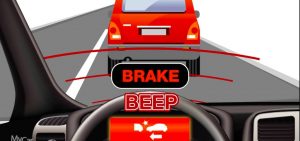
Examples include Automated Emergency Braking, which has become unavoidable almost in a new car but isn’t – yet – federally mandated.

Who’s “we,” by the way? Udall and Scott really mean they.

We haven’t been consulted. We will simply be told.

If the Udall-Scott bill becomes law, the National Highway Traffic Safety Administration (NHTSA) will decree “rules for advanced vehicle alcohol detection devices” by 2024.

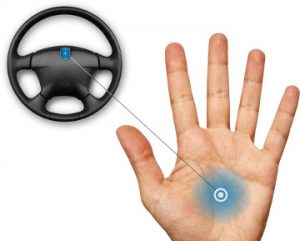
How will “alcohol” be “detected”? Via touch – sensors built into the surfaces of steering wheels, gear selectors and possibly door handles – and via sampling of the air inside the car. One assumes the sensors will (somehow) be savvy enough to separate the exhalations of passengers from those of drivers.

If not, then having a designated driver will find himself in the same peril as the non-drinking driver “sleeping it off” in the back seat of a parked car – for which one can be convicted of “drunk driving.”

Eye movements will also be monitored for signs of “distraction” or “drowsiness” – the parameters established by those who program the technology.

Those parameters will, of course, be both arbitrarily set as well as set at a threshold of low and paralyzingly idiotic pre-emption – in the manner of Automated Emergency Braking and Lane Keep Assist, which “assist” when it isn’t needed or wanted by jamming on the brakes when attempting to pass a slowpoke and jerking the steering wheel in the direction opposite the driver’s chosen path if he hasn’t signaled his intention first.

Our choices are being winnowed to nil by the government-corporate nexus. New cars are becoming holding cells for prisoners who haven’t been charged with anything but who are nonetheless treated as such and who are increasingly under the omnipresent supervision of electronic see-eye guards who stand ready to “correct” us for deviating in the slightest from The Rules.

There is probably going to be a tremendous market for older cars that operate under our control, which leave the choices to us – and don’t scold (or punish) us for not doing things that aren’t anyone else’s business.

Better get one before the rush.

Be seeing you

FEEDBACK: On-board breathalyzer could stop drunk driving ...


Posted in Uncategorized | Tagged: , , , , | Leave a Comment »

The In-Car Checkpoint – EPautos – Libertarian Car Talk

Posted by M. C. on June 15, 2019

If the government can force Breathalyzers on everyone then why not also random home checks by armed government workers to look for . . . well, anything? 

On the basis of . . . nothing.

https://www.ericpetersautos.com/2019/06/14/the-in-car-checkpoint/

A new principle forms the basis of American criminal justice. It is that innocence is irrelevant. More accurately, it is an obstruction.

It gets in the way of what government wants – which is to bully and control everyone.

The former requirement in law – and general custom – that conviction had to precede punishment and that evidence to suggest wrongdoing had to precede investigation has been thrown in the woods – so to speak – in favor of making things easier for the criminal justice system by assuming everyone is a criminal.


And treating all of us presumptively as such.

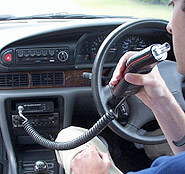
The latest such being a proposal – a threatened law, HR 3374 – purveyed by a termagant to liberty named Kathleen Rice, who is a coercive authoritarian “representative” (of whom begs some interesting questions) from the state of New York. She is demanding that all new cars be fitted with Breathalyzers – and ignition interlocks – by 2029.

You used to have to be convicted of drunk driving before they installed a Breathalyzer machine in your car. Rice wants them installed in every car – whether you drink or not.

The “drunk” part of her proposed law – the End Drunk Driving Act – is especially fatuous given the already low national standard defining it. A Blood Alcohol Content (BAC) of .08  has been legally synonymous with presumptive “drunk” driving for the past 20-plus years – meaning no evidence of impaired driving had to be presented; the BAC alone suffices to convict…

It doesn’t matter that you’re obviously not “drunk” if your BAC is .01 or even .04  – and arguably not even .05, the new threshold defining “drunk” for all in states such as Utah

Or that you might be impaired by something else – such as poor driving skills, a form of behind-the-wheel debility far more common than the booze-infused kind and objectively far more dangerous because there are many more such out there and there are no checkpoints for the inept.

What matters – as far as the law and this Rice woman are concerned – is the use of the pretext to establish the precedent. If the government can force Breathalyzers on everyone then why not also random home checks by armed government workers to look for . . . well, anything? 

On the basis of . . . nothing

Be seeing you

Random checkpoint - Wikipedia


Posted in Uncategorized | Tagged: , , , , | Leave a Comment »