MCViewPoint

Opinion from a Libertarian ViewPoint

Posts Tagged ‘Cecil Rhodes’

Examing the Foreign Policy Establishment’s ‘British Connection’

Posted by M. C. on June 14, 2023

Of course, apart from world encompassing imperialist frameworks and Russophobia, the British also introduced their American counterparts to the central banking and government propaganda apparatuses necessary to expanding Washington’s cheaply won contiguous land empire of the nineteenth century abroad in the twentieth. Having adopted these methods, Washington could, when Britain’s strength was finally exhausted, “Pick up the torch of empire from our [Britain’s] still cooling fingers.”8

https://libertarianinstitute.org/articles/examing-the-foreign-policy-establishments-british-connection/

by Joseph Solis-Mullen

cecil rhodes

In 1877, before he had made his fortune via the founding of De Beers Consolidated Mines and the British South Africa Company, the imperialist par excellence Cecil Rhodes had dictated a part of his will thusly: “[To make provision] for the establishment, promotion and development of a Secret Society, the true aim and object whereof shall be for the extension of British rule throughout the world.” This was to include, “The ultimate recovery of the United States of America.”1

This grandiose vision was pragmatically tempered in the final version of his will (1902), which instead set up an eponymous scholarship, the stated intention of which was to, “promote unity among English speaking nations.” Thus was the Rhodes Scholarship, which sees a handful of America’s future leaders shipped off to Oxford each year, conceived of and brought into being.2

Just looking over a list of some of those selected, the influence of British thinking on American grand strategy in the century that followed becomes all too explicable: From Stanley Hornbeck, special advisor to FDR’s Secretary of State Cordell Hull, the longest serving Secretary of State in U.S. history, to J. William Fullbright, senator and longest tenured Chair of the Senate Foreign Relations Committee (1945-1974), to JFK and LBJ’s Secretary of State Dean Rusk, and Walt Rostow, LBJ’s National Security Advisor: these men were among the most influential hands steering U.S. foreign policy from the 1930s onward.

Later architects of U.S. policy to pass through Oxford via the program include Richard Haas, President of the Council on Foreign Relations and Director of Policy Planning for George W. Bush (2001-2003), Joseph Nye, chair of the National Intelligence Council and Deputy Secretary of Defense under Bill Clinton3 (1993-1995), Strobe Talbot, Deputy Secretary of State and lead architect of Clinton’s Russia and NATO expansion policies (1994-2001), Susan Rice, Barack Obama’s National Security Advisor (2013-2017), Ash Carter, Secretary of Defense under Obama (2015-2017), and arguably the worst U.S. Ambassador to Russia ever, Michael McFaul (2012-2014).

As an aside, given the catastrophic performance of these later figures it is worth noting that apart from absorbing British principles of imperial strategy—the work of the Oxonian Halford Mackinder (1861-1947) clearly having influenced that of the foundational American realist Nicholas Spykman (1893-1943), who in turn greatly influenced John Foster Dulles (Dwight Eisenhower’s Secretary of State from 1953-1959)—American policy architects seem to have also imbibed the abiding British suspicion of the Russians, as well as their tactics for dealing with the “barbarians,” as the aforementioned ex-Ambassador McFaul described them on Twitter a week ago.

See the rest here

Be seeing you

Posted in Uncategorized | Tagged: , , , , | Leave a Comment »

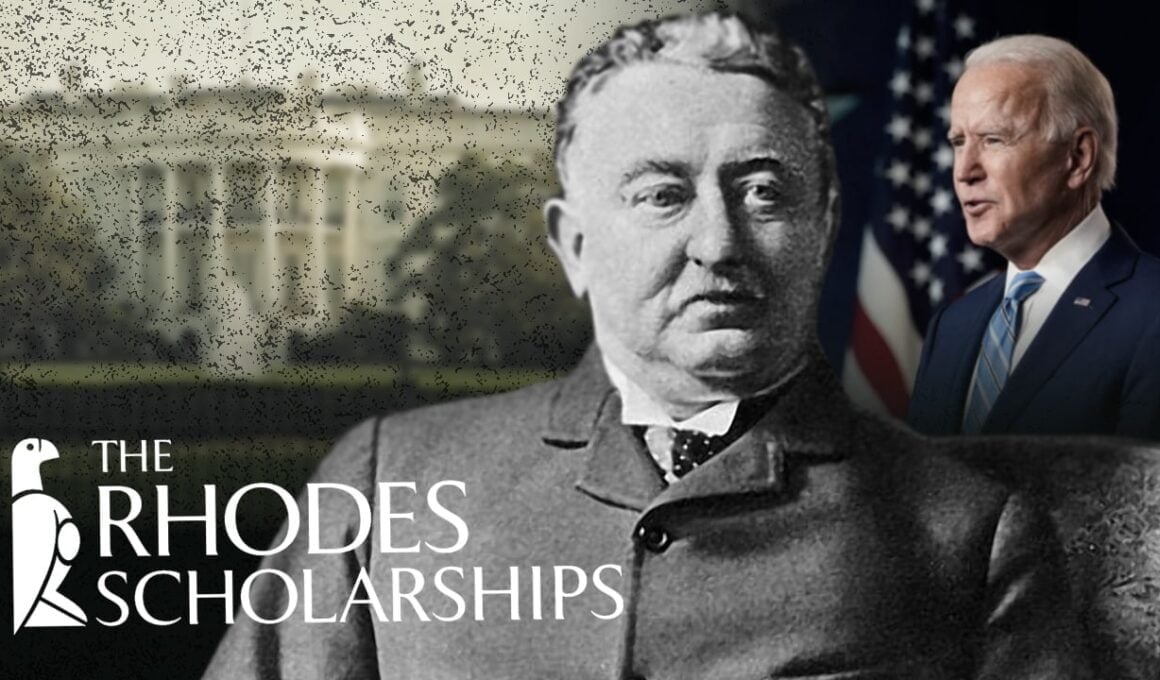
The Rhodes Scholars Guiding Biden’s Presidency

Posted by M. C. on March 30, 2022

While the WEF’s Young Global Leader program has recently become infamous, it follows the model of a much older program and think tank established with the ill-begotten gains of Cecil Rhodes.


BYMATTHEW EHRET

The recent, pandemic-ridden years have involved a steep and often traumatic learning curve for many citizens across the Trans Atlantic. One particularly shocking revelation that has ripped virally across the internet in recent days revolves around the revelations that the World Economic Forum’s ‘Young Global Leaders’ have been positioned across western governments and powerful private institutions over the past three decades. 

Videos of Klaus Schwab bragging that Young Leaders have been positioned across the governments of Canada, Argentina, Europe and beyond are now being posted across social media platforms on a daily basis, confirming the suspicions of many that the World Economic Forum is not a benign business networking operation, as it has tried to project for the credulous. Rather, it is something much darker and insidious. 

Set up in 1993 as the Global Leaders of Tomorrow and renamed WEF Young Leaders Forum in 2004 (fueled with funds from such benevolent institutions as JP Morgan Chase and the Bill and Melinda Gates Foundation), over 1400 young leaders (under the age of 38) from both public and private sectors have been processed through the program. For those tapped to become members of this elitist clique, they agree to attend six years of regular WEF conferences featuring seminars, focus groups and other special experiences both at Davos and at regional WEF events, at which point they graduate and become “alumni” who, in turn, become capable of nominating future young leaders.

Just a tiny sampling of the prominent figures who have been processed and installed into positions of influence to advance the WEF globalist agenda over the past 30 years include Angela Merkel, Nicholas Sarkozy, Emmanuel Macron, Tony Blair, Mark Zuckerberg, José Manuel Barroso, Bill Gates, Chrystia Freeland, Pete Buttigieg, Jacinda Arden (PM New Zealand), Jack Ma (Ali Baba founder), Larry Fink (Blackrock CEO), Larry Page (Google founder), Lynn Forrester de Rothschild (Council for Inclusive Capitalism founder), Jimmy Wales (Wikipedia founder), Peter Thiel (Paypal founder), Leonardo Di Caprio (tool), Richard Branson (Virgin Records CEO), Jeff Bezos (Amazon founder), Stephan Bancel (Moderna CEO), Pierre Omidyar (Ebay co-founder), Alizia Garza (co-founder BLM), Jonathan Soros (son of sociopath) and, according the Schwab, himself “half the Canadian Cabinet” under Prime Minister Justin Trudeau.

As important as it is to hold this disturbing fact in mind, it is even more important not to lose sight of the deeper historical forces at play and the older institutional practice of talent searching young blood upon which the YGL Program is based.

Just as Klaus Schwab was never his own man, having been trained by his mentors Maurice Strong (co-founder of the WEF) [1] and his Harvard mentor Henry Kissinger, so too were Klaus’ Young Leaders merely a modern version of an older practice that has been at play for over 114 years. This older institution is the Rhodes Scholarship system and the associated Round Table Movement, which created both Chatham House in 1919 and its American branch, dubbed “The Council on Foreign Relations,” in 1921.

This program has been incredibly influential and has also generated immense damage over the last century. Thousands of young Americans have been processed through the halls of Oxford since its founding who are then re-inserted back into their native land with a religious-like zeal to advance an agenda, the full scope of which very few of them truly comprehend.

The Example of Biden’s Cabinet

During the first year of the Biden administration, swarms of Oxford-trained Rhodes Scholars were swept into dominant positions of power across America’s domestic and foreign policy landscape. 

The hegemony of the Council on Foreign Relations as a major top-down planning center for the Rules-Based International Order has also been firmly re-established after having been relegated to a back seat during the four year period of Donald Trump’s presidency. Trump’s term was referred to by CFR President Richard Haass as “the aberration”. Haass himself is a Rhodes Scholar, having graduated from Oxford’s Oberlin College in 1978.

The CFR and the Rhodes Scholarship program are simply two sides of the same process that have acted as a key pillar to the establishment of fifth column operations within the USA, and the Trans Atlantic Community more generally, during the past century. Both the CFR and the Rhodes Scholarship were established by the ill-begotten fortunes of Cecil Rhodes. 

Cecil Rhodes’ Vision Revisited

See the rest here

Be seeing you

Posted in Uncategorized | Tagged: , , , | Leave a Comment »

How the British Sold Globalism to America – LewRockwell

Posted by M. C. on May 6, 2021

In fact, the CFR’s effective control over U.S. foreign policy is no conspiracy theory, but rather a well-known fact among Beltway insiders, who have nicknamed the CFR “the real State Department.”

In 2009, Secretary of State Hillary Clinton admitted taking direction from the CFR, referring to its New York headquarters as “the mother ship.”

https://www.lewrockwell.com/2021/05/richard-poe/how-the-british-sold-globalism-to-america/

By Richard Poe

ON APRIL 13, 1919, a detachment of fifty British soldiers opened fire on protesters in Amritsar, India, killing hundreds.

The soldiers were Indians, in British uniforms.

Their commander was an Englishman.

When Colonel Reginald Dyer gave the order, fifty Indians fired on their own countrymen, without hesitation, and kept on firing for ten minutes.

That’s called soft power.

The British Empire was built on it.

Soft power is the ability to seduce and coopt others into doing your bidding.

Some would call it mind control.

Through the use of soft power, a small country like England can dominate larger, more populous ones.

Even the mighty USA still yields to British influence in ways most Americans don’t understand.

For more than a hundred years, we Americans have been pushed relentlessly down the road toward globalism, contrary to our own interests and against our natural inclination.

The push for globalism comes mainly from British front groups masquerading as American think tanks. Preeminent among them is the Council on Foreign Relations (CFR).

Origin of the CFR

The CFR grew out of the British Round Table Movement.

In my last article, “How the British Invented Globalism,” I explained how British leaders began formulating plans for global government during the 19th century.

With funding from the Rhodes Trust, a secretive group called the Round Table was formed in 1909. It planted chapters in English-speaking countries, including the USA, to propagandize for a worldwide federation of English-speaking peoples united in a single superstate.

The Round Table’s long-term goal — as Cecil Rhodes made clear in his 1877 will — was to achieve world peace through British hegemony.

In the process, Rhodes also sought (and I quote) the “ultimate recovery of the United States of America as an integral part of the British Empire.”

The Dominions

It turned out that Britain’s English-speaking colonies wanted no part of Rhodes’s federation. They wanted independence.

So the Round Tablers proposed a compromise. They offered “Dominion” status or partial independence instead.

Canada was to be the model. It had gained Dominion status in 1867. This meant Canada governed itself internally, while Britain ran its foreign policy. Canadians remained subjects of the Crown.

The British now offered the same deal to other English-speaking colonies.

War with Germany was expected, so the Round Tablers had to work quickly.

Britain needed to mollify the Dominions with self-rule, so they’d agree to provide troops in the coming war.

Australia became a Dominion in 1901; New Zealand in 1907; and South Africa in 1910.

Courting the United States

The United States presented a special challenge. We had been independent since 1776. Moreover, our relations with Britain had been stormy, marred by a bloody Revolution, the War of 1812, border disputes with Canada, and British meddling in our Civil War.

Beginning in the 1890s, the British waged a public relations blitz called “The Great Rapprochement,” promoting Anglo-American unity.

Scottish-born steel magnate Andrew Carnegie called openly for a “British-American Union” in 1893. He advocated America’s return to the British Empire.

British journalist W.T. Stead argued in 1901 for an “English-speaking United States of the World.”

A “Canadian” Solution for America

From the British standpoint, the Great Rapprochement was a flop.

When Britain declared war on Germany in 1914, troops poured in from every corner of the Empire. But not from America. The US sent troops only in April 1917, after 2 1/2 years of hard British lobbying.

To the British, the delay was intolerable. It proved that Americans could not be trusted to make important decisions.

The Round Table sought a “Canadian” solution — manipulating the U.S. into a Dominion-like arrangement, with Britain controlling our foreign policy.

It had to be done quietly, through back channels.

During the 1919 Paris peace talks, Round Table operatives worked with hand-picked U.S. Anglophiles (many of them Round Table members), to devise formal mechanisms for coordinating U.S. and British foreign policy.

The Mechanism of Control

On May 30, 1919, the Anglo-American Institute of International Affairs (AAIIA) was formed, with branches in New York and London.

For the first time, a formal structure now existed for harmonizing U.S. and U.K. policy at the highest level.

However, the timing was bad. Anti-British feeling was rising in America. Many blamed England for dragging us into war. At the same time, English globalists were denouncing Americans as shirkers for failing to support the League of Nations.

With Anglo-American unity in temporary disrepute, the Round Tablers decided to separate the New York and London branches in 1920, for appearances’ sake.

Upon separation, the London branch was renamed the British Institute of International Affairs (BIIA). In 1926, the BIIA received a royal charter, becoming the Royal Institute of International Affairs (RIIA), commonly known as Chatham House.

Meanwhile, the New York branch became the Council on Foreign Relations in 1921.

See the rest here

Richard Poe is a New York Times bestselling author and journalist. He co-wrote The Shadow Party with David Horowitz, and is presently writing a history of globalism.

Be seeing you

Posted in Uncategorized | Tagged: , , , , , | Leave a Comment »

Delingpole: First They Came for the Statues. It Will Be People Next…

Posted by M. C. on June 10, 2020

Iconoclasm is undiscriminating:

Look at mobs which gather to smash monuments. These monuments may be the statues of deposed dictators who terrorized populations, causing untold death and suffering. They may be monuments to fallen soldiers who died defending causes that are no longer fashionable. The mob’s anger is the same. The viciousness and triumphant celebrations are the same.

And it almost inevitably tends towards greater violence:

The activists of today heedlessly erase history they haven’t yet learned to read. They act as the hammer that extremists use to deface the cathedrals and museums our ancestors built.

Could this hammer soon be turned from smashing statues to killing people? It has happened before.

https://www.breitbart.com/europe/2020/06/09/first-they-came-for-the-statues-it-will-be-people-next/

by James Delingpole

Perhaps not since the era of Oliver Cromwell, when Puritans smashed and burned any work of art or architecture they deemed impure, has Britain engaged in such a frenzy of iconoclasm.

Across the country, mobs of petty tyrants, puffed up with self-righteousness and moral fervour, are plotting which little piece of British history they can vandalise or destroy next. Ironic, perhaps, given Oliver Cromwell himself is now on the list of condemned statues.

In Bristol they have already succeeded with the statue of 17th-century merchant, slaver and city benefactor Edward Colston (whose statue – with the apparent acquiescence of Bristol police), they pulled from its plinth and dragged into the sea.

In London, they spray-painted (‘Racist’) a statue of Winston Churchill in Parliament Square. The statue remains upright, so far. But today they had better luck in East London with a statue of Robert Milligan, another slave trader, which was torn down from its plinth on the orders of the Canal and River Trust — supposedly in response to public demand. (There was a petition with a fairly modest 3,000 signatures)

In Oxford, they’ve revived the long-simmering campaign (copied from mob tactics used in Cape Town, South Africa) to remove a statue of Cecil Rhodes from Oriel College. Hundreds of undergraduates chanted ‘take it down’, blocked the High Street with a sit-down protest during which all but one of them took a knee for eight minutes, 46 seconds in solidarity with George Floyd…

The exception was local resident Peter Hitchens…

Here is another rare voice of dissent. She describes herself in her Twitter profile as a ‘feminist’ and a ‘Black Lives Matter’ supporter. But she recognises the irony of using racial injustice as an excuse to destroy a statue dedicated to the man who founded the Rhodes bursaries which now enable black African students to study at Oxford.

But she is the exception, not the rule. Many of those campaigning for the destruction of Oxford’s architectural heritage were themselves lucky enough to spend three years or more among the university’s dreaming spires. They don’t seem to have benefited much from the educational and cultural experience, though. Nor do they seem to have had their minds opened.

Here is one of the more notorious among them, left-wing activist Owen Jones.

And here is a left-wing professor, who sometimes takes time away from tweeting Marxist agitprop to teach at Oxford, chipping in her hot take on this ‘fearless’ vandalism.

What a shame that these vandals aren’t better versed in the history of iconoclasm. They could start by reading this superb essay — Iconoclasm and the Erasing of History — by art historian Alexander Adams.

Iconoclasm is born of rage and petulant egoism – and fuelled by ignorance…

The political activist reserves to himself the right to retrospectively edit our history for his satisfaction by removing monuments, those fixtures of civic life, embedded in the memories of generations. The activist often knows almost nothing about the object of his hatred—merely a garbled caricature of a person caught up in the conditions of her age…

It has a long, ugly history, embracing such bouts of wanton destruction and violence as Mao’s Cultural Revolution:

Buddhist and Confucian temples were razed, scrolls and books burned, statues smashed, paintings destroyed. The noble dead were dug from the earth, publicly hacked to pieces and the fragments burned. All feudal names were changed. Yongyi Song writes, “By the end of the Cultural Revolution, 4,922 of the 6,843 officially designated ‘places of cultural or historical interest’ in Beijing had been destroyed.”

Iconoclasm is undiscriminating:

Look at mobs which gather to smash monuments. These monuments may be the statues of deposed dictators who terrorized populations, causing untold death and suffering. They may be monuments to fallen soldiers who died defending causes that are no longer fashionable. The mob’s anger is the same. The viciousness and triumphant celebrations are the same.

And it almost inevitably tends towards greater violence:

The activists of today heedlessly erase history they haven’t yet learned to read. They act as the hammer that extremists use to deface the cathedrals and museums our ancestors built.

Could this hammer soon be turned from smashing statues to killing people? It has happened before.

Be seeing you


Posted in Uncategorized | Tagged: , , , | 3 Comments »