


The ability of client states to drag their patrons into conflicts is as old as Thucydides, as is their use of powerful interest groups within that patron state to influence policy decisions.
https://libertarianinstitute.org/articles/the-fake-china-threat-then-and-now/
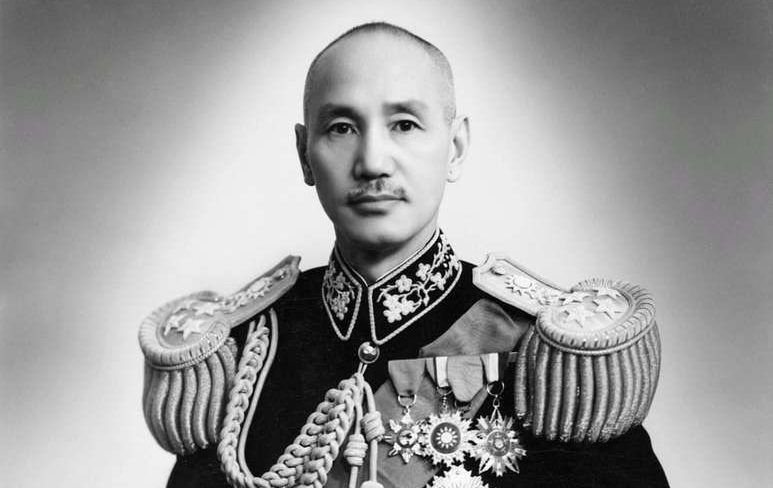
Republicans are terrible on China. Examples abound, but perhaps the most instructive illustration of this long-term handicap comes from the following quotation:
“We must be prepared to go it alone in China if our allies desert us. We must not fool ourselves into thinking we can avoid taking up arms with the Chinese Reds. If we don’t fight them in China and Formosa [Taiwan] we’ll be fighting them in San Francisco, in Seattle, in Kansas City.”1
This wasn’t excerpted from a recent speech by Senator Tom Cotton (R-AK). Rather, it was by then-Senate Majority Leader William Knowland (R-CA), in the January 1954 edition of Collier’s Magazine. While perhaps particularly rabid in his Sinophobia, President Dwight D. Eisenhower privately opined that “Knowland has no foreign policy, except to develop high blood pressure whenever he mentions ‘Red China’…In his case, there seems to be no final answer to the question, ‘How stupid can you get?’”2 The parallels between Knowland’s time and our own are significant. Representing the respective nadirs of Sino-American relations, they are worth considering in depth.
First, a necessary bit of high-level background.
In 1949 Mao Zedong and the Chinese Communist Party defeated the nominally republican forces of Chiang Kai-shek. Despite internal warnings that this was likely to happen, Chiang and his nationalist cronies being “thieves, every last one of them…corrupt as they come” according to President Harry Truman, this kicked off a firestorm in Washington3. “Who lost China?” subsequently became a driving force of the Second Red Scare that consumed American politics, distorting perceptions and constraining the ability of even the most powerful figures, such as Eisenhower or Secretary of State Dean Acheson, to act towards China in the more rational manner they would have liked.
Dean Acheson had presciently forecast as early as 1950 that Mao could be an “Asian Tito,” a disruptor of communist unity akin to the Yugoslav leader, Josip Broz Tito, Stalin’s bête noire. As things happened, however, the powerful China Lobby, led by men such as the editor of Time Henry Luce, was predictably able to push policy in the opposite direction.
For his part, Chiang refused to acknowledge defeat and demanded help retaking the mainland.While Eisenhower had bowed to domestic pressure to “unleash Chiang” in 1953, removing American impediments to cross-Strait engagement, further American support was not (yet) forthcoming. While Chiang’s friends worked on Washington, succeeding in securing for him more American planes and bombs, Chiang sought to do what he could to make life difficult for the new communist regime in Beijing. His policy of “Guanbi,” or “closed port policy,” involved the interdicting of foreign vessels bound for the mainland, eventually some one hundred in total.
The provocative policy prevented necessary trade and led to a series of skirmishes and several deaths, playing a larger role in precipitating what would come to be known as the First Taiwan Straits Crisis. In 1954 Chiang decided to fortify Quemoy and Matsu, islands so close to mainland China they’re visible from the shore on a clear day.
Predictably, the islands quickly came under bombardment by PRC forces. Resisting calls by the Joint Chiefs to either place U.S. troops in Taiwan or unleash nuclear weapons on mainland China, Eisenhower felt forced into the next worst thing. Concluding, in the words of Patterson, that “it would be politically risky to do nothing,” Eisenhower formalized the American commitment to defend Taiwan in the event of an attack. In making this commitment Eisenhower was careful to exclude islands such as Quemoy and Matsu, while also securing from Chiang a promise to cease unilateral military actions against the mainland.
Be seeing you
 MCViewPoint