https://mises.org/wire/clarence-darrow-vs-state
Doug French
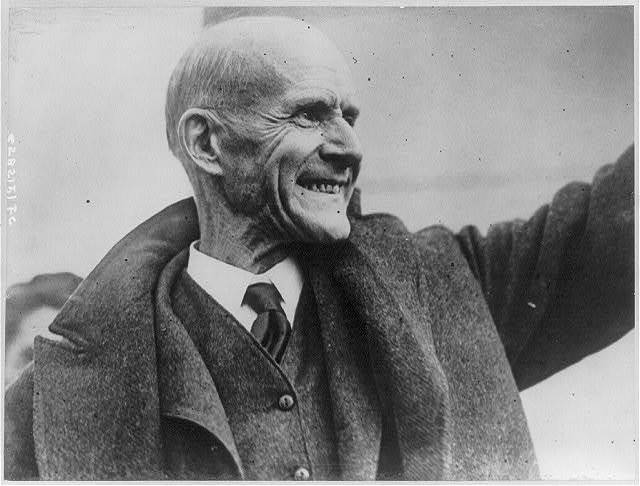
Describing attorney Clarence Darrow, the great H.L. Mencken wrote, “The marks of battle are all over his face. He has been through more wars than a whole regiment of Pershings. And most of them have been struggles to the death, without codes or quarter.”
Darrow is mostly a forgotten libertarian, unknown to the new generation. The Mises Institute kept his name alive with Jeff Riggenbach’s podcast about the famous barrister and the publishing of a new edition of Darrow’s 1902 book Resist Not Evil, both in 2011.
John A. Farrell in his book Clarence Darrow: Attorney for the Damned brings Darrow to life. The reader must remember there was no TV, no internet, no radio, and thus, “the era’s courthouse clashes and public debates played the role of mass entertainment. It was not unusual for the gallery to be packed with prominent lawyers, off-duty judges, newspapermen, and politicians, and the hallways outside jammed with spectators trying to get in, all to see Darrow close for the defense. At times a mob of thousands would spill through the corridors, down the stairs, and out into the yard, to surround a courthouse and listen at the windows.”
With a subject like Darrow, Farrell had plenty of Darrow’s soaring rhetoric to quote from. Darrow’s closing arguments would last for days, delivered without referring to a single note. The jury, the spectators, often the judge, and Darrow himself would be left in tears when he finished.
Amazon’s pitch for the book starts perfectly, “Clarence Darrow is the lawyer every law school student dreams of being: on the side of right, loved by many women, played by Spencer Tracy in Inherit the Wind. His days-long closing arguments delivered without notes won miraculous reprieves for men doomed to hang.”
Darrow could have made a handsome living doing legal work for the railroad. Instead he applied his considerable skills and determination to defending whom he believed was on the right side of a case. This meant that “depending on how he was fixed at the time, a third or more of Darrow’s cases earned him nothing,” wrote Farrell. His commitment was to individual freedom, leaving him “wary of all government.”
“Force is wrong,” Darrow wrote. “A bayonet in the hand of one man is no better than in the hand of another. It is the bayonet that is evil.” Darrow made headlines when he called President Teddy Roosevelt a “brutal murderer” in the war with Spain.
Farrell chronicles his subject’s life around his biggest trials, with personal life anecdotes spread throughout. Darrow divorced his first wife and cheated constantly on his second. He was a believer in free love and ran for local office unsuccessfully. If he was not in trial he often traveled giving speeches. He had a weakness for smart, idealistic young women, and they were drawn to him. Female companionship was never a problem, while financial troubles were constant. Besides maintaining a wife and ex-wife, Darrow “took to speculating in the stock market, and in banks and gold mines and other ventures, but had no gift for it.”
Darrow was well ahead of his time, writing that the “independent artisan has been destroyed” with legislatures filled with “lawyers … saloon-keepers and professional politicians” whose function “has sunk to the business of giving public property and privileges to the few, and executing such orders as the industrial captains see fit to give.”
Darrow represented union leaders Thomas Kidd and Eugene Debs. In both cases he put the business owners on trial. “This is really not a criminal case,” he told the jury in the Kidd case. “It is but an episode in the great battle for human liberty.”
Thirteen-year old Thomas Crosby and his mother hired Darrow after young Crosby shot and killed Deputy Sheriff Frank Nye, who attempted to evict the Crosbys. Darrow dared the jury to hang young Crosby, rather than sentence him to spend a lifetime incarcerated with criminals. The bluff worked, and Thomas was acquitted.
Farrell paints a vivid picture of Darrow during his closing arguments in the coal miners’ case for higher wages: “At times Darrow stood there, in his swallow-tailed coat, vest, and black tie, talking in conversational tones. But then he would crouch and stride across the floor, wheel toward the crowd, and thunder. He would pose, with his right hand in his pocket and his left arm raised, or wag his index finger like a rapier. As he built toward a climax he’d raise his voice, waive his right arm high, form a fist, and bring it crashing down.”
Sensationalism seemed to follow Darrow. He represented William Randolph Hearst in a dispute with sharpshooter Annie Oakley, who claimed to have been libeled. It was reported she was caught stealing to support her drug habit. It turns out the thief was another Annie, burlesque dancer Maude Fontanella, who, on occasion, performed as “Any Oak Lay.” The famous sharpshooter spent years successfully suing newspapers.
The American Federation of Labor (AFL) called on Darrow to defend John and James McNamara, who were charged with committing the Los Angeles Times bombing, which occurred on October 1, 1910, during the bitter struggle over the open shop in Southern California. The bomb was placed in an alley behind the building, igniting nearby ink barrels and natural gas main lines. In the ensuing fire, twenty people died.
In the weeks before the jury was seated, Darrow became increasingly concerned about the outcome of the trial and began negotiations for a plea bargain to spare the defendants’ lives. Darrow was accused of bribing a prospective juror. He pleaded not guilty and told a friend, “My conscience refuses to reproach me.”
The plea bargain Darrow helped arrange earned John fifteen years and James life imprisonment. Despite sparing the brothers the death penalty, Darrow was accused by many in organized labor of selling the movement out.
Darrow endured two lengthy trials for bribery. In the first trial, the night before his attorney was scheduled to cross-examine the prosecution’s main witness, Darrow’s attorney went on a bender and after a considerable search was found in a whorehouse completely drunk. “Yet Rogers had awesome recuperative powers. He strode into the courtroom at the appointed time, neatly dressed and shaved, with a haircut and a manicure.” Darrow took the stand and answered questions for over a week. Spectators, mostly women, packed the courtroom and were dubbed “Darrow’s harem.”
Darrow would make closing remarks that lasted two days. Walking into the courtroom, “hysterical women had grasped at his hands, like some holy man or prophet, as he made his way into court.” The jury only took thirty-five minutes to find him “not guilty.” The second trial would end in an unsatisfying mistrial.
Darrow would also save the lives of two murdering teenagers, Richard Loeb and Nathan Leopold. There was no doubt the two had killed Bobbie Franks; they admitted as much. The sixty-seven year old Darrow took the case because “he was a ferocious foe of hanging.” When the two young men met their lawyer, they weren’t impressed. Leopold thought Darrow one of the “least impressive-looking human beings I have ever seen.” “He looked for all the world like an innocent hayseed, a bumpkin,” said Leopold. “Could this scarecrow know anything about the law?” It turned out he did. The boys changed their plea to “guilty” and Darrow made the case it would be unprecedented for boys so young to hang. “Only the tears in my eyes as you talked and the feeling in my heart could express the admiration, the love, that I have for you,” wrote Loeb in a letter to his lawyer.
Farrell’s chapter 18, “The Monkey Trial,” is the one I couldn’t wait to read. Darrow would match wits with Williams Jennings Bryan, who after being secretary of state devoted his life to “the Menace of Darwinism.” The teaching of evolution in schools was to be tried. Not so much different than the cries today against teaching critical race theory.
“The fundamentalists wanted the mighty Lord of Genesis in the classroom, not monkeys,” and it was codified into Tennessee law via the Butler Act. The American Civil Liberties Union looked for a plaintiff to test the law, and George Rappleyea a local of Dayton, Tennessee, believed holding the trial in Dayton should be “promoted and staged as a circus event.” A twenty-four-year-old science teacher named John Scopes was recruited to stand trial. Bryan would lead the prosecution; Darrow, the defense. “It would be, Bryan prophesied, ‘a duel to the death’ between Christianity and ‘this slimy thing, evolution.’”
H.L. Mencken made the Scopes trial a national phenomenon. He wrote thousands of words slicing and dicing Bryan. “He hates in general, all who stand apart from his own pathetic commonness. And the yokels hate with him, some of them almost as bitterly as he does himself.
See the rest here
Be seeing you



 MCViewPoint