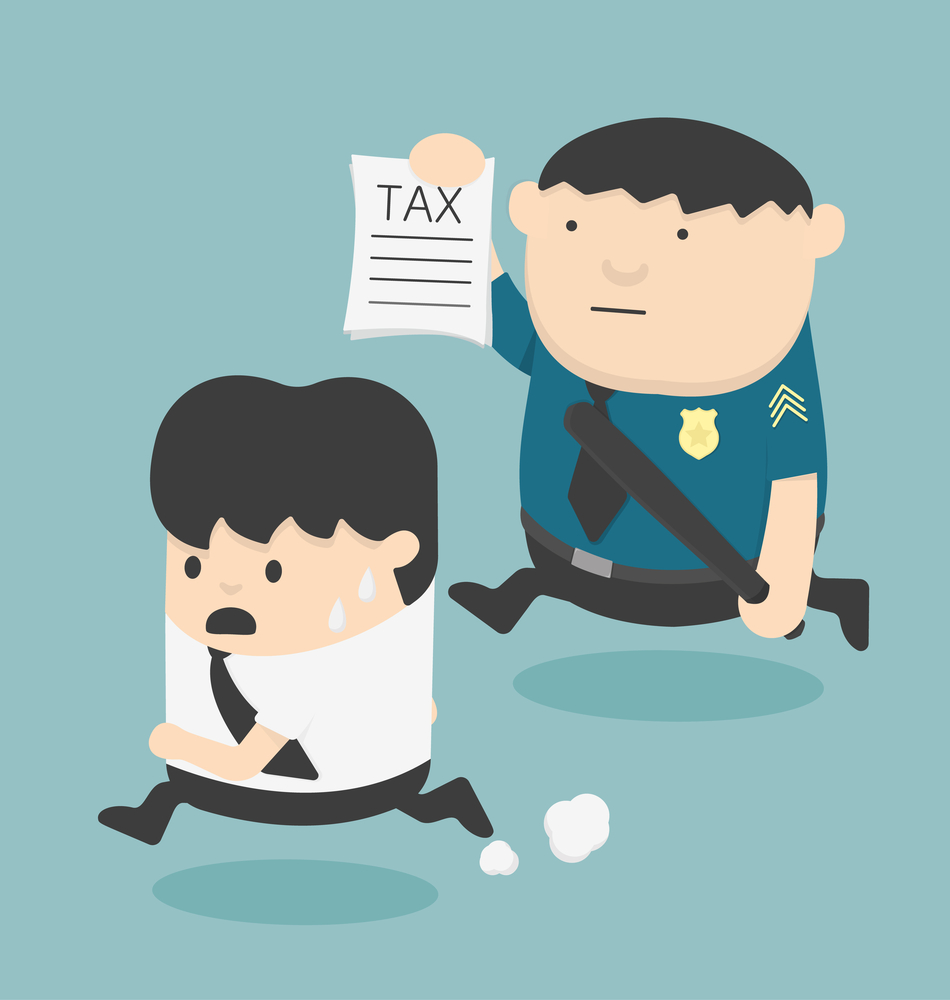
President Franklin Roosevelt used the IRS to harass newspaper publishers including William Randolph Hearst and Moses Annenberg, publisher of The Philadelphia Inquirer. FDR also dropped the IRS hammer on political critics such as Huey Long and Father Charles Coughlin and prominent Republicans like former Treasury Secretary Andrew Mellon. Perhaps Roosevelt’s most pernicious tax skulduggery occurred in 1944 when he spiked an IRS audit of massive illegal campaign contributions from a government contractor to Congressman Lyndon Johnson. LBJ’s career would likely have been destroyed if Texans had learned of his dirty-dealing. Instead, LBJ survived and scores of thousands of Americans and more than a million Vietnamese died as a result.
One hundred years ago, Senator James Couzens, a Michigan Republican, took to the Senate floor to denounce the Bureau of Internal Revenue for abusing its power and trampling innocent taxpayers. Couzens launched a sweeping Senate investigation of federal tax collectors. One year later, Internal Revenue Commissioner David Blair personally delivered a demand for $10 million in back taxes as Couzens stepped out of the Senate chamber. Couzens fought the case, and eventually proved that he had actually overpaid his taxes by roughly one million dollars, as David Burnham noted in his 1989 classic, A Law Unto Itself: The IRS and the Abuse of Power. But the precedent of the IRS exploiting its power to attack its critics was firmly established.
President Franklin Roosevelt used the IRS to harass newspaper publishers including William Randolph Hearst and Moses Annenberg, publisher of The Philadelphia Inquirer. FDR also dropped the IRS hammer on political critics such as Huey Long and Father Charles Coughlin and prominent Republicans like former Treasury Secretary Andrew Mellon. Perhaps Roosevelt’s most pernicious tax skulduggery occurred in 1944 when he spiked an IRS audit of massive illegal campaign contributions from a government contractor to Congressman Lyndon Johnson. LBJ’s career would likely have been destroyed if Texans had learned of his dirty-dealing. Instead, LBJ survived and scores of thousands of Americans and more than a million Vietnamese died as a result.
President John F. Kennedy raised the political exploitation of the IRS to an art form. Shortly after capturing the presidency, JFK denounced “the discordant voices of extremism” and derided people “who would sow the seeds of doubt and hate” and make Americans distrust their leaders.
At a news conference a few days later, a reporter sought his views on the legality of campaign contributions supporting ”right-wing extremist groups.” Kennedy replied “As long as they meet the requirements of the tax law, I don’t think that the Federal Government can interfere or should interfere with the right of any individual to take any position he wants. The only thing we should be concerned about is that it does not represent a diversion of funds which might be taxable to—for nontaxable purposes. But that is another question, and I am sure the Internal Revenue system examines that.”
Actually, JFK heavily elbowed the IRS to make sure that they targeted the tax-exempt status of conservative organizations that had criticized Kennedy or his agenda. The IRS launched the Ideological Organizations Audit Project which targeted numerous right-leaning groups, including the Christian Anti-Communist Crusade and the American Enterprise Institute. Shortly before his assassination, Kennedy specified that he wanted an “aggressive program” against the IRS targets. JFK also used the IRS to bolster compliance with “voluntary” price controls, targeting steel executives who defied the administration for audits.
A 1976 Senate report noted, “By directing tax audits at individuals and groups solely because of their political beliefs, the Ideological Organizations Audit Project established a precedent for a far more elaborate program of targeting ‘dissidents.’” After Richard Nixon took office, his administration quickly created a Special Services Staff (SSS) to mastermind “all IRS activities involving ideological, militant, subversive, radical, and similar type organizations.” More than 10,000 individuals and groups were targeted because of their political activism or slant between 1969 and 1973, including Nobel Laureate Linus Pauling and the John Birch Society. The IRS was also given a list of Nixon’s official enemies to, in the words of White House counsel John Dean, “use the available federal machinery to screw our political enemies.” Contributors to the Democratic Party were also high on Nixon’s target list as were many left-leaning organizations.
The Nixon administration also vastly expanded a secret computer database—the “Intelligence Gathering and Retrieval System” the IRS began in 1963 to sweep up information on individual Americans and groups. By 1975, the IRS had stockpiled data on almost half a million persons and groups; the program was abolished after its existence became known outside of official circles.
The exposure of Nixon’s IRS abuses profoundly weakened him during the uproar after the Watergate hotel break-in. The second article of his 1974 impeachment charged him with endeavoring to “obtain from the IRS…confidential information contained in income tax returns for purposed not authorized by law, and to cause, in violation of the constitutional rights of citizens, income tax audits or other income tax investigations to be initiated or conducted in a discriminatory manner.” Congress enacted legislation to severely restrict political contacts between the White House and the IRS.
But the IRS continued its freelance work. After Senator Joe Montoya of New Mexico announced plans in 1972 to hold hearings on IRS abuses, the agency added his name to a list of tax protestors who were capable of violence against IRS agents. When IRS Commissioner Donald Alexander was challenged on the listing at a 1975 Senate hearing, he replied, “The only connection that I can think of immediately is that Senator Montoya is, after all, the Chairman of the IRS Appropriations Subcommittee, and some one might have thought that he did violence to our appropriation.” Information from the an IRS investigation of Montoya was leaked to The Washington Post. Partly as a result of the IRS leak, Montoya lost his reelection bid.
In the following decades, the IRS regularly sparked outrage by abusing innocent taxpayers but there was scant controversy about the agency’s politicalization until Bill Clinton took office. In 1995, the White House and the Democratic National Committee produced a 331-page report entitled “Communication Stream of Conspiracy Commerce” which attacked magazines, think tanks, and other entities and individuals who had criticized President Clinton. In the subsequent years, many organizations mentioned in the White House report were hit by IRS audits. More than twenty conservative organizations—including the Heritage Foundation and The American Spectator—and almost a dozen high-profile Clinton critics were audited.
After Barack Obama was elected president, conservative groups mobilized to resist his policies. By mid-2010, conservative organizations were complaining of harassment by the IRS. IRS officials created a BOLO list—“Be On the Look Out”—for conservative organizations applying for nonprofit tax status.
Many volumes have been written about the Great Depression and its impact on the lives of millions of Americans. Historians, economists, and politicians have all combed the wreckage searching for the “black box” that will reveal the cause of this legendary tragedy. Sadly, all too many of them decide to abandon their search, finding it easier perhaps to circulate a host of false and harmful conclusions about the events that caused the Great Depression seven decades ago.
How bad was the Great Depression? Over the four years from 1929 to 1933, production at the nation’s factories, mines, and utilities fell by more than half. People’s real disposable incomes dropped 28 percent. Stock prices collapsed to one-tenth of their pre-crash height. The number of unemployed Americans rose from 1.6 million in 1929 to 12.8 million in 1933. One of every four workers was out of a job at the Depression’s nadir, and ugly rumors of revolt simmered for the first time since the Civil War.
Old myths never die; they just keep showing up in college economics and political science textbooks. Students today are frequently taught that unfettered free enterprise collapsed of its own weight in 1929, paving the way for a decade-long economic depression full of hardship and misery. President Herbert Hoover is presented as an advocate of “hands-off,” or laissez-faire, economic policy, while his successor, Franklin Roosevelt, is the economic savior whose policies brought us recovery. This popular account of the Depression belongs in a book of fairy tales and not in a serious discussion of economic history, as a review of the facts demonstrates.
The Great, Great, Great, Great Depression
To properly understand the events of the time, it is appropriate to view the Great Depression as not one, but four consecutive depressions rolled into one. Professor Hans Sennholz has labeled these four “phases” as follows: the business cycle; the disintegration of the world economy; the New Deal; and the Wagner Act.[1]
The first phase explains why the crash of 1929 happened in the first place; the other three show how government intervention kept the economy in a stupor for over a decade.
Phase I: The Business Cycle
The Great Depression was not the country’s first depression, though it proved to be the longest. The common thread woven through the several earlier debacles was disastrous manipulation of the money supply by government. For various reasons, government policies were adopted that ballooned the quantity of money and credit. A boom resulted, followed later by a painful day of reckoning. None of America’s depressions prior to 1929, however, lasted more than four years and most of them were over in two. The Great Depression lasted for a dozen years because the government compounded its monetary errors with a series of harmful interventions.
Most monetary economists, particularly those of the “Austrian school,” have observed the close relationship between money supply and economic activity. When government inflates the money and credit supply, interest rates at first fall. Businesses invest this “easy money” in new production projects and a boom takes place in capital goods. As the boom matures, business costs rise, interest rates readjust upward, and profits are squeezed. The easy-money effects thus wear off and the monetary authorities, fearing price inflation, slow the growth of or even contract the money supply. In either case, the manipulation is enough to knock out the shaky supports from underneath the economic house of cards.
One of the most thorough and meticulously documented accounts of the Fed’s inflationary actions prior to 1929 is America’s Great Depression by the late Murray Rothbard. Using a broad measure that includes currency, demand and time deposits, and other ingredients, Rothbard estimated that the Federal Reserve expanded the money supply by more than 60 percent from mid-1921 to mid-1929.[2] The flood of easy money drove interest rates down, pushed the stock market to dizzy heights, and gave birth to the “Roaring Twenties.”
By early 1929, the Federal Reserve was taking the punch away from the party. It choked off the money supply, raised interest rates, and for the next three years presided over a money supply that shrank by 30 percent. This deflation following the inflation wrenched the economy from tremendous boom to colossal bust.
The “smart” money—the Bernard Baruchs and the Joseph Kennedys who watched things like money supply—saw that the party was coming to an end before most other Americans did. Baruch actually began selling stocks and buying bonds and gold as early as 1928; Kennedy did likewise, commenting, “only a fool holds out for the top dollar.”[3]
When the masses of investors eventually sensed the change in Fed policy, the stampede was underway. The stock market, after nearly two months of moderate decline, plunged on “Black Thursday”—October 24, 1929—as the pessimistic view of large and knowledgeable investors spread.
The stock market crash was only a symptom—not the cause—of the Great Depression: the market rose and fell in near synchronization with what the Fed was doing.
Phase II: Disintegration of the World Economy
If this crash had been like previous ones, the subsequent hard times might have ended in a year or two. But unprecedented political bungling instead prolonged the misery for twelve long years.
Unemployment in 1930 averaged a mildly recessionary 8.9 percent, up from 3.2 percent in 1929. It shot up rapidly until peaking out at more than 25 percent in 1933. Until March 1933, these were the years of President Herbert Hoover—the man that anti-capitalists depict as a champion of noninterventionist, laissez-faire economics.
Did Hoover really subscribe to a “hands off the economy,” free-market philosophy? His opponent in the 1932 election, Franklin Roosevelt, didn’t think so. During the campaign, Roosevelt blasted Hoover for spending and taxing too much, boosting the national debt, choking off trade, and putting millions of people on the dole. He accused the president of “reckless and extravagant” spending, of thinking “that we ought to center control of everything in Washington as rapidly as possible,” and of presiding over “the greatest spending administration in peacetime in all of history.” Roosevelt’s running mate, John Nance Garner, charged that Hoover was “leading the country down the path of socialism.”[4] Contrary to the modern myth about Hoover, Roosevelt and Garner were absolutely right.
The crowning folly of the Hoover administration was the Smoot-Hawley Tariff, passed in June 1930. It came on top of the Fordney-McCumber Tariff of 1922, which had already put American agriculture in a tailspin during the preceding decade. The most protectionist legislation in U.S. history, Smoot-Hawley virtually closed the borders to foreign goods and ignited a vicious international trade war. Professor Barry Poulson notes that not only were 887 tariffs sharply increased, but the act broadened the list of dutiable commodities to 3,218 items as well.[5]
Officials in the administration and in Congress believed that raising trade barriers would force Americans to buy more goods made at home, which would solve the nagging unemployment problem. They ignored an important principle of international commerce: trade is ultimately a two-way street; if foreigners cannot sell their goods here, then they cannot earn the dollars they need to buy here.
Foreign companies and their workers were flattened by Smoot-Hawley’s steep tariff rates, and foreign governments soon retaliated with trade barriers of their own. With their ability to sell in the American market severely hampered, they curtailed their purchases of American goods. American agriculture was particularly hard hit. With a stroke of the presidential pen, farmers in this country lost nearly a third of their markets. Farm prices plummeted and tens of thousands of farmers went bankrupt. With the collapse of agriculture, rural banks failed in record numbers, dragging down hundreds of thousands of their customers.
Hoover dramatically increased government spending for subsidy and relief schemes. In the space of one year alone, from 1930 to 1931, the federal government’s share of GNP increased by about one-third.
Hoover’s agricultural bureaucracy doled out hundreds of millions of dollars to wheat and cotton farmers even as the new tariffs wiped out their markets. His Reconstruction Finance Corporation ladled out billions more in business subsidies. Commenting decades later on Hoover’s administration, Rexford Guy Tugwell, one of the architects of Franklin Roosevelt’s policies of the 1930s, explained, “We didn’t admit it at the time, but practically the whole New Deal was extrapolated from programs that Hoover started.”[6]
To compound the folly of high tariffs and huge subsidies, Congress then passed and Hoover signed the Revenue Act of 1932. It doubled the income tax for most Americans; the top bracket more than doubled, going from 24 percent to 63 percent. Exemptions were lowered; the earned income credit was abolished; corporate and estate taxes were raised; new gift, gasoline, and auto taxes were imposed; and postal rates were sharply hiked.
Can any serious scholar observe the Hoover administration’s massive economic intervention and, with a straight face, pronounce the inevitably deleterious effects as the fault of free markets?
Phase III: The New Deal
Franklin Delano Roosevelt won the 1932 presidential election in a landslide, collecting 472 electoral votes to just 59 for the incumbent Herbert Hoover. The platform of the Democratic Party whose ticket Roosevelt headed declared, “We believe that a party platform is a covenant with the people to be faithfully kept by the party entrusted with power.” It called for a 25 percent reduction in federal spending, a balanced federal budget, a sound gold currency “to be preserved at all hazards,” the removal of government from areas that belonged more appropriately to private enterprise, and an end to the “extravagance” of Hoover’s farm programs. This is what candidate Roosevelt promised, but it bears no resemblance to what President Roosevelt actually delivered.
In the first year of the New Deal, Roosevelt proposed spending $10 billion while revenues were only $3 billion. Between 1933 and 1936, government expenditures rose by more than 83 percent. Federal debt skyrocketed by 73 percent.
Roosevelt secured passage of the Agricultural Adjustment Act (AAA), which levied a new tax on agricultural processors and used the revenue to supervise the wholesale destruction of valuable crops and cattle. Federal agents oversaw the ugly spectacle of perfectly good fields of cotton, wheat, and corn being plowed under. Healthy cattle, sheep, and pigs by the millions were slaughtered and buried in mass graves.
Even if the AAA had helped farmers by curtailing supplies and raising prices, it could have done so only by hurting millions of others who had to pay those prices or make do with less to eat.
Perhaps the most radical aspect of the New Deal was the National Industrial Recovery Act (NIRA), passed in June 1933, which set up the National Recovery Administration (NRA). Under the NIRA, most manufacturing industries were suddenly forced into government-mandated cartels. Codes that regulated prices and terms of sale briefly transformed much of the American economy into a fascist-style arrangement, while the NRA was financed by new taxes on the very industries it controlled. Some economists have estimated that the NRA boosted the cost of doing business by an average of 40 percent—not something a depressed economy needed for recovery.
Like Hoover before him, Roosevelt signed into law steep income tax rate increases for the high brackets and introduced a 5 percent withholding tax on corporate dividends. In fact, tax hikes became a favorite policy of the president’s for the next ten years, culminating in a top income tax rate of 94 percent during the last year of World War II. His alphabet agency commissars spent the public’s tax money like it was so much bilge.
For example, Roosevelt’s public relief programs hired actors to give free shows and librarians to catalogue archives. The New Deal even paid researchers to study the history of the safety pin, hired 100 Washington workers to patrol the streets with balloons to frighten starlings away from public buildings, and put men on the public payroll to chase tumbleweeds on windy days.
Roosevelt created the Civil Works Administration in November 1933 and ended it in March 1934, though the unfinished projects were transferred to the Federal Emergency Relief Administration. Roosevelt had assured Congress in his State of the Union message that any new such program would be abolished within a year. “The federal government,” said the President, “must and shall quit this business of relief. I am not willing that the vitality of our people be further stopped by the giving of cash, of market baskets, of a few bits of weekly work cutting grass, raking leaves, or picking up papers in the public parks.”
But in 1935 the Works Progress Administration came along. It is known today as the very government program that gave rise to the new term, “boondoggle,” because it “produced” a lot more than the 77,000 bridges and 116,000 buildings to which its advocates loved to point as evidence of its efficacy.[7] The stupefying roster of wasteful spending generated by these jobs programs represented a diversion of valuable resources to politically motivated and economically counterproductive purposes.
The American economy was soon relieved of the burden of some of the New Deal’s excesses when the Supreme Court outlawed the NRA in 1935 and the AAA in 1936, earning Roosevelt’s eternal wrath and derision. Recognizing much of what Roosevelt did as unconstitutional, the “nine old men” of the Court also threw out other, more minor acts and programs which hindered recovery.
Freed from the worst of the New Deal, the economy showed some signs of life. Unemployment dropped to 18 percent in 1935, 14 percent in 1936, and even lower in 1937. But by 1938, it was back up to 20 percent as the economy slumped again. The stock market crashed nearly 50 percent between August 1937 and March 1938. The “economic stimulus” of Franklin Roosevelt’s New Deal had achieved a real “first”: a depression within a depression!
Phase IV: The Wagner Act
The stage was set for the 1937–38 collapse with the passage of the National Labor Relations Act in 1935—better known as the Wagner Act and organized labor’s “Magna Carta.” To quote Hans Sennholz again:
This law revolutionized American labor relations. It took labor disputes out of the courts of law and brought them under a newly created Federal agency, the National Labor Relations Board, which became prosecutor, judge, and jury, all in one. Labor union sympathizers on the Board further perverted this law, which already afforded legal immunities and privileges to labor unions. The U.S. thereby abandoned a great achievement of Western civilization, equality under the law.[8]
Armed with these sweeping new powers, labor unions went on a militant organizing frenzy. Threats, boycotts, strikes, seizures of plants, and widespread violence pushed productivity down sharply and unemployment up dramatically. Membership in the nation’s labor unions soared; by 1941 there were two and a half times as many Americans in unions as in 1935.
From the White House on the heels of the Wagner Act came a thunderous barrage of insults against business. Businessmen, Roosevelt fumed, were obstacles on the road to recovery. New strictures on the stock market were imposed. A tax on corporate retained earnings, called the “undistributed profits tax,” was levied. “These soak-the-rich efforts,” writes economist Robert Higgs, “left little doubt that the president and his administration intended to push through Congress everything they could to extract wealth from the high-income earners responsible for making the bulk of the nation’s decisions about private investment.”[9]
Higgs draws a close connection between the level of private investment and the course of the American economy in the 1930s. The relentless assaults of the Roosevelt administration—in both word and deed—against business, property, and free enterprise guaranteed that the capital needed to jumpstart the economy was either taxed away or forced into hiding. When Roosevelt took America to war in 1941, he eased up on his antibusiness agenda, but a great deal of the nation’s capital was diverted into the war effort instead of into plant expansion or consumer goods. Not until both Roosevelt and the war were gone did investors feel confident enough to “set in motion the postwar investment boom that powered the economy’s return to sustained prosperity.”[10]
Whither Free Enterprise?
On the eve of America’s entry into World War II and twelve years after the stock market crash of Black Thursday, ten million Americans were jobless. Roosevelt had pledged in 1932 to end the crisis, but it persisted two presidential terms and countless interventions later.
Along with the horror of World War II came a revival of trade with America’s allies. The war’s destruction of people and resources did not help the U.S. economy, but this renewed trade did. More important, the Truman administration that followed Roosevelt was decidedly less eager to berate and bludgeon private investors, and as a result, those investors came back into the economy to fuel a powerful postwar boom.
The genesis of the Great Depression lay in the inflationary monetary policies of the U.S. government in the 1920s. It was prolonged and exacerbated by a litany of political missteps: trade-crushing tariffs, incentive-sapping taxes, mind-numbing controls on production and competition, senseless destruction of crops and cattle, and coercive labor laws, to recount just a few. It was not the free market that produced twelve years of agony; rather, it was political bungling on a scale as grand as there ever was.
Notes
Hans F. Sennholz, “The Great Depression,” The Freeman, April 1975, p. 205.
Murray Rothbard, America’s Great Depression (Kansas City: Sheed and Ward, Inc., 1975), p. 89.
Lindley H. Clark, Jr., “After the Fall,” Wall Street Journal, October 26, 1979, p. 18.
“FDR’s Disputed Legacy,” Time, February 1, 1982, p. 23.
Barry W. Poulson, Economic History of the United States (New York: Macmillan Publishing Co., Inc., 1981), p. 508.
Paul Johnson, A History of the American People (New York: HarperCollins Publishers, 1997), p. 741.
Martin Morse Wooster, “Bring Back the WPA? It Also Had A Seamy Side,” Wall Street Journal, September 3, 1986, p. A26.
Sennholz, pp. 212–13.
Robert Higgs, “Regime Uncertainty: Why the Great Depression Lasted So Long and Why Prosperity Resumed After the War,” The Independent Review, Spring 1997, p. 573.
Roosevelt’s Lend-Lease program was a major factor in Russia’s salvation. The list of goods that Roosevelt committed to send to the Soviet Union was astounding. It included shipments every month of 400 planes, 500 tanks, 5,000 cars, 10,000 trucks and huge quantities of anti-tank guns, anti-aircraft guns, diesel generators, field telephones, radios, motorcycles, wheat, flour, sugar, 200,000 pairs of boots, 500,000 pairs of surgical gloves and 15,000 amputation saws. By the end of October 1941, ships were carrying 100 bombers, 100 fighter planes, 166 tanks all with spare parts and ammunition, plus 5,500 trucks. (5)
The siege of Moscow lasted from Oct 1941 to Jan 1942, it would claim 926,000 Soviet lives before it ended.
The Soviet Union was receiving supplies from the U.S., but it was taking the full brunt of the Wehrmacht army on their own.
According to WWII historian and authority on Nazi Germany Gerhard Weinberg, the German military’s own figures show that ten thousand Russian prisoners of war were shot or killed by hunger and disease EVERY SINGLE DAY for the first seven months of the war.
“Madman, thou errest. I say, there is no darkness but ignorance”
– William Shakespeare (Twelfth Night)
There is a very real attempt to rewrite history as we speak. A history that is at the root of what organises our world today, for it is understood that who controls the past, will have control over our present and our future.
This attempt to rewrite history is of the most paramount significance because it is what is used today to shape who we regard as a “friend” and who we regard as a “foe.” Thus who controls the “narrative” of history, will also control who we see ourselves “aligned” with.
There is a consequence to this which can only lead to further disunity, to further conflict, to further war. It can only be remedied when the past is finally acknowledged.
There is still time to change this dreadful course.
A Meeting of Minds
The Tehran conference (Nov 28 – Dec 1, 1943) was the first time that Roosevelt and Stalin met in person. It was a historic meeting of the two most important leaders of the Allies that would shape the outcome of WWII.
Roosevelt had been trying to set up a meeting for more than a year, the meeting was of utmost importance because it would allow the two leaders to begin a basis for a solid “trust” to be formed, essential to not only winning the war but for maintaining a stable peace afterwards.
Over four years into WII had passed, and the level of distrust, fear and hatred for the Soviets was still prevalent in the political and military circles within the United States.
This was especially the case within the State Department career officers who were against FDR’s recognition of the Soviet Union in 1933, and thus antagonism to him and his policies were pervasive (1). When Harry Hopkins, FDR’s closest advisor on foreign policy during WWII, was sent to Europe to check in on the foreign service, he had found many U.S. embassies and legations still displaying the portrait of Herbert Hoover on their walls instead of FDR.
George Keenan, best known as the author of the Cold War strategy of “containment,” was among many of similar fibre, who opposed FDR’s recognition of the Soviet Union, stating: “We should have no relationship at all with them…Never- neither then nor at any later date- did I consider the Soviet Union a fit ally or associate, actual or potential, for this country.”
The Foreign Services’ anti-Soviet attitude ran so deep that most were against aid to Russia even after Hitler had invaded, despite the Soviets losing more lives against the Nazis in the first few months than all of Europe combined.
Churchill himself made it no secret that he wanted to make sure Germany would emerge from the war strong enough to counterbalance Russia in Europe (strong… but as he sought to soothingly explain not dangerous).
However, Roosevelt would be the first to recognize that the ever growing barbarism of Hitler was much more dangerous than these foreign intelligence circles were estimating, and that Russia was an imperative ally, in fact the only ally, that could ensure its defeat.
The Tehran conference was a great success in collaborative strategy to win the war, but more importantly, it was a great diplomatic success that would begin one of the most important alliances to have ever occurred in modern history.
The Truth Behind the Molotov-Ribbentrop Pact
In 1936, Stalin had predicted how German aggression would break out upon the world:
“History shows that when any state intends to make war against another state…it begins to seek frontiers across which it can reach the frontiers of the state it wants to attack…I do not know precisely what frontiers Germany may adapt to her aims, but I think she will find people willing to ‘lend’ her a frontier.”
These statements were made before the Munich Agreement which was just that, a “lending of a frontier.”
On March 18th 1939 at Stalin’s direction Litvinov, Soviet Commissar for Foreign Affairs, proposed that France, Britain, Poland, Russia, Romania and Turkey join together at a conference to draw up a treaty to stop Hitler. Chamberlain was strongly against the idea, writing to a friend: “I must confess to the most profound distrust of Russia. I have no belief whatever in her ability to maintain an effective offensive, even if she wanted to. And I distrust her motives.” (2)
On April 14th 1939, Lord Halifax, British Foreign Minister said that Britain would not extend an alliance to Russia in case Germany were to attack. Russia was clearly being told to go at it alone.
On April 16th 1939, Stalin had Litvinov propose to Sir William Seeds the British ambassador, that Russia, France and Britain make a pact that would bind their three countries to declare war on Germany if they or any nation between the Baltic and the Mediterranean were attacked.
Great Britain and France refused.
The Munich Betrayal had already been signed Sept 30th 1938, where Britain had “allowed” Hitler’s annexation of the German speaking territory of Czechoslovakia, as if it were a British colony that it could do with as it wished.
In addition, the Bank of England and the Bank of International Settlements, through BoE Governor Montague Norman, allowed for the direct transfer of 5.6 million pounds worth of gold to Hitler that was owned by the Bank of Czechoslovakia.
And lastly, that Prescott Bush on behalf of Union Banking was caught funding Hitler before and during WWII and on Oct 20th, 1942 had its bank assets seized under the “U.S. Trading with the Enemy Act.”
Despite all of this, it is the Molotov-Ribbentrop Pact that has been selected by “historians” to go down in history as a deep stain on the moral character and true “face” of the Soviet Union. Confirmation that the Russians should never be trusted, for they would side with whoever wielded the greatest power, no matter the ideologies held.
This could not be further from the truth, and is in fact a gross disregard of the responsibility that Great Britain and France held in creating such a desperate situation for the Soviet Union. They had left her destitute because they wanted to see her destroyed.
Stalin was under no illusion. He knew that it was an impossibility for the USSR to coexist with a Nazi Germany, specifically because the existence of the Slavic people was considered unacceptable to the latter. Hitler, who described this belief in detail in his Mein Kampf, made no secret that he thought the Slavic people an inferior race and that after his conquest he planned to turn Russia and Poland into slave nations. Hitler would boast “The conflict [in the east] will be different from the conflict in the west.” The people of the west were to be subdued, the people of the east were to be annihilated.
Poland’s foreign minister Josef Beck who controlled foreign policy was strongly pro-German, and was adamant that Germany would never invade Poland. Some say Beck was a Nazi agent. It is curious that his son Anthony would in fact find after his father’s death, among his possessions an entire album filled with photos of Beck posing with Nazi generals and various officials of the Nazi government elite. (3)
Poland’s refusal to strategise a defense put the Soviet Union in an understandably difficult situation, since Poland shared a border with them. If Poland were to be invaded it would be used as a launching pad to attack the USSR, which had happened numerous times in the recent past, including during WWI.
Despite the fact that Poland would have absolutely no ability to defend itself in the case of a German invasion, Lord Halifax used as his excuse for putting off serious negotiations with the USSR that it was due to Josef Beck’s refusal to allow Russian soldiers to enter Poland, even if it were to drive back a Nazi army…who wanted to exterminate the Polish race as Hitler explicitly stated repeatedly. Read the rest of this entry »
Two years earlier, Congress enacted the Emergency Price Control Act, which created an Office of Price Administration with sweeping power to set or strike down prices in practically any industry.
Franklin Roosevelt did more than any other modern president to corrupt Americans’ understanding of freedom. Last week was the 75th anniversary of his 1944 speech calling for a second Bill of Rights to guarantee economic freedom to Americans. Nation magazine whooped up the anniversary, proclaiming that Democrats now have a “unique—and likely fleeting—opportunity to deliver where FDR fell short” with vast new government programs.
The 1944 speech, given as the tide in World War Two was finally turning, was a followup of his 1941 “Four Freedoms” speech which exploited Americans’ rising apprehensions tosee far more power for the government. Roosevelt promised citizens freedom of speech and freedom of worship and then, as if he was merely enumerating other self-evident rights, declared: “The third [freedom] is freedom from want . . . everywhere in the world. The fourth is freedom from fear . . . anywhere in the world.” Proclaiming a goal of freedom from fear meant that government should fill the role in daily life previously filled by God and religion. Politicians are the biggest fearmongers, and “freedom from fear” would justify seizing new power in response to every bogus federal alarm… Read the rest of this entry »
Progressivism stands for the proposition that freedom , liberty, voluntary cooperation, and the free market are not enough. To best improve life, the state must intervene with men and women carrying guns and willing to use them against resistance and break up those voluntary relations and impose its will by brute force to achieve different and presumably better results. At the bottom of progressivism is a quasi-religious belief in state action (force) over individual choice.
This is the definition of Progressivism as defined in James Ostrowski’s book on the greatest threat to liberty this country has seen. Progressivism -A Primer on the Idea Destroying America.
Ostrowski defines and describes Progressvisim, its failures and how neoconservatives have grown to employ its precepts.
“Progressivism -A Primer on the Idea Destroying America” is a great starting point for anyone new to and wanting to learn about Progressive philosophy. Read the rest of this entry »





 MCViewPoint