


For the United States today, the problem turns out to be similar to the one that beset the nation during the period leading up to World War II: not isolationism but overstretch, compounded by indolence. The present-day disparities between our aspirations, commitments, and capacities to act are enormous.
The core questions, submerged today as they were on the eve of U.S. entry into World War II, are these: What does freedom require? How much will it cost? And who will pay?
https://harpers.org/archive/2020/03/the-old-normal-united-states-addiction-to-war-andrew-bacevich/

Addressing the graduating cadets at West Point in May 1942, General George C. Marshall, then the Army chief of staff, reduced the nation’s purpose in the global war it had recently joined to a single emphatic sentence. “We are determined,” he remarked, “that before the sun sets on this terrible struggle, our flag will be recognized throughout the world as a symbol of freedom on the one hand and of overwhelming force on the other.”
At the time Marshall spoke, mere months after the Japanese attack on Pearl Harbor, U.S. forces had sustained a string of painful setbacks and had yet to win a major battle. Eventual victory over Japan and Germany seemed anything but assured. Yet Marshall was already looking beyond the immediate challenges to define what that victory, when ultimately— and, in his view, inevitably—achieved, was going to signify.
This second world war of the twentieth century, Marshall understood, was going to be immense and immensely destructive. But if vast in scope, it would be limited in duration. The sun would set; the war would end. Today no such expectation exists. Marshall’s successors have come to view armed conflict as an open-ended proposition. The alarming turn in U.S.–Iranian relations is another reminder that war has become normal for the United States.
The address at West Point was not some frothy stump speech by a hack politician. Marshall was a deliberate man who chose his words carefully. His intent was to make a specific point: the United States was fighting not to restore peace—a word notably absent from his remarks—nor merely to eliminate an isolated threat. The overarching American aim was preeminence, both ideological and military: as a consequence of the ongoing war, America was henceforth to represent freedom and power—not in any particular region or hemisphere but throughout the world. Here, conveyed with crisp military candor, was an authoritative reframing of the nation’s strategic ambitions.1
Marshall’s statement captured the essence of what was to remain America’s purpose for decades to come, until the presidential election of 2016 signaled its rejection. That year an eminently qualified candidate who embodied a notably bellicose variant of the Marshall tradition lost to an opponent who openly mocked that tradition while possessing no qualifications for high office whatsoever.
Determined to treat Donald Trump as an unfortunate but correctable aberration, the foreign-policy establishment remains intent on salvaging the tradition that Marshall inaugurated back in 1942. The effort is misguided and will likely prove futile. For anyone concerned about American statecraft in recent years, the more pressing questions are these: first, whether an establishment deeply imbued with Marshall’s maxim can even acknowledge the magnitude of the repudiation it sustained at the hands of Trump and those who voted him into office (a repudiation that is not lessened by Trump’s failure to meet his promises to those voters); and second, whether this establishment can muster the imagination to devise an alternative tradition better suited to existing conditions while commanding the support of the American people. On neither score does the outlook appear promising.
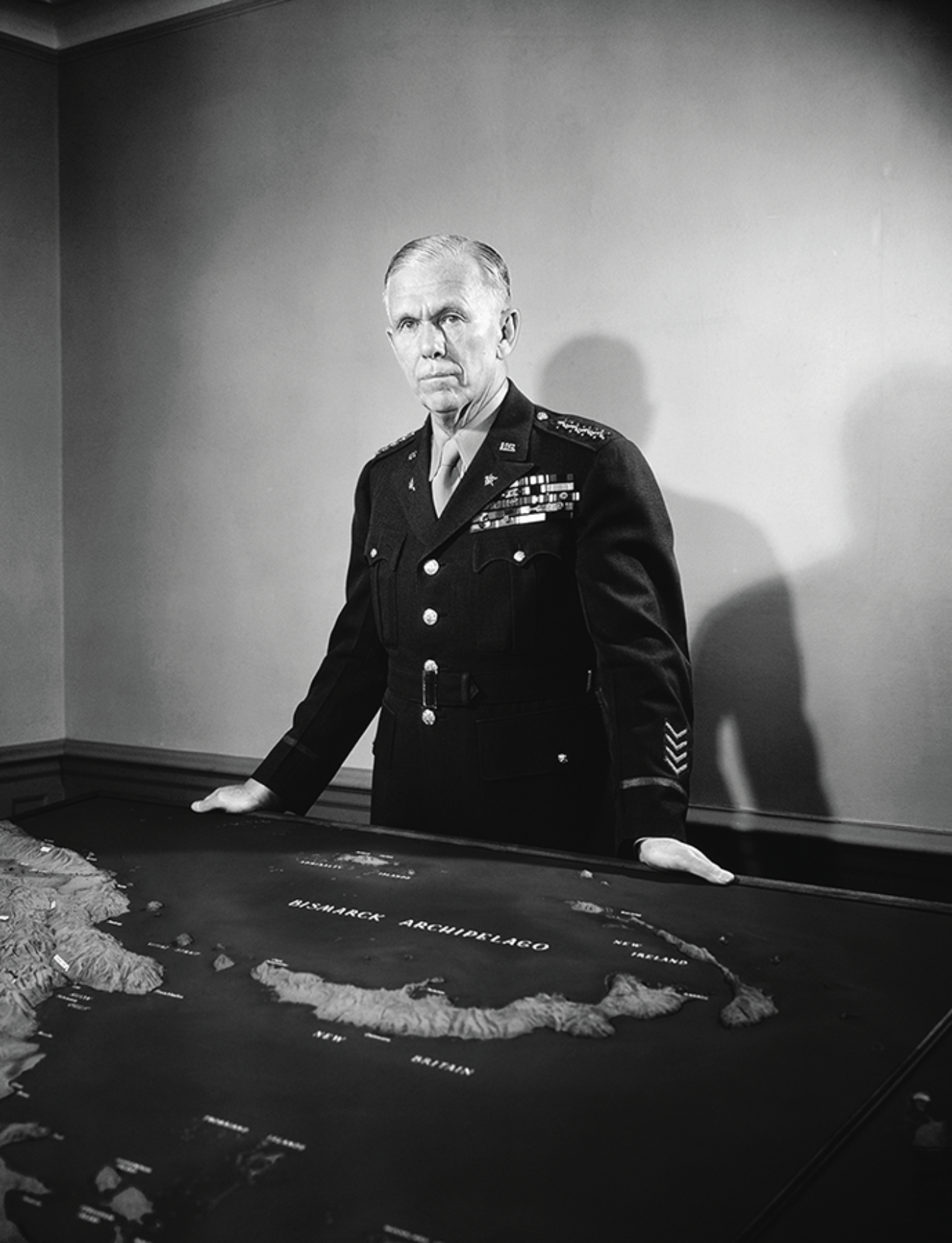
General George C. Marshall at the headquarters of the War Department, 1943 © Bettmann/Getty Images
General Marshall delivered his remarks at West Point in a singular context. Marshall gingerly referred to a “nationwide debate” that was complicating his efforts to raise what he called “a great citizen-army.” The debate was the controversy over whether the United States should intervene in the ongoing European war. To proponents of intervention, the issue at hand during the period of 1939 to 1941 was the need to confront the evil of Nazism. Opponents of intervention argued in the terms of a quite different question: whether or not to resume an expansionist project dating from the founding of the Republic. This dispute and its apparent resolution, misunderstood and misconstrued at the time, have been sources of confusion ever since.
Even today, most Americans are only dimly aware of the scope—one might even say the grandeur—of our expansionist project, which stands alongside racial oppression as an abiding theme of the American story. As far back as the 1780s, the Northwest Ordinances, which created the mechanism to incorporate the present-day Midwest into the Union, had made it clear that the United States had no intention of confining its reach to the territory encompassed within the boundaries of the original thirteen states. And while nineteenth-century presidents did not adhere to a consistent grand plan, they did pursue a de facto strategy of opportunistic expansion. Although the United States encountered resistance during the course of this remarkable ascent, virtually all of it was defeated. With the notable exception of the failed attempt to annex Canada during the War of 1812, expansionist efforts succeeded spectacularly and at a remarkably modest cost to the nation. By midcentury, the United States stretched from sea to shining sea.
Generations of Americans chose to enshrine this story of westward expansion as a heroic tale of advancing liberty, democracy, and civilization. Although that story certainly did include heroism, it also featured brute force, crafty maneuvering, and a knack for striking a bargain when the occasion presented itself.
In the popular imagination, the narrative of “how the West was won” to which I was introduced as a youngster has today lost much of its moral luster. Yet the country’s belated pangs of conscience have not induced any inclination to reapportion the spoils. While the idea of offering reparations to the offspring of former slaves may receive polite attention, no one proposes returning Florida to Spain, Tennessee and Georgia to the Cherokees, or California to Mexico. Properties seized, finagled, extorted, or paid for with cold, hard cash remain American in perpetuity.
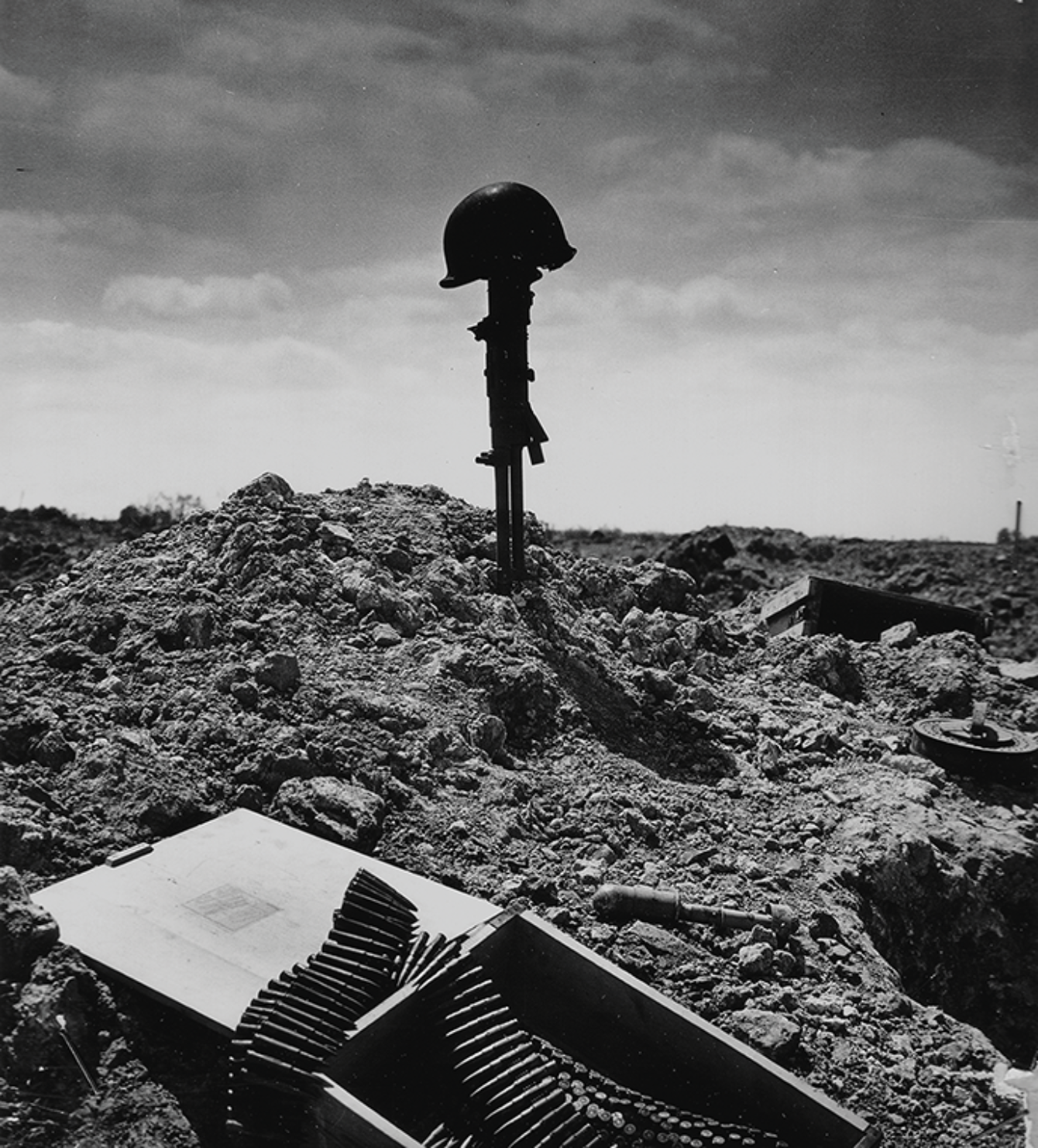
Battlefield memorial for a dead U.S. soldier, Normandy, France, 1944 (detail)
Back in 1899, the naturalist, historian, politician, sometime soldier, and future president Theodore Roosevelt neatly summarized the events of the century then drawing to a close: “Of course our whole national history has been one of expansion.” When T.R. uttered this truth, a fresh round of expansionism was under way, this time reaching beyond the fastness of North America into the surrounding seas and oceans. The United States was joining with Europeans in a profit-motivated intercontinental imperialism.
 MCViewPoint