


And if the nation should “protect” itself from other nations’ exports, Shouldn’t each U.S. state protect itself from the other states’ exports? How about each city and town? Or each neighborhood?
So who speaks up for real globalization? I have to add the adjective real because counterfeit globalization has been circulating for a while. That’s politically managed commerce where governments, most prominently the U.S. government, manage cross-border private trade and migration. When that happens, we — especially the poorest people in the world — not only miss out on the full wealth-creating benefits of worldwide freedom, but we also suffer all kinds of consequences that follow from bumbling politicians and bureaucrats making decisions for the rest.
https://libertarianinstitute.org/articles/tgif-hurrah-for-real-globalization/
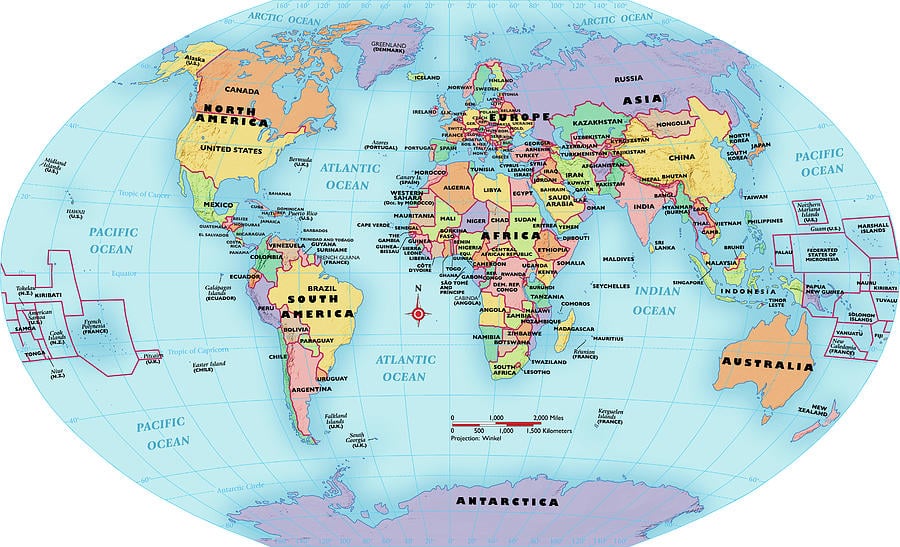
Globalization, like the free market and classical liberalism generally, isn’t wildly popular these days, is it? People blame globalization for all sorts of bad things, and the raps are usually bum. In truth, to the extent that governments keep out so-called foreign people, goods, and money, they make nearly everyone poorer. Even the few immediate beneficiaries pay a price in the long run.
So who speaks up for real globalization? I have to add the adjective real because counterfeit globalization has been circulating for a while. That’s politically managed commerce where governments, most prominently the U.S. government, manage cross-border private trade and migration. When that happens, we — especially the poorest people in the world — not only miss out on the full wealth-creating benefits of worldwide freedom, but we also suffer all kinds of consequences that follow from bumbling politicians and bureaucrats making decisions for the rest. Let’s have no more of that, if you please.
One of the top voices favoring real globalization is Deirdre N. McCloskey, the Cato Institute Distinguished Scholar and specialist in classical liberal history. McCloskey has been writing big and important books on how it was the growing acceptance of bourgeois virtues and culture over hundreds of years that lifted the world materially. McCloskey calls it the “Great Enrichment.” Most people don’t appreciate how rich we are in the West and how rich the world’s absolute poorest could be in fairly short order. Freeing individuals and the market is the key
A new essay by McClosely, “Globalization Creates a Global Neighborhood, Benefiting All,” is featured in a 12-part Cato series called “Globalization: Then and Now.” It’s an apt title for what McClosely sets out to do.
It begins:
The word “globalization” delights some and terrifies others. But it’s merely the gradual emergence [in] our world of a single economy.
It’s a natural and beneficial result of humans doing what humans have done since the beginning, making their families better off by working hard, inventing new stuff, keeping alert, looking around, making little deals, etc. The result of all this human liberty of choice has been globalization. At various scales of time, it’s been happening from the caves to the modern world, or from 1350 to 1800, or from 1776 to 2024.
That’s right. The international movement of people and wealth is not new, although it was never embraced wholeheartedly and uninterruptedly. Governments and other barriers, such as self-defeating cultural biases against foreigners and markets, got and still get in the way. But when those barriers are lowered or, better, are removed and governments loosen their grips, a single unified market emerges, with its tendencies toward one price through arbitrage (buy low, sell high), increased specialization and division of labor, higher productivity, more and cheaper known goods, and more innovation — that is, new things. Hence, people are enriched across the board, no matter where they began.
Prosperity has even spread to communist China and India, thanks to economic liberalization. (Political liberalization, on the other hand, was not embraced by China’s rulers, and the future of economic liberalization is by no means certain.) The same wealth-enhancing process would spread to other poor areas if rulers and bad values were repudiated by the people longing for better lives. It’s already happening, and McCloskey has the data. (The West can help by not insisting that the poor countries pretend that fossil fuels are destroying the planet — they aren’t. The poorest people need them badly, as do we all.)
“It’s all about liberty,” McCloskey writes.
In light of all this, why is “Buy American” so popular? It’s because people never learned to think economically or overcome self-defeating biases. That goes for politicians too. Spending more than necessary to buy so-called American-made goods (Really? No foreign parts whatsoever?) leaves buyers less money with which to buy other things (also hurting the makers of those things) and leaving foreign producers less money with which to buy American goods that can compete without government help. Don’t worry about the “balance of trade,” which Adam Smith knew was “absurd” in 1776. (Have you checked your trade deficit with your Amazon lately? Probably not.)
And if the nation should “protect” itself from other nations’ exports, Shouldn’t each U.S. state protect itself from the other states’ exports? How about each city and town? Or each neighborhood? Heck, let’s go all the way down to household self-sufficiency. That would create maximum employment. It would also create maximum poverty. Specialization and the division of labor saves and enhances lives, and as Adam Smith noted, “The division of labor is limited by the extent of the market.”
Be seeing you
 MCViewPoint