
MCViewPoint

Opinion from a Libertarian ViewPoint

Posts Tagged ‘Higher Education’

A Strategy To Restore Liberal Education – LewRockwell

Posted by M. C. on September 7, 2020

https://www.lewrockwell.com/2020/09/atilla-mert-sulker/a-strategy-to-restore-liberal-education/

By

This was originally published on Townhall.

The term “liberal education” is very commonly thrown around in American political discourse pertaining to higher education. But what does it really mean?

The University of Mississippi notes that a liberal education is “about nurturing human freedom by helping people discover and develop their talents.”

The Concise Oxford Dictionary of Politics defines liberalism as “the belief that it is the aim of politics to preserve individual rights and to maximize freedom of choice.”

A host of different political factions have adopted the label “liberal” over the years – each with differing views on economics and society. But liberalism – broadly conceived – always signified the welcoming of debate and an open society. It encouraged seeing all sides of the issue.

In higher education institutions, liberalism meant that students would be taught how to think, not what to think. What has emerged in recent years is hardly a liberal education. It is pure indoctrination.

What can those seeking to advance a genuine liberal education do?

Rage and frustration alone do not suffice in the effort to restore the liberal education. This indignation must be translated into tangible pressure put on the American higher education bureaucracy.

There are at least three ways in which pressure can surmount the higher education thought police:

1. Drying up money resources: The old cliché “money talks” never seems to fall short. The higher education bureaucracy consists of many people who couldn’t be categorized as leftists. Generally, these are centrist Republicans at best, and moderate Democrats at worst. Some decision makers may be on the far left, but these people generally don’t represent the majority.

On the other hand, far leftists are very vocal and can – to some extent – push around moderate and fair-minded administrators. At the end of the day, higher education administrators are required to raise funds for their university or college. Sometimes, this goes against the demands of leftist students and professors. But other times, raising money may well fall in line with certain “what to think” agendas. It’s easy to see how a mandatory anti-racism course can funnel in more money to a university.

Many wealthy conservatives also become big donors to universities. They are often blind to seeing that their contributions fund the efforts of leftist professors.

Thankfully, some efforts have been made to reach out to such people. DivestU, a project of Turning Point USA (of which I’m no fan of!), focuses on drying up the donor money stream to universities. Imagine if millions of dollars of donations all of a sudden disappeared. Administrators would have to change something.

Donors alone would not suffice. Fans who attend football games must be willing to forgo buying tickets. They must be willing to see that the same people who sell them overpriced tickets also imply the broader community – which includes fans – is “racist.”

Paradoxically, fans may even lose their mascots and the names of their favorite football stadiums if they keep giving universities money.

2. Embarrass higher education administrators: Too often, Americans get absorbed in abstract notions that the roles of policymakers and administrators encompass “uniting” the interests of everyone. More often than not, this means compromising something, or favoring one group over another. It is unwise to heckle policymakers, so the argument goes.

But this is precisely the way to take back the university. When administrators clearly bend the knee to small, vocal mobs of leftists, they need to be called out – in one form or another. Frustrated students should write to their local papers, try to appear on media outlets, and file complaints to their universities. Negative attention is a very tangible form of pressure on administrators.

One poll cites that Republican college students are three times more likely to self-censor than Democratic students. To bring back the liberal education, this epidemic of indifference must be reversed.

3. Troll the heck out of administrators: If all else fails, and students are forced to participate in mandatory “diversity” trainings, they may best be suited by trolling administrators – giving them a taste of their own medicine, so to speak.

For example, if students are told by staff that they are “inherently oppressive” and have “implicit biases” against LGBTQIA+ people, they may want to respond with something along these lines: “Why aren’t you voicing your concern for the rights of aromantic people? Why is this minority never represented? Therefore, why are you perpetuating hate and exclusivity?”

All in all, it doesn’t matter if a student uses this line, or a different one. The point is to completely delegitimize the efforts of leftists trying to indoctrinate students by arguing within their framework. Say things that are just as ridiculous as what they say.

The Future of Higher Education

There is a lesson to be learned from all of this: All it takes to sway and push around a diffident majority is a small, vocal, and vigilant mob. And this is how the academy was taken over.

Luckily, independent institutions have slowly been proliferating around the country, holding true to the promise of a liberal education. The Mises Institute – a free market economics educational organization in Auburn, Alabama – for example, recently launched a new graduate program, led by carefully selected professors from around the country.

This new decentralized approach to learning may pave the future of a free society. If the liberal education can’t be restored in universities, it will be restored elsewhere. No consolidation of power can stop the spread of powerful ideas.
Be seeing you


Posted in Uncategorized | Tagged: , , , , | Leave a Comment »

Are Universities Finished? – LewRockwell

Posted by M. C. on July 23, 2020

Maybe that is a good thing if we can start over from scratch.

https://www.lewrockwell.com/2020/07/lew-rockwell/are-universities-finished/

By

Higher education in America today is in a crisis. The diversity thought police pounce on anyone who offers the slightest resistance to them. Here are a few examples “Students at pricey Marymount Manhattan College are demanding a veteran professor be fired for allegedly falling asleep during an anti-racism Zoom meeting. Students at the Upper East Side school claim Patricia Simon, a theater arts associate professor, took a snooze during the virtual town hall last month, and have collected 1,800 petition signatures. Petition organizer Caitlin Gagnon said ‘action has only capitalized on a pattern of negligence and disrespect that Patricia Simon has exhibited over and over again.’ Gagnon included a photo of the 30-year prof, and also accused her of enabling ‘sizeist’ staffers.” A ‘sizeist,’ by the way, is someone who discriminates against people because of their physical size, e.g., requiring an obese person to pay for two seats. Of course, it doesn’t matter if the heavy person occupies two seats. If you charge more, you are still a sizeist.

If you dare to challenge the Black Lives Matter terrorists, you are dead in the water. “A longtime UCLA professor has been placed on leave after facing backlash over his response to a student’s request to postpone the final exam for African American students, considering the impact of George Floyd’s death. Gordon Klein received the email on June 2, and rejected the request. UCLA’s Anderson School of Management, where Klein has taught since 1981, said Klein’s classes have been assigned to other faculty, saying the following in a statement on Wednesday: ‘The lecturer is on leave from campus and his classes have been reassigned to other faculty.’”

Even if you like Martin Luther King, you can still get fired, if you say the wrong words. Look what happened to Ajax Peris: “In a virtual class lecture, Peris read a portion of King’s ‘Letter from a Birmingham Jail,’ which contains a couple of uses of the ‘N-word.’ On June 2, one UCLA student tweeted a video of Peris reading a passage from King’s letter, declining to omit the epithet, and expressed outrage at his uncensored reading and called for his termination. In short order, UCLA’s College of Letters and Science referred the matter to the Office of Equity, Diversity and Inclusion for review, and Peris’ department chair sent a letter to departmental faculty condemning his reading of the passage and noting that he had referred Peris to UCLA’s Discrimination Prevention Office. The chair also faulted Peris for showing portions of a documentary that included graphic images and descriptions of lynching, as well as narration that, the chair wrote, ‘quoted the n-word in explaining the history of lynching.’”

At Princeton, the situation is even worse. Matt Taibbi notes that “on July 4th, hundreds of faculty members and staff at Princeton University signed a group letter calling for radical changes. . . Much of . . . the letter read like someone drunk-tweeting their way through a Critical Theory seminar. Signatories asked the University to establish differing compensation levels according to race, demanding ‘course relief,’ ‘summer salary,’ ‘one additional semester of sabbatical,’ and ‘additional human resources’ for ‘faculty of color,’ a term left undefined. That this would be grossly illegal didn’t seem to bother the 300-plus signatories of one of America’s most prestigious learning institutions.”

When Joshua Katz, a classics professor at Princeton, protested against the letter’s demands, “University President Christopher Eisengruber ‘personally’denounced Katz for using the word “terrorist.” Katz was also denounced by his Classics department, which in a statement on the department web page insisted his act had ‘heedlessly put our Black colleagues, students, and alums at serious risk’ while hastening to add ‘we gratefully acknowledge all the forms of anti-racist work that members of our community have done.’”

One last example: BLM thugs are trying to oust the outstanding Austrian economist Walter Block from Loyola University in New Orleans, based on a demonstrably false claim that he supports slavery: “Walter Block is a professor in the Business school at Loyola University New Orleans. He has publicly stated that he believes slavery to be wrong because it goes against Libertarianism, not because it is morally wrong. He has justified women being paid less than men (see his book Building Blocks of Liberty) He is allegedly an ableist, too. While it is important to have professors with different views and opinions and beliefs, racist and sexist beliefs should not be a part of this. It is harmful to any non-men and any Black people to be taught that slavery isn’t morally wrong, to be taught that women don’t deserve to be paid and treated equally.
Fight racism, end racism, fire the racists. Fire Walter Block.”

As if this weren’t bad enough, universities are taking advantage of the phony Covid-19 pandemic to offer worse service for about the same astronomical tutition: “After the sudden closure of college campuses across the country in March due to the COVID-19 pandemic, the fate of the fall semester was suddenly placed into question. All eight schools in the Ivy League have announced fall 2020 decisions as of early July.  Penn, Brown, Cornell, Princeton, and Yale will all have hybrid modes of fall instruction, while Harvard will be completely online for the entire academic year. Each school has different decisions regarding which class years will come back to campus and where they will be housed during each school’s modified fall calendar.”

Professors have used the situation as an excuse to destroy already weakened academic standards. “As COVID-19 has forced classes online, colleges have eased up on graded assignments – even at the prestigious Ivy League schools. With professors and students advocating for automatic A’s or to be given passing grades at the minimum, many college administrations have surrendered highly generous grading policies to give students a break as coronavirus has taken its toll on the country”.

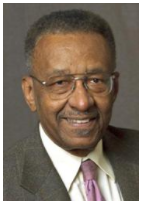
The crisis in higher education would not go away, even if we could get rid of Covid-19 and the PC thought police. Higher education has been in trouble for a long time.  As the great economist Walter Williams has pointed out, “According to the Bureau of Labor Statistics, in 2016, only 37% of white high school graduates tested as college-ready, but colleges admitted 70% of them. Roughly 17% of black high school graduates tested as college-ready, but colleges admitted 58% of them. A 2018 Hechinger Report found, ‘More than four in 10 college students end up in developmental math and English classes at an annual cost of approximately $7 billion, and many of them have a worse chance of eventually graduating than if they went straight into college-level classes.’

According to the National Conference of State Legislatures, ‘when considering all first-time undergraduates, studies have found anywhere from 28 percent to 40 percent of students enroll in at least one remedial course. When looking at only community college students, several studies have found remediation rates surpassing 50 percent.’ Only 25% of students who took the ACT in 2012 met the test’s readiness benchmarks in all four subjects (English, reading, math and science). Read the rest of this entry »

Posted in Uncategorized | Tagged: , , , , , | Leave a Comment »

Fraud in Higher Education – LewRockwell

Posted by M. C. on December 4, 2019

Here is a list of some other actual college courses that have been taught at U.S. colleges in recent years: “What If Harry Potter Is Real?” “Lady Gaga and the Sociology of Fame,” “Philosophy and Star Trek,” “Learning from YouTube,” “How To Watch Television,” and “Oh, Look, a Chicken!” The questions that immediately come to mind are these: What kind of professor would teach such courses, and what kind of student would spend his time taking such courses? Most importantly, what kind of college president and board of trustees would permit classes in such nonsense?

https://www.lewrockwell.com/2019/12/walter-e-williams/fraud-in-higher-education/

By

This year’s education scandal saw parents shelling out megabucks to gain college admittance for their children. Federal prosecutors have charged more than 50 people with participating in a scheme to get their children into colleges by cheating on entrance exams or bribing athletic coaches. They paid William Singer, a college-prep professional, more than $25 million to bribe coaches and university administrators and to change test scores on college admittance exams such as the SAT and ACT. As disgusting as this grossly dishonest behavior is, it is only the tiny tip of fraud in higher education.

According to the Bureau of Labor Statistics, in 2016, only 37% of white high school graduates tested as college-ready, but colleges admitted 70% of them. Roughly 17% of black high school graduates tested as college-ready, but colleges admitted 58% of them. A 2018 Hechinger Report found, “More than four in 10 college students end up in developmental math and English classes at an annual cost of approximately $7 billion, and many of them have a worse chance of eventually graduating than if they went straight into college-level classes.”

According to the National Conference of State Legislatures, “when considering all first-time undergraduates, studies have found anywhere from 28 percent to 40 percent of students enroll in at least one remedial course. When looking at only community college students, several studies have found remediation rates surpassing 50 percent.” Only 25% of students who took the ACT in 2012 met the test’s readiness benchmarks in all four subjects (English, reading, math and science).

It’s clear that high schools confer diplomas that attest that a student can read, write and do math at a 12th-grade level when, in fact, most cannot. That means most high diplomas represent fraudulent documents. But when high school graduates enter college, what happens? To get a hint, we can turn to an article by Craig E. Klafter, “Good Grieve! America’s Grade Inflation Culture,” published in the Fall 2019 edition of Academic Questions. In 1940, only 15% of all grades awarded were A’s. By 2018, the average grade point average at some of the nation’s leading colleges was A-minus. For example, the average GPA at Brown University (3.75), Stanford (3.68), Harvard College (3.63), Yale University (3.63), Columbia University (3.6), University of California, Berkeley (3.59).

The falling standards witnessed at our primary and secondary levels are becoming increasingly the case at tertiary levels. “Academically Adrift: Limited Learning on College Campuses” is a study conducted by Professors Richard Arum and Josipa Roksa. They found that 45% of 2,300 students at 24 colleges showed no significant improvement in “critical thinking, complex reasoning and writing by the end of their sophomore years.”

An article in News Forum for Lawyers titled “Study Finds College Students Remarkably Incompetent” cites a study done by the American Institutes for Research that revealed that over 75% of two-year college students and 50% of four-year college students were incapable of completing everyday tasks. About 20% of four-year college students demonstrated only basic mathematical ability, while a steeper 30% of two-year college students could not progress past elementary arithmetic. NBC News reported that Fortune 500 companies spend about $3 billion annually to train employees in “basic English.”

Here is a list of some other actual college courses that have been taught at U.S. colleges in recent years: “What If Harry Potter Is Real?” “Lady Gaga and the Sociology of Fame,” “Philosophy and Star Trek,” “Learning from YouTube,” “How To Watch Television,” and “Oh, Look, a Chicken!” The questions that immediately come to mind are these: What kind of professor would teach such courses, and what kind of student would spend his time taking such courses? Most importantly, what kind of college president and board of trustees would permit classes in such nonsense?

The fact that unscrupulous parents paid millions for special favors from college administrators to enroll their children pales in comparison to the poor educational outcomes, not to mention the gross indoctrination of young people by leftist professors.

Be seeing you


Posted in Uncategorized | Tagged: , , , , , , | 1 Comment »

Higher Education in America – LewRockwell

Posted by M. C. on May 15, 2019

College administrative staff often exceeds the teaching staff.

Diversity, inclusion, safe rooms, free ( approved) speech…like all government programs they need staff, rules and regulations to justify their existence.

https://www.lewrockwell.com/2019/05/walter-e-williams/higher-education-in-america/

By

Distinguished Professor Emeritus of Economics at Ohio University Richard Vedder’s new book, “Restoring the Promise,” published by the Independent Institute based in Oakland, California, is about the crisis in higher education. He summarizes the three major problems faced by America’s colleges and universities. First, our universities “are vastly too expensive, often costing twice as much per student compared with institutions in other industrialized democracies.” Second, though there are some important exceptions, students “on average are learning relatively little, spend little time in academic preparation and in some disciplines are indoctrinated by highly subjective ideology.” Third, “there is a mismatch between student occupational expectations after graduation and labor market realities.” College graduates often find themselves employed as baristas, retail clerks and taxi drivers.

The extraordinary high college cost not only saddles students with debt, it causes them to defer activities such as getting married and starting a family, buying a home and saving for retirement. Research done by the New York Federal Reserve Banks and the National Bureau of Economic Research shows that each dollar of federal aid to college leads to a tuition increase of 60 cents.

For the high cost of college, what do students learn? A seminal study, “Academically Adrift,” by Richard Arum and Josipa Roksa, after surveying 2,300 students at various colleges, argues that very little improvement in critical reasoning skills occurs in college. Adult literacy is falling among college graduates. Large proportions of college graduates do not know simple facts, such as the half-century in which the Civil War occurred…

Vedder has several important ideas for higher education reform. First, we should put an end to the university monopoly on certifying educational and vocational competency. Non-college organizations could package academic courses and award degrees based upon external examinations.

Regarding financial aid, colleges should be forced to share in covering loan defaults, namely they need to have some skin in the game. More importantly, Vedder says that we should end or revise the federal student aid program.

Vedder ends “Restoring the Promise” with a number of proposals with which I agree:

—College administrative staff often exceeds the teaching staff. Vedder says, “I doubt there is a major campus in America where you couldn’t eliminate very conservatively 10 percent of the administrative payroll (in dollar terms) without materially impacting academic performance.”

—Reevaluate academic tenure. Tenure is an employment benefit that has costs, and faculty members should be forced to make tradeoffs between it and other forms of university compensation.

—Colleges of education, with their overall poor academic quality, are an embarrassment on most campuses and should be eliminated.

—End speech codes on college campuses by using the University of Chicago Principles on free speech.

—Require a core curriculum that incorporates civic and cultural literacy.

—The most important measure of academic reforms is to make university governing boards independent and meaningful. In my opinion, most academic governing boards are little more than yes men for the president and provost.

Be seeing you

teachers


Posted in Uncategorized | Tagged: , , , , | Leave a Comment »