
MCViewPoint

Opinion from a Libertarian ViewPoint

Posts Tagged ‘Interest rates’

The Fed’s Destructive Guessing Game – The Future of Freedom Foundation

Posted by M. C. on December 21, 2022

Recession, depression, inflation, unemployment…aren’t these the things the Fed is supposed to prevent?

Instead we have have endless funding for endless wars and other endless government programs that endlessly don’t work.

https://www.fff.org/2022/12/15/the-feds-destructive-guessing-game/

by Jacob G. Hornberger

As expected, the Federal Reserve raised interest rates by half a point yesterday. It was a drop from the .75 point rate increases that the Fed has been implementing for the past several months. 

A big reason the Fed is going slower is the longstanding fear among Fed officials of bringing about another Great Depression by raising interest rates too high and too fast. That’s, of course, what happened in the late 1920s, when the Fed’s actions brought about the 1929 stock-market crash, which then led to the Great Depression.

Yes, I know, most everyone is taught in their public schools and state-supported universities that the Great Depression was caused by the failure of America’s free-enterprise system. But it’s a lie. And it’s been a lie ever since U.S. officials began saying it during the Great Depression.

In fact, it was the Federal Reserve that caused the Great Depression. If the Fed had not over-contracted the money supply in the late 1920s, there never would have been a Great Depression.
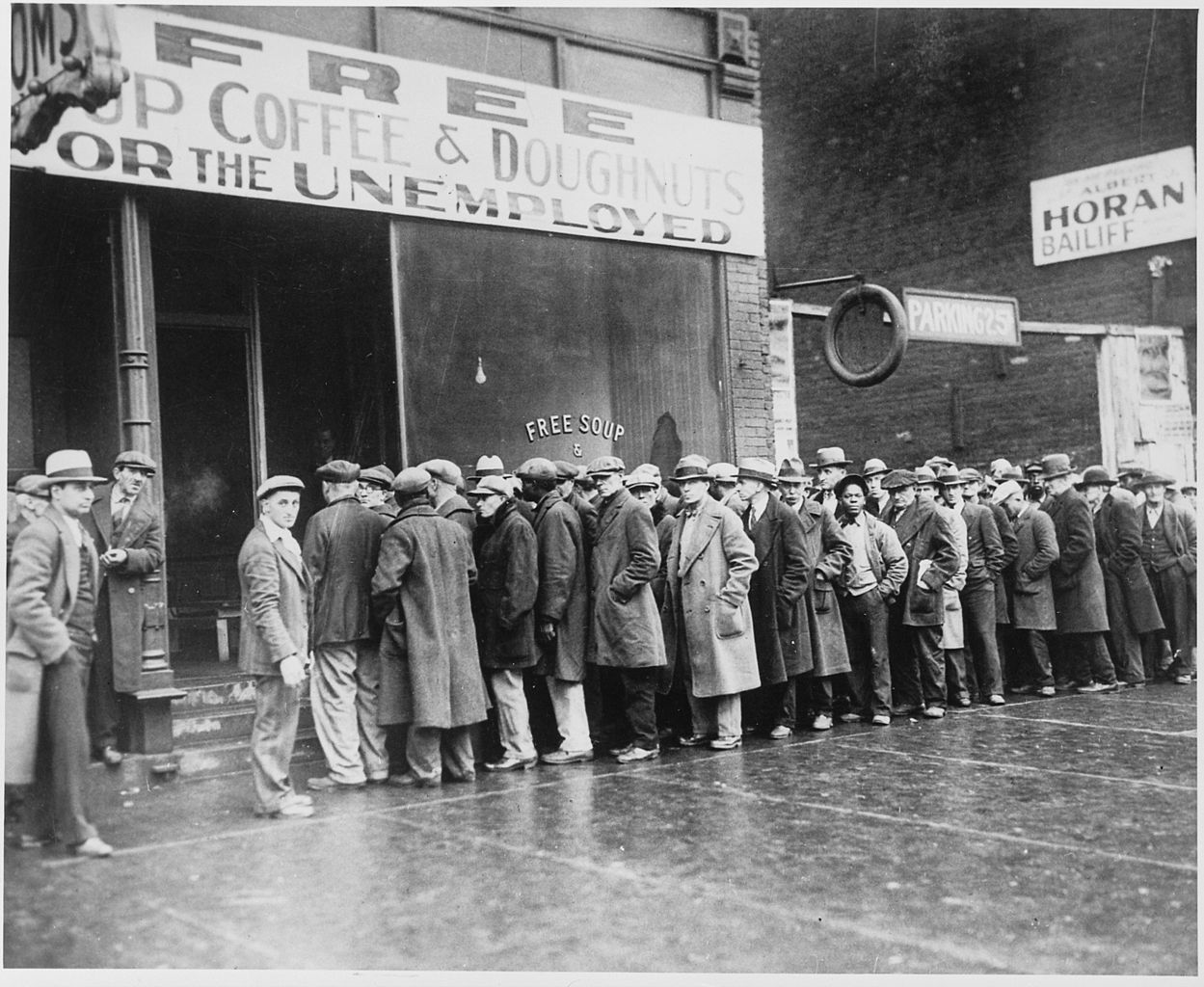
At the time, U.S. officials felt it necessary to tell the lie because of the widespread economic suffering the Fed had wreaked with its monetary policies. People had lost their businesses. Multimillionaires who had lost everything were committing suicide. There was massive unemployment and tremendous suffering. 

Imagine if the American people had discovered the truth — that it wasn’t “free enterprise” that had brought all this on but rather the federal government itself. The resulting anger would have certainly had an adverse effect on elected public officials in the next election. Moreover, U.S. officials undoubtedly feared the possibility of violence if people discovered the truth. 

The Fed had been established in 1913. This was during the time when the official money of the United States was still gold coins and silver coins. There was no paper money because the Constitution did not authorize the federal government to issue paper money. It only authorized the federal government to “coin” money. Moreover, the Constitution mandated that every state had to make gold coins and silver coins “legal tender.”

During the 1920s, the Fed began expanding the quantity of federal bills and notes in circulation, creating an artificial economic boon. People began to sense what was going on and began going to banks demanding that their bills and notes be redeemed in gold coins and silver coins, which they had the right to do. 

Faced with the fact that U.S. officials didn’t have sufficient gold coins and silver coins to honor all those paper debt instruments, the Fed panicked and began contracting the supply of paper bills and notes. In the process, they over-contracted, which brought the inevitable “bust” — that is, the 1929 stock-market crash and then the Great Depression.

This shouldn’t surprise anyone. The Fed is a socialist institution, given that it is based on the socialist principle of central planning. A board of bureaucrats plans, in a top-down, command-and-control manner, the supply of money in a very complex economy. It simply cannot be done. The central planners possess what Friedrich Hayek called “the fatal conceit” — the arrogant belief that they actually possess the requisite knowledge to plan such a complex economic phenomenon. As Ludwig von Mises pointed out, central planning produces “planned chaos.”

Today, people are taking the Fed to task because it over-expanded the money supply, which is now reflected in soaring prices of most everything. But what they fail to take into account is that the Fed is still a central-planning socialist institution, just as it was back in the 1920s. Why would Fed officials today be any better at central planning than their counterparts 90 years ago?

The big fear at the Fed is over-contracting. They are terrified of causing another Great Depression. This fear was confirmed some years ago by Fed chairman Ben Bernanke when he observed that Milton Friedman was right about how the Fed’s over-contraction had brought about the 1929 stock-market crash and the Great Depression. The Fed, Bernanke stated, was going to take great care that it never did that again. 

Bernanke’s admission was remarkable, given the lie that had become so widespread — that the 1929 stock-market crash and the Great Depression and been caused by the failure of “free enterprise.”

See the rest here

Be seeing you

Posted in Uncategorized | Tagged: , , , , , | Leave a Comment »

Before Progressives Condemn Capitalism, They Should Be Able to Define It

Posted by M. C. on August 10, 2022

If there is no growth in the money supply, prices and interest rates will best reflect the preferences of a society. An Austrian economics definition of capitalism is the interplay of supply and demand, without any growth in the money supply. In this form of capitalism individualism will never pay off. Profits can only be realized if people in society stand to benefit as well.

https://mises.org/wire/progressives-condemn-capitalism-they-should-be-able-define-it

Heiko de Boer

Many people blame capitalism for ever-increasing consumption, individualism, and the greedy pursuit of profits. Not very often do we see capitalism defined in any other way. In this article, I suggest an Austrian economics definition of capitalism that explains capitalism economically and without moralistic tones.

Human Actions Determine Prices and Interest Rates

The basis of Austrian economics price theory is human action. People must make choices on how to spend their scarce time and resources. They aim to improve their situation by ranking their subjective preferences and realizing as many of these preference, one by one.

This explains why the price of water is much lower than the price of diamonds. The supply of water is more than sufficient to meet almost all our needs. It is the last added unit of water that determines its price, which is many times lower than if the supply of water would satisfy the most important use only.

Interest rates are also a category of human action and are an indication of our time preference. This time preference applies to money and goods and services. A young society will be more inclined to save and invest than an older society. Their lower time preference translates into a lower interest rate as more money is offered for investing. Additional investments make it possible to expand the production structure.

By expanding a production structure, a society can consume more in the future. Consuming more can mean many things. If the purchasing power of people stays the same, but people only need to work three days a week instead of five days, people may still feel better off. Or, by investing we can produce similar goods, but with less pollution.

The interplay between interest rates and prices as they come about in a free marketplace, is shaping the production structure such that it meets the needs of society. The interplay of supply and demand could be termed capitalism. However, for a proper definition, more is needed.

What Money System Works Best?

The signaling function of prices and interest rates is distorted by central banks policies. Monetary policies prescribe that consumer goods prices must rise, according to the European Central Bank by “on average” 2 percent per year. Central banks find it unacceptable if a free market creates prices that are going down or do not rise sufficiently.

Central banks are creating money out of nothing, aiming to stimulate demand. More money means more competition for the same amount of goods, with upward price pressures as a result. Banks and central banks jointly issue more credit than what would be possible by savings alone. The additional offer of money pushes the interest rates down. The balance that prevailed in the time market is artificially disturbed.

Initially, money growth will ‘be good for the economy.’ More money is available for investing at a lower interest rate. It is as if the market has given a signal that people in society want to consume more in the future. However, consumers did not signal any change in consumption preferences.

There will come a time when the artificially low interest rate tends to rise, and prices adjust reflecting people’s actual preferences. Producers will be faced with rising production and refinancing costs. After the boom a bust will naturally follow.

The best money system is one that best reflects the preferences of people in society. This will be the case if there is no growth in the money supply. The Austrian school describes this as a sound money system. A proper definition of capitalism would then be the interplay of supply and demand, without any growth in the money supply.

Individualism, Profits, and Externalities

See the rest here

Be seeing you

Posted in Uncategorized | Tagged: , , , , , | Leave a Comment »

Clown World Finance | Mises Institute

Posted by M. C. on January 29, 2021

In a sane market, where market fundamentals actually determine prices, this would not have happened. Short selling would simply be a way of quickly and efficiently determining the market price of stocks, and there would be no special profit to be had from this practice, beyond the arbitrage gain (in the case that the short sellers were correct). Similarly, investors angry at the short sellers could not have driven stock prices sky-high in defiance of reality. Both practices are only possible in a market flooded with ever-increasing amounts of new money freshly printed by the Federal Reserve.

https://mises.org/power-market/clown-world-finance

Kristoffer Mousten Hansen

The recent blowup of GameStop shares has revealed, if anyone was still doubting, that the center of clown world is not Washington, DC, nor Silicon Valley—but Wall Street. To be clear, this is not meant to refer to the gallant band of redditors from r/wallstreetbets—those few, those happy few, that band of brothers who, as of this writing, may very well be poised to force several hedge funds into bankruptcy. Rather, the clowns are those hedge funds and all those other institutional investors who have been propped up by central bank intervention for decades while congratulating themselves that their seven-figure earnings were all due to their own financial brilliance.

What Happened?

The story of what happened (so far) is briefly told. It was revealed that GameStop was one of the most shorted shares in Wall Street, with the fund Melvin Capital taking the lead in shorting it. While this may or may not be a sound position based on market fundamentals—I have not investigated and think it’s a mug’s game to waste time on fundamentals these days—people did not take kindly to the revelation. Specifically, redditors at the subreddit Wallstreetbets saw that the short sellers were vulnerable, and they organized a campaign to drive them into the ground. Suddenly, retail investors flooded the market, bought up shares and drove GameStop shares, which had been trading below $20, into the stratosphere, topping $365 Wednesday morning (January 27). Melvin Capital suffered huge losses, up to 30 percent, and had to be saved by an infusion of $2.75 billion Tuesday afternoon.

That’s Not the Whole Story, Though…

In a sane market, where market fundamentals actually determine prices, this would not have happened. Short selling would simply be a way of quickly and efficiently determining the market price of stocks, and there would be no special profit to be had from this practice, beyond the arbitrage gain (in the case that the short sellers were correct). Similarly, investors angry at the short sellers could not have driven stock prices sky-high in defiance of reality. Both practices are only possible in a market flooded with ever-increasing amounts of new money freshly printed by the Federal Reserve.

For decades the central banks of the world—chief among them the US Federal Reserve—have had really only one mission: interest rates cannot ever be allowed to rise and everything must be done to prevent even the mildest of corrections in financial markets. They were able to get away with it clandestinely, so to speak—who now remembers the good ol’ days of the Greenspan put?—but after the financial crisis of ‘08 they had to come out into the open. Interest rates were forced lower and lower and markets were flooded with a tsunami of credit. Stocks and bonds responded, as could be expected, by reaching new all-time highs year after year. Of course, there were always economists ready with ever more whacky theories as to why this bare-faced inflationism was really sound policy dictated by the science of modern economics, but the result for anyone to see is financial markets that are completely divorced from reality and whose only purpose seems to be securing cheap funding for the US government and enormous earnings for the financial elites.

Then, of course, came corona, and the government, in its wisdom, chose to destroy the economy. To placate the plebs they offered them a few handouts—first $1,200, then $600—all financed by that incredible machine, the central bank printing press. According to Keynesian orthodoxy, this should have stimulated the economy to no end, ensuring a rapid recovery. Unfortunately, since most of the world was shut down, there were precious few opportunities for people to actually spend their money, and since the man in the street is wiser than most government-employed economists, he probably understood that an unprecedented shutdown of all society is not the best time to engage in a bonanza of consumer spending. So, he saved and invested his money, which thanks to the advances in modern technology he could now do directly, without going through savings banks or brokers.

Yet inflation is still inflation, even if it does not show up in government statistics, and the infusion of such an ocean of liquidity naturally drove stocks, bonds, bitcoin, and now GameStop sky-high. The beneficiaries this time were not the banks or Wall Street investors, however, but the many retail investors who now ganged up on Melvin Capital and the other “sharks” of Wall Street. It is all animal spirits, or rather, it is driven by the desire of those who feel themselves shortchanged to see the high lords of finance come crashing down. This latest round of inflation gave them the means to bring about just that.

Is This the End?

It’s impossible to tell what will happen next. Maybe the flood of liquidity is spent and Wall Street will weather the storm; maybe the Fed will again step in with new credit lines to save them, which seems most likely—again, the prime directive of the Fed has always been to save the big shots in finance. It is possible that financial markets are now so broken, central bank officials so worried about the effects of their money printing, that nothing will be done and we are now seeing the beginning of the end of the Big Bubble of 1980–2020. However, if recent history and mainstream economic orthodoxy are any guide, the Fed will stop at literally nothing to “save” the markets.

As Zero Hedge remarked on Twitter, “What is remarkable is how many people are “surprised” by what is going on in the “market” You throw $20 trillion stimulus at it, you nationalize the bond market, you break all links between price and fundamentals…what do you think happens.” Indeed. It would be wholly fitting in clown world, however, if the Great Stock Market Crash of 2021 were begun by day-trading teenagers, flush with helicopter money (thanks, Uncle Milty!) and with nothing else to do, forming a mob on reddit in order to break a hedge fund.

Be seeing you

Posted in Uncategorized | Tagged: , , , , , | Leave a Comment »

Marc Faber: These Trade Wars are Going to be Very Negative for Everyone

Posted by M. C. on May 3, 2018

https://marcfabersblog.blogspot.com/

…Concerning global trade, you are right. The idea was that multinationals in Europe and especially in the US could open up new markets like China and then sell their goods into these markets. But conditions have somewhat changed in the sense that it is the Chinese and other emerging economies that sold their goods into the US.

So to some extent, it backfired on the US and as you know the US is not the fair player and they reacted negatively. These trade sanctions or trade barriers, in my view are not very negative for China and other countries. Rather they are very negative for the US. This is my assessment of the situation.

Be seeing you

Posted in Uncategorized | Tagged: , , | Leave a Comment »

WSJ Loves Its Fed Enabler – Readers Don’t

Posted by M. C. on September 26, 2015

These are 25 Sep 15 comments from Wall Street Journal readers after Yellen says she will raise rates ‘later this year’.

Hopefully these same readers will realize the WSJ part of the problem.

Be seeing you

After 7-8 days down, this seems to be just a bounce….

How ridiculous. We can’t raise rates now but can in 3 months? What is going to be different then?

And look at this trollish hack of a human being. She doesn’t even possess enough physical strength to stand up and talk for an hour, but she’s strong enough to lead the Fed? Why on earth do we give power to such weak bureaucratic hacks? Our government is littered with such women now, little fireplugs of nothingness, flabby, sagging, flaccid and weak. Yet they have so much power.

What happened to my nation? I don’t recognize this country anymore. 9 years of decreasing rates, 7 years of ZIRP – if anyone ever told you in before 2008 that this was “good” policy, you would have been laughed out of the room. But now I’m supposed to clap like a seal and declare victory with the basketcase of an economy we now have? If they manage to raise rates by .25 I’m supposed to get in line and say Keynesian economics work?

Our society is now Orwellian. We are doomed.  Read the rest of this entry »

Posted in Uncategorized | Tagged: , , , , | Leave a Comment »