MCViewPoint

Opinion from a Libertarian ViewPoint

Posts Tagged ‘Kuomintang’

Dean Acheson’s Taiwan Dilemma

Posted by M. C. on February 8, 2025

by Joseph Solis-Mullen

“As economist Murray Rothbard noted at the time, this policy of defending Taiwan was always based on fallacious reasoning, parroted to this day by the current crop of hawks:

“A peaceful Pacific moat is needed for our defense. In order to protect this moat, we must secure friendly countries or bases all around it. To protect Japan and the Philippines, we must defend Formosa [Taiwan]. To protect Formosa we must defend the Pescadores. To protect the Pescadores we must defend Quemoy, an island three miles off the Chinese mainland. To protect Quemoy we must equip Chiang’s troops for an invasion of the mainland. Where does this process end? Logically, never.”

“And that is precisely the point.

https://libertarianinstitute.org/articles/dean-achesons-taiwan-dilemma/
screenshot 2025 01 29 at 12.51.56 pm

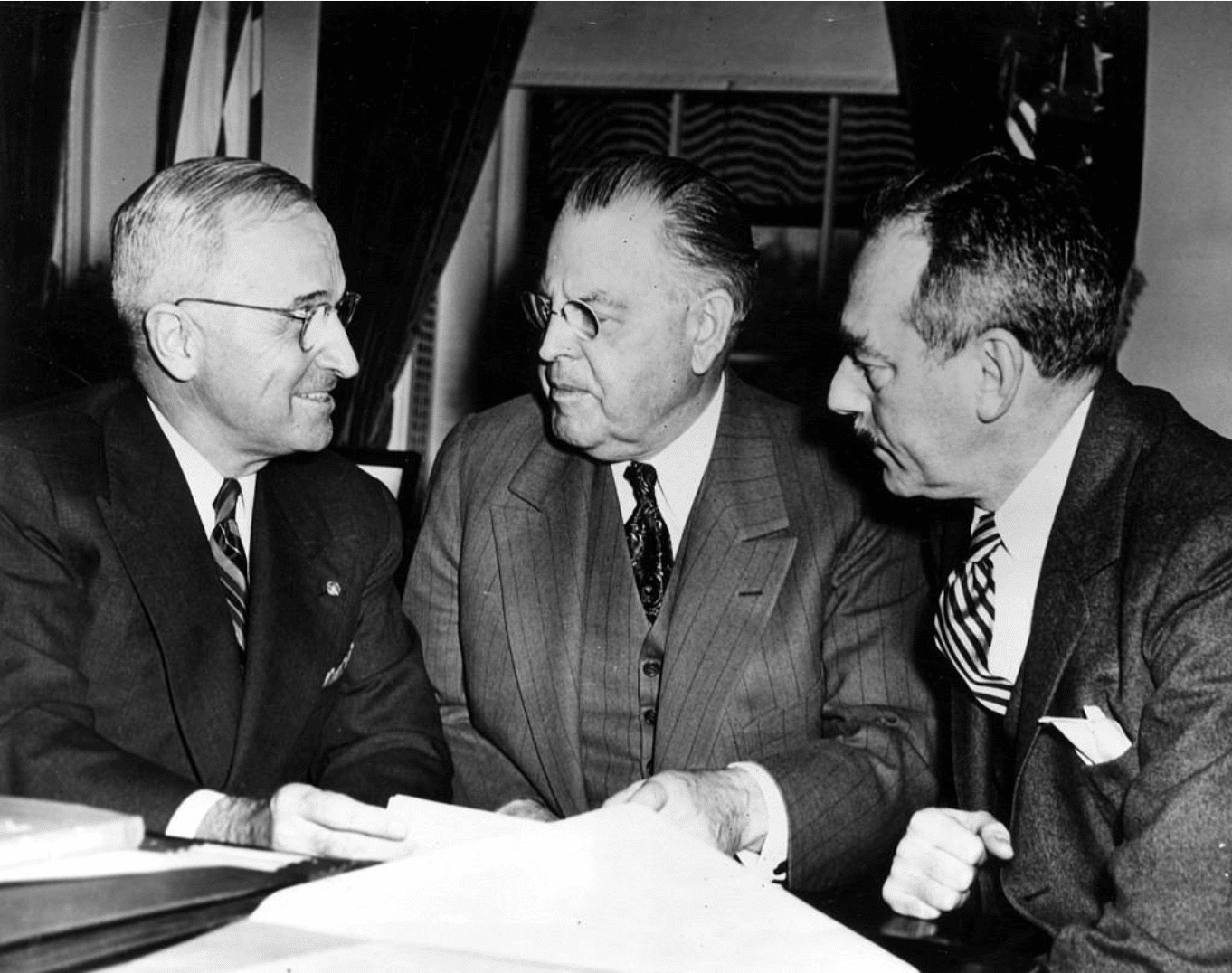
In the aftermath of World War II, U.S. policymakers felt they faced an increasingly dire situation in China. By late 1949, Mao Zedong’s Communist forces had decisively defeated Chiang Kai-shek’s Nationalists (Kuomintang/KMT), pushing them off the mainland to Taiwan. In the mind of Dean Acheson, secretary of state under President Harry Truman, the collapse of the Nationalists raised pressing questions. Could Taiwan be held against a Communist invasion? And was Chiang Kai-shek the right leader for this task? Acheson’s initial plans, however fleeting, to replace Chiang underscore the uncertainty and improvisation that characterized U.S. strategy in the early Cold War, and the hubris of the policymakers in Washington, convinced of their right to run the world.

Chiang’s regime had long been viewed with skepticism by American officials, even during the wartime alliance against Japan. Rampant corruption, poor governance, and military failures left the KMT vulnerable to the Communist insurgency. By 1949, Acheson and many in the Truman administration believed that Chiang bore significant responsibility for the Nationalists’ defeat.

Acheson’s January 1950 white paper on China publicly declared that the United States had done all it could to support Chiang’s regime and absolved Washington of blame for his collapse. Privately, Acheson believed that continued support for Chiang could harm American credibility and that Taiwan’s future depended on new leadership. He and other officials entertained various proposals, including sidelining Chiang in favor of a more competent leader or placing Taiwan under an international trusteeship.

One idea floated within the State Department was to engineer a transition of power within the KMT, potentially elevating more reform-minded figures such as Sun Fo, the son of Sun Yat-sen. Other suggestions went further, advocating for the establishment of a coalition government that might include non-KMT factions to stabilize Taiwan’s governance and make it a stronger bulwark against communism.

Chiang was acutely aware of these discussions. In early 1950, he acted preemptively by arresting General Sun Li-jen, one of the most respected Nationalist military leaders. Often referred to as the “Rommel of the East,” Sun was widely admired in Washington for his competence and honesty, qualities that stood in stark contrast to the corruption and inefficiency of Chiang’s regime. Fearing that Sun was being groomed by the United States as a replacement, Chiang accused him of plotting a coup and placed him under house arrest, where he would remain for decades. This decisive move eliminated a potential rival and signaled Chiang’s refusal to cede power.

By June 1950, Acheson was still grappling with the question of Taiwan’s future. At a meeting held at the Willard Hotel in Washington DC, he and several senior officials discussed various scenarios for the island, including the possibility of replacing Chiang. The meeting reflected the depth of American frustration with Chiang’s leadership and the desire to stabilize Taiwan as a potential bulwark against communism.

However, events overtook these deliberations.

See the rest here

Be seeing you

Posted in Uncategorized | Tagged: , , , , | Leave a Comment »

Case Study, Taiwan: A Nation is the Story We Tell Ourselves

Posted by M. C. on October 22, 2024

by Joseph Solis-Mullen

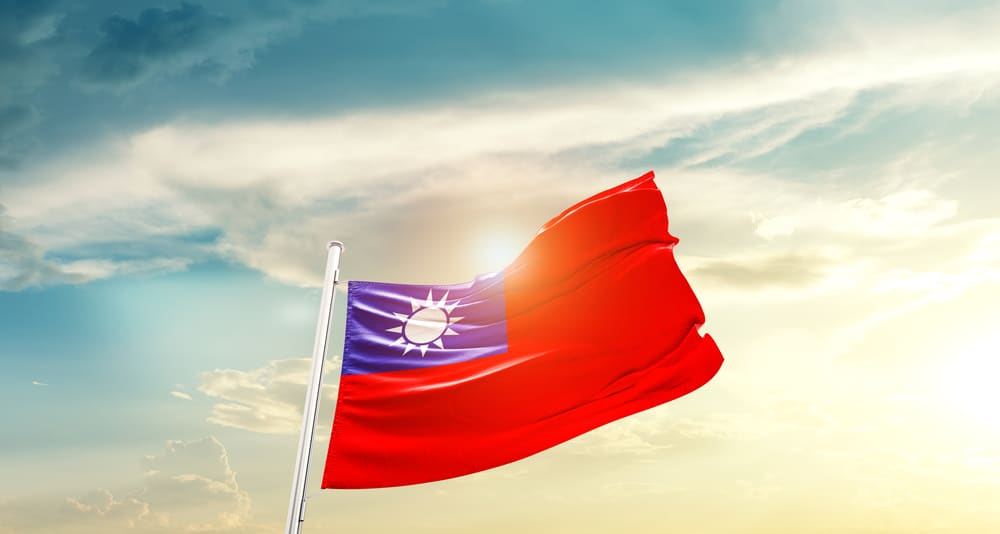
While all things being equal it is in Beijing’s interest to play the waiting game; Washington’s relative power in the region is in steady decline, and Taiwan’s real security rests on the possibility that Washington might intervene using both military and economic weapons. But things are not standing still, and Taiwan’s porcupine strategy, to eventually be too costly to conquer, might just provoke the kind of military solution it is purportedly meant to deter.

https://libertarianinstitute.org/articles/case-study-taiwan-a-nation-is-the-story-we-tell-ourselves/

depositphotos 643662328 s

In his famous 1882 lecture “What is a Nation?” the French historian and philosopher Ernest Renan emphasized the role of collective memory and even fictitious or selective historical narratives in the creation and maintenance of national identity, writing “Forgetting, I would even say historical error, is a crucial factor in the creation of a nation.”

What Renan was arguing is that nations are built not only on shared history but also on the myths and selective memories that bind people together. This selective forgetting often involves downplaying or erasing divisive events or highlighting certain aspects of a past to create a sense of unity and continuity. Even if that narrative isn’t entirely historically accurate, that isn’t the point. This selective memory allows a state or nation to foster a sense of unity and purpose among its citizens.

This past Thursday Taiwan’s President, Lai Ching-te, gave a highly anticipated speech on the occasion of Taiwan’s “National Day” celebrations—and Renan could hardly have been more impressed.

As one might expect of such a speech, Lai’s first on this occasion since taking office, it was full of paeans to the greatness of the state and its people, as well as the kind of dubious historical assertions, the nationalist myths, that everywhere buttress state power.

For example, Lai connected the current government on Taiwan to those presumably brave heroes who over a century ago “rose in revolt and overthrew the imperial regime,” with the intent to “establish a democratic republic of the people, to be governed by the people and for the people.” Naturally, Lai neglected to mention that the actors in question were a combination of ambivalent bureaucrats, ambitious warlords, opportunistic gangsters, and disaffected intellectuals who quickly fell to usurping and warring with one another.

Lai did not trouble himself with burdensome explanations of how after that glorious revolution the “dream of democracy was engulfed in the raging flames of war.” Rather, he skipped over how the eventual authoritarian government of the Kuomintang (KMT) was so corrupt, inefficient, and generally evil that the Chinese Communist Party (CCP) looked preferable by comparison. Instead, he jumped to solemn remembrances of the last battles as the KMT were driven off the mainland and to the island of Taiwan, and how “though we arrived on this land at different times and belonged to different communities, we defended Taiwan, Penghu, Kinmen, and Matsu. We defended the Republic of China.”

One notes here the subtle conflation between the regime’s flight for self-preservation and defense of those on the island who very definitely did not want them to come and bring war to their shores.

See the rest here

Be seeing you

Posted in Uncategorized | Tagged: , , , , | Leave a Comment »

The Taiwan Problem You (Probably) Don’t Know

Posted by M. C. on August 21, 2024

The foolish insistence of FDR that Taiwan be granted to Chiang’s crumbling ROC regime, then Harry Truman and Dwight Eisenhower’s determination to keep that regime in power, played an obviously critical role in creating the circumstances that prevail to the present day: a Chinese Civil War never concluded.

https://libertarianinstitute.org/articles/the-taiwan-problem-you-probably-dont-know/

by Joseph Solis-Mullen

chiang ching kuo and chiang kai shek 83b330

Taiwan is today lauded for its vibrant democracy, open economy, and progressive society. However, behind this shining exterior is a dark and brutal history that is frequently overlooked; or in the case of Washington and its loyal corporate mouthpieces, purposefully ignored.

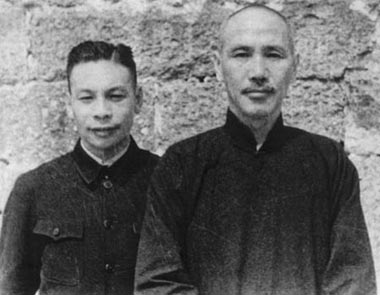
For before its democratization in the 1990s, Taiwan was a harsh authoritarian police state under the rule of Chiang Kai-shek and his son Chiang Ching-kuo. This period, marked by severe repression and systemic terror, is an essential chapter in Taiwan’s history that Americans should know, particularly given the enduring resentment Washington’s vital support for the regime engendered and the purported reasons for the necessity of the island’s defense.

The roots of Taiwan’s authoritarianism can be traced back to the retreat of Chiang Kai-shek’s Nationalist government (Kuomintang, or KMT) to Taiwan after losing the Chinese Civil War to the Communists in 1949. The local population had already received more than an inkling of what awaited, the KMT authorities having already in 1947 brutally suppressed a popular protest against KMT corruption, mistreatment, and misrule on the island. Facing a precarious situation and the ever-looming threat of a Communist invasion, once arrived on the island Chiang established a regime that relied heavily on surveillance, repression, and brutality to maintain control.

Central to this regime was the role of Chiang Ching-kuo, Chiang Kai-shek’s son, who was instrumental in the creation and operation of Taiwan’s police state. Having spent formative years in Stalin’s Moscow, Chiang Ching-kuo learned from the Soviet Union’s tactics of surveillance, infiltration, and terror. Upon his return, he applied these methods to serve his father’s regime, becoming a formidable spy chief whose skills ensured the perpetuation of KMT rule in Taiwan.

Chiang Ching-kuo’s police force penetrated almost every facet of life in Taiwan. Officially, their task was to arrest enemies of the state, countering Communist subversion; in practice, this mission translated into the suppression of virtually any source of potential dissent, contributing to what became known as the White Terror.

See the rest here

Be seeing you

Posted in Uncategorized | Tagged: , , , | Leave a Comment »

Death Wish: Fighting a Cold War With China

Posted by M. C. on February 9, 2022

However, the fact that making a joke about 9/11 being a good thing to these same people would likely be massively offensive to them is a perfect example of the cognitive dissonance that drives American foreign policy. When those people go out and vote, they are voting for politicians who think exactly the same way they do and decide American policy towards China. Thus, the sarcasm becomes reality.

https://libertarianinstitute.org/articles/death-wish-fighting-a-cold-war-with-china/

by Starte Butone

Recently, there has been an increased desire among the military establishment in the United States to intervene in the event of a Chinese invasion of Taiwan. Such a push has been made by politicians, public figures, and talking heads from both sides of the political spectrum. Massive spending bills aimed at “countering” China tend to pass through Congress with ease, with the only real opposition coming from congressmen who don’t think they’re strong enough. Promises by the Biden administration to defend Taiwan in the event of a Chinese invasion have brought tensions with China to their highest point in generations.

Of course, as anyone reading this article should know, the foolishness of going to war with China over Taiwan is virtually incomprehensible. China, as of the time of this writing, has hundreds of nuclear warheads in their arsenal, the majority of which are fusion weapons. China has promised to declare total war on the United States, even potentially escalating to the use of nuclear weapons, if the U.S. does so much as dock a warship in Taiwan.

To fully understand the way Chinese people look at this topic, one must first understand a little history. In the 1930s, China was involved in a civil war between two main groups: the Chinese Communist Party (CCP), led by Mao Zedong, and the Nationalist Party, or Kuomintang (KMT), led by Chiang-Kai Shek. The human rights violations perpetrated by Mao Zedong and the Communist Party are well known by most in the West, having starved people to death by the millions in the later “Great Leap Forward” period and executing countless political opponents.

However, the human rights violations of Chiang Kai-Shek are not as well known. Chiang executed his political opponents by the millions during the Civil War period. Additionally, the scorched-Earth policies used by the KMT during the Civil War and World War II killed millions more, in addition to even more millions of people who died as a result of corruption within the agricultural system and mis-allocation of food. Given that the KMT ruled over the majority of China at this point in time, it is reasonable to assume that the Chinese people would be willing to accept any alternative to their rule, even from people as unethical as the Communist party.

At the end of the Chinese Civil War, the U.S. military built up defenses around Taiwan and prevented the PRC from taking the island, leaving it de facto independent to this day. Given the history of relations between the two countries, one can understand just why the Chinese view Taiwan so negatively. In the eyes of most Chinese (and certainly the CCP) Taiwan is as bad as Nazi Germany is to us. Given Chiang Kai-Shek’s human rights record, they weren’t really all that wrong for a time.

China has promised to invade Taiwan as soon as they declare independence.

See the rest here

Be seeing you

Posted in Uncategorized | Tagged: , , , , , , , | Leave a Comment »