MCViewPoint

Opinion from a Libertarian ViewPoint

Posts Tagged ‘Kyiv’

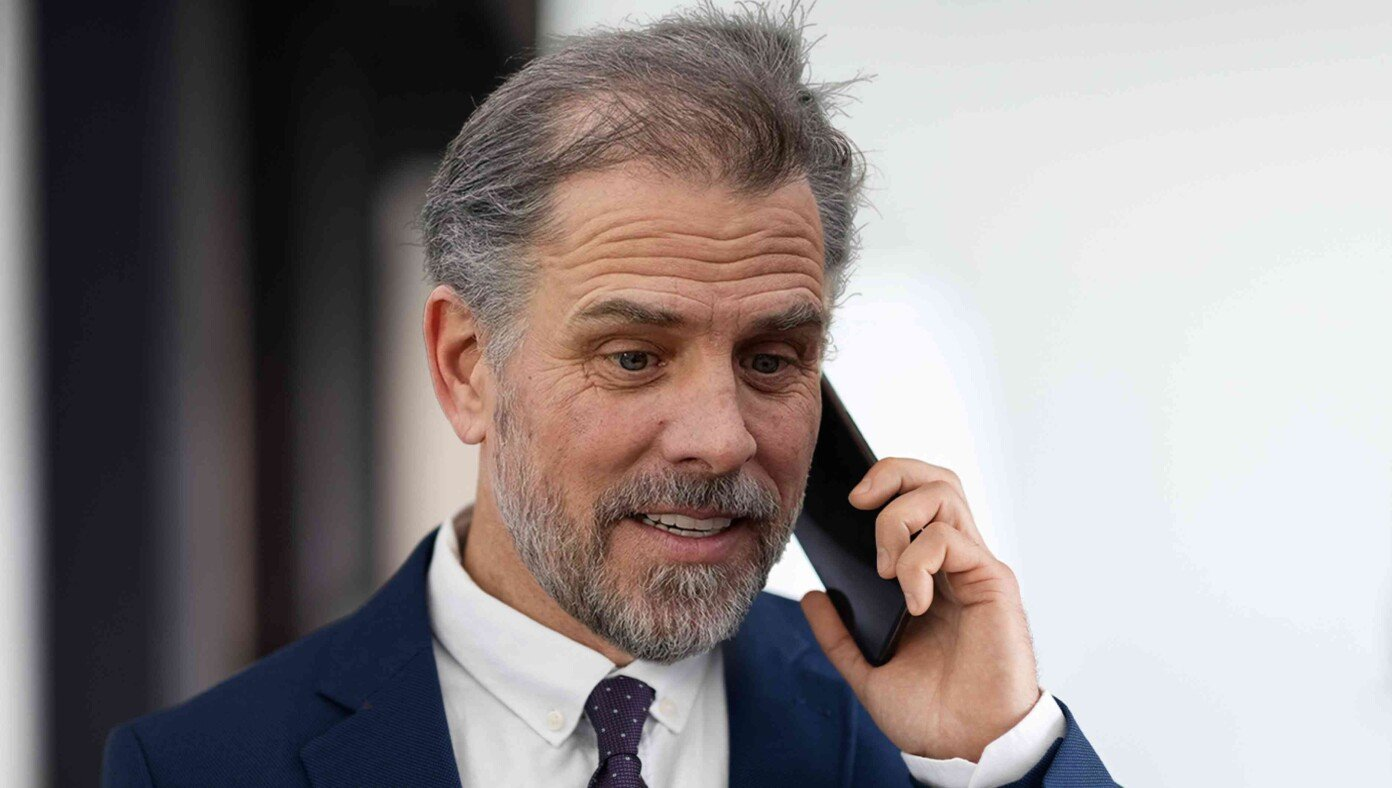
Hunter Asks Dad To Pick Up His Paycheck As Long As He’s In Kyiv

Posted by M. C. on February 21, 2023

WORLD·Feb 20, 2023 · BabylonBee.com

https://babylonbee.com/news/hunter-asks-dad-to-pick-up-his-paycheck-as-long-as-hes-in-kiev

KYIV — President Biden paid a visit to Ukraine to reaffirm America’s unwavering commitment to the country’s democracy, sovereignty, and military-industrial complex while also picking up a few things Hunter asked about, including his paycheck.

The Babylon Bee has acquired a recording of the exchange between Biden and his adolescent son, Hunter, just before the trip:

HUNTER: Yo, Pops, how’s it hangin’?

BIG GUY: Eh? What now? Which kid are you?

HUNTER: Hilarious, Dad. Hey, can you pick up my paycheck while you’re in Kyiv? I’m swamped this week. *SNORT* Big art show coming up. *SNORT*

BIG GUY: Sure thing, Herman.

HUNTER: Thanks, Dad, you’re the best. Also, I have a package waiting for me there. Could you pick that up too?

BIG GUY: Squirrel wizard.

HUNTER: K, cool. Brown paper package. Guy named Borysko the Blade has it.

BIG GUY: Baboonsky the Bard. Got it.

HUNTER: Just go to the address written in your notebook —

BIG GUY: Yum

HUNTER: Stop eating it; you need that address.

BIG GUY: Papa hungry. NURSE!

HUNTER: One more thing I need you to pick up. A busload of, um, ladies of the night.

BIG GUY: Janitorial staff?

HUNTER: No, bawdy tarts.

BIG GUY: Fruit snacks?

HUNTER: Forbidden women. Brazen hussies.

BIG GUY: Oh, town girls? Gotcha. Atta boy, son. Smartest guy I know.

At publishing time, Air Force One’s return flight had been delayed while President Biden waited for Zelensky to sign his son’s paycheck.

Bee seeing you

Posted in Uncategorized | Tagged: , , , | Leave a Comment »

1991: When America Tried to Keep Ukraine in the USSR

Posted by M. C. on April 29, 2022

Indeed, in the case of Ukraine, President George H.W. Bush even traveled to Kyiv in 1990 to lecture the Ukrainians about the dangers of seeking independence from Moscow, while decrying the supposed nationalist threat.

https://mises.org/wire/1991-when-america-tried-keep-ukraine-ussr

Ryan McMaken

The US government today likes to pretend that it is the perennial champion of political independence for countries that were once behind the Iron Curtain. What is often forgotten, however, is that in the days following the fall of the Berlin Wall, Washington opposed independence for Soviet republics like Ukraine and the Baltic states.

In fact, the Bush administration openly supported Mikhail Gorbachev’s efforts to hold the Soviet Union together rather than allow the USSR to decentralize into smaller states. The US regime and its supporters in the press took the position that nationalism—not Soviet despotism—was the real problem for the people of Eastern Europe and the Caucasus.

Indeed, in the case of Ukraine, President George H.W. Bush even traveled to Kyiv in 1990 to lecture the Ukrainians about the dangers of seeking independence from Moscow, while decrying the supposed nationalist threat.

Today, nationalism is still a favorite bogeyman among Washington establishment mouthpieces. These outlets routinely opine on the dangers of French nationalismHungarian nationalism, and Russian nationalism. One often sees the term nationalism applied in ways designed to make the term distasteful, as in “white nationalism.”

When nationalism is convenient for the North Atlantic Treaty Organization (NATO) and its European freeloaders, on the other hand, we are told that nationalism is a force for good. Thus, the US regime and mainstream media generally pretend that Ukrainian nationalism—and even Ukrainian white nationalism—either don’t exist or are to be praised.

In 1991, however, the US had not yet decided that it paid to actively promote nationalism—so long as it is anti-Russian nationalism. Thus, in those days, we find the US regime siding with Moscow in efforts to stifle or discourage local nationalist efforts to break with the old Soviet state. The way it played out is an interesting case study in both Bush administration bumbling and in the US’s foreign policy before the advent of unipolar American liberal hegemony. 

The Antinationalist Context

In the late 1980s, it was already apparent that the Soviet Union was beginning to lose its grip on many parts of the enormous polity that was the USSR. Restive nationalists within the Soviet Union were beginning to assert local control. For example, by 1989, ethnic Armenians and Azeris were already embroiled in the conflict over Nagorno-Karabakh that continues to this day. Deadly ethnic violence flared, but Moscow, in its weakened state, put off taking action. Yet, in January 1990, Moscow did act in what is known in Azerbaijan today as “Black January.” Soviet tanks rolled into the Caspian Sea port city of Baku and killed as many as 150 Azeris—many of them civilians: “The ostensible aim of the intervention was to stop Azeri massacres of Armenians, but the real goal was to prevent the Azerbaijani Popular Front from taking power.”1 The Popular Front was the chief political arm of anti-Moscow nationalism in Azerbaijan, and its leader stated, ”The goal is to drive out the army, liquidate the [Moscow-controlled] Azerbaijani Communist Party, establish a democratic parliament.”

Yet instead of Washington pundits instructing Americans to announce “I stand with Azerbaijan,” we were told the real threat was nationalism. As Doyle McManus wrote at the Los Angeles Times in 1990: “An ancient specter is haunting Europe: untamed nationalism…. From Baku to Berlin, as the Soviet Bloc has disintegrated, ethnic conflicts that once seemed part of the past have suddenly returned to life.” These old nationalistic impulses, one official from the State Department averred, are “dangerous ghosts” from Europe’s past. Arch establishment foreign policy advisor Zbigniew Brzezinki was on hand to claim that ethnic tensions could lead to “geopolitical anarchy.” Bush administration officials were “worried” that smaller national groups might replace the Soviet Union. At the time, it was not uncommon to hear that nationalism in Europe would bring about a situation similar to that which supposedly caused World War I. As one “senior Bush advisor” said, “It’s 1914 all over again.”

So, when the Soviet tanks showed up to crush a potential coup that might free some Soviet subjects from Moscow’s yoke, the feeling in Washington was one of relief rather than dismay at Moscow’s aggression. Washington was clinging to the idea that the answer to nationalism was to ensure the continued existence of—as Murray Rothbard put it—”a single, overriding government agency with a monopoly force to settle disputes by coercion.” That agency was the USSR. 

The US Against Independence for Ukraine and the Baltics

See the rest here

Be seeing you

Posted in Uncategorized | Tagged: , , , | Leave a Comment »

The Challenge of Foreign Policy Free Riding: Limited Government for Me, Not for Thee

Posted by M. C. on February 9, 2022

in 8 of 16 European states said they opposed fighting for NATO allies against Russia. In another three countries pluralities rejected defending their neighbors. The overall median result was 50 to 38 percent against. In Poland, where caterwauling about the supposed Russian threat is constant, opponents outpolled proponents by 43 to 40 percent. One can imagine their response if they had been asked about risking life and limb on behalf of Kyiv,

by Doug Bandow

https://original.antiwar.com/doug-bandow/2022/02/08/the-challenge-of-foreign-policy-free-riding-limited-government-for-me-not-for-thee/

Free riding is a constant of international relations. That is evident in Europe today.

The Ukraine crisis understandably has Europe on edge. But no one – Russian, Ukrainian, America, or European – believes that Europeans will fight for Kyiv. To simply raise the issue is to elicit a snicker. Modern Europeans believe their birthright is not to have to fight, that if they are threatened their defense is be provided by Americans.

Ironically, that assumption reflects as much contempt as respect for the US. Many Europeans possess a barely suppressed sense of moral superiority over the colossus of the New World, with its overt capitalist ethos, ragged welfare state, surplusage of guns, widespread religious commitment, rejection of solidarity politics, and ignorance of all things foreign. To be fair, criticisms across the Pond are not without some basis, as is evident from the bitter, increasingly dangerous political divides and policy failures in America today. Still, even those Europeans filled with condescension continue to look westward for protection from the vicissitudes of a dangerous world.

However, widespread disdain for the results of the vaunted American political experiment has done little to diminish the desire to clamber aboard the US defense dole. Europeans who routinely deride Washington’s blundering interventions abroad nevertheless even more loudly insist that American policymakers should constantly reassure them that sufficient American military personnel are always available to die on their behalf should that become necessary. To question this demand is to be denounced as an isolationist and worse.

Consider European military spending. NATO stands for North America and the Others. According to NATO figures, America came in at 3.6 percent of GDP. Of the other 29 members, only Greece devoted more effort than the US – to confront not Russia, but long-term enemy though fellow alliance member Turkey. Another outlier was tiny Croatia, which approached three percent.

France, Great Britain, Romania, Poland, Latvia, Lithuania, and Estonia hit or broke two percent, NATO’s agreed-upon standard. Everyone else, including Germany, Italy, and Spain, fell below. Even two percent is not impressive for nations – most notably Poland and the three Baltic States – which spend every moment of everyday warning about Moscow’s every move, complaining about the unfairness of the world, and demanding a permanent US troop presence. Do they believe their freedom is worth only two cents on the Euro? The gulf in combat capabilities between America and Europe is even greater than the spending differential. But then, as noted before, defense is Washington’s, not Brussels’ job.

Since 2014 Russia’s abusive behavior and Washington’s whining have spurred some European countries to spend more. But not that much more. And Europe’s largest nations with the greatest potential – Spain, Italy, Germany, France, and Britain – are unlikely to do enough to confront the presumed threat they want America to defend them from.

Indeed, Europeans evidence no shame in forever cheap-riding on the US. For instance, in a 2020 Pew Research Center poll majorities in 8 of 16 European states said they opposed fighting for NATO allies against Russia. In another three countries pluralities rejected defending their neighbors. The overall median result was 50 to 38 percent against. In Poland, where caterwauling about the supposed Russian threat is constant, opponents outpolled proponents by 43 to 40 percent. One can imagine their response if they had been asked about risking life and limb on behalf of Kyiv, to which their nation has no legal obligation. Predictably, however, most Europeans said they expected the US to drop everything elsewhere and save them, if necessary. They don’t believe their allies are worth supporting, but no worries: the Yanks, though unsuited for inclusion in polite European society, will take care of everything.

See the rest here

Be seeing you

Posted in Uncategorized | Tagged: , , , | Leave a Comment »

Russia-U.S. Negotiations Continue on Shaky Grounds | The Libertarian Institute

Posted by M. C. on January 15, 2022

Russia wants the US and NATO to rescind a promise that was first made in 2008 that Ukraine would eventually become a member of NATO. When Viktor Yanukovych was president of Ukraine from 2010 to 2014, Kyiv joining NATO was not a concern. But Yanukovych was ousted in a US-backed coup in 2014, and ever since, NATO has significantly increased its cooperation with Ukraine.

https://libertarianinstitute.org/articles/russia-u-s-negotiations-continue-on-shaky-grounds/

by Dave DeCamp

No progress was made during a meeting between NATO and Russia in Brussels on Wednesday as the US and NATO are rejecting a key Russian demand to halt the military alliance’s eastward expansion. But according to NATO Secretary-General Jens Stoltenberg, both sides are open to further talks.

Stoltenberg said during the meeting, NATO members and Russia “expressed the need to resume dialogue and to explore a schedule of future meetings.”

The NATO chief said there are “significant differences” between the military alliance concerning Ukraine. “Our differences will not be easy to bridge, but it is a positive sign that all NATO allies and Russia sat down around the same table and engaged on substantive topics,” he said.

Deputy Secretary of State Wendy Sherman represented the US at the meeting and echoed Stoltenberg’s comments. She said some of Russia’s security proposals were “non-starters” but maintained that there are still issues the two sides can negotiate on, including arms control.

Russian Deputy Foreign Minister Alexander Grushko, who led the Russian delegation in Brussels, had some positive things to say about the talks despite the US and NATO’s stance.

“I think that [this meeting] was absolutely essential. Firstly, it was some sort of a shake-up. If the meeting had not taken place, it would have been impossible to bring up these issues in full action,” Grushko said, according to Russia’s Tass news agency.

Russia wants the US and NATO to rescind a promise that was first made in 2008 that Ukraine would eventually become a member of NATO. When Viktor Yanukovych was president of Ukraine from 2010 to 2014, Kyiv joining NATO was not a concern. But Yanukovych was ousted in a US-backed coup in 2014, and ever since, NATO has significantly increased its cooperation with Ukraine.

On Thursday, the diplomacy between Russia and the West will continue at a meeting of the Vienna-based Organization for Security and Cooperation in Europe. While no breakthroughs have been made, the flurry of diplomacy and willingness to continue dialogue is a sign that the tensions around Ukraine and elsewhere in the region likely won’t lead to further conflict.

This article was originally featured at Antiwar.com

Be seeing you

Posted in Uncategorized | Tagged: , , , , | Leave a Comment »