


While all things being equal it is in Beijing’s interest to play the waiting game; Washington’s relative power in the region is in steady decline, and Taiwan’s real security rests on the possibility that Washington might intervene using both military and economic weapons. But things are not standing still, and Taiwan’s porcupine strategy, to eventually be too costly to conquer, might just provoke the kind of military solution it is purportedly meant to deter.
https://libertarianinstitute.org/articles/case-study-taiwan-a-nation-is-the-story-we-tell-ourselves/
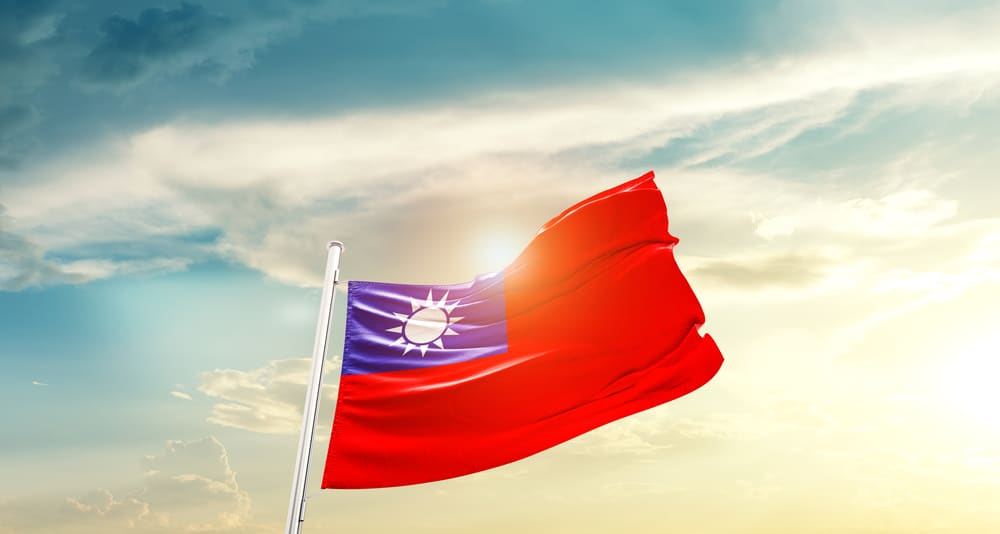
In his famous 1882 lecture “What is a Nation?” the French historian and philosopher Ernest Renan emphasized the role of collective memory and even fictitious or selective historical narratives in the creation and maintenance of national identity, writing “Forgetting, I would even say historical error, is a crucial factor in the creation of a nation.”
What Renan was arguing is that nations are built not only on shared history but also on the myths and selective memories that bind people together. This selective forgetting often involves downplaying or erasing divisive events or highlighting certain aspects of a past to create a sense of unity and continuity. Even if that narrative isn’t entirely historically accurate, that isn’t the point. This selective memory allows a state or nation to foster a sense of unity and purpose among its citizens.
This past Thursday Taiwan’s President, Lai Ching-te, gave a highly anticipated speech on the occasion of Taiwan’s “National Day” celebrations—and Renan could hardly have been more impressed.
As one might expect of such a speech, Lai’s first on this occasion since taking office, it was full of paeans to the greatness of the state and its people, as well as the kind of dubious historical assertions, the nationalist myths, that everywhere buttress state power.
For example, Lai connected the current government on Taiwan to those presumably brave heroes who over a century ago “rose in revolt and overthrew the imperial regime,” with the intent to “establish a democratic republic of the people, to be governed by the people and for the people.” Naturally, Lai neglected to mention that the actors in question were a combination of ambivalent bureaucrats, ambitious warlords, opportunistic gangsters, and disaffected intellectuals who quickly fell to usurping and warring with one another.
Lai did not trouble himself with burdensome explanations of how after that glorious revolution the “dream of democracy was engulfed in the raging flames of war.” Rather, he skipped over how the eventual authoritarian government of the Kuomintang (KMT) was so corrupt, inefficient, and generally evil that the Chinese Communist Party (CCP) looked preferable by comparison. Instead, he jumped to solemn remembrances of the last battles as the KMT were driven off the mainland and to the island of Taiwan, and how “though we arrived on this land at different times and belonged to different communities, we defended Taiwan, Penghu, Kinmen, and Matsu. We defended the Republic of China.”
One notes here the subtle conflation between the regime’s flight for self-preservation and defense of those on the island who very definitely did not want them to come and bring war to their shores.
Be seeing you
 MCViewPoint