Date of recording: June 3, 2025, The Savvy Street Show
Host: Roger Bissell. Guests: Walter Block, Vinay Kolhatkar
For those who prefer to watch the video, it is here.
Editor’s Note: The Savvy Street Show’s AI-generated transcripts are edited for removal of repetitions and pause terms, and for grammar and clarity. Explanatory references are added in parentheses. Material edits are advised to the reader as edits [in square brackets].
Roger Bissell
Good evening, everyone, and welcome to The Savvy Street Show. My name is Roger Bissell, and I’m your host for this third installment of our series on controversies in libertarianism. Tonight’s topic is libertarian foreign policy. Is there even such a thing? And if there is more than one candidate, are any of them correct in their basics or, if not, can they be fixed? So again, here to explore this topic are my two guests, the eminent economist and libertarian theorist and author of the series, Defending the Undefendable, Walter Block. Welcome to the show, Walter.
Walter Block
Thanks for having me. It’s always a pleasure.
Roger Bissell
Pleasure for us, too, Walter, good to have you. And second, we have my friend and frequent co-host, a novelist and screenwriter, chief editor of The Savvy Street, and co-author with me of Modernizing Aristotle’s Ethics, Vinay Kolhatkar. Welcome to the show, Vinay.
Vinay Kolhatkar
Thank you for having me.
Roger Bissell
Well, we’re going to just plunge right in. The first question is rather open-ended, just to kind of warm up with. Does a nation-state, such as the United States, have rights or obligations or any kind of moral principles that it needs to act according to? Walter, let’s have you begin, if you would.
Walter Block
On the one hand, I wear an anarcho-capitalist hat. And on the other hand, I wear a moderate libertarian hat; call it classical liberalism.
I guess I’m torn on this because I wear two hats. On the one hand, I wear an anarcho-capitalist hat. And on the other hand, I wear a moderate libertarian hat; call it minarchism or classical liberalism or something like that. Now, with the anarcho-capitalist hat, paradoxically, we’re not against government. We just want everyone to have one. So, from the anarcho-capitalist point of view, the optimal number of governments is about 8 billion, because there are 8 billion people here, and everyone should have one. You know, be the first on your block to have a government, and everyone should get one. And then my government should be nice to your government, Roger, and nice to your government, Vinay, and we should all follow the non-aggression principle, and we should all cooperate with each other. We don’t have to like each other, but we’ve got to keep our mitts off each other—unless we agree to put our mitts on each other, like in a voluntary boxing match or something like that. So, the foreign policy of me should be the same as the foreign policy of you guys, and that is to adhere to the non-aggression principle and uphold private property rights based on homesteading—and as Robert Nozick would then say, on anything subsequent like voluntary trade. So, if I homestead some land and you homestead a cow, and I produce corn and you produce milk, and now we trade, I now have the righteous ownership of the milk even though I didn’t produce it, because I can trace it back to homestead and voluntary trade.
Now for the tough part. Now we’re minarchists for the moment, or classical liberals, and what should the government do? Well, it’s going to collect taxes, which is a no-no, but now I’m not an anarcho-capitalist anymore. I’m schizophrenic. I’m now a limited-government libertarian. And yes, we’re going to have taxes, and the taxes are mainly for armies to protect us from foreign invaders; police to protect us from local invaders, rapists, murderers; and courts to determine, what should be the statutory rape age, or is my music too loud at three in the morning? Things like that. Or Vinay and I had a contract, and I say he broke it, he says he didn’t, so I’ll appoint you, Roger, as the court. You would decide, based on the evidence that Vinay and I give to you.
I don’t see anything in the bowels of libertarianism that says you can’t have any allies.
So, what should the foreign policy be? The foreign policy should be to protect the country. Don’t let any invaders come in and get us. Now, this leads to an issue. Should we have allies? Well, I don’t see why we shouldn’t have allies. I don’t favor an alliance with everybody from our country, let’s say that our country is the United States, but I don’t see anything in the bowels of libertarianism that says you can’t have any allies. So, I would say that if we’re the ally of Israel, and Israel is under attack, we help them; and on the other hand, if we’re under attack, we would expect Israel to help us. This leads to a whole can of worms. Who should be our allies? NATO? How about China? Better yet, Taiwan. Should the Taiwanese be our allies? That would be my opening answer to the question.
Roger Bissell
Okay. Well, Vinay, do you see it that way or do you have a different slant on it?
Vinay Kolhatkar
Governments only have rights that are delegated to them by their citizens.
Well, a little different slant. First of all, I’ve held this view, I think, for many decades, which is a view that we do have allies [naturally]. So, for instance, if the three of us are walking down Central Park, let’s say somebody attacks Walter Block. He doesn’t have a gun, he doesn’t have a knife, and Roger being a big strong guy, I’m going to encourage him to intervene. [Laughter]. I will intervene as well, especially if it’s a physical fight, and poor Walter could be beaten to death, but three against one, we might have a better chance. And it’s an implicit contract because we’re friends or colleagues, we help each other out. But the critical question was, do nation-states have rights and obligations? And I found out that my answer is identical to [Ayn] Rand’s. She explores that in an essay called “Collectivized Rights” in the book The Virtue of Selfishness. She divides the world into black and white, no gray in that hypothetical, which is typical of Rand. So, let’s say there are nations that are fundamentally secular, democratic, and respect the rule of law, have a wall between religion and the state, and, most importantly, they respect the rights of their citizens. Now, she’s a little bit uncertain where to draw the line, and she’s drawn the line where the US, the UK, in her time—the 60s, would clearly fall on the good side. And her favorite villain, Soviet Russia, would fall on the bad side, as would Cuba, because they’re completely communist, and they respected no rights, it was a kangaroo court system out there. So, in those, she says firstly, that the governments only have rights that are delegated to them by their citizens. So, the right to protect them from internal strife [requires that] we have the police, the courts. But in this situation, [the government also has] the right, clearly, and an obligation to protect the citizens from outside threats.
But what if the threat isn’t imminent to the United States itself, taking the US as an example? And this is a statement I completely agree with. Then the government has the right to intervene, but not an obligation. That’s a statement that is absolutely right in one sense. If you’re going by the beach and you see somebody drowning, [and] it’s a complete stranger, not your own son or daughter or somebody that you love, then you do have the right to jump in the water and save him or her; but you may not be so confident of your swimming, you might drift away and you might drown yourself and such things have happened, and so you don’t have the obligation. You’ve got to make a split[-second] decision, a quick decision; but in foreign policy, we don’t have to make that quick a decision.
Governments like Iran’s, that abrogate the rights of their own citizens, have no right to exist, and any country has the right (but not the obligation) to help topple that kind of government.
Essentially, these kinds of governments, like the government of Iran, that abrogate the rights of their own citizens, have no right to exist, and we, or the US or any country, according to Rand, and I agree, has the right to help topple that kind of government, especially if the end result is going to be a better one.
Even Murray Rothbard, about as anti-war [an intellectual] as you can get, said that the Indo-Pakistan War in 1971 was a just war.
Even Murray Rothbard, about as anti-war [an intellectual] as you can get, said that the Indo-Pakistan War in 1971 was a just war, because you had East Pakistan on the east of the Indian subcontinent and on the west, you had Pakistan. It was a funny kind of unified country [the old Pakistan] with a large area in the middle that belonged to India. Apparently, Pakistan was raping, pillaging, and looting out in East Pakistan, and there were refugees coming in hordes crossing over the Indian border. To cut a long story short, the Indian army went into what is now Bangladesh. They repelled the Pakistani army, freed the people, and then they just came back, and they [people there] had a new election and called it a new state: Bangladesh. That was, even according to Rothbard, a just cause. Now, I don’t know how many Indian soldiers died in that, and somebody might argue, wait a minute, you’re still using taxpayers’ money to intervene, and even if one soldier died, what right did you have to put him into an external conflict? But there was a danger in the future to the Indian subcontinent from Pakistan winning against East Pakistan. So, I rest my case there. The principle is there. The particulars get very complicated.
Roger Bissell
They sure do. I like your example of our pal Walter [being] out there in Central Park, and he’s being set upon by some violent person. Now, let’s expand it a little bit to a situation where the guy has not attacked Walter yet, but we’re strolling along, the two of us, and we know Walter is not far away. Maybe he’s over at the food wagon getting a hot dog or something, and we hear this guy over in the bushes, and he says, “I’m going to get that blasted Walter Block,” and he’s loading up his pistol. Now, by the NAP [non-aggression principle] and the right to self-defense and the right to help your friend by defending them—this gets into preemptive stuff, right? —if there’s no policeman nearby, and our phones don’t have any charge in the batteries, then it’s up to us. Do we have the right to apprehend, subdue, disarm this guy, to initiate force against him? Or, in fact, is he initiating force already, even though he hasn’t laid a hand on Walter yet? He’s planning, and he’s loading up his gun. Maybe he’s mentally deranged, and he’s not really going to do anything, he’s just hallucinating. But what kind of chance do you take in a situation like that? Do you go after the crazy person? Vinay, go ahead and comment.
Vinay Kolhatkar
If the threat is absolutely imminent, we do have the right to intervene.
If the threat is absolutely imminent, we do have the right to intervene. I’ll give you a couple of other examples. Even in a libertarian society, you would probably take away the firearms from a person who is a paranoid schizophrenic, has a history of violence, has been in and out of jail, has been warned plenty of times but can’t help himself, and has already shot at a few people. He’s not in jail because fortunately his aim was pretty bad, and he ended up injuring people in the leg or the arm, hasn’t killed anyone simply because he’s not as good a shot, but he keeps doing this, and even a libertarian society would take away his firearms. And in cases otherwise, even this person may have made many threats to Walter, he has mailed him [threats], has shouted from his soapbox that “I don’t like Walter’s existence, he should be eradicated from the earth.” And suppose in this case, Roger and I are policemen, so it makes it a little bit easier than us unarmed taking on an armed, deranged person. We are policemen, we sight him, and he is right behind Walter, about to draw his gun. Yes, we have every right at least to use the taser guns on him to disarm him and disable him. And if nothing succeeds, and he lunges at Walter with a knife, and there’s only five feet between them, at that stage we have the right to shoot [the assailant] in the chest or the head area.
Roger Bissell
So, you’re going to wait till you see the whites of his eyes or something? You wouldn’t preempt him if he’s just off in the bushes loading his gun and muttering ominously?
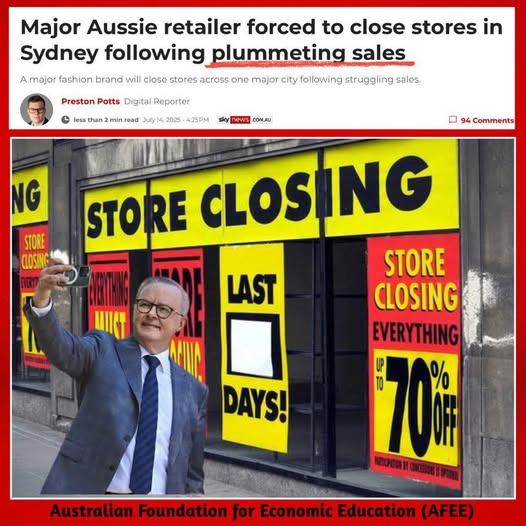
“Judith South comment: People buying online & that is what they want…no more driving around…haven’t you noticed even the supermarkets are getting people used to getting deliveries not going to the store“
Oz competing with their UK brethren to see how fast they can destroy society. The 15 minute city fetish.
Understanding the “First Hundred Days” The idea of judging a president by their first 100 days in office dates back to Franklin D. Roosevelt’s New Deal blitz in 1933. Ever since, it’s served as a benchmark for evaluating early priorities, tone, and executive impact. For libertarians, that means asking: Has government grown or shrunk? Have Americans gained more freedom, or lost it? Let’s examine where President Trump’s return to the White House stands on those counts. Help us hold leaders accountable to shrinking government and expanding freedom. >>>
Economy Tariffs Return with a Vengeance: Trump’s sweeping tariffs on imports, from allies and adversaries alike, signal a revival of protectionist policy. Markets wobbled, and consumer prices are already rising in key sectors. Tax Cuts Without Spending Cuts: Promises to eliminate taxes on tips and overtime sound good, but without significant spending reductions, they risk compounding the federal debt. Libertarian View: Tariffs are taxes on consumers, not foreign governments. We favor tax relief, but when paired with spending discipline. Fund our fight for free markets! >>>
Foreign Policy Ukraine Aid Halted: The administration has halted lethal aid to Ukraine and called on Europe to assume more responsibility. This marks a shift away from interventionist spending. Blank Check to Israel: Simultaneously, the administration continues sending arms to Israel and offering military support without conditions. Libertarian View: We applaud a move toward restraint in Ukraine, but oppose maintaining entanglements elsewhere. America should not be the world’s police force, or arms dealer. Support our push to end America’s role as the world’s police. >>>
Domestic Policy & Regulation Executive Order Overload: Over 140 executive orders in the first 100 days alone. Topics range from rolling back DEI mandates to renaming geographic regions and expanding executive authority. DOGE and Downsizing: A new Department of Government Efficiency claims billions in cuts and tens of thousands of federal layoffs, though questions remain about the math. Even with these cuts, overall U.S. spending remains at or near record highs. Libertarian View: Shrinking government is a win. But relying on executive orders instead of legislative change centralizes power, even when the policy is right. Real decentralization requires structural change, not just a reshuffling of bureaucracies. Help us demand real decentralization. >>>
Justice & Criminal Reform Mass Pardons: President Trump has pardoned over 1,500 individuals, including non-violent January 6 defendants and Ross Ulbricht. Police Militarization Resurges: Orders to loosen federal oversight of police, re-arm departments with military gear, and expand legal immunity signal a doubling down on authoritarian law enforcement. Support for Foreign Detention Without Trial: The administration has voiced admiration for El Salvador’s mega-prison strategy, locking thousands of people away without trial, and expressed interest in similar approaches, raising serious due process concerns. Libertarian View: We cheer the pardons, especially for peaceful dissenters and victims of the drug war. But we strongly oppose the expansion of the death penalty, militarized policing, and any move toward extrajudicial imprisonment. Liberty demands justice, not vengeance. Fund our work to protect liberty and justice! >>>
Education States First, Bureaucracy Last: Moves to decentralize education and restore power to states and parents have gained steam. Simultaneously, the Department of Education is increasing its investigations into universities and revoking student visas for foreign nationals who express support for Palestinians, an alarming violation of free speech, regardless of citizenship. Libertarian View: Education should be free of federal control, full stop. We support school choice and oppose any federal overreach, whether from the left or right. Support our battle for educational freedom. >>>
Energy & Environment Paris Accord Abandoned Again: The administration has exited the Paris climate agreement and reversed several “green” federal mandates. Protectionist Energy Tariffs: Tariffs on Canadian oil and other imports contradict the principles of free trade and energy independence. Libertarian View: We support rejecting international regulatory entanglements. But tariffs, even green ones, interfere with market efficiency and raise costs. Your donation drives our energy freedom agenda! >>>
Health WHO Withdrawal: Trump has cut ties with the World Health Organization, citing its pandemic failures and lack of transparency. Budget Cuts at HHS: Billions in cuts have been proposed for Health and Human Services, though without broader entitlement reform. Food Color Bans & Autism Registry: Federal regulatory actions have also targeted certain food dyes and floated a national “autism registry” with both raising troubling questions about medical surveillance and government overreach into personal health decisions. Libertarian View: Government should never be in the business of making health decisions for individuals. Whether it’s mandates, registries, or nanny-state bans, the principle remains the same: the state should not be your doctor, nor your dietitian. Donate to keep personal freedom first! >>>
Debt & Fiscal Outlook Despite a few headline cuts, a ballooning defense budget and unfunded tax changes threaten to expand an already unsustainable national debt. Libertarian View: Real fiscal responsibility means tackling the root of the problem: entitlements and military spending. Anything else is political theater. Demand real fiscal responsibility, not political theater. >>>
Military Defense Budget Soars: A record-setting $1 trillion defense package, new fighter jets, and expanded military bases reveal that the warfare state remains fully funded. Libertarian View: National defense is vital, but the Pentagon is not sacred. We oppose endless growth in military budgets and unconstitutional foreign interventions. Help us challenge bloated defense budgets and endless wars. >>>
Immigration Mass Deportation Plan Announced: The administration is rapidly expanding detention facilities and pledging mass deportations of undocumented immigrants, including long-settled workers and families. Asylum Restriction Orders: New policies further limit asylum access, encourage expedited removals, and penalize humanitarian entry. Underlying System Still Broken: Despite aggressive enforcement, there is no serious effort to reform the legal immigration system, leaving in place a byzantine, quota-ridden bureaucracy that incentivizes illegal entry in the first place. Libertarian View: A free society requires the free movement of peaceful people. Mass deportation, militarized borders, and federal centralization of immigration policy are fundamentally at odds with individual liberty. Without real reform that expands legal pathways, the core dysfunctions fueling illegal immigration will remain, and so will the crisis. Help us push for real reform. >>>
Libertarian Scorecard
Liberty Wins: Mass pardons of peaceful offendersDEI rollbacks and agency cutsPause on Ukraine aidSchool choice emphasisWHO exit and HHS cuts Liberty Losses: Tariffs and protectionism Record use of executive orders$1T defense budget and military buildup Police militarization and civil-liberties erosion Immigration crackdowns without system reform
Final Grade: C- Trump’s second term launch is a mixed bag for liberty. While there are signs of positive disruption—some red tape is being slashed, some political prisoners pardoned, some war spending paused—the deeper disease of centralization, fiscal irresponsibility, and state power remains unaddressed. Libertarians should praise the steps toward decentralization, but stay vigilant as power continues to shift, often just from one federal hand to another.
In April of 2004, the 9/11 Commission began its tenth public hearing in Washington, D.C., probing the intelligence and law enforcement failures that allowed the September 11 attacks. Over two days, ending April 14, the commission grilled top officials like FBI Director Robert Mueller, Attorney General John Ashcroft, and CIA Director George Tenet, alongside former leaders like Janet Reno and Louis Freeh. The hearings exposed gaps—missed warnings, siloed agencies, and lax airport security—that let 19 hijackers execute their plan, killing nearly 3,000 Americans.
The commission’s 2004 report didn’t just dissect the past; it reshaped the future. Its call for tighter ID standards to prevent terrorist travel birthed the REAL ID Act in 2005, mandating a national ID system through state driver’s licenses. Sold as a fix for 9/11’s vulnerabilities, REAL ID requires biometric data, federal oversight, and links to sprawling databases—tracking where you fly, bank, or even enter a government building. With enforcement delayed time and time, the truth is clear: this isn’t about catching bad guys; it’s about watching and tracking everyone. The War on Terror’s fear machine turned a tragedy into an excuse for control.
The Libertarian Party of Pennsylvania rejects this overreach. The 9/11 hearings showed government failed—not because it lacked power, but because it misused it. Piling on surveillance through REAL ID doesn’t make us safer; it makes us suspects in our own country. Freedom means moving through life without a federal leash, not proving your identity to board a plane. Let’s scrap REAL ID and the War on Terror’s bloated legacy—liberty, not tracking, is our shield.
“Immediately before the 2004 presidential election, almost 70 percent of U.S. citizens were unaware that Congress had added a prescription drug benefit to Medicare, though this was a giant increase to the federal budget and the largest new entitlement program since President Lyndon Johnson began the War on Poverty.”
“In 1964, only a minority of citizens knew that the Soviet Union was not a member of NATO…the organization created to oppose the Soviet Union.”
A couple weeks back, the managing editor here at the Libertarian Institute, Keith Knight, posted on Twitter/X about voter ignorance. The post, which featured the headline “Monetary Policy by the Taylor Rule,” along with the associated equation, concluded with the comment: “What % of voters know this and can comprehend this? How long would it take to teach everyone? Democracy is a joke, privitize [sic] everything.”
While voters might be forgiven for not being able to parse the arcane occult of highly mathematized macroeconomic policy—no matter their other scholastic qualifications, those lacking graduate training in economics are unlikely to be able to do so—a survey of voter competency across a broader range of metrics provides no great comfort.
Indeed, Knight’s criticism and prescription stand.
Consider the following recent examples a quick search revealed:
2017 Annenberg Public Policy Center Study: This found that only 26% of Americans could name all three branches of government, while 33% couldn’t name any branches at all, underscoring a lack of basic civic knowledge.
2010 Pew Research Center Knowledge Survey: Around 45% of respondents did not know that the Republican Party was generally considered more conservative than the Democratic Party, indicating a basic lack of understanding about the ideological differences between the major parties.
2018 National Election Studies: A significant number of voters misidentified which party controlled Congress. Despite widespread media coverage, many voters were confused about which party had the majority in the U.S. House and Senate, demonstrating low political awareness.
2010 Survey by Xavier University: This survey found that one-third of voters did not know that the Bill of Rights is part of the U.S. Constitution, revealing a gap in basic constitutional knowledge.
2019 Quinnipiac University Poll: This found that a significant percentage of Americans, over 50%, believed that Social Security was funded by a government trust fund rather than through a pay-as-you-go system where current workers’ payroll taxes fund current retirees’ benefits.
These instances illustrate a wide range of voter ignorance, from misinformation to a lack of knowledge about key political processes, policies, and historical facts. They highlight the challenges voters face in making informed decisions in elections—and this is hardly new!
Consider these earlier instances of voter ignorance, provided by the political scientist Jason Brennan in his Against Democracy:
Non-libertarians can understand the immorality and wrongfulness of private robbers forcibly taking people’s money and giving it to others. Unfortunately, however, many of them are unable to see that the same principle applies to the government.
The core principle of the libertarian philosophy is what is known as the non-aggression principle. It holds that it is morally wrong for one person to initiate force against another person, either directly or indirectly through the use of government. Libertarians understand the critical importance of the non-aggression principle and subscribe to it … mostly.
Let’s assume that I rob you of $10,000. I take the money and give it to the poor, needy, and disadvantaged. I don’t keep any of the money for myself. By robbing you of your money, I have initiated force against you. Under the libertarian non-aggression principle, my action is considered immoral even though I have selflessly given the money to others who need it.
The same principle applies to the government. If the government taxes you $10,000 and gives it to the poor, needy, and disadvantaged, the government has engaged in an immoral action. That’s because taxation is based on force. The government forces you to pay taxes. If you refuse to pay your taxes, the government will initiate force against you in the form of arrest, prosecution, conviction, incarceration, fines, liens, attachments, and garnishments. There is nothing voluntary about the government’s requirement to pay taxes. The fact that the government has given the money to others who need it does not change the wrongfulness of what the government has done.
Libertarians apply the non-aggression principle not only to the private robber but also to the government. Just as it is morally wrong for a private robber to take a person’s money and give it to others, it us just as morally wrong for the government to do it.
Non-libertarians can understand the immorality and wrongfulness of private robbers forcibly taking people’s money and giving it to others. Unfortunately, however, many of them are unable to see that the same principle applies to the government.
Unfortunately, however, some libertarians have carved out an exception to the non-aggression principle. They hold that it is okay to violate the libertarian non-aggression principle if one is gradually reducing a welfare-state program.
For example, consider Social Security, which is the crown jewel of America’s welfare state. It is based on the initiation of force because it relies on the IRS to forcibly seize through taxation the income of younger people in order to give the money to older people.
On Sunday, delegates at the Libertarian Party National Convention by majority vote selected Chase Oliver to be the party’s presidential nominee. Individuals seeking an anti-war candidate to support in the United States presidential race will be looking into Oliver’s views in regard to war and peace.
Oliver has provided a brief statement concerning those views in the “End Wars & Support Peace” plank of the platform presented at his campaign website.
In line with the platform plank’s title, Oliver presents a broad anti-war and pro-peace message in the introductory paragraph of the plank, stating in part:
Our nation has long had the moniker ‘leader of the free world.’ It is time we earn that distinction by insisting that Peace is the way forward. End the wars. End the drones. End the policy of constant intervention. It’s easy to drop a bomb, it’s much harder to serve as a beacon of Peace. We must take the more difficult but necessary path.
The first of five bullet points in the plank starts off with a statement in line with a noninterventionist foreign policy: “Close all overseas bases and immediately return active-duty personnel to domestic bases.” People looking for a libertarian perspective from the candidate, though, will likely be frustrated by the remainder of the first bullet point expressing Oliver’s determination to provide special benefits to people with student loans and thus create a big expansion of the welfare state: “The cost savings of doing so will be used as a one-time contribution to discharge the interest on currently outstanding Federally guaranteed student loans.”
The second bullet point of the plank starts off with another statement that supporters of nonintervention overseas would find heartening:
End aid being directed to nation-states currently at war. This includes Israel and Ukraine.
But, the remainder of the bullet point takes an interventionist and nonlibertarian turn, declaring:
While we offer moral support to our friends currently engaged with the enemy, we should not be contributing to extending the fight.
It does not generate confidence that a presidential candidate will, if elected, maintain neutrality in regard to conflicts abroad when he calls the people on one side of major conflicts in which the US is intervening “our friends” and people on the other side “the enemy.”
Skipping to the final bullet point of the plank, advocates of nonintervention overseas will see more reason for concern. The final bullet point reads in full: “Utilize trade as a bargaining chip to foment peace with our neighbors.” This sounds like a rehash of Democratic and Republican presidents over the last few decades using sanctions and tariffs to influence and punish other nations, not the free trade with all approach commonly expected from Libertarian Party candidates.
“Chase Oliver, recognized as the “most influential Libertarian” by Rolling Stone, garnered national attention following his debate with incumbent Sen. Raphael Warnock and Herschel Walker’s empty podium. With over 80,000 votes, Oliver forced a runoff between the Republican and Democratic candidates. Now he wants to bring a new vision to the broken two-party system as he runs for President of the United States.“






 MCViewPoint