MCViewPoint

Opinion from a Libertarian ViewPoint

Posts Tagged ‘liquidity’

Four Unreported Signs Paper Money is Dying

Posted by M. C. on September 7, 2021

By Matthew Piepenburg

Reason 1: The Taper Debate May Not be a Debate at All

Here, we look past the taper headlines and ask a simple question: Would a Fed “tapering” of QE really matter?

As we’ve written elsewhere, the Great Taper Debate is less of a debate than it is a pundit circus, forever fueling now classic yet complimentary debates on inflation vs. deflation, gold vs. the dollar and Fed-speak vs. honesty.

Of course, such topics, including the great “taper,” are all critical issues worthy of opposing views and somber discussions.

The world needs open, transparent and respectful (as opposed to tyrannical) debate, now more than ever.

If the Fed, for example, were to taper money printing, it’s logical to assume (and argue) that this would mean falling bonds, rising rates, deflationary forces, a stronger dollar and massive headwinds for risk assets like stocks and real estate.

But for many who are not otherwise deeply ensconced into the weeds of Wall Street (i.e., normal, smart and conscientious investors), what they may not know is this: The Fed has other tricks up its liquidity sleeve than just “QE.”

Stated otherwise, the taper fears as well as taper debate may not be as central to the central bank debate as one might think.

Why?

Hidden Liquidity Tricks and More Central Bank Fire Hoses

Because hidden within the backwash of the deliberately murky and mysterious (i.e., toxic) love affair between Wall Street and the Fed, lies unmarked little islands of hidden liquidity powers known as the Standard Repo Facility (SRF).

Specifically, we’re referring to the Reverse Repo Program (RRP) for domestic use and the FIMA swap lines (for foreign creditors) which allows the Fed to keep dumping liquidity into the system even during a QE “taper.”

The RRP program, for example, allows the Fed to help commercial banks avoid (i.e., cheat on) those otherwise laudable Basel 3 rules, thereby giving our seemingly immortal banks the hidden power to circumvent Basel 3’s reserve requirements.

Without diving too deep into this intentionally complex arena, RRP programs technically reduce liquidity, but the program’s fine print effectively allows increasingly less “liquid” commercial banks to sidestep Basel 3, which means they are not forced to become “less liquid” in actual practice—just more dangerous.

As we warned months ago, as debt conditions worsen, so too does transparency and truth; far more importantly, centralized control over (and support for) an otherwise grossly distorted banking system (and risk asset bubble) continues to rise behind the headlines.

In short, if investors are wondering why or how markets can and could climb despite “taper” headlines, the answer is hidden in plain yet deliberately complex sight. After all, distortion loves to hide behind complexity.

Like inflation, the real truth behind Basel 3 and the taper-debate is hidden behind deliberate obfuscation and mis-reporting—what normal folks call, well…lies.

This means, taper or no taper, the dollar liquidity will keep pumping within the fantasy islands of the RRP archipelago and hence the liquidity needed to help “inflate away” otherwise unconscionable and mathematically growth-killing sovereign debt will and can continue.

Such liquidity trends, of course, just mean the further debasement of fiat/paper money.

Reason 2: The IMF Signals More Liquidity

But if you think the Fed is the only monetary body growing more desperate and hence liquidity-clever by the day, let’s not forget those Wunderkinder at the IMF nor Forest Gump’s reminder that when it comes to dumping more paper money onto an already unsustainable debt pile, “stupid is as stupid does.”

Just one month ago, the IMF’s board of governors approved an allocation (its first since 2009) of Special Drawing Rights (SDR) to the tune of $650B (456B in SDR) in order to stimulate, you guessed it, more global liquidity.

See the rest here

Be seeing you

Posted in Uncategorized | Tagged: , , , , , | Leave a Comment »

Thanks to the Fed, the High-Risk, Small-Time Borrower Is Becoming a Thing of the Past | Mises Wire

Posted by M. C. on April 28, 2021

So how do the Fed’s shenanigans hurt banks? “The thing about quantitative easing, if you take it in a technical way, the Fed is taking duration out of the market. You can think of duration as another way of talking about bond, risk, or the ability to buy an asset that pays you over time. When the Fed’s doing that, they’re making all of these assets more scarce, and they’re forcing the prices up and the yields down. By definition, the available return of what’s left for a bank to buy is less. That’s what it comes down to.” 

https://mises.org/wire/thanks-fed-high-risk-small-time-borrower-becoming-thing-past

Doug French

Banks and accounting trickery go together. Last year, as I remember back to my banking days, financial institutions followed the advice once proffered by one of our board members, “If we’re going to the dump, let’s take a full load.” 

When the pandemic struck, banks dumped plenty in their loan-loss provisions, $60 billion, expecting the worst. The cavalry arrived led by Jerome Powell’s Fed liquidity flood, Steven Mnuchin’s Paycheck Protection Program (PPP) loans, Congress’s Coronavirus Aid, Relief, and Economic Security (CARES) Act, and moratoriums on foreclosures and evictions. Instead of an Austrian business cycle cleansing, the cracks were papered over, including bailing out money market funds, allowing us to watch the pandemic comfortably on TV. 

Here we are a year later and banks are rocking their earnings by adding back the money that had been put away for the predicted rainy covid day. Appearing on Real Vision’s Daily Briefing with Jack Farley, bank analyst extraordinaire and Ludwig von Mises fan Chris Whalen said the future of banks could be dim or worse. Mentioning bank darling JPMorgan, Whalen pointed out, “[Y]ou take the reserve release out, their revenues are down year-over-year. Their earnings would have been down year-over-year, and nobody on Wall Street really gets past the first paragraph in the press release, so they don’t bother with this stuff.”

Finding a friendly, promiscuous banker is impossible these days as regulators fight the last war, meaning “banks are continuing to see their assets run off. In other words, they’re not originating new loans fast enough to keep up with the loans that are either being redeemed or prepaying early. A lot of early prepayments, especially in business loans, that kills banks,” Whalen said. 

While consumer numbers look good, the lurking problem is commercial real estate. While hiding in plain sight the heavy hand of the government is “letting the banks let these borrowers go [in] the hope that they come back.” Hope is not a good strategy, but “the bank doesn’t want the building. The bank doesn’t want the shopping mall. They’re giving these people time. But I think it’s a mistake, because especially in big cities, we’re going to have to restructure this real estate.”

A person might think the more loan-loss reserves, the better. Whalen says no. Auditors and regulators argue about it all the time. Bank auditors are on red alert for stashing cash in the reserve to smooth earnings or sandbag earnings for tax purposes. Regulators want all the reserves a bank can put away. 

“The really big question mark is businesses, urban real estate, multifamily real estate, apartments that haven’t had people paying their rent, all of these are going to be problematic,” Whalen told Farley. “Then down the road, and I mean six months, 12 months down the road, not very far, we got to start thinking about municipal finance, because all the money that Congress put on the table to help New York, help Chicago, that’s going to be gone very quickly.”

The bank analyst said real estate was behind most commercial loans. Regulators, and therefore bankers, love owner-occupied real estate, believing those loans as safe as can be. But in a pandemic, with storefronts boarded up, how safe are they? 

In the banking big picture, the Fed’s monetary manipulations are sending the business toward oblivion. “As the banks have grown, their earnings return on earning assets, which is probably the most important thing you look at with any bank that has been falling. It’s fallen 20 basis points in the last three years. We’re down to about 70 basis points,” Whalen said. “I keep telling people if the Fed doesn’t change their policy, by the end of this year, the banks are going to be in trouble.”

Banks aren’t in the risk business anymore. As Whalen told Real Vision, “banks are running away from consumers, the consumer is toxic. The only time a bank wants to face a consumer is if it’s an affluent consumer, a bigger mortgage, high FICO score, low LTV [loan-to-value], cut a loan, no risk.” Other than credit card lending, there is no margin in the lending business anymore.

Back to the loan impairment issue. What banks don’t know is whether their loan books will perform after the government moratoriums are lifted. Says Whalen, “[B]y the summer, the fall, you’re going to be in a position where the auditor is going to force the banks to really start recognizing whether the assets are permanently impaired. That’s when I think we’re going to have to come to Jesus in terms of credit costs.” So, some of that loan-loss reserve money, which conveniently propped up earnings today, may have to be replenished, or worse, the losses may have to be recognized tomorrow.

So how do the Fed’s shenanigans hurt banks? “The thing about quantitative easing, if you take it in a technical way, the Fed is taking duration out of the market. You can think of duration as another way of talking about bond, risk, or the ability to buy an asset that pays you over time. When the Fed’s doing that, they’re making all of these assets more scarce, and they’re forcing the prices up and the yields down. By definition, the available return of what’s left for a bank to buy is less. That’s what it comes down to.” 

Whalen worries about the Fed and about Janet Yellen at the Treasury, “because these people are playing with a prayer book that’s 30 years old. They don’t really understand how much has changed in this market, and how their manipulation of the market has destroyed price discovery, has destroyed risk metrics. We don’t know what we’ve got here. The only way we’re going to find out is if the Fed ever stops buying, but I don’t think they can. I think the Fed will be buying Treasury bonds forever.”

The Fed is taking the US economy where Europe is, with no freely trading bond market. If Powell is successful, Whalen believes the US will be mired in slow growth and, “[f]rankly, we would have a revolution in this country. You give that a couple of years, and we would be hanging Fed governors from lampposts on Constitution Avenue, which could happen anyway.”

Being Real Vision, Farley had to ask about cryptocurrencies, and Whalen pulled no punches. He believes they are a form of fraud, but “if they want to trade Beanie Babies, great. I think that’s fine.” And he doesn’t believe crypto is decentralized, saying three people in North Korea and China using free electricity are manipulating crypto markets. 

Whalen parts with Austrians in saying money is a function of government entities. “You can’t take politics out of money,” he said. “Anybody who makes that argument to you, you know that they’re a child, and that they don’t get it. Countries with strong currencies have big armies and usually nuclear weapons. That’s the way it works.”

The Fed and Treasury are scary, banks are slowly failing, and crypto is a fraud. Other than that, it’s the end of the world and I feel fine.  Author:

Doug French

Douglas French is former president of the Mises Institute, author of Early Speculative Bubbles & Increases in the Money Supply, and author of Walk Away: The Rise and Fall of the Home-Ownership Myth. He received his master’s degree in economics from UNLV, studying under both Professor Murray Rothbard and Professor Hans-Hermann Hoppe.

Be seeing you

Posted in Uncategorized | Tagged: , , , | Leave a Comment »

In Unprecedented Monetary Overhaul, The Fed Is Preparing To Deposit “Digital Dollars” Directly To “Each American” | Zero Hedge

Posted by M. C. on September 24, 2020

In short, ever since the Fed launched QE and NIRP, it has been making the situation it has been trying to “fix” even worse while blowing the biggest asset price bubble in history.

https://www.zerohedge.com/markets/loretta-mester-hints-fed-preparing-deposit-digital-dollars-directly-each-american


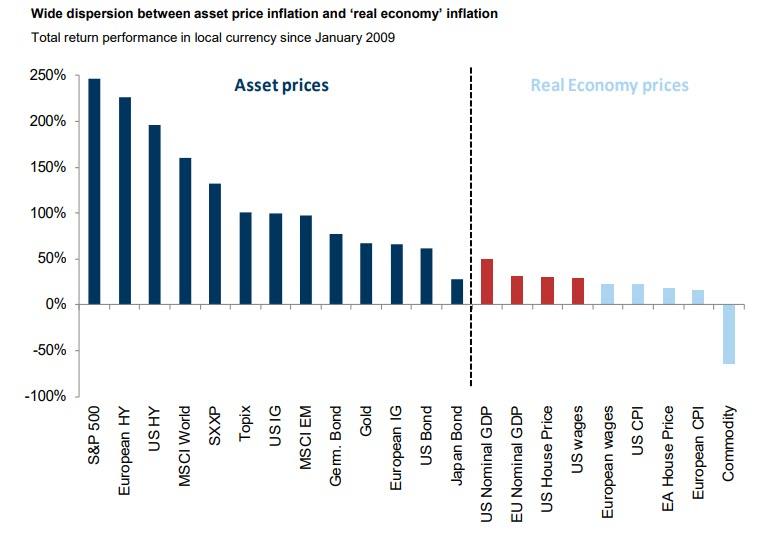
Over the past decade, the one common theme despite the political upheaval and growing social and geopolitical instability, was that the market would keep marching higher and the Fed would continue injecting liquidity into the system. The second common theme is that despite sparking unprecedented asset price inflation, prices as measured across the broader economy – using the flawed CPI metric and certainly stagnant worker wages – would remain subdued (as a reminder, the Fed is desperate to ignite broad inflation as that is the only way the countless trillions of excess debt can be eliminated and has so far failed to do so).

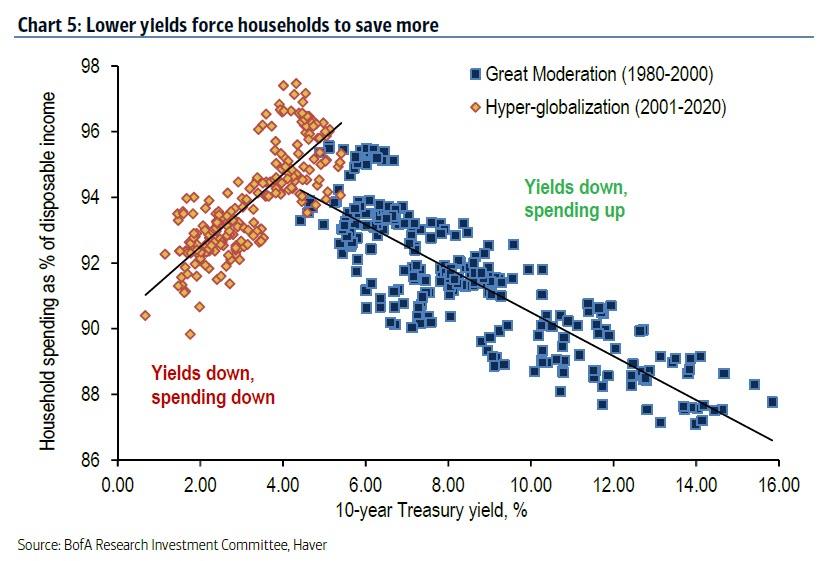
The Fed’s failure to reach its inflation target – which prompted the US central bank to radically overhaul its monetary dogma last month and unveil Flexible Average Inflation Targeting (or FAIT) whereby the Fed will allow inflation to run hot without hiking rates – has sparked broad criticism from the economic establishment, even though as we showed in June, deflation is now a direct function of the Fed’s unconventional monetary policies as the lower yields slide, the lower the propensity to spend. In other words, the harder the Fed fights to stimulate inflation, the more deflation and more saving it spurs as a result (incidentally this is not the first time this “discovery” was made, in December we wrote “One Bank Makes A Stunning Discovery – The Fed’s Rate Cuts Are Now Deflationary“).


In short, ever since the Fed launched QE and NIRP, it has been making the situation it has been trying to “fix” even worse while blowing the biggest asset price bubble in history.

And having recently accepted that its preferred stimulus pathway has failed to boost the broader economy, the blame has fallen on how monetary policy is intermediated, specifically the way the Fed creates excess reserves which end up at commercial banks instead of “tricking down” all the way to the consumer level.

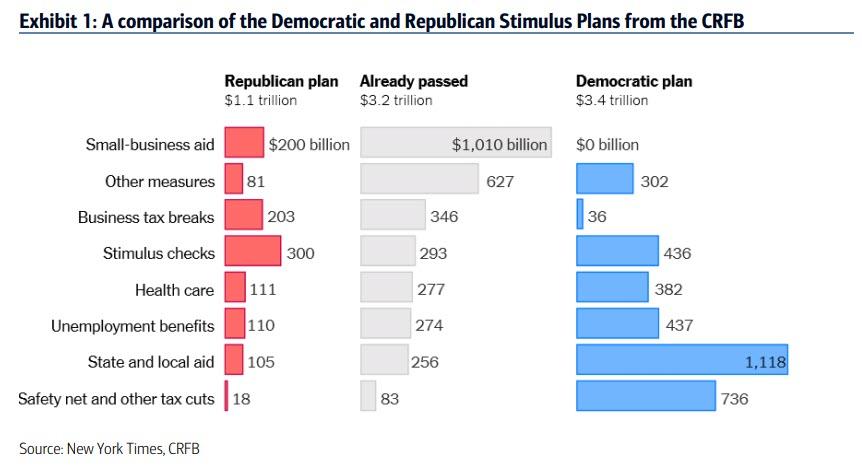
To be sure, in the aftermath of the covid pandemic shutdowns the Fed has tried to short-circuit this process, and in conjunction with the Treasury it has launched “helicopter money” which has resulted in a direct transfer of funds to US corporations via PPP loans, as well as to end consumers via the emergency $600 weekly unemployment benefits which however are set to expire unless renewed by Congress as explained last week, as Democrats and Republicans feud over which fiscal stimulus will be implemented next.

And yet, the lament is that even as the economy was desperately in need of a massive liquidity tsunami, the funds created by the Fed and Treasury (now that the US operates under a quasi-MMT regime) did not make their way to those who need them the most: end consumers.

Which is why we read with great interest a Bloomberg interview with two former Fed officials: Simon Potter, who led the Federal Reserve Bank of New York’s markets group i.e., he was the head of the Fed’s Plunge Protection Team for years, and Julia Coronado, who spent eight years as an economist for the Fed’s Board of Governors, who are among the innovators brainstorming solutions to what has emerged as the most crucial and difficult problem facing the Fed: get money swiftly to people who need it most in a crisis.


The response was striking: the two propose creating a monetary tool that they call recession insurance bonds, which draw on some of the advances in digital payments, which will be wired instantly to Americans.

As Coronado explained the details, Congress would grant the Federal Reserve an additional tool for providing support—say, a percent of GDP [in a lump sum that would be divided equally and distributed] to households in a recession. Recession insurance bonds would be zero-coupon securities, a contingent asset of households that would basically lie in wait. The trigger could be reaching the zero lower bound on interest rates or, as economist Claudia Sahm has proposed, a 0.5 percentage point increase in the unemployment rate. The Fed would then activate the securities and deposit the funds digitally in households’ apps.

As Potter added, “it took Congress too long to get money to people, and it’s too clunky. We need a separate infrastructure. The Fed could buy the bonds quickly without going to the private market. On March 15 they could have said interest rates are now at zero, we’re activating X amount of the bonds, and we’ll be tracking the unemployment rate—if it increases above this level, we’ll buy more. The bonds will be on the asset side of the Fed’s balance sheet; the digital dollars in people’s accounts will be on the liability side.”

Essentially, the Fed is proposing creating a hybrid digital legal tender unlike reserves which are stuck within the financial system, and which it can deposit directly into US consumer accounts. In short, as we summarized “The Fed Is Planning To Send Money Directly To Americans In The Next Crisis, something we reminded readers of on Monday:

So this morning, as if to confirm our speculation of what comes next, Cleveland Fed president Loretta Mester delivered a speech to the Chicago Payment Symposium titled “Payments and the Pandemic“, in which after going through the big picture boilerplate, Mester goes straight to the matter at hand.

In the section titled “Central Bank Digital Currencies”, the Cleveland Fed president writes that “the experience with pandemic emergency payments has brought forward an idea that was already gaining increased attention at central banks around the world, that is, central bank digital currency (CBDC).”

And in the shocking punchline, then goes on to reveal that “legislation has proposed that each American have an account at the Fed in which digital dollars could be deposited, as liabilities of the Federal Reserve Banks, which could be used for emergency payments.

But wait it gets better, because in launching digital cash, the Fed would then be able to scrap “anonymous” physical currency entirely, and track every single banknote from its “creation” all though the various transactions that take place during its lifetime. And, eventually, the Fed could remotely “destroy” said digital currency when it so decides. Oh, and in the process the Fed would effectively disintermediate commercial banks, as it would both provide loans to US consumers and directly deposit funds into their accounts, effectively making the entire traditional banking system obsolete. Here are the details:

Other proposals would create a new payments instrument, digital cash, which would be just like the physical currency issued by central banks today, but in a digital form and, potentially, without the anonymity of physical currency. Depending on how these currencies are designed, central banks could support them without the need for commercial bank involvement via direct issuance into the end-users’ digital wallets combined with central-bank-facilitated transfer and redemption services. The demand for and use of such instruments need further consideration in order to evaluate whether such a central bank digital currency would allow for quicker and more ubiquitous payments in times of emergency and more generally. In addition, a range of potential risks and policy issues surrounding central bank digital currency need to be better understood, and the costs and benefits evaluated.

The Federal Reserve has been researching issues raised by central bank digital currency for some time. The Board of Governors has a technology lab that has been building and testing a range of distributed ledger platforms to understand their potential benefits and tradeoffs. Staff members from several Reserve Banks, including Cleveland Fed software developers, are contributing to this effort. The Federal Reserve Bank of Boston is also engaged in a multiyear effort, working with the Massachusetts Institute of Technology, to experiment with technologies that could be used for a central bank digital currency. The Federal Reserve Bank of New York has established an innovation center, in partnership with the Bank for International Settlements, to identify and develop in-depth insights into critical trends and financial technology of relevance to central banks. Experimentation like this is an important ingredient in assessing the benefits and costs of a central bank digital currency, but does not signal any decision by the Federal Reserve to adopt such a currency. Issues raised by central bank digital currency related to financial stability, market structure, security, privacy, and monetary policy all need to be better understood.

Read the rest of this entry »

Posted in Uncategorized | Tagged: , , , , , , | Leave a Comment »

NY Fed Doubles-Down on Repo Intervention as Bank Cash Crisis Rattles Markets

Posted by M. C. on September 18, 2019

“We think that the culprit is the scarcity of bank reserves,…

Translation: If you have cash in banks-get it out before the other guy because there is not nearly enough to go around.

This is a very bad sign.

https://www.thestreet.com/investing/fixed-income/ny-fed-doubles-down-on-repo-intervention-as-bank-cash-crisis-rattles-markets-15094169

by

The New York branch of the U.S. Federal Reserve will step in and offer billions more in liquidity to gummed-up intrabank lending markets Wednesday, following the first intervention in more than a decade only yesterday, as a worrying spike in overnight borrowing costs continues to perplex investors and complicate today’s Fed rate decision.

The New York branch of the U.S. Federal Reserve added billions more in liquidity to gummed-up intrabank lending markets Wednesday, following the first intervention in more than a decade only yesterday, as a worrying spike in overnight borrowing costs continues to perplex investors and complicate today’s Fed rate decision.

The New York Fed offered $75 billion in cash to broader markets, in exchange for eligible collateral such as U.S. Treasury bonds or mortgage-backed securities, in order to hold the Fed’s key rate inside its target range of between 2% and 2.25%. It accepted its full allotment, even as bids totaled $80 billion, lowing the range from 2.6% to 3% prior to the operation to 2.25% to 2.6% immediately afterwards.

The New York Fed was forced yesterday to inject $53.2 billion after overnight borrowing costs surged close to 10%, thanks in part to the hefty burden of primary dealers in the Fed system taking down nearly $45 billion each day in gross U.S. Treasury bond issuance, and reducing spare cash — known as excess reserves — at the same time. In fact, excess reserves have fallen by $171 billion so far this year, according to Fed data, and are down $1.4 trillion from 2014 levels.

Nonetheless, the repeat overnight repo operation later today — only the second in ten years — will add to market jitters as to what Powell and his colleagues are likely to say about future rate hikes, and the unwinding of the Fed’s $3.8 trillion balance sheet, in the months ahead.

“We think that the culprit is the scarcity of bank reserves, which are the only asset that provides banks with intraday liquidity,” said TD Securities head of global rate strategy Priya Misra. “Reserves have been declining since 2014 and we expect them to decline further as Treasury’s cash balance increases and currency in circulation grows.”…

Be seeing you

What is Fractional Reserve Banking? - Market Business News

It means John can’t get all his $1000 back.


Posted in Uncategorized | Tagged: , , , | Leave a Comment »