


Kennedy’s Nuclear nonproliferation. Killed by Lyndon Johnson.
When it comes to LBJ and Israel, we know who was the boss.
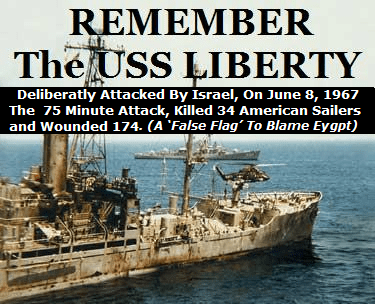
As we like to say here – Remember The Liberty
Throughout the spring and summer of 1963, the leaders of the United States and Israel – President John F. Kennedy and Prime Ministers David Ben-Gurion and Levi Eshkol – were engaged in a high-stakes battle of wills over Israel’s nuclear program. The tensions were invisible to the publics of both countries, and only a few senior officials, on both sides of the ocean, were aware of the severity of the situation
In Israel, those in the know saw the situation as a real crisis, as a former high-level science adviser, Prof. Yuval Ne’eman, told one of us (Avner Cohen) 25 years ago. Ne’eman recalled that Eshkol, Ben-Gurion’s successor, and his associates saw Kennedy as presenting Israel with a real ultimatum. There was even one senior Israeli official, Ne’eman told me, the former Israel Air Force commander Maj. Gen. (res.) Dan Tolkowsky, who seriously entertained the fear that Kennedy might send U.S. airborne troops to Dimona, the home of Israel’s nuclear complex.
What was at stake was the future of Israel’s nuclear program. Kennedy, with an exceptionally strong commitment to nuclear nonproliferation, was determined to do all he could to prevent Israel from producing nuclear weapons. Ben-Gurion (and later Eshkol) were equally determined to complete the Dimona project. For them, nuclear capability was an indispensable insurance policy against existential threats to Israel. The exchange between the American president and the two prime ministers illustrates both Kennedy’s tenacity and the Israeli leaders’ recalcitrance.
Earlier this week, we published – on the website of the National Security Archive – a collection of nearly 50 American documents from U.S. archives that illuminate for the first time the full scope of this secret American-Israeli confrontation. The collection includes not only the entire exchange of messages between the leaders – Kennedy, Ben-Gurion and Eshkol – but also many related American documents, some of which were declassified and became available only in recent months…
In the end, the confrontation between President Kennedy and two Israeli prime ministers resulted in a series of six American inspections of the Dimona nuclear complex, once a year between 1964 and 1969. They were never conducted under the strict conditions Kennedy laid out in his letters. While Kennedy’s successor remained committed to the cause of nuclear nonproliferation and supported American inspection visits at Dimona, he was much less concerned about holding the Israelis to Kennedy’s terms. In retrospect, this change of attitude may have saved the Israeli nuclear program.
Be seeing you
 MCViewPoint