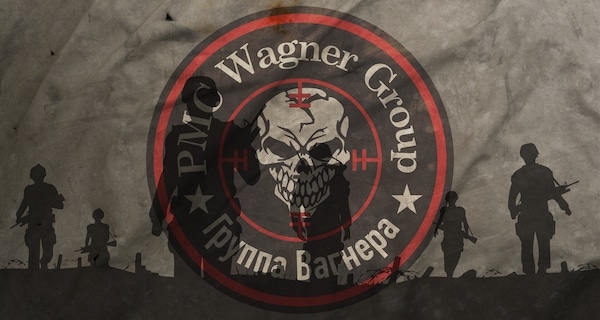
The imminent collapse of Russia. The sudden rebellion by Wagner troops followed by the equally sudden, non-rebellion had the MSM in a tizzy. Most interesting and hilarious was watching the MSM go from “Wagner mercenaries are murdering Ukrainians” to “Wagner mercenaries are going to free us from Putin’s tyranny.” And, of course, now… silence. To be fair, it’s probably best they just shut up. I am simply stunned that anyone continues to listen to these shills who either spout propaganda or simply have no earthly idea what is going on but feel the need to say… well, something. Surely, it must be getting humiliating at this point?
In any event, here are some thoughts and questions I have after having digested some of what appears to have taken place.
I watched the MSM come out with multiple (I counted 7 and then stopped counting) reports out on the Saturday morning. The fact we had this deluge of reports in such a rapid timeframe seemed odd to me. I mean the “mutiny” had literally only begun taking place hours prior. Hours!
Then we heard that the intelligence agencies briefed Congress earlier in the week about an expected uprising. Earlier in the week? So the spooks at the CIA and Congress knew about this ahead of time. Which means corporate media knew ahead of time. Which explains how they manage to have literally dozens of articles out within hours. They wrote the Russian Civil War narrative beforehand!
Which brings up the question. How did the security services know this was going to go down… before it happened if they weren’t playing a hand in the affair? An attempted Maidan coup 2.0?
If that’s true, then you know what that means? It means that the US has directly attacked Russia. That is an act of war.
Those conclusions, true or not, lead one to consider that maybe, just maybe we have the CIA involved in a foreign country attempting to overthrow its leadership.
2014 saw two pivotal events that led to the current conflict in Ukraine.
The first, familiar to all, was the coup in Ukraine in which a democratically elected government was overthrown at the direction of the United States and with the assistance of neo-Nazi elements which Ukraine has long harbored.
Shortly thereafter the first shots in the present war were fired on the Russian-sympathetic Donbass region by the newly installed Ukrainian government. The shelling of the Donbass which claimed 14,000 lives has continued for 8 years, despite attempts at a cease-fire under the Minsk accords which Russia, France and Germany agreed upon but Ukraine backed by the US refused to implement. On February 24, 2022, Russia finally responded to the slaughter in Donbass and the threat of NATO on its doorstep.
Russia Turns to the East – China Provides an Alternative Economic Powerhouse.
The second pivotal event of 2014 was less noticed and in fact rarely mentioned in the Western mainstream media. In November of that year according to the IMF, China’s GDP surpassed that of the U.S. in purchasing power parity terms (PPP GDP). (This measure of GDP is calculated and published by the IMF, World Bank and even the CIA. Students of international relations like economics Nobel Laureate, Joseph Stiglitz, Graham Allison and many others consider this metric the best measure of a nation’s comparative economic power.) One person who took note and who often mentions China’s standing in the PPP-GDP ranking is none other than Russia’s President Vladimir Putin.
From one point of view, the Russian action in Ukraine represents a decisive turn away from the hostile West to the more dynamic East and the Global South. This follows decades of importuning the West for a peaceful relationship since the Cold War’s end. As Russia makes its Pivot to the East, it is doing its best to ensure that its Western border with Ukraine is secured.
Following the Russian action in Ukraine, the inevitable U.S. sanctions poured onto Russia. China refused to join them and refused to condemn Russia. This was no surprise; after all Putin’s Russia and Xi’s China had been drawing ever closer for years, most notably with trade denominated in ruble-renminbi exchange, thus moving toward independence from the West’s dollar dominated trade regime.
The World Majority Refuses to Back U.S. Sanctions
But then a big surprise. India joined China in refusing to honor the US sanctions regime. And India kept to its resolve despite enormous pressure including calls from Biden to Modi and a train of high level US, UK and EU officials trekking off to India to bully, threaten and otherwise attempting to intimidate India. India would face “consequences,” the tired US threat went up. India did not budge.
India’s close military and diplomatic ties with Russia were forged during the anti-colonial struggles of the Soviet era. India’s economic interests in Russian exports could not be countermanded by U.S. threats. Now India and Russia are now working on trade via ruble-rupee exchange. In fact, Russia has turned out to be a factor that put India and China on the same side, pursuing their own interests and independence in the face of U.S. diktat. Moreover with trade in ruble-renminbi exchange already a reality and with ruble-rupee exchange in the offing, are we about to witness a Renminbi-Ruble-Rupee world of trade – a “3R” alternative to the Dollar-Euro monopoly? Is the world’s second most important political relationship, that between India and China, about to take a more peaceful direction? What’s the world’s first most important relationship?
India is but one example of the shift in power. Out of 195 countries, only 30 have honored the US sanctions on Russia. That means about 165 countries in the world have refused to join the sanctions. Those countries represent by far the majority of the world’s population. Most of Africa, Latin America (including Mexico and Brazil), East Asia (excepting Japan, South Korea, both occupied by U.S. troops and hence not sovereign, Singapore and the renegade Chinese Province of Taiwan) have refused. (India and China alone represent 35% of humanity.)
Add to that fact that 40 different countries are now the targets of US sanctions and there is a powerful constituency to oppose the thuggish economic tactics of the U.S.
Finally, at the recent G-20 Summit a walkout led by the US when the Russia delegate spoke was joined by the representatives of only 3 other G-20 countries, with 80% of these leading financial nations refusing to join! Similarly, a US attempt to bar a Russian delegate from a G-20 meeting later in the year in Bali was rebuffed by Indonesia which currently holds the G-20 Presidency.
Nations Taking Russia’s side are no longer poor as in Cold War 1.0.
These dissenting countries of the Global South are no longer as poor as they were during the Cold War. Of the top 10 countries in PPP-GDP, 5 do not support the sanctions. And these include China (number one) and India (number 3). So the first and third most powerful economies stand against the US on this matter. (Russia is number 6 on that list about equal to Germany, number 5, the two being close to equal, belying the idea that Russia’s economy is negligible.)
These stands are vastly more significant than any UN vote. Such votes can be coerced by a great power and little attention is paid to them in the world. But the economic interests of a nation and its view of the main danger in the world are important determinants of how it reacts economically – for example to sanctions. A “no” to US sanctions is putting one’s money where one’s mouth is.
We in the West hear that Russia is “isolated in the world” as a result of the crisis in Ukraine. If one is speaking about the Eurovassal states and the Anglosphere, that is true. But considering humanity as a whole and among the rising economies of the world, it is the US that stands isolated. And even in Europe, cracks are emerging. Hungary and Serbia have not joined the sanctions regime and of course most European countries will not and indeed cannot turn away from Russian energy imports crucial to their economies. It appears that the grand scheme of U.S. global hegemony to be brought about by the US move to WWII Redux, both Cold and Hot, has hit a mighty snag.
For those who look forward to a multipolar world, this is a welcome turn of events emerging out of the cruel tragedy of the U.S. proxy war in Ukraine. The possibility of a saner, more prosperous multipolar world lies ahead – if we can get there.
After the Maidan coup in 2014, the Russian-speaking part of the population – civilians – were attacked by Ukrainian soldiers. In cities like Odessa, Mariupol, Luhansk and Donetsk massacres were carried out by them.
The retired Swiss Colonel Jacques Baud has written a lengthy article in which he paints a completely different picture of the war in Ukraine than portrayed in the Western media. The former NATO analyst helped Ukraine build its army for years.
Baud noted that the so-called Russian-backed separatists in Donbass were never supported in any way by Russia for the past eight years. After the Maidan coup in 2014, the Russian-speaking part of the population – civilians – were attacked by Ukrainian soldiers. In cities like Odessa, Mariupol, Luhansk and Donetsk massacres were carried out by them. Since then, a civil war has raged in the country.
Baud was working as an army analyst for NATO in 2014, when his team discovered that the rebels’ weapons were not supplied by Russia, but by Russian-speaking defectors from the Ukrainian armed forces.
How did he know this?
There was a massive exodus, after which Baud had to help to rebuild the image of the Ukrainian army. This turned out to be a long and arduous process. In the process, extremist paramilitary militias, including the Azov Battalion, sprung up.
In 2020, 40 percent of the Ukrainian army consisted of these militias, Baud said. He describes the members as cruel fanatics. They were funded, trained and armed by the United States, Great Britain, Canada and France.
Baud further pointed out that President Zelensky announced last year that he intended to take Crimea and he sent his troops south to complete the task. In February, the Ukrainian army began bombing Donbass on a large scale.
The former colonel added that US President Biden announced on February 17 that Russia would attack Ukraine within days. How did he know this? Since February 16, the civilian population of Donbass has been massively bombed by the Ukrainian army. The European Union, media, NATO and Western governments nonetheless kept mum as this was happening.
Three reasons
It seems the European Union and Western countries deliberately did not say anything about the massacre in Donbass because they knew it would provoke a Russian response, the ex-NATO analyst said.
He also pointed out that in January saboteurs with Western equipment were caught in Donbass who spoke Polish. They had wanted to cause incidents with chemical substances in Gorlovka. Baud said Joe Biden knew the mass bombing and acts of sabotage would lead to a Russian invasion.
According to him, there are three reasons for this war: the expansion of NATO, refusal of the West to implement the Minsk agreements and the large-scale attacks on the civilian population of Donbass over the past eight years.
The Chinese and Russians (and most of the rest of the world) simply cannot process the notion that the United States is run by clueless amateurs who stumble from one half-baked initiative to another, with no overall plan (except, of course, to persuade the Persians to become America’s friends rather than enemies).
People who were with Putin that night report his anger and disbelief at the unfolding ‘Orange’ revolution in Ukraine. ‘They lied to me,’ Putin said bitterly of the United States. ‘I’ll never trust them again.’ The Russians still can’t fathom why the West threw over a potential strategic alliance for Ukraine. They underestimate the stupidity of the West.”
US President Donald Trump offended the entire political spectrum with a tweet this morning blaming Washington for poor relations with Russia. “Our relationship with Russia has NEVER been worse thanks to many years of US foolishness and stupidity,” the president said, and he is entirely correct…
Full disclosure: I was a card-carrying member of the neoconservative cabal that planned to bring Western-style democracy and free markets to Russia after the fall of Communism. As chief economist for the supply-side consulting firm Polyconomics, I got an appointment as an adviser to Boris Yeltsin’s finance ministry and made several trips to Moscow.
Of course, the finance ministry really was a family office for Yeltsin’s oligarch friends, who were too busy stealing Russia’s economy to listen to advice. The experience cured me of the neoconservative delusion that democracy and free markets are the natural order of things.
Unfortunately, the delusion that the United States would remake Russia in its own image persisted through the Bush and Obama administrations. I have no reason to doubt the allegations that a dozen Russian intelligence officers meddled in the US elections of 2016, but this was equivalent of a fraternity prank compared to America’s longstanding efforts to intervene in Russian politics…
The Maidan coup was the second American attempt to install a Ukrainian government hostile to Moscow; the first occurred in 2004, when Condoleezza Rice was Secretary of State rather than Hillary Clinton. As I wrote in Asia Times a decade ago, “On the night of November 22, 2004, then-Russian president – now premier – Vladimir Putin watched the television news in his dacha near Moscow. People who were with Putin that night report his anger and disbelief at the unfolding ‘Orange’ revolution in Ukraine. ‘They lied to me,’ Putin said bitterly of the United States. ‘I’ll never trust them again.’ The Russians still can’t fathom why the West threw over a potential strategic alliance for Ukraine. They underestimate the stupidity of the West.”
American efforts to promote a democratic opposition to Putin have failed miserably, and as John Lloyd wrote recently at Reuters, the Russian president remains genuinely popular. This remains a source of perpetual frustration for the neoconservatives, who cannot fathom why dictatorships still exist…
Thanks to President Trump, Russia (as well as China) now understands that America’s intervention in Iraq was not a deliberate effort to destabilize the region, and that its support for Sunni jihadists in Syria was not a deliberate effort to create an Islamist monster with which to destabilize Russia. Under the headline “They’ll never believe we’re that stupid,” I wrote in May 2015:
“Beijing and Moscow made up their minds some time ago that the United States had deliberately unleashed chaos on the Levant as part of a malevolent plan of some kind. The Chinese and Russians (and most of the rest of the world) simply cannot process the notion that the United States is run by clueless amateurs who stumble from one half-baked initiative to another, with no overall plan (except, of course, to persuade the Persians to become America’s friends rather than enemies).
Incompetence has consequences. One of the consequences will be that our competitors and adversaries will take us for knaves instead of fools, or even worse, will recognize that we are fools after all.”





 MCViewPoint