MCViewPoint

Opinion from a Libertarian ViewPoint

Posts Tagged ‘Mao Zedong’

Dean Acheson’s Taiwan Dilemma

Posted by M. C. on February 8, 2025

by Joseph Solis-Mullen

“As economist Murray Rothbard noted at the time, this policy of defending Taiwan was always based on fallacious reasoning, parroted to this day by the current crop of hawks:

“A peaceful Pacific moat is needed for our defense. In order to protect this moat, we must secure friendly countries or bases all around it. To protect Japan and the Philippines, we must defend Formosa [Taiwan]. To protect Formosa we must defend the Pescadores. To protect the Pescadores we must defend Quemoy, an island three miles off the Chinese mainland. To protect Quemoy we must equip Chiang’s troops for an invasion of the mainland. Where does this process end? Logically, never.”

“And that is precisely the point.

https://libertarianinstitute.org/articles/dean-achesons-taiwan-dilemma/
screenshot 2025 01 29 at 12.51.56 pm

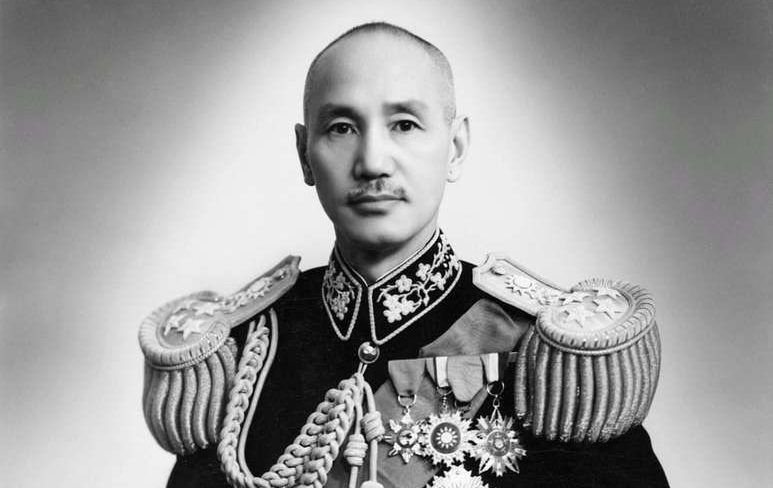
In the aftermath of World War II, U.S. policymakers felt they faced an increasingly dire situation in China. By late 1949, Mao Zedong’s Communist forces had decisively defeated Chiang Kai-shek’s Nationalists (Kuomintang/KMT), pushing them off the mainland to Taiwan. In the mind of Dean Acheson, secretary of state under President Harry Truman, the collapse of the Nationalists raised pressing questions. Could Taiwan be held against a Communist invasion? And was Chiang Kai-shek the right leader for this task? Acheson’s initial plans, however fleeting, to replace Chiang underscore the uncertainty and improvisation that characterized U.S. strategy in the early Cold War, and the hubris of the policymakers in Washington, convinced of their right to run the world.

Chiang’s regime had long been viewed with skepticism by American officials, even during the wartime alliance against Japan. Rampant corruption, poor governance, and military failures left the KMT vulnerable to the Communist insurgency. By 1949, Acheson and many in the Truman administration believed that Chiang bore significant responsibility for the Nationalists’ defeat.

Acheson’s January 1950 white paper on China publicly declared that the United States had done all it could to support Chiang’s regime and absolved Washington of blame for his collapse. Privately, Acheson believed that continued support for Chiang could harm American credibility and that Taiwan’s future depended on new leadership. He and other officials entertained various proposals, including sidelining Chiang in favor of a more competent leader or placing Taiwan under an international trusteeship.

One idea floated within the State Department was to engineer a transition of power within the KMT, potentially elevating more reform-minded figures such as Sun Fo, the son of Sun Yat-sen. Other suggestions went further, advocating for the establishment of a coalition government that might include non-KMT factions to stabilize Taiwan’s governance and make it a stronger bulwark against communism.

Chiang was acutely aware of these discussions. In early 1950, he acted preemptively by arresting General Sun Li-jen, one of the most respected Nationalist military leaders. Often referred to as the “Rommel of the East,” Sun was widely admired in Washington for his competence and honesty, qualities that stood in stark contrast to the corruption and inefficiency of Chiang’s regime. Fearing that Sun was being groomed by the United States as a replacement, Chiang accused him of plotting a coup and placed him under house arrest, where he would remain for decades. This decisive move eliminated a potential rival and signaled Chiang’s refusal to cede power.

By June 1950, Acheson was still grappling with the question of Taiwan’s future. At a meeting held at the Willard Hotel in Washington DC, he and several senior officials discussed various scenarios for the island, including the possibility of replacing Chiang. The meeting reflected the depth of American frustration with Chiang’s leadership and the desire to stabilize Taiwan as a potential bulwark against communism.

However, events overtook these deliberations.

See the rest here

Be seeing you

Posted in Uncategorized | Tagged: , , , , | Leave a Comment »

The Fake China Threat, Then and Now

Posted by M. C. on July 6, 2023

The ability of client states to drag their patrons into conflicts is as old as Thucydides, as is their use of powerful interest groups within that patron state to influence policy decisions.

https://libertarianinstitute.org/articles/the-fake-china-threat-then-and-now/

by Joseph Solis-Mullen 

chiang kai shek 2fe653 1024

Republicans are terrible on China. Examples abound, but perhaps the most instructive illustration of this long-term handicap comes from the following quotation:

“We must be prepared to go it alone in China if our allies desert us. We must not fool ourselves into thinking we can avoid taking up arms with the Chinese Reds. If we don’t fight them in China and Formosa [Taiwan] we’ll be fighting them in San Francisco, in Seattle, in Kansas City.”1

This wasn’t excerpted from a recent speech by Senator Tom Cotton (R-AK). Rather, it was by then-Senate Majority Leader William Knowland (R-CA), in the January 1954 edition of Collier’s Magazine. While perhaps particularly rabid in his Sinophobia, President Dwight D. Eisenhower privately opined that “Knowland has no foreign policy, except to develop high blood pressure whenever he mentions ‘Red China’…In his case, there seems to be no final answer to the question, ‘How stupid can you get?’”2 The parallels between Knowland’s time and our own are significant. Representing the respective nadirs of Sino-American relations, they are worth considering in depth.

First, a necessary bit of high-level background.

In 1949 Mao Zedong and the Chinese Communist Party defeated the nominally republican forces of Chiang Kai-shek. Despite internal warnings that this was likely to happen, Chiang and his nationalist cronies being “thieves, every last one of them…corrupt as they come” according to President Harry Truman, this kicked off a firestorm in Washington3. “Who lost China?” subsequently became a driving force of the Second Red Scare that consumed American politics, distorting perceptions and constraining the ability of even the most powerful figures, such as Eisenhower or Secretary of State Dean Acheson, to act towards China in the more rational manner they would have liked.

Dean Acheson had presciently forecast as early as 1950 that Mao could be an “Asian Tito,” a disruptor of communist unity akin to the Yugoslav leader, Josip Broz Tito, Stalin’s bête noire. As things happened, however, the powerful China Lobby, led by men such as the editor of Time Henry Luce, was predictably able to push policy in the opposite direction.

For his part, Chiang refused to acknowledge defeat and demanded help retaking the mainland.While Eisenhower had bowed to domestic pressure to “unleash Chiang” in 1953, removing American impediments to cross-Strait engagement, further American support was not (yet) forthcoming. While Chiang’s friends worked on Washington, succeeding in securing for him more American planes and bombs, Chiang sought to do what he could to make life difficult for the new communist regime in Beijing. His policy of “Guanbi,” or “closed port policy,” involved the interdicting of foreign vessels bound for the mainland, eventually some one hundred in total.

The provocative policy prevented necessary trade and led to a series of skirmishes and several deaths, playing a larger role in precipitating what would come to be known as the First Taiwan Straits Crisis. In 1954 Chiang decided to fortify Quemoy and Matsu, islands so close to mainland China they’re visible from the shore on a clear day.

Predictably, the islands quickly came under bombardment by PRC forces. Resisting calls by the Joint Chiefs to either place U.S. troops in Taiwan or unleash nuclear weapons on mainland China, Eisenhower felt forced into the next worst thing. Concluding, in the words of Patterson, that “it would be politically risky to do nothing,” Eisenhower formalized the American commitment to defend Taiwan in the event of an attack. In making this commitment Eisenhower was careful to exclude islands such as Quemoy and Matsu, while also securing from Chiang a promise to cease unilateral military actions against the mainland.

See the rest here

Be seeing you

Posted in Uncategorized | Tagged: , , , , | Leave a Comment »

Death Wish: Fighting a Cold War With China

Posted by M. C. on February 9, 2022

However, the fact that making a joke about 9/11 being a good thing to these same people would likely be massively offensive to them is a perfect example of the cognitive dissonance that drives American foreign policy. When those people go out and vote, they are voting for politicians who think exactly the same way they do and decide American policy towards China. Thus, the sarcasm becomes reality.

https://libertarianinstitute.org/articles/death-wish-fighting-a-cold-war-with-china/

by Starte Butone

Recently, there has been an increased desire among the military establishment in the United States to intervene in the event of a Chinese invasion of Taiwan. Such a push has been made by politicians, public figures, and talking heads from both sides of the political spectrum. Massive spending bills aimed at “countering” China tend to pass through Congress with ease, with the only real opposition coming from congressmen who don’t think they’re strong enough. Promises by the Biden administration to defend Taiwan in the event of a Chinese invasion have brought tensions with China to their highest point in generations.

Of course, as anyone reading this article should know, the foolishness of going to war with China over Taiwan is virtually incomprehensible. China, as of the time of this writing, has hundreds of nuclear warheads in their arsenal, the majority of which are fusion weapons. China has promised to declare total war on the United States, even potentially escalating to the use of nuclear weapons, if the U.S. does so much as dock a warship in Taiwan.

To fully understand the way Chinese people look at this topic, one must first understand a little history. In the 1930s, China was involved in a civil war between two main groups: the Chinese Communist Party (CCP), led by Mao Zedong, and the Nationalist Party, or Kuomintang (KMT), led by Chiang-Kai Shek. The human rights violations perpetrated by Mao Zedong and the Communist Party are well known by most in the West, having starved people to death by the millions in the later “Great Leap Forward” period and executing countless political opponents.

However, the human rights violations of Chiang Kai-Shek are not as well known. Chiang executed his political opponents by the millions during the Civil War period. Additionally, the scorched-Earth policies used by the KMT during the Civil War and World War II killed millions more, in addition to even more millions of people who died as a result of corruption within the agricultural system and mis-allocation of food. Given that the KMT ruled over the majority of China at this point in time, it is reasonable to assume that the Chinese people would be willing to accept any alternative to their rule, even from people as unethical as the Communist party.

At the end of the Chinese Civil War, the U.S. military built up defenses around Taiwan and prevented the PRC from taking the island, leaving it de facto independent to this day. Given the history of relations between the two countries, one can understand just why the Chinese view Taiwan so negatively. In the eyes of most Chinese (and certainly the CCP) Taiwan is as bad as Nazi Germany is to us. Given Chiang Kai-Shek’s human rights record, they weren’t really all that wrong for a time.

China has promised to invade Taiwan as soon as they declare independence.

See the rest here

Be seeing you

Posted in Uncategorized | Tagged: , , , , , , , | Leave a Comment »

Beware Awakening China – LewRockwell

Posted by M. C. on October 5, 2019

https://www.lewrockwell.com/2019/10/eric-margolis/beware-awakening-china/

By

Special for LewRockwell.com

“China is a sleeping giant.  Let her sleep, for when she wakes she will move the world.”  Napoleon

France’s future emperor never saw China, but he was wise enough to understand its immense latent strength and future importance.  Two centuries after making this prediction, China has proved the Corsican correct.

Last week, China feted the 70th anniversary of the Communist takeover of the mainland.  It was a gala demonstration of the nation’s military and social power.  I recall watching the 60th anniversary celebration in Hong Kong and wondering at how amazingly far China had come since I first went there in the early 1980’s.

At that time, China was a vastness filled with poverty, suffering and primitive conditions.  Red Guards were on the rampage; everything was grim, dusty and backwards.  Today, the ‘Great Leap Forward’ predicted by Chairman Mao Zedong and engineered by the equally great Deng Xiaoping and Zhou Enlai has transformed China into the world’s second economic power and a first rate military force.

Over a decade ago, I wrote in my book, `War at the top of the World,’ that America’s greatest geopolitical challenge would be to negotiate a peaceful withdrawal from the mainland of North Asia. China, I predicted, would never allow the US to continue its total domination of the western Pacific. The Koreas, Japan and the chain of islands stretching south would become the key battlegrounds between the US and China. I also foresaw a major land conflict between India and China over parts of the Himalayas and Burma (today Myanmar).

China showed last week that it has serious offensive military power. Gone are the Korean War days of vast infantry armies launching human wave attacks with bugles and burp guns. Today, China’s ground forces look hi-tech and effective. More important, China’s military aviation looks deadly and very modern, though one can never really judge effectiveness until war is joined.

This is particularly true of China’s rapidly expanding blue-water navy which will one day challenge the mighty and highly proficient US Navy. In naval warfare, experience and tradition are of paramount importance. Even the courageous, well-trained Imperial Japanese Navy was totally defeated by the US Navy in titanic battles across the Pacific. China’s naval forces have not waged a war since 1894 when they were trounced by Japan.

But in a US-China war, the Chinese would be fighting almost at home. The US would have to sustain a major conflict many thousands of miles from its home ports. America is the world’s genius when it comes to logistics and mass operations, but even so great distances are punishing. It would prove a bridge too far.

Most alarming in China’s 70th anniversary display was its new DF-41 ICBM heavy missile.  Solid-fueled, road mobile, and with multiple warheads, this big beast of a missile is said to be able to reach anywhere in North America within 30 minutes from launch.  This means the DF-41 now puts all of the United States at risk.

China’s recently deployed DF-21D anti-ship ballistic missile may be able to hit a moving carrier if targeted by satellites, drones or submarines.  Add to this threat numerous new Chinese high-speed anti-ship missiles fired from air, land and submarines that now pose a significant threat to US aircraft carriers.  They might prove as deadly to capitol ships as Gen. Billy Mitchell’s bombs did to battleships in 1921.

China is a world leader in electronics.  The US should be very concerned that it will develop systems that can interrupt or even block the satellite data that it increasingly uses to target its missiles and detect enemy forces.  Remember how the US Stinger missile put the Soviets on the back foot in Afghanistan.  Today, the US Air Force, Marines and Naval aviation run on electronics.  Jam them and offensive US power would be crippled.

US strategic planning increasingly deals with a Sino-American conflict.  But not sufficiently.  The Pentagon is still too embroiled in petty Mideast and African conflicts to face the Asian music.  The Chinese are coming.  They are the only people to make communism (or a version of it) work.  China has indeed awakened.  Beijing’s next targets will be the US Navy, Taiwan, Japan, Burma and part of India.

While Washington fiddles and burns, Chairman Xi Jinping, the new Chinese emperor, is fast making China great again.

Be seeing you

A slow awakening - Left-behind children


Posted in Uncategorized | Tagged: , , , | Leave a Comment »