


University of Southern California clinical psychologist Darby Saxbe warns that mental illness labels have “become an identity marker that makes people feel special and unique. That’s a big problem because this modern idea that anxiety is an identity gives people a fixed mindset, telling them this is who they are and will be in the future.” Psychiatric labels can disable the people they seek to assist. The New York Times found that many young people were left worse off thanks to “mental health interventions.”
by Jim Bovard
https://libertarianinstitute.org/articles/psychiatry-is-vexing-americans-and-subverting-freedom/
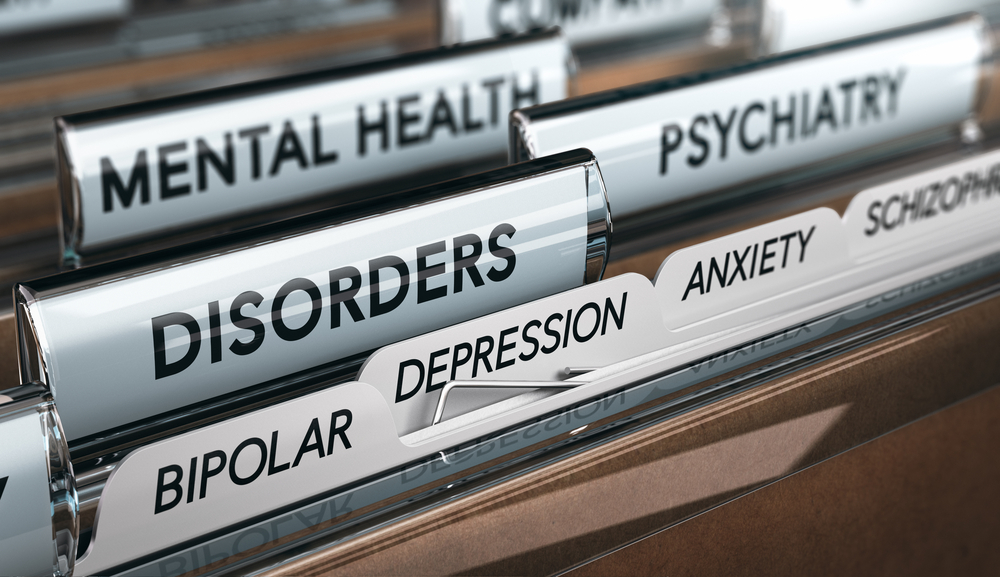
Psychiatry is ruining more lives than ever before. The New York Times recently showcased psychiatric “prevalence inflation”—a vast increase in reported mental illness among teenagers because they are encouraged to view normal symptoms as grave maladies requiring intervention.
Oxford University psychologist Lucy Foulkes observed that school programs are “creating this message that teenagers are vulnerable, they’re likely to have problems, and the solution is to outsource them to a professional.” In an analysis published last year in the academic journal, New Ideas in Psychology, Foulkes explained that “awareness efforts” spur young people “to interpret and report milder forms of distress as mental health problems.” Filing such complaints “leads some individuals to experience a genuine increase in symptoms, because labeling distress as a mental health problem can affect an individual’s self-concept and behavior in a way that is ultimately self-fulfilling.”
Psychiatric diagnoses have become status symbols, propelled by snake oil “social emotional learning” programs. University of Southern California clinical psychologist Darby Saxbe warns that mental illness labels have “become an identity marker that makes people feel special and unique. That’s a big problem because this modern idea that anxiety is an identity gives people a fixed mindset, telling them this is who they are and will be in the future.” Psychiatric labels can disable the people they seek to assist. The New York Times found that many young people were left worse off thanks to “mental health interventions.” Endless classroom presentations on mental health spur “co-rumination”—excessively talking about one’s problems—which might remind many people of first dates from hell.
A deluge of new mental illnesses and is helping to hobble an entire young generation. Hungarian-American psychiatrist Thomas Szasz warned in the last century, “Psychiatrists manufacture mental diagnoses the way the Vatican manufactures saints.” But Szasz’s deft ridicule did nothing to prevent a sham stampede.
The American Psychiatric Association’s Diagnostic and Statistical Manual of Mental Disorders (DSM) now lists more than three-hundred mental illnesses, five times as many as it specified in the 1960s. Dr. Allen Frances, writing in Psychology Today, warned that the latest DSM contained “many changes that seem clearly unsafe and scientifically unsound” and is “likely to lead to massive over-diagnosis and harmful over-medication.” After the DSM redefined autism in the 1990s, the autism rate “quickly multiplied almost 100 fold.” Thanks to another DSM redefinition, the “number of American children and adolescents treated for bipolar disorder increased 40-fold” between 1993 and 2004, The New York Times reported. Psychiatrist Laurent Mottron complained in 2023 that the latest version of the DSM “is full of vague and trivial definitions and ambiguous language that ensures more people fall into various, abnormal categories.”
The DSM provides a road map for federal discrimination law. The Americans with Disabilities Act (ADA) compels schools and universities to provide “reasonable accommodation” to students who claim to have a disability, physical or mental. Even before the pandemic, up to 25% of students at top colleges were “classified as disabled, largely because of mental-health issues such as depression or anxiety, entitling them to a widening array of special accommodations like longer time to take exams,” The Wall Street Journal reported in 2018. Similar string-pulling occurs for the rigorous entrance exams for New York City’s elite high schools, where “white students…are 10 times as likely as Asian students to have a [disability] designation that allows extra time,” The New York Times reported.
Between 2008 and 2019, the number of undergraduate students diagnosed with anxiety increased by 134%, 106% for depression, 57% for bipolar disorder, 72% for ADHD, 67% for schizophrenia, and 100% for anorexia, according to the National College Health Assessment. Students’ struggles skyrocketed after COVID shutdowns. A Boston University analysis of students on almost 400 campuses in 2022 found that “60% of the respondents met the qualifying criteria for ‘one or more mental health problems, a nearly 50% increase from 2013.’” But awarding endless psychiatric Purple Hearts to college students will do nothing to help graduates adjust to the challenges of daily life beyond the classroom.
I recognized that the APA had gone nuts after attending their 1986 annual meeting in Washington. Here are some riffs from a Detroit News piece I wrote at that time:
The APA served attendees a batch of freshly-ordained mental illnesses, including “premenstrual dysphoric disorder.” The APA says symptoms of this “mental illness” include “irritability,” “marked fatigue,” and “negative evaluation of self.” According to the APA’s definition, a third of all women go crazy once a month.
The second newly ordained mental illness is “self-defeating personality type,” previously known as common or garden-variety masochism. The symptoms for this grade disorder include, “complaints, directly or indirectly, about being unappreciated,” “repeatedly turns down opportunities for pleasure,” and “remains in relationships in which others…take advantage of him or her.” Bring on the Valium!
Be seeing you


 MCViewPoint