MCViewPoint

Opinion from a Libertarian ViewPoint

Posts Tagged ‘Opportunity Cost’

TGIF: The Economic Way of Thinking Can Save Lives | The Libertarian Institute

Posted by M. C. on January 21, 2023

https://libertarianinstitute.org/articles/tgif-thinking-save-lives/

by Sheldon Richman

The Cambridge economist Joan Robinson (1903-1983) wisely said, “The purpose of studying economics is not to acquire a set of readymade answers to economic questions, but to learn how to avoid being deceived by economists.”

Excellent point, though I would both broaden and narrow her category of suspects. I would include most politicians, bureaucrats, pundits, and social-science and humanities professors in the suspect group. And I would exclude the economists — spoiler alert: primarily those of the Austrian school, although others stand out — who paint a much more realistic picture of the world than the others do.

For the record, Robinson was sympathetic to John Maynard Keynes and, later in life, communist China’s Mao Zedong, and North Korea’s Kim Il Sung. Obviously, her study of economics did not teach her how to avoid being deceived by all who represented themselves as economists. (I heard once that Che Guevera became head of Cuba’s national bank in 1959 because when Fidel Castro asked his cadre, “Who here is a good economist?” Guevara, thinking he heard, “Who here is a good communist?” raised his hand. But that’s apparently apocryphal.)

At any rate, mankind would have been spared a good deal of misery had people learned at an early age to engage in the economic way of thinking. If I were to sum it up in a short phrase, I would say: in a world in which the law of identity, causality, and scarcity rule, you can’t do just one thing. Human action has consequences. This apparently is also the first law of ecology, but oddly, environmentalists (as opposed to humanists) seem ignorant of it.

The point is that all human action has rippling consequences across society and across time. The economist who called his textbook The Economic Way of Thinking, the late Paul Heyne, wrote, “All social phenomena emerge from the choices of individuals in response to expected benefits and costs to themselves.” (Happily, Peter J. Boettke and David L. Prychitko keep updating the book. It’s in its 10th edition.)

Heyne’s maxim applies to the choices of politicians and bureaucrats also. So before proposing or endorsing a government policy, one ought to wonder about the social phenomena that are likely to emerge from it. Economics is an indispensable tool in this respect.

Henry Hazlitt’s classic, Economics in One Less, is a great way to get started. Hazlitt wrote, “The art of economics consists in looking not merely at the immediate but at the longer effects of any act or policy; it consists in tracing the consequences of that policy not merely for one group but for all groups.” Hazlitt’s book elaborated an important message of his intellectual ancestor, Frédéric Bastiat, the 19th-century French laissez-faire liberal, in the classic essay “That Which Is Seen and That Which Is Unseen.”

Individuals who adopt this way of thinking are better equipped to judge the promises of politicians, etc. who support taxes, minimum-wage laws, rent control, general wage-and-price controls, and the rest of the program of political authority over contractual freedom and other peaceful conduct. Even well-intended regulations will have unintended bad secondary consequences. Good intentions are never enough.

Any good introduction to the economic way of thinking will introduce readers to concepts like opportunity cost, the unseen, sunk costs, the margin, and tradeoffs. Most people seem to intuit some of these in their own lives. But they fail to do so when it comes to society as a whole. They are encouraged by politicians and pundits to think that common sense in private life does not apply to the big picture.

Opportunity cost refers to the fact when you choose a course of action, you necessarily foreclose another course of action. The true cost, then, is the (subjectively judged) next-best choice forgone. If you buy something for two dollars, your cost isn’t really two dollars. It’s what you regard as the next best use of those two dollars — the future not chosen. You might decide afterward that you made a mistake: “I could’ve had a V-8!” Good economists do not regard people as omniscient robots.

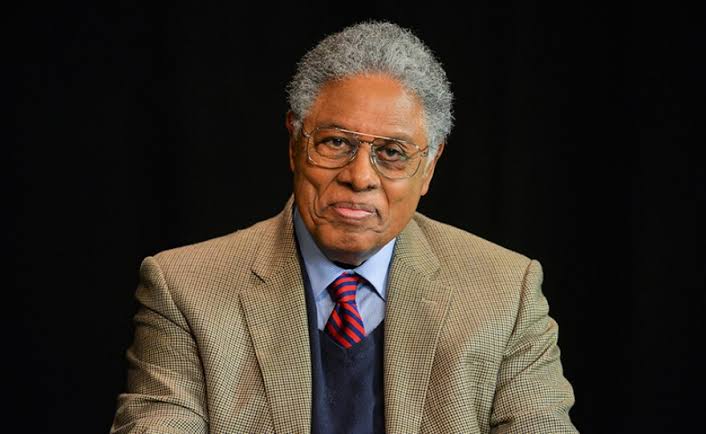
Opportunity cost is another way of looking at trade-offs. If you do or choose A you can’t do or choose B. Thus you trade B for A. Trade-offs are inescapable. Thomas Sowell, for whom the word genius is woefully inadequate, dramatically drew attention to this feature of life when he wrote, “There are no solutions. There are only trade-offs.” Today’s problems, he adds, may well be the result of yesterday’s solutions. We’d do well to bear this in mind, especially in deciding what the government should be doing (if anything).

See the rest here

Be seeing you

Posted in Uncategorized | Tagged: , , , , | Leave a Comment »

TGIF: The Economic Way of Thinking Can Save Lives | The Libertarian Institute

Posted by M. C. on January 20, 2023

Any good introduction to the economic way of thinking will introduce readers to concepts like opportunity cost, the unseen, sunk costs, the margin, and tradeoffs. Most people seem to intuit some of these in their own lives. But they fail to do so when it comes to society as a whole. They are encouraged by politicians and pundits to think that common sense in private life does not apply to the big picture.

https://libertarianinstitute.org/articles/tgif-thinking-save-lives/

by Sheldon Richman

sowell

The Cambridge economist Joan Robinson (1903-1983) wisely said, “The purpose of studying economics is not to acquire a set of readymade answers to economic questions, but to learn how to avoid being deceived by economists.”

Excellent point, though I would both broaden and narrow her category of suspects. I would include most politicians, bureaucrats, pundits, and social-science and humanities professors in the suspect group. And I would exclude the economists — spoiler alert: primarily those of the Austrian school, although others stand out — who paint a much more realistic picture of the world than the others do.

For the record, Robinson was sympathetic to John Maynard Keynes and, later in life, communist China’s Mao Zedong, and North Korea’s Kim Il Sung. Obviously, her study of economics did not teach her how to avoid being deceived by all who represented themselves as economists. (I heard once that Che Guevera became head of Cuba’s national bank in 1959 because when Fidel Castro asked his cadre, “Who here is a good economist?” Guevara, thinking he heard, “Who here is a good communist?” raised his hand. But that’s apparently apocryphal.)

At any rate, mankind would have been spared a good deal of misery had people learned at an early age to engage in the economic way of thinking. If I were to sum it up in a short phrase, I would say: in a world in which the law of identity, causality, and scarcity rule, you can’t do just one thing. Human action has consequences. This apparently is also the first law of ecology, but oddly, environmentalists (as opposed to humanists) seem ignorant of it.

The point is that all human action has rippling consequences across society and across time. The economist who called his textbook The Economic Way of Thinking, the late Paul Heyne, wrote, “All social phenomena emerge from the choices of individuals in response to expected benefits and costs to themselves.” (Happily, Peter J. Boettke and David L. Prychitko keep updating the book. It’s in its 10th edition.)

Heyne’s maxim applies to the choices of politicians and bureaucrats also. So before proposing or endorsing a government policy, one ought to wonder about the social phenomena that are likely to emerge from it. Economics is an indispensable tool in this respect.

Henry Hazlitt’s classic, Economics in One Less, is a great way to get started. Hazlitt wrote, “The art of economics consists in looking not merely at the immediate but at the longer effects of any act or policy; it consists in tracing the consequences of that policy not merely for one group but for all groups.” Hazlitt’s book elaborated an important message of his intellectual ancestor, Frédéric Bastiat, the 19th-century French laissez-faire liberal, in the classic essay “That Which Is Seen and That Which Is Unseen.”

Individuals who adopt this way of thinking are better equipped to judge the promises of politicians, etc. who support taxes, minimum-wage laws, rent control, general wage-and-price controls, and the rest of the program of political authority over contractual freedom and other peaceful conduct. Even well-intended regulations will have unintended bad secondary consequences. Good intentions are never enough.

See the rest here

Be seeing you

Posted in Uncategorized | Tagged: , , , , , | Leave a Comment »

Why There Is No Free Lunch | Mises Wire

Posted by M. C. on November 10, 2021

Opportunity cost, he tells us, “is the value of the alternative you sacrifice when you choose to pursue a goal—any goal. Put another way, opportunity cost is the flip side of any choice you make” (p. 22).

https://mises.org/wire/why-there-no-free-lunch

David Gordon

No Free Lunch: Six Economic Lies You’ve Been Taught and Probably Believe
by Caleb S. Fuller
Freiling Publishing, 2021. 110 pp.

Caleb Fuller, an economist who teaches at Grove City College, thinks that many people have a mistaken conception of economics. It is, they think, a dull and dry subject, the “dismal science,” of primary interest to specialists. Fuller disagrees. He says that “economics changed my life” (p. 11; all page references are to the Amazon Kindle edition), and in this wonderful short book, which can be read in an hour or so, he conveys his infectious enthusiasm for it.

What is the reason for his enthusiasm? Fuller says that he can provide readers with “a pair of eyeglasses that can extend our vision beyond where we’re accustomed to looking” (p. 12), and this is the “opportunity cost lens.” (One wonders how a pair of eyeglasses can be at the same time a lens, but this is a quibble.) By using this lens properly, readers will be able to unmask six common fallacies that exercise a malign influence on current thought. In carrying out his project, he follows Frédéric Bastiat and Henry Hazlitt, and he is a worthy successor of them, whom he calls “economics’ greatest communicators” (p. 12).

Before turning to opportunity cost and its use in exposing fallacies, I will note one point of usage. Fuller often calls the fallacies “lies,” meaning by this that they are untrue; but although some people use the word in this way, I think it better to reserve “lies” for deliberate misstatements, so that someone who wrongly believes one of the fallacies is true would not count as a liar if he stated his belief. But this is by the way.

Opportunity cost, he tells us, “is the value of the alternative you sacrifice when you choose to pursue a goal—any goal. Put another way, opportunity cost is the flip side of any choice you make” (p. 22). Fuller first uses opportunity cost to explain Bastiat’s famous “parable of the broken window.” In the story, a “teenage vandal” (could one say that today?) has thrown a brick through a shopkeeper’s window. A passerby suggests that he is really a public benefactor in that the shopkeeper will now have to pay a glazier to replace his window and the glazier will spend the money he receives, increasing the community’s prosperity. What the passerby overlooks is that had the window not been broken, the shopkeeper would have spent his money on other things. The passerby has ignored the shopkeeper’s opportunity cost. The community has not gained, but lost, because a resource, namely the window, has been destroyed. Few people would call the teenager a public benefactor, but many have been ensnared by the fallacy. It’s often claimed, for example, that government spending on weapons during World War II ended the Great Depression, but in the absence of war, the money would have been spent on other things, and the war in fact lowered the standard of living of civilians.

Fuller next applies opportunity cost to answer a fundamental question. Resources in an economy are scarce, “in limited supply and also desirable” (p. 32). How are they to be allocated? The price system is by far the best way to do this; it is “humankind’s greatest invention” (p. 33). If the quantity demanded of a good exceeds the available supply, its price will rise, and the good will go to those who value it the most, i.e., offer a higher price than competing buyers. Many people resent this system—why should scarce goods go to the rich rather than the poor?—and seek a “free lunch” by forcing prices down. Fuller says there is no such thing as a free lunch and, to illustrate his point, offers an excellent and detailed account of the failures of rent control. Often, for example, landlords will respond to laws that compel them to offer apartments at below the market price by refusing or delaying repairs. By reducing the quality of the apartment, they “simply let the housing quality adjust until it matches the new, lower price they are forced to charge” (p. 42). He says that the “fact that lunch isn’t free is an economic law that was true in 2021 B.C., around the time Hammurabi declared price controls” (p. 44). The date is a few hundred years off, but one gets what he means.

The behavior of the landlords in response to rent control is an instance of a more general principle. Good intentions by lawmakers often fail to achieve the desired outcomes, because “virtually all public policies alter the relationship between costs and benefits. When the benefits of an action change relative to an action’s opportunity cost, people’s actions also change. And when people change their actions, they may do so in a way that works at cross-purposes with a public policy’s noble intentions” (p. 48). As an example, after the 9/11 attacks, the Transportation Security Administration security measures raised the opportunity costs of flying, since people after that had to wait much longer in line. As a result, some shifted to automobile travel. But fatal accidents are much more likely to occur in cars than airplanes, and one estimate is that because of the TSA’s policies, “327 additional automobile deaths occurred monthly for the last quarter of 2001” (p. 52).

The price system, so much stressed by Fuller, depends on a fundamental principle, that exchange takes place only when both parties to it expect to benefit. “Thus every trade makes the world wealthier because both parties gain, even as exchange only switches who owns what property titles” (p. 60). Though the point seems when stated to be obvious—why else would you make an exchange if you did not expect to gain from it?—it has often been overlooked, and Aristotle among many others thought an exchange takes place when the good is equally valued by both parties. If you understand that exchange benefits both parties, you will see what is wrong with criticisms of agreements between owners of “sweatshops” and those workers who voluntarily work in them, under what seems to us harsh conditions and poor pay. The employers are not exploiting the workers; the conditions are to them an improvement. You do not exploit people by offering them jobs, even if you could have made them an offer they would have found even more desirable. It is worth noting, and in doing so I do not mean to suggest that Fuller has not seen this, that the view that in an exchange one party gains at the expense of another is inconsistent not only with the “both parties benefit” view but also with the “exchange as equality” position. The elaborate efforts of Karl Marx to reconcile labor exploitation and equality in exchange manifest the intellectual bankruptcy of his thought.

The mutual benefits of exchange apply to all exchanges, not just ones by the residents of one country, though many people find this extraordinarily hard to see. Foreign trade extends the advantages of specialization and the division of labor, and attempts to limit it reduce consumer welfare. If it is objected that workers displaced by foreign competition are worse off, Fuller’s reply is that to use this point in support of tariffs is an instance of the broken window fallacy. Tariffs raise production costs, leading employers to reduce offers of employment, and these unseen lost jobs need to be set against the losses to domestic workers that are so much emphasized in anti–free trade propaganda. Free trade also promotes peace because trading partners benefit from each other’s continued well-being. “If goods don’t cross borders, armies will,” an adage that comes not from Bastiat but from a “somewhat obscure nineteenth-century economist, Otto T. Mallery” (p. 86), but is true nonetheless.

Fuller concludes with a convincing rejoinder to the claim that the government needs to regulate markets. Otherwise, it is claimed, businesses would be tempted to take advantage of their customers through inferior service and fraud. If, for example, a restaurant serves you monkfish, the “poor man’s lobster” (p. 91), instead of the genuine article you had ordered, won’t it make a profit? Not it if wants you back as a customer. “The ‘shadow of the future’ looms over every exchange like a specter threatening to take away future profits. But you need to be wearing your economic eyeglasses to see that far ahead” (p. 93).

No Free Lunch is an ideal book for introductory economics classes and for anyone who wants to understand how the free market works. It would be a good test to see if you understand the book to explain why the lesson summarized in the book’s title is consistent with the fact that the book is, at least as of this writing, available on Amazon Kindle for free. Author:

Contact David Gordon

David Gordon is Senior Fellow at the Mises Institute and editor of the Mises Review.

Be seeing you

Posted in Uncategorized | Tagged: , , | Leave a Comment »

Brexit: Why the Threat of High Tariffs Wasn’t Enough To Stop It | Mises Wire

Posted by M. C. on February 6, 2020

But much of the concern over EU membership has focused on issues that are hard to quantify, such as government regulations and lost opportunities. How exactly does one quantify a new regulation on British businesses handed down by EU bureaucrats? An individual business might be able to hazard a guess, but aggregate data is far less reliable and far less available.

Even harder to count is the opportunity cost of EU membership. As noted by EU critics, for example, membership in the EU has limited the ability of the UK to expand trade outside the EU bloc. There’s no way to put a number on how much these lost opportunities have cost British households. Certainly some researchers have tried. But we end up debating the accuracy and relevance of the research. Ultimately, it all requires a judgment call as to whether or not EU membership is “worth it” to a specific person.

When government tells you something, start wondering what it doesn’t tell you.

https://mises.org/wire/brexit-why-threat-high-tariffs-wasnt-enough-stop-it

Chris Johns at the Irish Times is dismayed by all the support he sees for Brexit. He’s vexed by the fact so many of Brexit’s boosters are — in Johns’s eyes—going against their own economic interests.

Johns notes, for example, that Brexit may take a significant toll on British manufacturing, and may be problematic for income growth and tax revenues. Resigned to Brexit as a fact, Johns suggests trying to make the transition as painless as possible, but insists, “Britain will either be poorer or much poorer.” But it’s too late the avert at least some damage. Thus, the narrative goes something like this: “we tried to warn you people about the dangers of Brexit to your pocketbook. But you went ahead and supported it anyway. So now you’re worse off.”

Johns’s is missing a big part of the economic argument made by Brexit supporters.  At the moment, even the economic data suggests the British are better off today, but the Brexit gambit for many has always been one in which supporters calculate political independence will bring long-term economic gains, even if there are problems in the short term.  This hardly proves supporters are acting against their own economic interests, or that they don’t understand economic realities. It simply shows their predictions of the future are different from Johns’s.

[RELATED: “Brexit: Predictions of Economic Doom Show Why People Ignore ‘Experts’” by Ryan McMaken]

But Johns’s misunderstanding is bigger even than this.  A big part of why he assumes people will soon be worse off thanks to Brexit is because he is too limited in how he understands the process of calculating costs and benefits. Once we move beyond “homo economicus” notions of benefits being limited to monetary gains, we realize the benefits of Brexit can be found in ways that aren’t tracked by any government office, and don’t show up in any statistical data.   Economists and pundits who limit their calculations to measurable statistics are missing a big chunk of how humans measure and value the world around them.

We Can’t Put a Number on the Opportunity Cost of EU Membership

Government statistics have been devised to keep track of identifiable and countable events and dollar amounts. This is why numbers such as “unemployment rates” and “median incomes” form the backbone of government stats. They can be identified and counted with relative ease based on survey data or direct observation. But these numbers are hardly comprehensive in measuring the real world.

[RELATED: “The Homo Economicus Straw Man” by Ryan McMaken]

But much of the concern over EU membership has focused on issues that are hard to quantify, such as government regulations and lost opportunities. How exactly does one quantify a new regulation on British businesses handed down by EU bureaucrats? An individual business might be able to hazard a guess, but aggregate data is far less reliable and far less available.

Even harder to count is the opportunity cost of EU membership. As noted by EU critics, for example, membership in the EU has limited the ability of the UK to expand trade outside the EU bloc. There’s no way to put a number on how much these lost opportunities have cost British households. Certainly some researchers have tried. But we end up debating the accuracy and relevance of the research. Ultimately, it all requires a judgment call as to whether or not EU membership is “worth it” to a specific person.

The “Psychic Profit” of Leaving the EU

Other things are even harder to quantify than lost opportunities. These are what many voters perceive as the intangible benefits of leaving the EU.

For example, a pro-Brexit voter might argue that British laws should be decided in Britain—even if this means paying higher tariffs. Thus: political independence is more valuable than selling goods to France at a lower tariff rate. Obviously, there’s no way to determine exactly how much benefit “political independence” produces for a person who values it. But the value is real.

We’re now in the realm of “psychic profit,” which is the profit that a person perceives in his own mind from a certain action or state of affairs. The problem with psychic profits is that they are not quantifiable as money profits are. As economist Ludwig von Mises noted, at a fundamental level, profits and lossses are “psychic qualities and not reducible to any interpersonal description in quantitative terms.” Moreover, Mises notes that the “psychic phenomena” from which these valuations derive involve “incalculable intensive magnitudes.” Even if a person values Brexit more than low-tariff trade, it’s impossible to put a number on how much more.

A similar accounting problem arises with the immigration issue. Some voters support Brexit because they suspect or hope that it will reduce immigration. In this case, some have concluded that their psychic profits are improved by being surrounded by people of similar language and culture.

Faced with the idea that greater controls on migrant labor could push up the cost of living, some may nonetheless conclude the psychic loss resulting from immigration outweighs the monetary benefits of low-cost labor at the supermarket.

All of this should illustrate that when we’re talking about a voter’s decision to support a certain policy, we’re not exactly employing an exact science. By supporting policies that might ultimately lead to higher prices or higher foreign tariffs, one is not necessarily falling victim to economic illiteracy. One is simply taking a position that, in one’s mind, something that can’t be measured in pounds is more valuable than something that can be measured in pounds. There is a rational—and possibly well-informed—process of calculation going on here. It’s just a calculation that’s impossible to quantify.

Some economists find this sort of thing quite irksome, however. Johns, for instance, bemoans the fact that the “culture war” behind Brexit has led to ” the economy tak[ing] acceptable collateral damage.” He apparently means that voters have abandoned what he considers to be sound economic thinking in favor of “benefits” that can’t be counted in any ledger.  In the minds of pundits like Johns, people are “irrational” if they chose a policy that might reduce their incomes as measured in dollars or pounds.

The Real Problem: Majorities Forcing Policies on Minorities

Brexit critics like Johns would do well to admit their adversaries aren’t necessary irrational economic illiterates. But even if we all agree different people calculate economic benefit in their own non-measurable ways, we haven’t solved our political problems.

Policies like Brexit will always be problems so long as people who make very different value judgments are forced to live under a common government.  We have a problem because the democratic majority can impose a preferred policy on the losing minority.

In the case of Brexit, for example, nearly half the population appears to be either indifferent to membership in the EU or actively in support of it. And just as statistical economic data can’t tell us whether or not pro-Brexit supporters are “right,” it can’t make a judgment about EU supporters. Many EU advocates simply like the fact the EU hands down lots of environmental regulations to all member states. Supporters may like that EU membership (presumably) increases total immigration for reasons totally unrelated to economic factors. Some feel they benefit emotionally from a politically united Europe.

But this doesn’t mean that this minority of voters ought to be forced into leaving the EU because 51 percent of the population says so.

The ideology underlying democracy offers no answer to this. We have a situation in which about half of the population believes that it profits (psychically or otherwise) from one policy. But about half of the population believes it profits from the opposite policy. This problem becomes even worse when reduced to a regional level. An outright majority of residents in Scotland, for example, apparently opposes Brexit. Now that Brexit is a reality, a slim majority of Scots support independence. It would seem to violate basic notions of justice to insist that Scotland be held to the dictates of the English majority forever.

Scottish Separatists Are Now the “Irrational” Ones

In spite of years of being told how economically inept they are for supporting Brexit, some are now turning the same arguments on the Scots. This pundit, for example, might as well be saying  “look at those crazy Scots. They want to cut themselves off from their best trading partner (England)!” In the minds of those opposing independence, the dictates of economic good sense mean that Scotland should stay in the UK. But the anti-independence pundits may be making the same mistake the anti-Brexit pundits were making. It could be pro-independence Scots feel that they would gain more from independence than from unity—even if government stats say otherwise. If many Scots truly believe this strongly, it will be very hard to convince them otherwise, no matter how many studies by economists are trotted out.

Ultimately, we’re still left with a political problem that can’t be solved by insisting all the intelligent people agree with us because our spreadsheets and bean counters tell us which political position is “best” for us.

None of this should be construed to suggest that sound economics is wrong. Yes, low tariffs are better than high tariffs. Yes, business owners ought to be free to hire workers regardless of what country those workers are from. Yes, government regulations on businesses are a destructive burden, whether imposed by London or by Brussels. But the Brexit debate wasn’t really about whether high tariffs are better than low tariffs. It was about who should decide tariffs, and where and how. It was about issues far beyond whether or not an additional 1 percent growth could be wrung out of GDP next quarter. Many have tried to turn Brexit into just a debate about economic policy. But economics as imagined by mainstream number crunchers has never been sufficient to understand how people calculated the value of leaving the EU.

Be seeing you

?u=http2.bp.blogspot.com-PHz2lYHCjogTknVSW-EwgIAAAAAAAAF48gzFph6vhhZks1600BadEconomicIndicators.gif&f=1&nofb=1


Posted in Uncategorized | Tagged: , , , | Leave a Comment »

The Hidden Costs Behind Every Government Program | Mises Wire

Posted by M. C. on August 27, 2019

Behind every million dollar tax-funded high school, for example, there hides a million dollars’ worth of other goods and services that these taxpayers never got to purchase, but would have preferred…

https://mises.org/wire/hidden-costs-behind-every-government-program

When the state constructs a new bike lane, school, or begins a new space mission, the natural inclination of the majority is to cheer this new endeavor as progressive. We possess one new structure or have accomplished one new task than before; society has moved forward, the thinking goes.

The state is responsible for truly technically impressive or beautiful accomplishments like the Apollo missions, the Moscow Metro, the Palace of Versailles, etc. that most would agree clearly produce benefits for society.

Confronted with these concrete and widely celebrated examples of government accomplishments, how can libertarians deny that state action is sometimes a benevolent force in society?

Opportunity Cost

Leaving aside moral considerations and focusing on utilitarian considerations, the answer revolves around opportunity cost and demonstrated preference.

Opportunity cost is the benefits that could have been obtained through the best forgone alternative to an actual employment of resources. If a slice of pizza costs two dollars, and a hamburger costs two dollars, then the opportunity cost of a slice of pizza is a hamburger, and visa-versa.

The resources of any given country are scarce, and the “economic question” that must be solved is, how should the limited resources available be applied to best satisfy people’s subjective preferences?

Even if, for example, the state builds a library that is beautiful, the books are neatly organized, the librarian is competent and cordial, the temperature is well-regulated, and the computers are state of the art, we still need to hold our applause.

In order to be able to celebrate the employment of resources by the state in a particular application, it’s necessary to consider the alternative uses that could have been possible with those resources. If there exists an alternative option that could have better satisfied subjective preferences, then the actual employment, even if it produced benefits, was a relative failure.

Voluntary Exchange and Demonstrated Preference

Now the question is: by what standard can it be determined which employment of resources is best, relative to the subjective preferences of consumers, in any given case?

In instances of voluntary exchange, every exchange is not only ex-ante mutually beneficial, it’s ex-ante the best employment of the resources being exchanged, from the perspectives of the respective property owners. This is called demonstrated preference, which Rothbard explains to mean, “simply this: that actual choice reveals, or demonstrates, a man’s preferences; that is, that his preferences are deducible from what he has chosen in action.”

For example, if Smith sells Jones a lamp for twenty dollars, we can know that of all of the alternative uses of the lamp Smith had available to him, such as using it to read, using it as a decoration, keeping it in storage, etc., selling it to Jones for twenty dollars was his most highly preferred option, because that is the option that he freely chose.

Likewise, Jones thought buying Smith’s lamp was the best of all possible uses available to him of his twenty dollars. Otherwise, he wouldn’t have executed that option.

Involuntary Exchange

On the other hand, sometimes exchange, production, and consumption are not conducted as a result of the voluntary decisions of all of the owners of the property involved, but rather under compulsion of physical force. Then, in the absence of demonstrated preference, it can never be known whether the act benefited any of the involved parties or caused them harm, let alone that it was the most beneficial employment of resources for every party involved.

Given that usually countless options are available to actors at any given time, if would be an astronomically unlikely coincidence for the state to happen to dictate what consumers would have voluntarily chosen to do at a particular moment in time anyway. In this way, it’s metaphysically possible for state action to be equally ex-ante beneficial to all parties involved as voluntary exchange, but never more.

Fundamentally, acts of taxation and regulation, due to their involuntary nature, sever the link between consumers’ subjective preferences and the way in which their resources are deployed.

The Seen and the Unseen

Behind every million dollar tax-funded high school, for example, there hides a million dollars’ worth of other goods and services that these taxpayers never got to purchase, but would have preferred over the high school. Perhaps these goods would have been a million dollars’ worth of flowers, food, board games, medical services, books, cutlery, home renovations, farming equipment, computer software, and math tutor services.

There’s nothing stopping taxpayers from funding a high school on their own and sparing themselves the deadweight loss of bureaucracy. It really is simply the case that if consumers want a high school, they can pay for one, and as private high schools demonstrate, they often do.

However, the state using taxation to build a particular high school can only divert funds from more highly valued opportunity costs to the lower ranked high school. Otherwise, no compulsion would have been necessary. Despite this undeniable and simple logic, in the U.S., tax-funded expansions of the government K-12 education system, among other interventions, are widely celebrated.

In terms of public opinion, part of the explanation is that the high school can be seen and cheered because it actually exists, whereas the lost opportunity costs, by their very nature as forgone alternatives, never occurred, as so mourning their loss requires abstract reasoning and imagination on the part of the public.

Frédéric Bastiat described this phenomenon in his classic work “That Which is Seen, and That Which is Not Seen.” Conspicuous state projects win the public relations war over quietly letting people spend their money as they actually wish to.

The interstate highway system, the Louvre, and the Sixth Fleet may be impressive, but they’re not cause for applause. Relative to the preferences of the taxpayer, no matter how grand and awe-inspiring a project the state completes, it will always and everywhere ex-ante fall short of voluntary exchange.

Be seeing you

wp-1555692458658.jpg


Posted in Uncategorized | Tagged: , , , , , | Leave a Comment »