From Ivy League campuses to the publishing industry and the digital domains of Facebook,there is an Orwellian sense of perpetual emergency, an irrational fear that misinformation and hate speech will overwhelm society unless every utterance is subject to a censor’s scrutiny.
What’s interesting about that is that 53% of Americans who support a CBDC also support in-home surveillance cameras.
Nearly one-third of Generation Z says they’d be just fine with government-installed surveillance cameras in every householdunder the guise of reducing domestic violence and other illegal activity.
“Would you favor or oppose the government installing surveillance cameras in every household to reduce domestic violence, abuse, and other illegal activity?” asks a new survey from the Cato Institute. Of the responses, 29% of those aged 18-29 said yes.
In 1791, the utilitarian philosopher Jeremy Bentham proposed building a “panopticon” in which people’s behavior could be monitored at all times.
But Bentham’s panopticon was meant to be a prison. A sizable segment of Generation Z would like to call it home.
When it comes to other age brackets, 20% of millennials (between the ages of 30 and 44) also want everyone watched.
Then, wisdom appears to kick in – as just 6% ofAmericans aged 45 and older were OK with government surveillance in every home.
Broken down by politics, 19% of liberals and 18% of centrists agreed that our daily lives should be monitored by the government for our own safety, while 9 – 11% of those who identify as conservative, very conservative, or very liberal agreed in what appears to be a “horseshoe” issue that unites both ends of the political spectrum.
It’s the middle that has the ethic of old East German secret police — or the KGB.
Maybe that’s not surprising considering the way respectable liberal institutions now run themselves.
From Ivy League campuses to the publishing industry and the digital domains of Facebook,there is an Orwellian sense of perpetual emergency, an irrational fear that misinformation and hate speech will overwhelm society unless every utterance is subject to a censor’s scrutiny.
Even Orwell didn’t imagine Newspeak would require new pronouns. -NY Post
Broken down by race, 33% of black Americans said they’re fine with government in-home surveillance, as did 25% of hispanics, 11% of whites, and 9% of asians respectively.
The question was asked as part of the Cato Institute’s survey on American attitudes on the prospect of a ‘central bank digital currency.’ What’s interesting about that is that 53% of Americans who support a CBDC also support in-home surveillance cameras.
Now, whom does the government fear most under these conditions?
Rather, it is the person who has no problem walking away from the government’s panopticon to go hunting in the woods, who decides to pay in cash, or who has woken up to the reality that the federal government is in the business of control. It is the solitary American capable of questioning the government’s official State narrative and willing to think for himself who scares the bejesus out of the powers that be.
The federal government spies on every email, text, and call you make. It uses your phone’s location services to pinpoint where you are at all times. It knows which I.P. addresses are associated with online comments that have been deemed “politically incorrect.” Its partnerships with Amazon and Walmart let it know what you’re reading and buying. Its partnerships with Google and Facebook let it know what you’re thinking. Its partnerships with Twitter and Hollywood allow it to censor unapproved messages before too many brains have the opportunity to consider new thoughts. Its alliance with credit card companies allows it to track all your financial transactions and thereby understand your habits, preferences, choices, and addictions. Its alliance with cellular companies allows it to monitor all your movements, contacts, and associations. And all of these consumer comforts that are used by the “national security” surveillance state to watch everyone in real time constantly measure every American’s potential for subversiveness, even when that American is engaged in the most mundane things during the course of an ordinary day.
Now, whom does the government fear most under these conditions? Hint: It is not the millions of illegal aliens who pour through our uncontrolled borders (during supposedly the greatest pandemic threat in a century), or foreign governments that bankroll American elected officials (How else could Biden and other lifelong politicians be millionaires?), or the threat of an electromagnetic pulse attack taking out America’s aging electrical grid (because Congress’s “infrastructure” spending won’t bother fixing actual infrastructure when there are so many campaign donors and special interest groups to pay off).
Rather, it is the person who has no problem walking away from the government’s panopticon to go hunting in the woods, who decides to pay in cash, or who has woken up to the reality that the federal government is in the business of control. It is the solitary American capable of questioning the government’s official State narrative and willing to think for himself who scares the bejesus out of the powers that be. It is the patriotic grandmother who has the temerity to show up at the nation’s capitol after a heavily disputed election to wave a Trump flag while drinking hot chocolate. It is the parent who has the gall to believe that the public should be in charge of public education. It is the humble police officer publicly outed and fired for privately giving a word of encouragement to an innocent teenager politically persecuted for defending his life against a State-sanctioned Antifa mob. It is the health care worker, firefighter, blue-collar worker, or soldier who refuses to let Big Brother pump him full of experimental gene therapies for the remainder of his life just because people who wear their prestige like crowns proclaim, “You must because we say.” In other words, governments pretending to protect freedom are most afraid of individuals who insist on being free.
Does this seem like a system that is destined to survive?
Though NPR named thedefense contractor—South Carolina–based Advanced Technology International—they declined to explore the company’s deep ties to the CIA, Department of Homeland Security, and the Department of Defense and how ATI is helping to lead those agencies’ efforts to militarize health care and create a surveillance panopticon that not only monitors the world around us but our physiology as well.
$6 billion in Covid-19 vaccine contracts awarded by Operation Warp Speed have been doled out by a secretive government contractor with deep ties to the CIA and DHS, escaping regulatory scrutiny and beyond the reach of FOIA requests.
Last Tuesday, while most Americans were distracted by the first US presidential debate, NPRquietly reported that the US government’s Operation Warp Speed, a public-private partnership launched by the Trump administration to rapidly develop and distribute a Covid-19 vaccine, had taken the unusual step of awarding contracts to vaccine companies, not directly, but through a secretive defense contractor.
Though NPR named thedefense contractor—South Carolina–based Advanced Technology International—they declined to explore the company’s deep ties to the CIA, Department of Homeland Security, and the Department of Defense and how ATI is helping to lead those agencies’ efforts to militarize health care and create a surveillance panopticon that not only monitors the world around us but our physiology as well.
The “secret” vaccine contracts awarded through ATI as part of Warp Speed total approximately $6 billion, accounting for the majority of Operation Warp Speed’s $10 billion budget. Both Paul Mango, Health and Human Services’ deputy chief of staff for policy, and Robert Kadlec, HHS assistant secretary for preparedness and response (ASPR), personally signed off on the contracts.
Operation Warp Speed, which officially involves the combined efforts of HHS and the military to deliver over 300 million Covid-19 vaccines to Americans by next January, is a highly secretive program dominated by military personnel, most of whom have no experience in health care or vaccine production. The Trump administration has often compared Warp Speed to the Manhattan Project, which produced the atomic bomb.
Several very unsettling revelations about the true nature and scope of Warp Speed, including the out-sized role of ATI, began to emerge starting last Monday. Yet, most of this new information was not covered by US news outlets due to the media frenzy surrounding the first presidential debate and the subsequent news that President Trump and several other politicians and White House officials had tested positive for Covid-19.
NPR noted that the decision to use a nongovernment intermediary like ATI to issue the coronavirus vaccine contracts, as opposed to the government itself directly awarding those contracts, allows Operation Warp Speed to “bypass the regulatory oversight and transparency of traditional federal contracting mechanisms.” This means that, among other things, the vaccine contracts awarded under Operation Warp Speed are unlikely to be publicly released in the near future, if ever.
The report from NPR also noted that the Congressional Research Service reported just last year that using such intermediaries to award contracts can result in “significant risks, including potentially diminished oversight and exemption from laws and regulations designed to protect government and taxpayer interests.” Proponents of this unorthodox way of issuing contracts, known as “other transaction agreements” (OTAs), often argue that utilizing this alternative method for awarding contracts significantly hastens the process. However, the Congressional Research Service also noted that the Department of Defense, which has been increasingly relying on OTAs in recent years, has never tracked the information necessary to determine if OTAs are actually faster than traditional contracting methods. This suggests that claims regarding the alleged “speed advantage” of OTAs are based on assumptions rather than data-based evidence.
Johnson & Johnson, Novavax, Pfizer, and Sanofi are among the companies that have received these covert vaccine contracts through the OTA authorized by Operation Warp Speed and managed by ATI. Many of these companies, particularly Johnson & Johnson, have been involved in scandals related to selling and marketing products they knew to be unsafe to the public. This makes the lack of oversight and their exemption from federal regulations (including safety regulations) an issue of concern regarding their participation in Warp Speed.
This concern is further compounded by the fact that, on September 21, HHS Secretary Alex Azar told FOX Business that all Operation Warp Speed vaccine manufacturers would be exempt from liability for any damages their vaccines may cause and that those who administer their vaccines would also not be liable for damages. “Under the PREP Act, which is a provision in Congress, any treatment or vaccine for purposes of a national emergency pandemic like this actually comes with liability protection. Both the product as well as those who administer it or provide it,” Azar stated during the televised interview. The PREP Act that Azar referenced was originally signed into law in 2005 but was updated this past April, a few weeks before Operation Warp Speed was announced, so that vaccine and therapeutic manufacturers “cannot be sued for money damages in court” over injuries caused by medical countermeasures for Covid-19.
WASHINGTON, DC – MARCH 02: Flanked by U.S. Vice President Mike Pence (L) and Secretary of Health and Human Services Alex Azar, U.S. President Donald Trump leads a meeting with the White House Coronavirus Task Force and pharmaceutical executives in Cabinet Room of the White House on March 2, 2020 in Washington, DC. President Trump and his Coronavirus Task Force team met with pharmaceutical companies representatives who are actively working to develop a COVID-19 vaccine. (Photo by Drew Angerer/Getty Images)
Notably, the architect of that controversial April update to the PREP Act, HHS ASPR Kadlec, is intimately involved in deciding who is awarded Operation Warp Speed contracts.STAT News reported last week, citing senior HHS officials, that Kadlec “personally signs off” on every business agreement made on behalf of HHS for Operation Warp Speed. In addition to his past activities in lobbying for intelligence and defense contractors, Kadlec also previously worked as a lobbyist for the scandal-ridden biodefense company Emergent Biosolutions, which is also a major player in Operation Warp Speed as well as the manufacturer of the controversial anthrax vaccine BioThrax.
Despite top HHS officials allegedly overseeing every single one of these business agreements, NPR was told by HHS that the department has “no records” of the $1.6 billion Operation Warp Speed contract with Novavax, which was awarded through ATI. This is a strange response given that HHS is supposedly the lead agency overseeing Operation Warp Speed, yet they somehow lack a copy of a massive vaccine contract at the heart of the operation. NPR also asked the DoD for a copy of the Novavax contract and have yet to receive a response.
At a press conference in mid-September, Lt. Gen. Paul Ostrowski, a key figure in Operation Warp Speed, told reporters: “With respect to the contracts, the contracts are between ourselves, the United States government and private entities, and they are releasable to an extent. Obviously everything cannot be released, but they are releasable to an extent and they will be made available at some point in time.” Ostrowski declined to elaborate on when that “point in time” would be.
Also odd is that ATI told NPR that, at the time they were awarding these secretive vaccine contracts, it was never explicitly told by the Department of Defense that these contracts were part of Operation Warp Speed, with a former ATI executive describing that key fact as “invisible” to the company.
Spooks and Skunkworks
Advanced Technology International (ATI) is a nonprofit company that organizes consortia of public, private, and academic organizations that perform research and development (R&D) on behalf of the US government. ATI mostly manages R&D consortia for the Department of Defense for things like weapons manufacturing, metal casting and forging, ship production, and technology aimed at countering so-called weapons of mass destruction. They also manage the Border Security Technology Consortium (BSTC) for the Department of Homeland Security, primarily surveillance technology companies, among other DHS research projects.
ATI only currently manages two consortia that have any relationship to health care, the Medical Technology Enterprise Consortium (MTEC) and the Medical CBRN Defense Consortium (MCDC). The MTEC, operating on behalf of the US Army Medical Research and Development Command, aims to “accelerate the development of revolutionary medical solutions,” which include gene editing, nanotechnology, “telehealth solutions,” artificial limbs, and brain implants. They are also currently developing a wearable device that would diagnose individuals with Covid-19 before symptoms appear.
The other ATI-managed “health-care” consortia, the MCDC, is focused on “advanced development efforts to support the Department of Defense’s (DoD) medical pharmaceutical and diagnostic requirements to counter Chemical, Biological, Radiological and Nuclear (CBRN) threat agents.”
They are specifically involved in “enabling prototype technologies for therapeutic medical countermeasures targeting viral, bacterial and biological toxin targets of interest to the DoD,” including the development of vaccines. ATI told NPR that theywere contacted by the DoD sometime between March and April, before Warp Speed was announced in May, and asked to issue requests for proposals related to Covid-19 from MCDC members.
MCDC members include Emergent Biosolutions as well as DoD/CIA contractor Battelle Memorial Institute, with both of those companies having unsettling ties to the 2001 anthrax attacks. Another member of the MCDC is CIA/NSA contractor Booz Allen Hamilton and weapons manufacturer General Dynamics. MCDC’s membership has expanded significantly following ATI’s acquisition by Analytic Services Inc. (ANSER), the principal sponsor of the Dark Winter bioterror simulation, with eighteen new members added just three months after the acquisition had concluded.
In addition, there is considerable overlap between the MCDC and the vaccine companies that have been awarded secretive contracts through ATI as part of Operation Warp Speed. Sanofi, Novavax, Pfizer, and Johnson & Johnson are all MCDC members as well as recipients of Warp Speed vaccine contracts. In addition, Emergent Biosolutions, another MCDC member, was awarded a major Warp Speed contract to manufacture Covid-19 vaccines, but that contract was awarded through HHS Biomedical Advanced Research and Development Authority (BARDA), not ATI.
ANSER’s Rise, Its Fall, and Its Saving Grace
In February 2017, ATI was acquired by Analytic Services Inc. ANSER, like ATI, manages R&D projects for the federal government, historically for DHS, with ANSER being the long-time manager of one of the two DHS federally funded research and development centers. However, ANSER also provides services to the DoD, NASA, the State Department, and the US intelligence community.
ANSER was originally founded as a spin-off from the RAND Corporation in the late 1950s, but it became a much larger part of government operations, particularly in the realm of Homeland Security, after Ruth David became its president and CEO in 1998. Prior to becoming ANSER’s CEO, David had been the deputy director for science and technology at the CIA, where, among other things, she laid the groundwork for what would become In-Q-Tel, the CIA’s venture capital arm responsible for the rise of several Silicon Valley behemoths such as Google and Palantir. David led ANSER until 2015. After David took charge, ANSER became an early leader in promoting the use of biometric and facial recognition software by US law enforcement agencies and became a key driver in pivoting the government toward “homeland defense” and “homeland security” in the years leading up to the events of September 11, 2001.
As journalist Margie Burns noted in a 2002 article, the rise of “homeland defense” as a centerpiece of US government policy, including the push to create a new “homeland security” agency, began with former State Department official Richard Armitage’s alleged coining of the term in 1997 in a National Defense Policy document. In the years that followed, this pivot toward seeing the American homeland as a future battlefield was heavily promoted by a web of media outlets owned by South Korean cult leader and CIA asset Sun Myong Moon, including the Washington Times, Insight Magazine, and UPI. Allpublished numerous articles either penned by ANSER analysts or that heavily cited ANSER reports and employees regarding the need for a greatly expanded “homeland security” apparatus.
Lt. Gen. Paul A. Ostrowski, deputy commander at Army Futures Command under commanding general Mike Murray. (Photo by Catherine DeRan/U.S. Army)
In October 1999, at David’s behest, ANSER created the Institute for Homeland Security (ANSER-IHS). Though fully funded and established at that time, but for reasons still unclear, the ANSER-IHS was not formally launched until April 2001. The Institute’s first director was Randall Larsen, who was at that time—and still is today—a close associate of current HHS ASPR Robert Kadlec. Though ANSER has never explained the reason behind the lengthy delay in officially launching ANSER-IHS, it is possible that the timing was related to the introduction of H.R.1158 in March 2001. That bill called for the creation of the National Homeland Security Agency, which was the foundation of the later Department of Homeland Security.
One month after ANSER-IHS was created, Insight Magazine published an article in May 2001 entitled “Preparing for the Next Pearl Harbor,” which heavily cited ANSER and its Institute for Homeland Security as being among “the nation’s top experts” in warning that a terrorist attack on the US mainland was imminent. It also stated that “the first responders on tomorrow’s battlefield won’t be soldiers, but city ambulance workers and small-town firefighters.”
The following month, ANSER-IHS cohosted the Dark Winter exercise, with two top ANSER-IHS officials, Mark DeMier and Randall Larsen, cowriting the exercise with Tara O’Toole and Thomas Inglesby of the Johns Hopkins Center for Civilian Biodefense Studies (now the Johns Hopkins Center for Health Security). O’Toole, at the time, was on the ANSER-IHS board of advisers.
As previously detailed in the Engineering Contagion series, several of those involved in Dark Winter had foreknowledge of the 2001 anthrax attacks, and Dark Winter itself originated what became the initial, yet false, narrative for those attacks—that Iraq and Al Qaeda were working together to conduct acts of bioterrorism on US soil. However, the anthrax used in the attacks was quickly determined to have either originated from a US military lab or a US defense contractor.
ANSER’s convenient gamble that the US government would imminently pivot toward homeland security soon after April 2001 paid off tremendously. Thanks largely to the fear stoked by 9/11 and the 2001 anthrax attacks, the Department of Homeland Security was created, and ANSER-IHS quickly became the first government think tank, that is, federally funded research and development center.
Not long after its formal creation as an agency, DHS established its Science and Technology (S & T) Directorate in 2003 with the mission “to protect the homeland by providing . . . officials with state-of-the-art technology.” DHS later announced in 2004 that it had “selected [ANSER] to operate the Homeland Security Institute . . . [f]ollowing a full and open competition procurement process conducted by [DHS] Science and Technology.” This is despite this very institute having already been funded and established by ANSER in 1999 and then launched in 2001.
From 2009 to 2013, the head of DHS Science and Technology Directorate was Dark Winter coauthor and bioterror alarmist Tara O’Toole, who had long-standing, close ties to ANSER-IHS, as previously mentioned. With O’Toole at the helm, DHS focused on “more robust public-private sector partnerships” and “increasing the budget for innovative, longer-term technology projects,” such as those overseen by ANSER on the behalf of DHS. She also made it her mission to model the S & T Directorate more closely after the Defense Advanced Research Projects Agency (DARPA).
During her tenure, DHS also claimed to be “unaware” of how the department’s multibillion dollar research expenditures were being used, suggesting a lack of oversight in the millions of dollars DHS S & T was funneling to the ANSER-run research center and the other DHS research center, which is run by the equally shady MITRE Corporation.
Unexpectedly for ANSER, DHS declined to renew ANSER’s federally funded research and development center contract in October 2016. They instead awarded that contract to the RAND Corporation, which created a new research and development center with “a different set of focus areas, aligned more closely with current DHS priorities.” ANSER’s apparent plans for restructuring following the loss of this critical contract included its decision to acquire ATI, which took place just a few months later in February 2017.
The acquisition of ATI gave ANSER access to the key OTA research consortia that ATI manages, ensuring that ANSER’s board of former intelligence officials, military officers, and defense-industry executives continued to wield considerable influence over the direction of government-funded research projects. Per the press release, the acquisition was aimed at combining ANSER’s “government problem-solving heritage with ATI’s technical expertise,” allowing ANSER to continue to execute “thought leadership independent of commercial influences” over the “important defense technology developments” being overseen by ATI. Thus, whatever decisions are being made by ATI with respect to these secretive Operation Warp Speed vaccine contracts, it is ultimately ANSER that is signing off on them.
Mess Hall
Given that Operation Warp Speed’s official purpose is to use taxpayer funds to produce, accelerate, and distribute a medical treatment (i. e., vaccine) to Americans, there is no reason for such extreme secrecy and also no reason for the excessive role of the military and secretive contractors like ATI and ANSER in the execution of this “public health” effort.
While the officially stated purpose of Warp Speed makes the extreme secrecy involved seem not just unnecessary but absurd, it is worth noting that several recent revelations regarding Warp Speed’s structure, strategy, and execution strongly suggest that the reason for the operation’s covert nature is because its scope goes well beyond its publicly stated purpose.
For instance, Stat News noted last week that Operation Warp Speed “looks a lot more like a military operation than a science project,” adding that “roughly 60 military officials—including at least four generals—are involved in the leadership of Operation Warp Speed, many of whom have never worked in health care or vaccine development.” That report also pointed out that “just 29 of the roughly 90 leaders on the chart aren’t employed by the Department of Defense.”
Though the military’s initial justification for playing such a major role in Warp Speed was related to its “expertise” in logistics and supply chains, the recent release of the operation’s vaccine distribution strategy makes no direct mention of the military’s role in those aspects of Warp Speed. So noticeable was the disconnect that, soon after the release of the official distribution strategy, the Department of Defense “clarified” the military’s role in the operation by publishing an interview on its website with Lt. Gen. Ostrowski, who is leading Warp Speed’s efforts to supply, produce, and distribute vaccines. Per Ostrowski, the reason the military is playing such an outsize role in Warp Speed is because of the military’s “program management and contracting expertise.”
Yet, as this article has shown, Warp Speed contracts are being funneled through secretive contractors to avoid scrutiny and are apparently not being made available to HHS, the civilian agency supposedly “co-leading” Warp Speed alongside the military.
Such examples of extreme secrecy and conflicting statements appear to be just scratching the surface of what Operation Warp Speed truly aims to accomplish. An upcoming series of investigative reports produced by this author in collaboration with Ryan Cristián and Derrick Broze of The Last American Vagabond will explore in depth this operation and the individuals leading it in order to expose Operation Warp Speed as the most clandestine, and arguably most dangerous, US military operation in decades. Unlike such well-funded and secretive military operations of years past, this one is aimed directly at the American people.
Question Everything, Come To Your Own Conclusions.
And here comes the bill, custom-tailored just for you.
“The data is there,” smacked the lips of Matthew Edmonds – who is Teslian Head of Insurance, Elon’s new Underboss. “It’s all there; cameras in and all around your car; all of the data points are there.”
Imagine if your insurance company knew about it immediately every time you drove faster than any speed limit, anywhere. That you failed to come to a complete dead stop at every stop sign before proceeding – regardless of the need to come to a complete dead stop.
Every instance of seatbelt scofflawism.
That you drove eight hours straight to visit friends in another state; that last Thursday, you “accelerated aggressively” while trying to merge with traffic. That you turned off the traction control the other day – and squealed the tires.
And here comes the bill, custom-tailored just for you.
This is what Elon Musk has in mind next. The King of Mandated Business is getting into the insurance business – a logical thing since car insurance is the original mandated business that set the precedent for the rest of them. It’s an even better business than the electric car business because everyone has to buy car insurance, if they own a car – even if it’s not an electric car.
But Elon’s got a a new take on the business. Or rather, a new way to take.
He wants to base premiums not on your record – of accidents and claims – but on data about your driving, mined in real-time as you drive. Which, just by happy coincidence, his cars are fully equipped to provide…
Already do provide.
“The data is there,” smacked the lips of Matthew Edmonds – who is Teslian Head of Insurance, Elon’s new Underboss. “It’s all there; cameras in and all around your car; all of the data points are there.”
Elon knows all. He just hasn’t been able to monetize it, yet.
Wait…
Elon could – and has – reduced the range of the cars under his control to zero. So far, temporarily – while an “app” updated. But the point should be taken. Elon has the power to prevent any Tesla owner from driving at all…
For any reason.
Think about this a bit.
What if you offend Elon? Or the Big Tech Panopticon? Can there be any doubt in anyone’s mind that the same electronic oligarchs – and Elon’s one of them – who summarily “de-platform” and “de-monetize” people whose views transgress the orthodoxies of our era will refrain from using the same power to de-wheel people?
Depressingly, it’s not just Teslas.
They are currently the most “connected” cars on the road but not the only “connected” cars on the road. Every new car has some degree of connected tech baked into it.
What do you suppose all the 5G Connectedness being hurriedly erected and Internet of Things is all about?…
Resistance will be futile. Or at least, driving will be…
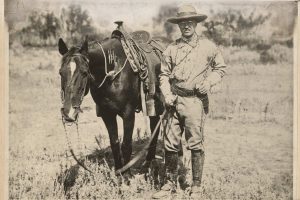
Cowboys became ranch hands, no longer free to roam.
But at least they aren’t subject to 24-7 recording of their doings – as truckers soon will be. It will be done via something called an Electronic Logging Device (ELD) which is basically a mobile, in-truck Panopticon – a rig for the rig that sees all and knows all – and narcs all, to the Appropriate Authorities.
It will tell drivers when to stop driving – even if they are just a couple of miles away from their destination. And they must stop. No matter how needless or inconvenient.
If they do not . . .
The ELDs, of course, will not be optional.
They will become mandatory for all new trucks about a month from now – on Dec. 18 – when a new federal fatwa goes into effect. Read the rest of this entry »






 MCViewPoint