


Long before FDR and Erdoğan, in 1720 France, John Law, maestro of the the Mississippi Bubble, made it illegal to own gold or silver as his bubble in Mississippi Company shares and Bank Royale notes deflated. In a review of Janet Glesson’s excellent book on the episode, I summarized Law’s desperate methods:
https://mises.org/wire/fdr-wasnt-only-one-who-declared-war-gold-save-paper-money
Desperate times call for desperate measures. Or tyrannical men do tyrannical things when it comes to propping up paper money whose value is circling the drain. The Financial Times headline screams, “Turkey to Target ‘Under the Mattress’ Gold in Effort to Bolster the Lira.”
This in the same week that “[n]ewly appointed Turkish finance minister Nureddin Nebati delivered a sales pitch to investors in London on Tuesday, offering an upbeat assessment of the country’s economic outlook despite acute currency weakness and raging inflation,” according to Almost Daily Grant’s.
BlueBay Asset Management emerging market strategist Timothy Ash was impressed, telling the Financial Times that “this guy had a pitch. He’d prepared. The message was clear: foreign capital is welcome. Forget about capital controls, we’re not going to do that. That’s encouraging.”
But just in case, Mr. Nebati figures there is three hundred million dollars’ worth of gold under the beds of the Turkish populous, and the government would like to trade more than 10 percent of the hoarded yellow metal for their flimsy paper lira.
The latest of many finance ministers serving under President Recep Tayyip Erdoğan said, according to the FT, that the country’s thirty thousand gold shops would play a central role in the scheme, “which will build on a broader package of emergency measures unveiled in December in order to halt a freefall in the lira, which lost 44 per cent of its value against the dollar in 2021.”
Refineries have even been commissioned to melt down jewelry into bullion. Laura Pitel writes, “A traditional gift given for weddings and births, gold has long been a preferred way for Turks suspicious of the banking system—and their country’s history of inflation—to guard their wealth.”
After visiting the Grand Bazaar in Istanbul in 2012, I wrote on mises.org, “Just one visit to Istanbul’s Grand Bazaar tells a visitor how Turks store value. The Turkish monetary authorities have a history of debauching their currency so Turks store their wealth in gold and rugs. There are 373 jewelers and 125 rug stores in the bazaar.”
To illustrate, I continued, “In 1966, one US dollar bought 9 lira. By 2001, a dollar bought 1.65 million lira. Four years later, six zeros were lopped off the lira and a dollar equaled 1.29 new Turkish lira. Today (2012), a dollar can be traded for around 1.80 lire.” Ten years later a US dollar will buy more than thirteen lire, having rallied from seveteen to the buck in December.
Nebati said his plan aims to gather $25 billion of the yellow metal for the local banking system.
Of course, this scheme is nothing new. In 1933, Franklin Delano Roosevelt, with “authority from the Emergency Banking Act and its amendment to the Trading with the Enemy Act, ordered all individuals and corporations in America to hand over their gold holdings to the federal government in exchange for an equivalent amount of paper currency,” Tom Woods wrote on mises.org.
FDR’s next step made it illegal to “require payment in gold or a particular kind of coin or currency, or in an amount in money of the United States measured thereby.”
Long before FDR and Erdoğan, in 1720 France, John Law, maestro of the the Mississippi Bubble, made it illegal to own gold or silver as his bubble in Mississippi Company shares and Bank Royale notes deflated. In a review of Janet Glesson’s excellent book on the episode, I summarized Law’s desperate methods:
Law then resorted to despotic power, banning the export of coins and bullion. Next he prohibited the purchase or wearing of diamonds and other jewels. When this didn’t stop the exit from paper, Law outlawed the production and sale of all gold and silver artifacts with the exception of religious paraphernalia, resulting in soaring prices in crosses and chalices.
Within a month, Law banned the possession of more than five hundred livres’ worth of silver or gold and required that all payments of more than 100 livres be made in banknotes. People were promised generous rewards if they informed on their neighbors. “The slightest suspicion that gold was being concealed illegally would be enough for any house, whether palace or hovel, to be searched,” Gleeson writes.
In monetary affairs, there is nothing new under the sun.
Author:
Douglas French is President Emeritus of the Mises Institute, author of Early Speculative Bubbles & Increases in the Money Supply, and author of Walk Away: The Rise and Fall of the Home-Ownership Myth. He received his master’s degree in economics from UNLV, studying under both Professor Murray Rothbard and Professor Hans-Hermann Hoppe.
Be seeing you
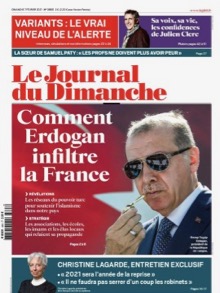
 Didier Lemaire, professor of philosophy in the Paris region (in France, one teaches philosophy in the final year of secondary school), has been threatened by Islamists because he dares to debate political Islam. He was placed under police protection.
 Former Islamist Prime Minister Necmettin Erbakan and his bodyguards. To the right of the photo is Recep Tayyp Erdoğan.
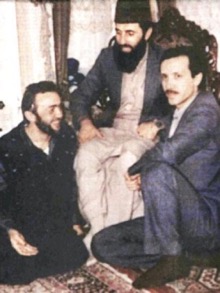 In Afghanistan, Gulbuddin Hekmatyar with at his feet Rachid Ghanoucchi Ghanoucchi (left in the photo) and Recep Tayyip Erdoğan (right).
 MCViewPoint