MCViewPoint

Opinion from a Libertarian ViewPoint

Posts Tagged ‘Rome’

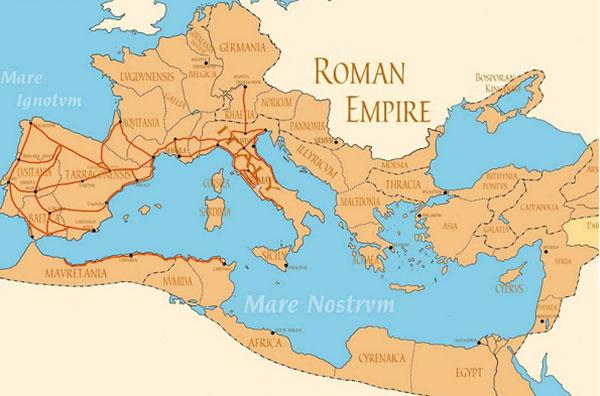
Why Rome Collapsed: Lessons For the Present

Posted by M. C. on August 14, 2023

As resources are depleted and climate change disrupts the few breadbaskets of the world, which nations will have the foundations of values, organization, resources, human capital and wealth to survive polycrises?

https://www.oftwominds.com/blogaug23/Rome-lessons8-23.html

Charles Hugh Smith

No nation clinging to the current “waste is growth / landfill economy” will survive the emergent global polycrisis.

Identifying why the western Roman Empire collapsed in 476 AD has been a parlor game for at least two centuries, since Edward Gibbon published his monumental The History of the Decline and Fall of the Roman Empire (Abridged). Gibbon concluded Christianity had a major role in weakening the Empire, a view few today share.

Part of the fun of the parlor game is trying to identify the one thing that pushed it over the cliff: poisoning from lead pipes and wine goblets being a famous example that has been discounted by modern historians.

New research is more holistic, considering factors that were ignored or dismissed in the past, such as climate change and pandemics.

The word polycrisis captures this basic view: there wasn’t just one thing that toppled the empire, it was a confluence of crises that together nudged the empire to the breaking point. The empire was still robust and adaptive enough to handle any one crisis, but the onslaught of multiple, mutually reinforcing crises overwhelmed the resources of the empire.

The book The Fate of Rome: Climate, Disease, and the End of an Empire does an admirable job of explaining the polycrisis of reduced crop yields and pandemics.

Another approach is that of Peter Turchin and other historians, who look at social and economic cycles. Turchin holds that the overproduction of elites leads to elite conflicts that weaken the leadership and soaring wealth-power inequality undermines the social coherence of the state/empire. Ages of Discord: A Structural-Demographic Analysis of American History (2016)

End Times: Elites, Counter-Elites, and the Path of Political Disintegration (2023)

Historians such as David Hackett Fischer, author of The Great Wave: Price Revolutions and the Rhythm of History and Thomas Homer-Dixon, author of The Upside of Down: Catastrophe, Creativity and the Renewal of Civilization, examine the role of resource depletion, higher costs and diminishing returns for those doing the work of propping up the empire.

Historian Michael Grant makes the case for moral rot unraveling social coherence in his classic The Fall of the Roman Empire.

Having read all these works and many others on the subject, it seems clear that all of these factors were part and parcel of the polycrisis that brought down Rome. Each factor added to the empire’s already immense burdens while reducing its wealth and resources.

I would highlight three such consequential factors among many:

1. The depletion of the silver mines in Spain, fatally reducing Rome’s money supply.

2. The Vandals conquering the North African breadbasket of Rome in 435 AD. The loss of this major wheat supply doomed Rome to scarcities that could not be made up elsewhere.

3. The decline of trade with India through Egypt as silver and gold supplies diminished, as this trade provided 20% of all Imperial revenues. The Roman Empire and the Indian Ocean: Rome’s Dealings with the Ancient Kingdoms of India, Africa and Arabia

The view substantiated by Peter Heather argues that the Roman Empire was neither on the brink of social or moral collapse, nor fatally weakened by resource depletion. What brought it to an end were the barbarian invasions from what is now Germany and Eastern Europe. The fall of the Roman Empire: a new history of Rome and the Barbarians.

Heather argues Rome’s great success eventually led to its undoing, as the small, loosely organized Barbarian tribes learned from the Romans how to form larger, more cohesive and thus more powerful social and military organizations. Rome’s immense wealth was a magnet that attracted the Barbarians in two ways:

1. They wanted a piece of the rich Roman pie

2. In order to get that slice, they adopted Roman values and methodologies.

As a result of what they learned from Rome, the Barbarians became so formidable that Rome could no longer defeat them militarily, as they could when the tribes were smaller-scale and less cohesive.

Heather points out that late-era Rome faced multiple existential military threats, especially from the resurgent Persian Empire that Rome had battled for centuries. Despite its unwieldy size and bureaucracy, Rome managed effective adaptations that resolved the Persian threat.

Heather notes what other authors have focused on: Rome weakened itself by drawing an artificial distinction between “Barbarians” and “Romans.” Barbarians were anyone not within the Imperial borders, which were well-defined and defended, a point made by Edward N. Luttwak in his classic study, The Grand Strategy of the Roman Empire: From the First Century CE to the Third.

This distinction discounted the Barbarians and elevated the Romans, generating a fatal hubris in the Roman elites and squandering an opportunity to recruit the Barbarian tribes as stable allies. As with all human groups, if the rewards of alliance outweigh the risky gains of conquest, then leaders and their followers will pick alliance over conquest, the success of which is far from guaranteed.

So-called Barbarians became the core of the Roman army, and many of the most competent generals were either from the Roman hinterlands or they were Barbarians.

Rome had long exercised a military-diplomatic policy of defeating the Barbarians when they invaded Roman territories, but then making treaties with the Barbarian leaders that allowed the Barbarians to trade (and thus share the wealth) with Rome and settle within its borders.

In effect, Rome Romanized many Barbarian tribes over the centuries, mostly with “soft power” (diplomacy, sharing the wealth, cultural absorption) rather than “hard power” (military force).

Read the Whole Article

Be seeing you

Posted in Uncategorized | Tagged: , , , | Leave a Comment »

When in Rome

Posted by M. C. on June 26, 2023

It has been repeated time and again for over a thousand years. Yet the Fed, the nations “government experts”, didn’t get the memo.

by Jeff Thomas

  • Over its last one hundred years, the State steadily devalued the currency by 98%
  • The high cost of government—particularly, growing entitlements and perpetual warfare, coupled with a diminished number of taxpayers, led the government to massive debt, to the point that it could not be repaid.
  • Those citizens that were productive began to exit the country, finding new homes in countries that were not quite so sophisticated but offered better prospects for the future.
  • The decline in the value of the currency resulted in ever-increasing prices of goods, so much so that the purchase of them became a hardship to the people. By governmental edict, wage and price controls were established, forcing rises in wages whilst capping the amount that vendors could charge for goods.
  • The result was that vendors offered fewer and fewer goods for sale, as the profit had been eliminated.

If the reader is a citizen of the EU or US, the above history may seem quite familiar, with the one exception that strict wage and price controls have not (yet) been implemented. Still, the history is accurate; it is the history of Rome.

See the rest here

Be seeing you

Posted in Uncategorized | Tagged: , | Leave a Comment »

Decline of Empire: Parallels Between the U.S. and Rome, Part I – Doug Casey’s International Man

Posted by M. C. on January 9, 2023

https://internationalman.com/articles/decline-of-empire-parallels-between-the-us-and-rome-part-i/

by Doug Casey

As some of you know, I’m an aficionado of ancient history. I thought it might be worthwhile to discuss what happened to Rome and based on that, what’s likely to happen to the U.S. Spoiler alert: There are some similarities between the U.S. and Rome.

But before continuing, please seat yourself comfortably. This article will necessarily cover exactly those things you’re never supposed to talk about—religion and politics—and do what you’re never supposed to do, namely, bad-mouth the military.

There are good reasons for looking to Rome rather than any other civilization when trying to see where the U.S. is headed. Everyone knows Rome declined, but few people understand why. And, I think, even fewer realize that the U.S. is now well along the same path for pretty much the same reasons, which I’ll explore shortly.

Rome reached its peak of military power around the year 107, when Trajan completed the conquest of Dacia (the territory of modern Romania). With Dacia, the empire peaked in size, but I’d argue it was already past its peak by almost every other measure.

The U.S. reached its peak relative to the world, and in some ways its absolute peak, as early as the 1950s. In 1950 this country produced 50% of the world’s GNP and 80% of its vehicles. Now it’s about 21% of world GNP and 5% of its vehicles. It owned two-thirds of the world’s gold reserves; now it holds one-fourth. It was, by a huge margin, the world’s biggest creditor, whereas now it’s the biggest debtor by a huge margin. The income of the average American was by far the highest in the world; today it ranks about eighth, and it’s slipping.

But it’s not just the U.S.—it’s Western civilization that’s in decline. In 1910 Europe controlled almost the whole world—politically, financially, and militarily. Now it’s becoming a Disneyland with real buildings and a petting zoo for the Chinese. It’s even further down the slippery slope than the U.S.

Like America, Rome was founded by refugees—from Troy, at least in myth. Like America, it was ruled by kings in its early history. Later, Romans became self-governing, with several Assemblies and a Senate. Later still, power devolved to the executive, which was likely not an accident.

U.S. founders modeled the country on Rome, all the way down to the architecture of government buildings, the use of the eagle as the national bird, the use of Latin mottos, and the unfortunate use of the fasces—the axe surrounded by rods—as a symbol of state power. Publius, the pseudonymous author of The Federalist Papers, took his name from one of Rome’s first consuls. As it was in Rome, military prowess is at the center of the national identity of the U.S. When you adopt a model in earnest, you grow to resemble it.

A considerable cottage industry has developed comparing ancient and modern times since Edward Gibbon published The Decline and Fall of the Roman Empire in 1776—the same year as Adam Smith’s Wealth of Nations and the U.S. Declaration of Independence were written. I’m a big fan of all three, but D&F is not only a great history, it’s very elegant and readable literature. And it’s actually a laugh riot; Gibbon had a subtle wit.

There have been huge advances in our understanding of Rome since Gibbon’s time, driven by archeological discoveries. There were many things he just didn’t know, because he was as much a philologist as an historian, and he based his writing on what the ancients said about themselves.

There was no real science of archeology when Gibbon wrote; little had been done even to correlate the surviving ancient texts with what was on the surviving monuments—even the well-known monuments—and on the coins. Not to mention scientists digging around in the provinces for what was left of Roman villas, battle sites, and that sort of thing. So Gibbon, like most historians, was to a degree a collector of hearsay.

And how could he know whom to believe among the ancient sources? It’s as though William F. Buckley, Gore Vidal, H. L. Mencken, Norman Mailer, and George Carlin all wrote about the same event, and you were left to figure out whose story was true. That would make it tough to tell what really happened just a few years ago… forget about ancient history. That’s why the study of history is so tendentious; so much of it is “he said/she said.”

In any event, perhaps you don’t want a lecture on ancient history. You’d probably be more entertained by some guesses about what’s likely to happen to the U.S. I’ve got some.

Let me start by saying that I’m not sure the collapse of Rome wasn’t a good thing. There were many positive aspects to Rome—as there are to most civilizations. But there was much else to Rome of which I disapprove, such as its anti-commercialism, its militarism and, post-Caesar, its centralized and increasingly totalitarian government. In that light, it’s worth considering whether the collapse of the U.S. might not be a good thing.

See the rest here

Be seeing you

Posted in Uncategorized | Tagged: , , | Leave a Comment »

A Return to Beauty – Taki’s Magazine

Posted by M. C. on March 3, 2020

Beauty and government dictate are not something I would equate. That said Trump is certainly correct about government architecture, at least the post depression variety.

Ayn Rand and Howard Roarke strike again.

https://www.takimag.com/article/a-return-to-beauty/

Theodore Dalrymple

The guilty flee when no man pursueth, says Proverbs, but it does not follow from this that the guilty do not flee when they are indeed pursued. The guilty also have a tendency to argue when they know that they are in the wrong, as for example architects who continue to deny that, for the past seventy years at least, they have been disenchanting the world by espousing a dysfunctional functionalism and constructing buildings so hideous that they make Frankenstein’s monster look like Clark Gable.

I refuse to think so ill of architects as human beings as to believe them to be totally unaware of what they have done. Rather, I pity them. They are like those unfortunate government spokesmen who have to defend the indefensible in public, which is always a disagreeable and nerve-racking thing to have to do. As government spokesmen invent a language full of polysyllabic euphemism to disguise the catastrophe their masters have wrought, so architects speak a language that is either incomprehensible or, where comprehensible, entirely beside the point.

I take as an example the response of a university professor of architecture to President Trump’s executive order making the classical style of architecture compulsory for new federal buildings of any size or cost in the Washington area. I do not name the professor because my target is the guild or sect to which he belongs rather than the individual. His article objecting to the executive order is typical of many.

He begins with the argument from authority: He cites a number of American architectural organizations that are highly critical or fearful of the president’s executive order. But this is like canvassing the opinion of the Communist Party of the Soviet Union, the KGB, and the Red Army to find out whether communism was as bad as it was painted. It is precisely the nature of the architects’ authority that is at issue.

“A triangular wheel would be an innovation, but it would not be an advance.”

The president’s executive order starts from what seems to me an indisputable premise, that much if not most of the federal building carried out in the past half century has been at best undistinguished and at worst hideous. But in the 1930s and even later, federal buildings that were (and will always be) a great adornment to the city, such as the Supreme Court and the Jefferson Memorial, were built. And it is not possible that what was possible then should not be possible now.

According to the executive order, classical architecture that takes its inspiration from ancient Greece and Rome symbolizes the American founding aspiration toward democracy and the rule of law. Critics point out that both were slave societies, says the professor, and indeed that the slave-owners in the Southern states of America built neoclassical mansions on their plantations. I think both arguments miss the point, though simply to reject the classical world because it was slave-owning is to deny its other and longer-lasting legacy, and would also—in logic—be to reject the founding of the American republic because some of the American founding fathers were slave-owners (and not a woman among them). History is, or ought to be, more than the backward projection of our current moral enthusiasms or obsessions.

Moreover, modernism and its successors are much more tainted by fascist and communist ideologies. And while I do not think that classical buildings are in any way aesthetically redolent of slavery—one does not look at the Maison Carrée in Nîmes and think “slavery”—modern buildings frequently speak of megalomania, both of the architect and his patron, and it is true that dictators have sometimes built in a style that one might call tyrant-classicism. But high modernism was certainly in vogue for much of the Soviet Union’s existence, with horrible results, combining hideousness of design with shoddiness of execution. Moreover, many of the originators of modernism were themselves of very totalitarian disposition—they explicitly wanted to legislate the style of architecture for the whole world—and their inhumanity is obvious from what they built.

However, the political associations of classicism and modernism (and its successors, such as brutalism and deconstructivism) are beside the point. What is important is that classical architecture, even when not of the very best, is never as bad as the kind of things that Thom Mayne builds. It can achieve grandeur through elegance and not merely by size, or by a tendency to make human beings about as welcome in its precincts as weevils in a packet of flour. What is important is to build well and beautifully, and I do not see how anyone could fail to come to the conclusion that (for example) the National Gallery of Art in Washington is incomparably superior to the recent extension of the Tate Modern gallery in London.

But the nub of the professor’s argument is this: “I fear that [the executive order] will ultimately stifle innovation and reverse recent federal support for architectural experimentation.” In other words, it will cramp the architects’ freedom to build whatever they feel like building—with the results that are to be seen everywhere.

Innovation and architectural experimentation are not good in themselves. They are to be judged by their results, not by their newness, their originality or unprecedentedness. It would be an innovation to build a skyscraper of refrigerated butter, but the fact of its innovation would not be enough to save it from reprobation. A triangular wheel would be an innovation, but it would not be an advance.

The article bears out precisely what the executive order’s preamble says: that the modernists and their successors pay no regard to beauty. The professorial author extols the new American embassy in London as follows:

[The embassy] combined provocative design with the latest advancements in security, while incorporating green building systems that reduced energy costs. Together, I believe [it] project[s] the image of a technologically advanced and enlightened U.S. federal government.

Not a word of its beauty, not surprisingly, since it is a monstrosity, admittedly one among many other monstrosities.

And why provocative design? Who is to be provoked, and what for? Architecture is not a cartoon, a play, a novel, a joke. Note also the absence of all mention of beauty or elegance in this dithyramb—for a very good and sufficient reason. If anything could bear out precisely what the executive order says to justify its promulgation, it is this.

What the building projects is not enlightenment, but total inhumanity, a tendency to dictatorship, a deeply skewed scale of values, a total lack of aesthetic discrimination, and a surrender to a self-generating and perpetuating clique. As Thom Mayne, one of the leaders of that clique, put it, he would like to build only for other architects, the only persons qualified to judge and to admire what he does. Yet surely even he has an inkling, at some level in his mind, that he has made the world a little worse than he found it.

Be seeing you

In Novels, A Character Flaw | ArchDaily


Posted in Uncategorized | Tagged: , , , , , , | Leave a Comment »