


“Weiner credits Sylvester with “stealing Russia’s war plans for Ukraine,” but completely ignores the role the CIA played in provoking Russia’s invasion of Ukraine.“
“Based on Weiner’s article, we now know that the US launched an intelligence war on Russia based completely on a lie. And the senior leaders of the CIA went along with it. In my view, the CIA ought to be dismantled and cast to the four winds. We need to start over with some people of actual intelligence.“
We know what happened the last time those “wind” words were used.
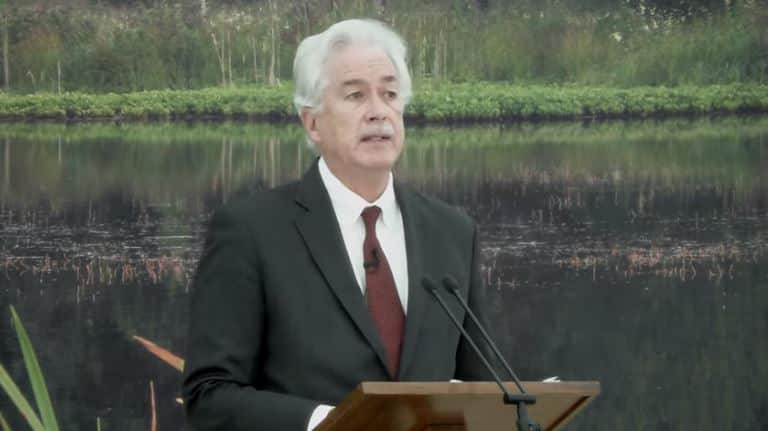
Foreign Policy published an article last week by Tim Weiner, author of Legacy of Ashes, with the title, When the Threat Is Inside the White House: What CIA insiders make of the MAGA moles and toadies now in charge of U.S. national security. While the intent of the article is to paint Trump and his team as a bunch of Russian toadies, Weiner unwittingly paints a picture of the CIA’s leadership as biased operators with no understanding of Russia… They still think they are engaging a communist authoritarian state.
Here’s the opening paragraph:
If our nation’s spies are the infantry of our ideology, as John Le Carré once observed, Tom Sylvester is an unknown soldier who became a four-star general. Two years ago, he was named the CIA’s deputy director of operations, in charge of thousands of officers conducting espionage, covert action, and paramilitary operations. He won the job by virtue of his role in stealing Russia’s war plans for Ukraine, warning the world about the coming invasion, and providing steadfast support to Kyiv’s military and intelligence services.
Weiner credits Sylvester with “stealing Russia’s war plans for Ukraine,” but completely ignores the role the CIA played in provoking Russia’s invasion of Ukraine. The entire narrative surrounding Sylvester’s actions is constructed around the premise that Russia is a bad, evil actor and that its actions have nothing to do with Western provocations, especially the expansion of NATO to the East.
The next “highlight” from Weiner’s piece provides an excellent example of the CIA’s bias and ignorance when it comes to Russia:
In the summer of 2017, Sylvester received new marching orders from Tomas Rakusan, the new chief of the clandestine service, whose identity remained a state secret until after his retirement. Rakusan had spied on Russia since before the end of the Cold War, operating throughout Central and Eastern Europe. His hatred of the Russians was bred in the bone. His parents were Czech; he was 9 years old when Soviet troops crushed the Prague Spring uprising in 1968. Rakusan saw Russian President Vladimir Putin’s subversion of the presidential election on Trump’s behalf as the espionage equivalent of 9/11. In retaliation, he aimed to penetrate the Kremlin—among the greatest aspirations of the CIA since its foundation, and a goal never achieved.
Hatred of Russians? It is one thing to despise the Soviet Union, which was governed by a Communist ideology. But the “End of the Cold War” was marked by the peaceful overthrow of a communist government and the creation of a new Russian government that emphasized nationalism and Christianity. So how is that a threat to the United States? Moreover, during the decade of the 1990s, Russia’s military was in disarray and the society was ravaged by economic crisis, which included two periods of hyperinflation, widespread poverty among the Russian people, and a dramatic decline in life expectancy among Russian men.
This did not age well: “Rakusan saw Russian President Vladimir Putin’s subversion of the presidential election on Trump’s behalf as the espionage equivalent of 9/11.” Tulsi Gabbard’s declassification of intelligence documents and emails from various members of the CIA and other intelligence officials on Friday, shows that Rakusan either had his head up his ass or was part of the conspiracy to attack Donald Trump with a lie (or both). The memo carries the following subject line: Intelligence Community suppression of intelligence showing “Russian and criminal actors did not impact” the 2016 presidential election via cyber-attacks on infrastructure. I am sure this caught Tim Weiner by surprise. Certainly takes the wind out of his sails as he tries to portray the CIA as a saintly, honest outfit being undermined by a President who is in the pocket of Putin.
The next couple of paragraphs from Weiner paint a picture of Western intelligence ramping up against Russia, but also exposes CIA’s impotence with respect to human intelligence assets in Russia:
By the summer of 2020, CIA officers were working in close liaison with the British, Dutch, Ukrainians, Poles, Czechs, Estonians, and many other services against the Russians. “There was the strategic decision on how we would share intelligence,” Sylvester said. “We used it as an influence mechanism, in and of itself, to get governments to start cooperating with us.” This hard-won trust “allowed them to open up taps of cooperation and intelligence that they had theretofore not shared with us,” he added. The CIA and its foreign allies were cross-fertilizing intelligence, choreographing operations, and, most importantly, recruiting Russian sources.
The CIA had been able to “push back against the Russian services” largely by “working with liaison partners overseas to expose and disrupt Russian intelligence activities,” then-CIA Director William Burns told me last year. “And then what we tried to build on that, starting in the spring of 2021, was the recruitment dimension of this,” he said. “This was really, especially once the war drums started beating, a once-in-a-generation opportunity, given the disaffection in some parts of the Russian elite and Russian society” against Putin’s regime.
This quote jumped off the page for me: largely by “working with liaison partners overseas to expose and disrupt Russian intelligence activities.” That is a polite way of saying that the the CIA had no assets of its own and was relying on foreign intelligence services, with the bulk of the information coming from Ukraine.
Be seeing you

 MCViewPoint