MCViewPoint

Opinion from a Libertarian ViewPoint

Posts Tagged ‘Socialists’

Even Socialists Get It Right Once In A While

Posted by M. C. on September 3, 2025

Following a political awakening, he joined the gradualist Fabian Society and became its most prominent pamphleteer.

https://en.wikipedia.org/wiki/Fabian_Society

Be seeing you

Posted in Uncategorized | Tagged: , , | Leave a Comment »

Power To The People

Posted by M. C. on August 3, 2025

Socialists cry “Power to the people”, and raise the clenched fist as they say it. We all know what they really mean – power over people, power to the State.

Margaret Thatcher

Posted in Uncategorized | Tagged: , , | Leave a Comment »

Questions That Only Libertarians Are Asking

Posted by M. C. on October 26, 2024

by Laurence M. Vance

It is only libertarians who are asking these questions and getting to the real issues. It is only libertarians because libertarianism is based on the timeless principles of individual liberty, economic freedom, private property, and a government limited to the protection of these things. Libertarians don’t just hold to these principles when it is expedient or popular to do so. This is what sets them apart from the proponents of every other political philosophy.

Although on the surface, Democrats, liberals, socialists, and progressives seem to be ideological opposites of Republicans, conservatives, nationalists, and constitutionalists, and although both groups are often contrasted with moderates, populists, centrists, and independents, in reality, every one of these groups has something in common: their opposition to libertarianism.

Libertarianism

Libertarianism is the philosophy that says people should be free from individual, societal, or government interference to live their lives any way they desire, pursue their own happiness, accumulate wealth, assess their own risks, make their own choices, participate in any economic activity for their profit, engage in commerce with anyone who is willing to reciprocate, and spend the fruits of their labor as they see fit — as long as their actions are peaceful, their associations are voluntary, their interactions are consensual, and they don’t violate the personal or property rights of others.

Libertarians maintain that as long as people don’t infringe upon the liberty of others by committing, or threatening to commit, acts of fraud, theft, aggression, or violence against their person or property, the government should leave them alone and not interfere with their pursuit of happiness, commerce, personal decisions, economic enterprises, or what they do with their body or on their property.

Libertarians thus believe that —

Individuals, not society or the government, should be the ones to decide what risks they are willing to take and hat behaviors they want to practice.

Everyone should be free to pursue happiness in his own way — even if his choices are deemed by others to be harmful, unhealthy, unsafe, immoral, unwise, stupid, destructive, or irresponsible.

Every crime needs a tangible and identifiable victim who has suffered measurable harm to his person or measurable damages to his property.

Markets should be completely free of government regulation, licensing, restriction, and interference.

No industry or individual should ever receive government grants, subsidies, loans, or bailouts.

The functions of government should be limited to prosecuting and exacting restitution from those individuals who initiate violence against, commit fraud against, or violate the property rights of others.

Contrary to Democrats, liberals, socialists, progressives, Republicans, conservatives, nationalists, constitutionalists, moderates, populists, centrists, and independents — who all may claim to believe some of these things — libertarians believe these things consistently and without exception.

The issues

Be seeing you

Be seeing you

Posted in Uncategorized | Tagged: , , , , , , , , , , , , , | Leave a Comment »

“Communism is what happens when Socialists realize that they want complete control over every aspect of human life.”

Posted by M. C. on June 12, 2023

A.E. Samaan

Sounds like most governments.

Be seeing you

Posted in Uncategorized | Tagged: , , | Leave a Comment »

TGIF: Where Socialists Go Wrong | The Libertarian Institute

Posted by M. C. on January 17, 2023

Here Hayek extended Ludwig von Mises’s fatal critique of socialism; namely, that

  1. without tradeable private property in the means of production, markets for resources and producers’ goods don’t exist;
  2. without such markets, true prices can’t exist; and
  3. without prices, rational economic calculation is impossible;
  4. therefore, socialism is impossible; it’s “planned chaos.”

https://libertarianinstitute.org/articles/tgif-where-socialists-go-wrong/
by Sheldon Richman 

r

R

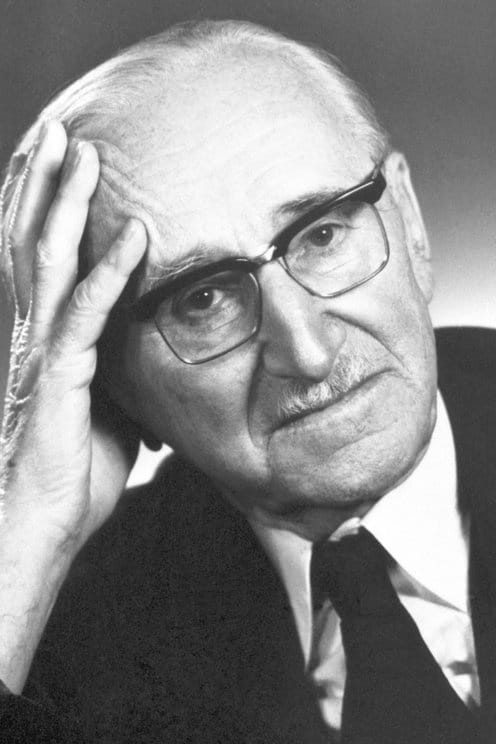
Since socialism is “in” today — even though many people who say they favor it have no idea what it is — F. A. Hayek’s last book, The Fatal Conceit: The Errors of Socialism (1988), is worth checking out. Hayek, the late great Nobel-laureate economist of the Austrian school, begins this way:

This book argues that our civilisation depends, not only for its origin but also for its preservation, on what can be precisely described only as the extended order of human cooperation, an order more commonly, if somewhat misleadingly, known as capitalism. To understand our civilisation, one must appreciate that the extended order resulted not from human design or intention but spontaneously: it arose from unintentionally conforming to certain traditional and largely moral practices, many of which men tend to dislike, whose significance they usually fail to understand, whose validity they cannot prove, and which have nonetheless fairly rapidly spread by means of an evolutionary selection — the comparative increase of population and wealth — of those groups that happened to follow them. The unwitting, reluctant, even painful adoption of these practices kept these groups together, increased their access to valuable information of all sorts, and enabled them to be ‘fruitful, and multiply…’ This process is perhaps the least appreciated facet of human evolution.

Socialists take a different view of these matters.

Well, that last sentence is quite an understatement. By socialism Hayek didn’t mean the welfare state or continuing government efforts to manipulate market outcomes according to some notion of equity. That would be interventionism or the mixed economy. No, socialism is the abolition of the market order and its necessary condition, private property: the replacement of free private enterprise with centralized bureaucracy. Let’s cut to the chase:

The main point of my argument is, then, that the conflict between, on one hand, advocates of the spontaneous extended human order created by a competitive market, and on the other hand those who demand a deliberate arrangement of human interaction by central authority based on collective command over available resources is due to a factual error by the latter about how knowledge of these resources is and can be generated and utilised. As a question of fact, this conflict must be settled by scientific study. Such study shows that, by following the spontaneously generated moral traditions underlying the competitive market order (traditions which do not satisfy the canons or norms of rationality embraced by most socialists), we generate and garner greater knowledge and wealth than could ever be obtained or utilised in a centrally-directed economy whose adherents claim to proceed strictly in accordance with ‘reason’. Thus socialist aims and programmes are factually impossible to achieve or execute; and they also happen, into the bargain as it were, to be logically impossible.

Hayek is saying that once we understand how information about resources is produced and transmitted, we realize that central planners can’t deliver the goods. Socialism can’t keep its (earlier) promises of plenty. (Nor of justice, but that’s for another time.)

Here Hayek extended Ludwig von Mises’s fatal critique of socialism; namely, that

See the rest here

Be seeing you

Posted in Uncategorized | Tagged: , , | Leave a Comment »

Yes, They Were Socialists: How the Nazis Waged War on Private Property

Posted by M. C. on July 6, 2022

The Nazi government took control of the economy, which is what one expects from socialism.

https://mises.org/wire/yes-they-were-socialists-how-nazis-waged-war-private-property

John Kennedy

When the average person thinks of the Nazis, what often comes to mind is World War II, the Holocaust, and rousing speeches of hate. However, the National Socialists also had economic and political policies, policies many just assume were either free market or New Deal–style public works projects like the Autobahn. But Nazi policy was not so cut-and-dried.

The Nazis were socialists, and it showed in many of the policies they implemented after coming to power in 1933. First, like the Soviets, the Nazis initiated a war on private property. Not surprisingly, property rights were severely curbed by National Socialism in the name of public welfare.

How did the National Socialists combat private property in Germany? The first step came shortly after the Nazis took control, when they abolished private property. Article 153 of the Weimar constitution guaranteed private property, with expropriation only to occur within the due process of the law, but this article was nullified by a decree on February 28, 1933. 

With this, the new National Socialist government had complete control of private property in Germany. While they did not take complete control of the lands like the Bolsheviks did in Russia in 1917, the Nazis issued quotas for industries and farms, and later they reorganized all industry into corporations run by members of the Nazi Party. 

The War on Business

Peter Temin wrote about this in Soviet and Nazi Economic Planning, stating:

Both governments reorganized industry into larger units, ostensibly to increase state control over economic activity. The Nazis reorganized industry into 13 administrative groups with a larger number of subgroups to create a private hierarchy for state control. The state could therefore direct a firm’s activities without acquiring direct ownership of enterprises. The pre-existing tendency to form cartels was encouraged to eliminate competition that would destabilize prices.

The Nazis, ironically, called this reorganization “privatization,” although the owners of these corporations were either removed from board positions and replaced by Nazi Party members or sold out and became Nazi Party members. They included IG Farben and the Junkers airplane factory. IG Farben was a chemical company founded in 1925 by Carl Bosch and Carl Duisberg, who were both Jewish, and had a capitalization of around a billion marks by 1926. By 1938, all of the company’s Jewish workers had been purged and the supervisory board replaced by Nazis (see Joseph Borkin’s book The Crime and Punishment of I.G. Farben).

IG Farben was a clear example of the reorganization of industry the Nazis undertook for their benefit. Sybille Steinbacher, a professor of Holocaust studies, wrote about the public-private partnership in her book Auschwitz, stating:

Otto Ambros and IG Farben director Fritz ter Meer held a board meeting in Berlin with Carl Krauch who was not only a member of the board of directors of IG Farben, but also a member of the circle of industrialists around Reichsfurhrer-SS known as Himmler’s “Circle of Friends.” 

After the Nazis took power, this kind of cooperation was common.

See the rest here

Be seeing you

Posted in Uncategorized | Tagged: , , , , | Leave a Comment »

Leftists Have It Wrong on Rights

Posted by M. C. on February 7, 2022

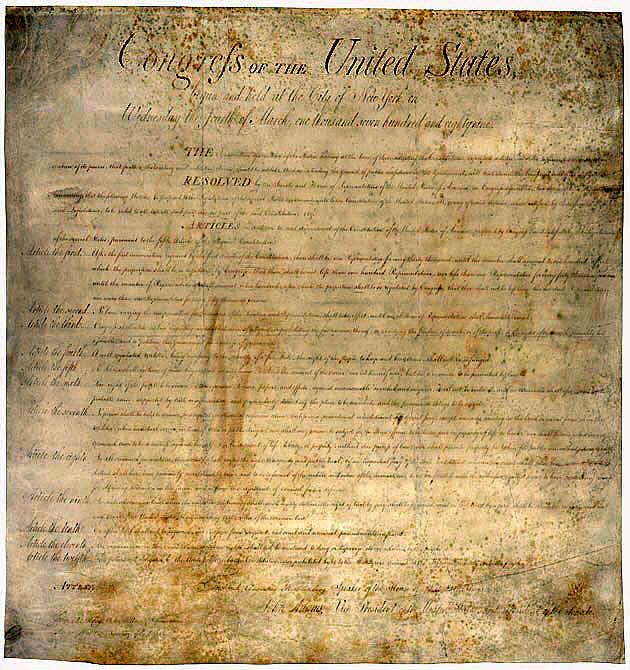
Not even the crafters of the Bill of Rights believed that. A careful reading of the First Amendment reveals that it doesn’t purport to give any rights to anyone. Instead, the wording states that Congress (and implicitly the rest of the federal government) is prohibited from infringing on people’s right of free speech. 

Thus when the government enacts a law or adopts a measure that infringes on freedom of speech, leftists are relegated to saying, “We understand that you have given us this important privilege but please be nice and don’t infringe on it.” Libertarians, on the other hand, say, “You have no legitimate authority to do that and so stop it immediately or else we will alter you or abolish you!”

by Jacob G. Hornberger

One of the central defects among leftists (that is, “liberals,” progressives, socialists, or interventionists) is their wrong-headed view of the nature of people’s rights. Their belief on this issue is one of the distinguishing characteristics between leftists and libertarians.

Leftists believe that people’s rights come from the government or from the Constitution. As such, they view rights not so much as rights but rather more as government-granted privileges.

Libertarians, on the other hand, believe that people’s rights are endowed in them by nature and God and, therefore, that people’s rights preexist government and the Constitution. We hold that the main purpose of government is to serve as our servant whose job is to protect the exercise of our natural, God-given rights. 

A good example of this leftist mindset was recently expressed in a fundraising letter I received from a leftist group called the Daily Kos. The letter stated that freedom of speech is “one of those rights granted to us in Bill of Rights.” It went on to refer to “our First Amendment rights.”

Not even the crafters of the Bill of Rights believed that. A careful reading of the First Amendment reveals that it doesn’t purport to give any rights to anyone. Instead, the wording states that Congress (and implicitly the rest of the federal government) is prohibited from infringing on people’s right of free speech. 

In other words, unlike American leftists today, our American ancestors didn’t believe that people’s rights come from the Constitution, the Bill of Rights, or from the government. They believed in what the Declaration of Independence stated — that man’s rights come from nature and God and that it is the responsibility of government to protect, not destroy, the exercise of such rights.

We are not just talking about a semantical difference here. The difference between how leftists and libertarians view the nature of rights has profound consequences. 
Given that leftists believe that their rights come from the government, they necessarily put themselves in a position of pleading, or perhaps even begging, that government go easy on them — that is, that government officials give them more latitude in exercising their “rights.” 

Thus, leftists view freedom as living on a leash — they just want the government to let them have a longer leash. What happens when the government begins reining in the leash? Leftists have no principled argument to make against what the government is doing. Since people’s rights come from government, leftists believe, then government can legitimately rein in the leash whenever it wants. 

Not so with libertarians. Unlike leftists, we are not relegated to pleading with or begging the government to treat us nicely. That’s because for us our rights don’t come from government. They preexist government. Government officials are nothing more than our servants whose job is to protect our rights. If they fail or refuse to do so — or if they use their power to destroy or infringe our rights — we have the right to alter or even abolish government and restore its rightful responsibility — the responsibility to behave as our servants whose job is to protect the exercise of our preexisting natural, God-given rights.

Thus when the government enacts a law or adopts a measure that infringes on freedom of speech, leftists are relegated to saying, “We understand that you have given us this important privilege but please be nice and don’t infringe on it.” Libertarians, on the other hand, say, “You have no legitimate authority to do that and so stop it immediately or else we will alter you or abolish you!”

The leftist view of the nature of rights is one reason why you can never count on leftists to protect our rights and liberties. Anyone who wants a genuine defense of our rights and liberties needs to join up with us libertarians. 

EMAIL

Be seeing you

Posted in Uncategorized | Tagged: , , , , , , , | Leave a Comment »

The Socialists’ Plan for “Ecological Leninism” | Mises Wire

Posted by M. C. on December 17, 2020

Regardless of whether the problem is attacked from the supply or the demand side, the race to zero [carbon emissions] would have to be coordinated through control measures—rationing, reallocating, requisitioning, sanctioning, ordering…ecological Leninism leaps at any opportunity to…break with business-as-usual as sharply as required and subject the regions of the economy working towards catastrophe to direct public control. It would mean that “one part of the population imposes its will upon the other part”, to speak with Engels. (pp. 145, 151)

https://mises.org/wire/socialists-plan-ecological-leninism

David Gordon

Corona, Climate, Chronic Emergency: War Communism in the Twenty-First Century
by Andreas Malm
Verso, 2020. 215 pages.

Some critics of the draconian lockdowns alleged to be needed to cope with covid-19 have claimed that these measures are merely preparatory steps to accustom Americans to centralized control. Once the covid-19 hysteria dies down, we will face permanent restrictions to deal with “climate change.”

These critics, and other readers as well, are likely to find Corona of interest. The author, Andreas Malm, a scholar of human ecology at the University of Lund, calls for using covid-19 and climate change as tools to promote a world socialist revolution. Lenin and Trotsky are for him heroic figures, though he acknowledges they were far from flawless, and we can learn much to guide us through our current troubles from the “war communism” they instituted.

The world is heating up and we face a global pandemic. Neither of these assertions is to be questioned, says Malm. “Science” tells us that they are true, and that is that. What causes these problems? The answer, you will not be surprised to learn, is capitalism. Marx long ago predicted that capitalism would collapse because capitalists, greedy for profit, would expand production to a greater extent than the market could absorb. The revisionist Marxist Eduard Bernstein objected that capitalism had so far surmounted its crises and hadn’t collapsed, but Rosa Luxemburg, another heroic figure for Malm, had high hopes for future disaster.

And she turns out to be right. The culprit is capitalist exploitation of nature. Capitalists disturb rainforests and other areas with large numbers of animals. This disturbs the animals found there, such as bats, causing them to flee elsewhere. In doing so they spread pathogens all over the world. “If it weren’t for the economy operated by humans constantly assailing the wild,…destroying it with a zeal bordering on lust for extermination, these things wouldn’t happen. The pathogens would not come leaping toward us. They would be secure among their natural hosts. But when these hosts are cornered, stressed, expelled and killed, they have two options: go extinct or jump.” (p. 35) Malm calls this lamentable state of affairs “zoonotic spillover.”

It is thus a great mistake to contrast, as leftists unenlightened by Marxist dialectics often do, humanly caused climate change with natural catastrophes such as covid-19. (Remember, the scale and scope of these is not allowed to be questioned.) Both result from capitalist exploitation of nature. This comes about through stripping the rainforests and expelling carbon dioxide into the atmosphere. The rise in temperature that results from the burning of fossil fuels also disturbs the pathogens ensconced in the forests.

Following Lenin, he asks, what is to be done? The answer does not lie in anarchism. A stateless world may be a dream for the far future, but right now we require a strong state to curb the capitalist exploiters responsible for our woes. Some find the anarchist theorist James Scott insightful, but he is at fault for his failure to respond to the exigencies of our current crisis.

It is not James Scott whom we need now but Lenin. He realized that before the state can wither away, it must be strengthened to deal ruthlessly with the class enemy. Lenin in his “The Impending Catastrophe and How to Combat It,” written in September 1917, said that to combat Russia’s loss of territory and resources, the state should control the economy in the same way the belligerent powers had already done during World War I. “Here, then, was Lenin’s wager: to take measures already instituted by the warring states, step them up a notch, and deploy them against the drivers of catastrophe” (p. 127, emphasis in original). Readers of Mises will not fail to note that he too saw the central control of the German economy during the war as a way to establish socialism.

What we need now is “war communism.” Malm admits that “this term leaves an acid taste. Rightly so. The warring Bolsheviks committed no small amount of cruelty” (pp. 158–59). But contrary to anticommunist propaganda, war communism in one respect succeeded magnificently. “Having the Whites and the allied empires arrayed against them—zero fossil fuels versus all the reserves in the world—the Red Army won the war. In this isolated respect, the period from late 1918 to late 1920 was the finest hour of the Soviet state” (p. 160).

What would “war communism” be like for us now? Malm has little in the way of a velvet glove that conceals the iron fist. He says,

Regardless of whether the problem is attacked from the supply or the demand side, the race to zero [carbon emissions] would have to be coordinated through control measures—rationing, reallocating, requisitioning, sanctioning, ordering…ecological Leninism leaps at any opportunity to…break with business-as-usual as sharply as required and subject the regions of the economy working towards catastrophe to direct public control. It would mean that “one part of the population imposes its will upon the other part”, to speak with Engels. (pp. 145, 151)

Malm says that “the journey [to an economy along ecological Leninist lines] would obviously be fraught with danger. A state thus expanded could…become bloated.” (p. 167) Nevertheless, he believes the risk worth taking. It is best to leave Malm to his fantasies. I prefer Murray Rothbard to Lenin, and I do not share Malm’s opinion that Theodor Adorno of the Frankfurt school was “the greatest thinker of the twentieth century” (p. 171). Author:

Contact David Gordon

David Gordon is Senior Fellow at the Mises Institute and editor of the Mises Review.

Be seeing you

Posted in Uncategorized | Tagged: , , , , | Leave a Comment »

Why the Free Market Liberals Underestimated the Socialists | Mises Wire

Posted by M. C. on November 13, 2020

Capitalism gave the world what it needed, a higher standard of living for a steadily increasing number of people. But the liberals, the pioneers and supporters of capitalism, overlooked one essential point. [p. 865] A social system, however beneficial, cannot work if it is not supported by public opinion. They did not anticipate the success of the anticapitalistic propaganda.

It was precisely this fact that the immense majority did contest. The essential point in the teachings of all socialist authors, and especially in the teachings of Marx, is the doctrine that capitalism results in a progressive pauperization of the working masses. With regard to the capitalistic countries the fallacy of this theorem can hardly be ignored.

https://mises.org/wire/why-free-market-liberals-underestimated-socialists?utm_source=Mises+Institute+Subscriptions&utm_campaign=a6f6f8b0e5-EMAIL_CAMPAIGN_9_21_2018_9_59_COPY_01&utm_medium=email&utm_term=0_8b52b2e1c0-a6f6f8b0e5-228343965

Ludwig von Mises

[A selection from Human Action.]

The masses, the hosts of common men, do not conceive any ideas, sound or unsound. They only choose between the ideologies developed by the intellectual leaders of mankind. But their choice is final and determines the course of events. If they prefer bad doctrines, nothing can prevent disaster.

The social philosophy of the Enlightenment failed to see the dangers that the prevalence of unsound ideas could engender. The objections customarily raised against the rationalism of the classical economists and the utilitarian thinkers are vain. But there was one deficiency in their doctrines. They blithely assumed that what is reasonable will carry on merely on account of its reasonableness. They never gave a thought to the possibility that public opinion could favor spurious ideologies whose realization would harm welfare and well-being and disintegrate social cooperation.

It is fashionable today to disparage those thinkers who criticized the liberal philosophers’ faith in the common man. Yet, Burke and Haller, Bonald and de Maistre paid attention to an essential problem which the liberals had neglected. They were more realistic in the appraisal of the masses than their adversaries.

Of course, the conservative thinkers labored under the illusion that the traditional system of paternal government and the rigidity of economic institutions could be preserved. They were full of praise for the ancient regime which had made people prosperous and had even humanized war. But they did not see that it was precisely these achievements that had increased population figures and thus created an excess population for which there was no room left in the old system of economic restrictionism. They shut their eyes to the growth of a class of people which stood outside the pale of the social order they wanted to perpetuate. They failed to suggest any solution to the most burning problem with which mankind had to cope on the eve of the “Industrial Revolution.”

Capitalism gave the world what it needed, a higher standard of living for a steadily increasing number of people. But the liberals, the pioneers and supporters of capitalism, overlooked one essential point. [p. 865] A social system, however beneficial, cannot work if it is not supported by public opinion. They did not anticipate the success of the anticapitalistic propaganda. After having nullified the fable of the divine mission of anointed kings, the liberals fell prey to no less illusory doctrines, to the irresistible power of reason, to the infallibility of the volonté générale and to the divine inspiration of majorities. In the long run, they thought, nothing can stop the progressive improvement of social conditions. In unmasking age-old superstitions the philosophy of the Enlightenment has once and for all established the supremacy of reason. The accomplishments of the policies of freedom will provide such an overwhelming demonstration of the blessings of the new ideology that no intelligent man will venture to question it. And, implied the philosophers, the immense majority of people are intelligent and able to think correctly.

It never occurred to the old liberals that the majority could interpret historical experience on the ground of other philosophies. They did not anticipate the popularity which ideas that they would have called reactionary, superstitious, and unreasonable acquired in the nineteenth and twentieth centuries. They were so fully imbued with the assumption that all men are endowed with the faculty of correct reasoning that they entirely misconstrued the meaning of the portents. As they saw it, all these unpleasant events were temporary relapses, accidental episodes to which no importance could be attached by the philosopher looking upon mankind’s history sub specie aeternitatis. Whatever the reactionaries might say, there was one fact which they would not be able to deny; namely, that capitalism provided for a rapidly increasing population a steadily improving standard of living.

It was precisely this fact that the immense majority did contest. The essential point in the teachings of all socialist authors, and especially in the teachings of Marx, is the doctrine that capitalism results in a progressive pauperization of the working masses. With regard to the capitalistic countries the fallacy of this theorem can hardly be ignored. With regard to the backward countries, which were only superficially affected by capitalism, the unprecedented increase in population figures does not suggest the interpretation that the masses sink deeper and deeper. These countries are poor when compared with the more advanced countries. Their poverty is the outcome of the rapid growth of population. These peoples have preferred to rear more progeny instead of raising the standard of living to a higher level. That is their own affair. But the fact remains that they had the wealth to prolong the average length of life. It would have been [p. 866] impossible for them to bring up more children if the means of sustenance had not been increased.

Nonetheless not only the Marxians but many allegedly “bourgeois” authors assert that Marx’s anticipation of capitalist evolution has been by and large verified by the history of the last hundred years. [p. 867] Author:

Ludwig von Mises

Ludwig von Mises was the acknowledged leader of the Austrian school of economic thought, a prodigious originator in economic theory, and a prolific author. Mises’s writings and lectures encompassed economic theory, history, epistemology, government, and political philosophy. His contributions to economic theory include important clarifications on the quantity theory of money, the theory of the trade cycle, the integration of monetary theory with economic theory in general, and a demonstration that socialism must fail because it cannot solve the problem of economic calculation. Mises was the first scholar to recognize that economics is part of a larger science in human action, a science that he called praxeology.

Be seeing you

Posted in Uncategorized | Tagged: , , | Leave a Comment »

Doug Casey on What Happens After The US Election

Posted by M. C. on October 9, 2020

Serious populists, socialists, Marxists, and other authoritarians can pull that off because they’re completely unbound by conventional notions of morality. They sincerely believe the ends justify the means, and nothing is off the table when it comes to gaining and maintaining power. They always say they’re working for the people and invariably promise lots of free stuff. The hoi polloi want to hear that during a crisis—like the one we’re entering.

https://internationalman.com/articles/doug-casey-on-what-happens-after-the-us-election/

by Doug Casey

Whenever a really radical group takes over—and the Democrats are serious radicals—they try to cement themselves in power. I’ve explained my reasons for believing the Democrats are going to win, and it only takes a small number of people working as a cadre to do it. I’d like to discuss what happens next.

At the time of the Russian Revolution, the hardcore Bolsheviks only numbered in the hundreds. That was enough to take control of a hundred million Russians and stay in power for 70 years until they totally ran the wheels off the economy.

The same thing happened with Fidel Castro in Cuba. He landed with only 50 or 60 guys, but once he took over the country, his apparatchiks were able to keep control of it.

Serious populists, socialists, Marxists, and other authoritarians can pull that off because they’re completely unbound by conventional notions of morality. They sincerely believe the ends justify the means, and nothing is off the table when it comes to gaining and maintaining power. They always say they’re working for the people and invariably promise lots of free stuff. The hoi polloi want to hear that during a crisis—like the one we’re entering. When things get tumultuous, once they’re in, it’s almost impossible to get them out. Democracy—which is a sham anyway in today’s world—be damned.

If the positions discussed by the twenty final contenders for their presidential nomination are any indication, the Democratic Party has been completely captured by leftists like AOC and her gang of four, who really want to change the very nature of the US. If they win, they’ll be able to do so.

In order to succeed in an American Purple Revolution, they’ll need to cement themselves in place. It takes time for cement to dry. Even though the Republicans are just ineffectual and spineless “me too-ers” with no core beliefs, the Democrats will see there’s no point in letting them regain power.

How will they ensure that? First, it seems almost certain that the Democrats will make both Washington DC and Puerto Rico states; there will then be 104 senators voting—and they will without question be left-leaning Democrats. That will also help assure control of the Electoral College—assuming it’s not abolished—since it will have two more reliably Democratic states. Second, the 20 million undocumented people—illegal aliens—now in the US will undoubtedly be made citizens; they lean heavily toward the Democrats. Third, they’ll expand the size of the Supreme Court and pack it with leftists, so any new laws they pass can’t be challenged effectively.

There could be more, of course. Perhaps they’ll reduce the voting age to 16; such is already the case in Argentina and a growing number of other countries. Young people, especially once they’re freshly indoctrinated by the State schools, always tend to favor socialist ideas. Maybe they’ll even engineer a new Constitutional Convention to change everything. The 2nd Amendment will go, of course, and the rest of the Bill of Rights would be heavily modified. Most of it is already a dead letter—but that would formalize the change once and for all. There will probably be “free” college in order to ensure an extra four years of intense leftist indoctrination for all. State-administered and paid medical care is a sure thing, as well.

These things would cement the Democrats into office for at least a generation. But please don’t think I support the Republicans. That would be like supporting tuberculosis just because it’s better than terminal cancer. Could things get violent? Yes.

There are quite a few examples, and these things can come out of almost nowhere, like the witch hysteria in Salem in the late 17th century. It was completely irrational, of course, and couldn’t have been predicted. But if you argued against the prevailing hysteria, you too could be accused and hung.

Sometimes, these things are ethnic. Look at what happened in Rwanda a generation ago. The Hutus and Tutsis had lived together, more or less amicably, for generations. Then, all of a sudden, a million people were hacked with machetes. The wave blew over, and now things are peaceful again. But if you weren’t out there slaughtering Tutsis during the hysteria, you might be accused of being a sympathizer and be killed yourself.

Sometimes, these things are religious, like the war between Christians and Muslims in Bosnia, or Lebanon, or the Central African Republic—among other places.

Sometimes, conflict is political, like the gang warfare between the National Socialists and Communists in 1920s Germany.

But what the US seems to be facing isn’t so much political, or religious, or ethnic as it is cultural, which is much more serious. The country is on the cusp of a full-blown cultural revolution. It happened during the Terror of the French Revolution. In a short period, perhaps over 20,000 people were murdered, mostly guillotined. Who would have guessed that simple regime change could get so out of control? It did, however, because it wasn’t just a political revolution. It was a cultural revolution, right down to changing the names of the months.

It famously happened in Russia in 1917, when the Bolsheviks succeeded in changing the basic structure of society. And it happened in Cambodia in the late 1970s with Pol Pot, when a quarter of the population was murdered. Who would have thought that even possible in modern times? That was also a cultural revolution against the educated and essentially anyone who wasn’t a peasant.

Of course, the mother of all social convulsions was Maoist China’s Great Cultural Revolution of the 1960s. The whole country, or at least what looked like the whole country, was bamboozled into overthrowing what they called the Four Olds—old customs, old culture, old habits, and old ideas. It went on for ten years, killed perhaps two million people, and destroyed the lives of tens of millions more.

Right now, the same meme is spreading in the US. Absolutely anything could happen after the November election, no matter who wins. But with the serious financial, economic, and social problems the US is facing, authoritarians will know how to use them to their own advantage.

The people promoting a US cultural revolution aren’t getting much resistance. The old regime—the conservatives, the Republicans—are totally intimidated. They’ve been brainwashed into accepting the righteousness of the Left’s cultural, political, economic, and social agendas. They don’t like it, but they sheepishly accept it. The schools, the NGOs, corporations, Hollywood, and the media are completely controlled by leftists and have inculcated their notions into society.

This is a real problem. When these things get out of control, the consequences can be genuinely terrible. Trends in motion tend to stay in motion—and this one is even accelerating.

America was unique among the world’s countries because it was founded on the premise of individualism and capitalism, free minds, and free markets. More than any other country, it’s lived up to those ideals.

But these people don’t want just a change of government; they want to overturn the actual things that have made America—America. There’s no other place to go once America goes.

Where can you run? In fact, the whole world is moving in the same direction.

That’s really dangerous because the president has a lot of power, including the power to make several thousand direct appointees with immense influence. Trump has been very unsuccessful in all his appointments. Most of them turn on him viciously. He might as well have picked random names out of the telephone directory. The Democrats, however, can be counted on to plug in fully vetted idealogues.

If Biden wins, he’ll probably get the Senate and the House, too. The Democrats will get a vast array of programs and departments approved. The changes will be much more radical than either Roosevelt’s New Deal or Johnson’s Great Society. Taxes will skyrocket, along with unlimited money in a world of Modern Monetary Theory. The US will get a makeover. America will cease to exist.

I don’t know how the red areas of the country will react if/when the Dems win. They’re culturally conservative, so I doubt there will be serious counterviolence. But if Trump does wind up in office, after a seriously contested election, we can count on more Portlands and Kenoshas. A domestic version of the leftist saying during the ’60s: “Two, three, many Vietnams.” It’s really serious.

The consequences of the Greater Depression will go far beyond a simple bear market. If Trump does win, no doubt the Republicans will crack down on the country in an attempt to keep order. The Dems will have cause to say they were right about his dictatorial tendencies. Then, assuming we have an election in ’24, we’ll certainly get a leftist Democrat in office.

On the (kind of) bright side, gold will go a lot higher. So will Bitcoin, partly because FX controls will be installed. And the next financial bubble will be in gold mining stocks. They’re very cheap right now; those in production are coining money. Ten-to-one shots will be thick underfoot. Buy them now, so you have the capital to insulate yourself from the bad things to come.

Then it’s game over for the Old America. Even if we don’t have an actual civil war.

Editor’s Note: Right now, the US is the most polarized it has been since the Civil War. 

If you’re wondering what comes next, then you’re not alone.

The political, economic, and social implications of the 2020 vote will impact all of us.

EXCLUSIVE VIDEO: The Day After—How to Prepare for What’s Coming After the 2020 Election

That’s exactly why bestselling author Doug Casey and his team just released this urgent new video about how to prepare for what comes next. Click here to watch it now.

Be seeing you

Posted in Uncategorized | Tagged: , , , | Leave a Comment »