


Be seeing you
Posts Tagged ‘Soviet Union’
Know Your Enemy
Posted by M. C. on March 2, 2024
– we must not underestimate them
To the well known aphorism, “those who do not remember the past are doomed to repeat it,” I would like to add another phrase of my own, that perhaps more accurately describes the present – those who sleep through the past are sleepwalking into disaster.

https://francischristian.substack.com/p/know-your-enemy
A remarkable disappearing act has taken place in the last thirty odd years since the demise of the Soviet Union in 1991. Through a coordinated propaganda campaign by think tanks, legacy media, the internet and governments, the mass genocides, murders, terrors, tortures, incarcerations, disappearances, show trials, famines and multiplied miseries of Communism have been all but completely hidden from the masses.
You would think that a system that systematically and ruthlessly killed many more millions than the Nazis did and lasted for many more decades than the short, murderous rule of the third Reich would be the subject of numerous scholarly studies, retrospective news articles, actual narratives and case studies and dedicated academic departments. Clearly, this has not been the case – and there is instead a desire by the ruling classes to induce a sense of mass amnesia about the horrors of Communism. Why is this?
Francis Christian’s Essays is a reader-supported publication. To receive new posts and support my work, consider becoming a free or paid subscriber.
Hollywood has no doubt also played its part in this game of subterfuge and omission. There have been numerous well know, moving motion pictures about the terrors of the Holocaust in which millions of Slavs, Jews, Poles, Gypsies, homosexuals and the disabled were killed. Lest we forget, we must remember the evils of Naziism. But can you remember the last Hollywood generated motion picture that showed you the stories of the much greater number of people that the Bolsheviks (Russian Communists) put to death in the Soviet Union during the years of Communism? Or of the gulag prison system that the Bolsheviks invented to starve, torture and imprison political and other dissidents (and the many, stirring stories of defiance in the gulag, including those by Aleksandr Solzhenitsyn). Or of the millions of Christians who were persecuted, imprisoned, tortured and put to death by the Communists? For example, why has there not been a Hollywood motion picture that describes the compelling story of the Christian pastor Richard Wurmbrand (my readers can read his breathtaking, heroic, true story in the 1970s era book, “Tortured for Christ”) who endured many years of torture under Communism? Some motion pictures that tell these stories were produced privately, but not by the marketing and financial juggernaut that is Hollywood. Why is this?
The answer is actually quite simple. The ideological descendants of the same people behind the murderous Bolshevik Communist regime that brought unspeakable suffering to millions of Russians and Eastern Europeans (before engulfing China and SE Asia in a similar convulsion), are in charge of our Western Governments and institutions today. The same players, the same playbook, the same international goals. They don’t want you to know of the connection of course – because if you do, the similarities are so stark that you will take notice and be enraged. The Bolsheviks/Communists of today are just as determined, just as ruthless, just as efficient and likely much more powerful than their Soviet ancestors. We ignore them at our peril.
Be seeing you
Posted in Uncategorized | Tagged: Gypsies, homosexuals, Jews, Know Your Enemy, Poles, Slavs, Soviet Union | Leave a Comment »
What the Constitutions of the Soviet Union and North Korea Can Teach Us about Rights—and the Purpose of a Constitution
Posted by M. C. on October 3, 2022
A successful constitution will prevent the centralization of power, not facilitate it.

Jack Elbaum
n December 5, 1936, history was made in Moscow when the Eighth Congress of Soviets approved and Joseph Stalin signed the Soviet Constitution of 1936.
Also known as the “Stalin Constitution,” the document was hailed by Soviet leaders as “the most democratic in the world.” It was indeed a revolutionary document — and not even primarily because of its openly socialist ideology. What made it so striking was that it granted more rights — civic, political, and personal — than almost any Western constitution did (or does today, for that matter). Forget the universal right to vote, the five freedoms granted in the First Amendment of the US Constitution, or the right to privacy; the Soviet Constitution guaranteed all of that and more. There was the right to “rest and leisure,” “the right to maintenance in old age and also in the case of sickness or loss of capacity to work,” and the ”right to employment and payment for their work in accordance with its quantity and quality.”
Despite this new, egalitarian Constitution, the next two years were notable for its escalation of terror and Stalin’s campaign “to eliminate dissenting members of the Communist Party and anyone else he considered a threat.” Over 750,000 people were executed and more than a million were put in the Gulag (a system of forced labor camps). This period became known as the Great Purge. In subsequent decades, many more millions of people were killed in famines caused by an utterly inefficient state-run economy, while others were killed for expressing dissenting views. Citizens had no right to protest the government, join a union that was not controlled by the state, or even leave the state without express permission from the government.
All of this was done in the name of creating a better society; and it was done despite the lofty, rights-centered language of their new Constitution. In other words, despite enshrining utopia into law, the USSR ended up being one of the worst and most repressive countries in history.
The question, therefore, must be asked: how could this happen? How could the terror and brutality of the Soviet Union happen under such a seemingly progressive and forward-looking Constitution?
The answer is surprisingly simple — and also instructive for our own times.
The Purpose of a Constitution
The horrors of the USSR were able to take place, despite all of the rights included in their Constitution, for two reasons.
The first reason is that the framework the USSR Constitution outlined — and the structures it put in place — did not prevent the centralization of power. In fact, it actually did the opposite by maintaining the absolute power of the Communist Party, while also granting the government jurisdiction over basically every area of life.
However, the creation of systems designed to keep total power out of the hands of any group is both the purpose and the sign of a strong constitution. It ensures that even if some people would like to violate the rights of others — whether it be for personal gain or ideological reasons — they will not be able to because there are checks on the amount of power any individual or body can accumulate.
Be seeing you
Posted in Uncategorized | Tagged: Constitutions, Great Purge, North Korea, Soviet Union, Stalin Constitution | Leave a Comment »
Setting Up Crises in Afghanistan and Ukraine
Posted by M. C. on February 9, 2022
Despite crocodile tears that U.S. officials will openly shed for the people of Ukraine, the truth is that U.S. officials couldn’t care one whit how many of them are killed, injured, or maimed in such an invasion, any more than they were concerned about the people of Afghanistan who were killed, injured, and maimed after U.S. officials succeeded in goading the Soviets to invade Afghanistan or, for that matter, after the Pentagon and the CIA invaded and occupied the country in 2001.
As I have watched how the U.S. national-security establishment has set up its latest crisis, this one in Ukraine, I couldn’t help but be reminded of how it set up a similar crisis in Afghanistan in 1979.
Back then, the goal of U.S. national-security state officials was to goad the Soviet Union into invading Afghanistan. U.S. National Security Advisor Zbigniew Brzezinski put it succinctly when he told President Carter, “We now have the opportunity of giving to the USSR its Vietnam war.”
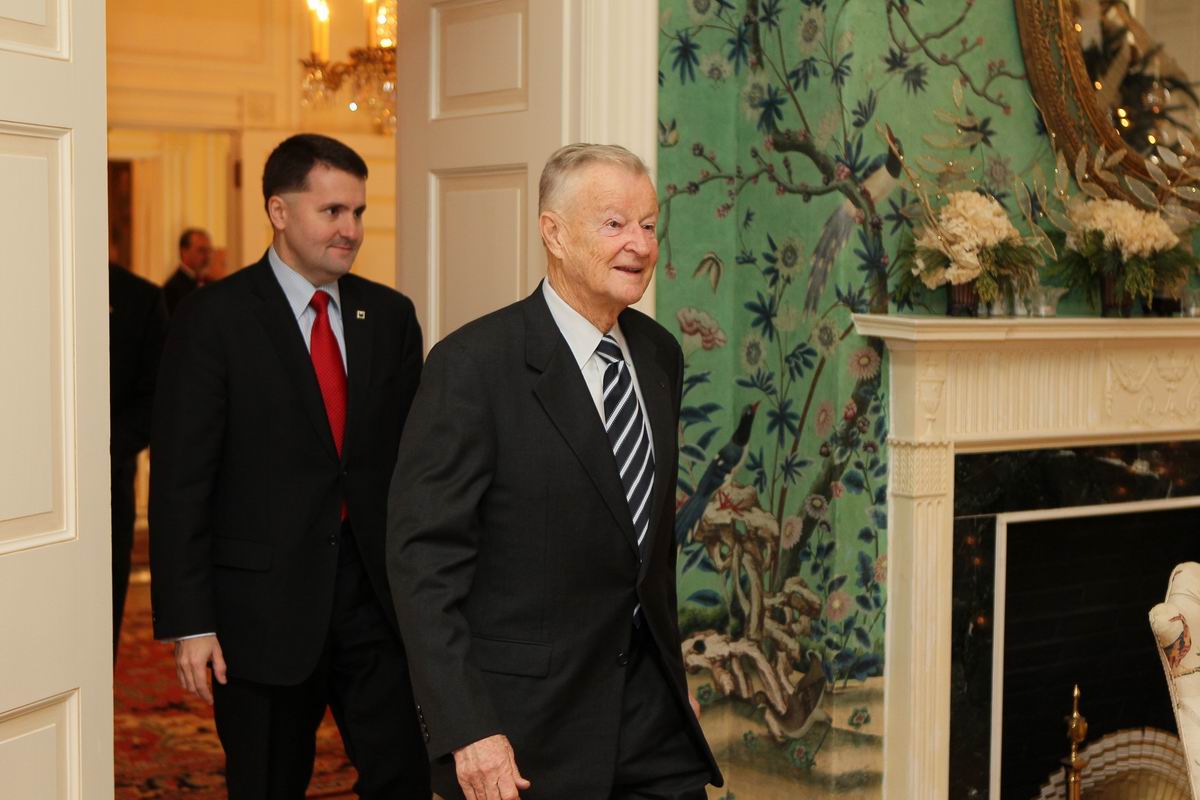
What he meant by that was the opportunity of getting Soviet soldiers killed, maimed, and injured for no good reason, just as the Pentagon and the CIA did to tens of thousands of U.S. soldiers in Vietnam. Additionally, the Soviet Union would have to waste large sums of taxpayer money, just as the U.S. government also did in Vietnam.
To goad the Soviets into invading Afghanistan, U.S. officials began supporting the anti-Soviet resistance that was committed to removing a pro-Soviet regime from power. U.S. officials figured that faced with the possibility that Afghanistan might end up with a pro-U.S. regime, the Soviets would have no choice but to invade.
The scheme worked brilliantly. The Soviets invaded on December 24, 1979, and for the next decade were bogged down in a guerrilla war, much like the United States was when it invaded Vietnam and, for that matter, when it invaded Afghanistan in 2001. In the process, many Soviet soldiers were killed, maimed, and injured, just as U.S. officials hoped they would be. Moreover, the war helped to bankrupt the Soviet Union, which ultimately led to its dismantling.
Needless to say, U.S. national-security state officials were ecstatic over what they had accomplished. As Brzezinski gloated, “We didn’t push the Russians to intervene, but we knowingly increased the probability that they would.”
Of course, the U.S. government played the innocent and portrayed the Soviet Union as a horrible aggressor. The following year, the U.S. government boycotted the Summer Olympics in Russia to protest Soviet aggression in Afghanistan.
When asked in an interview with Le Nouvel Observateur in 1998 whether he regretted any of this, Brzezinski was shocked that anyone would even ask such a question. He responded, “Regret what? That secret operation was an excellent idea. It had the effect of drawing the Russians into the Afghan trap and you want me to regret it? The day that the Soviets officially crossed the border, I wrote to President Carter, essentially: ‘We now have the opportunity of giving to the USSR its Vietnam war.’ Indeed, for almost 10 years, Moscow had to carry on a war that was unsustainable for the regime, a conflict that bought about the demoralization and finally the breakup of the Soviet empire.”
The interviewer then asked, “And neither do you regret having supported Islamic fundamentalism, which has given arms and advice to future terrorists?” Brezinski responded, “What is more important in world history? The Taliban or the collapse of the Soviet empire? Some agitated Moslems or the liberation of Central Europe and the end of the cold war?”
Of course, that interview was conducted prior to the blowback of the 9/11 attacks in 2001. I can’t help but wonder whether Brzezinski would have considered his scheme to be worth it in light of what those attacks did to America.
The irony is that the break-up of the Soviet Union in 1989 also brought a sudden and surprising end to the U.S. national-security state’s Cold War racket, which was guaranteeing them a perpetual flow of ever-increasing amounts of U.S. taxpayer money into the coffers of the Pentagon, the military-industrial complex, the CIA, and the NSA.
That was when U.S. officials went into the Middle East and began poking hornets’ nests, which succeeded in producing terrorist blowback. That’s when we got the “war on terrorism,” which replaced the “war on communism.” That guaranteed the continuous flow of ever-increasing amounts of U.S. taxpayer money into the pockets of the Pentagon, the CIA, the NSA, and the entire “defense” industry.
But U.S. officials weren’t about to let go of the Russians so easily. Rather than dismantle NATO, which was nothing more than a Cold War dinosaur, they used the organization to gobble up former members of the Warsaw Pact, with the aim of stationing U.S. troops, missiles, and tanks closer and closer to Russia’s borders. The scheme ultimately called for NATO to absorb Ukraine, which would mean that the Pentagon and the CIA would be able to install their missiles, tanks, and troops on Russia’s border.
Thus, their latest scheme has placed Russia in the position of choosing between invading Ukraine, which would thereby prevent the Pentagon and the CIA from installing their troops, missiles, and tanks on Russia’s border versus letting NATO absorb Ukraine, which would enable the Pentagon and the CIA to install their troops, missiles, and tanks on Russia’s border.
If Russia invades, there is no doubt that the U.S. national-security establishment will, once again, play the innocent and cry out against those aggressive Russians. And make no mistake about it: Despite crocodile tears that U.S. officials will openly shed for the people of Ukraine, the truth is that U.S. officials couldn’t care one whit how many of them are killed, injured, or maimed in such an invasion, any more than they were concerned about the people of Afghanistan who were killed, injured, and maimed after U.S. officials succeeded in goading the Soviets to invade Afghanistan or, for that matter, after the Pentagon and the CIA invaded and occupied the country in 2001. The people of Ukraine are as much pawns in the evil machinations of the U.S. national-security establishment as the people of Afghanistan.
Be seeing you
Posted in Uncategorized | Tagged: Blowback, national-security establishment, Soviet Union, Soviet Union into invading Afghanistan, Ukraine, Zbigniew Brzezinski | Leave a Comment »
How A Russian’s Grocery Store Trip In 1989 Exposed The Lie Of Socialism
Posted by M. C. on November 20, 2021
Yeltsin was a member of the Politburo and Russia’s upper political crust, yet he’d never seen anything like the offerings of this little American grocery store. “Even the Politburo doesn’t have this choice. Not even Mr. Gorbachev,” Yeltsin said.
The fall of the Soviet Union is sometimes remembered as Nov. 9, 1989, the day the Berlin Wall symbolically collapsed. While the physical barrier endured for some two more years, on that day, East German Communist Party officials announced they would no longer stop citizens of the German Democratic Republic from crossing the border.
The fall of the barrier that scarred Germany was indeed a watershed in the collapse of the Soviet Empire, yet one could argue the true death knell came two months before at a small grocery store in Clear Lake, Texas.
An Unexpected Trip
On Sept. 16, 1989, Boris Yeltsin was a newly elected member of the Soviet Parliament visiting the United States. Following a scheduled visit to Johnson Space Center, Yeltsin and a small entourage made an unscheduled stop at a Randalls grocery store in Clear Lake, a suburb of Houston. He was amazed by the aisles of food and stocked shelves, a sharp contrast to the breadlines and empty columns he was accustomed to in Russia.
Yeltsin, who had a reputation as a reformer and populist, “roamed the aisles of Randall’s nodding his head in amazement,” wrote Stefanie Asin, a Houston Chronicle reporter. He marveled at free cheese samples, fresh fish and produce, and freezers packed full of pudding pops. Along the way, Yeltsin chatted up customers and store workers: “How much does this cost? Do you need special education to manage a supermarket? Are all American stores like this?”
Yeltsin was a member of the Politburo and Russia’s upper political crust, yet he’d never seen anything like the offerings of this little American grocery store. “Even the Politburo doesn’t have this choice. Not even Mr. Gorbachev,” Yeltsin said.
A Sickening Revelation
It’s difficult for Americans to grasp Yeltsin’s astonishment. Our market economy has evolved from grocery stores to companies such as Walmart and Amazon that compete to deliver food right to our homes.
Yeltsin’s reaction can be understood, however, by looking back on the conditions in the Soviet Union’s economy. Russia grocery stores at the time looked like this and this:
Now compare that footage to the images of Yeltsin shopping at a U.S. supermarket. The contrast is undeniable. Yeltsin’s experience that day ran contrary to everything he knew. A longtime member of the Communist Party who had lived his entire life in a one-party system that punished dissent harshly, Yeltsin had been taught over and over that socialism wasn’t just more equitable, but more efficient.
His eyes were opened that day, and the revelation left the future Russian president feeling sick.
“When I saw those shelves crammed with hundreds, thousands of cans, cartons and goods of every possible sort, for the first time I felt quite frankly sick with despair for the Soviet people,” Yeltsin later wrote in his autobiography, “Against the Grain.” “That such a potentially super-rich country as ours has been brought to a state of such poverty! It is terrible to think of it.”
Yeltsin was not the only person fooled, of course. There is copious documentation of Western intellectuals beguiled by the Soviet system. These individuals, who unlike Yeltsin did not live in a state-controlled media environment, saw the Soviet system as both economically and morally superior to American capitalism despite the brutal methods employed in the workers’ paradise.
“I have seen the future, and it works,” the Progressive Era journalist Lincoln Steffens famously said.
Paul Samuelson, the first American to win the Nobel Prize in economics and one of the most influential economists of the 20th century, was a longtime enthusiast of Soviet central planning and predicted it would lead to a higher standard of living. “Who could know that [the data] was all fake?” Samuelson is said to have asked a fellow economist following the empire’s collapse.
The Truth About Socialism Revealed
Despite decades of propaganda and obfuscation, the great fiction of socialism was eventually fully exposed with the fall of the Soviet Union and the publication of its archives in the 1990s. No longer could academics deny the truth that the people of the Soviet Union endured a painfully low standard of living despite the vast wealth of its empire.
“Their standard of living was low, not only by comparison with that in the United States, but also compared to the standard of living in countries with far fewer natural resources, such as Japan and Switzerland,” the economist Thomas Sowell observed in “Basic Economics.”
Yeltsin deserves credit for laying bare the lie of socialism that so many others had refused to see. “[T]here would be a revolution,” Yeltsin told his entourage that fateful September day in 1989, if the people in the Soviet Union ever saw the prosperity in American grocery stores. Yeltsin was more right than he knew. Jon Miltimore is the Managing Editor of FEE.org. Follow him on Facebook and Twitter. Jon’s reporting has been cited in TIME magazine, The Wall Street Journal, and CNN. He has bylines in The Washington Times, The Washington Examiner, and the Daily Caller. He previously served in editorial roles at The History Channel magazine, Intellectual Takeout, and Scout. He is a former reporter for the Panama City News Herald, and served as an intern in the speechwriting department of George W. Bush.
Be seeing you
Posted in Uncategorized | Tagged: Boris Yeltsin, Randalls grocery, Soviet Union | Leave a Comment »
If America Splits Up, What Happens to the Nukes? | Mises Wire
Posted by M. C. on February 19, 2021
The Israeli state is an important and illustrative case. This is a country with a GDP smaller than Colorado’s and a population smaller than that of the US state of Georgia, yet Israel is thought to maintain a nuclear triad of sea, air, and land-based warheads. In other words, this is a small state which has taken full advantage of the relatively economical nature of a small nuclear arsenal (estimated to include approximately eighty assembled warheads).
https://mises.org/wire/if-america-splits-what-happens-nukes
Opposition to American secession movements often hinges on the idea that foreign policy concerns trump any notions that the United States ought to be broken up into smaller pieces.
It almost goes without saying that those who subscribe to neoconservative ideology or other highly interventionist foreign policy views treat the idea of political division with alarm or contempt. Or both.
They have a point. It’s likely that were the US to be broken up into smaller pieces, it would be weakened in its ability to act as a global hegemon, invading foreign nations at will, imposing “regime change,” and threatening war with any regime that opposes the whims of the American regime.
For some of us, however, this would be a feature of secession rather than a bug.
Moreover, the ability of the American regime to carry out offensive military operations such as regime change is separate and distinct from the regime’s ability to maintain an effective and credible defensive military force.
Last month, we looked at how even a dismembered United States would be more than capable of fielding a large and effective defensive military force. A politically divided America nonetheless remains a very wealthy America, and wealth remains a key component in effective military defense. In other words, bigness is not as important as the extent to which a regime can call upon high levels of wealth and capital accumulation.
[Read More: “When It Comes to National Defense, Bigger Isn’t Always Better” by Ryan McMaken]
That analysis, however, concentrated on conventional forces, and this leaves us with the question of how the successor states to a postsecession United States would fare in terms of nuclear deterrence.
In this case, there is even less need for bigness than in the case of conventional military forces. As the state of Israel has demonstrated, a small state can obtain the benefits of nuclear deterrence without a large population or a large economy.
In other words, an effective military defense through nuclear deterrence is even more economical than conventional military forces.
After Secession, Who Gets the Nukes?
But how would secession actually play out when nuclear weapons are involved?
One example we might consider is Ukraine’s secession from the Soviet Union the early 1990s.
In 1991, as the Soviet Union was collapsing, Ukrainians voted overwhelmingly to secede and set up an independent republic. At the time, the new state of Ukraine contained around one-third of the Soviet nuclear arsenal. This means there were literally thousands of nuclear warheads within Ukraine’s borders, making Ukraine’s arsenal the third largest in the world. In 1994, Ukraine began a program of denuclearization and today is no longer a nuclear power.
The relations between Ukraine and the new Russian Federation were acrimonious in the early nineties—as now—so this means that the lessons of the Ukraine situation are limited if applied to American secessionist movements. American pundits may like to play up the red-blue division in America as an intractable conflict of civilizations, but these differences are small potatoes compared to the sort of ethnic and nationalist conflicts that have long existed in Eurasia.
Nevertheless, we can glean some insights from that separation.
For example, the Ukrainian secession demonstrates that it is possible for nuclear weapons to pass into the control of a seceding state without a general conflict breaking out. Indeed, Ukraine was not alone in this. Kazakhstan and Belarus “inherited” nuclear arms from the Soviet Union as well. If Russia, Ukraine, Kazakhstan, and Belarus can all peacefully negotiate a resolution on how to deal with a suddenly decentralized nuclear arsenal, the Americans can pull it off, too.
Nonetheless, the Ukraine situation highlights some of the technical and logistical problems involved in working out who exactly controls nuclear weapons in a postsecession situation.
For example, it was never a simple matter for the Ukrainian regime to assert technical control over land-based nuclear missiles. It is unlikely that Ukraine ever obtained all the tools necessary to actually launch the nuclear missiles within its territory.1
It is likely, however, that Ukraine could have eventually gained this power, as it was already developing its own control system for the arsenal in 1993. Not surprisingly, the Soviet Russian regime was unenthusiastic about helping the Ukrainians in this respect.
When it came to using nuclear-capable bombers, on the other hand, it appears Ukraine’s regime had total control.2
It is likely the successor states of the US would face similar issues. The use of land-based missiles would be heavily reliant on authorization from whichever faction most recently controlled access and launching authority, even if those missiles are physically located within the borders of a separatist state. It must be noted, however, that the state within which land-based nuclear missiles exist has the ability to prevent usage in most cases. This is because even if the missiles themselves cannot be directly controlled, the personnel that maintains and controls the sites can far more easily be traded out for personnel loyal to the new regime.3
When it comes to submarines and bombers, a secessionist US region might find itself better able to assert control in the short term. Where those bombers and subs end up would have a lot to do with the likely chaotic situation in the wake of the independence movement and shifting borders.
Separatist Regions May Be Unwilling to Give Up Nukes
Ukraine had denuclearized in part due to bribes and pressure from both the United States and Russia. Russia wanted Ukraine’s arsenal for obvious reasons. The United States was obsessed with deproliferation, although it naturally insisted on keeping its own massive stockpile.
Neither the US nor Russia had the ability to force Ukraine to denuclearize—short of a full-scale invasion of Ukraine, of course. However, Ukraine capitulated to pressure when the Russian Federation, the US, and the UK (and to a lesser extent China and France) pledged in the Budapest Memorandum to protect Ukraine’s territorial integrity.
In 2014, many interpreted this move as a grand folly when Russia annexed the Crimea from Ukraine and none of the other parties to the memorandum intervened. Ukraine had given up its best guarantee against Russian intervention—its nuclear arsenal—in exchange for weak “assurances” from foreign states.
Some foreign policy scholars—most notably John Mearsheimer—had predicted this and advised against denuclearization in Ukraine. Indeed, in 1993, Mearsheimer doubted that Ukraine would cave to denuclearization pressure precisely because reliable assurances from outsiders were unlikely. Even after the Budapest Memorandum became a reality a year later, it was nonetheless a rather weak reed on which to hang denuclearization. As Mearsheimer pointed out, should the Americans fail to provide an effective defense for Ukraine—as ended up being the case with the Crimea crisis—the Americans “would not have to live with the consequences of a Russian attack.”4 Nonetheless, some Ukrainians insist the Crimea crisis is not evidence of a need for a nuclear deterrent.
Many, Americans, however, may be much less sanguine—even to the point of unwarranted paranoia—about the prospects of foreign intervention on American soil. This is why it is best to proceed assuming that at least some successor states to the current US would insist on retaining a nuclear arsenal. After all, while the Ukraine might have been betting on the US as the enforcer of the international order, such guarantees would be even more unlikely in the wake of an American secession crisis. Postsecession American states, in other words, would need to rely on a self-help system of deterrence.
On the other hand, we should not assume that all successor states to the United States would seek permanent nuclear arsenals. Some would likely give up nuclear programs, just as Sweden and South Africa have abandoned nuclear programs that were well advanced toward assembling arms (Sweden) or had already completed the construction of functioning warheads (South Africa). While the Ukrainian example of voluntary denuclearization may appear to be a blunder to many now, the situation in North America is different. North America is not eastern Europe with its long history of interstate conflict. In North America, Canada and the United States have been at peace for more than two centuries, and Canada has never made much effort to move toward assembling a nuclear arsenal. Rather, Canada’s proximity to the United States shields it from nuclear threats from outside North America. Any conventional or nuclear arrack on Canada from, say, China or Russia is likely to be interpreted as an attack on the United States, with disastrous consequences for the initial aggressor.
In other words, Canada benefits from what Baldur Thorhallsson calls “shelter” in the international arena. Canada requires no nuclear arsenal of its own, because it can use its close alliance with the United States as a substitute.
So long as some successor states of the United States maintain a functioning arsenal, other nonnuclear states in North America will be able to function similarly. It stands to reason that just as the United States in its current form has been at peace with all other former British colonies, it is likely that new North American republics will share a similar fate.
Big States Are Not Necessary: A Deterrent Nuclear Force Is Entirely Feasible for Small States
A new American republic need not be especially large to maintain a working arsenal.
While a sizable economy and population are extremely helpful in terms of building a large conventional military, these factors are not nearly as important when it comes to a nuclear force capable of deterring foreign powers.
As Kenneth Waltz has explained, “Nuclear parity is reached when countries have second-strike forces. It does not require quantitative or qualitative equality of forces.”5 That is, if a regime can plausibly hide or move around enough nuclear warheads to so as to survive a nuclear first strike, it is able to deter nuclear aggression from other states altogether. Moreover, the number of warheads necessary to achieve this number “not in the hundreds, but in the tens.”6
This is why Waltz has concluded that “deterrence is easier to contrive than most strategists have believed”7 and that “some countries may find nuclear weapons a cheaper and safer alternative to running economically ruinous and militarily dangerous conventional arms races. Nuclear weapons may promise increased security and independence at an affordable price.”8 In other words, deterrence “can be implemented cheaply.”9
[Read More: “Why No State Needs Thousands of Nuclear Warheads” by Ryan McMaken]
The Israeli state is an important and illustrative case. This is a country with a GDP smaller than Colorado’s and a population smaller than that of the US state of Georgia, yet Israel is thought to maintain a nuclear triad of sea, air, and land-based warheads. In other words, this is a small state which has taken full advantage of the relatively economical nature of a small nuclear arsenal (estimated to include approximately eighty assembled warheads).
Clearly, claims that even medium-sized American states—such as Ohio with 11 million people and a GDP nearly as large as that of Switzerland—are too small to possibly contemplate functioning as independent states are quite detached from reality. Moreover, there is no reason to assume any postsecession American state would seek to act alone in the realm of international relations. Kirkpatrick Sale has pointed out what should be regarded as obvious: “Historically, the response of small states to the threat of … aggression has been temporary confederation and mutual defense, and indeed the simple threat of such unity, in the form of defense treaties and leagues and alliances, has sometimes been a sufficient deterrent” (emphasis added).10
On the other hand, a continuation of the current trend toward political centralization in Washington—and the growing political domination of every corner of the nation by central authorities—is likely to only harm future prospects for amicable separation and peaceful cooperation on the international stage.
- 1. John J. Mearsheimer, “The Case for a Ukrainian Nuclear Deterrent,” Foreign Affairs 72, no. 3 (Summer 1993): 50–66, esp. 52.
- 2. Ibid., p. 52.
- 3. Graham Allison notes the importance of personnel in the post-Soviet Ukraine situation in the National Interest: “Officially, the chain-of-command continued to run from the new President of Russia through communications and control systems to missile officers in Ukraine. Physically, however, the missiles, warheads, officers, and mechanisms for launching weapons resided on the territory of Ukraine. Moreover, the individuals who operated these systems now lived in houses owned by the government of Ukraine, received paychecks from the Ministry of Defense of Ukraine, and were subject to promotion or firing not by Moscow, but by Kiev.” See “Good News From Ukraine: It Doesn’t Have Nukes,” National Interest, Mar. 21, 2014.
- 4. Mearsheimer, “The Case for a Ukrainian Nuclear Deterrent,” p. 58.
- 5. Kenneth Waltz, “Structural Realism after the Cold War.” International Security 25, no. 1 (Summer 2000): 5–41, esp. 32n75.
- 6. Kenneth Waltz, “Nuclear Myths and Political Realities,” American Political Science Review 84, no. 3 (September 1990): 731–45.
- 7. Ibid.
- 8. Kenneth Waltz, “The Spread of Nuclear Weapons: More May Be Better,” Adelphi Papers 21, no. 171 (1981).
- 9. Waltz, “Nuclear Myths and Political Realities.”
- 10. Kirkpatrick Sale, Human Scale Revisited (White River Junction, VT: Chelsea Green, 2017), p. 312.
Author:
Ryan McMaken (@ryanmcmaken) is a senior editor at the Mises Institute. Send him your article submissions for the Mises Wire and The Austrian, but read article guidelines first. Ryan has degrees in economics and political science from the University of Colorado and was a housing economist for the State of Colorado. He is the author of Commie Cowboys: The Bourgeoisie and the Nation-State in the Western Genre.
Be seeing you
Posted in Uncategorized | Tagged: military force, nuclear parity, nuclear weapons, secession, Separatist, Soviet Union, Ukrainian | Leave a Comment »
The Ron Paul Institute for Peace and Prosperity : Pompeo Lays Out New US Cold War Against China
Posted by M. C. on July 26, 2020
The US government changing a superpower’s behavior. What could possibly go wrong?
Written by
Following near daily screeds against China, Secretary of State Mike Pompeo is now laying out US hostility, and the goal of “changing” China as part of what is effectively a new Cold War, likening it to Cold War with the Soviet Union.
Saying that the US had changed Soviet behavior, Pompeo expressed confidence that they could change China as well, saying that the nations of the world have a duty to help the US “defend freedom.” He also warned that “our children’s children may be at the mercy of the Communist party.”
This seems to be harkening back to the language of the historic red scares, and the idea that China is a real threat to dominate the future is likely intended to scare Americans into supporting more hostility, as opposed to a serious policy reality.
Either way, it seems like the era of diplomacy with China, at least so far as the administration is concerned, is over, with Pompeo saying that the US can “never go back to engagement,” declaring China “a Marxist-Leninist regime” and following a “bankrupt totalitarian ideology.”
Be seeing you
Posted in Uncategorized | Tagged: cold war, Mike Pompeo, Soviet Union | Leave a Comment »
How Secession from the Soviet Union Created Booming Economies and Innovative Government | The Daily Bell
Posted by M. C. on January 1, 2019
Just a recent historical example to consider, as the political divide seems to grow in the United States.
Ironically, the classic Cold War villain, the USSR, gives one of the best contemporary examples of peaceful secession.
By Joe Jarvis
On August 23, 1989, two million Estonians, Latvians, and Lithuanians joined hands to form a human chain almost 400 miles long.
The chain stretched from the Estonian capital of Tallinn, through Latvia, and to the Lithuanian capital of Vilnius.
This show of both unity among the Baltic states and resistance to the Soviet Empire cemented their fate.
Gorbachev’s government privately concluded that the Baltics’ secession from the USSR was inevitable.
In 1990, the Baltics each officially declared their independence.
One year later, the Soviet Union officially recognized their independence and the last Russian troops withdrew in 1994. Read the rest of this entry »
Posted in Uncategorized | Tagged: Estonians, Latvians, Lithuanians, secession, Soviet Union | Leave a Comment »
How Bill Clinton Accidentally Started Another Cold War | The American Conservative
Posted by M. C. on October 29, 2017
I tend to believe the promise was never meant to be kept. We are talking about a promise from CIA man George H.W. Bush. I also believe the Trump/CIA deal was made in part because G. H.W. B. is still alive.
Who bears responsibility for the current tensions between America and Russia? There are many answers to that question but blame is overdue to President Bill Clinton who in 1994 sealed the fate of any potential U.S.-Russia partnership when he made the decision to expand the NATO alliance into Moscow’s former sphere of influence. That set the stage for a renewed great power struggle in Europe against a revanchist Russia, just as legendary diplomat George F. Kennan repeatedly warnedthe Clinton administration that it would.
“Expanding NATO would be the most fateful error of American policy in the entire post-cold-war era,” Kennan wrote on February 5, 1997 in a New York Times op-ed.“Such a decision may be expected to inflame the nationalistic, anti-Western and militaristic tendencies in Russian opinion; to have an adverse effect on the development of Russian democracy; to restore the atmosphere of the cold war to East-West relations, and to impel Russian foreign policy in directions decidedly not to our liking.” Read the rest of this entry »
Posted in Uncategorized | Tagged: Bill Clinton, George F. Kennan, NATO, old War, Soviet Union | Leave a Comment »
 MCViewPoint