
MCViewPoint

Opinion from a Libertarian ViewPoint

Posts Tagged ‘subsidies’

Hands Off My Income | The Libertarian Institute

Posted by M. C. on January 19, 2023

Instead, most of Americans’ tax money is spent on welfare, grants, subsidies, vouchers, transfer payments, unconstitutional agencies and programs, foreign aid, hundreds of foreign military bases and tens of thousands of U.S. troops all over the globe, and offensive military intervention.

Taxes are not the price we pay for a civilized society, as is engraved on the exterior of the Internal Revenue Service building in Washington, D.C. Rather, taxes are the price we pay for the welfare/warfare state.

https://libertarianinstitute.org/articles/hands-off-my-income/
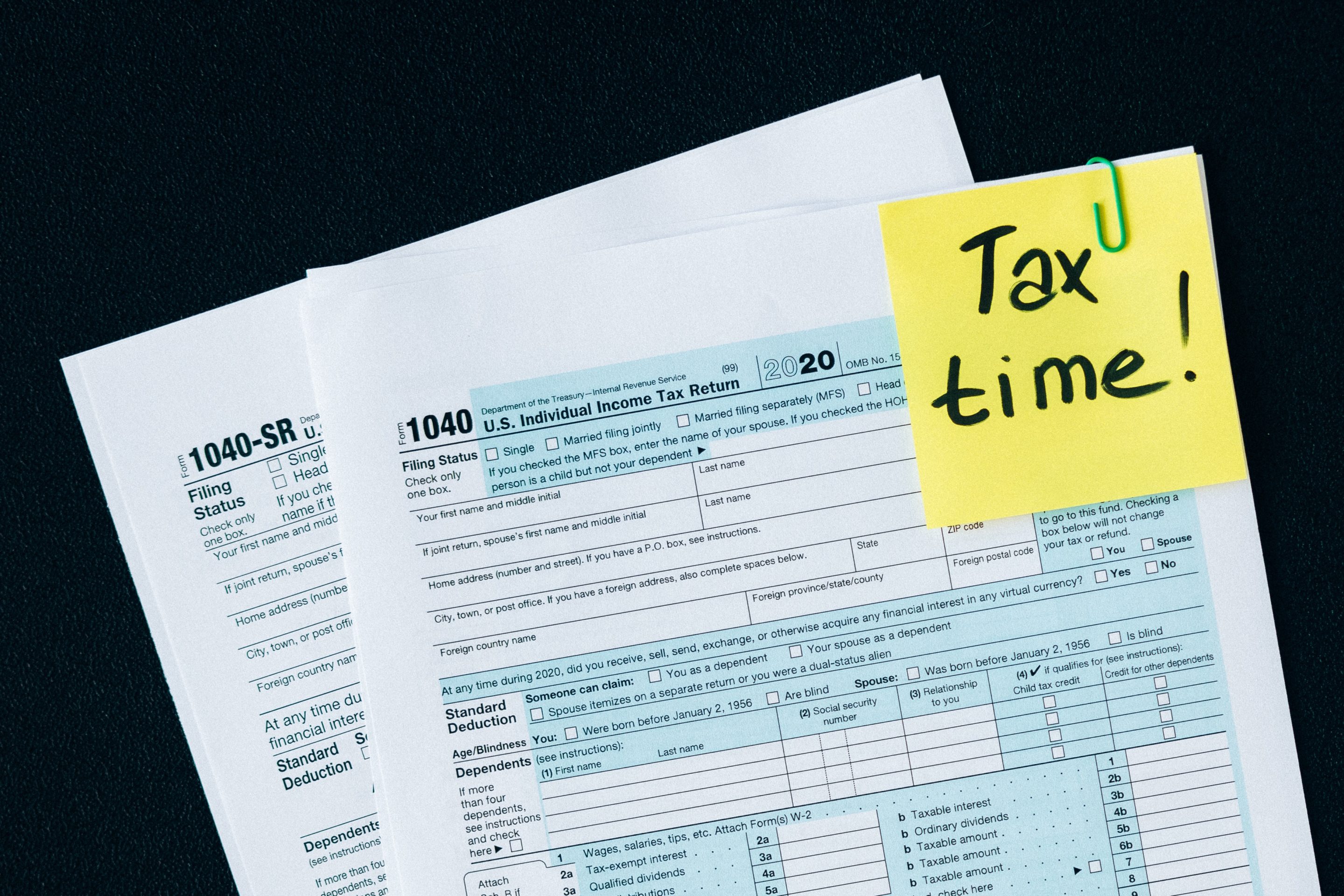
hands-off-my-income/

by Laurence Vance

pexels nataliya vaitkevich 6863244

House Democrats finally obtained former president Donald Trump’s tax returns and promptly released them to the public. No one should have his tax returns released: not presidents, not politicians, not celebrities, not sports figures, not cab drivers.

Released was nearly 6,000 pages of six years of individual and business income tax returns for the years 2015 through 2020. The returns show that Trump paid $750 in federal taxes in 2017, $0 in 2020, and had negative adjusted gross income in four of the six years. His highest year for charitable giving was 2017, when he donated $1.8 million.

But regardless of how “little” Trump may have paid in federal income tax, he neither wrote the tax code nor prepared his tax returns. His accountants merely did for him what they did for other rich businessmen. If there are loopholes, deductions, and credits that Trump’s accountants took advantage of, then good for them. As Supreme Court Justice Learned Hand wrote in the Helvering v. Gregory (1935) case: “Anyone may so arrange his affairs that his taxes shall be as low as possible; he is not bound to choose that pattern which will best pay the Treasury; there is not even a patriotic duty to increase one’s taxes.”

Democrats took the opportunity to blast “the rich” for using the tax code to their advantage: “Trump’s returns likely look similar to those of many other wealthy tax cheats—hundreds of partnership interests, highly-questionable deductions, and debts that can be shifted around to wipe out tax liabilities,” said Senate Finance Chair Ron Wyden.

But who actually pays the majority of income taxes in this country?

According to the latest figures released by the Internal Revenue Service (IRS), as reported by the Tax Foundation:

The bottom 50 percent of taxpayers (taxpayers with AGI below $44,269) faced an average income tax rate of 3.5 percent.

The top 1 percent of taxpayers (AGI of $546,434 and above) paid the highest effective income tax rate of 25.6 percent — more than seven times the rate faced by the bottom 50 percent of taxpayers.

In 2019, the bottom 50 percent of taxpayers (taxpayers with AGI below $44,269) earned 11.5 percent of total AGI and paid 3.1 percent ($48.4 billion) of all federal individual income taxes.

The top 1 percent (taxpayers with AGI of $546,434 and above) earned 20.1 percent of total AGI in 2019 and paid 38.8 percent of all federal income taxes.

In 2019, the top 1 percent of taxpayers accounted for more income taxes paid than the bottom 90 percent combined. The top 1 percent of taxpayers paid $612 billion in income taxes while the bottom 90 percent paid $461 billion in income taxes.

But this is not the whole picture. The IRS dataset excludes the refundable portion of tax credits. Not only do “the poor” pay little or no federal income taxes, they receive “refunds” of tax money that they never paid in via refundable tax credits like the Earned Income Tax Credit that can give them over $6,000 each year.

See the rest here

Be seeing you

Posted in Uncategorized | Tagged: , , , , , , | Leave a Comment »

Trade war averted? Macron gets Biden to ‘tweak’ his industrial subsidies – POLITICO

Posted by M. C. on December 2, 2022

Foreign countries complain they don’t get enough US taxpayer money. Washington fixes that.

https://www.politico.eu/article/emmanuel-macron-joe-biden-us-france-lands-unexpected-concession-on-inflation-reduction-act/

BY CLEA CAULCUTT

French President Emmanuel Macron snatched an unexpected win from his U.S counterpart during a visit to Washington on Thursday, getting Joe Biden to suggest that European companies could benefit from a controversial American subsidies package.

Fury has been boiling over in Europe after it became clear that Biden’s Inflation Reduction Act — a $369 billion package for green industry — could drain investment out of the EU and into the U.S. Big car-making nations like France and Germany had complained that the U.S. law was potentially illegal for discriminating against foreign companies in the electric vehicle sector and encouraging consumers to “Buy American.”

Macron’s visit to the U.S. had been trailed as a doomed last-ditch effort to secure a truce over Washington’s largesse before the EU and U.S. would lurch into a subsidy race or full-blown trade war with countervailing tariffs.

Europeans have been pressing to receive the same rights as Mexicans and Canadians to benefit from the green cash bonanza, but with little prospect of success. For weeks, the French have been campaigning for European partners to agree to their own rival subsidy package, including a “Buy European” component.

See the rest here

Be seeing you

Posted in Uncategorized | Tagged: , , , | Leave a Comment »

Erie Times E-Edition Article-Fossil fuel subsidies don’t pay off for Pennsylvanians

Posted by M. C. on February 26, 2021

Government shouldn’t subsidize anyone. Government messes up most everything it touches.

If consumers aren’t happy with price, product or delivery of anything the consumer should be free to go somewhere else, stimulating providers to either develop something new and better or fix what they have.

That is called free market.

Did I mention government shouldn’t subsidize anyone. Government messes up most everything it touches?

https://erietimes-pa-app.newsmemory.com/?publink=158714e9e

Budget hearings began this week in Harrisburg, a long process that will culminate with the passage of a new spending plan by the end of June.

The next several months will be filled with contentious hearings and verbal sparring as lawmakers grapple with a $3 billion budget deficit. While legislators will argue about individual line items, a much larger issue will be largely ignored — the massive amount of money being wasted on fossil fuel subsidies.

According to research conducted by PennFuture, the fossil fuel industry received $3.8 billion in subsidies for fiscal year 2019 alone, or about $296 per Pennsylvania resident. This makes Pennsylvania one of the largest corporate subsidizers in a country that is the second largest fossil fuel subsidizer in the world.

This industry harms public health, degrades the environment and destabilizes our climate as the people of Pennsylvania suffer very real costs. Instead of ensuring the fossil fuel industry pays for the damage it causes, the commonwealth has been more interested in helping corporate polluters generate as much profit as possible.

These subsidies distort our markets and make it harder for better, cleaner technologies to compete. At a time when we need to be transitioning to a clean energy economy to fight the climate crisis, these subsidies do the exact opposite by prolonging our dependence on polluting industries.

Of the $3.8 billion in fossil fuel subsidies, the fracked gas and petrochemical industry captured at least $2 billion, or 52%. Despite the continued pleas of those living nearest fracked gas and petrochemical development, more subsidies are added every year. Our subsidy problem is getting worse, not better.

The industry continues to claim that keeping the subsidies flowing will bring jobs and prosperity, but as a recent

report from the Ohio River Valley Institute shows, counties with significant oil and gas development are far below average in both job growth and personal income. Even the S&P 500 Energy Index has fallen more than 50% from its 2014 peak. This is the picture of an industry in decline.

As this decline continues, our families, schools and local governments wrestle with unprecedented challenges made worse by dirty industries that are given a free pass to drain our resources. Sustainable alternatives exist, but any attempt to invest in better choices is quickly attacked by the industry as the government ‘picking winners and losers.’

The damage doesn’t stop in the counties with fracked gas. Our report reveals an additional $11.1 billion in external costs, including drinking water contamination, infrastructure damage and health impacts like respiratory problems and cancers. That’s not to mention the greatest damages that come from methane pollution contributing to climate change.

Our legislators owe it to each and every Pennsylvanian to do better than this. PennFuture’s report details over 50 fossil fuel subsidies that have covertly wormed their way into Pennsylvania’s tax code and other rules and regulations.

After reviewing these harmful and unfair subsidies, we find our way forward with a package of key recommendations.

Perhaps most importantly: Pennsylvania’s fossil fuel subsidies are pernicious in part because they are buried out of sight and difficult to disentangle. To tackle this problem, we need to report and track these fossil fuel subsidies so that we can accurately understand the scope and nature of the problem at hand. While watchdog organizations like PennFuture are happy to bring sunlight to this problem, our state government should be providing this transparency. Even before achieving full transparency, however, there are a few things we can say for sure: Fossil fuel development and consumption is not sustaining our communities; it’s fueling their deterioration.

We ask that fossil fuel companies, for just once in their centuries-long existence, begin to pay the full price for consumption of limited natural resources, contribute their fair share to the state treasury, and prevent and mitigate their eroding impact on health and well-being, the environment and the climate.

These are commonsense solutions at a time we need them most. As budget season progresses, we will have our eyes on Harrisburg, hoping that our elected officials do the right thing.

Rob Altenburg is the director of the PennFuture Energy Center, and co-author of a new report that details fossil fuel subsidies in Pennsylvania.

Be seeing you

Posted in Uncategorized | Tagged: , , | Leave a Comment »

There’s Nothing Wrong with Buying Local — Except When Government Tells You To | Mises Wire

Posted by M. C. on April 18, 2019

Grants or government spending on marketing and advertising — in order to promote local businesses — tend to hinder market flexibility. Instead of allowing the market to adjust to an environment, there is a greater incentive to remain in an inefficient industry. Murray Rothbard in Power and Market also pointed out how this would encourage greater conflict among segments of society while hurting the wellbeing of society as a whole:

https://mises.org/wire/theres-nothing-wrong-buying-local-%E2%80%94-except-when-government-tells-you?utm_source=Mises+Institute+Subscriptions&utm_campaign=ebfc7d7f14-EMAIL_CAMPAIGN_9_21_2018_9_59_COPY_01&utm_medium=email&utm_term=0_8b52b2e1c0-ebfc7d7f14-228343965

There is something unique about walking into a mom and pop shop and being on a first name basis with the local business owner or feeling a sense of pride towards the rising entrepreneur from the same city or country setting their mark on the global market. The truth of the matter is, there is nothing wrong with purchasing local goods and services, even when it is more costly to do so. The value of a product is subjective to each individual and that sense of community or local pride make any additional monetary cost worth it. The problem of buying local only comes when the government adopts public policies designed to “encourage” consumption of these goods and services.

It is not new to hear a politician pushing support for national businesses, encouraging consumers to “buy local” while discouraging imports due to trade deficits or nationalism. Moreover, the push for policies to support local businesses completely ignores the long-term effects of such policies. These can take the form of trade barriers, of course, but they can also include subsidies of local businesses, or government policies of only “buying local” when it comes to government procurements.

In the case of subsidies and government procurement policies, there is a reallocation of money with the purpose of benefiting a small number of individuals within a certain industry at the taxpayers’ expense. Grants or government spending on marketing and advertising — in order to promote local businesses — tend to hinder market flexibility. Instead of allowing the market to adjust to an environment, there is a greater incentive to remain in an inefficient industry. Murray Rothbard in Power and Market also pointed out how this would encourage greater conflict among segments of society while hurting the wellbeing of society as a whole:

The greater the extent of government subsidy, the more the market is prevented from working, the more resources are frozen in inefficient ways, and the lower will be the standard of living of everyone. Further-more, the more government intervenes and subsidizes, the more caste conflict will be created in society, for individuals and groups will benefit only at one another’s expense.The more wide-spread the tax-and-subsidy process, the more people will be induced to abandon production and join the army of those who live coercively off production. Production and living standards will be progressively lowered as energy is diverted from production to politics and as government saddles a dwindling base of production with a growing and more top-heavy burden of the State-privileged.

Along with subsidies, governments can also grant local firms’ quasi-monopolies through the use of tariffs in order to compete with their foreign counterparts. Attempting to discourage imports, policymakers ignore that the costs of these taxes on international firms shift to the consumer. In other words, this tax imposed on international firms falls on the national consumers purchasing these products, paying more had the tariff not been in place. Furthermore, in cases where imports are no longer accessible due to an increase in price created by tariffs, the products available to consumers are of a lesser quality.

However, the overlying issue with these policies are the long-term effects. When the government plays a role in the consumption of domestic products, consumers suffer the most and at times so do the individuals within these protected industries. The lack of market flexibility incentivizes firms to rent-seek, instead of innovating and this lack of innovation does not allow for the improvement of societal living standards.

When governments decide to stop subsidizing these industries, they are unable to keep up or catch up with technological advances and the processes of recovery and adjustment are more difficult. The anti-capitalist mentality in many developing nations is partly due to how protected national industries were and after market liberalization, many of the individuals working within these industries could not recover.

Even with all of this, somehow policymakers have a tendency to ignore both history and economics and continue to promote protectionist policies, not taking into account the long-term effects and costs they might have. Consumers deserve to be able to hold international and national firms to the same standard. Having them compete for the consumption of their products, without the need of subsidies or tariffs. There is nothing wrong with purchasing local goods and services, but at the same time there is also nothing wrong with purchasing products from abroad. Individuals who find value in the sense of community mom and pop shops offer or pride in sporting a product made by a local entrepreneur, regardless of monetary cost, should continue to do so. Nonetheless, in the case where individuals decide not to, punishing them with higher prices or lower quality goods in the name of supporting local business, is both unnecessary and inefficient to the market and overall wellbeing of society.

Be seeing you

Posted in Uncategorized | Tagged: , , , | Leave a Comment »