MCViewPoint

Opinion from a Libertarian ViewPoint

Posts Tagged ‘Taiwan’

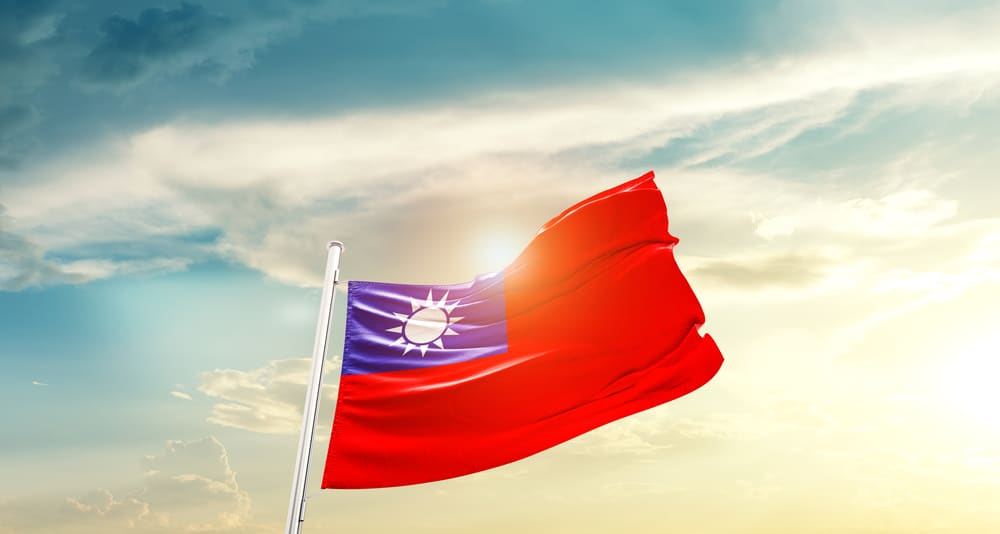
Case Study, Taiwan: A Nation is the Story We Tell Ourselves

Posted by M. C. on October 22, 2024

by Joseph Solis-Mullen

While all things being equal it is in Beijing’s interest to play the waiting game; Washington’s relative power in the region is in steady decline, and Taiwan’s real security rests on the possibility that Washington might intervene using both military and economic weapons. But things are not standing still, and Taiwan’s porcupine strategy, to eventually be too costly to conquer, might just provoke the kind of military solution it is purportedly meant to deter.

https://libertarianinstitute.org/articles/case-study-taiwan-a-nation-is-the-story-we-tell-ourselves/
depositphotos 643662328 s

In his famous 1882 lecture “What is a Nation?” the French historian and philosopher Ernest Renan emphasized the role of collective memory and even fictitious or selective historical narratives in the creation and maintenance of national identity, writing “Forgetting, I would even say historical error, is a crucial factor in the creation of a nation.”

What Renan was arguing is that nations are built not only on shared history but also on the myths and selective memories that bind people together. This selective forgetting often involves downplaying or erasing divisive events or highlighting certain aspects of a past to create a sense of unity and continuity. Even if that narrative isn’t entirely historically accurate, that isn’t the point. This selective memory allows a state or nation to foster a sense of unity and purpose among its citizens.

This past Thursday Taiwan’s President, Lai Ching-te, gave a highly anticipated speech on the occasion of Taiwan’s “National Day” celebrations—and Renan could hardly have been more impressed.

As one might expect of such a speech, Lai’s first on this occasion since taking office, it was full of paeans to the greatness of the state and its people, as well as the kind of dubious historical assertions, the nationalist myths, that everywhere buttress state power.

For example, Lai connected the current government on Taiwan to those presumably brave heroes who over a century ago “rose in revolt and overthrew the imperial regime,” with the intent to “establish a democratic republic of the people, to be governed by the people and for the people.” Naturally, Lai neglected to mention that the actors in question were a combination of ambivalent bureaucrats, ambitious warlords, opportunistic gangsters, and disaffected intellectuals who quickly fell to usurping and warring with one another.

Lai did not trouble himself with burdensome explanations of how after that glorious revolution the “dream of democracy was engulfed in the raging flames of war.” Rather, he skipped over how the eventual authoritarian government of the Kuomintang (KMT) was so corrupt, inefficient, and generally evil that the Chinese Communist Party (CCP) looked preferable by comparison. Instead, he jumped to solemn remembrances of the last battles as the KMT were driven off the mainland and to the island of Taiwan, and how “though we arrived on this land at different times and belonged to different communities, we defended Taiwan, Penghu, Kinmen, and Matsu. We defended the Republic of China.”

One notes here the subtle conflation between the regime’s flight for self-preservation and defense of those on the island who very definitely did not want them to come and bring war to their shores.

See the rest here

Be seeing you

Posted in Uncategorized | Tagged: , , , , | Leave a Comment »

The Taiwan Problem You (Probably) Don’t Know

Posted by M. C. on August 21, 2024

The foolish insistence of FDR that Taiwan be granted to Chiang’s crumbling ROC regime, then Harry Truman and Dwight Eisenhower’s determination to keep that regime in power, played an obviously critical role in creating the circumstances that prevail to the present day: a Chinese Civil War never concluded.

https://libertarianinstitute.org/articles/the-taiwan-problem-you-probably-dont-know/

by Joseph Solis-Mullen

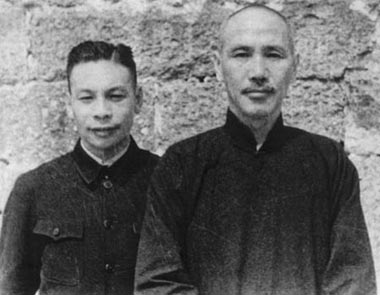
chiang ching kuo and chiang kai shek 83b330

Taiwan is today lauded for its vibrant democracy, open economy, and progressive society. However, behind this shining exterior is a dark and brutal history that is frequently overlooked; or in the case of Washington and its loyal corporate mouthpieces, purposefully ignored.

For before its democratization in the 1990s, Taiwan was a harsh authoritarian police state under the rule of Chiang Kai-shek and his son Chiang Ching-kuo. This period, marked by severe repression and systemic terror, is an essential chapter in Taiwan’s history that Americans should know, particularly given the enduring resentment Washington’s vital support for the regime engendered and the purported reasons for the necessity of the island’s defense.

The roots of Taiwan’s authoritarianism can be traced back to the retreat of Chiang Kai-shek’s Nationalist government (Kuomintang, or KMT) to Taiwan after losing the Chinese Civil War to the Communists in 1949. The local population had already received more than an inkling of what awaited, the KMT authorities having already in 1947 brutally suppressed a popular protest against KMT corruption, mistreatment, and misrule on the island. Facing a precarious situation and the ever-looming threat of a Communist invasion, once arrived on the island Chiang established a regime that relied heavily on surveillance, repression, and brutality to maintain control.

Central to this regime was the role of Chiang Ching-kuo, Chiang Kai-shek’s son, who was instrumental in the creation and operation of Taiwan’s police state. Having spent formative years in Stalin’s Moscow, Chiang Ching-kuo learned from the Soviet Union’s tactics of surveillance, infiltration, and terror. Upon his return, he applied these methods to serve his father’s regime, becoming a formidable spy chief whose skills ensured the perpetuation of KMT rule in Taiwan.

Chiang Ching-kuo’s police force penetrated almost every facet of life in Taiwan. Officially, their task was to arrest enemies of the state, countering Communist subversion; in practice, this mission translated into the suppression of virtually any source of potential dissent, contributing to what became known as the White Terror.

See the rest here

Be seeing you

Posted in Uncategorized | Tagged: , , , | Leave a Comment »

Money For Ukraine, Israel & Taiwan? .. Are American Taxpayers Made of Money?

Posted by M. C. on October 13, 2023

The Ron Paul Liberty Report

Posted in Uncategorized | Tagged: , , , | Leave a Comment »

Peace with China Is the Only Way to Protect Taiwan

Posted by M. C. on October 5, 2023

Our rulers, like they forgot how to negotiate and how to rule generally, also seem to have forgotten the “carrot” part of the trite but true “carrot and stick” metaphor for managing relationships with other countries. In the case of Taiwan, it simply isn’t possible to defend militarily from mainland China, nor is it possible to inflict economic pain on China without hurting ourselves as much or more than China.

https://libertarianinstitute.org/articles/peace-with-china-is-the-only-way-to-protect-taiwan/

by Brad Pearce

chinese vice premier arrives in washington for economic, trade consultations

–FILE–National flags of China and the United States are seen in Ji’nan city, east China’s Shandong province, 14 June 2018. Chinese Vice Premier Liu He arrived in Washington D.C. on Monday afternoon for the upcoming high-level economic and trade consultations with the U.S. Liu, also a member of the Political Bureau of the Communist Party of China Central Committee and chief of the Chinese side of the China-U.S. comprehensive economic dialogue, leads a delegation with members from the major economic sectors of the Chinese government.

It has been observed by many that the main foreign policy difference between the American political parties is a disagreement over which other super power to hate more. For the Democrats, it has been a deranged obsession with Russia for several years now. For the Republicans, of course, it is the Chinese whom we must hate and fear.

To the extent that some Republican candidates are better on Russia-Ukraine than the Biden Administration, it is almost entirely driven by their stated desire to instead use those military resources against China. I will concede that as long as one insists on viewing the world as a “global chessboard,” the obvious move is to draw closer to Russia as a hedge against a rising China, but that is both a reductionist view that downplays the real benefits of cooperation and, perhaps more importantly, that ship has long since sailed.

Overall, Republican politicians—and the American right generally—want us to fear China in every sphere where one could fear a country, from silly video sharing apps to drugs to world military domination. Most of all, we are told we must have an antagonistic policy towards China to protect the unrecognized state of Taiwan from Chinese aggression. However, a U.S. policy of antagonism towards Beijing only puts Taiwan at greater threat from the government of the People’s Republic of China. The truth is that it is not possible for the United States to militarily defend Taiwan against China. Taiwan can only be protected through maintaining good relations with China so that any benefits of China invading Taiwan are outweighed by the economic and diplomatic costs.

Since Richard Nixon adopted the “One China” policy 50 years ago, U.S.-China policy has been based on an inherent contradiction. The United States views the People’s Republic of China as the sole government of China, including Taiwan. However, it has given what amounts to a security guarantee to the so-called “Republic of China,” the government of Taiwan, which itself claims all of China. This system has held surprisingly well given the weight of its own ridiculousness, but in an era where American power is fading while China takes its place among the leaders of the world, it has become ever more fragile. All of this would be hard enough to manage under competent, steady leadership. Instead, the United States is ruled by irresponsible, foolish people who should not be trusted to be in charge of anything, least of all to guide a nuclear superpower through changing times.

See the rest here

Be seeing you

Posted in Uncategorized | Tagged: , , , | Leave a Comment »

Can Taiwan Prevent a US-China War over Taiwan?

Posted by M. C. on July 1, 2023

This would be a bitter pill for the US as well. In order to be logically consistent with this new philosophy, it would have to announce that if Texas or California, or Florida or New York, wished to secede from the US, it could do so without any physical opposition from Washington D.C. Let us say nothing about the war against secession of 1861.

The world’s eyes are now focused on Russia and Ukraine. And with good reason. These two nations are now involved in a hot war with each other, and there are fears that it might spread even further.

China makes no secret of its desired relationship with Taiwan.

Another possible war, that between the US and China over Taiwan, should also be kept on the forefront of consideration. If it occurs, it will involve the two most powerful nations on the third rock from the sun. China makes no secret of its desired relationship with Taiwan: the former considers the latter as its 16th province, even though it is presently separate from its mother country and has been since 1949.

The US is equally adamant that Taiwan is not a province of any other country, such as China. It opposes any unilateral change in its present status. In order to prevent any aggressive takeover of the former by the latter, American warships continually ply the waters of the South China Sea, which separates these two political entities.

How can a hot war over this issue be prevented? Is there any possible compromise that can preclude such an altercation, a potential danger to the entire human race?

There is.

One or more of these three political entities must officially sign on to the doctrine that all political associations must take place on a voluntary basis. No group of people should be compelled to associate, politically or in any other manner, with others against their will. Neither the US nor China is likely to be the first to take this plunge. This leaves the matter up to Taiwan. It, presumably, has the most to lose in any war to prevent a Chinese takeover, and, thus, the most incentive to do what it can to ward off such an eventuality.

What can Taiwan do?

Are there any folk now living in Taiwan who would wish to politically amalgamate with China? To become part of its 16th province? Fortunately for this compromise scheme, there are.

For example, Lin Te-wang, the leader of the Taiwan People’s Communist Party, admires Chinese President Xi Jinping, and maintains that his version of Chinese socialism would maximize economic development in Taiwan. How many Taiwanese support those or similar views? According to a survey recently held by the non-partisan Taiwanese Public Opinion Foundation, this figure is about 12%.

How, then, to proceed? The Taiwanese government should hold elections of a very different sort than the usual. It should seek a relatively small area, perhaps, even a single town or a village in which a majority of the voters are to be found representative of this 12%. Unless voters who favor joining China are randomly distributed, geographically, a most unlikely occurrence (people with similar views tend to coalesce), such a territory will be found. Then, the Taiwanese government should welcome China into this one small area, which should be declared the 16th province of that mother country (provided that a peace treaty, or some such guarantee against the coerced spread of this entity, could be arranged).

See the rest here

Be seeing you

Posted in Uncategorized | Tagged: , | Leave a Comment »

By Gambling on Deterrance, Washington Must Prepare for Failure in the Pacific

Posted by M. C. on June 19, 2023

Japanese leaders chose war rather than capitulation, even though some of them, including Admiral IsorokuYamamoto, the architect of the attack on Pearl Harbor, suspected that their country could not win a war against the United States.

https://libertarianinstitute.org/articles/by-gambling-on-deterrance-washington-must-prepare-for-failure-in-the-pacific/

by Ted Galen Carpenter

china us flags on table

It has become increasingly apparent that any notion of U.S. “strategic ambiguity” with respect to Taiwan is dead. Both the Joe Biden administration’s rhetoric and U.S. military deployments in the western Pacific indicate that the United States will come to Taiwan’s defense if the People’s Republic of China (PRC) uses force against the island. The logic underlying this more confrontational stance is that it will deter Beijing from taking rash actions. It is far more likely to produce a potentially catastrophic military collision between the United States and China.

The reliability and credibility of any U.S. security assurances to Taipei are based on the assumption that U.S. forces would prevail if fighting broke out. However, it is most unclear whether that would be the case. Simulations run by the Pentagon and think tanks in recent years have produced mixed results. Some of them indicate that the United States would lose such a war; others point to a hard-fought U.S. victory. Both scenarios entail a horrific cost in lives and treasure. Looming in the background is the worry that either country might conclude that an escalation to the use of nuclear weapons was necessary to avoid a humiliating defeat.

The Pentagon and its supporters increasingly focus on ways to strengthen the U.S. military presence in the western Pacific to maximize the credibility of deterrence. A recent article by Rear Admiral Mark Montgomery (ret.) and Bradley Bowman is typical. They recommend five steps to prevent defeat: enhancing the ability to strike attacking PRC forces; strengthening Taiwan’s ability to defend itself; bolstering the survivability of forward deployed U.S. units; improving the capabilities of U.S. and allied forces to fight together; and building more cyber resilient infrastructure to support military mobility.

Such analyses focus on only one element of deterrence—the balance of military forces. Even with that narrow focus, U.S. prospects are not bright. Over the past two decades, the PRC has dedicated itself to an extraordinarily ambitious military modernization program. The focus of that effort has been on air and naval weapons systems that would make a U.S. intervention to defend Taiwan prohibitively problematic and costly. Beijing may already have achieved that capability. If not, it is just a few years away.

See the rest here

Be seeing you

Posted in Uncategorized | Tagged: , , , | Leave a Comment »

Taking Notes Out of Rothbard’s Taiwan Playbook

Posted by M. C. on May 19, 2023

Those who today reasonably say that the defense of an island eighty miles off the coast of mainland China and five thousand miles from Hawaii (let alone the mainland United States) cannot possibly be a core national interest can take comfort in following the footsteps of such brave and principled forebearers as Rothbard.

https://libertarianinstitute.org/articles/taking-notes-out-of-rothbards-taiwan-playbook/

by Joseph Solis-Mullen

Writing pseudonymously in a series of articles for Faith and Freedom in the 1950s, Murray Rothbard took on the question of whether or not the United States should defend Formosa (Taiwan) from attack by mainland China. While his conclusions will surprise no one familiar with his work (that war is the health of the state, that individuals concerned with the fate of Taiwan should do as they will privately, but that their lives and property are not for the government to command), a review of the articles’ contents are worthwhile, nonetheless. For apart from such typically memorably Rothbardian lines as “only those who want to socialize America really look forward to the third and perhaps last World War,” we find many of the same ludicrous rationales for war with China used today excoriated with great wit by Rothbard.

For example, Rothbard begins the first of these, “Along Pennsylvania Avenue,” by rhetorically posing the question of how it happened that a smattering of islands eighty miles off the coast of mainland China became “necessary to our defense,” and as an answer he replies:

…[the government] were forced to portray the Reds as “island hopping” their way to the United States. […For] if the Reds take Formosa, they will be one island nearer to the United States. It is an age-old story: a peaceful Pacific “moat” is needed for our defense. In order to protect his moat, we must secure friendly countries or bases all around it. To protect Japan and the Philippines, we must defend Formosa, to protect Formosa we must defend the Pescadores. To protect the Pescadores, we must defend Quemoy, an island three miles off the Chinese mainland. To protect Quemoy we must equip Chiang’s troops for an invasion of the mainland. Where does this process end? Logically, never (18).

Readers unfamiliar with the history of the region may be interested in some additional context regarding Rothbard’s mention of equipping Chiang Kai-shek, the dictator of Taiwan and exiled leader of China’s failed Republic, for an invasion of the mainland. Despite having been driven from the off by force of arms, and only secured in their island fortress by virtue of the United States Navy repeatedly intervening to prevent a cross-strait invasion by the PLA, it was the official policy of Taipei to retake the mainland by force. Though such plains never got far off the ground—and were mostly abandoned by the 1970s—it was not until the constitutional revisions of the 1990s that Taiwan officially gave up such a policy of armed reconquest in favor of focusing strictly on its own defense.

Writing in the 1950s, near the height of the first Taiwan Strait Crisis and when talk of an invasion of the mainland by Taipei was still openly planned and called for by Chiang, Rothbard heroically pushed back against those who equated isolation with appeasement. In a scene all too familiar, he complained that Congress’ answer to heightened tensions over Formosa was to write what “amounted to a blank check for war in China whenever the President shall deem it necessary,” noting sadly that only two congressmen had opposed the resolution on the grounds that the United States should not actively seek to “engage their boys in a war on foreign soil,” the rest merely arguing over the scope or scale of the commitment to be made.

Rothbard was predictably red-baited for his efforts, even attacked by a fellow “libertarian” in Faith and Freedom. He defended himself in a series of further articles, “Fight for Formosa?” Parts I & II, and reflecting on the experience some years later in The Betrayal of the American Righthe had this to say:

I could never—and still cannot—detect one iota of devotion to ‘freedom’ in the worldview of those whose zeal for crusading abroad makes them blind to the real enemy: the invasion of our liberty by the State…to give up our freedom in order to “preserve” it is only succumbing to the Orwellian dialectic that “freedom is slavery.”

Indeed.

Those who today reasonably say that the defense of an island eighty miles off the coast of mainland China and five thousand miles from Hawaii (let alone the mainland United States) cannot possibly be a core national interest can take comfort in following the footsteps of such brave and principled forebearers as Rothbard.

Posted in Uncategorized | Tagged: , , | Leave a Comment »

Understanding The Highly Complex World Of Western China Analysis

Posted by M. C. on May 15, 2023

Okay, so are you with me so far? Remember, this is very advanced stuff, so feel free to read back and review as much as you need. 

https://caitlinjohnstone.substack.com/p/understanding-the-highly-complex?utm_source=substack&utm_medium=email

CAITLIN JOHNSTONE

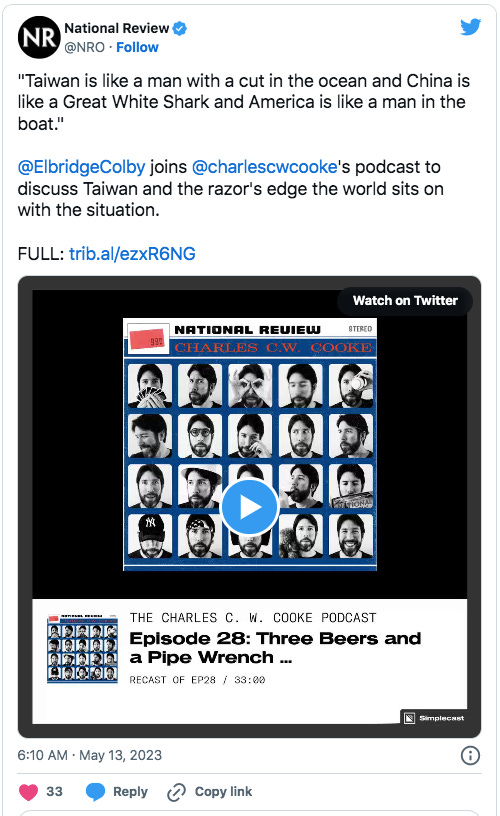
Former Pentagon official Elbridge Colby was interviewed on The National Review’s Charles CW Cooke Podcast, where he provided some very high-level analysis on the tensions around China, Taiwan, and the United States.

I will here attempt to explain some of Colby’s comments for the benefit of the average reader, because Colby has been studying these things for many years and his commentary can be a bit advanced and esoteric for the casual punditry consumer.

“The analogy I use is… Taiwan is like a man with a cut in the ocean, and China is like a great white shark, and America is like a man in a boat,” Colby said in the interview.

“The problem is once that great white shark starts moving, you got no time,” added Colby. “You’re done. You know, if you’re not already by the side of the boat, right? Because it’s a great white shark.”

Tweet from National Review: "Taiwan is like a man with a cut in the ocean and China is like a Great White Shark and America is like a man in the boat."  @ElbridgeColby  joins  @charlescwcooke 's podcast to discuss Taiwan and the razor's edge the world sits on with the situation.
https://twitter.com/NRO/status/1657115944156647430

Now bear with me if Colby’s incisive observations went a bit over your head here, but if we break it down I’m confident that we can all catch up to this man’s towering intellect enough to catch a glimpse of his understanding on the matter.

What Colby appears to be saying — and please correct me of you think I’m reading this wrong — is that China is like a Great White Shark, which as we all know is an extremely dangerous aquatic predator with a voracious appetite, capable of gulping down a human being in a few swift bites.

Now, try to imagine being in a situation where you’re out there in the ocean, and there’s a Great White Shark right there with you in the water. And to make matters worse, you’re bleeding — a problem not only due to the wound from whence the blood is emanating, but also because sharks can smell blood in the water! That would be pretty bad, right?

Okay, so are you with me so far? Remember, this is very advanced stuff, so feel free to read back and review as much as you need. 

Now, imagine you’re in that situation with the cut and the shark, and there’s a boat that you can go to to get away from the shark. You’d want to hop aboard that vessel as swiftly as possible, don’t you think? I know I would!

So to put it all together, what the esteemed Elbridge Colby is telling us is that China is analogous to the Great White Shark which is eyeing the bleeding man in the water, and the man can be compared to Taiwan, and the United States of America is comparable to the boat that is coming to the rescue of the man.

Make sense? If you’re still struggling to comprehend Colby’s scalpel-like geopolitical analysis, don’t worry, because I’ve obtained this helpful infographic to further illuminate your understanding:

See the rest here

Be seeing you

Posted in Uncategorized | Tagged: , , , | Leave a Comment »

Sino-Japanese Relations Are Deteriorating, But Western Media Ignores It…

Posted by M. C. on May 8, 2023

One thing is clear: the corporate media in the United States will continue to ignore anything that runs contrary to DC’s chosen narrative of a unified chorus of willing southeast Asian allies ready to contain China, as well as anything that hints at unpleasant complications or possible dangers in DC’s chosen course. And in the event of an accident, they will doubtlessly howl for escalation rather than de-escalation, as they always do.

https://libertarianinstitute.org/articles/sino-japanese-relations-are-deteriorating-but-western-media-ignores-it/

by Joseph Solis-Mullen

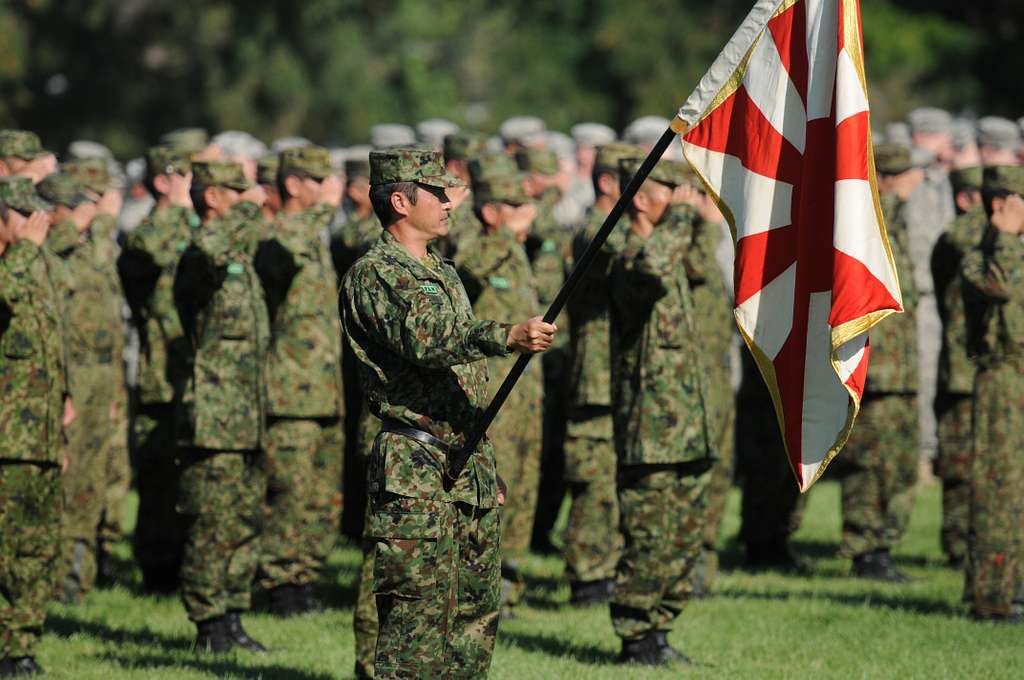
the 16th japanese ground self defense force regimental 96c127 1024

Apart from its well-practiced habit of uncritically repeating whatever the Pentagon, State Department, White House (or really any other government agency) have to say on a particular subject, of equal importance in any indictment of the so-called Fourth Estate is what the corporate media does not report at all. Admittedly, to borrow from Sir Arthur Conan Doyle, a dog that fails to bark is not as readily noticeable as one which does; but when it comes to the fake China threat, several recent examples are particularly instructive.

First, U.S. House Speaker Kevin McCarthy’s loudly applauded meeting in late March with Taiwanese leader Tsai Ing-wen. Apart from failing to note that the first meeting on U.S. soil of a sitting Taiwanese leader with the third-highest ranking elected American government official since the U.S. supposedly severed relations with Taipei and recognized Beijing as legitimate government of China in 1979 clearly violated the agreed prohibition on high level government-to-government contacts between the two, the corporate media failed to report that at the same time Kevin McCarthy was posturing to show everyone that he was as tough as Nancy Pelosi, the leading members of the Taiwanese opposition party (the KMT) were in Beijing effectively showing their commitment to the status quo and good relations with the mainland.

Though readily available to anyone who cared to look, this inconvenient fact was doubtlessly ignored as it did not fit the narrative of a nation uniformly ready to die in a cross-strait fight with U.S.-made weapons in their hands. Given the sound shellacking Tsai Ing-wen’s Democratic Progressive Party received in local elections this past year, one would be unsurprised to see them lose the presidency in 2024, just as they did after the last round of independence-agitating by the party during the early 2000s.

The second notable non-story in the corporate press is Beijing’s position on Okinawa and its recent activities with regard to those formerly independent islands. No doubt in retaliation for Japan’s increasingly hostile stance toward China and its support for Taiwanese independence, Beijing has announced it will began calling the Okinawa prefecture by its old name of Ryukyu, will open a regional diplomatic office there, and will host its governor Denny Tamaki for a visit to China. Further, in an April speech China’s Foreign Minister made reference to both the Potsdam Proclamation and Cairo Declaration, and while this was done in the context of talking about Taiwan, these agreements also clearly spell out that Ryukyu/Okinawa was to be stripped from Japan at the end of World War II.

(For a bit of additional context on this admittedly obscure issue, Ryukyu was long a tributary kingdom of the Chinese Imperial state before being annexed and renamed by Imperial Japan in the late nineteenth century as the Qing dynasty disintegrated. The islands, for there are some dozens that comprise the Okinawa Prefecture, were unilaterally given to Japan by the United States in 1971 in exchange for continued basing rights for U.S. forces over the objections of the local native inhabitants).

See the rest here

Be seeing you

Posted in Uncategorized | Tagged: , , , , | Leave a Comment »

DeSantis Discusses What U.S. Policy Needs To Be To Deter A Chinese Invasion Of Taiwan

Posted by M. C. on April 26, 2023

“what makes them a significant threat is they’ve been able to make themselves, partially because U.S. policy facilitated this, the biggest industrial power in the world.”

Seems like they are copying US. The best way to keep China from invading Taiwan is to not provide a reason for doing so. DeSantis needs a lesson in non-interventionism.

https://www.dailywire.com/news/desantis-discusses-what-u-s-policy-needs-to-be-to-deter-a-chinese-invasion-of-taiwan

By  Daily Wire News

NORTH CHARLESTON, SC - APRIL 19: Florida Governor Ron DeSantis, left, and his wife, Casey DeSantis, speak to a crowd at the North Charleston Coliseum on April 19, 2023 in North Charleston, South Carolina. The Governor's appearance marks his first official visit to the "First in the South" presidential primary state amid mounting anticipation of his 2024 presidential candidacy.
Sean Rayford/Getty Images

Florida Governor Ron DeSantis said in an interview this week with Asian media that the U.S. needs to show a much stronger presence in helping “to shape the environment in such a way” that deters China from trying to invade Taiwan and expanding their influence around the world.

The 44-year-old governor made the remarks during a conversation with Nikkei Asia while in Japan on an international trade mission.

DeSantis said that “at this juncture in the 21st century, what the Soviet Union was to [the U.S. last century], that’s really what China represents, with the CCP in terms of the threat to the free world.”

“And I think in many respects, the CCP is stronger than what the Soviet Union was,” he said. “Certainly economically, they’re way stronger than what the Soviet Union ever was. And so when you look at that, our national security strategy has really got to view the Indo-Pacific like we did Europe after World War II. And to be able to do that effectively obviously requires us to make sure that we have strong defense and that we can project power. But it really does require a very close relationship with U.S. and Japan.”

The governor said that the Quad — officially called the Quadrilateral Security Dialogue, which is comprised of the U.S., Japan, India, and Australia — was critical to confronting and preventing Chinese aggression.

DeSantis said that “without question” China represented the biggest threat to the U.S. and that Chinese dictator Xi Jinping was “very ideological” and that he has “a very clear idea of what he wants to do by entrenching the party in power, entrenching himself in power, and then he’s built up military capability.”

He said that Xi wants to project that military power beyond China’s borders “in a much bigger way” than past Chinese leaders and that “what makes them a significant threat is they’ve been able to make themselves, partially because U.S. policy facilitated this, the biggest industrial power in the world.”

See the rest here

Be seeing you

Posted in Uncategorized | Tagged: , , , | Leave a Comment »