MCViewPoint

Opinion from a Libertarian ViewPoint

Posts Tagged ‘the State’

You Can’t Depend on the State to Maintain Public Order | Mises Wire

Posted by M. C. on June 10, 2023

On multiple occasions, the US Supreme Court has opined that US citizens have no constitutional right to police protection and officers cannot be held legally liable for failing to protect them. You must pay them under penalty of law, but they are not required to provide anything in return.

The taxpayer-funded monopoly on policing became even less effective without leaving any more money in taxpayers’ pockets. Drawing another parallel with government schools, which closed without returning the taxpayers’ money, several cities cut police funding and staffing while keeping the money that taxpayers ostensibly paid for that purpose. It truly is only the government that can take your money, barely provide a service they’ve monopolized, and then insist on how necessary they are for the provision of that service.

https://mises.org/wire/you-cant-depend-state-maintain-public-order

Tate Fegley

Although commonly used, Max Weber’s definition of the state—an entity that has a monopoly on the legitimate use of force within a given geographical area—can mislead people into thinking that the state is the only or even the primary reason for security and order. This is illustrated in the trends in the nonstate provision of security, as revealed by my Google alert for the phrase “private police.” Lately, incidents of car and bike theft have led individuals to either organize themselves to prevent and respond to it or hire private security to do so.

One example is a gas station in Philadelphia (a city that has frequently been in the news lately due to growing crime problems, having set a new personal record for annual murders) that has hired security armed with rifles to protect patrons, mainly from car jackings, since motorists are especially vulnerable to attack while pumping gas.

One thing I found notable from a Fox News interview of the head of security Chief Andre Boyer (other than the fact that journalists at a “conservative” outlet are just as clueless as other journalists about what an AR15 is) is his response to a question about whether he and his agents will intervene when witnessing a crime in progress. Chief Boyer responds, “We have to. We have a contract to protect our clients and our clients’ assets.”

As I have noted previously, the fact that voluntarily hired security has a contractual obligation to provide services to the people who pay them is in stark contrast to government police. On multiple occasions, the US Supreme Court has opined that US citizens have no constitutional right to police protection and officers cannot be held legally liable for failing to protect them. You must pay them under penalty of law, but they are not required to provide anything in return.

See the rest here

Be seeing you

Posted in Uncategorized | Tagged: , , , | Leave a Comment »

How Government Schools Use Bad History to Promote the State | Mises Institute

Posted by M. C. on April 22, 2023

https://mises.org/library/how-government-schools-use-bad-history-promote-state

Ryan McMakenTho Bishop

On this episode of Radio Rothbard, Ryan McMaken and Tho Bishop look at common American history myths baked into government school curricula. While Republican governors have begun to prioritize removing “critical race theory” and other forms of modern “leftwing indoctrination” from textbooks, there are a number of historical episodes left unchallenged that all lead to a deification of state power and a celebration of progressive politics.

Be seeing you

Posted in Uncategorized | Tagged: , , | 1 Comment »

Abstract Nouns

Posted by M. C. on April 10, 2023

“It is remarkable to see how quickly the men who had got rid of the Christian God began to create fictitious deities for themselves out of abstract nouns and concepts like the state.”

Herbert Butterfield, Christianity In Modern Europe 1952

Posted in Uncategorized | Tagged: , , , | Leave a Comment »

To Fight the State, Build Alternatives to the State | The Libertarian Institute

Posted by M. C. on March 30, 2023

The effort to neutralize nonstate institutions has been enormously successful. Institutional obstacles to state power are shadows of their former selves. Long gone are the independent communes, the free towns, the local militias, and the independent monasteries and churches. In more recent history, even fraternal organizations and local charities have become increasingly invisible, and ever more dependent on the central government’s tax dollars. Religious observance is in deep decline. Church organizations such as schools and parishes are consequently much reduced. Families are in decline as well.

https://libertarianinstitute.org/articles/to-fight-the-state-build-alternatives-to-the-state/

by Ryan McMaken

261c60b17a169a23110d0bbd723f817e family portraits th century

Throughout its history, liberalism—the ideology today called “classical liberalism” or “libertarianism”—has suffered from the impression that it is primarily against things. This is not entirely wrong. Historically, liberalism coalesced as a recognizable and coherent ideology in opposition largely to mercantilism and absolutism throughout Western Europe. Over time, this opposition extended to socialism, protectionism, imperialism, aggressive warfare, and slavery as well. In this regard, liberals have for centuries fought against a wide array of moral and economic evils that spread poverty, injustice, and misery.

Being “against” things, however, has never been sufficient in itself, and liberals have never contented themselves with being so. Liberalism, of course, has long been closely associated with so-called “bourgeois” values, private property, local self-determination, and—in spite of claims to the contrary—religious institutions. Today, however, these institutions that have long undergirded liberalism and the free society are in an advanced state of decay. These are the institutions that have made society and civic life possible without state control.

The decline of these institutions did not happen by accident. The power of the modern state is the result of long wars by the state against independent churches, against family ties, and against local self-determination and self-government. The state has never suffered rivals, so any organization that competes for the “hearts and minds” of the population must be made impotent.

So, we find that the challenge at hand is more than simply opposing the state. Rather, it is necessary to build up, reinforce, and sustain institutions that can offer alternatives to the state in terms of organizing and supporting human society. Without these institutions, liberalism’s job is much more difficult—or even impossible.

Societies Are Composed of Institutions

As libertarian historian Ralph Raico notes, liberals make a key distinction between the state and “society.” Society is simply those institutions that are not the state. Or as David Gordon puts it, “Liberals believe that the main institutions of society can function in entire independence of the state.”

The idea that the institutions of society can function without a state is an established historical fact. Since the beginnings of human civilization, even in the absence of states, people have built up institutions and relationships designed to provide order, security, and social safety nets. As described by historian Paul Freedman, many societies have been held together by something other than “government in the sense that we understand it.” Rather, they can be held together with “informal social networks and ties.” These include “kinship, family, private vengeance, religion.”

See the rest here

Be seeing you

Posted in Uncategorized | Tagged: , , , | Leave a Comment »

How the State Seized Control of Marriage | Mises Wire

Posted by M. C. on December 5, 2022

Because marriages can have such far-reaching effects even for those not directly involved, government officials as well as family members of the betrothed have long sought ways to exercise power over who gets married to whom. The desire to exercise this sort of control can be seen in the negative reaction to changes in the Catholic Church confirmed by Pope Alexander III. In the late twelfth century, Pope Alexander clarified that marriages did not require the approval of government officials—or even church officials—to be valid and legally binding. Rather, a valid marriage required only the consent of both the husband and wife. No other parties possessed a veto.

In the year 2021, there’s not really anything remarkable about this in the minds of most people. To most modern thinking, marriage is just yet another thing that is to be regulated and modified according to the whims of a civil government’s lawmakers and judges.

https://mises.org/wire/how-state-seized-control-marriage

Ryan McMaken

Both the US Senate and the House of Representatives are expected to pass new same-sex marriage legislation in coming days. The legislation is expected to codify what is already de facto law in the US under the US Supreme Court’s ruling in Obgerfell v. Hodges. The legislation further solidities federal law stating that states are required to recognize same-sex marriages that are legal in other US member states. The legislation also ensures that same-sex spouses will continue to be eligible for federal benefits through programs like Medicare and Social Security. The legislation does not mandate that each state government establish its own provisions for same-sex unions, however.

In the year 2021, there’s not really anything remarkable about this in the minds of most people. To most modern thinking, marriage is just yet another thing that is to be regulated and modified according to the whims of a civil government’s lawmakers and judges. Even among those who think there ought not be any federal role in marriage legislation, very few dispute that the governments of the member states themselves—or foreign national governments, for that matter—can rightfully exercise immense legislative authority over the regulation of marriage. The only disagreement is often over how government officials ought to regulate marriage, and to what ends.

“Historically, the Government Was Very Uninvolved in Marriage.”

The only dissenters to this consensus appear to be some libertarians like Ron Paul. For example, in 2012, Paul told a rally audience “I’d like to see all governments out of the marriage question. I don’t think it’s a state decision. I think it’s a religious function.” These comments followed earlier comments from Paul contending that “Biblically and historically, the government was very uninvolved in marriage.”

Paul is right in saying that marriage historically had (often) been a matter for religious authorities instead of agents of the civil governments. Yet, given the rise of the modern sovereign state, which is currently the ultimate legal authority on virtually all matters, it has become difficult to even imagine the particulars of the historical reality to which Paul refers.

Nonetheless, state regulation of marriage—and the ensuing secularization of marriage that followed—is a historical development that was part of the larger trend toward the expansion and consolidation of state power that began in the late Middle Ages. It was during this period that states gradually came to exercise monopolistic authority over all of society’s institutions including the towns, the nobility, and even the monarchies themselves. Also brought under the state’s power were the churches and state control of marriage was an important component of this. State control of marriage, that we now consider to be so normal, was simply one aspect of the state building that set the stage for our modern era of nearly untrammeled state power.

Privatized Marriage in the Middle Ages

Because marriages can have such far-reaching effects even for those not directly involved, government officials as well as family members of the betrothed have long sought ways to exercise power over who gets married to whom. The desire to exercise this sort of control can be seen in the negative reaction to changes in the Catholic Church confirmed by Pope Alexander III. In the late twelfth century, Pope Alexander clarified that marriages did not require the approval of government officials—or even church officials—to be valid and legally binding. Rather, a valid marriage required only the consent of both the husband and wife. No other parties possessed a veto.

This necessarily reduced the power of both parents and local government officials in regulating marriage. For example, even in a case in which certain parents were insisting that their son marry a preselected woman of the parents’ liking, the son could do an end run around the parents by simply marrying someone else without their permission. For those who felt outside pressure to be especially overwhelming, a couple seeking marriage could pursue a “clandestine marriage” potentially conducted entirely without the parents’ knowledge and without outside sanctioning or church solemnization at all. These secret unions might incur a temporary ecclesiastical sanction, but this did not invalidate the marriage, and there was nothing the parents or government officials could do to invalidate the union. (Notably, the consent model also limited the church’s ability to veto proposed unions or otherwise directly control the formation of marriages.)

This “consent model” of marriage was not exactly acclaimed by Christendom’s parents and government officials. After all, Alexander’s efforts to make marriage requirements more uniform and accessible interfered with officials and family organizations that had long exercised considerable control over marriage at the local level. Customs varied considerably from place to place, but now the pope was telling everyone that couples could marry without the consent of others so long as they conformed to a short list of prohibitions designed to avoid incest, polygamy, and other conditions believed to be prohibited by divine law. According to Andrew Finch, in Pope Alexander’s view:

Marriages of love were to be promoted at the expense of those of economic convenience or feudal necessity and the church was made to stand as guardian for individual freedom in this area. This was, however, a vision very much at odds with existing notions of parental and feudal authority.1 

What resulted was an essentially private system in which marriages could be contracted among individuals with a presumption of validity. Outside adjudication only became necessary when there were disputes over whether or not a marriage was valid or if one of the parties was accused of somehow violating the agreement. This arbitration was done through private, international ecclesiastical courts staffed by church personnel and through which a plaintiff or defendant could appeal to a transnational Pope. This system of law was outside the control of the civil governments courts which were staffed by a temporal king’s appointees and allies.

See the rest here

Be seeing you

Posted in Uncategorized | Tagged: , | Leave a Comment »

Randolph Bourne

Posted by M. C. on November 1, 2022

War is the Health of the State

(1918)

Posted in Uncategorized | Tagged: , , | Leave a Comment »

the State

Posted by M. C. on October 18, 2022

“It is in war that the State really comes into its own: swelling in power, in number, in pride, in absolute dominion over the economy and the society.”
–Murray Rothbard

Be seeing you

Posted in Uncategorized | Tagged: , | Leave a Comment »

An Ancient Warning: Criminal Trespass Is the State’s Essential Feature

Posted by M. C. on October 5, 2022

https://mises.org/wire/ancient-warning-criminal-trespass-states-essential-feature

Jeffery Degner

Whether one takes the Hebrew as literal history or as archetypal fable, there’s no escaping the warnings given to those who reject the private law society. Those warnings are that there is one vile and destructive alternative to the peaceful resolution of conflict by market actors. That vile alternative is what we call the state.

In the eighth chapter of 1 Samuel, we are introduced to the scene of a nationwide rejection of private law in exchange for a form of rule that the people of Israel had observed in all the pagan nations that surrounded them. In their defense, their prophet, Samuel, had selected leading judges in a direct affront to the methods that Yahweh—Israel’s god—had clearly prescribed. The selection process had to emerge from the sphere of exchange, where honest dealers who had the competence and character to win over their fellow citizens through their personal uprightness would be exalted in unanimity. These people would then serve as arbiters in what Hans-Hermann Hoppe has described as private courts.

Instead of utilizing this market-centered selection mechanism, Samuel took the expedient path and simply lifted his own sons to the role. In doing so, they would move throughout the land of Israel from town to town, deciding difficult cases. These cases included every offense from the improper building of walls on a neighbor’s property all the way up to capital offenses. Rather than conducting themselves with impartiality, Samuel’s sons were incompetent and greedy for bribes, and they were not held in check by their fellow countrymen. Rather than demanding that the prophet denounce these crooks and replace them through the righteous process that Yahweh had prescribed, the people also erred by looking to power and not righteous actions in the market for the solution to judgment.

The rejection of this method wasn’t a rejection of Samuel or his sons. Rather, it was a personal rejection of Yahweh himself as sovereign ruler and arbiter of justice and righteousness. The people petulantly complained to the prophet and to the Lord to give them the state. And they were given it … good and hard.

Even so, they were warned about the nature of the state before it was inaugurated through the reign of the tall and handsome yet moronic and worthless donkey retriever named Saul. However, Yahweh didn’t speak of the personal flaws of the kings themselves. Rather, he warned his people that by rejecting Him and his market-generated path toward justice, they were wishing for a monstrous institution that was—and is—established in criminal trespass.

See the rest here

Be seeing you

Posted in Uncategorized | Tagged: , , | Leave a Comment »

How Monarchs Became Servants of the State

Posted by M. C. on September 13, 2022

  • e21

Ryan McMaken

Hayes Brown at MSNBC writes this week, for example, on how Elizabeth held together a declining institution, but “It is entirely probable that [new King Charles III] and his likely successor, Prince William, will oversee the unraveling of the monarchy itself.”

We shall see.

But in one respect Brown is undeniably right when he says: “the wheels of the state will continue turning without her.” Of course they will. In the modern world, none of the monarchs of Europe are critical institutions within the regimes over which they ostensibly “reign.”

https://mises.org/wire/how-monarchs-became-servants-state

European monarchs come and go, but the American media—no doubt largely due to the fact the British speak and write in English—follows the British monarchy more closely than others. American pundits didn’t have much to say when King Juan Carlos of Spain abdicated in 2014 in the wake of an embezzlement scandal. But it’s only been a few hours since the death of Queen Elizabeth II, and the speculation about the future of the British monarchy is already plentiful. Hayes Brown at MSNBC writes this week, for example, on how Elizabeth held together a declining institution, but “It is entirely probable that [new King Charles III] and his likely successor, Prince William, will oversee the unraveling of the monarchy itself.”

We shall see.

But in one respect Brown is undeniably right when he says: “the wheels of the state will continue turning without her.” Of course they will. In the modern world, none of the monarchs of Europe are critical institutions within the regimes over which they ostensibly “reign.”

Indeed, the mere fact that we refer to “the state” as something distinct from a monarch at all illustrates a crucial fact about the relationship between monarchs and the state in the modern world: states have surpassed and replaced the monarchs as the true source of legal and military power within their respective territories. Moderns states have subsequently expanded this power far beyond what even the most ambitious monarchs of centuries past dreamed about. There is an irony here, however. In Europe, it was the monarchs themselves who built up law courts and military institutions into the immense states that we know today. In the process, though, the monarchs lost control of these increasingly unwieldy and bureaucratic institutions. Eventually, the monarchs grew to become appendages of the state, rather than the other way around, as the monarchs had originally intended. This all occurred even before the advent of democratic states. By the nineteenth century, the old model of private dynastic rule had been overturned by the machinery of states, both democratic and not.

Monarchy before the State

Certainly, the monarchies of today should not be confused with the monarchies that existed before the state rose to prominence in the sixteenth and seventeenth centuries.

See the rest here

Be seeing you

Posted in Uncategorized | Tagged: , , , , | Leave a Comment »

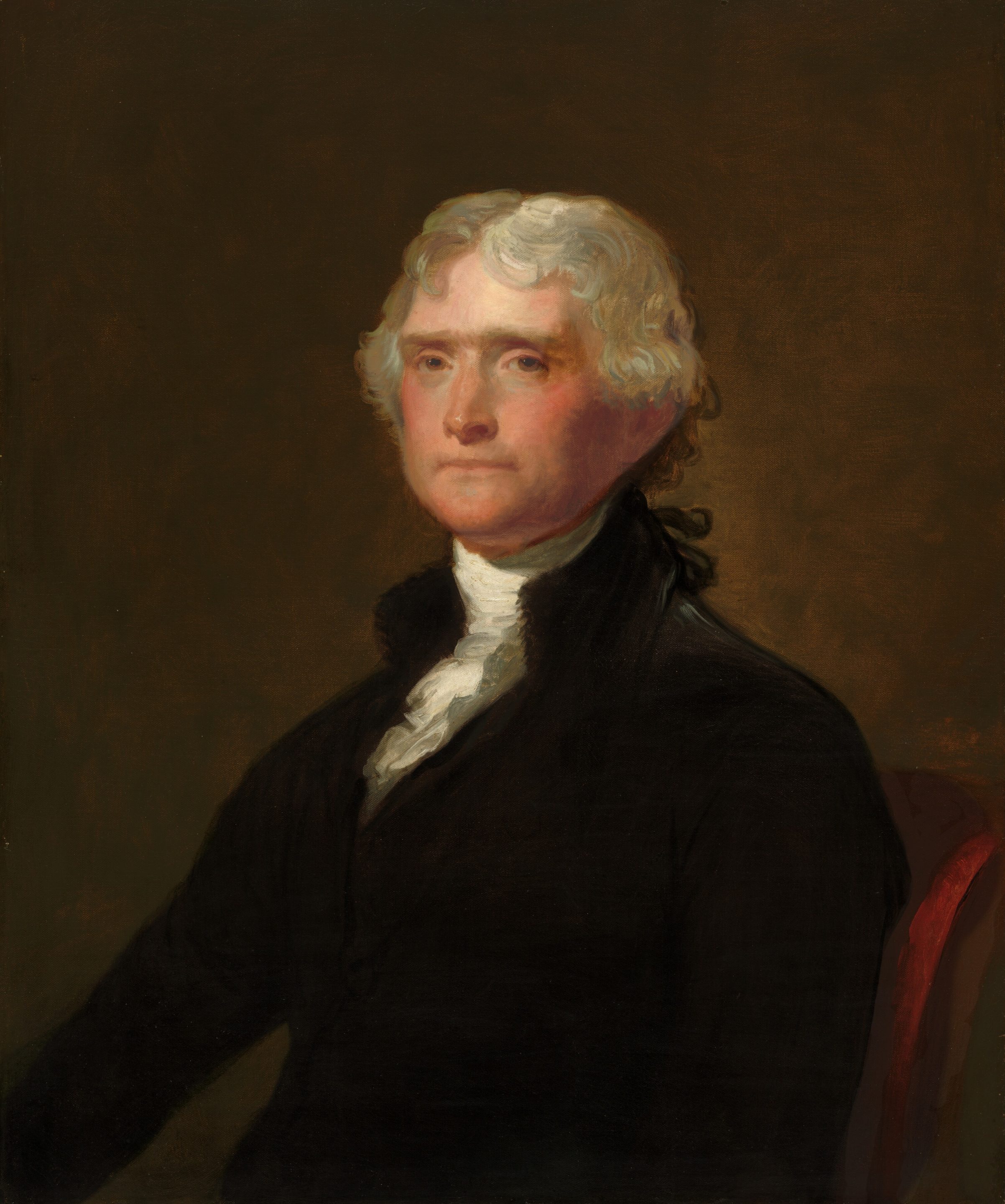
TGIF: Jefferson on Not Trusting the State

Posted by M. C. on August 27, 2022

free government is founded in jealousy and not in confidence; it is jealousy & not confidence which prescribes limited Constitutions to bind down those whom we are obliged to trust with power

by Sheldon Richman 

Libertarian Institute

thomas jefferson

Regardless of written constitutions and the laws on the books, individual liberty is always at risk. And as liberty goes, so goes our capacity to live well, to achieve the good life as rational, virtuous social beings.

The danger comes from left and right, both of which aspire to have a body of elders impose narrow cultural and moral norms on everyone, overriding our right to think for ourselves. (Progressives and National Conservatives have a lot in common in that regard, even if they differ on what is to be imposed.)

This point about the fragility of liberty was well understood by the Irish politician, judge, and orator John Philpot Curran (1750-1817), who said: “The condition upon which God hath given liberty to man is eternal vigilance; which condition if he break, servitude is at once the consequence of his crime and the punishment of his guilt.”

As often happens, variations of this insight have been attributed to other people, most famously Thomas Jefferson, who is widely and apparently erroneously thought to have said more pithily: “The price of liberty is eternal vigilance.” Curran has missed out on the credit he deserves.

At any rate, we have a problem. Although liberty is never safe from political ambition or even good intentions, most people are understandably absorbed in raising their families, earning their livelihoods, and just plain living. Thinking about liberty, much less exercising vigilance, has a low priority — if it is on their agendas at all. I’m not finding fault; it’s just a fact.

Hence the need for a degree of specialization. Libertarians to one extent or another specialize in keeping watch over liberty and drawing the public’s attention to dangers from governments and nongovernment sources. These aren’t entirely two separate categories because if an influential segment of the public comes to believe that liberty must be curtailed, such sentiment could find its way into the halls of power. For example, if enough people decide that offensive words or obscene images are equivalent to violent acts, politicians may take up that cause and prohibit so-called hate speech and the like. This has happened in Great Britain, where citizens can be visited by the police, fined, and compelled to take a sensitivity course for posting something on social media that allegedly made someone feel anxious. So far, thanks to the tradition of free speech and press recognized in the First Amendment, that does not happen in the United States. But we mustn’t rest on our laurels. A violation could be just around any corner, and we can’t be sure from which direction it will come.

Although Jefferson did not say, “The price of liberty is eternal vigilance.” we know he believed it. We know this because of his 1798 Kentucky Resolutions, which he wrote anonymously for the state legislature in opposition to the Alien and Sedition Acts of that year. The Acts were passed by the Federalist party-controlled Congress under Federalist President John Adams. (Jefferson, who was not a Federalist, was the vice president at the time.) As one description of the Acts puts it:

The Resolutions by Jefferson and Madison were provoked by the Alien and Sedition Acts adopted by a Federalist-dominated Congress during the Quasi-War with France; those Acts gave the president the authority to deport any alien whom he thought a threat and made it illegal to criticize the president or the Congress. Dozens of people were prosecuted under the Sedition Act, with prosecutions targeted at newspaper editors who favored the new Democratic-Republican party – Jefferson’s party. Seeing such political prosecutions of free speech as a fundamental threat to the republic, Jefferson referred to this period as a “reign of witches.”

Federalist support for the Acts was also fueled by Jeffersonian sympathy for the French Revolution. The government’s fears about French influence in the United States had reached a fevered pitch.

In his Kentucky Resolutions — a second, shorter resolution written by an unknown person passed in 1799 — Jefferson invoked the principle that the Constitution delegated only certain limited powers to the national government and therefore the states individually could check that government whenever it broke through the limits. Hence, the document declared the Alien and Sedition Acts  “void and of no force” and requested their repeal. (Jefferson’s draft called for nullification, but that language did not make the final document. It did make the second version, however.)

In making his case, Jefferson wrote something that more people need to understand,

See the rest here

Be seeing you

Posted in Uncategorized | Tagged: , | Leave a Comment »