
MCViewPoint

Opinion from a Libertarian ViewPoint

Posts Tagged ‘Truman’

Truman’s War Crimes at Hiroshima and Nagasaki – The Future of Freedom Foundation

Posted by M. C. on August 8, 2020

Keep in mind that there is nothing in the principles of warfare that required Truman and Roosevelt to demand the unconditional surrender of Japan (or Germany). Wars can be — and often are — ended with terms of surrender. Both presidents were willing to sacrifice countless people on both sides of the conflict to attain their demand for unconditional surrender.

https://www.fff.org/2020/08/05/trumans-war-crimes-at-hiroshima-and-nagasaki/

by

This month marks the 75h anniversary of the U.S. atomic bombings of Hiroshima and Nagasaki. While proponents of the bombings have long justified them on the basis that they shortened World War II, the fact is that they were war crimes. The only reason why President Truman and the pilots who dropped the bombs were not prosecuted as war criminals is because the United States ended up winning the war.
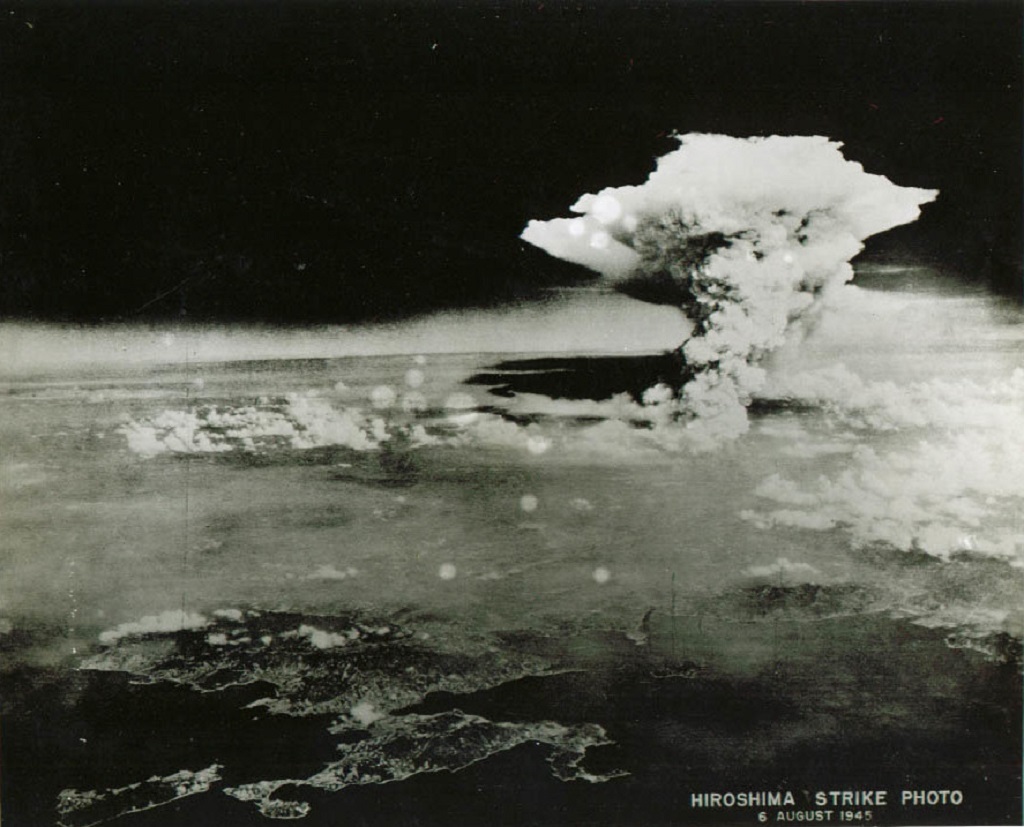
It has long been pointed out that Japan had expressed a willingness to surrender. The only condition was that the Japanese emperor not be abused or executed.

President Truman refused to agree to that condition. Like his predecessor Franklin Roosevelt, Truman demanded “unconditional surrender.”

That was why Japan continued fighting. Japanese officials naturally assumed that U.S. officials were going to do some very bad things to their emperor, including torture and execution. In the minds of Japanese officials, why else would the United States not be willing to agree to that one condition, especially given that it would have meant the end of the war?

The dark irony is that Truman ended up accepting the condition anyway, only after he pulverized the people in Hiroshima and Nagasaki with nuclear bombs.

In an excellent op-ed in the Los Angeles Times today entitled “U.S. Leaders Knew We Didn’t Have to Drop Atomic Bombs on Japan to Win the War. We Did It Anyway” the authors point out:

Seven of the United States’ eight five-star Army and Navy officers in 1945 agreed with the Navy’s vitriolic assessment. Generals Dwight Eisenhower, Douglas MacArthur and Henry “Hap” Arnold and Admirals William Leahy, Chester Nimitz, Ernest King, and William Halsey are on record stating that the atomic bombs were either militarily unnecessary, morally reprehensible, or both.

Keep in mind that there is nothing in the principles of warfare that required Truman and Roosevelt to demand the unconditional surrender of Japan (or Germany). Wars can be — and often are — ended with terms of surrender. Both presidents were willing to sacrifice countless people on both sides of the conflict to attain their demand for unconditional surrender.

But Truman’s unconditional surrender demand is not why his action constituted a war crime. This bombings constituted war crimes because they targeted non-combatants, including children, women, and seniors with death as a way to bring about an unconditional surrender of the Japanese government.

It has long been considered a rule of warfare that armies fight armies in war. They don’t target non-combatants. The intentional killing of non-combatants is considered a war crime.

A good example of this principle involved the case of Lt. William Calley in the Vietnam War. Calley and his men shot and killed numerous non-combatants in a South Vietnamese village. The victims included women and children.

The U.S military prosecuted Calley as a war criminal — and rightly so. While the deaths of non-combatants oftentimes occurs incidentally to wartime operations, it is a war crime to specifically target them for death.

Truman justified his action by arguing that the bombings shortened the war and, therefore, saved the lives of thousands of American soldiers and Japanese people if an invasion had become necessary. It is a justification that has been repeated ever since by proponents of the bombings.

There are two big problems with that justification, however.

First, an invasion would not have been necessary. All that Truman had to do was to accept Japan’s only condition for surrender, and that would have meant the end of the war, without the deaths that would have come with an invasion and that did come with the bombings of Hiroshima and Nagasaki.

More important, the fact that lives of American soldiers would have been saved is not a moral or legal justification for targeting non-combatants. If Calley had maintained at his trial that his actions were intended to shorten the Vietnam War, his defense would have been rejected. He would have still be convicted for war crimes.

Soldiers die in war. That is the nature of war. To kill women, children, and seniors in the hopes of saving the lives of soldiers by shortening the war is not only a war crime, it is also an act of extreme cowardice. If an invasion of Japan would have become necessary to win the war, thereby resulting in the deaths of thousands of U.S. soldiers, then that’s just the way that war works.

It’s also worth pointing out that Japan never had any intention of invading and conquering the United States. The only reason that Japan bombed Pearl Harbor was in the hope of knocking out the U.S. Pacific fleet, not as a prelude to invading Hawaii or the continental United States but simply to prevent the U.S. from interfering with Japan’s efforts to secure oil in the Dutch East Indies.

And why was Japan so desperate for oil as to initiate war against the United States? Because President Franklin Roosevelt had imposed a highly effective oil embargo on Japan as a way to maneuver the Japanese into attacking the United States.

FDR’s plan, of course, succeeded, which ended up costing the lives of hundreds of thousands of American soldiers and millions of Japanese citizens, including those at Hiroshima and Nagasaki.


This post was written by:


Jacob G. Hornberger is founder and president of The Future of Freedom Foundation. He was born and raised in Laredo, Texas, and received his B.A. in economics from Virginia Military Institute and his law degree from the University of Texas. He was a trial attorney for twelve years in Texas. He also was an adjunct professor at the University of Dallas, where he taught law and economics. In 1987, Mr. Hornberger left the practice of law to become director of programs at the Foundation for Economic Education. He has advanced freedom and free markets on talk-radio stations all across the country as well as on Fox News’ Neil Cavuto and Greta van Susteren shows and he appeared as a regular commentator on Judge Andrew Napolitano’s show Freedom Watch. View these interviews at LewRockwell.com and from Full Context. Send him email.

Be seeing you


Posted in Uncategorized | Tagged: , , , , , | Leave a Comment »

ATOMIC BOMBINGS AT 75: The Decision to Drop the Bomb on Japan and the Genesis of the Cold War – Consortiumnews

Posted by M. C. on August 6, 2020

According to Szilard, Byrnes was very concerned about the role of the Soviet Union in the postwar era. The Soviets’ massive armies had already steamrolled into Eastern Europe, and America was faced with the difficult task of figuring out how to get them out of these nations after Hitler was defeated. Byrnes told Szilard “that Russia might be more manageable if impressed by American military might, and that a demonstration of the bomb might impress Russia.”

Unlike Stimson, however, the navy secretary believed that the United States should exhaust all alternatives to dropping the atomic bomb in order to get Japan to surrender. Forrestal’s views were shaped more by his strong anticommunist position than they were out of any moral qualms about using the atomic bomb. He firmly believed that if a face-saving mechanism could be found to entice Japan into surrender, the geopolitical situation in the Pacific could be stabilized before the Soviet Union could shift its resources away from Europe.

…Stalin and the Russians during the Second World War, the fact is that the Soviets were all too aware of what was transpiring inside the secret weapons plants in the United States and Britain.

https://consortiumnews.com/2020/08/05/atomic-bombings-at-75-the-decision-to-drop-the-bomb-on-japan-and-the-genesis-of-the-cold-war/

By Scott Ritter

Even by the heightened standards of a nation’s capital during wartime, the gathering of generals, admirals, and high government officials in the White House Cabinet Room on the afternoon of Monday, June 18, 1945, was impressive. Only one, however, could claim resident status—the newly sworn in president of the United States, Harry S. Truman.

A veteran of the First World War and a long-serving Democratic senator from the state of Missouri, Truman was an unlikely candidate for the job he now held. A compromise candidate for the office of vice president in 1944, Truman was no close confidant of President Franklin D. Roosevelt. Indeed, he had little insight into Roosevelt’s thinking about postwar relations with the Soviet Union and no knowledge of the existence of a major program—the Manhattan Project—to produce an atomic bomb.

In a series of meetings conducted shortly after being sworn in as president, Truman overcame this deficit, maintaining a pledge to adhere as closely as possible to the policy directions set forth by President Roosevelt. But some decisions would have to be taken by the new president, which is why he had convened the Cabinet Room meeting. [Minutes]

Joining Truman was General George Catlett Marshall, the distinguished 64-year-old chief of staff of the U.S. Army. In addition to managing the problems associated with waging global war, General Marshall was also a member of a high-level committee (the “Top Policy Group,” formed in October 1941) overseeing the effort by the United States to construct an atomic bomb.

Marshall had left most day-to-day decisions about the atomic bomb program in the hands of Major General Leslie Groves and had limited his own role to that of making sure Congress continued to underwrite the project financially and to a lesser extent of policymaking about the use of an atomic weapon.

As recently as May 31, 1945, Marshall had told a gathering of atomic bomb scientists, administrators, and policymakers that he felt the United States would be in a stronger position in any postwar environment if it avoided using an atomic bomb against the Japanese. He also recommended that the United States invite the Soviet Union to attend tests of the atomic bomb.

The majority attending that meeting ruled against Marshall, including soon-to-be Secretary of State James Byrnes, who feared the United States would lose its lead over the Soviets in nuclear weapons if the Russians became a de facto partner through such cooperation. In any event, Marshall viewed any decision to use or not use an atomic bomb, given the horrific ramifications, to be a purely political question, outside the purview of the military.

‘Barbaric’

Joining Marshall were two senior naval officers, Fleet Admiral Ernest J. King—the commander of the U.S. Fleet and chief of naval operations (the only person ever to hold such a joint command)—and Admiral William Leahy, the 70-year-old chief of staff to the commander in chief, U.S. Army and Navy. Admiral King was an abrasive, hard-drinking man who openly disdained any use of American resources for purposes other than the total destruction of the Japanese.

Unlike King, Admiral Leahy was a proponent of avoiding a bloodbath fighting the Japanese and was sympathetic toward the idea of reaching a negotiated surrender brought on by the combined pressure of an economic blockade of the Japanese islands and conventional aerial bombardment. Leahy was against any use of the atomic bomb against civilian targets, a concept he viewed as “barbaric.”

The Army Air Force was represented by Lieutenant General Ira C. Eaker. General Eaker had almost single-handedly made strategic bombing an accepted practice when as the commander of the 8th Air Force in Europe, he convinced British Prime Minister Winston Churchill to continue the controversial strategy, noting that “round the clock bombing” would “soften the Hun for land invasion and the kill.”

Ira Eaker was standing in for the flamboyant Chief of Staff of the U.S. Army Air Force, General Henry Harley “Hap” Arnold. Sidelined by health issues, General Arnold was an unabashed proponent of strategic bombing and had, through sheer force of will, positioned the Army Air Force to carry out massive aerial bombardment campaigns against both Germany and Japan.

Like Arnold, General Eaker carried the secret that it was the 20th Air Force, flying the B-29 “Superfortress” bomber, which would deliver the atomic bomb to a Japanese target should the president decide on its use.

Rounding out the meeting’s attendees was a trio of civilians. At 78 years of age, Secretary of War Henry L. Stimson was by far the senior man present. Like General Marshall, Stimson was a member of the Top Policy Group overseeing the atomic bomb project. Stimson was the first official to brief President Truman about the existence of the atomic bomb, on April 25, 1945.

At that meeting Stimson warned Truman that “with reference to this weapon, the question of sharing it with other nations and, if so shared, upon what terms, becomes a primary question of our foreign relations. Also, our leadership in the war and in the development of this weapon has placed a certain moral responsibility upon us which we cannot shirk without very serious responsibility for any disaster to civilization which it would further.”

From that meeting, Secretary Stimson, at the request of Truman, formed the “Interim Committee,” the purpose of which was to advise the president on the utility of using the atomic bomb. The Interim Committee’s report, delivered on June 1, 1945, strongly advocated for the use of the atomic bomb against the Japanese. Unlike General Marshall, who also attended the Interim Committee’s meetings, Stimson supported this decision.

Navy Secretary James Forrestal was also a member of the Interim Committee. Unlike Stimson, however, the navy secretary believed that the United States should exhaust all alternatives to dropping the atomic bomb in order to get Japan to surrender. Forrestal’s views were shaped more by his strong anticommunist position than they were out of any moral qualms about using the atomic bomb. He firmly believed that if a face-saving mechanism could be found to entice Japan into surrender, the geopolitical situation in the Pacific could be stabilized before the Soviet Union could shift its resources away from Europe.

McCloy’s Suggestion

Accompanying Stimson and Forrestal was the junior civilian present, Assistant Secretary of War John J. McCloy. McCloy was a complex individual. A veteran of the First World War, McCloy served as a legal counsel for the German chemical company I. G. Farben. His links to Germany led him to be somewhat sympathetic to the rise of Adolf Hitler, whom McCloy was photographed sitting with at the 1936 Olympics in Berlin. However, his status as a lawyer and manager led to his appointment in 1941 as the assistant secretary of war.

For the bulk of the meeting, President Truman and his military chiefs wrestled with the decision to invade Japan. Read the rest of this entry »

Posted in Uncategorized | Tagged: , , , , , , | 1 Comment »

The CIA vs. the presidency: this is not the first time « Jon Rappoport’s Blog

Posted by M. C. on February 21, 2017

https://jonrappoport.wordpress.com/2017/02/20/the-cia-vs-the-presidency-this-is-not-the-first-time/

Posted in Uncategorized | Tagged: , , , | Leave a Comment »