


The only real surprise in all this is that The Wall Street Journal would dare to broach such a topic as secession in a manner that was not explicitly condemnatory. Those interested in learning more should consult the Ludwig von Mises Institute’s Ryan McMaken and his great book on the subject of secession.
https://libertarianinstitute.org/articles/against-the-tyranny-of-urban-majorities/
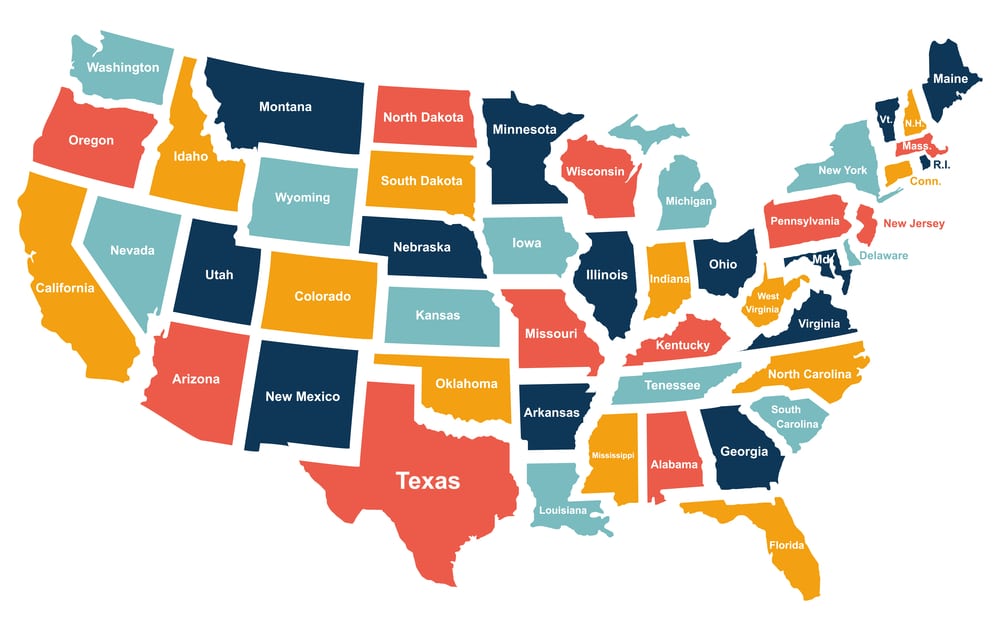
In a recent and rather surprising piece, The Wall Street Journal highlighted growing frustrations among rural residents of states like Illinois, solidly Republican regions who feel disenfranchised by the political dominance of urban metropolises like Chicago and the wider Cook County. The article described sentiments among rural Illinoisans who increasingly view their state government as an unrepresentative body, one that governs in the interests of urban elites while neglecting or outright opposing the values, interests, and livelihoods of those living in less densely populated areas.
This frustration is not unique to Illinois; it resonates in states like California, Oregon, and New York, where rural and small-town residents feel marginalized by overwhelmingly urban legislatures and policies crafted by political majorities in the cities. It raises an important question: why should sparsely populated regions be bound indefinitely to the political dominance of a few, highly concentrated urban areas?
The idea that rural regions might seek autonomy from urban majorities has an intuitive appeal, especially when considering the arbitrary nature of state boundaries in the United States. Unlike France, England, or other nations rooted in medieval kingdoms and centuries-old cultural identities, states like Illinois and California are constructs of relatively recent history, products of political compromises and expedient geographic delineations. Many boundaries of these states reflect no natural or inherent connection among their inhabitants. This arbitrariness invites comparisons to the imperial cartography of the late nineteenth and early twentieth centuries, where colonial powers carved up Africa and the Middle East into artificial nations that still grapple with the consequences of their incoherent borders. Why, then, should we expect places as disparate as Chicago and rural Illinois, or San Francisco and the farmlands of California’s Central Valley, to share common governance without conflict or resentment?
The argument for rural secession from urban-dominated states rests on several principles. First, it is fundamentally undemocratic to force people into perpetual political subjugation because they happen to live within arbitrarily drawn borders. Unlike democracy, properly republican government depends not just on majority rule but on the protection of minority rights, including the right to self-governance. When rural communities are systematically outvoted and overruled by urban majorities, they are effectively disenfranchised within their own states.
Take California, for example. The state’s Democratic supermajority is overwhelmingly driven by votes from urban centers like Los Angeles, San Francisco, and San Diego. Policies on taxation, land use, energy, and firearms, among others, reflect urban priorities that often clash with the values and economic needs of rural Californians. Yet rural residents have no realistic avenue to influence these policies.
Be seeing you

 MCViewPoint