France realises a little late that the jihadists who have carried out attacks on its soil and others who are preparing new ones are supported by foreign states, military allies within NATO.
It revolves around four strong ideas, including the prohibition of the financing of religious associations by foreign States. Everyone is well aware that this is the head of Islamism, but no one dares to name these states: Turkey and Qatar, remote controlled by the United Kingdom and the United States.
France realises a little late that the jihadists who have carried out attacks on its soil and others who are preparing new ones are supported by foreign states, military allies within NATO. The refusal to draw conclusions in terms of foreign policy makes the bill to combat Islamism of little use.
President Emmanuel Macron and the government of Jean Castex drafted a bill to combat the political instrumentation of the Muslim faith. This text is currently being discussed in Parliament.
It revolves around four strong ideas, including the prohibition of the financing of religious associations by foreign States. Everyone is well aware that this is the head of Islamism, but no one dares to name these states: Turkey and Qatar, remote controlled by the United Kingdom and the United States. Indeed, fighting against Islamism in France has many brutal consequences in foreign policy. No party dares to tackle this problem, rendering all the efforts made in this struggle ineffective.
France has already experienced this hesitation in the face of Islamism in the mid-1990s. At the time, the United Kingdom and the United States supported the jihadists in Algeria against French influence. London also offered political asylum to these “democrats” who were fighting against a military regime. The Minister of the Interior, Charles Pasqua, launched a showdown that led him to have the members of a commando of the Armed Islamic Group (GIA) who had hijacked an Air France plane shot dead and to expel the CIA chief of post in Paris (who was also compromised in a case of economic espionage). The issue was thus settled for 20 years.
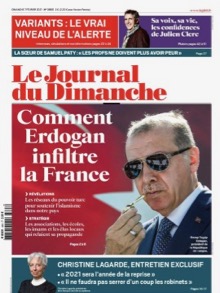
The Directorate General of Internal Security (DGSI) inspired a press dossier, in the Journal du Dimanche of February 7, 2021, on how “Erdoğan is infiltrating France”. Note: the newspaper did not question Turkey, but the only President Erdoğan. Similarly, at least initially, it did not mention Qatar, the United Kingdom or the United States. Above all, it quoted the Millî Görüş which it accuses, without noting that it was the militia of Prime minister Necmettin Erbakan and that President Erdoğan was one of its leaders. Finally, it omitted to mention the alleged role of the Turkish secret services in the attacks of November 13, 2015 (the Bataclan).
It is this theme that we are going to develop by rectifying many prejudices.Didier Lemaire, professor of philosophy in the Paris region (in France, one teaches philosophy in the final year of secondary school), has been threatened by Islamists because he dares to debate political Islam. He was placed under police protection.
Islam: faith and politics
Mohammed was a prophet, warlord and prince at the same time. The Islam he founded was at the same time a particular rite of Christianity [1], his policy towards the tribes of the Arabian Peninsula and the law he promulgated. No one was able at his death to distinguish his spiritual heritage from his political and military action. On the contrary, his political successors (in Arabic: “Caliphs”) inherited his authority in religious matters, although they had no theological knowledge and sometimes even did not believe in God.
Today, Muslims living in Europe aspire to sort out this Islam, to keep only the spiritual part of it and to abandon dated aspects, especially the Sharia. On the contrary, President Erdoğan, who officially wishes to be declared Caliph of Muslims on October 29, 2023 (the centenary of the Turkish Republic), is doing everything possible to oppose this.
It is therefore a struggle between two civilisations. Not between European culture and that of Turkey, but contemporary civilisation against another, which disappeared a century ago.Former Islamist Prime Minister Necmettin Erbakan and his bodyguards. To the right of the photo is Recep Tayyp Erdoğan.
Erdoğan: an Islamist thug who became president
President Erdoğan is not a politician like the others. He started his career as a thug who was punching in the streets of the capital. He entered politics in the 1970s by joining an Islamist militia, the Akıncılar, until he joined the militia created during the fall of Prime Minister Necmettin Erbakan in 1997, the Millî Görüş. This organisation of nervis was financed by the Iraq of President Saddam Hussein and placed under the control of the Grand Master of the Sufi Order of the Naqchbandis, General Ezzat Ibrahim Al-Douri, future Iraqi Vice-President.In Afghanistan, Gulbuddin Hekmatyar with at his feet Rachid Ghanoucchi Ghanoucchi (left in the photo) and Recep Tayyip Erdoğan (right).
The Anglo-Tunisian Rachid Ghanoucchi, one of the great figures of the Muslim Brotherhood, said: “In the Arab world of my generation, when people talked about the Islamic movement, they talked about Erbakan. When they talked about Erbakan, it was the way they talked about Hassan al-Banna and Sayyed Qutb”. So, although the Islamist movement is organisationally divided between the Muslim Brotherhood on the one hand and the Naqchbandis on the other, they undoubtedly form a single ideology.
It is in the name of the Millî Görüş that Recep Tayyip Erdoğan played an effective role in the wars in Afghanistan alongside Gulbuddin Hekmatyar and in the wars in Chechnya alongside Shamil Basayev. Once he became president, he imposed himself as the leader of this movement during the NATO war in Syria. Today he is the leader of both the Muslim Brotherhood (established in the wider Middle East and Europe) and the Naqchbandis (established mainly in Bosnia-Herzegovina, Russian Dagestan, South Asia and Chinese Xinjiang).
Widely described as “the sick man of Europe” after three decades of socialism, the United Kingdom underwent an economic revolution in the 1970s and 1980s because of one remarkable person—Prime Minister Margaret Thatcher.
Distinguished Fellow in Conservative Thought Lee Edwards is a leading historian of American conservatism and the author or editor of 25 books.
Israel, India, and the United Kingdom all adopted socialism as an economic model following World War II.
Socialism is guilty of a fatal conceit: It believes its system can make better decisions for the people than they can for themselves.
Socialism has failed in every country in which it has been tried.Copied
Socialists are fond of saying that socialism has never failed because it has never been tried. But in truth, socialism has failed in every country in which it has been tried, from the Soviet Union beginning a century ago to three modern countries that tried but ultimately rejected socialism—Israel, India, and the United Kingdom.
While there were major political differences between the totalitarian rule of the Soviets and the democratic politics of Israel, India, and the U.K., all three of the latter countries adhered to socialist principles, nationalizing their major industries and placing economic decision-making in the hands of the government.
The Soviet failure has been well documented by historians. In 1985, General Secretary Mikhail Gorbachev took command of a bankrupt disintegrating empire. After 70 years of Marxism, Soviet farms were unable to feed the people, factories failed to meet their quotas, people lined up for blocks in Moscow and other cities to buy bread and other necessities, and a war in Afghanistan dragged on with no end in sight of the body bags of young Soviet soldiers.
The economies of the Communist nations behind the Iron Curtain were similarly enfeebled because they functioned in large measure as colonies of the Soviet Union. With no incentives to compete or modernize, the industrial sector of Eastern and Central Europe became a monument to bureaucratic inefficiency and waste, a “museum of the early industrial age.” As the New York Times pointed out at the time, Singapore, an Asian city-state of only 2 million people, exported 20 percent more machinery to the West in 1987 than all of Eastern Europe.
And yet, socialism still beguiled leading intellectuals and politicians of the West. They could not resist its siren song, of a world without strife because it was a world without private property. They were convinced that a bureaucracy could make more-informed decisions about the welfare of a people than the people themselves could. They believed, with John Maynard Keynes, that “the state is wise and the market is stupid.”
Israel, India, and the United Kingdom all adopted socialism as an economic model following World War II. The preamble to India’s constitution, for example, begins, “We, the People of India, having solemnly resolved to constitute India into a Sovereign Socialist Secular Democratic Republic . . .” The original settlers of Israel were East European Jews of the Left who sought and built a socialist society. As soon as the guns of World War II fell silent, Britain’s Labour Party nationalized every major industry and acceded to every socialist demand of the unions.
At first, socialism seemed to work in these vastly dissimilar countries. For the first two decades of its existence, Israel’s economy grew at an annual rate of more than 10 percent, leading many to term Israel an “economic miracle.” The average GDP growth rate of India from its founding in 1947 into the 1970s was 3.5 percent, placing India among the more prosperous developing nations. GDP growth in Great Britain averaged 3 percent from 1950 to 1965, along with a 40 percent rise in average real wages, enabling Britain to become one of the world’s more affluent countries.
But the government planners were unable to keep pace with increasing population and overseas competition. After decades of ever declining economic growth and ever rising unemployment, all three countries abandoned socialism and turned toward capitalism and the free market. The resulting prosperity in Israel, India, and the U.K. vindicated free-marketers who had predicted that socialism would inevitably fail to deliver the goods. As British prime minister Margaret Thatcher observed, “the problem with socialism is that you eventually run out of other people’s money.”
Israel Israel is unique, the only nation where socialism was successful—for a while. The original settlers, according to Israeli professor Avi Kay, “sought to create an economy in which market forces were controlled for the benefit of the whole society.” Driven by a desire to leave behind their history as victims of penury and prejudice, they sought an egalitarian, labor-oriented socialist society. The initial, homogeneous population of less than 1 million drew up centralized plans to convert the desert into green pastures and build efficient state-run companies.
Most early settlers, American Enterprise Institute scholar Joseph Light pointed out, worked either on collective farms called kibbutzim or in state-guaranteed jobs. The kibbutzim were small farming communities in which people did chores in exchange for food and money to live on and pay their bills. There was no private property, people ate in common, and children under 18 lived together and not with their parents. Any money earned on the outside was given to the kibbutz.
A key player in the socialization of Israel was the Histadrut, the General Federation of Labor, subscribers to the socialist dogma that capital exploits labor and that the only way to prevent such “robbery” is to grant control of the means of production to the state. As it proceeded to unionize almost all workers, the Histadrut gained control of nearly every economic and social sector, including the kibbutzim, housing, transportation, banks, social welfare, health care, and education. The federation’s political instrument was the Labor party, which effectively ruled Israel from the founding of Israel in 1948 until 1973 and the Yom Kippur War. In the early years, few asked whether any limits should be placed on the role of government.
Israel’s economic performance seemed to confirm Keynes’s judgment. Real GDP growth from 1955 to 1975 was an astounding 12.6 percent, putting Israel among the fastest-growing economies in the world, with one of the lowest income differentials. However, this rapid growth was accompanied by rising levels of private consumption and, over time, increasing income inequality. There was an increasing demand for economic reform to free the economy from the government’s centralized decision-making. In 1961, supporters of economic liberalization formed the Liberal party—the first political movement committed to a market economy.
The Israeli “economic miracle” evaporated in 1965 when the country suffered its first major recession. Economic growth halted and unemployment rose threefold from 1965 to 1967. Before the government could attempt corrective action, the Six-Day War erupted, altering Israel’s economic and political map. Paradoxically, the war brought short-lived prosperity to Israel, owing to increased military spending and a major influx of workers from new territories. But government-led economic growth was accompanied by accelerating inflation, reaching an annual rate of 17 percent from 1971 to 1973.
For the first time, there was a public debate between supporters of free-enterprise economics and supporters of traditional socialist arrangements. Leading the way for the free market was the future Nobel Prize winner Milton Friedman, who urged Israeli policymakers to “set your people free” and liberalize the economy. The 1973 war and its economic impacts reinforced the feelings of many Israelis that the Labor party’s socialist model could not handle the country’s growing economic challenges. The 1977 elections resulted in the victory of the Likud party, with its staunch pro-free-market philosophy. The Likud took as one of its coalition partners the Liberal party.
Because socialism’s roots in Israel were so deep, real reform proceeded slowly. Friedman was asked to draw up a program that would move Israel from socialism toward a free-market economy. His major reforms included fewer government programs and reduced government spending; less government intervention in fiscal, trade, and labor policies; income-tax cuts; and privatization. A great debate ensued between government officials seeking reform and special interests that preferred the status quo.
Meanwhile, the government kept borrowing and spending and driving up inflation, which averaged 77 percent for 1978–79 and reached a peak of 450 percent in 1984–85. The government’s share of the economy grew to 76 percent, while fiscal deficits and national debt skyrocketed. The government printed money through loans from the Bank of Israel, which contributed to the inflation by churning out money.
Finally, in January 1983, the bubble burst, and thousands of private citizens and businesses as well as government-run enterprises faced bankruptcy. Israel was close to collapse. At this critical moment, a sympathetic U.S. president, Ronald Reagan, and his secretary of state, George Shultz, came to the rescue. They offered a grant of $1.5 billion if the Israeli government agreed to abandon its socialist rulebook and adopt some form of U.S.-style capitalism, using American-trained professionals.
The Histadrut strongly resisted, unwilling to give up their decades-old power and to concede that socialism was responsible for Israel’s economic troubles. However, the people had had enough of soaring inflation and non-existent growth and rejected the Histadrut’s policy of resistance. Still, the Israeli government hesitated, unwilling to spend political capital on economic reform. An exasperated Secretary Schulz informed Israel that if it did not begin freeing up the economy, the U.S. would freeze “all monetary transfers” to the country. The threat worked. The Israeli government officially adopted most of the free-market “recommendations.”
The impact of a basic shift in Israeli economic policy was immediate and pervasive. Within a year, inflation tumbled from 450 percent to just 20 percent, a budget deficit of 15 percent of GDP shrank to zero, the Histadrut’s economic and business empire disappeared along with its political domination, and the Israeli economy was opened to imports. Of particular importance was the Israeli high-tech revolution, which led to a 600 percent increase in investment in Israel, transforming the country into a major player in the high-tech world.
There were troubling side effects such as social gaps, poverty, and concerns about social justice, but the socialist rhetoric and ideology, according to Glenn Frankel, the Washington Post’s correspondent in Israel, “has been permanently retired.” The socialist Labor party endorsed privatization and the divestment of many publicly held companies that had become corrupted by featherbedding, rigid work rules, phony bookkeeping, favoritism, and incompetent managers.
After modest expansion in the 1990s, Israel’s economic growth topped the charts in the developing world in the 2000s, propelled by low inflation and a reduction in the size of government. Unemployment was still too high and taxes took up 40 percent of GDP, much of it caused by the need for a large military. However, political parties are agreed that there is no turning back to the economic policies of the early years—the debate is about the rate of further market reform. “The world’s most successful experiment in socialism,” Light wrote, “appears to have resolutely embraced capitalism.”
India Acceptance of socialism was strong in India long before independence, spurred by widespread resentment against British colonialism and the land-owning princely class (the zamindars) and by the efforts of the Communist Party of India, established in 1921. Jawaharlal Nehru adopted socialism as the ruling ideology when he became India’s first prime minister after independence in 1947.
For nearly 30 years, the Indian government adhered to a socialist line, restricting imports, prohibiting foreign direct investment, protecting small companies from competition from large corporations, and maintaining price controls on a wide variety of industries including steel, cement, fertilizers, petroleum, and pharmaceuticals. Any producer who exceeded their licensed capacity faced possible imprisonment.
As the Indian economist Swaminathan S. Anklesaria Aiyar wrote, “India was perhaps the only country in the world where improving productivity . . . was a crime.” It was a strict application of the socialist principle that the market cannot be trusted to produce good economic or social outcomes. Economic inequality was regulated through taxes—the top personal income tax rate hit a stifling 97.75 percent.
Some 14 public banks were nationalized in 1969; six more banks were taken over by the government in 1980. Driven by the principle of “self-reliance,” almost anything that could be produced domestically could not be imported regardless of the cost. It was the “zenith” of Indian socialism, which still failed to satisfy the basic needs of an ever expanding population. In 1977–78, more than half of India was living below the poverty line.
At the same time, notes Indian-American economist Arvind Panagariya, a series of external shocks shook the country, including a war with Pakistan in 1965, which came on the heels of a war with China in 1962; another war with Pakistan in 1971; consecutive droughts in 1971–72 and 1972–73, and the oil price crisis of October 1973, which contributed to a 40 percent deterioration in India’s foreign trade.
Economic performance from 1965 to 1981 was worse than than at any other time of the post-independence period. As in Israel, economic reform became an imperative. Prime Minister Indira Gandhi had pushed her policy agenda as far to the left as possible. In 1980, the Congress party won a two-thirds majority in the Parliament, and Gandhi adopted, at last, a more pragmatic, non-ideological course. But as with everything else in India, economic reform proceeded slowly.
An industrial-policy statement continued the piecemeal retreat from socialism that had begun in 1975, allowing companies to expand their capacity, encouraging investment in a wide variety of industries, and introducing private-sector participation in telecommunications. Further liberalization received a major boost under Rajiv Gandhi, who succeeded his mother in 1984 following her assassination. As a result, GDP growth reached an encouraging 5.5 percent.
Economics continued to trump ideology under Rajiv Gandhi, who was free of the socialist baggage carried by an earlier generation. His successor, P. V. Narasimha Rao, put an end to licensing except in selected sectors and opened the door to much wider foreign investment. Finance minister Manmohan Singh cut the tariff rates from an astronomical 355 percent to 65 percent. According to Arvind Panagariya, “the government had introduced enough liberalizing measures to set the economy on the course to sustaining approximately 6 percent growth on a long-term basis.” In fact, India’s GDP growth reached a peak of over 9 percent in 2005–8, followed by a dip to just under 7 percent in 2017–18.
A major development of the economic reforms was the remarkable expansion of India’s middle class. The Economist estimates there are 78 million Indians in the middle-middle and upper middle-class category. By including the lower middle class, Indian economists Krishnan and Hatekar figure that India’s new middle class grew from 304.2 million in 2004–5 to an amazing 606.3 million in 2011–12, almost one-half of the entire Indian population. The daily income of the three middle classes are lower middle, $2–$4; middle middle, $4–$6; upper middle, $6–$10.
While this is extremely low by U.S. standards, a dollar goes a long way in India, where the annual per capita income is approximately $6,500. If only half of the lower middle class makes the transition to upper-class or middle income, that would mean an Indian middle class of about 350 million Indians—a mid-point between The Economist and Krishnan and Hatekar estimates. Such an enormous middle class confirms the judgment of the Heritage Foundation, in its Index of Economic Freedom, that India is developing into an “open-market economy.”
In 2017, India overtook Germany to become the fourth-largest auto market in the world, and it is expected to displace Japan in 2020. That same year, India overtook the U.S. in smartphone sales to become the second-largest smartphone market in the world. Usually described as an agricultural country, India is today 31 percent urbanized. With an annual GDP of $8.7 trillion, India ranks fifth in the world, behind the United States, China, Japan, and Great Britain. Never before in recorded history, Indian economist Gurcharan Das has noted, have so many people risen so quickly.
All this has been accomplished because the political leaders of India sought and adopted a better economic system—free enterprise—after some four decades of fitful progress and unequal prosperity under socialism.
United Kingdom Widely described as “the sick man of Europe” after three decades of socialism, the United Kingdom underwent an economic revolution in the 1970s and 1980s because of one remarkable person—Prime Minister Margaret Thatcher.
Farage: ‘Black Lives Matter Is a Dangerous, Marxist Organisation Hell-Bent on Anarchy’ https://t.co/sp1XrNOugF
— Breitbart London (@BreitbartLondon) June 9, 2020
“This did not just spark after George Floyd. This has been long-planned, and they were simply waiting for an opportunity. If we lose free speech to this degree, then the world is going to be a pretty dangerous and unpleasant place.”
Farage: Poor History Teaching Means Young Don’t Know Britain Stamped Out Slavery Worldwide https://t.co/hGLR0MD5Q3
Brexit leader Nigel Farage has spoken to Breitbart about the “Marxist, Anarchic” threat to free speech and free thought in the United Kingdom, saying that fear is “dominating absolutely everything”.
Mr Farage made the remarks to Alex Marlow on the Breitbart News Daily Show on Sirius XM Patriot on Monday, when he was asked about his recent break with Global Radio’s LBC, where until last week he had a daily political talk show.
While Mr Farage declined to comment on the specifics of the change, a position of silence has has taken since the surprise announcement on Thursday, he did offer his thoughts on the broader move to suppress freedom of thought and speech in the United Kingdom, implying those developments may have had something to do with his ouster.
Making clear present developments were historic in scale, the Brexit leader told Marlow and the Breitbart News Daily audience that: “It seems that the real threat we face now is a genuine threat to free speech. I have never known a time when, in the United Kingdom — which is famed for its huge breadth of media commentary and views — I have never seen so many people so scared to write and say and speak and broadcast what they think. It really is very disturbing.”
Mr Farage explained that while it was clear the simple and face-value idea that black lives matter was unarguable and widely supported, the organisation that calls itself Black Lives Matter hid a radical agenda behind its agreeable sounding name, but used the title to accuse anyone who dared disagree with its hard-left views of being racist. He continued: “the truth of it, of course, is that Black Lives Matters the organisation is open Marxist, Anarchic, wants to abolish our police forces, and is doing its best culturally to literally destroy and erase every piece of symbolism of our long and complex history.
“We’re at a point where if you criticise ‘Black Lives Matter’ the accusation is you don’t support equality and you think there should be a huge racial divide. And that is where we are. I am just not somebody who is prepared to go along with that, and I won’t support mob rule.”
On how the woke-left police the new orthodoxy of thought, Farage said “Fear is what dominating absolutely everything”, pointing out political activists would vilify dissenters online, in the street, and agitate against businesses to deprive funding. On the organised campaigning networks that perpetrate this enforcement, Farage told Breitbart News that ordinary peoiple increasingly felt: “…the fear knowing that the Soros-funded organisations will go directly to the advertisers who advertise on radio shows and TV shows and in newspapers and all the rest of it. And this is very much the way in which the cancel-mob works. They try to put the advertisers under pressure.
Farage: ‘Black Lives Matter Is a Dangerous, Marxist Organisation Hell-Bent on Anarchy’ https://t.co/sp1XrNOugF
— Breitbart London (@BreitbartLondon) June 9, 2020
“This did not just spark after George Floyd. This has been long-planned, and they were simply waiting for an opportunity. If we lose free speech to this degree, then the world is going to be a pretty dangerous and unpleasant place.”
Mr Farage has been extremely outspoken on this new Puritanism in recent weeks, leading to speculation that his pointing out that Black Lives Matter UK openly campaign for the abolition of police and that smashing statues was uncomfortably similar to the behaviour of radical religious extremist groups in the Middle East contributed to his sudden departure from his radio talk show. Last week, the Brexit party leader condemned the announcement that London’s Royal Holloway university was going to purge its own library collection to combat “structural racism”, noting dryly that the “book-burning” had now started.
Offering an explanation of how it could be that young British people caught up in the growing Black Lives Matter protest could be ignorant of the fact that it was the British Empire that did so much to stamp out slavery worldwide in the 19th century, Farage said “we’ve got to start teaching history properly” and it was time to make “positive arguments” to the nation’s youth.
Farage: Poor History Teaching Means Young Don’t Know Britain Stamped Out Slavery Worldwide https://t.co/hGLR0MD5Q3
Political correctness recently took a dangerous turn in the United Kingdom…
The UK is one big dangerous turn.
NHS’s infamous “waiting lists…
Since many people define racism and sexism as “anything I disagree with,” the new policy will no doubt lead to people being denied medical care for statements that most reasonable people would consider unobjectionable.
Political correctness recently took a dangerous turn in the United Kingdom when the North Bristol National Health Service Trust announced that hospital patients who use offensive, racist, or sexist language will cease receiving medical care as soon as it is safe to end their treatment.
The condition that treatment will not be withdrawn until doing so is safe seems to imply that no one will actually suffer from this policy. However, health-care providers have great discretion to determine when it is “safe” to withhold treatment. So, patients could be left with chronic pain or be denied certain procedures that could improve their health but are not necessary to make them “safe.” Patients accused of racism or sexism could also find themselves at the bottom of the NHS’s infamous “waiting lists,” unable to receive treatment until it truly is a matter of life and death.
Since many people define racism and sexism as “anything I disagree with,” the new policy will no doubt lead to people being denied medical care for statements that most reasonable people would consider unobjectionable.
This is not the first time NHS has withheld treatment because of an individual’s behavior. A couple years ago, another local health committee announced it would withhold routine or nonemergency surgeries from smokers and the obese. Since reducing smoking and obesity benefits both individual patients and the health care system as a whole, this policy may appear defensible. But denying or delaying care violates medical ethics and sets a dangerous precedent. If treatment could be denied to smokers and the obese, then it could also be denied to those who engage in promiscuous sex, drive over the speed limit, don’t get the “proper” number of vaccinations for themselves and their children, or have “dangerous” political views.
Government bureaucrats denying care to individuals for arbitrary reasons is the inevitable result of government interference in the health-care market. Government intervention is supposed to ensure quality and affordable (or free) care for all. But, government intervention artificially lowers the costs of health care to patients while increasing costs to providers. As demand rises and supply falls, government imposes rationing to address the shortages and other problems caused by prior government interference.
Rationing has been part of American health care at least since the passage of the Health Maintenance Organization Act of 1973. Every plan to expand government’s role in health care contains some form of rationing.
Advocates for government intervention in health care will counter complaints about rationing by saying the related health-care decisions are being made to benefit people’s quality of life. But, claiming government officials know how medical treatment can best enhance quality of life is as absurd as claiming that government officials know the correct prices of automobiles.
The only way to reverse the slide into national health care and rationing is for those who understand the economic and moral case for liberty to keep pushing to replace Obamacare and all other government intrusions into health care. Government-controlled health care must be replaced by free-market health care that empowers individuals to determine for themselves what does and does not enhance their quality of life.
The statistics obtained by Caught on Camera and comparitech differ markedly from those in the Bloomberg story which was retailed throughout the Western world by many news outlets, who increasingly refer to the West as “the Free World”. Comparitech records that as at August 2019 Moscow, with a population of 12.4 million, had 146,000 (not 200,000) cameras, while London’s 9 million citizens were being watched by 627,707 cameras.
A Bloomberg report of October 22 was concise and uncompromising in declaring Russia to be a surveillance state. Harking back to the good old days of the Cold War, as is increasingly the practice in much of the Western media, Bloomberg recounted that “The fourth of 10 basic rules Western spies followed when trying to infiltrate Russia’s capital during the Cold War — don’t look back because you’re never alone — is more apt than ever. Only these days it’s not just foreigners who are being tracked, but all 12.6 million Muscovites, too. Officials in Moscow have spent the last few years methodically assembling one of the most comprehensive video-surveillance operations in the world. The public-private network of as many as 200,000 cameras records 1.5 billion hours of footage a year that can be accessed by 16,000 government employees, intelligence officers and law-enforcement personnel.”
Terrifying, one might think. Straight out of Orwell’s 1984, that dystopian prediction of what the world could become, as noted in one description of how the face of the state’s symbolic leader, Big Brother, “gazes at you silently out of posters and billboards. His imposing presence establishes the sense of an all-seeing eye. The idea that he is always watching from the shadows imposes a kind of social order. You know not to speak out against The Party — because big brother is watching… The face always appears with the phrase Big Brother is watching you. As if you could forget.” Such is the terrifying Bloomberg picture of Moscow where there are supposedly 200,000 video cameras. You can’t blow your nose without it being seen. And wait for the next phase, in which Big Brother will hear you laugh.
In line with the Western approach, there is little mention of surveillance in other cities, but the website ‘Caught on Camera’ has analysed world-wide practices. It reports that there are some 25 million closed-circuit surveillance cameras world-wide and “the United Kingdom [with 4 million cameras] has more CCTV activity than any other European country, per capita… surprisingly, the Wandsworth borough in London in particular has more CCTV cameras than Boston, Dublin, Johannesburg and San Francisco put together. It is estimated there are 500,000 cameras dotted around London. The average person living in London will be recorded on camera 300 times in one day.”
The statistics obtained by Caught on Camera and comparitech differ markedly from those in the Bloomberg story which was retailed throughout the Western world by many news outlets, who increasingly refer to the West as “the Free World”. Comparitech records that as at August 2019 Moscow, with a population of 12.4 million, had 146,000 (not 200,000) cameras, while London’s 9 million citizens were being watched by 627,707 cameras. The picture (if one may use that word) is slightly slanted. To put it another way, London has 68 cameras for each 1,000 people, and the ratios elsewhere are enlightening: Shanghai 113 (China is in treble figures in three cities); Atlanta (Ga) 15; Chicago 13; Baghdad, Sydney and Dubai 12; Moscow and Berlin 11; and St Petersburg, Canberra and Washington DC tie at 5.
The slanting doesn’t stop there, because there are other ways of attacking Russia, spearheaded by such as the Washington Post, which highlighted the Bloomberg surveillance tale. The Post behaves like Big Brother focusing on Winston Smith, the hapless victim/hero of 1984 whose job it is “to rewrite the reports in newspapers of the past to conform with the present reality.” There is an eerie resonance in this, because the Post’s reportage on Russia verges on the obsessively censorious, while it avoids mention of anything remotely positive.
Understandably, the Post relies heavily on such sources as “Meduza, a Latvia-based online news outlet that covers the Kremlin” which reported that the Russian government “passed a law earlier this year that lets Vladimir Putin take all the country’s Internet traffic off the World Wide Web if he decrees that there’s an ‘emergency’.”
The fact that the intelligence services of the West have worked for a long time to devise strategies and tactics to destroy internet services in Russia and many other countries is neither here nor there, but it is important for Western propaganda purposes to condemn Russia for taking measures to counter the manoeuvres of the West’s cyberwar agencies. The Post emphasised that arrangements were made by various Russian ministries and agencies, including the Emergencies Ministry and the Federal Security Service which “is the successor to the KGB, where Putin was once an officer.”
The absurdity of that needlessly-injected personal point is amusing in a way, and serves to highlight the unending reiteration of detail intended to set the western public against Russia. Naturally, there is exclusion of information that could lead to audiences approving of Russia in any way.
The news site Axios states it aims to “deliver the cleanest, smartest, most efficient and trust-worthy experience for readers and advertisers alike” but when it comes to Russia it appears that there could be a bit of selectivity in that delivery. For example, in October the UK’s Guardian newspaper reported approvingly that according to the World Health Organisation (WHO), alcohol consumption in Russia “has dropped by 43% since 2003” and commented that the WHO had “put the decrease down to a series of measures brought in under the sport-loving president, Vladimir Putin, including restrictions on alcohol sales and the promotion of healthy lifestyles.” But Axios didn’t report it quite like that.
The Guardian also noted that “The last Soviet leader, Mikhail Gorbachev, led an anti-alcohol campaign with partial prohibition, which brought down consumption from the mid-1980s until 1990. But after the collapse of the Soviet Union, alcohol consumption exploded, continuing to rise until the start of the 2000s. Under Putin, Russia has introduced measures including a ban on shops selling any alcohol after 11 pm, increases in the minimum retail price of spirits and an advertising blackout.” The result has been “increased life expectancies in Russia, which reached a historic peak in 2018, at 78 years for women and 68 years for men. In the early 1990s, male life expectancy was just 57 years.”
This is an amazing societal development. In no other country has there been a comparable initiative that resulted in such a massive and positive shift in community habits.
The BBC was more coy than the Guardian about allocating approval for the remarkable success of the programme, and confined itself to reporting that the WHO “attributed the decline to a series of alcohol-control measures implemented by the state, and a push towards healthy lifestyles.” There was no reference to President Putin, and indeed the credit went elsewhere, because “alcohol-control measures introduced under former President Dmitry Medvedev included advertising restrictions, increased taxes on alcohol and a ban on alcohol sales between certain hours.”
Axios followed suit, and ‘Radio Free Europe’ didn’t mention Presidents Putin, Medvedev or Gorbachev, retailing simply that the “decline in consumption was due to “alcohol-control measures introduced at the beginning of the 2000s.” There were no reports of the achievement in US mainstream outlets or the UK’s resolutely right-wing anti-Russia media. (The Guardian doesn’t carry a Russian flag; it merely reports without xenophobic bias.)
The WHO Case Study provides an admirably detailed timeline of legislature and other developments concerning Russia’s successful drive against alcohol abuse, recording, for example, that in 2018 there was a “presidential decree on ‘National Purposes and Strategic Development Challenges of the Russian Federation until 2024’… including in the field of public health. The aim is to increase life expectancy to 78 years by 2024 and to 80 years by 2030, as well as the proportion of citizens leading a healthy lifestyle and systematically engaging in physical activities and sports.”
Don’t expect such an initiative to be praised or even mentioned by the Western media. Big Brother prefers to slant the cameras.



 Didier Lemaire, professor of philosophy in the Paris region (in France, one teaches philosophy in the final year of secondary school), has been threatened by Islamists because he dares to debate political Islam. He was placed under police protection.
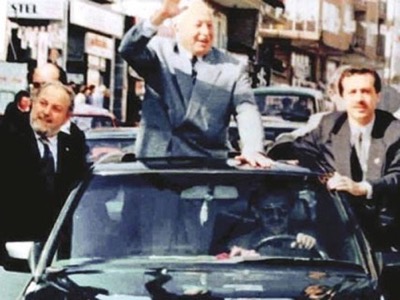 Former Islamist Prime Minister Necmettin Erbakan and his bodyguards. To the right of the photo is Recep Tayyp Erdoğan.
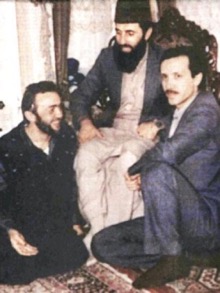 In Afghanistan, Gulbuddin Hekmatyar with at his feet Rachid Ghanoucchi Ghanoucchi (left in the photo) and Recep Tayyip Erdoğan (right).


 MCViewPoint