MCViewPoint

Opinion from a Libertarian ViewPoint

Archive for the ‘Uncategorized’ Category

UK: National Health Service to Deny Treatment for ‘Racist or Sexist Language, Gestures, Behaviour’

Posted by M. C. on November 4, 2019

More PC insanity from the UK.

The NHS – equal health care for all – only some are less equal than others.

I wonder if the NHS would treat Pakistani child groomers.

https://www.breitbart.com/europe/2019/11/04/uk-national-health-service-to-deny-treatment-for-racist-or-sexist-language-gestures-behaviour/

by Jack Montgomery

A National Health Service (NHS) trust has announced that it will withdraw treatment from patients it deems to be racist or sexist.

The North Bristol NHS Trust announced that patients will be subject a “sports-style disciplinary yellow card and then final red card in which treatment would be withdrawn as soon as is safe” on its official website.

The policy would cover not just “Threatening and offensive language” but also “Racist or sexist language, gestures or behaviour” more generally, as well as “malicious allegations” — a rather troubling caveat, given the NHS has in the past been entangled in large-scale malpractice scandals which hospitals and staff have initially denied.

“We have staff from many different backgrounds, from all over the world, and we pride ourselves on our commitment to equality which is a fundamental value of the NHS,” commented Andrea Young, Chief Executive for North Bristol NHS Trust.

“We’re sending a strong signal that any racism or discrimination is completely unacceptable – we want staff to challenge and report it and we want everyone to know that it will have consequences.”

How low the bar for deeming behaviour discriminatory and sufficiently “offensive” to withdraw treatment is not spelled out in explicit terms.

For example, in late 2017 an NHS patient who requested a female nurse to carry out a cervical smear complained when the hospital sent a person with “an obviously male appearance… close-cropped hair, a male facial appearance and voice, large number of tattoos and facial stubble” who insisted “My gender is not male. I’m a transsexual”…

Another NHS trust for the area, the University Hospitals Bristol NHS Foundation Trust, has previously been criticised for ordering the removal of the British flag from security staff stab vests after someone complained that the country’s national banner was “offensive”.

Be seeing you

25+ Best Memes About Overworked | Overworked Memes

Posted in Uncategorized | Tagged: , , , , | Leave a Comment »

America’s Military Is Misdirected, Not Underfunded – Defense One

Posted by M. C. on November 4, 2019

The real problem with current U.S. security strategy is that it is aimed at the wrong targets and employs the wrong tools to deal with the most urgent challenges we face.

https://www.defenseone.com/ideas/2019/11/americas-military-misdirected-not-underfunded/161025/

U.S. strategy should be more focused on preventing conflict with nuclear-armed China than on spinning out elaborate war-fighting scenarios.

The Heritage Foundation released its 500-page index of military strength this week. Unfortunately, what it achieves in length is undermined by its stale and unpersuasive assumptions.

As usual, Heritage gives all of the military services low marks. While there’s always room for improvement, the Heritage methodology seems arbitrary at best, and misleading at worst. The biggest complaint in the index is that America’s military is a “one-war force” that could not win simultaneous wars against Russia and China. But the two-war standard is a convenient myth that has historically had more to do with justifying high Pentagon budgets than it has with any rational assessment of the primary security challenges facing the United States and its allies.

The Center for International Policy’s Sustainable Defense Task Force – a group of ex-White House and Congressional budget experts, ex-military and Pentagon officials, and representatives of think tanks from across the political spectrum – takes a different view of the issue of great power rivalry.

Our European allies spend three times as much on their military forces as Russia does. Given better coordination and a more coherent strategy, they are more than capable of taking the lead in addressing any conceivable military challenge posed by Russia, with a reduced level of direct U.S. support. In any case, the greatest threats posed by the Putin regime – hybrid warfare, nuclear weapons, support for divisive nationalist parties, and cyber-attacks – cannot be dealt with by traditional military means.

Related: The National Defense Strategy Is No Strategy

Related: What’s Great Power Competition? No One Really Knows

Related: Is the Pentagon Truly Committed to the National Defense Strategy?

As for China, its biggest long-term challenge is economic, not military. Beijing’s aggressive global infrastructure initiatives are garnering priority access to key resources, and its steady economic growth could allow it to catch up with the U.S. military within the next two decades. But there is much that can be done to head off that eventuality, and the primary tool for doing so should not be bulking up the U.S. naval presence in the Pacific.

U.S. strategy should be more focused on preventing conflict with China – a war between two nuclear powers that would be a disaster for all concerned – than on spinning out elaborate war-fighting scenarios…

U.S. policy towards Russia and China should seek areas of potential cooperating rather than assuming unending confrontation. Climate change and nuclear arms control are two promising avenues for joint effort. As happened during the Cold War, nuclear arms control can be pursued even during periods of tension between Washington and Moscow. Reversing the Trump administration’s efforts to dismantle the carefully crafted hard-won system of global nuclear arms control – from abandoning the multilateral deal to curb Iran’s nuclear program to walking away from the Intermediate-Range Nuclear Forces treaty – needs to be reversed, and the sooner the better. And there will be no progress on climate change without substantial cooperation between the world’s two largest emitters of greenhouse gases.

The truth is, a policy that takes a more realistic view of great power rivalry; abandons planning for large-scale counterinsurgency and nation building initiatives like those that have been pursued in Iraq and Afghanistan; adopts a deterrence-only nuclear strategy along the lines outlined by the organization Global Zero; and cuts excess bureaucracy could allow for at least a 10 percent reduction in the size of the U.S. military and save $1.2 trillion from current Pentagon plans over the next decade.

In short, when it comes to U.S. military spending and capabilities, the sky is not falling, whatever the new Heritage analysis may allege. In fact, the United States is projected to spend over $1 trillion more during the decade covered by the Budget Control Act than in the prior decade, when the U.S. interventions in Iraq and Afghanistan were at peak levels…

Be seeing you

f35-moneydump


Posted in Uncategorized | Tagged: , , , , , | Leave a Comment »

Doug Casey on Trump… and an Impending Civil War? – Casey Research

Posted by M. C. on November 4, 2019

A fairly accurate assessment of Trump and our military, in my opinion.

https://www.caseyresearch.com/daily-dispatch/doug-casey-on-trump-and-an-impending-civil-war/

By

Chris’ note: Chris Reilly here, managing editor for Casey Daily Dispatch.

A couple of weeks ago, I flew out to Aspen, Colorado to catch up with legendary speculator and bestselling author Doug Casey.

It was a fantastic trip. I asked Doug about everything from technology… to the economy… and the resurgence of gold.

Doug also shared his thoughts on President Trump… and more importantly, what could be in store for America.

Like usual, Doug didn’t hold anything back. Today, I want to share our discussion with you…

Read on for this week’s special Conversations With Casey…


Chris: Doug, you predicted that Trump would win the election long before most people even thought he had a chance. Now, almost three years in, how would you rate his presidency?

Doug: Well, on the one hand Trump is a good thing simply because he’s not one of the lunatic fringe Democrats. He’s a cultural traditionalist at heart; he wants to see the US return to the “Leave It to Beaver” days of the 1950s. That’s essentially why he was elected, and why he’s still so popular. Despite the fact he’s culturally conservative, he has no core values. He runs strictly on gut feeling. He has no central philosophy or intellectual beliefs. It’s just whatever seems like a good idea at the time. He knows a lot about real estate speculation on high leverage. But he knows absolutely nothing about economics.

Let’s look at the good and the bad things about Trump.

Cultural conservative. That’s good in a time when the US is in a state of cultural turmoil, where the old order is being overthrown – which it is. Not so long ago, the country that was composed of white Christian people of European origin; it was quite homogeneous. And if you’re going to have a country, it’s good to be homogeneous.

Since the late ‘60s, however, the US has been inundated with migrants from all over the world; it’s no longer homogeneous. It no longer has real cultural traditions, and the remaining ones are being abolished, like Columbus Day recently. Columbus is no longer the discoverer of America so much as the oppressor of native peoples.

One major change is that Americans no longer share a common religious tradition. Say what you want about Christianity – and I’m not a religious person – but it was something Americans could share, that they had in common. But it’s no longer a major element; the US is becoming like Europe that way. That’s important because Christianity provided a broad moral framework. Now there’s a vacuum. It may be filled by Mohammedanism, especially since so many migrants take that creed seriously. Churches will be replaced by mosques in many places.

There’s no longer any kind of trust in the culture in general. And certainly not in the government. The only thing that Americans still trust – the only institution they still have any respect for – is the military. And that’s extremely dangerous because as Edward Gibbon said, regarding the Roman Empire and their military, “any order of men accustomed to slavery and violence make for very poor guardians of a civil constitution.” Nonetheless, I don’t doubt one or both parties will put up a general as the Greater Depression reaches a climax.

Of course Trump loves the military, which is natural for a statist. But the good news about Trump is that he also apparently sees all the pointless foreign wars are just making lots of enemies while they bankrupt the country. He’s trying to get the troops out of the Middle East quagmire; better late than never, although he’s been very, very slow about this. If he finishes that, maybe he’ll get them out of the new quagmires that are building up in Africa, and then start closing the 800 bases around the world, which serve no useful purpose besides feeding the Deep State. I don’t believe he’ll succeed, however. Warmongers are in total control in Washington.

So let’s put it this way. Trump has some real pluses, but no philosophical center. Politically he’s a statist. Economically, he doesn’t have a clue. In fact, he’s looking for more money creation, and lower or negative interest rates. Which is going to add flames to an absolutely catastrophic depression.

I appreciate his trying to stem mass migration, so what’s left of America can retain its cultural core. But his efforts are like building a sand castle on the sea shore. The waves are going to wash it away for all kinds of reasons. A pity, really. Minneapolis will resemble Mogadishu, Miami might resemble Port au Prince more than even Havana, El Paso will be like Juarez, and Cleveland like Karachi. But things change. The colors of the map on the wall are running more than has been the case since the barbarian invasions of the 5th century.

Chris: What do you have to say about the political landscape right now as we head into the 2020 election season?

Doug: Trump’s acting as a catalyst for something resembling an actual civil war in this country. And I’ll draw your attention to the fact that the unpleasantness of 1861 to 1865 was not, in fact, a civil war. It was a war of secession, which is very different from a civil war. In a war of secession, one group simply wants to part company from another – not rule them. In a civil war, on the other hand, you’ve got two or more groups that are fighting for control of one government. That wasn’t the case in the War Between the States…

The US could easily break up.

People say, “Well, what about our military, our defense?” The point I’d make is that the military is the second biggest thing, after welfare, that’s bankrupting the country. That’s number one.

Number two, they’re not defending the country. They’re actually drawing in outside attacks by going out and making enemies all over the world. The natives don’t like our soldiers in their countries any more than we’d like their soldiers in the US.

Number three, all our expensive high-tech weapons – F35s, B2s, aircraft carriers, and the rest of it… are basically junk. They’re going to be almost worthless in what resembles World War III, whatever that might look like. New technologies are going to totally obviate this crap, much more seriously than cavalry in World War I, which turned out to be worthless, or battleships in World War II.

When the military fails, it’s going to be a big disuniting influence for the US. Only a teeny-weeny portion of the American population knows anything about the military anymore. They’re isolated from it, even though they’ve been programmed to love and respect it. The military have, at the same time, become like a separate culture within the culture. Military guys hang out just with each other, not with civilians. Just like cops hang out just with each other, not with the people that they police. Most cops today, incidentally, are also ex-military. Another bad trend.

There’s a great deal more to be said about all this, but the purpose of this interview was just to touch on a few high points.

Bottom line? Trump has his hands full.

Posted in Uncategorized | Tagged: , , , , , | Leave a Comment »

The Power of Self-Ownership | Mises Wire

Posted by M. C. on November 4, 2019

If you don’t own yourself you are not free.

https://mises.org/wire/power-self-ownership?utm_source=Mises+Institute+Subscriptions&utm_campaign=fe55b60ca0-EMAIL_CAMPAIGN_9_21_2018_9_59_COPY_01&utm_medium=email&utm_term=0_8b52b2e1c0-fe55b60ca0-228343965

As every reader of Murray Rothbard knows, the principle of self-ownership stands at the basis of libertarian thought. Each person is the owner of his or her own body. If we add a principle for homesteading land and natural resources, we can without much trouble get to an anarcho-capitalist society. But even on its own, the self-ownership principle rules out the welfare state. You cannot be compelled to labor for someone else, even if the other person “needs” your labor more than you do.

You would expect Marxists to brush aside self-ownership as bourgeois apologetics, and for most part they do. G.A. Cohen, a Marxist who taught political theory at Oxford University, was an exception. In his book Self-Ownership, Freedom, and Equality (Cambridge University Press, 1995), he says that he finds self-ownership intuitively plausible:

In my experience, leftists who disparage [Robert] Nozick’s essentially unargued affirmation of each person’s right over himself lose confidence in their unqualified denial of the thesis of self-ownership when they are asked to consider who has the right to decide what should happen, for example, to their own eyes. They do not immediately agree that, were eye transplants easy to achieve, it would then be acceptable for the state to conscript potential eye donors into a lottery whose losers must yield an eye to beneficiaries who would otherwise not be one-eyed but blind.” (p. 70)

As Cohen rightly notes, your right to your own body outweighs commonly used socialist principles that mandate redistribution. You are entitled to keep your eyes even if the fact that you have two working eyes is a matter of genetic luck and even if a blind person “needs” an eye more than you do. (You could still see with one eye but he cannot see at all.)

Cohen must now confront a dilemma. He finds self-ownership prima facie plausible. But self-ownership rules out the welfare state, and even worse, is a big step toward a fully free market society. What can he do to escape the dilemma?

Two courses of action suggest themselves. He might admit self-ownership, but deny that it leads to free-market capitalism. Alternatively, he might claim that, in spite of its surface plausibility, self-ownership ought to be rejected. It is the latter tactic that he adopts. He readily acknowledges that self-ownership rules out the welfare state.

Cohen says that the force of self-ownership really derives from something else. We have a strong belief that it is wrong to interfere with the integrity of someone’s body, and this, he thinks, is different from self-ownership. He asks us to imagine that everyone is born with empty eye sockets. The state implants two eyes in everyone at birth, using an eye bank it owns. If someone lost both eyes, wouldn’t we oppose an eye lottery to remove forcibly one eye from a sighted person to help the blind person? But in the example the state owns all the eyes. Cohen concludes that our real objection to an eye lottery in the actual world is not that it violates self-ownership but that people have a right to bodily integrity.

The “suggestion arises that our resistance to a lottery for natural eyes shows not belief in self-ownership but hostility to severe interference in someone’s life. For the state need never vest ownership of the eyes in persons.” (p. 244)

A defender of self-ownership can readily acknowledge that it would be wrong to remove someone’s eyes in Cohen’s science-fiction case. All he needs to preserve his principle is the fact that you own your eyes adds to the moral badness of making you enter the eye lottery. Bodily integrity and self-ownership supplement each other: they do not compete for our allegiance, as Cohen seems to think. The fact that Cohen had to resort to a bizarre example to try to escape self-ownership shows its power. Once you think about it, self-ownership is hard to reject.

Be seeing you

706a7-rothbard2bmurray

Murray Rothbard


Posted in Uncategorized | Tagged: , , , | Leave a Comment »

C.S. Lewis Describes How To Combat Fake News | Mises Wire

Posted by M. C. on November 4, 2019

Lewis implicitly acknowledges the power of consumer sovereignty when he suggests that his readers begin their battle against Cleon by canceling the subscription to his newspaper. While few readers today likely have a literal newspaper subscription, we all subscribe to Cleons in one way or another, even if just on a mental level…

Shut it off and shake off the wool.

https://mises.org/wire/cs-lewis-describes-how-combat-fake-news?utm_source=Mises+Institute+Subscriptions&utm_campaign=8cb3cdee0b-EMAIL_CAMPAIGN_9_21_2018_9_59_COPY_01&utm_medium=email&utm_term=0_8b52b2e1c0-8cb3cdee0b-228343965

In 1945, the great English author and medieval scholar, C.S. Lewis, penned an incisive essay in The Spectator called “ After Priggery—What? ” that discussed the dissolution of priggery as a prominent vice in British society. The absence of priggery is in itself no bad thing, but Lewis warns that the vacuum created by the absence of priggery cannot be sustained. In the absence of a replacement virtue, another vice shall come to fill the void. Lewis identifies this vice as an excess of toleration, specifically regarding what is tolerated in the public discourse. Unfortunately, the state of contemporary discourse demonstrates that rather than heeding Lewis’ advice, our society has instead done the exact opposite.

According to Lewis, British society had “sunk below” priggery in its open toleration of a journalist Lewis identifies with the pseudonym Cleon. This Cleon serves as a stand-in for mendacious muck-raking journalists and media personalities who purposefully lie and stir up trouble. In a priggish society, Lewis argues, a fellow such as Cleon would be regarded as being on the same social level as a prostitute, or perhaps even lower. Yet, in Lewis’s time, even those who hold Cleon to be a horrid liar will still meet with “him on perfectly friendly terms over a lunch table.”

Lewis pulls no punches in his assessment of Cleon’s danger to society, claiming that Cleon has sold his intellectual virginity, that “he gives his patrons a baser pleasure” than a prostitute, and that “he infects them with more dangerous diseases.” To Lewis, Cleon’s vile work “is poisoning the whole nation.”

Lewis is careful to explicitly argue against the idea that such danger necessitates government regulation of speech, noting the danger such laws would pose to freedom and questioning whether such a course of action would even be effective. Instead, Lewis goes on to propose that Cleon be socially shunned, not, Lewis is careful to note, because we are morally better than Cleon, but rather because there is one area in which our moral superiority stands in clear contrast to his own vice. And that is that while Cleon is poisoning the country with his lies and sensationalism, we are not.

Unfortunately, our society has, for a variety of causes, taken part of Lewis’ message to heart, while ignoring this important aspect of moral humility and as a result brought about the rebirth of priggery. The result is a Frankenstein’s monster of vice.

People have taken with great zeal to calling for the social ostracization of contemporary Cleons, while at the same time, thanks to social media, it has never been easier for individuals to become full-on Cleons in their own right. In effect, we have the worst of both worlds; widespread self-righteous priggery against those we disagree with while at the same time tolerating and even praising the Cleons in our own camp. The result is an infection of hatred and divisiveness spreading throughout the body politic worse than a venereal disease.

Traditional and social media are full of Cleons on all sides, with seemingly endless hordes of followers ready to do battle in the comments. Such persons thrive on the oxygen provided by these views, clicks, and comments, yet, many of us cannot bring ourselves to avert our eyes.

Some of us may even find ourselves taking perverse pleasure in reading and following Cleons just so that we may smugly observe how terrible they are and how much better we are. Sometimes we find ourselves rooting for “our side’s” Cleons, knowing full well that they are agents of mendacity and then seeking justification for our indulgence in the base pleasure they provide on the flimsy grounds that such tactics are sadly necessary in these troubled times.

Given the current deluge of Cleons, it is not uncommon to hear politicians gripe about how “there ought to be a law” whenever their feelings are hurt by the press or even random people on Twitter and we see increasing pressure for censorship on social media platforms. However, Libertarians, who are no strangers to the abuses of Cleon’s duplicitous contemporary descendants, know that at the end of the day it is consumer preference that ultimately decides who succeeds and who fails in the market. And it is because of this consumer sovereignty that hope for a return to civil coexistence is not entirely lost.

Lewis implicitly acknowledges the power of consumer sovereignty when he suggests that his readers begin their battle against Cleon by canceling the subscription to his newspaper. While few readers today likely have a literal newspaper subscription, we all subscribe to Cleons in one way or another, even if just on a mental level. Canceling such subscriptions, to Cleons on all sides, is something that each and every one of us is capable of, even though some particularly pleasurable ones may be harder to kick to the curb than others. Doing so has the two-fold benefit of denying Cleons the oxygen of attention on which they depend while simultaneously denying us the opportunity to indulge in the delectable temptation to engage in priggish self-righteousness.

There can be no doubt that today’s Cleons contribute to our current state of social disharmony. This disharmony poses a great threat to liberty as the lack of social trust in turn leads not only to people trusting more and more in the power of the state, but also a greater urgency to control the powerful state as a shield and later as a sword against one’s enemies. Expelling the Cleons from not only our news feeds but from our minds as well will not only play small part in helping to promote the conditions that allow for social peace, but will also allow us to expel a source of vice that inevitably makes our own lives more miserable.


Be seeing you

sheeple


Posted in Uncategorized | Tagged: , , , | Leave a Comment »

What Should We Learn from 40 Years of U.S. Intervention in the Middle East? | The National Interest

Posted by M. C. on November 3, 2019

https://nationalinterest.org/blog/middle-east-watch/what-should-we-learn-40-years-us-intervention-middle-east-41542

The presence of America’s vaunted military cannot necessarily shape the political orientation and structure of societies.

…These criticisms fail to take stock of the lessons that emerge from forty years of U.S. military action in the greater Middle East region. The presence of America’s vaunted military cannot necessarily shape the political orientation and structure of societies. Iraq and Afghanistan are obvious examples. Unrivaled American military power also has failed to contour the decisions of other actors in the theater. The United States failed to sufficiently influence the behavior of sectarian actors in Lebanon during its expedition there. The United States has failed to change Iranian foreign policy even after decades of relative military encirclement. Even after inflicting arguably the most humiliating and decisive military victory in modern history, American soldiers watched from just beyond the border as Saddam defied Washington and violently cracked down on Kurdish and Shia uprisings.

The notion that the United States could use its control on the north to shape the postwar Syrian state and expel Iran has always been a theoretical concept with no clear path to implementation.  In fact, many of the forces that have been deemed Iranian-backed are composed of Syrian citizens. Where would they be expelled too? Most likely, Damascus and its allies will work to secure the rest of the country while waiting America out. The simple fact that has been determinative to much of the conflict is that countries like Iran and Russia have more vital interests in Syria than a faraway superpower.

Others argued that Trump’s “strategy of retreat” from Syria, as the New York Times’ David Sanger called it, will result in chaos and terrorism as the U.S. withdrawal from Iraq did. Mimicking Bush administration talking points, Sanger claimed that “deployed forces are key to stopping terrorists before they reach American shores.” Ilan Goldenberg, a former State Department official and Clinton acolyte, took this line of reasoning to its natural conclusion. He wrote that, “[u]ltimately, the answer in the Middle East is to stay, but in a smaller more sustainable and cheaper way. We may need to have a few thousand troops in some of the various trouble spots in the region such as northeastern Syria for years to come. Their job will not be to ‘win’ but simply to muddle through.” Retired Marine General John Allen, president of the Brookings Institution, argued that “U.S. global leadership and, where necessary, its forces” are needed in ISIS-influenced territory across Asia and Africa “until the idea of the caliphate has been defeated.”

ISIS was quickly defeated because its messianic state building delusion deprived it of strategic flexibility. In having to defend fixed positions, its forces could not focus on the kind of asymmetrical strategies that have been so effective for non-state actors in the region. What’s left of it has already made clear it will not make the same mistake. But indefinite American military occupation of broad swaths of the Middle East is not a simple antidote to anti-U.S. militant action or chaos. In fact, the connective tissue between many of non-state actors is aggressive opposition towards the influence or direct or indirect military presence of the United States or its key allies. A diverse array of non-state actors including Hezbollah, the Taliban and al-Qaeda in Iraq have strengthened or even been established under the noses of American soldiers and marines. In fact, the Sunni Arabs of northern Syria are already chafing under heavy-handed America-enabled Kurdish rule—even “ethnic cleansing”—and the long-term continuation of this trend will invite trouble.

One oft-cited criticism was that it was a betrayal of the very Kurdish group in question. “The West owes them a debt for the price they’ve paid,” argues an opinion piece in the Wall Street Journal. The Kurdish groups in northern Syria, the YPG, decried the original decision as a “blatant betrayal.” But the sponsor-client relationship is inherently bidirectional; they form due to convergences of interests. The Kurds fought ISIS because it posed an existential threat to their communities, not as an expression of loyalty to America. ISIS had once pushed the Syrian Kurds all the way to the Turkish border at many points, and in Iraq, they came close to sacking Erbil.

The overzealous alliance reinforcement ethos that permeates Washington and demands every strategic cooperation be treated as a treaty alliance (or an emotional commitment) demanding America’s unrestricted moral fidelity to the demands and ambitions of the client, is neither necessary for alliance management nor in keeping with U.S. interests…

Moreover, why shouldn’t public opinion be a factor in American military decisionmaking? Due to a series of reasons, such as its military prowess and providential location, America faces little in the way of existential threats and, therefore, can entertain a spectrum of options on how to address interests and security challenges. A de facto occupation of one-third of Syrian territory was never the only or the obvious course of action…

Be seeing you

Posted in Uncategorized | Tagged: , , , , | Leave a Comment »

Watch “Jacob Hornberger: 2020 Libertarian US Presidential Candidate Announcement” on YouTube

Posted by M. C. on November 3, 2019

Great news!!!

Posted in Uncategorized | Tagged: , , | Leave a Comment »

Trump-Ukraine Whistleblower Suddenly Won’t Testify; Lawyers Break Off Negotiations Amid New Revelations | Zero Hedge

Posted by M. C. on November 2, 2019

In other words, House Democrats are about to impeach President Trump over a second-hand whistleblower complaint by a partisan CIA officer, and neither he nor his source will actually testify about it (for now…).

https://www.zerohedge.com/political/trump-ukraine-whistleblower-suddenly-wont-testify-lawyers-break-negotiations-house-amid

Profile picture for user Tyler Durden

A CIA officer who filed a second-hand whistleblower complaint against President Trump has gotten cold feet about testifying after revelations emerged that he worked with Joe Biden, former CIA Director John Brennan, and a DNC operative who sought dirt on President Trump from officials in Ukraine’s former government.

According to the Washington Examiner, discussions with the whistleblower – revealed by RealClearInvestigations as 33-year-old Eric Ciaramella have been halted, “and there is no discussion of testimony from a second whistleblower, who supported the first’s claims.”

Ciaramella complained that President Trump abused his office when he asked Ukraine to investigate corruption allegations against Joe Biden and his son Hunter, as well as claims related to pro-Clinton election interference and DNC hacking in 2016.

On Thursday, a top National Security Council official who was present on a July 25 phone call between Trump and Ukrainian President Volodomyr Zelensky testified that he saw nothing illegal about the conversation.

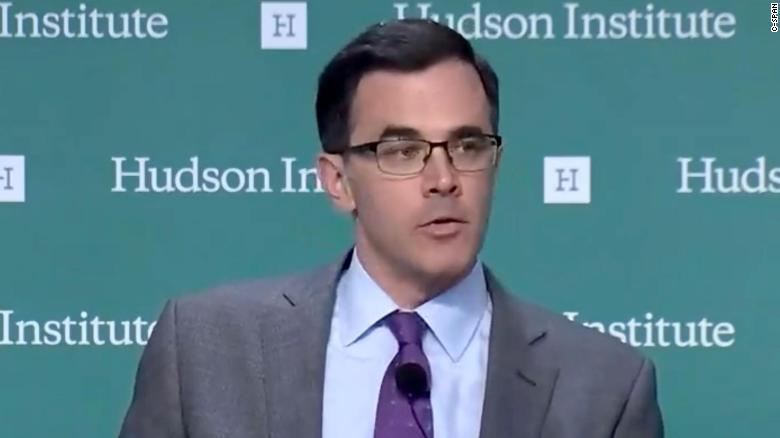
“I want to be clear, I was not concerned that anything illegal was discussed,” said Tim Morrison, former NSC Senior Director for European Affairs who was on the July 25 call between the two leaders.

Tim Morrison

And now, the partisan whistleblowers have cold feet;

“There is no indication that either of the original whistleblowers will be called to testify or appear before the Senate or House Intelligence committees. There is no further discussion ongoing between the legal team and the committees,” said the Examiner‘s source.

The whistleblower is a career CIA officer with expertise in Ukraine policy who served on the White House National Security Council during the Obama administration, when 2020 Democratic presidential candidate Joe Biden was “point man” for Ukraine, and during the early months of the Trump administration. –Washington Examiner

In other words, House Democrats are about to impeach President Trump over a second-hand whistleblower complaint by a partisan CIA officer, and neither he nor his source will actually testify about it (for now…).

On Thursday, the House passed a resolution establishing a framework for Trump impeachment proceedings, belatedly granting Republicans the ability to subpoena witnesses, but only if Schiff and fellow Democrats on the Intelligence Committee agree.

Mark Zaid, who along with Andrew Bakaj is an attorney for both the original whistleblower and the second whistleblower, told the Washington Examiner the legal team was willing to work with lawmakers so long as anonymity is ensured. “We remain committed to cooperating with any congressional oversight committee’s requests so long as it properly protects and ensures the anonymity of our clients,” Zaid said.

On Wednesday, Zaid and Bakaj declined to confirm or deny in a statement to the Washington Examiner that Eric Ciaramella, 33, a career CIA analyst and former Ukraine director on the NSC, was the whistleblower after a report by RealClearInvestigations. –Washington Examiner

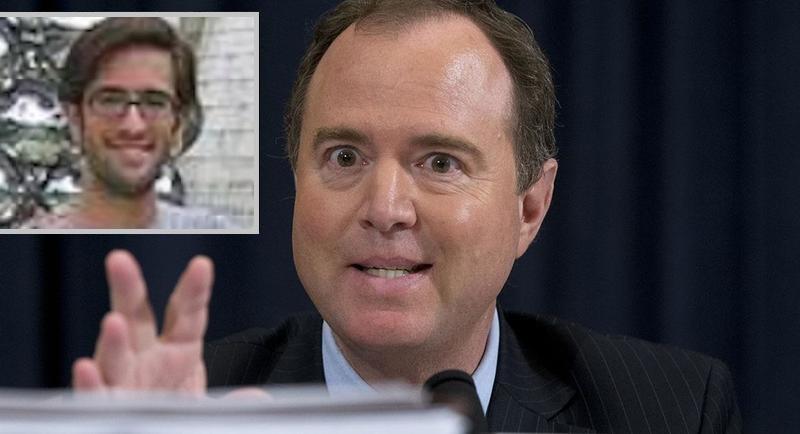
In September, House Intelligence Committee Chair Adam Schiff, who lied about contacts with Ciaramella (and hired two Ciaramella associates as staffers) said that the whistleblower “would like to speak to our committee.”

Once Ciaramella’s status as a CIA officer and his links to Biden emerged, however, Schiff backtracked. On October 13 he changed his tune, saying “Our primary interest right now is making sure that that person is protected.”

Meanwhile, once the House impeaches Trump – which it most certainly will – the tables will turn in the Senate, which will hold a mandatory trial. Not only will the GOP-Senators controlling the proceedings be able to subpoena documents and other evidence, they’ll be able to compel Ciaramella, the Bidens, Chalupa and any other witnesses they desire as we head into the 2020 US election.

Nancy Pelosi saw this coming and caved to her party anyway. There isn’t enough popcorn in the world for what’s coming.

Be seeing you
CIA Torture Program Whistleblower Speaks on – “The Sad ...

Posted in Uncategorized | Tagged: , , , , | Leave a Comment »

EconomicPolicyJournal.com: Warren Admits Universal Medicare Would Result in Two Million Lost Jobs

Posted by M. C. on November 2, 2019

He has calculated that Medicare for All would result in job losses (mostly among administrators) “somewhere in the range of 2 million” — about half on the insurers’ side and half employed in hospitals and doctors’ offices to argue with the former.

Mostly?

That’s a real hard number! It suggests some layoffs will be among actual medical staff.

Truly amazing.  They are going to make healthcare free and actually think they will be able to get away with less medical staff.
Elizabeth Warren is quickly climbing the ladder to becoming the most dangerous woman in the world

https://www.economicpolicyjournal.com/2019/11/warren-admits-universal-medicare-would.html#more

Elizabeth Warren has agreed with an assessment that a “medicare for all” plan would eliminate roughly two million jobs, reports National Review.

Warren was speaking during an interview at New Hampshire Public Radio.

“An economist at the University of Massachusetts, Amherst, told Kaiser Health News earlier this year that that could result in about 2 million jobs lost,” mostly within the healthcare industry, said NHPR reporter Casey McDermott.

“So I agree,” Warren replied. “I think this is part of the cost issue and should be part of a cost plan.”

The economist cited by McDermot is Robert Pollin of the extreme left Political Economy Research Institute at the University of Massachusetts.

“Every proponent of Medicare for All — including myself — has to recognize that the biggest source of cost-saving is layoffs,” Pollin said. He has calculated that Medicare for All would result in job losses (mostly among administrators) “somewhere in the range of 2 million” — about half on the insurers’ side and half employed in hospitals and doctors’ offices to argue with the former.

Mostly?

That’s a real hard number! It suggests some layoffs will be among actual medical staff.

Truly amazing.  They are going to make healthcare free and actually think they will be able to get away with less medical staff.

These people actually think they can plan the entire healthcare sector with giveaways to all and get better healthcare!

And further, they appear to have no clue as to what their oppressive central planning would do to innovation in medical care.

These are extremely dangerous people with a dangerous desire to control. This type of extreme planning always gets very bad when it gets implemented. It would put healthcare on the Venezuela economic model.

Elizabeth Warren is quickly climbing the ladder to becoming the most dangerous woman in the world. I have her ranked just under Cristina Fernández de Kirchner who was just elected vice-president in Argentina, and Alexandria Ocasio-Cortez who sure is able to rally the youth to her mad central planing deires.

–RW

Be seeing you

Faux

Identity Politics

Posted in Uncategorized | Tagged: , , , , | Leave a Comment »

The Ethnic Cleansing of Palestinian Christians That Nobody Is Talking About – Antiwar.com Original

Posted by M. C. on November 2, 2019

Christians in Israel, Saudi Arabia and Eqypt. You can’t tell the oppressors…US friends without a program.

The Clinton administration turned old Yugoslavia into a Christian free, Islamic free for all.

The disease is spreading.

https://original.antiwar.com/ramzy-baroud/2019/11/01/the-ethnic-cleansing-of-palestinian-christians-that-nobody-is-talking-about/

Palestine’s Christian population is dwindling at an alarming rate. The world’s most ancient Christian community is moving elsewhere. And the reason for this is Israel.

Christian leaders from Palestine and South Africa sounded the alarm at a conference in Johannesburg on October 15. Their gathering was titled: “The Holy Land: A Palestinian Christian Perspective”.

One major issue that highlighted itself at the meetings is the rapidly declining number of Palestinian Christians in Palestine.

There are varied estimates on how many Palestinian Christians are still living in Palestine today, compared with the period before 1948 when the state of Israel was established atop Palestinian towns and villages. Regardless of the source of the various studies, there is near consensus that the number of Christian inhabitants of Palestine has dropped by nearly tenfold in the last 70 years.

A population census carried out by the Palestinian Central Bureau of Statistics in 2017 concluded that there are 47,000 Palestinian Christians living in Palestine – with reference to the Occupied West Bank, East Jerusalem and the Gaza Strip. 98 percent of Palestine’s Christians live in the West Bank – concentrated mostly in the cities of Ramallah, Bethlehem and Jerusalem – while the remainder, a tiny Christian community of merely 1,100 people, lives in the besieged Gaza Strip.

The demographic crisis that had afflicted the Christian community decades ago is now brewing.

For example, 70 years ago, Bethlehem, the birthplace of Jesus Christ, was 86 percent Christian. The demographics of the city, however, have fundamentally shifted, especially after the Israeli occupation of the West Bank in June 1967, and the construction of the illegal Israeli apartheid wall, starting in 2002. Parts of the wall were meant to cut off Bethlehem from Jerusalem and to isolate the former from the rest of the West Bank.

“The Wall encircles Bethlehem by continuing south of East Jerusalem in both the east and west,” the “Open Bethlehem” organization said, describing the devastating impact of the wall on the Palestinian city. “With the land isolated by the Wall, annexed for settlements, and closed under various pretexts, only 13% of the Bethlehem district is available for Palestinian use.”

Increasingly beleaguered, Palestinian Christians in Bethlehem have been driven out from their historic city in large numbers. According to the city’s mayor, Vera Baboun, as of 2016, the Christian population of Bethlehem has dropped to 12 percent, merely 11,000 people.

The most optimistic estimates place the overall number of Palestinian Christians in the whole of Occupied Palestine at less than two percent.

The correlation between the shrinking Christian population in Palestine, and the Israeli occupation and apartheid should be unmistakable, as it is obvious to Palestine’s Christian and Muslim population alike.

A study conducted by Dar al-Kalima University in the West Bank town of Beit Jala and published in December 2017, interviewed nearly 1,000 Palestinians, half of them Christian and the other half Muslim. One of the main goals of the research was to understand the reason behind the depleting Christian population in Palestine.

The study concluded that “the pressure of Israeli occupation, ongoing constraints, discriminatory policies, arbitrary arrests, confiscation of lands added to the general sense of hopelessness among Palestinian Christians,” who are finding themselves in “a despairing situation where they can no longer perceive a future for their offspring or for themselves”.

Unfounded claims that Palestinian Christians are leaving because of religious tensions between them and their Muslim brethren are, therefore, irrelevant.

Gaza is another case in point. Only 2 percent of Palestine’s Christians live in the impoverished and besieged Gaza Strip. When Israel occupied Gaza along with the rest of historic Palestine in 1967, an estimated 2,300 Christians lived in the Strip. However, merely 1,100 Christians still live in Gaza today. Years of occupation, horrific wars and an unforgiving siege can do that to a community, whose historic roots date back to two millennia.

Like Gaza’s Muslims, these Christians are cut off from the rest of the world, including the holy sites in the West Bank. Every year, Gaza’s Christians apply for permits from the Israeli military to join Easter services in Jerusalem and Bethlehem. Last April, only 200 Christians were granted permits, but on the condition that they must be 55 years of age or older and that they are not allowed to visit Jerusalem.

The Israeli rights group, Gisha, described the Israeli army decision as “a further violation of Palestinians’ fundamental rights to freedom of movement, religious freedom and family life”, and, rightly, accused Israel of attempting to “deepen the separation” between Gaza and the West Bank.

In fact, Israel aims at doing more than that. Separating Palestinian Christians from one another, and from their holy sites (as is the case for Muslims, as well), the Israeli government hopes to weaken the socio-cultural and spiritual connections that give Palestinians their collective identity.

Israel’s strategy is predicated on the idea that a combination of factors – immense economic hardships, permanent siege and apartheid, the severing of communal and spiritual bonds – will eventually drive all Christians out of their Palestinian homeland.

Israel is keen to present the “conflict” in Palestine as a religious one so that it could, in turn, brand itself as a beleaguered Jewish state in the midst of a massive Muslim population in the Middle East. The continued existence of Palestinian Christians does not factor nicely into this Israeli agenda.

Sadly, however, Israel has succeeded in misrepresenting the struggle in Palestine – from that of political and human rights struggle against settler colonialism – into a religious one. Equally disturbing, Israel’s most ardent supporters in the United States and elsewhere are religious Christians.

It must be understood that Palestinian Christians are neither aliens nor bystanders in Palestine. They have been victimized equally as their Muslim brethren, and have also played a major role in defining the modern Palestinian identity, through their resistance, spirituality, deep connection to the land, artistic contributions and burgeoning scholarship.

Israel must not be allowed to ostracize the world’s most ancient Christian community from their ancestral land so that it may score a few points in its deeply disturbing drive for racial supremacy.

Equally important, our understanding of the legendary Palestinian “soumoud” – steadfastness – and of solidarity cannot be complete without fully appreciating the centrality of Palestinian Christians to the modern Palestinian narrative and identity.

Be seeing you

aipac


Posted in Uncategorized | Tagged: , , , | Leave a Comment »