Which happens to be the job of the two-party system: creating the illusion of having a democratic choice between two opposing parties while ensuring that both parties advance the same overall agendas.
Voting in a western “democracy” is like that bit in the opening intro of The Simpsons when Marge is driving with the baby and the baby has a toy steering wheel. The baby thinks she’s driving the car but it’s just a fake toy to keep her busy and let her feel like she’s participating.
❖
All the worst atrocities in human history have been perpetrated or permitted by the government of the people who perpetrated them. None of the world’s most evil people are in prison. The law isn’t there to protect you from bad people, it’s there to protect bad people from you.
That’s why you should always, always, always be distrustful of all efforts to extend the law and expand government power over you. It’s not happening because your government wants to help you. Your government is not your friend.
❖
Republicans push war with China while sometimes acting as skeptics on Russia warmongering, Democrats push war with Russia while sometimes acting as skeptics on China warmongering. This creates the illusion of opposition while giving the war machine everything it wants.
Since then, the growth of government has led to the growth of an unelected and unaccountable bureaucracy that plays an important role for the deep state. The deep state pursues its own agenda regardless of the wishes of the people. The deep state works to subvert those who oppose its agenda, using tactics up to and including assassination in the case of President Kennedy.
President Donald Trump is hardly the first political figure who has had the legal and policy processes weaponized against him. In fact, there is a long and shameful history of U.S. politicians and bureaucrats weaponizing governmental powers against their political opponents.
The First Amendment was not even a decade old when fear of influence on America by French agents was used to support the passage of the Alien and Sedition Acts. This outlawed “false, scandalous, and malicious writing” against the US government, Congress, or the president and made it illegal to conspire “to oppose any measure or measures of the government of the United States.”
The weaponization of politics is another example of how hysteria over alleged foreign threats leads to less liberty. The claim that opponents of U.S. government policy were serving interests of France is an early example. Sadly, critics of U.S. government policy have been smeared for spreading disinformation to benefit hostile foreign powers many times since.
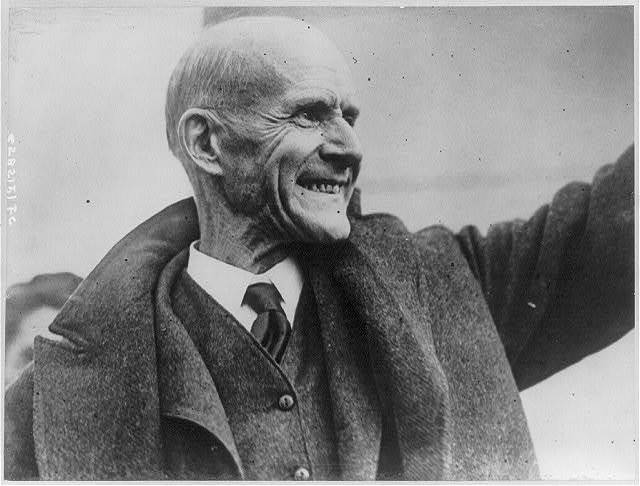
During the Civil War, President Abraham Lincoln oversaw the shutting down of newspapers and even the arresting of state legislators. After the U.S. became involved in World War I, Congress passed a new Sedition Act banning “disloyal, profane, scurrilous, or abusive language” toward the military or U.S. government. This act was used to imprison Eugene Debs, who then ran for president as the Socialist Party nominee while in prison.
Over its last one hundred years, the State steadily devalued the currency by 98%
The high cost of government—particularly, growing entitlements and perpetual warfare, coupled with a diminished number of taxpayers, led the government to massive debt, to the point that it could not be repaid.
Those citizens that were productive began to exit the country, finding new homes in countries that were not quite so sophisticated but offered better prospects for the future.
The decline in the value of the currency resulted in ever-increasing prices of goods, so much so that the purchase of them became a hardship to the people. By governmental edict, wage and price controls were established, forcing rises in wages whilst capping the amount that vendors could charge for goods.
The result was that vendors offered fewer and fewer goods for sale, as the profit had been eliminated.
If the reader is a citizen of the EU or US, the above history may seem quite familiar, with the one exception that strict wage and price controls have not (yet) been implemented. Still, the history is accurate; it is the history of Rome.
WASHINGTON, D.C. — As hope for rescuing the crewmembers of the Titan submersible continues to dwindle, President Joe Biden has pledged to honor the lives lost in the tragedy by sending another $5 billion to Ukraine.
“It’s the best way to honor their lives,” Biden said to reporters gathered outside the White House. “Listen, folks. These brave men took a great risk to explore the remains of the Titanic, which is why it’s only fitting that we remember them by sending an additional $5 billion of taxpayer money to Ukraine. Cheesefuzzlegarbit!”
The submersible has been lost below the surface of the Atlantic Ocean for several days, with rescue efforts thus far unable to locate it. The Biden administration expressed its concern for those on board and stated the tragedy is an inspiration to continue to support Ukraine’s war effort against Russia. “These men aboard the lost submersible loved freedom,” said White House Press Secretary Karin Jean-Pierre, a history-making black lesbian. “You know who also loves freedom? President Zelensky and the Ukrainian military. That’s why, as a tribute to the submersible tragedy, we will be sending Ukraine several submarines full of cash.”
Critics of the administration were quick to question what sending more funding to Ukraine has to do with the lost submersible. “They’ll use any excuse to send Zelensky more money,” said Senator Rand Paul. “I’m surprised they aren’t sending a few billion as a memorial for the Titanic itself.”
At publishing time, President Biden thanked Senator Paul for his suggestion and announced an additional $7 billion as a remembrance of the sinking of the Titanic.
I don’t see even the most Left-Wing scholar in this country scornfully burning his salary check. In other words, “greed” simply means that you are trying to relieve the nature-given scarcity that man was born with. Greed will continue until the Garden of Eden arrives, when everything is superabundant, and we don’t have to worry about economics at all.
The free market system has faced its fair share of criticism, often being labeled as a breeding ground for greed and self-interest. However, let’s take a closer look and see how greed, when properly channeled and regulated within a free market framework, can actually bring about positive outcomes for society.
One fascinating thought experiment that showcases the positive role of greed in the free market is Adam Smith’s concept of the “invisible hand.” Smith proposed that when individuals pursue their own self-interest, unintended benefits are generated for society as a whole. By seeking personal gain, individuals are motivated to produce goods and services that others value, leading to voluntary exchanges that benefit both parties. This intricate network of self-interest forms the foundation of a prosperous and efficient free market system.
At the heart of the free market lies the entrepreneurial spirit, which is driven by the desire for profit. Entrepreneurs spot unmet needs and desires within the market and strive to fill those gaps with innovative products, services, and solutions. Through their endeavors, they not only create wealth for themselves but also stimulate economic growth, generate employment opportunities, and contribute to the overall expansion of the economy. Greed, when harnessed by entrepreneurs, becomes a catalyst for innovation and progress.
Competition, an inherent aspect of the free market, acts as a powerful force that channels and refines the actions driven by greed. In a competitive marketplace, self-interested individuals are compelled to provide superior goods and services at lower prices in order to attract customers and maximize profits. This compulsion leads to a broader range of choices, improved quality of goods and services, and lower prices for consumers. The drive for personal gain is transformed into a pursuit of excellence, resulting in a more efficient and consumer-oriented market.
The pursuit of self-interest in the free market fosters cooperation and specialization. Individuals, motivated by their desire for personal gain, recognize the benefits of collaboration and form mutually beneficial relationships. This division of labor allows individuals to focus on their strengths, increasing overall productivity and efficiency. By leveraging their respective areas of expertise, individuals fueled by the inherent drive for greed contribute to the collective advancement of society.
While it’s essential to recognize the positive aspects of greed within the free market, we must also shed light on how the state, through coercion and intervention, can turn greed into a destructive force. When greed operates outside the bounds of ethical principles and voluntary exchange, it poses a significant threat to the fundamental principles that underpin a free market system.
Vlad Karkov/SOPA Images/LightRocket via Getty Images
Yevgeny Prigozhin is the owner of Russia’s notorious Wagner paramilitary group, an organization that is designated as a Transnational Criminal Organization and is frequently accused of committing war crimes.
Prigozhin served nearly a decade in prison after being convicted of “assault, robbery, and fraud” in 1981, according to Insider.
After being released from prison, he made his living selling hot dogs on street corners and eventually started a catering business, where he eventually met Russian President Vladimir Putin — then a low-level government official.
His company, Concord Catering, in the mid-to-late 1990s started receiving contracts from the Russian government.
According to a Wall Street Journal documentary, the Russian government laundered money to Prigozhin through his catering company, which he eventually used to start Wagner — initially a small group of only a few hundred former Russian soldiers that were hired to do Russia’s bidding in Ukraine in 2014.
Having Wagner do Russia’s bidding gave the Russian government plausible deniability as the group engaged in dirty work.
Russian government contracts to Concord Catering have reportedly been estimated to be well into the billions of dollars.
ST. LOUIS, MO — According to sources inside the Anheuser-Busch company, scientists at Bud Light have been hard at work on a time machine that would go back about six months.
No one really knows exactly why six months is the target amount of time selected, though some insiders suggest it could have something to do with a dip in sales, stock, motivation, and morale that began around that time.
“While we don’t have any functioning time machine yet, we’re getting much closer,” said lead time machine scientist, Dr. Gary McPherson while conducting a thorough examination of a four-person hot tub extruding various wires, tubes, and what looks like a flux capacitor. “We will soon be starting trial runs using drunk monkeys in swim trunks.”
Some say the company has suffered severely since creating commemorative cans for brave young lad Dylan Mulvaney though it would be reckless to assume a simple branding effort could do so much financial harm to an American institution such as Bud Light.
At publishing time, scientists at Bud Light had successfully sent a crew back in time six months to stop their marketing team from getting in touch with Dylan Mulvaney. Instead, the Bud Light marketing team had turned their sights on sponsoring deep-sea tourism company, OceanGate.
On the view of humanity adopted by the state and its agents
Underlying these policy initiatives and many others is a highly abstract bureaucratic conception of the individual, what I’ll call the Administrative Man. This is how state bureaucrats everywhere approach their subject populations, and it is an unavoidable artefact of routine bureaucratic processes like regulation and taxation. In this conception, everybody is more or less the same, subject to nudging via the same incentives, requiring the same protections from the same risks, and likely to benefit from the same one-size-fits-all solutions.
There is a pattern, a recurring blindness, in the approach of the administrative state to everyday human life.
Let’s consider a few examples of recent political idiocy and the common thread that unites them:
1. The Scholz government hopes to convince more Germans to opt for public transit by tinkering with fares and introducing a universal 49-Euro ticket. The offering, which collapses regional ticket schemes into one simple, relatively cheap monthly subscription, is now more than 50 days old, and preliminary data show it’s changed hardly anybody’s habits. The vast majority of the 11 million subscriptions sold so far have gone to longstanding public transit users; less than a tenth have been purchased by new customers. Surveys show that interest is concentrated in the urban centres, while rural populations have no use for the ticket because everybody drives cars there. Calls for improving transit offerings in the countryside are half-hearted and bizarre; the whole concept of public transit requires dense, concentrated populations.
3. I’ve already written about proposed government legislation to compel all Germans to transition to heat pumps beginning in 2024. Massive controversy compelled substantial changes in the law, which has been blunted in many respects, but remains worrying. Because not everybody lives in buildings that are suitable for heat pumps, the law in its original form would’ve required massive renovations across broad sectors of the housing market, effectively wiping out billions of Euros in personal wealth. If enacted in its original form, it might well have rendered many prewar buildings basically uninhabitable.
5. Lockdowns and mass vaccination also belong in this list. These policies arose from the myopia of public health mandarins, who regarded everyone in their jurisdiction as equally likely to spread SARS-2, equally likely to die from it and equally able to endure months of rolling house arrests and an indefinite marathon of mRNA injections. They were wrong in every respect: The virus was only ever dangerous to a very small segment of the population, there was never any purpose in vaccinating the millions of people who had recovered from SARS-2 infection, and even according to officially accepted, heavily massaged statistics, the vaccines have no measurable upside for any healthy person under 50.
Underlying these policy initiatives and many others is a highly abstract bureaucratic conception of the individual, what I’ll call the Administrative Man. This is how state bureaucrats everywhere approach their subject populations, and it is an unavoidable artefact of routine bureaucratic processes like regulation and taxation. In this conception, everybody is more or less the same, subject to nudging via the same incentives, requiring the same protections from the same risks, and likely to benefit from the same one-size-fits-all solutions. The highly differentiated lives that people actually lead – their vast differences in personal circumstances, wealth, individual preferences, religious beliefs and political opinions – are at best ignored, at worst considered a massive inconvenience. There is an unstated, unconsciously harboured bureaucratic vision of a country made up entirely of Administrative Men as the ideal receptacles of bureaucratic solutions, which are of course always correct, except when the people fail them.