MCViewPoint

Opinion from a Libertarian ViewPoint

Archive for the ‘Uncategorized’ Category

Who Lost America’s Longest War? – LewRockwell

Posted by M. C. on August 14, 2021

How many other U.S. allies field paper armies, which will collapse, if they do not have the Americans there to do the heavy lifting?

Is what we have on offer — one man-one vote democracy — truly appealing in a part of the world where democracy seems to have trouble, from the Maghreb to the Middle East to Central Asia, putting down any deep roots?

The Taliban’s God is Allah. The golden calf we had on offer was democracy. In the Hindu Kush, their god has proven stronger.

https://www.lewrockwell.com/2021/08/patrick-j-buchanan/who-lost-americas-longest-war/

By Patrick J. Buchanan

In April, President Joe Biden told the nation he would have all U.S. troops out of Afghanistan by Sept. 11, the 20th anniversary of the worst terrorist attack ever on the continental United States.

Given the turn of events of the past week, that 20th anniversary may be celebrated by a triumphant Taliban, now on the cusp of victory over the Americans and their Afghan allies, with gruesome public executions of their surrendered and captured enemies.

Sept. 11, 2021, could see U.S. Marines and diplomats fleeing Kabul to escape the retribution of the Taliban whom we ousted in 2001.

Consider. From Friday, a week ago, to today, the Taliban have overrun 10 of Afghanistan’s 34 provincial capitals.

Mazar-e-Sharif in the north is now surrounded. Kandahar and Herat, second and third largest cities, are under siege. The Kandahar-Kabul road has been cut. The defense minister escaped assassination in the capital. The government’s media director did not. The Taliban now control half of the 400 regions of Afghanistan and two-thirds of its territory.

Some Afghan soldiers have fought bravely. Others have retreated into their bases, surrendered, or fled into neighboring countries such as Iran, Tajikistan, Uzbekistan and Pakistan. An entire Afghan army corps with its U.S. weapons, equipment and vehicles was surrendered in Kunduz city.

U.S. military say the fall of Kabul could come within 90 days, with some saying privately the regime could fall to the Taliban within a month.

Democratic Sen. Chris Murphy of Connecticut has summarized the situation:

“The complete, utter failure of the Afghan national army, absent our hand-holding, to defend their country is a blistering indictment of a failed 20-year strategy predicated on the belief that billions of U.S. taxpayer dollars could create an effective democratic central government in a nation that has never had one.”

The reality of that grim assessment raises many questions.

Who is responsible for the colossal U.S. failure in Afghanistan? Who is responsible for America’s impending defeat in her longest war?

Over the last 20 years, the U.S. lost 2,500 troops with 20,000 wounded and invested $1 trillion to create an Afghan army, only to see that army crumble and disintegrate as soon as we departed.

Wednesday, Biden conceded that truth:

“Look, we spent over $1 trillion over 20 years; we trained and equipped … over 300,000 Afghan forces. Afghan leaders have to come together. They’ve got to fight for themselves.”

We are facing in Afghanistan a wipeout of the investment of a generation to convert Afghanistan into a democracy with the ability to hold the allegiance of its people and to defend itself.

Why did we fail?

Did the U.S. generals, statesmen, politicians and journalists who went to Afghanistan during these last two decades, and came back to testify to our steady progress, delude themselves? Or did they deceive us?

How many U.S. generals knew what was going on but declined to risk their careers by telling Congress or the country that the Afghan army and regime we had stood up would likely collapse like a house of cards once the Americans departed and they had to face the Taliban alone?

Today, the U.S. special envoy for Afghanistan, Zalmay Khalilzad, is in Qatar threatening the Taliban that if they overrun the country and impose a victor’s peace, they risk being denied diplomatic recognition by the U.S. and its Western allies and a forfeiture of future foreign aid.

But to brand the Taliban terrorists and pariahs is not new to them. What they seek is something for which they have proven they are willing to die.

What is critical for them is to restore the Taliban to their previous dominance; to create an Islamic Emirate; to make themselves the moral, social and political arbiters of a more purely Islamic Afghanistan.

And to be rid of the outsiders and their alien values.

They want to be able to stand up and say to the Muslim world: “We have shown you how to do it. We fought America, the world superpower, for 20 years until we forced the Americans, tails between their legs, to get out of our land, and then put their puppets up against a wall.”

While our strategic defeat will leave Americans reluctant to attempt any such future imperial interventions, there needs to be an accounting.

The questions that need answering:

Was not the attempt to transplant Madisonian democracy into the soil of the Middle and Near East a fool’s errand from the beginning?

How many other U.S. allies field paper armies, which will collapse, if they do not have the Americans there to do the heavy lifting?

Is what we have on offer — one man-one vote democracy — truly appealing in a part of the world where democracy seems to have trouble, from the Maghreb to the Middle East to Central Asia, putting down any deep roots?

The Taliban’s God is Allah. The golden calf we had on offer was democracy. In the Hindu Kush, their god has proven stronger.

Patrick J. Buchanan is co-founder and editor of The American Conservative. He is also the author of Where the Right Went Wrong, and Churchill, Hitler, and the Unnecessary War. His latest book is Nixon’s White House Wars: The Battles That Made and Broke a President and Divided America Forever See his website.

Be seeing you

Posted in Uncategorized | Tagged: , , | 1 Comment »

Refuse ALL fear narratives – OffGuardian

Posted by M. C. on August 14, 2021

Don’t end up clinging to a rock on Point Fear screaming about the virus or the variants or the super-duper breakthrough killer bugs. That’s where they want you. Terrified, ineffectual and a slave to anything that mitigates your fear.

https://off-guardian.org/2021/08/09/refuse-all-fear-narratives/

Catte Black

As this struggle for truth and freedom heats up we need to be careful of muddled messages and graded language that concedes important ground.

We need to focus on a few crucial points in everything we put out there, whether to friends, family or the world at large.

1. The pandemic is FAKE. Not exaggerated or opportunistically exploited – FAKE. Whether there is a new virus called SARSCOV2 or not (we remain neutral on that), the ‘pandemic’ associated with it never happened. The all cause mortality figures show this, as we have pointed out many times. Excess deaths in 2020 were unremarkable and can be accounted for by the real ‘pandemic’ of care home deaths, forced DNRs and lockdown-related mortalities.

2. The PCRs DON’T WORK to diagnose infection so your endless ‘tests’ are largely just moneymaking scams and ‘cases’ are meaningless.

3. Most diagnoses of ‘Covid’ are just the normal array of respiratory infections, caused by many different bugs, plus meaningless PCR , and 99.9% of people who ‘get it’, whatever it is, or are told they have it will be fine, and those who die with it will almost all be very old and very sick and already dying of something else. Just like before 2020 when ‘Covid’ was just flu or pneumonia.

4.The vax is totally unnecessary, doesn’t work and might harm or kill you.

5.Your compliance will never make this go away. Only resistance can do that.

As I said in a recent article we can all tend to forget these basic facts and begin buying in parts of the narrative without realizing.

Especially true as the ones selling this scam are very good at providing new stories that superficially appear to help our side but on closer analysis just promote virus fear porn by a back door.

Be wary of any mainstream, or even ‘alternative’, news story that ends up promoting a deadly virus – by any route.

I include in that all stories about the Wuhan “lab leak”, any alleged “gain of function” research, ‘spike protein’ shedding, ‘breakthrough infections’, vax-created super-virus, and even the claims that Ivermectin and HCQ can ‘cure Covid’.

All these stories, whether containing grains of truth or wholly imaginary, and however honestly promoted, all work to the same end – to convince you there is a new and deadly virus, either naturally occurring, made in a lab or mutated in the bodies of the vaxxed.

Even when promoted in good faith they all serve the ultimate agenda of fear and estrangement and control.

The makers of this narrative don’t care how you become afraid. They don’t care what flavour of infection got you there. They just want you scared of a vaguely terrifying virus and the people potentially carrying it.

So if a particular narrative is pointing you toward the rocky and wave-beaten outcrop of Point Fear, stop and think before you get there.

Remember the pandemic is a lie and the PCRs can’t diagnose active infection and 96% of people who died ‘with covid’ were already very old and/or dying of something else when they were given a scientifically meaningless PCR test and became a largely meaningless statistic.

The rest – anything that starts looping around a circuitous route back to the ‘deadly bug’ story is just clever diversion.

Don’t end up clinging to a rock on Point Fear screaming about the virus or the variants or the super-duper breakthrough killer bugs. That’s where they want you. Terrified, ineffectual and a slave to anything that mitigates your fear.

Stay on firm ground. Stay sane. Stay on the only message that matters.

There’s nothing to fear except the fear-mongers, their “great reset” social reforms and their snake oil, ‘experimental’, totally unnecessary ‘cure’.

Be seeing you

Posted in Uncategorized | Tagged: , , , , , , | 1 Comment »

Watch “Oregon Gov Signs Bill Suspending Math and Reading Requirements Because RACISM #Shorts” on YouTube

Posted by M. C. on August 13, 2021

https://youtu.be/72-jEXvhuQw

Be seeing you

Posted in Uncategorized | Tagged: , , , | 3 Comments »

Welfare Payments and Foreign Policy Fears Are the Only Things Holding America Together | Mises Wire

Posted by M. C. on August 13, 2021

A lopsided majority of 84 percent are sure a nuclear-armed Iran would be a grave threat to the US. It remains unclear why a nuclear-armed Iran should be any more of a threat to the US than a nuclear-armed Pakistan, yet such explanations are surely unnecessary from the point of view of the American foreign policy establishment. It’s a safe bet that few Americans are even aware that Pakistan is a nuclear state. Americans fear Iran because policymakers and media pundits have told them to be afraid.1

https://mises.org/wire/welfare-payments-and-foreign-policy-fears-are-only-things-holding-america-together

Ryan McMaken

In case you haven’t noticed, America is “deeply divided.” At least, that’s what a seemingly nonstop stream of headlines from major media sources would have us believe. “Trump Leaves America at Its Most Divided since the Civil War,” reads one CNN headline from earlier this year. Meanwhile, in his speeches from the first few months of his presidency, President Biden frequently claimed to be trying to restore national “unity.” More recently, the debate over vaccine mandates has prompted countless op-eds on how there are now “two Americas” or that differences in vaccination rates from state to state reflect a “deeply divided” America.

How deep are these divisions, really?

Well, there is no doubt that the divisions are nontrivial. In recent years, talk of secession has become more frequent and more urgent. For several years now, a quarter of Americans polled have claimed to support the idea of secession. In 2018, a Zogby poll concluded 39 percent of those polled agree that residents of a state should “have the final say” as to whether or not that state remains part of the United States. Nor are predictions of secession among Americans something reserved only for the distant future. In a 2020 poll, Zogby pollsters found that “[a] little over one-half of likely voters believe all 50 states will remain united under the Constitution five to ten years from now. In contrast, roughly one-quarter believe at least one state will secede from the union during the 2020s.”

These trends suggest a deterioration of national unity, to be sure. But has the movement toward disunity reached a critical point at which de facto political disunity results? If we’re not there yet, at what point will it be reached?

The answer is we still have a long way to go until we reach the point when US citizens will demand, en masse, political separation from Washington, DC.

This is because there are two important factors that continue to work in favor of a unified political system controlled by Washington. The first is the welfare state, and the second is American paranoia over foreign “enemies.”

Welfare Spending

With the advent of the New Deal in the 1930s, the federal government built a system of largesse that tied most Americans, at some point in their lives, to federal benefits through the Social Security system. Until that time, state and local governments in the United States had long employed a variety of poverty-relief programs. But after the 1930s, thanks to Social Security, Americans would look to the federal government for direct cash payments. Over time, of course, this would be greatly expanded with the invention of Medicare, and then Medicaid, and then again with the Bush administration’s immense expansion of Medicare with the prescription drug benefit.

Today, 69.8 million (one in five) Americans receive some kind of benefit through the Social Security administration. Sixty-one million Americans (18 percent) are on Medicare. An additional 72 million Americans are on Medicaid. (Preliminary data suggests total Medicaid enrollment surged to above 80 million during 2020.)

Indeed, the American welfare state is the largest in the Western world, by far. Most European welfare states, for example, “serve” populations that are small fractions of the size of the US’s population. While the US has 330 million people, Norway has 5 million. Switzerland has 8 million. Even the larger European welfare states—i.e., Italy with 60 million and Germany with 84 million—are mere fractions of the size of the US. 

The political effect of all this is to keep Americans tied to federal spending, thus contributing to political unity. For example, were a US state to contemplate secession from the US, it’s easy to imagine what would happen. The federal government would vow to cut off all Medicaid, Medicare, and Social Security recipients from payments. Elderly voters would panic, demanding that no secession could be possible until they received assurances that they would somehow continue to receive “their” monthly welfare payments.

Essentially, the American welfare state functions as an enormous carrot to ensure that a sizable portion of the American electorate think twice before risking its access to the federal welfare trough.

We saw this phenomenon at work in Britain the run-up to the Scottish independence vote in 2014. It is likely not a coincidence that the over-sixty-five demographic constituted one of the largest anti-independence blocs. According to postelection polls, among those Scottish voters polled, a whopping 73 percent of voters over sixty-five reported voting no. For those under fifty-five, the no vote was closer to 50 percent. Fears over maintaining pension benefits from the central government in London likely were a significant factor.

Military Paranoia

A second major factor pushing the US toward continued political unity is the American tendency toward paranoia over perceived foreign threats. As the Old Right journalist Garet Garrett pointed out, Americans are routinely caught up in “a complex of vaunting and fear.” This is a complex in which Americans talk tough about being the most powerful nation in the world, yet they are also fundamentally fearful, sure that countless foreign powers are poised to attack the United States at any time.

We continue to see this today. For example, a July 2021 poll of Americans concluded “two-thirds of Americans believe Iran poses a threat to the U.S.” A lopsided majority of 84 percent are sure a nuclear-armed Iran would be a grave threat to the US. It remains unclear why a nuclear-armed Iran should be any more of a threat to the US than a nuclear-armed Pakistan, yet such explanations are surely unnecessary from the point of view of the American foreign policy establishment. It’s a safe bet that few Americans are even aware that Pakistan is a nuclear state. Americans fear Iran because policymakers and media pundits have told them to be afraid.1

Similarly, many Americans remain fearful over China. Gallup polls from earlier this year show Americans increasingly fear China, with 63 percent of Americans polled labeling China a “critical threat.”

Facts suggest China isn’t nearly as powerful geopolitically as today’s new Cold Warriors would have us believe,2 but the true extent of China’s power is a separate matter from what matters for domestic politics—the common perception among many Americans that China is immensely powerful.

These perceptions will continue to fuel the notion among many Americans that the American regime ought to pursue a goal of maximum geopolitical power. This means a continued preference for a unified American regime with enormous tax revenues and military spending.

In other words, fear of China and Iran, combined with the more practical desire for continued “free” money from the federal government, will continue to fuel opposition to any serious movement toward secession.

On the other hand, this is all true only in the short term. Over a longer time horizon, matters are far less certain. Should the US continue with its current policies of reckless deficit spending, the longer-term prognosis points toward insolvency, and a relative decline in federal power compared to state governments, which may find themselves picking up the welfare slack as the spending power of federal welfare payments declines thanks to a declining dollar.

We saw similar dynamics at work in the waning days of the Soviet Union. A bankrupt regime is a regime with declining legitimacy. In such a situation, it is also likely that domestic concerns would overwhelm geopolitical concerns, and the stage would finally be set for true de facto separatism in the US. But for now, this does not appear to be likely in the short term.

  • 1. For more on nuclear proliferation, see Bertrand Lemennicier, “Nuclear Weapons: Proliferation or Monopoly,” in The Myth of National Defense: Essays on the Theory and History of Security Production, ed. Hans-Hermann Hoppe (Auburn, AL: Mises Institute, 2003), pp. 127–44; and Ryan McMaken, “Why No State Needs Thousands of Nuclear Warheads,” Mises Wire, Feb. 10, 2021.
  • 2. As Michael Beckley notes, “China may have the world’s biggest economy and military, but it also leads the world in debt; resource consumption; pollution; useless infrastructure and wasted industrial capacity; scientific fraud; internal security spending; border disputes; and populations of invalids, geriatrics, and pensioners. China also uses seven times the input to generate a given level of economic output as the United States and is surrounded by nineteen countries, most of which are hostile toward China, politically unstable, or both.” For more see Michael Beckley, “China’s Century?,” International Security 36, no. 3 (Winter 2011/12): 41–78.

Author:

Contact Ryan McMaken

Ryan McMaken is a senior editor at the Mises Institute. Send him your article submissions for the Mises Wire and Power&Market, but read article guidelines first. 

Be seeing you

Posted in Uncategorized | Tagged: , , , | Leave a Comment »

Erie Times E-Edition Article-Hyperinflation, US dollars pricing out Venezuelan consumers

Posted by M. C. on August 13, 2021

The government last week announced it would lop six zeros off the currency – a million-to-1 change – with new bills as of Oct.1. Currently, the 1million bolivar note is the largest denomination. It’s worth roughly a U.S. quarter.

Inflation happens when government prints money and dilutes the value.

That was a boon for the private sector, which began importing all sorts of goods that Venezuelans had not seeing in years.

The “private sector”…

https://erietimes-pa-app.newsmemory.com/?publink=0a6f33d47_1345ea1

Regina Garcia Cano and Juan Pablo Arraez ASSOCIATED PRESS CARACAS, Venezuela – Yosmar Sanguino says she struggles to put food on the table for her two daughters and three grandchildren in a low-income neighborhood of Venezuela’s capital.

She often whips up arepas – traditional flat, round corn patties – with butter and cheese. But it’s hard to afford even those few ingredients.

‘There is food, but the money is lacking. Because if you buy one thing, you can’t buy the other,’ she said. ‘If you buy butter, you can’t buy cheese. Or if you buy the cheese, you can’t buy the butter.’

And she’s among the relatively fortunate Venezuelans who have at least some access to dollars – money sent by a son who emigrated to the United States as the the South American nation’s social, political and economic crises worsened.

More than 40% of Venezuelan households receive some remittances from abroad, which last year were expected to reach $4billion, according to the consultancy firm Econoanalitica, based in Caracas, the capital. The money often flows through a network of third-party foreign bank account holders who charge commissions, digital payment methods such as Zelle or via friends or relatives traveling home with cash.

The country’s socialist government two years ago gave up its long and complicated efforts to restrict transactions in dollars in favor of the local bolivar, whose value has been obliterated by the world’s worst inflation.

That has largely ended shortages that for years left markets with chronically empty shelves. But it means many Venezuelans – paid in bolivars whose value evaporates by the day – can’t afford what’s on those shelves.

The government last week announced it would lop six zeros off the currency – a million-to-1 change – with new bills as of Oct.1. Currently, the 1million bolivar note is the largest denomination. It’s worth roughly a U.S. quarter.

But without other measures, that would have little to no effect on the continuing erosion of value. The government already had cut three zeros in 2008 and five more in 2018.

Despite repeated multiplications of the official minimum wage earned by millions of Venezuelans, it still amounts to about $2 – not even enough to buy a kilogram of chicken.

Millions of Venezuelans anxiously wait for the semi-monthly arrival of a heavily subsidized box of goods that costs between 43 cents and 62 cents and usually includes corn flour, rice, oil, sugar, pasta and beans. Many scramble to make ends meet with side jobs – home bakeries, haircuts, car repairs, food deliveries, barter.

And for some, the ends don’t meet at all.

Per capita consumption of protein dropped 60% between 2013, when President Nicolás Maduro took office, and 2019, according to investment firm Torino Capital. Consumption of chicken plunged 82% during that period, while eggs’ fell 66%.

A report from the U.N. Food and Agriculture Organization found that roughly a third of Venezuelans reported they had no food stored up and 11 percent reported sometimes going a day without food. The U.N. World Food Program in 2019 reported that 6.3% of children under 5 years were acutely malnourished, 13.4% were stunted and 30% were anemic. About 24% of women between the ages of 15 and 49 were also anemic.

The value of the bolivar had been collapsing for years despite – or because of – government efforts to control the exchange rate. It rapidly expanded the money supply even as there was less to spend it on, with an economy that was producing fewer goods and eventually exporting less oil.

But massive blackouts in 2019 began to change the dynamic, said Dagnelly Duarte, an economist for Torino Capital, which has a special focus on Venezuela.

Consumers without an enormous stash of paper bolivars couldn’t go the grocery store because credit card terminals weren’t working. People charged $1 to power up cellphones. Bags with ice went for $10. By the end of the year, the government had abandoned efforts to constrict the U.S. dollar.

That was a boon for the private sector, which began importing all sorts of goods that Venezuelans had not seeing in years.

Duarte said sellers initially were wary of setting prices in dollars; most customers had none and many feared the government would still crack down.

But after awhile, ‘it became evident that, ‘Look, I’m using dollars and the sale of the products is flowing better.’’

These days, Duarte said, over 60% of transactions are in U.S. dollars – a fact that snarls life for those without greenbacks.

‘It’s very complicated for a person like me, who retired from the university – 27 years of service, professional. I had the position of head of public relations … and my salary does not even reach $5,’ said Germán Socas, who was buying fruits and vegetables at a market in Caracas.

Even dollar prices have risen sharply, partly because the currency itself is less scarce. A set of basic goods for a family of five – including flour for arepas, chicken, sardines and butter – in May cost almost four times more in dollar terms than it did two years ago, according to Torino Capital.

‘In 2019, when (the use of) the dollar was still restricted, with $100 dollars you could make a complete market run, and you still had plenty. Currently, the basic basket is around $390 (a month),’ Duarte said.

The shelves stocked with imported olive oils and imported cheeses give ‘an image of prosperity’ said travel agent Viviana Stifano after visiting a supermarket. ‘But it is an environment of scarcity at the same time because now there is an excess of products, but you do not have the purchasing power to buy the ones you want. You get what you need to barely live.’

All sides blame part of Venezuela’s problems on falling oil prices. Critics blame government mismanagement and corruption for the collapsing output of the country’s main export and its failure to diversify the economy away from oil. From a peak of about 3.2million barrels of oil a day in 1997, the country with the world’s largest oil reserves today pumps out fewer than 500,000 barrels.

The government blames U.S. sanctions for many of its economic woes and Maduro last month accused a few rich Venezuelans, whom he did not name, of manipulating prices, warning of possible action against them. ‘There are no untouchables in the Venezuelan oligarchy,’ he said.

Two years ago Venezuela stopped restricting transactions in dollars, which has largely ended shortages, but has meant many Venezuelans who are paid in bolivars can’t afford what’s on those shelves. Ariana Cubillos/AP

Be seeing you

Posted in Uncategorized | Tagged: , | Leave a Comment »

Of Two Minds – Dear Fed: Are You Insane?

Posted by M. C. on August 13, 2021

https://www.oftwominds.com/blogaug21/fed-insane8-21.html

Charles Hugh Smith

So sorry, America, but your central bank is certifiably insane, and it’s not going to magically work out.

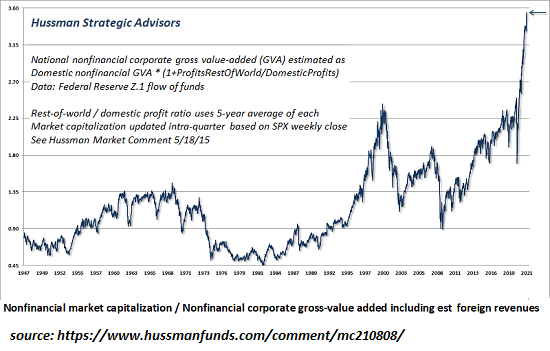
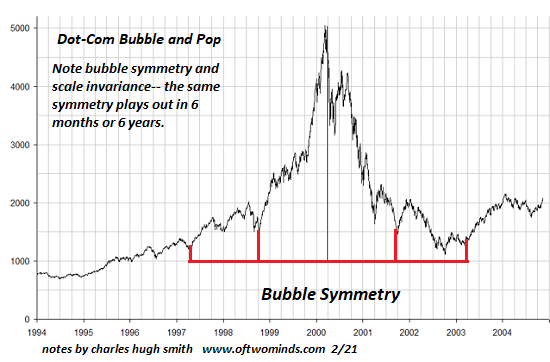
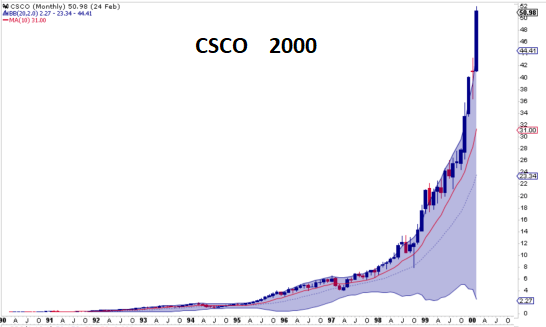
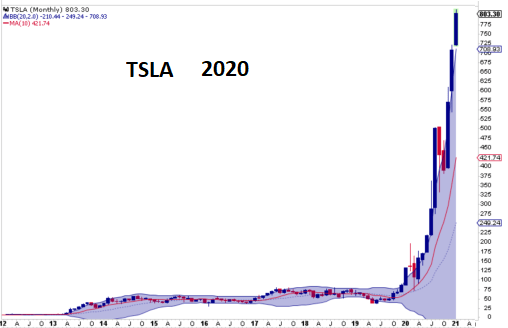
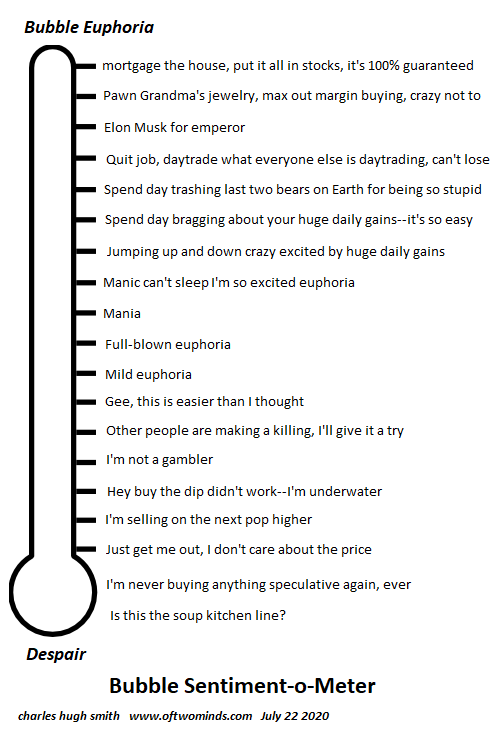
History definitively shows that speculative bubbles always pop–always. Every speculative bubble mania, regardless of its supposed uniqueness–“it’s different this time”–pops. No speculative bubble has ever “reached a permanently high plateau” and then remained on the plateau for years.

So what does the Federal Reserve do? It inflates the biggest speculative bubble in modern history and then implicitly promises it will never pop. Dear Fed, are you insane? You might as well make a public pronouncement that stocks have “reached a permanently high plateau” that will be followed by a permanent ascent to ever-higher plateaus, as that is the implicit message you’ve been sending punters and pundits.

To promise a speculative mania that never ends is insane, yet that is precisely what the Fed is doing. Nothing else matters except “the Fed has our back.”

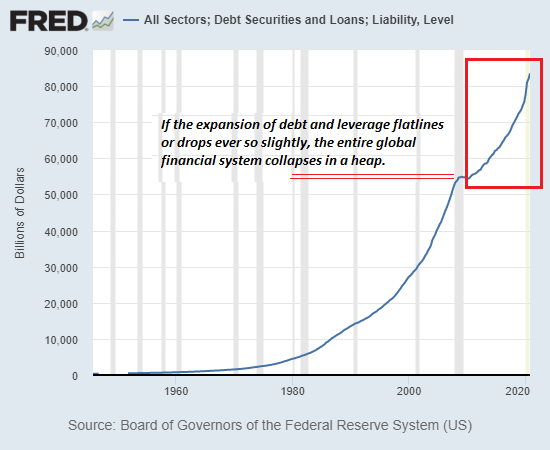
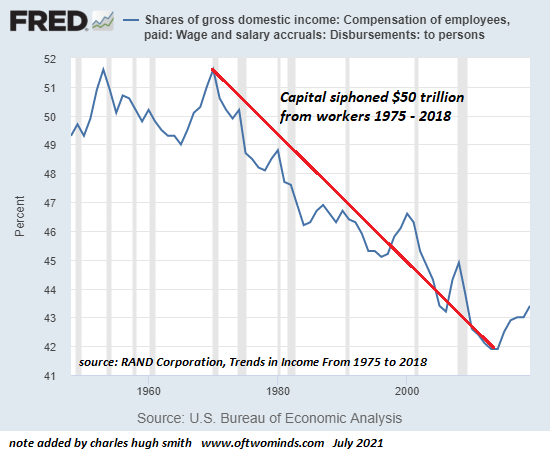
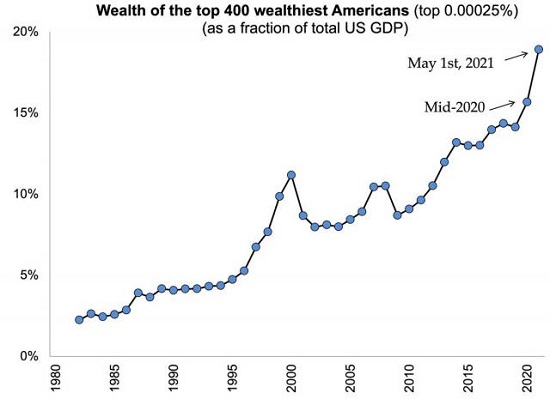
The Fed is also effectively promising that debt, leverage and wealth/income inequality will also all ascend higher forever. Once again history moots this happy story, as soaring wealth / income / political power asymmetries that serve the interests of the few at the expense of the many inevitably generate revolution or regime collapse.

Dear Fed: is your “plan” to accelerate revolution and collapse? If so, you are insane. Has your hubris reached new extremes in la-la-land or are you so disconnected from reality that you’re closing your eyes and going to your happy place where it all magically works out without the extremes you’ve single-handedly created reverting to the mean?

So sorry, America, but your central bank is certifiably insane, and it’s not going to magically work out. The speculative bubbles in credit, leverage and assets will pop and the extremes of wealth / income / political power inequality will swing to the opposite extreme. The way of the Tao is reversal and the Fed’s supposedly godlike powers are nothing but the hubris-soaked rantings of the delusionally insane.

Be seeing you

Posted in Uncategorized | Tagged: , , | Leave a Comment »

Peter Schiff Breaks Down the Inflation Tax – LewRockwell

Posted by M. C. on August 13, 2021

As Peter pointed out, money creation itself is inflation. Rising prices are a symptom.

The more money there is, the more expensive everything is, because each unit of money is diminished as the quantity of money is increased. So, as you have more dollars, each dollar is worth less and now you need more of them to buy stuff.”

https://www.lewrockwell.com/2021/08/no_author/peter-schiff-breaks-down-the-inflation-tax/

Peter Schiff recently appeared on the Matt Walsh podcast. During the interview, he broke down exactly how the Federal Reserve and the US government team up to hit you with an inflation tax.

Matt said upfront that culture and social issues are more in his wheelhouse than economics. But like pretty much everybody, he sees prices rising with his own two eyes. He said he went shopping with his wife recently and “had one heart attack after another looking at how expensive everything was.” Peter said, “You ain’t seen nothing yet.”

Prices are just starting to go up. So, they’re going to go a lot higher. And I think even the acceleration is going to pick up, so, you’re going to see bigger gains.”

Peter said the real question is why didn’t this happen sooner? Why weren’t prices moving up faster over the last few years?

The Federal Reserve has been creating a lot of inflation. That’s been their monetary policy. That’s how they responded to the busting of the dot-com bubble, and then the housing bubble, and then COVID – they just printed a lot of money.”

As Peter pointed out, money creation itself is inflation. Rising prices are a symptom.

The more money there is, the more expensive everything is, because each unit of money is diminished as the quantity of money is increased. So, as you have more dollars, each dollar is worth less and now you need more of them to buy stuff.”

Peter said the reason we didn’t see spiking prices early on was a lot of those dollars ended up going into financial assets.

That was the way they were kind of entering into the economy and the way the Fed was administering this monetary policy. And so, you saw big increases in stock prices or real estate prices. All of those price gains were being fueled by inflation. But now, you’re finally starting to see that inflation now showing up in the consumer goods prices.”

This is particularly a problem in the wake of the COVID-19 pandemic.

What COVID did was it reduced the supply of goods, because a lot of people who used to work stopped working, and so they were no longer helping to produce goods and services that we all buy, because they weren’t working anymore. So, the economy, not only in the US but around the world, became less productive, so that we weren’t making as much stuff. The proper response for the Fed would have been to withdraw money from the economy — take money away so that the money supply was going down with the supply of goods and services, and that would have kind of kept prices in check. But instead, the Fed did the opposite. The Fed decided to print a bunch of money and mail it out to the people who were no longer working.”

In fact, a lot of people got more money not working than they earned at their job. But they weren’t producing anything.

So, we decreased the supply of goods and services to buy while simultaneously increasing the amount of money in circulation to buy them. So, it’s a perfect storm for prices. And the government is going to throw fuel on the fire with this infrastructure program and all this other economic stimulus that is really just inflation because it’s all paid for by the Fed printing money.”

Peter reminds us that every time the government spends money, it’s a tax – whether it raises taxes or not.

Whether they want to acknowledge it as a tax or not, the cost of government is what it spends, not what it collects in taxes — what it spends. So, every dollar of federal spending has to be paid for. And the way you pay for the spending that is financed when the Fed prints money to buy government debt – we pay for that with higher prices. So, what you’re experiencing every time you go and buy something, and the price is much higher than what you remember, that increase is really a tax. That is what all the government spending is costing you. It’s costing those higher prices. And since government spending is going to go way up from here, the inflation tax to pay for it is also going to go way up.”

So, what is the path out?

Well, we have to cut government spending, and then the Fed won’t be printing as much money to finance all the debt.”

But of course, there is no indication that will happen any time soon.

We’re going to keep printing money. We’re going to keep borrowing and spending money. And so, we’re going to keep paying for all that through inflation, which means the price of everything we buy is going to go up.”

In this interview, Peter also talked about the future trajectory of the economy, and he delves into Bitcoin.

Be seeing you

Posted in Uncategorized | Tagged: , | Leave a Comment »

Climate Scientists Admit Exaggerated Warming – American Thinker

Posted by M. C. on August 13, 2021

Governments pay for Covid “cases”. Governments pay for climate research grants.

Have you ever noticed that when government pays for a program, the program never quite gets finished?

https://www.americanthinker.com/articles/2021/08/climate_scientists_admit_exaggerated_warming_.html

By Vijay Jayaraj and E. Calvin Beisner

Last week, a group of scientists sent shock waves through the climate-science community. They boldly pointed out that current climate models exaggerate greenhouse warming.

In other words, they confirmed what climate skeptics have been arguing all along: that most computer climate models forecast unrealistic warming — warming not observed anywhere in the real world.

Could this be a turning point for climate science? Has the hitherto staunch resistance to any kind of scrutiny regarding the dangerous warming narrative come to an end?

Scientific Method

Science is not a body of facts. It is a method of finding facts — a method that is inherently skeptical. Not cynically skeptical, but humbly skeptical. It insists, as the motto of the Royal Society, nullius in verba, roughly translated “take nobody’s word for it,” that a scientist’s every claim be tested — over and over and over. Thus, as the philosopher of science Robert K. Merton put it in 1938, “Most institutions demand unqualified faith; but the institution of science makes skepticism a virtue.”

A scientific hypothesis is carefully studied and checked against available evidence. The process of establishing a scientific truth involves the scientific community’s continuous effort to falsify it until so many such efforts have failed that the community provisionally accepts it — with emphasis on provisionally.

In the age of celebrity culture, though, people easily assume that theories celebrated scientists — or large numbers of scientists, or scientists associated with government authorities — embrace are above challenge. Yet even theories universally embraced (for example, that continents don’t move, or that all ulcers are caused by excess stomach acid arising from too-acidic foods or anxiety) are not immune from new challenges or improvements and have been discarded.

Even the most celebrated scientists have been wrong. As EarthSky editor Deborah Byrd notes,

Einstein’s [General] Theory of Relativity implied that the universe must either be expanding or contracting. But Einstein himself rejected this notion in favor of the accepted idea that the universe was stationary and had always existed. When [Edwin] Hubble presented his evidence [the red shift] of the expansion of the universe, Einstein embraced the idea. He called his adherence to the old idea “my greatest blunder.”

It is now understood that the universe is constantly expanding.

Today, climate science finds itself in turmoil. Theories of catastrophic global warming driven by carbon dioxide emissions have long escaped careful scrutiny — just as the theories of acid-caused ulcers and stable continents long did.

Climate Scientists: Yes, the Models are Wrong

Some climate scientists, like Roy W. Spencer and Judith Curry, point out that many warming theories depend on computer models that are badly flawed. If the empirical, observational evidence — which Nobel Prize-winning physicist Richard Feynman called “the key to science” — doesn’t keep these theories standing, what does? It appears that it’s the veneer of authority embodied in the United Nations’ Intergovernmental Panel on Climate Change (IPCC).

However, now scientists deeply embedded in the IPCC have admitted that the models exaggerate warming. They raise concerns about the implausibility of the exaggerated warming levels.

Science noted, “But as climate scientists face this alarming reality, the climate models that help them project the future have grown a little too alarmist. Many of the world’s leading models are now projecting warming rates that most scientists, including the modelmakers themselves, believe are implausibly fast.”

These new admissions reaffirm findings in 2014 and 2019 that most models exaggerate warming — though the evidence is that they exaggerate not “a little” but a lot.

Scientists identified these unrealistic exaggerations by comparing model performance with real-world temperature data. A study published in 2020 analyzed 38 Coupled Model Intercomparison Project Version 6 (CMIP6) models and concluded, “For lower-troposphere and midtroposphere layers both globally and in the tropics, all 38 models overpredict warming in every target observational analog, in most cases significantly so, and the average differences between models and observations are statistically significant.”

Thus, solid empirical evidence shows that belief in dangerous greenhouse warming is unwarranted, based on faulty computer climate models.

That scientists working within the IPCC now acknowledge models’ errors could be a first step for climate science’s return to normalcy — that is, to the skepticism that is a hallmark of science — after decades of adherence to the doomsday narrative.

But there are obstacles in the way. The same Science article that reported the IPCC scientists’ admission that the models run hot also quoted NASA Goddard Institute for Space Studies Director Gavin Schmidt as saying, “It’s become clear over the last year or so that we can’t avoid this” — a slip that suggests that he and others have, contrary to the skepticism inherent in genuine science, been trying to avoid it for a long time. So long as that mentality prevails, “climate science” will fall short of the true measure of science: honest, humble self-skepticism.

It remains to be seen how the UN will approach this complex and delicate matter. Bold, outright admission could deflate public trust and so undermine the agenda of global “decarbonization.”

Nevertheless, the admission gives hope to climate science’s future. Far too many scientists have been afraid to test climate doomsday narratives. This might give them courage.

Honest scientists follow the evidence wherever it leads. But to stand up and own the truth, scientists must also be freed from political pressure. Funding for the climate-science community flows largely through entities that seek to gain politically from climate fear. This must stop, and academic institutions must no longer function as public relations agencies for fearmongering political narratives.

Vijay Jayaraj (M.Sc., Environmental Science, University of East Anglia, England), is a Research Contributor for the Cornwall Alliance for the Stewardship of Creation and resides in Bengaluru, India. E. Calvin 

Be seeing you

Posted in Uncategorized | Tagged: , , , , | Leave a Comment »

It’s Time to Abolish the Capital Gains Tax | Mises Wire

Posted by M. C. on August 12, 2021

The great explains in Economics in One Lesson (order your free copy) that when investors realize

they lose the whole dollar when they lose, but can keep only a fraction of it when they win, they decide it is foolish to take risks with their capital. In addition, the capital available for risk-taking itself shrinks enormously. It is being taxed away before it can be accumulated. In brief, capital to provide new private jobs is first prevented from coming into existence, and the part that does come into existence is then discouraged from starting new enterprises.

https://mises.org/wire/its-time-abolish-capital-gains-tax

McCoy Dorr

President Biden’s ridiculously high spending proposals require equally ridiculous tax proposals. Among the craziest proposals is a massive increase in the capital gains tax rate. According to the Tax Foundation, Biden’s proposal would raise the top federal rate on capital gains tax to 43.4 percent. When accounting for state and local rates, the average top rate would be 48 percent, up from the current 29 percent. This is about nineteen steps in the wrong direction. Progressives, the largest proponents of the tax on capital gains, believe that this tax is a necessary and just tool used to rein in the greed of the rich and ensure that the selfless government can implement righteous social programs to help the needy. This belief could not be further detached from reality. The existence of taxes on capital gains significantly distorts the natural flow of investment in markets, which harms the social welfare of all Americans, and it is past time to abolish the capital gains tax.

The capital gains tax is imposed on the profits gained from the sale of an asset. This increases the costs involved in realizing the profits of an investment, therefore altering individuals and businesses’ cost-benefit analysis and decision process when evaluating investment opportunities. This has a substantial impact on the reallocation of capital and the availability of capital, because investors have to take the capital gains tax into account when weighing if a new investment is worthy. Investors are forced to decide if the new investment has a profit potential that outweighs the impact of the capital gains tax and the future profit potential of whatever asset they may currently be invested in. Many investors decide it is not. This creates the “lock-in effect.” The capital gains tax creates the incentive for investors to retain their current subpar-performing investments even when more profitable investment opportunities are present. This keeps capital locked into inefficient and underperforming assets as opposed to more efficient and profitable assets. Therefore, these inefficient assets have an inflated value and worth compared to what a free market, undistorted by the capital gains tax, would have allocated to them. As capital is a scarce and limited resource, these distortions inhibit the growth of other industries and assets that are more worthy of investment and consequently harm the social welfare of all Americans, as these industries with a deflated worth are unable to provide the goods, services, and jobs the market would have otherwise provided. This is why an unaltered flow of capital and investment is integral to the health of a free economy. The great Henry Hazlitt explains in Economics in One Lesson (order your free copy) that when investors realize

they lose the whole dollar when they lose, but can keep only a fraction of it when they win, they decide it is foolish to take risks with their capital. In addition, the capital available for risk-taking itself shrinks enormously. It is being taxed away before it can be accumulated. In brief, capital to provide new private jobs is first prevented from coming into existence, and the part that does come into existence is then discouraged from starting new enterprises.

These new enterprises that are blocked from coming into existence would have otherwise created better and cheaper goods. In the end, not only is the investor harmed but so are the consumers and producers that are deprived of an improved standard of living. It is nearly impossible to dissect and weigh all of the societal harms that have occurred due to the implementation of the capital gains tax, because we have been robbed of a reality we could use as a control. The industries and companies that have been deprived of growth due to the capital gains tax are invisible.

However, we can examine the effects previous changes in the capital gains tax rate have had on investments. The clearest metric we can use to examine the flow of capital into new enterprises is seed-capital funding. Seed-capital funding is funding provided by investors to the creators of a new start-up venture in exchange for equity. This seed-capital funding is linked to the capital gains tax, because investors likely have to divest their capital from another firm or asset, a taxable event, to then invest in a new company in exchange for equity, which would then be taxed again if ever sold. In an examination of past changes in the tax rate of capital gains and the volume of new seed-capital funding, an article published by National Review  found that when the capital gains tax rate was cut in 1977 from 49 percent to 20 percent, there was an increase in seed-capital funding from $68 million to $5.1 billion, a 700 percent increase. A later increase of the rate to 28 percent in 1986 resulted in a 60 percent decrease in seed-capital funding. This shows that funding for new ventures is intrinsically linked to the free flow of capital, which is instead obstructed by the capital gains tax. Investors are deprived of healthy returns on investment, producers are denied economic opportunity, and consumers are impoverished.

Examining just a few studies on the effects of the capital gains tax demonstrates the effects an abolition would have in boosting the quality of life for the lower and middle classes. First, economists from the Tax Foundation examined IRS data and found “that more than 80 percent of taxpayers who claim dividend income earn less than $100,000 and 76.4 percent of those who claim capital gains earn less than $100,000.” This shows that the burden of the capital gains tax falls on the middle class. This burden can be alleviated by removing the capital gains tax. Furthermore, the Cato Institute discovered that a capital gains tax reduction is a way to attract investment funds to capital-starved areas and minority groups. In the ’80s, when the capital gains tax was slashed, the number of black-owned businesses increased by one-third. And later when it was cut again, that number increased by an additional 38 percent. While the precise results that the elimination of the capital gains tax would have are incalculable due to the stubborn fact that we lack omniscience, an elimination would unequivocally lead to the creation of a large number of jobs and economic growth, which would bring an improvement to the quality of life of poverty-stricken communities by encouraging a culture of private ownership and entrepreneurship.

Eliminating the capital gains tax would free up an unprecedented amount of capital, create countless new jobs, and result in the formation of new enterprises dedicated to providing cheaper and improved goods and services. The abolition of the capital gains tax would create an economically productive and stable society, yet the fallacy persists that the capital gains tax is beneficial. The failure of progressives to see beyond the increased government revenues is the reason we are shackled with the capital gains tax today. Progressives are failing Hazlitt’s one lesson (not that anyone has ever accused progressives of being economically literate). As Hazlitt states at the end of his magnum opus, economics “is a science of recognizing secondary consequences. It’s also a science of seeing general consequences. It is the science of tracing the effects of some proposed or existing policy not only on some special interest in the short run, but on the general interest in the long run.” Progressives look at the immediate effects, increase in government revenue and funding for their social programs, and are blind to the havoc they have wrought in the market. This failure to comprehend the impacts of distorting the flow of capital results in the average American consumer being deprived of an indecipherable higher standard of living. Author:

McCoy Dorr

Creative Commons Licence

Be seeing you

Posted in Uncategorized | Tagged: , , , | Leave a Comment »

Three Charts The Delta Variant Scaremongers Don’t Want You To See – Issues & Insights

Posted by M. C. on August 12, 2021

Here’s one possibility. The public health community and leftist politicians don’t want to give up their newfound powers.

If COVID goes away, Anthony Fauci suddenly becomes just another annoying bureaucrat that nobody pays attention to.

And leftists, who have been able to boss people around and spend taxpayer money at levels no one would have ever tolerated before COVID, are loathe for things to get back to normal.

There’s also the fact that the current outbreak provides another chance for Democrats to score political points against Republicans. Just as we saw in the initial outbreak, Republican governors are coming under vicious and constant attack for not being sufficiently authoritarian, despite the growing body of scientific evidence that lockdowns and mask mandates are largely ineffective.

https://issuesinsights.com/2021/08/11/three-charts-the-delta-variant-scaremongers-dont-want-you-to-see/

I & I Editorial Board

While the sharp rise in Delta-variant COVID cases has sparked a renewed push for mask mandates, lockdowns, and vaccine “passports,” there’s been little attention paid to just how dangerous this variant is. Perhaps that’s because the evidence suggests it is far less of a public health concern than previous outbreaks.

Just how much less of a threat isn’t precisely known. But there are ways to gauge the risk. One is to look at the number of COVID cases and the number of deaths happening right now, compared with what happened a year ago.×

What do you find? First of all, there are fewer cases than last year. From June to August this year, there have been more than 2 million recorded COVID cases in the U.S.

Over the same days last year, the total number of COVID cases was above 3.1 million.

How about deaths? From June 1 through Aug. 9, the total number of COVID fatalities was 20,149. Last year, the death count was 62,287.

In other words, cases are 41% lower than during this time last year, and deaths are 66% lower.

Source: CDC Data

Looked at another way, the “case fatality rate” was 1% from June 1 through Aug. 9 this year. It was 2% over the same days last year.

Looking at a longer time frame, the case fatality rate all this year is 1.5%. And the case fatality rate for all of last year was 1.8%.

In other words, the fatality rate from COVID appears to be steadily declining.

Source: CDC Data

The lower lethality of the Delta variant makes sense. 

Like any other infectious disease, COVID picked off the low-hanging fruit first – the very sick and elderly. So the case fatality rate plunged after its initial spike in early 2020 – when it was around 6%.

Doctors and hospitals also learned about better ways to treat the disease, no doubt saving lives. 

And, the vaccines that unexpectedly appeared by last November have since created a vastly larger pool of people with immunity to the new virus. The vaccinated who are catching the Delta variant are experiencing far milder symptoms than they would have otherwise.

So far, in fact, there have been 36.8 million recorded cases of COVID, there are 167 million people fully vaccinated, and another 29 million partially vaccinated. That means roughly 60% of the nation has either had COVID or has been vaccinated. Even assuming there’s a lot of overlap between the two groups, that’s still a massive number of people with at least some immunity to the disease.

Here’s another way to look at it. Deaths from all causes so far this year are now lower in every age group than last year, especially among the elderly.

Source: CDC

But while the disease has become less fearsome, the public perception hasn’t changed, and so the fixation on case counts only feeds the public’s anxiety.

Yes, there are certain areas where hospital resources are being strained at the moment. But overall, hospital capacity is far from reaching its limit. Data from John Hopkins University of Medicine’s tracking center shows that 25% of intensive care unit beds in the country aren’t occupied. Even in hotspots such as Texas, 10% of ICU beds are available, as are 20% of inpatient beds. Ten percent of Florida’s ICU beds and 16% of inpatient beds are currently unoccupied.

So why isn’t this seemingly good news about COVID making headlines?

Here’s one possibility. The public health community and leftist politicians don’t want to give up their newfound powers.

If COVID goes away, Anthony Fauci suddenly becomes just another annoying bureaucrat that nobody pays attention to.

And leftists, who have been able to boss people around and spend taxpayer money at levels no one would have ever tolerated before COVID, are loathe for things to get back to normal.

There’s also the fact that the current outbreak provides another chance for Democrats to score political points against Republicans. Just as we saw in the initial outbreak, Republican governors are coming under vicious and constant attack for not being sufficiently authoritarian, despite the growing body of scientific evidence that lockdowns and mask mandates are largely ineffective.

Power doesn’t only corrupt. It is also highly addictive. And the fear of suffering painful withdrawal symptoms supersedes any other consideration.

— Written by the I&I Editorial Board

Be seeing you

Posted in Uncategorized | Tagged: , , , , , | 1 Comment »