MCViewPoint

Opinion from a Libertarian ViewPoint

Archive for the ‘Uncategorized’ Category

Racism Has Become A Buzzword. Here’s Why That’s Important – LewRockwell

Posted by M. C. on July 9, 2020

And you know what, the Marxists don’t care. No part of them feels bad. So stop treating them like they do. Stop pretending that they care about the moral turpitude of racism or any other form of determinism. It is merely a momentarily useful tool to the Marxist. Stop having the arrogance of assuming that others define this powerful term identically to you. That way, at least, there is no moralizing agony for you related to the term.

When someone says “racist,” or “racism,” you must only ever hear “look at me!”

That’s all it means. That’s all that a buzzword is, a call for attention, an attempt to seize an extra newton of power — the impact on society be damned.

https://www.lewrockwell.com/2020/07/allan-stevo/racism-has-become-a-buzzword-heres-why-thats-important/

By

A buzzword is a word or phrase that is added to a statement in order to say “Look at me!”  It’s a flourish, a bit of panache, a stylistic note meant to evoke emotion and get people to perk up their ears.

Popular vapid buzzwords have included: robust, synergy, proactive, sunset, bandwidth, lockstep, and learnings.

Let’s take a look at a few notable buzzwords in greater depth: global warming, blockchain, and racism.

Buzzword #1: Global Warming 

Astute researchers who have been active in their fields since the late 1990s and early 2000s, before global warming became a popularized concept that attracted passionate mass protest and wider funding, have special insight on this topic.

Researchers have always had to answer the question of how to fund their research. The competition for research funding can be exhausting. From time to time, one can identify an agenda to latch onto in order to help the research money flow more smoothly.

Global warming, as such an agenda, has been big money in academia and beyond. If you were an ethologist studying snowy owl habitats, you needed to only add global warming to the title of your paper, dedicate a fraction of the paper to the topic superficially, and suddenly a new area of funding was available to you.

The individual financial benefit around favorable climate change research has long been evident in academia and has long been ignored outside of academia when evaluating the integrity of research. Though funding for global warming research has become more sophisticated, appending this, or any other buzzword to research, remains an avenue for opening up additional funding.

  • To further sweeten this honeypot, funding on global warming in the social sciences is generously given without rigorous methodology. “In an examination of 15 years of energy research (1999–2013), it was found that almost one-third (29%) of 4,444 studies examined had no research design—or method—whatsoever.”
  • To stay trendy and effective, The Guardian recommends these synonymous buzzwords to communicate urgency to an audience: global heating, climate crisis, climate emergency, climate breakdown, climate and wildlife crisis, ecological breakdown, ecological crisis, and ecological emergency.
  • Layering buzzwords can also be a useful technique. Additional funding sources can be unlocked by researchers “challenging incumbent ways of thinking” through global warming research “promoting gender diversity in research (fighting patriarchy),” or “highlighting the value of trans-disciplinary research designs (fighting dogmatism and elitism).”

Climate science and energy studies remain fields where the application of superficial buzzwords can attract serious funding.

A Toxic Shortcut To Take 

Many writers know editor-specific tweaks are needed to get writing published. Many employees know the same about proposing projects to a boss. Entrepreneurs know that about selling products and services to their customer base. The ideal situation is to work with counterparts who allow you to express yourself genuinely. If you do not have that, you are working with the wrong counterpart.

Many take shortcuts in finding their counterparts and instead shortchange their values to make life more tenable. While this may be a useful short term solution for a person in a bind, this behavior is instead treated as a long term norm across society.

The distinction is integral to how society functions, and amounts to a fundamental deceit undergirding much dysfunction. This deceit is harmful to all involved: society gets lied to, employers don’t get their best employee, and the individual never develops the ability to push himself to his potential because so much of his energy is spent in lying and complying.

Sometimes a shortcut is the longest distance between two points. Being a sell-out is not about the money, being a sell-out is about betraying your values.

The Network Effects Of Buzzwords 

An important notion behind buzzwords is their network effect: if enough people fall for a buzzword, that buzzword gets the job done. Even funders who will hand out a billion dollars in funding this year have bosses, donors, or other authority figures they report to, and even if the funder realizes the superficial nature of global warming in a piece of research, it still allows the funder to turn around and brag to others that they are funding research about some buzzword that others may have seen getting a lot of attention lately.

They get to mention it at cocktail parties, put it on the resume, get media coverage when the mainstream media finally starts reporting on the topic, and generally get to be the person in a friend group that does the most interesting and trendy work.

This is the way of the technocrat.

This does not even consider the powerful incentive to appear virtuous. Virtue signaling is one of the ways we demonstrate our value to our social circle. To demonstrate value to those we most want to fit in with is a powerful drive.

The Cynical Use Of Buzzwords 

There’s more. There’s a cynical political aspect to buzzwords.

Why is a liberal environmentalist called a watermelon? Because they are green on the outside, but so very red on the inside.

Marxists, decades ago, figured out how to greenwash their anti-market sentiments and to con people into going along. Two or three generations into the process, some naively believe buzzwords to be more than buzzwords. As new indoctrinated young folks come of age in this cynical system, they approach the system with sincerity, and buy into its established truths rather than sorting through axioms themselves from the ground up. Peppering speech with thoughtless buzzwords and jargon that they have not themselves examined the veracity of becomes the norm.

Every person seeking to be intellectually honest in life must sort through axioms from the ground up themselves. That is part of the heroes journey that we are called to take in western culture. There is nothing heroic about preferring buzzwords to hard-earned victories.

Buzzword #2: Blockchain 

Blockchain is a buzzword that I am intimately familiar with, having worked seven years in the eleven-year-old cryptocurrency industry and having authored the book The Bitcoin Manifesto. The blockchain is a technological underpinning of Bitcoin, an influential free market currency that is difficult to censor and difficult for governments to regulate.

A blockchain is also a synonym for a database, though in the case of Bitcoin there are some significant differences. When the word blockchain is dropped into conversation, the astute listener can simply ask “Why is a blockchain needed, won’t a database suffice?” and in our current environment will have hit the nail on the head better than 9 out of 10 times.

As in the matter of global warming, superficially plastering the buzzword blockchain on a project you are already passionate about, will attract additional funding and attention to your work. Very few people will be able to recognize the word as superficial rather than integral.

Buzzword #3: Racism 

Racism, once an important example of the logically flawed notion of determinism, has become yet another buzzword. The loss of the word will spell decades of woe to English-speaking people. Without a word to describe the pernicious concept, English speakers will likely setback human freedom around race decades.

The word has become a buzzword and a calumny devoid of specific meaning.

Buzzwords are marketing. When we sacrifice the important meaning of a word at the altar of marketing and influence, we really do burn up the substance of the word as it is presently understood. It grows overused and loses its meaning.

Some 5 million technocrats globally are now superficially attaching the word racism to work they had already been doing and dropping it into conversation as much as possible. This is work that previously had no direct connection to race.

The most veteran among them have been through this song and dance a dozen times.

Willing to claim plausible deniability, the harm done to their small area of influence in society, when they follow this trend, is ignored. The urge to claim powerlessness or even default to the Nuremberg defense is overwhelming to some: “I’m just following orders,” or “I can’t change a thing, so why not ride the wave,” or “I can’t speak up, because if I do, I’ll be a barista at Starbucks by the end of the month with third-rate, off-the-beaten path, community colleges refusing to answer my job inquiries.”

The Saddest Thing About Racism As A Buzzword

Use of racism as a buzzword makes the identification of actual racism nearly impossible.

This is not a problem in a one-on-one conversation, as one should define key terms in all such conversations, but this is a massive problem for larger conversations.

The English language no longer has a useful term for this that can be understood societally. This is an attack on language and reason. It is an attack on opposition to determinism based on race that western culture has so vehemently developed tools against.

Denying the English language a word for racism, allows the true racists in the room to continue their racism unopposed, and allows the true anti-racists in the room to be silenced by whatever mob can shout the loudest.

This silencing often happens because the speaker has the clarity to see and express how many times Marxism has destroyed countries. The speaker does not want it for their own country, so they potently denounce it in all its forms.

Unconcerned with intellectual dishonesty, Marxists shamelessly practice racial discrimination, alongside other forms of determinism, and do not desire to have a mirror turned on them, least of all by someone who is not a repentant member of the coalition of the oppressed.

The consistent speaker may take this further and oppose all statism, advocating across the board for the same principle of voluntary association that makes slavery or rape immoral. Of course the Marxist doesn’t want to be compared to the rapist or slaver that they are the moral equivalent of. The more clearly a speaker can express this moral failure of Marxism to those who will listen, the more the Marxist seeks to silence them. Other statists too may appreciate the Marxists for ridding them of the persistent gadfly.

To have such a person silenced, is an injustice in the world and makes the perpetrators villains in the most evil sense. Attacking language silences such a fighter for human freedom and incisive thought, while empowering the dullard, the bully, the mob, and the racist.

And you know what, the Marxists don’t care. No part of them feels bad. So stop treating them like they do. Stop pretending that they care about the moral turpitude of racism or any other form of determinism. It is merely a momentarily useful tool to the Marxist. Stop having the arrogance of assuming that others define this powerful term identically to you. That way, at least, there is no moralizing agony for you related to the term.

Conclusion

When someone says “racist,” or “racism,” you must only ever hear “look at me!”

That’s all it means. That’s all that a buzzword is, a call for attention, an attempt to seize an extra newton of power — the impact on society be damned.

Be seeing you
 

Posted in Uncategorized | Leave a Comment »

Love of Ancestors and American History – LewRockwell

Posted by M. C. on July 9, 2020

This is exactly what the internal haters of America seek to bring about. By claiming that the key players in America’s history were racists, they try to portray our past as a tale of injustice. Needless to say, their charge of racism is as both misplaced and unjustified. Slavery, which they position at center of their narrative as America’s original sin, has existed throughout the world since the advent of society and probably even before that. It is only relatively recently, in historical terms, that this practice has been largely relinquished.

In fact, slavery exists in a number of places in the world to this day. Most of those places are in Africa and most of the enslavers as well as the enslaved are black. One wonders why today’s racism crusaders do not focus their attention where the real problem is.

https://www.lewrockwell.com/2020/07/vasko-kohlmayer/love-of-ancestors-and-american-history/

By

In the past few weeks we have watched the widespread vandalization of statues and memorials dedicated to men who played a pivotal role in the story of our nation. Among the targets were such giants of American history as George Washington, Thomas Jefferson, Andrew Jackson, Abraham Lincoln and Ulysses S. Grant.

The purge was carried out on the charge of racism. Something, however, did not add up. A number of the men whose statues were desecrated were well ahead of their time in their views of race and they did much to further the cause of black people. But the vandals would hear none of it, which came as a surprise to many. There is, however, nothing surprising about their actions once we understand what they are truly after.

What the statue slayers really want has nothing to do with racism. Their goal is not to fight or remedy racial injustice, which in the US has been done decades ago. Their goal is to tear America apart. The way they attempt to achieve this is quite insidious: They seek to make us ashamed of our history which, they maintain, is one of continual racism that persists to this day.

Once we internalize this spurious narrative, we cannot but repudiate our past. The moment this happens we become doomed as a nation, since no people can survive as a national entity without the intuition of togetherness which a sense of shared history helps to foster. It is precisely for this reason that all sane and healthy countries preserve and honor the landmarks of their past, especially those dedicated to the men who shaped their history. It is this collective sense of history that binds a people together and gives them a feeling of belonging to a larger polity, which we call a nation. When the glue of a mutually shared history loses its binding power, a nation will, sooner or later, come apart.

This is exactly what the internal haters of America seek to bring about. By claiming that the key players in America’s history were racists, they try to portray our past as a tale of injustice. Needless to say, their charge of racism is as both misplaced and unjustified. Slavery, which they position at center of their narrative as America’s original sin, has existed throughout the world since the advent of society and probably even before that. It is only relatively recently, in historical terms, that this practice has been largely relinquished.

The United States has paid a greater price in blood and treasure than any other nation to stop this practice and eliminate racism from its institutions. It did it so well that in the second half of the 20th century America’s black population enjoyed more rights, opportunities and freedoms than black people in any other country at any point in history.

The claims of the statue topplers that America’s past is somehow uniquely egregious because of slavery betray a lack of historical perspective. If we should condemn American history because it has been marked by this practice, then we would have to condemn almost ALL of history. In nearly all great civilizations of the past – Egypt, Sumeria, Babylon, Phoenicia, Greece, Rome, etc. – slavery was commonly practiced. In fact, these civilizations were to a great extent built on slave labor.

Are we going to blanketly condemn them all? Are we going to say there was nothing good in them and discard their great contributions to the development of mankind? Are we going to tear down statues of Plato, Aristotle, Pericles, Julius Caesar, Augustus, Cicero, Marcus Aurelius because all of them either owned slaves or directly benefited from their labor?  Are we going to condemn Jesus who lived at a time when slavery was a widespread practice and yet chose not to launch a crusade against it? When asked how people should behave toward their Roman overlords, he stated, “Render unto Caesar what is Caesar’s.” He said this even though slavery was endemic in Roman society.

Until relatively recently, nearly every society or historical figure was – by the logic of today’s crusaders –“tainted” by slavery in one way or another. In Europe, for instance, serfdom, which was essentially a soft form of slavery, lasted in many places well into the 18th century. In the rest of the world such practices lasted well beyond that time. In fact, slavery exists in a number of places in the world to this day. Most of those places are in Africa and most of the enslavers as well as the enslaved are black. One wonders why today’s racism crusaders do not focus their attention where the real problem is.

In any case, we cannot judge history through the lens of today’s political correctness which is a luxury that comes with our modern cushioned existence. Given slavery’s historical ubiquity, it is obvious that there existed very strong natural tendencies toward it as an institution. Neither was slavery seen as uniformly negative or injurious to those subjected to it. Sad though it may sound, for many in the past slavery was preferable to the alternatives they faced in life. Many people sold themselves or their children to slavery voluntarily, because they simply could not provide enough to survive. Furthermore, when in past wars armies were defeated and prisoners taken, there were often only two options for those on the losing side: death or servitude. Many a prisoner was glad of the availability of the latter.

  As far as American history goes, it is nothing like the haters try to portray it as. No person or country is perfect, and every person and country has committed their share of errors. America is no exception. This being said, America’s is an inspiring and magnificent history. It is a history of a people who made a perilous voyage across the ocean in search of a new home. It is a history of those who faced very difficult conditions and managed to survive despite the odds. It is a history of a people who from humble beginnings managed to build the most prosperous and free nation the world has ever seen. Ours is a history of a young nation which after many struggles, errors and setbacks managed to build a society which translated into reality the noblest aspirations of the human soul: equality and freedom for all, white, black, yellow and everything in between. The efforts of our forefathers eventually made America a shining city on the global hill, a magnet for people from all over the world regardless of the color of their skin. That’s the essence of the American story.

The miracle of America has come about because of the dedication, strength and ingenuity of our ancestors who overcame immense challenges to make their country a better place for those would come after them. All of us – including the ungrateful complainers of today – are the fortunate beneficiaries of their sweat and blood and we should be deeply grateful for their efforts. We should be thankful regardless of our race, for America is a fair, equitable and opportunity-rife place for all who live here.

But nothing is apparently good enough for the self-righteous critics who spit not only on the memory of our ancestors but also on everything that is good and noble. Blinded by ill-will born of their own misguided ways, they condemn America’s past generations who laid the foundation for the most affluent and racially accommodating country in history. And even while living in the fairest and most institutionally unprejudiced society in the world, the critics still claim that it is “systemically” racist. The fact that they fail to submit any good evidence for their allegations is of no consequence to them.

For brats like this nothing will ever be good enough. Put to shame by the nobility of the great men who came before them, they stand as boors next to the grand souls whose memorials they seek to desecrate. Spoiled, self-indulgent and crass, these people could never build or create a great nation, or anything worthy for that matter. All they can do is to scream, criticize, loot and destroy. Instead of trying to better themselves and make their own contribution to the great story of America, they tear down what the generations before them built with so much effort and sacrifice.

By any historical standard or measure, we Americans are very fortunate to have had great forefathers. We must not allow the ransackers and assorted malcontents to cast false aspersions on their memory. We must not let them besmirch our history by their distorted interpretations of it, because if we give up our past we will surely lose our nation. We owe a deep debt of gratitude to generations past, and we must not let anyone sever the bond of love that many of us feel towards them. Above all, to be the worthy heirs of our forefathers we must not become intimidated by the screeching of the agitators. Instead we need to strengthen our resolve to keep defending and fighting for what we know is right. Let those who come after us say that our generation rose to the challenge and that we did it well.

Be seeing you

Posted in Uncategorized | Tagged: , , , | Leave a Comment »

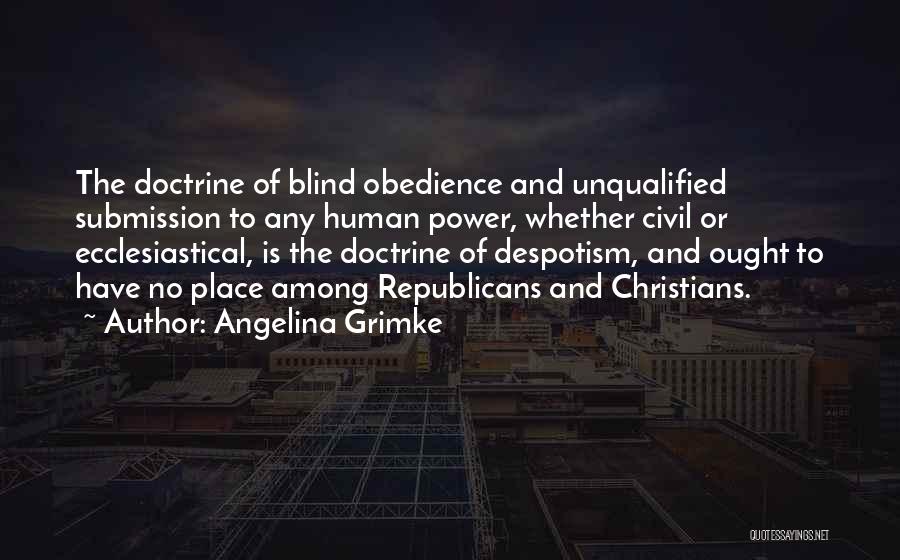
blind-obedience-quote-by-angelina-grimke

Posted by M. C. on July 8, 2020

https://quotessayings.net/pics/blind-obedience-quote-by-angelina-grimke-1583002.jpg

https://quotessayings.net/pics/blind-obedience-quote-by-angelina-grimke-1583002.jpg

Posted in Uncategorized | Tagged: | Leave a Comment »

Mises on Secession | Mises Institute

Posted by M. C. on July 8, 2020

https://mises.org/library/mises-secession?utm_source=Mises+Institute+Subscriptions&utm_campaign=9afce7e2be-EMAIL_CAMPAIGN_9_21_2018_9_59_COPY_01&utm_medium=email&utm_term=0_8b52b2e1c0-9afce7e2be-228343965

[Editor’s Note: Contrary to some attempts to portray Ludwig von Mises as a theorist who rejected radical solutions, we find in his works that Mises supported radical decentralization and widespread secession. Hans-Hermann Hoppe discusses Mises’s views below.]

“A nation, therefore, has no right to say to a province: You belong to me, I want to take you. A province consists of its inhabitants. If anybody has a right to be heard in this case it is these inhabitants. Boundary disputes should be settled by plebiscite.” (Omnipotent Government, p. 90)

“No people and no part of a people shall be held against its will in a political association that it does not want.” (Nation, State, and Economy, p. 34)

“Liberalism knows no conquests, no annexations; just as it is indifferent towards the state itself, so the problem of the size of the state is unimportant to it. It forces no one against his will into the structure of the state. Whoever wants to emigrate is not held back. When a part of the people of the state wants to drop out of the union, liberalism does not hinder it from doing so. Colonies that want to become independent need only do so. The nation as an organic entity can be neither increased nor reduced by changes in states; the world as a whole can neither win nor lose from them.” (Nation, State, and Economy, pp. 39–40)

“The size of a state’s territory therefore does not matter.” (Nation, State, and Economy, p. 82)

“The right of self-determination in regard to the question of membership in a state thus means: whenever the inhabitants of a particular territory, whether it be a single village, a whole district, or a series of adjacent districts, make it known, by a freely conducted plebiscite, that they no longer wish to remain united to the state to which they belong at the time, but wish either to form an independent state or to attach themselves to some other state, their wishes are to be respected and complied with. This is the only feasible and effective way of preventing revolutions and civil and international wars.” (Liberalism, p. 109)

“If it were in any way possible to grant this right of self-determination to every individual person, it would have to be done.” (Liberalism, pp. 109–10)

“The situation of having to belong to a state to which one does not wish to belong is no less onerous if it is the result of an election than if one must endure it as the consequence of a military conquest.” (Liberalism, p. 119)

“It makes no difference where the frontiers of a country are drawn. Nobody has a special material interest in enlarging the territory of the state in which he lives; nobody suffers loss if a part of this area is separated from the state. It is also immaterial whether all parts of the state’s territory are in direct geographical connection, or whether they are separated by a piece of land belonging to another state. It is of no economic importance whether the country has a frontage on the ocean or not. In such a world the people of every village or district could decide by plebiscite to which state they wanted to belong.” (Omnipotent Government, p. 92)

From an interview with Hans-Hermann Hoppe in the Austrian Economics Newsletter (AEN):

AEN: Was Mises better than the classical liberals on the question of the state?

HOPPE: Mises thought it was necessary to have an institution that suppresses those people who cannot behave appropriately in society, people who are a danger because they steal and murder. He calls this institution government.

But he has a unique idea of how government should work. To check its power, every group and every individual, if possible, must have the right to secede from the territory of the state. He called this the right of self-determination, not of nations as the League of Nations said, but of villages, districts, and groups of any size. In Liberalism and Nation, State, and Economy, he elevates secession to a central principle of classical liberalism. If it were possible to grant this right of self-determination to every individual person, he says, it would have to be done. Thus the democratic state becomes, for Mises, a voluntary organization.

AEN: Yet you have been a strong critic of democracy.

HOPPE: Yes, as that term is usually understood. But under Mises’s unique definition of democracy, the term means self-rule or self-government in its most literal sense. All organizations in society, including government, should be the result of voluntary interactions.

In a sense you can say that Mises was a near anarchist. If he stopped short of affirming the right of individual secession, it was only because of what he regarded as technical grounds. In modern democracy, we exalt the method of majority rule as the means of electing the rulers of a compulsory monopoly of taxation.

Mises frequently made an analogy between voting and the marketplace. But he was quite aware that voting in the marketplace means voting with your own property. The weight of your vote is in accord with your value productivity. In the political arena, you do not vote with your property; you vote concerning the property of everyone, including your own. People do not have votes according to their value productivity.

AEN: Yet Mises attacks anarchism in no uncertain terms.

HOPPE: His targets here are left-utopians. He attacks their theory that man is good enough not to need an organized defense against the enemies of civilization. But this is not what the private-property anarchist believes. Of course murderers and thieves exist. There needs to be an institution that keeps these people at bay. Mises calls this institution government, while people who want no state at all point out that all essential defensive services can be better performed by firms in the market. We can call these firms government if we want to.

Authors:

Ludwig von Mises

Ludwig von Mises was the acknowledged leader of the Austrian school of economic thought, a prodigious originator in economic theory, and a prolific author. Mises’s writings and lectures encompassed economic theory, history, epistemology, government, and political philosophy. His contributions to economic theory include important clarifications on the quantity theory of money, the theory of the trade cycle, the integration of monetary theory with economic theory in general, and a demonstration that socialism must fail because it cannot solve the problem of economic calculation. Mises was the first scholar to recognize that economics is part of a larger science in human action, a science that he called praxeology.

Contact Hans-Hermann Hoppe

Hans-Hermann Hoppe is an Austrian school economist and libertarian/anarcho-capitalist philosopher. He is the founder and president of The Property and Freedom Society.

Be seeing you

Posted in Uncategorized | Tagged: , , | Leave a Comment »

How the Left Exploits Antiracism to Attack Capitalism | Mises Wire

Posted by M. C. on July 8, 2020

For example, in an article titled “Black Politics and the Neoliberal Racial Order” authors Michael C. Dawson and Megan Ming Francis are quite clear that an attack on neoliberalism is no mere limited attack on an international elite of central bankers:

We define neoliberalism as a set of policies and ideological tenets that include the privatization of public assets; the deregulation or elimination of state services; macroeconomic stabilization and the discouragement of Keynesian policies; trade liberalization and financial deregulation.

Neoliberalism is any movement in the direction of less government intervention in the everyday lives of business owners, entrepreneurs, and households. To be a “non-neoliberal”—and thus ideologically correct—is to be in favor of Keynesian policies, trade controls, and more government regulation.

https://mises.org/wire/how-left-exploits-antiracism-attack-capitalism?utm_source=Mises+Institute+Subscriptions&utm_campaign=b8b3373a63-EMAIL_CAMPAIGN_9_21_2018_9_59_COPY_01&utm_medium=email&utm_term=0_8b52b2e1c0-b8b3373a63-228343965

Joseph Schumpeter once observed, “capitalism stands its trial before judges who have the sentence of death in their pockets.” Capitalism is to be condemned no matter what, even if the executioners have yet to settle on the specific reason for its condemnation.

The forces of anticapitalism have long morphed into whatever form best suits them for taking advantage of the zeitgeist. Whatever the latest injustice may be—from a polluted environment to poverty to racism—the solution is always the same: the destruction of markets and market freedom. As Ralph Raico has noted:

In earlier times, they [i.e., the anticapitalists] indicted capitalism for the immiseration of the proletariat, inevitable depressions, and the disappearance of the middle classes. Then, a little later, it was for imperialism and inevitable wars among the imperialist (capitalist) powers….

Capitalism was charged with being unable to compete with socialist societies in technological progress (Sputnik); with promoting automation, leading to catastrophic permanent unemployment; both with creating the consumer society and its piggish affluence and with proving incapable of extending such piggishness to the underclass; with “neo-colonialism”; with oppressing women and racial minorities; with spawning a meretricious popular culture; and with destroying the earth itself.

At the moment, the Left has apparently settled on racism as the justification for the latest round of anticapitalist invective. Indeed, if we delve into the Left’s narrative underpinning of the current Black Lives Matter movement we find a sizable undercurrent of anticapitalism. This isn’t to say antiracism has nothing to do with the controversy. Clearly it is an element of the movement. Moreover, it may certainly be the case that most of the movement’s rank and file—those who demonstrate in the streets—are animated simply by a desire to end mistreatment by government police. But when it comes time to formulate policy responses to the current crises of police abuse, we’re likely to discover that the Left is demanding a “solution” that goes far beyond merely holding abusive cops accountable and will focus instead on further dismantling what’s left of the market economy.

“Neoliberalism” as White Supremacy

While the connection between police abuse and the evils of capitalism may not be readily apparent to some, the indictment of capitalism as the ultimate culprit will flow naturally from the fact that the Left has long attempted to connect racism to market economies. We find the evidence in countless leftist-authored books and articles which claim capitalism and racism are inseparable. The vocabulary used here employs the usual pejorative term for capitalism employed by the Left: neoliberalism.

Although many free market liberals (i.e., “classical” liberals) and conservatives have tried to reassure themselves that attacks on neoliberalism are merely benign attacks on globalist elites, this is a naïve view. The Left has consistently used the term “neoliberal” to describe nearly any ideology or policy agenda that is even moderately procapitalist. In their minds, neoliberalism is simply market capitalism.

For example, in an article titled “Black Politics and the Neoliberal Racial Order” authors Michael C. Dawson and Megan Ming Francis are quite clear that an attack on neoliberalism is no mere limited attack on an international elite of central bankers:

We define neoliberalism as a set of policies and ideological tenets that include the privatization of public assets; the deregulation or elimination of state services; macroeconomic stabilization and the discouragement of Keynesian policies; trade liberalization and financial deregulation.

Neoliberalism is any movement in the direction of less government intervention in the everyday lives of business owners, entrepreneurs, and households. To be a “non-neoliberal”—and thus ideologically correct—is to be in favor of Keynesian policies, trade controls, and more government regulation.

The anticapitalism is apparent when researcher Felicia Rose Asbury concludes: “Black Lives Matter…operates as both a byproduct and site of resistance to the material and ideological manifestations of neoliberal projects.” This, of course, makes perfect sense if neoliberalism is inextricably linked with racism, and thus Asbury goes on to describe neoliberalism as being characterized by “exclusion and erasure” of nonwhite groups, which its “structural manifestations of violence” perpetuate. Consequently, it becomes necessary to “create a black future beyond the neoliberal paradigm.”

Dawson and Francis similarly lament the “the intertwined history of white supremacy and capitalist economic structures,” and this is especially alarming to them, because, in the anticapitalist narrative, free market capitalism is the dominant ideology in the world today. The story behind this is a familiar one for anyone well-versed in the Left’s historical narrative around neoliberalism. Specifically, as Dawson and Francis describe it:

Neo-liberalism is a set of policies and an ideology that has led to the transformation of government, starting under President Ronald Reagan, from New Deal – type social policies to policies that not only would be dictated by market principles but also would seek to have market values dominate every sphere of human existence from entertainment to science, from education to the arts. Reagan and his contemporaries Prime Minister Margaret Thatcher of Great Britain and Chancellor Gerhard Schröder of Germany were mostly successful in waging war on the Keynesian social contract by attacking the social safety net, labor and its organizations, and any argument or policy that favored, even if ever so slightly, those who were not members of “the 1 percent.”

Moreover, in the mind of the typical anticapitalist intellectual, the story of the 1980s and 1990s is one in which capitalists moved from victory to victory in overturning the old paradigm of the New Deal, which valued egalitarianism and social justice. An almost laissez-faire economic order has been the rule ever since.

Yet to anyone who has been paying attention, this narrative is clearly absurd. Whether we look at tax receipts, government spending, government employment, or the regulatory burden, state control of the economy—at least in the United States—is far larger today than at any time in the past. The economy has not been “deregulated” and the Keynesian paradigm has not been scaled back. Yet the narrative remains immensely powerful. Both leftists and conservatives believe it, which is why even conservatives will claim that “market fundamentalists” dominate the the entire government apparatus.

“Racial Capitalism”

The centrality of racism to capitalism is further reinforced by the relatively recent term “racial capitalism.” The term is employed by Dawson and Francis, who define racial capitalism as “the system that is produced by the mutually constitutive hierarchical structures of capitalism and race in the United States.” This sentence may be difficult to understand for those unfamiliar with the Left’s view of capitalism: capitalism is inherently hierarchical and characterized by top-down and bottom-up conflict between the social classes. In this view, capitalism is fundamentally inseparable from state coercion, which must must be employed by capitalists to keep workers in their place. Capitalists then employ racial divisions to reinforce this hierarchy.

Numerous examples of this theory are fleshed out in Walter Johnson’s new book The Broken Heart of America: St. Louis and the Violent History of the United States. Although Johnson focuses on the city of Saint Louis, the book is really his history of how capitalists nationwide have used racism to exploit the middle and working classes over the past two centuries. It is a history of how “racial capitalism has been one in which white supremacy justified the terms of…capitalist exploitation.” Johnson makes it clear he views the promotion of racism as a necessary tactic in perpetuating capitalism at the expense of the workers. For Johnson, it is possible to control racial and ethnic minorities with shows of physical force. But the numerically superior white workers require a different strategy: specifically, “white supremacy is necessary to control the white people.”1

Consequently, in Johnson’s view, we find that capitalism rests on a shaky foundation in which racism is not just part of the capitalist framework. Racism must be perpetuated by capitalists in order to maintain the capitalist status quo. The conclusion becomes obvious: destroy capitalism and we destroy racism.

It’s easy to see, then, how a well-meaning opponent of bigotry might conclude that the cause of decency must necessary demand the destruction of capitalism. According to the Left’s intellectuals, not only is neoliberalism (i.e., capitalism) inextricably linked with racism, but the neoliberal order is the dominant one. We might then conclude that the injustices we see around us—presumably a product of the status quo—can only be fixed by overturning that dominant ideology. Moreover, the current ruling class—the ascendant capitalists—employ racism to prop themselves up at the expense of everyone else.

Who wouldn’t want to strike at the capitalists after accepting this narrative?

The problem with all this, of course, is that capitalism is certainly not the dominant ideology of the status quo. If it were, Paul Krugman would not be a media darling, and the US would not be running trillion-dollar deficits each year, funded with government-printed money. Moreover, capitalism has long been the enemy of caste systems, which tend to find the most support in noncapitalist traditionalist systems of privilege and protectionism. It’s no coincidence, of course, that the slave drivers of old vehemently slandered capitalism at every opportunity.

But even if we were to win that argument, the anticapitalist narrative would simply switch to environmentalism or the moral turpitude of consumerism. This year, the popular anticapitalist narrative is about race. Next year, it may be something else entirely. The evidence presented at capitalism’s trial will change. But the presumed death sentence will remain.

  • 1. It should be noted that Johnson did not invent this theory, although he employs it extensively. Martin Luther King, Jr., hinted at a similar theory in 1965 when he claimed: “The segregation of the races was really a political stratagem employed by the emerging Bourbon interests in the South to keep the southern masses divided and southern labor the cheapest in the land.” The “Bourbon interests” were the Bourbon Democrats of the late nineteenth century, who were notable for their support of hard money, decentralization, and market capitalism in general. The most famous Bourbon Democrat was Grover Cleveland of New York, probably the last true economic liberal in the White House.
Author:

Contact Ryan McMaken

Ryan McMaken (@ryanmcmaken) is a senior editor at the Mises Institute. Send him your article submissions for the Mises Wire and The Austrian, but read article guidelines first. Ryan has degrees in economics and political science from the University of Colorado and was a housing economist for the State of Colorado. He is the author of Commie Cowboys: The Bourgeoisie and the Nation-State in the Western Genre.


Be seeing you

Posted in Uncategorized | Tagged: , , , , , | Leave a Comment »

Delingpole: Not Terrorism – Just a Randomly Exploding Bus, Claims BBC

Posted by M. C. on July 8, 2020

Largely peaceful explosion

The last comment was, of course, a reference to the BBC’s description of Black Lives Matter riots which resulted in 27 police officers being injured as ‘largely peaceful.’

Two hours later, the BBC was finally shamed into a follow up tweet, identifying the real perpetrator of Philip Russell’s death.

The BBC, a liberal/remainer government mouthpiece, will go to any lengths to avoid dissing Middle East immigrants. Jihadists or not.

The same BBC that helped cover up Afghan child groomers for 10+ years.

How long until you have to bring your own rug if you want to enter the UK?

https://www.breitbart.com/europe/2020/07/08/delingpole-not-terrorism-just-a-randomly-exploding-bus-claims-bbc/

by James Delingpole

When four Muslim suicide bombers blew themselves up on the London Underground and on buses during the infamous 7/7 atrocities of 2005, 52 people died and more than 700 were injured.

Here is how the BBC chose to commemorate one of those deaths yesterday on Twitter.

A self-exploding bus, eh? Why has nobody warned us before about this terrible threat? We’ve all heard of cases of spontaneous combustion where humans are concerned: Dickens, for example, was obsessed with it, and included someone dying of it in Bleak House. But spontaneously combustible buses? That’s a new one.

The BBC’s tweet got quite a bit of attention, mainly from people who don’t believe in self-exploding buses but who know a mealy-mouthed, evasive, slimy, politically correct, dishonest, issue-ducking, blame-avoiding BBC tweet when they see one.

Among the 2,000 comments below the BBC’s tweet were:

I hate it when the bus you are on suddenly decides to explode.

NB* The bus DID NOT explode. The rucksack being carried by an Islamic lunatic, high on religious zeal and the power of imaginary fairies exploded on his back.

Not killed, murdered. The bus didn’t just explode, it was bombed. The BBC no longer capable of being truthful.

Ok, so you’ve managed NOT to offend the terrorists who murdered with impunity on 7/7… Now, how about NOT offending everybody else with this hideous headline? Remembering the victims & families of #londonbombings RIP…

Naughty bus was in a bad mood and had a little explosion. Nothing to do with Islamic extremists.

It didn’t explode. The bus had a bomb on it. Always glad to help the national broadcaster.

Largely peaceful explosion

The last comment was, of course, a reference to the BBC’s description of Black Lives Matter riots which resulted in 27 police officers being injured as ‘largely peaceful.’

Two hours later, the BBC was finally shamed into a follow up tweet, identifying the real perpetrator of Philip Russell’s death.

Too little, too late. #DefundtheBBC

James Delingpole is the host of the Delingpod. In the latest episode he talks to Calvin Robinson of the #DefundtheBBC campaign about why the BBC is a lost cause.


Be seeing you


truth-goes-to-die


Posted in Uncategorized | Tagged: , , , | 1 Comment »

[Essay] The Old Normal, by Andrew J. Bacevich | Harper’s Magazine

Posted by M. C. on July 8, 2020

For the United States today, the problem turns out to be similar to the one that beset the nation during the period leading up to World War II: not isolationism but overstretch, compounded by indolence. The present-day disparities between our aspirations, commitments, and capacities to act are enormous.

The core questions, submerged today as they were on the eve of U.S. entry into World War II, are these: What does freedom require? How much will it cost? And who will pay?

https://harpers.org/archive/2020/03/the-old-normal-united-states-addiction-to-war-andrew-bacevich/

Why we can’t beat our addiction to war

By

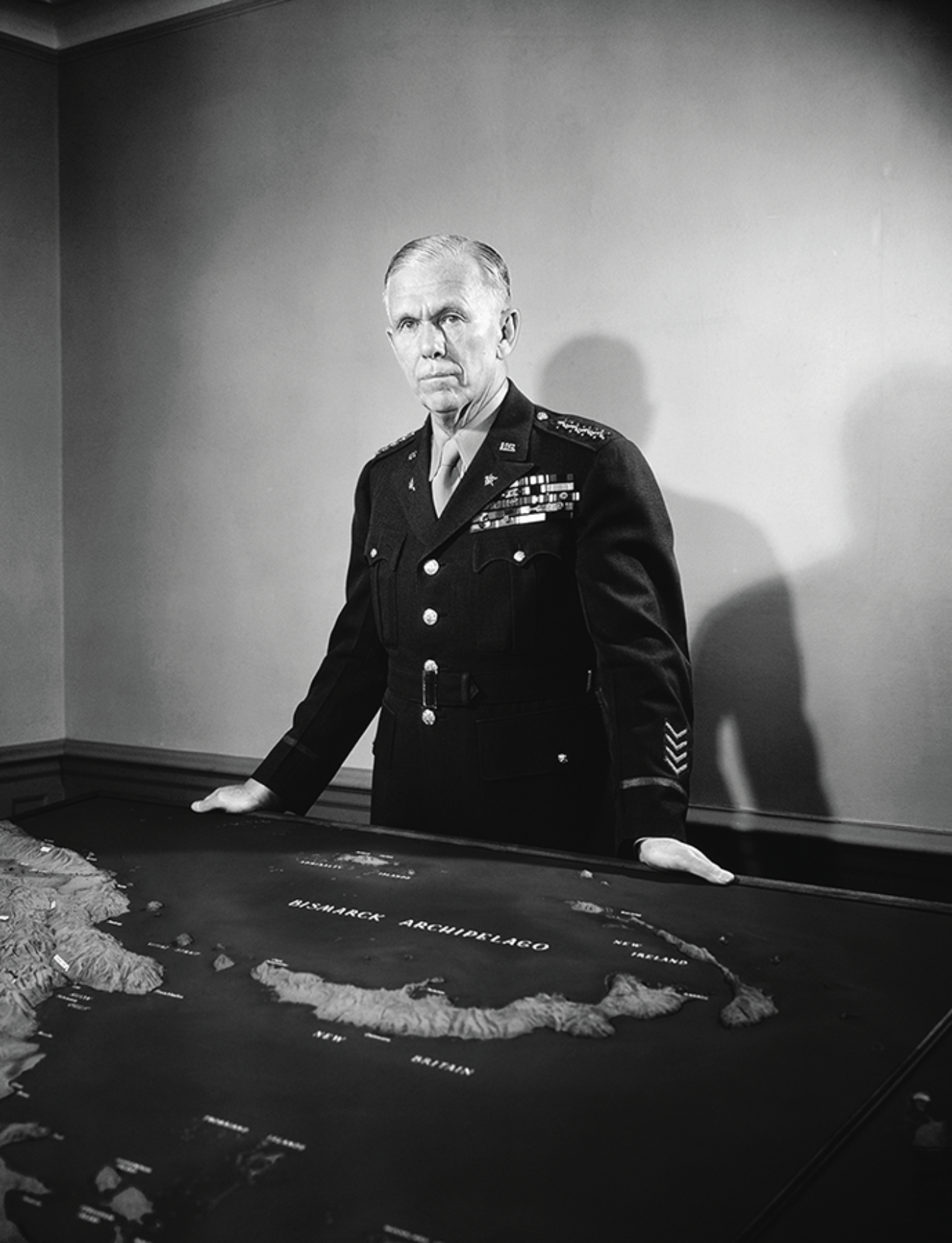
Addressing the graduating cadets at West Point in May 1942, General George C. Marshall, then the Army chief of staff, reduced the nation’s purpose in the global war it had recently joined to a single emphatic sentence. “We are determined,” he remarked, “that before the sun sets on this terrible struggle, our flag will be recognized throughout the world as a symbol of freedom on the one hand and of overwhelming force on the other.”

At the time Marshall spoke, mere months after the Japanese attack on Pearl Harbor, U.S. forces had sustained a string of painful setbacks and had yet to win a major battle. Eventual victory over Japan and Germany seemed anything but assured. Yet Marshall was already looking beyond the immediate challenges to define what that victory, when ultimately— and, in his view, inevitably—achieved, was going to signify.

This second world war of the twentieth century, Marshall understood, was going to be immense and immensely destructive. But if vast in scope, it would be limited in duration. The sun would set; the war would end. Today no such expectation exists. Marshall’s successors have come to view armed conflict as an open-ended proposition. The alarming turn in U.S.–Iranian relations is another reminder that war has become normal for the United States.

The address at West Point was not some frothy stump speech by a hack politician. Marshall was a deliberate man who chose his words carefully. His intent was to make a specific point: the United States was fighting not to restore peace—a word notably absent from his remarks—nor merely to eliminate an isolated threat. The overarching American aim was preeminence, both ideological and military: as a consequence of the ongoing war, America was henceforth to represent freedom and power—not in any particular region or hemisphere but throughout the world. Here, conveyed with crisp military candor, was an authoritative reframing of the nation’s strategic ambitions.1

Marshall’s statement captured the essence of what was to remain America’s purpose for decades to come, until the presidential election of 2016 signaled its rejection. That year an eminently qualified candidate who embodied a notably bellicose variant of the Marshall tradition lost to an opponent who openly mocked that tradition while possessing no qualifications for high office whatsoever.

Determined to treat Donald Trump as an unfortunate but correctable aberration, the foreign-policy establishment remains intent on salvaging the tradition that Marshall inaugurated back in 1942. The effort is misguided and will likely prove futile. For anyone concerned about American statecraft in recent years, the more pressing questions are these: first, whether an establishment deeply imbued with Marshall’s maxim can even acknowledge the magnitude of the repudiation it sustained at the hands of Trump and those who voted him into office (a repudiation that is not lessened by Trump’s failure to meet his promises to those voters); and second, whether this establishment can muster the imagination to devise an alternative tradition better suited to existing conditions while commanding the support of the American people. On neither score does the outlook appear promising.

General George C. Marshall at the headquarters of the War Department, 1943 © Bettmann/Getty Images

General Marshall delivered his remarks at West Point in a singular context. Marshall gingerly referred to a “nationwide debate” that was complicating his efforts to raise what he called “a great citizen-army.” The debate was the controversy over whether the United States should intervene in the ongoing European war. To proponents of intervention, the issue at hand during the period of 1939 to 1941 was the need to confront the evil of Nazism. Opponents of intervention argued in the terms of a quite different question: whether or not to resume an expansionist project dating from the founding of the Republic. This dispute and its apparent resolution, misunderstood and misconstrued at the time, have been sources of confusion ever since.

Even today, most Americans are only dimly aware of the scope—one might even say the grandeur—of our expansionist project, which stands alongside racial oppression as an abiding theme of the American story. As far back as the 1780s, the Northwest Ordinances, which created the mechanism to incorporate the present-day Midwest into the Union, had made it clear that the United States had no intention of confining its reach to the territory encompassed within the boundaries of the original thirteen states. And while nineteenth-century presidents did not adhere to a consistent grand plan, they did pursue a de facto strategy of opportunistic expansion. Although the United States encountered resistance during the course of this remarkable ascent, virtually all of it was defeated. With the notable exception of the failed attempt to annex Canada during the War of 1812, expansionist efforts succeeded spectacularly and at a remarkably modest cost to the nation. By midcentury, the United States stretched from sea to shining sea.

Generations of Americans chose to enshrine this story of westward expansion as a heroic tale of advancing liberty, democracy, and civilization. Although that story certainly did include heroism, it also featured brute force, crafty maneuvering, and a knack for striking a bargain when the occasion presented itself.

In the popular imagination, the narrative of “how the West was won” to which I was introduced as a youngster has today lost much of its moral luster. Yet the country’s belated pangs of conscience have not induced any inclination to reapportion the spoils. While the idea of offering reparations to the offspring of former slaves may receive polite attention, no one proposes returning Florida to Spain, Tennessee and Georgia to the Cherokees, or California to Mexico. Properties seized, finagled, extorted, or paid for with cold, hard cash remain American in perpetuity.

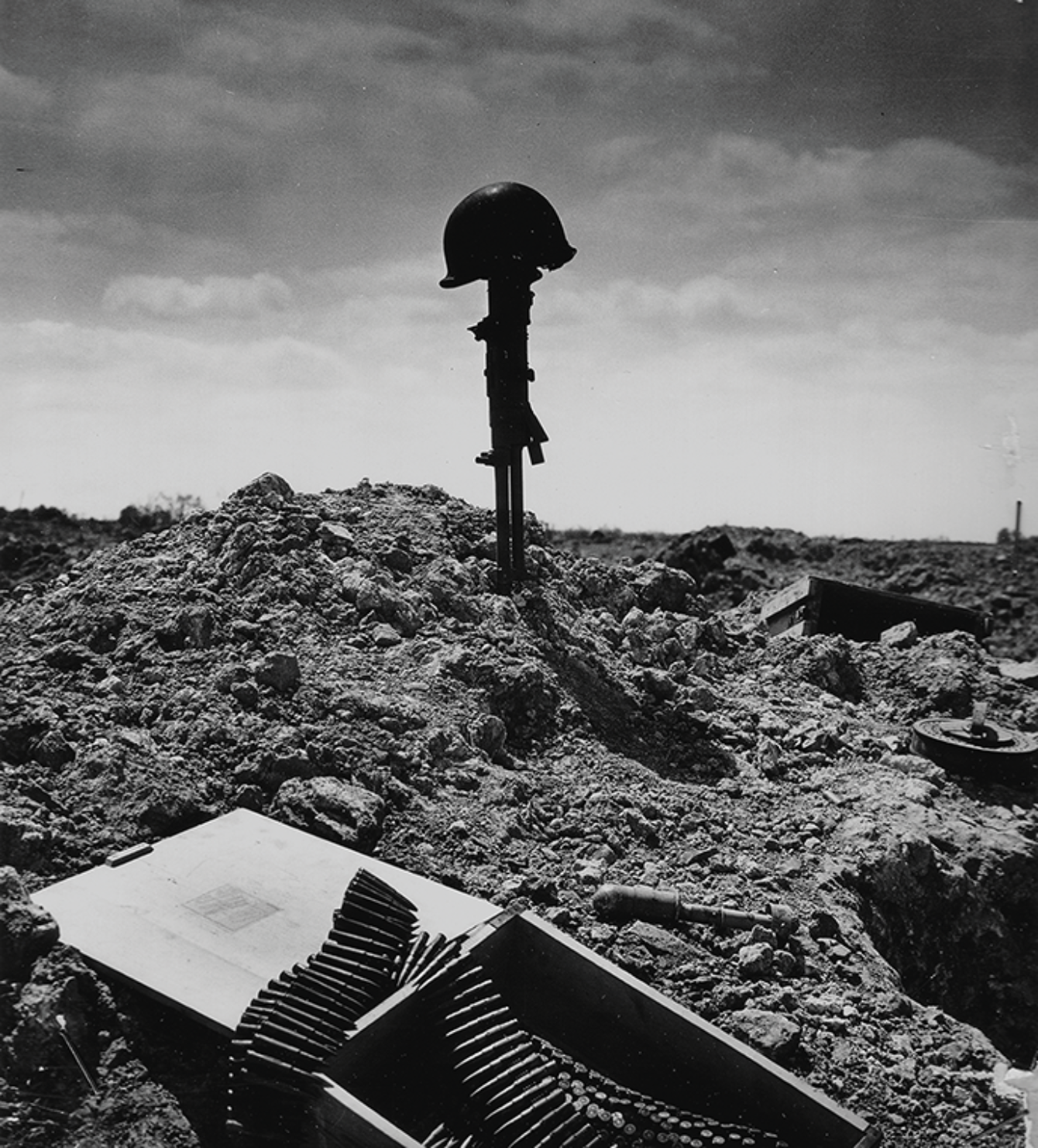
Battlefield memorial for a dead U.S. soldier, Normandy, France, 1944 (detail)

Back in 1899, the naturalist, historian, politician, sometime soldier, and future president Theodore Roosevelt neatly summarized the events of the century then drawing to a close: “Of course our whole national history has been one of expansion.” When T.R. uttered this truth, a fresh round of expansionism was under way, this time reaching beyond the fastness of North America into the surrounding seas and oceans. The United States was joining with Europeans in a profit-motivated intercontinental imperialism.

Read the rest of this entry »

Posted in Uncategorized | Tagged: , , , , , , | Leave a Comment »

A Culture War Battle Trump Can Win – LewRockwell

Posted by M. C. on July 8, 2020

Trump’s stand for tradition and against mob rule is the only stand the president can take. And it is a necessary stand. For this culture war is going to last long after this presidency. And it is going to determine what kind of country we shall become.

Will it be the great and glorious republic of the past or the social and cultural Marxist hellhole that is the promise of the mobs?

https://www.lewrockwell.com/2020/07/patrick-j-buchanan/a-culture-war-battle-trump-can-win/

By

Speaking at Mount Rushmore on Friday, and from the White House lawn on Saturday, July 4, Donald Trump recast the presidential race.

He seized upon an issue that can turn his fortunes around, and the wounded howls of the media testify to the power of his message.

Standing beneath the mammoth carved images of Presidents Washington, Jefferson, Lincoln and Theodore Roosevelt, Trump declared: “Angry mobs are trying to tear down statues of our founders, deface our most sacred memorials, and unleash a wave of violent crime in our cities.”

These mobs are made up of Marxists, criminals and anarchists. Their cause is a cultural revolution. “Their goal is not a better America. Their goal is the end of America.”

After reciting the achievements of his four predecessors, Trump added: “No movement that seeks to dismantle these treasured American legacies can possibly have a love of America at its heart.”

Then he put it right into the basement hideaway of Joe Biden: “No person who remains quiet at the destruction of this resplendent heritage can possibly lead us to a better future.”

Trump is calling out Biden’s silence in the face of an onslaught against our heroes and history as manifest political cowardice that makes Biden a moral accomplice of the mobs.

One day, Basement Boy is going to have to speak out.

Where was Biden when Trump was standing up for America on Independence Day?

As his Party tweeted that Trump’s trip to Mount Rushmore was aimed at “glorifying white supremacy,” Biden was wailing about the need “to rip the roots of systemic racism” out of America.

Does that sound like Harry Truman or JFK?

So the lines are drawn for 2020.

On one side are those who believe America is a good country, the greatest the world has ever seen, and that the men who created this miracle should be respected, revered and remembered.

That is not the view of the left wing of the Democratic Party.

For even as the fireworks were exploding on the Mall, a Baltimore mob was tearing down, smashing up and dumping into the Inner Harbor a landmark statue of Christopher Columbus.

That statue stood next to the Baltimore neighborhood of Little Italy and had been dedicated in 1984 by President Ronald Reagan.

Do the haters of Columbus think that destroying Columbus’ statues across America will not anger and alienate Americans of Italian descent who revere the explorer? Does Biden think Italian-Americans will reward a candidate and party that will not renounce the mob that did this?

As the left wing of the Democratic Party embraces the “defund the police” movement, how long will it hold onto voters who are today watching murder rates climb to new records?

During Independence Day weekend in Chicago, 80 people were shot, and 17 of them killed.

In New York City, the number of shooting victims has risen this year by 50%. In June, there were 250 shootings, an increase of 150 over June 2019. Mayor Bill de Blasio’s response: cutting $1 billion from the NYPD budget.

Over July 4, an armed Black militia arrived at the reopening of the Stone Mountain monument in Georgia, which features huge carved images of Robert E. Lee and Stonewall Jackson. They want its destruction.

Trump is charged with “dividing the nation.”

But it is not Trump trashing cops or providing cover for “protests” marked by looting and arson. Nor is it Trump tearing down memorials and monuments to the great Americans of the past.

Where the Democratic Party has been a portrait in indecisiveness, Trump has been clear. He stands with the cops who have gone through a hellish six weeks. He stands against defacing statues and destroying monuments. He has denounced the rioting, looting and arson that have accompanied protests the media never cease to describe as “peaceful.”

It is not Trump who is dividing America. He has pledged to resist the rampages with all the weapons in his presidential arsenal.

There are four months until November’s election, 18 weeks until America decides: Do we want to continue an era of protests that revert to rioting, looting and arson? Do we want to see police departments further constricted and trashed as neo-fascist?

Do we wish to see statues of presidents from Washington, Jefferson, Jackson, Lincoln and Grant to Teddy Roosevelt trashed by mobs that hate America, hate her heroes and hate her history?

Trump’s stand for tradition and against mob rule is the only stand the president can take. And it is a necessary stand. For this culture war is going to last long after this presidency. And it is going to determine what kind of country we shall become.

Will it be the great and glorious republic of the past or the social and cultural Marxist hellhole that is the promise of the mobs?

Trump just played the patriotism card, the correct card to play, and it may just work for his reelection.

Be seeing you


Posted in Uncategorized | Tagged: , , , , , | Leave a Comment »

PETER HITCHENS: We’ve all turned from normal humans into muzzled masochists!  | Daily Mail Online

Posted by M. C. on July 8, 2020

Its evangelists will not leave you and me alone, but constantly seek to force us to join. This is why I make such a fuss about the demand to make us all wear muzzles. This is not about health. 

And we do it. I have begun to understand why the atrocious drivel of Fifty Shades Of Grey was so popular. It seems we really have become a nation of surrendered masochists.

https://www.dailymail.co.uk/debate/article-8490527/PETER-HITCHENS-Weve-turned-normal-humans-muzzled-masochists.html

By Peter Hitchens for The Mail on Sunday

When this madness began, I behaved as if a new and fanatical religion was spreading among us. Be polite and tolerant, I thought. It may be crazy and damaging but in time it will go away.

Now it is clear that a new faith, based on fear of the invisible and quite immune to reason, has all but taken over the country. And it turns out to be one of those faiths that doesn’t have much tolerance for those who don’t share it.

My guess is that about 85 per cent of the population now worship it and will continue to do so. The rest of us are, as each day goes by, a persecuted minority, forced to go along with beliefs we do not hold.

This obsession with telling us how to look, and turning us from normal humans into submissive, mouthless flock animals all decked out in a compulsory uniform is, in my view, part of an unprecedented assault on our personal liberty in general. Passengers are seen on the London Tube network

This obsession with telling us how to look, and turning us from normal humans into submissive, mouthless flock animals all decked out in a compulsory uniform is, in my view, part of an unprecedented assault on our personal liberty in general. Passengers are seen on the London Tube network


Its evangelists will not leave you and me alone, but constantly seek to force us to join. This is why I make such a fuss about the demand to make us all wear muzzles. This is not about health.

There is simply not enough evidence to compel us to do so. It is an attempt to force submission on Covid unbelievers.

That is why it spreads, despite the absence of any good case for it. In a creepy development, one of the most powerful scientific papers arguing against it, Why Face Masks Don’t Work: A Revealing Review, last week suddenly vanished from its usual place on the internet (I still have a copy).

Scotland’s tinpot despot, Nicola Sturgeon, now demands that muzzles are worn in shops, as well as on public transport, north of the border.

In Texas, of all states, the governor seeks to make muzzles compulsory in all public places. The tiny-circulation Guardian newspaper, which just so happens to be the house journal of the BBC, absurdly compares muzzles to seat belts (proven a million times to save lives, beyond any doubt) and demands in its main editorial ‘Cover your face’.

Now it is clear that a new faith, based on fear of the invisible and quite immune to reason, has all but taken over the country. And it turns out to be one of those faiths that doesn't have much tolerance for those who don't share it [File photo]

Now it is clear that a new faith, based on fear of the invisible and quite immune to reason, has all but taken over the country. And it turns out to be one of those faiths that doesn’t have much tolerance for those who don’t share it [File photo]


The BBC is then careful to report this prominently. Do not be surprised if the Government soon follows. Yet, as the Government’s own documents and experts have repeatedly said, evidence for the usefulness of these muzzles is weak. The Department for Business and Enterprise says clearly: ‘The evidence of the benefit of using a face covering to protect others is weak and the effect is likely to be small.’

This obsession with telling us how to look, and turning us from normal humans into submissive, mouthless flock animals all decked out in a compulsory uniform is, in my view, part of an unprecedented assault on our personal liberty in general. Stay at home. Stop working. Don’t see your friends or relatives. Submit, submit, submit. Get used to being told what to do.

And we do it. I have begun to understand why the atrocious drivel of Fifty Shades Of Grey was so popular. It seems we really have become a nation of surrendered masochists.

The decision to force poor Leicester back into the misery of total shutdown is an example of this. Craziest of all is the closure of schools in that city, when school-age children are barely touched by Covid.

This must make plans to reopen schools in September even less likely to come true. Does the Government think the education unions won’t notice this panic-driven act and use it to keep the schools shut? Of course they will.

I am pretty sure this has been done not because it’s necessary but because the hysterical would-be headmaster Matt Hancock wants to keep us under his thumb.

Behave, he shrills, or the tuck shop stays closed. Leicester is like the poor boys who were caned by such headmasters to set an example to the rest. Read the rest of this entry »

Posted in Uncategorized | Tagged: , , , , | Leave a Comment »

Why the Police Must Be Removed from the Equation

Posted by M. C. on July 8, 2020

Of course, if the police are trained primarily to control the citizenry
rather than to be a part of the community, they will eventually inspire
alienation, resentment and hatred.

There can be no doubt that there will be widespread unrest and riots as a result. At this point, the US has a host of federal enforcement agencies: the NSA, DHS, USMS, CIA, FBI, BOP, USSS, TSA, CBP, BIS, OLE, DIA, NGA, OCR, FAMS, DEA, National Guard and literally dozens of others.

If and when the people of the US begin to rebel on a significant scale, it would not be at all surprising if some or most of these agencies were called out to suppress dissent.

https://internationalman.com/articles/why-the-police-must-be-removed-from-the-equation/

by Jeff Thomas

In America, no one likes the police… not really.

There are many, perhaps even half of Americans, who conceptually support the idea of the police, but virtually no one likes what the police have become.

At one time, the fellow in the image above was America’s idea of the neighbourhood cop. Today, if one were to conjure up an image of a policeman, it would be a more Darth Vader-like image of a man whose face is obscured by mask, goggles and helmet, wearing body armour, and carrying an assault weapon.

Decades ago, the local cop was looked upon as a good guy – part of the community. He may not have been thought of as having been part of the intelligentsia, but he did receive his training under the concept of “serve and protect,” and for the most part, he behaved accordingly.

But that’s no longer so.

Somewhere along the line, policemen ceased to receive training under the heading of “serve and protect,” and now receive an entirely different form of training that focuses on control.

Not long ago, I watched a police training video in which police recruits were being led by a trainer, punching their fists in the air in unison, and shouting repeatedly, “I have the power! I have the power!”

And, unfortunately, that’s the direction the police in America have gravitated to – if not on a national level, then at least in areas of high population concentration.

This is quite an important change. Once the latest batch of recruits have been indoctrinated into the concept that “You must submit to my authority,” there will be more frequent extremes in force, including some actual homicides. Whilst most police will be likely to maintain a measure of self-control, there will be those few who, if any resistance occurs, will go to any length to achieve submission, including homicide.

Of course, if the police are trained primarily to control the citizenry rather than to be a part of the community, they will eventually inspire alienation, resentment and hatred.

But if we’re objective, we’ll recognize that, periodically, there have always been community protests and that they’ve sometimes become violent. In each such case the local police have been called in.

So, what’s different now?

Well, although few police have actually overstepped their authority and become unreasonably forceful, they tend to all be tarred with the same brush – both the protestors and the media tend to label them all as fascist and racist – even those police who are the same race as their accusers.

Clearly, logic is not a deterrent to typecasting.

This is not the first time such accusations have occurred – they tend to pop up whenever police are tasked with controlling crowds.

But now we’re seeing a new twist.

Governors, mayors, police commissioners and even police chiefs now routinely apologise for their officers, accepting the media’s tendency to lump them all together as being fascist and racist.

This has not resulted in a toning down of the vitriol heaped on the police. Quite the contrary – the rhetoric has only become louder and is led on a daily basis by the media.

And we’re now beginning to see the reaction by the police themselves. Those who previously accepted their task of confronting protesters and rioters have begun to call in sick en masse, or even walk away from their jobs entirely.

No doubt they’re hoping that their disappearance from duty will make both the public and their own superiors swallow hard and say, “We’re sorry, I guess we were too harsh. We should have supported you in doing the job you were hired to do. Please come back.”

But this is not what will happen. Those who are in the upper reaches of the police hierarchy will try to save their own skins, and will take a knee, on camera, in apology for their officers.

This will only serve to further polarize the front-line police from their superiors.

At the same time, we’re seeing placards by the thousands, reading, “Defund the Police.”

And this is not a mere idle threat. The media now promote a programme under which most police duties would be turned over to social workers, mental health practitioners, and “victim advocates.”

So, the objective here is not to defund, but to re-allocate those funds, diminishing the numbers of actual police drastically.

It would appear that only a small segment of the population actually support this concept, yet the great majority who may well fear diminished police protection are noticeably silent, apparently fearful of appearing to be politically incorrect.

The outcome would be to de-fang police at the local level, to render them incapable of the “protect” portion of “serve and protect.”

But why? And why now?

Well, the US has entered an economic crisis. At present, it’s perceived by most to be a downturn due to the coronavirus, but it will soon become apparent that it is a major crisis that has only just begun.

And it will be devastating to the lives of Americans.

Soon, they’ll figure out that the government, the banksters, et al, have robbed them of their economic stability and they’re headed for a state of neo-serfdom.

There can be no doubt that there will be widespread unrest and riots as a result. At this point, the US has a host of federal enforcement agencies: the NSA, DHS, USMS, CIA, FBI, BOP, USSS, TSA, CBP, BIS, OLE, DIA, NGA, OCR, FAMS, DEA, National Guard and literally dozens of others.

If and when the people of the US begin to rebel on a significant scale, it would not be at all surprising if some or most of these agencies were called out to suppress dissent.

And this perception is not by any means conjecture or “conspiracy theory.” The 2001 Patriot Act and 2011 National Defense Authorization Act effectively allow the entire US to be redefined as a battleground, to be controlled by martial law.

Of course, if federal troops are deployed in the US, the group of combat-trained individuals who are most likely to stand against them would be the local police. After all, it’s their own communities that would be under fire, their own neighbours who would be the casualties.

History has shown that, when the central government’s troops move in to control a population, the local enforcers often turn against them and become their adversaries.

Therefore, a federal government would be wise to diminish that potential opposition, months prior to any major move toward martial law.

If that is indeed what’s in store, we should not be surprised if the central government and the media work together to remove the local police from the equation.

Editor’s Note: The truth is, we’re on the cusp of a economic crisis that could eclipse anything we’ve seen before. And most people won’t be prepared for what’s coming. That’s exactly why bestselling author Doug Casey and his team just released a free report with all the details on how to survive an economic collapse. Click here to download the PDF now.


Be seeing you


Posted in Uncategorized | Tagged: , , , , | Leave a Comment »