MCViewPoint

Opinion from a Libertarian ViewPoint

Archive for the ‘Uncategorized’ Category

Trump and Pelosi Ready to Spend Another $2 Trillion on Infrastructure

Posted by M. C. on April 7, 2020

Sadly, a large quantity of Americans seem eager to take the fast lane on this road to serfdom, even as the economic and civil liberties restrictions pile up under the guise of a public health emergency.

https://www.theadvocates.org/2020/04/trump-and-pelosi-ready-to-spend-another-2-trillion-on-infrastructure/

Who says there’s not enough bipartisanship in Washington? President Donald Trump is praising House Speaker Nancy Pelosi and urging Congress to follow her lead by passing yet another $2 trillion coronavirus bill that would “invest” in infrastructure.

privacy coronavirus south korea 

What a sight to behold, a country in crisis inspires its leaders to come together for the common good. Even better, by forcing more debt and inflation on Americans, the economy can finally get roaring again!

That demented logic prevails in Washington, D.C., and the swamp-drainer-in-chief is no exception.

Fresh off signing the most expensive bill in American history, more than twice the cost of FDR’s New Deal, Trump is ready for whatever Pelosi throws at him next, as long as it also costs at least $2 trillion.

On Monday, Pelosi unveiled her wishlist for what she called “Phase 4” of Congress’s response to COVID-19. This fourth bill could very well be bigger than the previous three, setting a new price tag record.

The San Francisco Democrat listed “more direct payments,” “more opportunity for family and medical leave,” and an infrastructure megaproject.

“She wasn’t bad,” Trump tweeted after watching Pelosi’s press conference.

“With interest rates for the United States being at ZERO, this is the time to do our decades long awaited Infrastructure Bill. It should be VERY BIG & BOLD, Two Trillion Dollars, and be focused solely on jobs and rebuilding the once great infrastructure of our Country! Phase 4,” Trump wrote, adopting Pelosi’s term for the forthcoming proposal.

Sadly, a large quantity of Americans seem eager to take the fast lane on this road to serfdom, even as the economic and civil liberties restrictions pile up under the guise of a public health emergency.

Economist Peter Schiff, who predicted the 2008 financial crisis, has been sounding the alarm that another crash is imminent since the Federal Reserve dropped interest rates to zero, promising to monetize debt without restraint or limit.

“President @realDonaldTrump thinks it’s the perfect time for the government to borrow trillions more to improve our infrastructure. That’s like a guy who just lost his job deciding it’s the perfect time to take out a second mortgage to put in the swimming pool he’s always wanted,” Schiff tweeted.

To extend the analogy, Trump is gaining support for the project by promising the biggest pool party ever. All politicians and special interests are invited.

There is no opposition to this profligate spending. Senate Majority Leader Mitch McConnell just wants to wait “a few weeks” to see how the other $2.2 trillion stimulus bill plays out first.

It doesn’t actually matter what happens in a few weeks though. When government policies go horribly wrong, a bureaucrat knows that just means the policy wasn’t enacted with enough gusto.

The coronavirus pandemic remains the sole focus of the country to the detriment of the people. Worse than the disease is the government’s cure.

Be seeing you


Posted in Uncategorized | Tagged: , , , , , , , , , , | Leave a Comment »

Informal Economies – LewRockwell

Posted by M. C. on April 7, 2020

If strict price controls and import controls are imposed or if there is a flight to an “unofficial” form of money due to hyperinflation, the markets will pop up quickly in an attempt to meet demand at market prices.

https://www.lewrockwell.com/2020/04/david-hathaway/informal-economies/

By

When I worked in U.S. Embassies in various third-world countries, the term “informal economy” was bandied about to describe a market sector that was not submitting to the taxation and regulation of the individual countries. A term often used in tandem with “informal economy” is “ungoverned space” meaning the geographic area where the activity occurs.

Generally, the more oppressive the government, the larger the presence of the “informal economy.” Ironically, the usual stance of the U.S. (an allegedly free country) in such situations is to prompt the foreign government to capture and regulate the identified informal economy through heavy-handed police action. This informal economy is no secret to the foreign government. Even the foreign government officials make use of, almost entirely, the informal economy to make purchases for their own households. Why pay full price, including tax and import fees, for the items you need?

The hustle and bustle of the stalls in the sprawling outdoor and sometimes indoor black markets represent freedom bursting onto the scene. They allow the otherwise oppressed inhabitants of the country to survive. It doesn’t matter what you want, whether it be a new refrigerator or a pair of shoes, the informal market will provide it at a cheaper price. The ”formal” merchants tied to a building at a fixed street address are identifiable by the government and will be targeted for closure if they don’t sell things with an official serial-numbered receipt, indicating that taxes have been paid.

Although farmers’ markets, swap meets, flea markets, thrift stores, yard sales, and garage sales have increased over recent years in the U.S., they haven’t reached the magnitude of the informal economy in third-world countries. They will get much bigger, when necessity requires it. People will choose to go “off the books” rather than die or subsist in abject poverty at the hands of an oppressive government.

It is incredible to see the ingenious circuitous routes through the Andes Mountains that manufactured goods from Asia traverse, going from the sea coast in Chile and across the Bolivian border in order to avoid confiscatory fees collected by border officials; and then to see that same merchandise traverse one landlocked country to the neighboring landlocked country of Paraguay only to rush across the Parana river at nightfall carried by hundreds of small motorboats going to unofficial landing spots in the “Tri-border Area” allowing Brazilian residents to avoid a hefty “Value Added Tax.”

When the big crash comes in the U.S. (maybe it is arriving now), the black markets—the informal economy—will arrive very noticeably. There is very little industrial productivity in this country and, in the winter, the U.S. relies heavily on produce imports from foreign countries that have year-round growing seasons. If strict price controls and import controls are imposed or if there is a flight to an “unofficial” form of money due to hyperinflation, the markets will pop up quickly in an attempt to meet demand at market prices. Americans will quickly swap survival for any imagined distaste they thought they would have for a hodge-podge market place where many vendors and shoppers give each other the assurance of anonymity as they blend together in a friendly mass. Since the merchants are outside the formal regulated economy, they can choose to ignore legal tender laws or any other regulation if it is advantageous to do so and make their transactions or trades in any medium they want.

Identifiable store names and logos will likely be absent with vendors, but you will remember the lady that gave you a good deal on a pair of shoes or the man that sells good cheese and dairy products.  When the informal economy asserts itself in a big enough way, the regulators will try to play catch-up and try to enshrine whatever new conditions develop into official policy before the dog scratches the flea off its back.

Informal markets are not the creations of know-nothing “substandard” foreigners. They are essential facts of life in regions where governments have shut down the ability to thrive and conduct business out in the open.  “Out in the open” would be better, where branding and associated reputation can be tracked more readily by consumers, but in hard times, getting the things you need becomes the paramount concern. See you at the swap meet.

Be seeing you


Posted in Uncategorized | Tagged: , , , , , | Leave a Comment »

The Govt. Wants to Decide What Items Are Essential Purchases

Posted by M. C. on April 7, 2020

Vermont has decided to choose for you what is essential and what is not, banning the sale of non-essential items at stores like Target, Walmart, and Costco.

The Agency of Commerce and Community Development (ACCD) is directing large “big box” retailers, such as Walmart, Target and Costco, with in-store sales of food, beverage and pharmacy, as well as electronics, toys, clothing, and the like to cease in-person sales of non-essential items in order to reduce the number of people coming into the stores.

I fail to see how this is going to stop the spread of a coronavirus if the shopper is already at the store and the employees are also already at the store.

In Erie PA you can shop at Lowes but you can’t buy seeds.

Lowes, grabbing its ankles for Governor Wolf.

Why don’t I feel safer?

https://www.theorganicprepper.com/lockdown-retailers-decide-items-essential/

by Daisy Luther

Living under lockdown restrictions, prevalent in nearly every state, is about to get a whole lot worse. The government in the United States and Canada has decided to take away the guesswork in the stores that are still open and decide for you what’s “essential” and what’s not.

When I have gone to the store to pick up groceries (I’m still getting fresh produce while I can), I also like to pick up a couple of things that are pleasant diversions: magazines, a crossword puzzle book, coloring pencils, some craft supplies. It’s nice to have some things that are enjoyable on hand to keep lockdown from feeling so grim and torturous. If the store is already open, getting a sunny yellow pillow for the living room is a pick-me-up, not a frivolous jaunt to a place I wasn’t already going. When we had a birthday in the family, we even picked up a few small gifts on our regular trip to the grocery store to provide a sense of normalcy.

But the days of getting a random item to brighten a family member’s day may be numbered. The government (at least in some places) wants to make this already unpleasant time as dismal as possible for us all.

Vermont has started a worrisome trend.

Vermont has decided to choose for you what is essential and what is not, banning the sale of non-essential items at stores like Target, Walmart, and Costco.

The Agency of Commerce and Community Development (ACCD) is directing large “big box” retailers, such as Walmart, Target and Costco, with in-store sales of food, beverage and pharmacy, as well as electronics, toys, clothing, and the like to cease in-person sales of non-essential items in order to reduce the number of people coming into the stores.

“Large ‘big box’ retailers generate significant shopping traffic by virtue of their size and the variety of goods offered in a single location,” said Agency of Commerce and Community Development Secretary Lindsay Kurrle.  “This volume of shopping traffic significantly increases the risk of further spread of this dangerous virus to Vermonters and the viability of Vermont’s health care system. We are directing these stores to put public health first and help us reduce the number of shoppers by requiring on-line ordering, delivery and curbside pickup whenever possible, and by stopping the sale of non-essential items.” (source)

Retailers are asked to close certain areas of the stores, rope them off to deny access, or pull non-essentials from their shelves.

What’s considered non-essential?

The Burlington Free Press reports the following items have been deemed non-essential purchases:

  • Arts and crafts items.
  • Beauty supplies.
  • Carpet and flooring.
  • Clothes.
  • Consumer electronics.
  • Entertainment (books, music, movies).
  • Furniture.
  • Home and garden.
  • Jewelry.
  • Paint.
  • Photo services.
  • Sports equipment.
  • Toys.

So a store you’re already at is telling you that grabbing some hand lotion to soothe your dry, cracked skin from the constant application of hand sanitizer is non-essential? Getting a book to read while you’re locked down is against the rules? You can’t do a home improvement project while you’re stuck at home?

I fail to see how this is going to stop the spread of a coronavirus if the shopper is already at the store and the employees are also already at the store.

In fact, it seems to me that this would be helpful to our gasping and dying economy. But what would I know? Dinesh Iyer, Assistant Professor of Management at Rutgers School of Business-Camden, says the stores don’t need our frivolous little purchases.

“I think the economy can wait,” he said. “Most corporations have access to debt and finances that are not available to the common folk.”

Corporations can “leverage their assets and tide through difficult times” by borrowing larger sums of money at lower interest rates and more frequently than you or I can,” he said.

“We have an opportunity to do all the things around the house that we have been putting off, spend time with family, learn a new skill,” Iyer said.

He even cautions against online shopping.

“The online shopping can wait,” Iyer said. “But if you must, you can always add the items of interest to your wish-list. And after the crisis, if you still need it, go for it. In the meantime, conserve the resources. You will be saving lives.” (source)

It’s rather curious how Iyer thinks us “common folk” will be able to do those things around the house and learn new skills without the supplies to do so.

One of the most alarming things is that garden supplies are considered non-essential.

Of all the times in the world you need most to plant a garden, now is the time. But in Vermont’s directive, even the sale of garden supplies is non-essential.

…showrooms and garden sections of large home improvement centers should be closed.  (source)

And readers shared this photo from a store in Vermont.

The government of Vermont says that it isn’t really accurate.

 Recent pictures circulating on social media appear to be from a box store which has roped off access to “non-essential” areas of the store, per guidance from ACCD, with various seed packets behind the roped-off section.  As stated above, agricultural seeds have been deemed “essential” in Vermont per the Governor’s executive order, however a homeowner’s access to seeds has been modified to meet the Governor’s executive order.

We’re hoping that retailers and consumers alike restrict in-person shopping to items that need to be purchased in-person and are of a time sensitive nature. While the state recognizes the importance of gardening as a source of food for many Vermonters, the ability to browse for seeds and purchase them in person doesn’t outweigh the risk of spreading the virus. Retailers can continue to make seeds available online, delivery and curbside. (source)

Okay. You can just buy them online…or can you?

Buying seeds online isn’t an option either.

Almost every seed company readers in the preparedness community have tried to make purchases from has said, sorry, but we’re just selling to commercial operations this year.

Johnny’s Select Seeds has the following announcement on their home page:

Here’s what you can expect as of March 31st, 2020:

  • At this time, we are accepting new orders only from commercial farmers shipping to the U.S. and Canada and international wholesale customers. We plan to resume taking orders from all customers on April 14th. This restriction applies to all orders placed via our website, phone, and email. This was a difficult decision and we apologize for the inconvenience.
  • Commercial Farmers only: Please login to your website account before placing your order or call our contact center at 1-877-564-6697 for assistance. If you have forgotten your password, you can find information on resetting your password here.
  • Orders placed with our standard shipping option prior to March 31st, 2020 may experience a shipment delay of 5–10 days. Commercial orders placed on or after March 31st, 2020 may experience a shipment delay of 1–2 days.
  • You may experience a longer than usual response time when you phone in your order, call on us to answer growing questions, or email us to make inquiries.
  • We have closed our retail store in Winslow, Maine, and will not be hosting farm tours until further notice.

We remain honored that you have chosen Johnny’s. Whether you have been buying from Johnny’s for 25 years or this is your first order, please know that we care deeply about helping you through the challenges of this coronavirus outbreak. Call or email us if you need growing advice or help finding products. (source)

So…you can’t get seeds from your local Walmart garden center if you’re in Vermont and you can’t order seeds from seed stores. Good luck with that garden you were hoping would help see you through this disaster unless you’ve already got seeds put back from previous years.

What can we expect?

I think it’s extremely likely that Vermont’s idea will catch on and spread across the country. Just like lockdowns began in a couple of areas then spread state by state, don’t be surprised when this trend does also. The province of Ontario in Canada has just closed all their hardware stores and is limiting purchases only to curbside pick-up. Here’s what you need to be prepared to see:

  • Don’t expect that you’re going to be able to pop over to Lowes or Home Depot to pick up seedlings – or even seeds – for your summer garden.
  • Don’t expect that you’ll be able to replace your children’s flipflops or sandals for the summer regardless of the growth of their feet – this could be considered “non-essential.”
  • Don’t expect to be able to replace clothing for growing children – at least not in person.
  • Don’t expect to get any summer toys for the kids to play with while they’re in the back-yard – non-essential.
  • Don’t expect to be able to buy a bigger size of pants because you ate all your quarantine candy. You’re going to have to squeeze yourself into your old pants.
  • Don’t expect to be able to get the fabric to make masks – remember? Craft supplies are non-essential.

Really, don’t expect anything. Because for some reason, it seems like governments want to make an already difficult and stressful time even worse by taking away the possibility for any kind of pleasant past-time unless you already have all the supplies you need for that.

This senseless crackdown not only makes things even more unpleasant, but it takes away even more streams of revenue for struggling businesses. And more than that, it’s limiting our ability to be as self-reliant as possible, leaving people to fight it out at the grocery store for dwindling resources with few options for creating our own food supplies.

Those living in Vermont have unfortunately missed their window for anything but mail order. For the rest of us, if there are some things you were hoping to get – be it new curtains, paint for the living room, tile for the bathroom, pots for your container garden, or the supplies to make a new chicken coop – you’d better get it now before your state follows the lead of Vermont.

What do you think?

Are these restrictions reasonable or some kind of power trip? What’s your advice to people who are new to preparedness and self-reliance? Share your thoughts in the comments section.


Posted in Uncategorized | Tagged: , , , , | Leave a Comment »

Fake Coronavirus Data, Fear Campaign. Spread of the COVID-19 Infection – Global ResearchGlobal Research – Centre for Research on Globalization

Posted by M. C. on April 7, 2020

This is not the first time that a global health emergency has been called by the WHO in close liaison with Big Pharma.

In 2009,  the WHO launched the  H1N1 Swine Flu Pandemic predicting that “as many as 2 billion people could become infected over the next two years — nearly one-third of the world population.” (World Health Organization as reported by the Western media, July 2009).

One month later WHO Director General Dr. Margaret Chan stated that  “Vaccine makers could produce 4.9 billion pandemic flu shots per year in the best-case scenario”,( Margaret Chan, Director-General, World Health Organization (WHO), quoted by Reuters, 21 July 2009)

While creating an atmosphere of  fear and insecurity, pointing to an impending global public health crisis, the WHO nonetheless acknowledged that the H1N1 symptoms were moderate and that “most people will recover from swine flu within a week, just as they would from seasonal forms of influenza” (WHO statement, quoted in the Independent, August 22, 2009).


https://www.globalresearch.ca/fake-coronavirus-data-fear-campaign-spread-of-the-covid-19-infection/5708643

Introduction

Do not let yourself be misled by the fear campaign, pointing to a Worldwide coronavirus calamity with repeated “predictions” that hundreds of thousands of people are going to die.

These are boldface lies. Scientific assessments of the health impacts of  the COVID-19 have been withheld, they do not make the headlines. 

While COVID-19 constitutes a serious health issue, why is it the object of  fear and panic?

According to the WHO, “The most commonly reported symptoms [COV-19] included fever, dry cough, and shortness of breath, and most patients (80%) experienced mild illness.”  

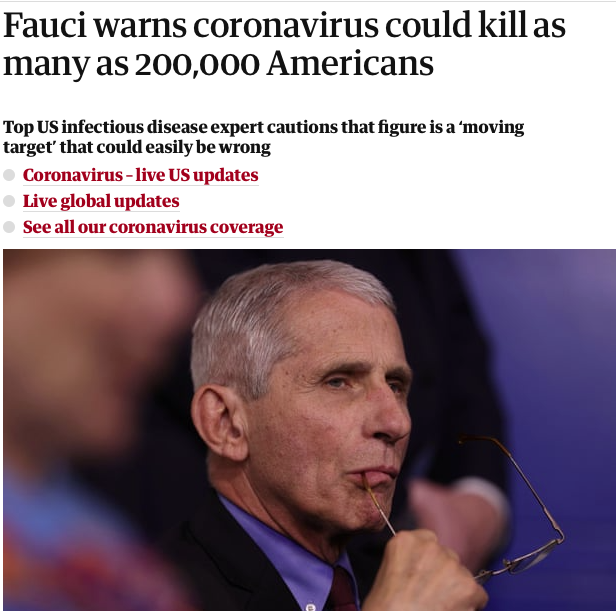
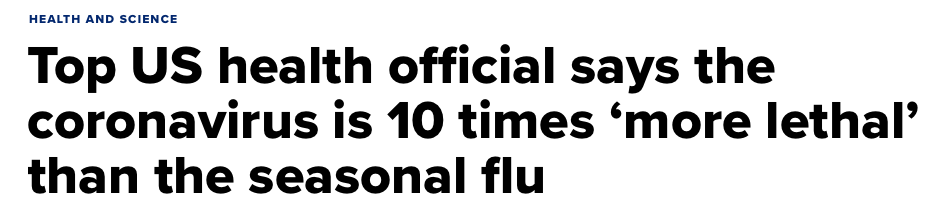
Examine the contradictory headlines:

Screenshot The Hill

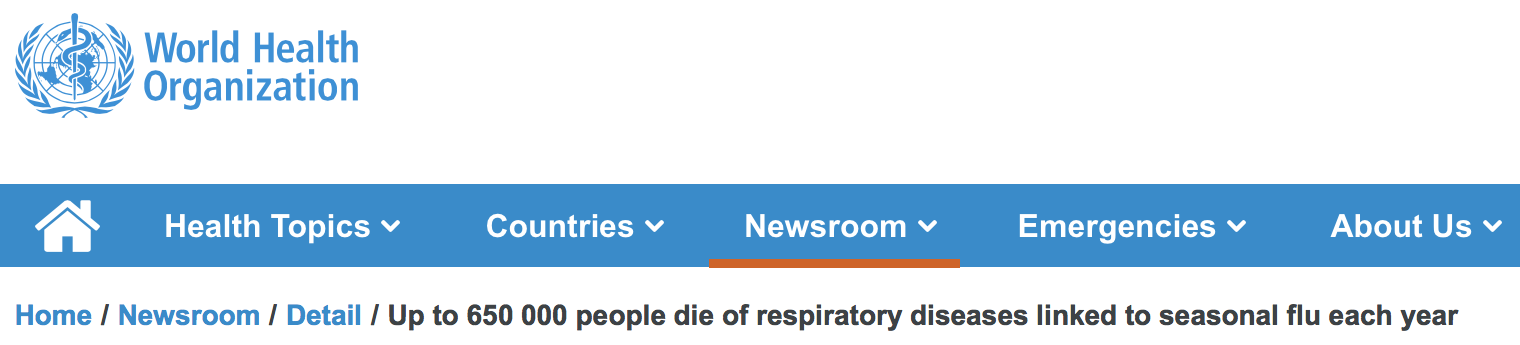
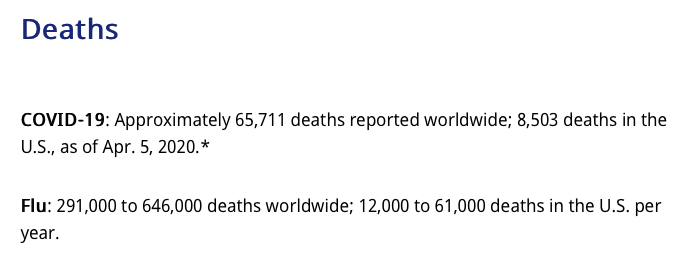
According to the WHO and John Hopkins Medicine (see below),  the risks of dying from influenza are higher than from COVID-19. 

Source; John Hopkins Medicine

Moreover, the media fails to acknowledge that there are simple and effective treatments for COVID-19. In fact, the reports on the treatment of COVID-19 are being suppressed. And the issue of “recovery” is barely mentioned. 

Persistent headlines and TV reports. Fear and panic. Neither the WHO nor our governments have taken the trouble to reassure us. 

According to latest media hype, citing and often distorting scientific opinion (CNBC)

Statistical Models by Washington think tanks predict a scenario of devastation suggesting that “more than a million Americans could die if the nation does not take swift action to stop its spread as quickly as possible”.

One model from the Centers for Disease Control and Prevention (CDC) suggested that between 160 million and 210 million Americans could contract the disease over as long as a year. Based on mortality data and current hospital capacity, the number of deaths under the CDC’s scenarios ranged from 200,000 to as many as 1.7 million. (The Hill, March 13, 2020)

The Unspoken Truth:  Unprecedented Global Crisis

The unspoken truth is that the novel coronavirus provides a pretext to powerful financial interests and corrupt politicians to trigger the entire World into a spiral of  mass unemployment, bankruptcy, extreme poverty and despair. 

This is the true picture of what is happening. “Planet Lockdown” is an encroachment on civil liberties and the “Right to Life”. Entire national economies are in jeopardy. In some countries martial law has been declared.

Small and medium sized capital are slated to be eliminated. Big capital prevails. A massive concentration of corporate wealth is ongoing. 

Is a diabolical “New World Order” in the making as suggested by Henry Kissinger (WSJ Opinion, April 3, 2020): 

“The Coronavirus Pandemic Will Forever Alter the World Order”.

Recall Kissinger’s historic 1974 statement: “Depopulation should be the highest priority of US foreign policy towards the Third World.” (1974 National Security Council Memorandum) Read the rest of this entry »

Posted in Uncategorized | Tagged: , , , , , | Leave a Comment »

Did Bill Gates Just Reveal the Reason Behind the Lock-Downs? – OffGuardian

Posted by M. C. on April 7, 2020

Why am I thinking of the climate change industry.

Is Gates an Al Gore wannabe?

Will digital immunity ID be the equivalent of a tattooed serial number?

Then a few seconds later, at 33:45, Gates drops another bomb:

We don’t want to have a lot of recovered people […] To be clear, we’re trying – through the shut-down in the United States – to not get to one percent of the population infected.

Vaccines are very big business: this Feb. 23 CNBC article, for example, describes the vaccine market as six times bigger than it was 20 years ago, at more than $35 billion annually today, and providing a $44 return for every $1 invested in the world’s 94 lowest-income countries.

https://off-guardian.org/2020/04/04/did-bill-gates-just-reveal-the-reason-behind-the-lock-downs/

Rosemary Frei
In a recent candid interview, Bill Gates outlined that, despite the comparatively small threat of Coronavirus, he and his colleagues “don’t want a lot of recovered people” who have acquired natural immunity. They instead are hoping we become reliant on vaccines and anti-viral medication.
Shockingly, Gates also suggests people be made to have a digital ID showing their vaccination status, and that people without this “digital immunity proof” would not be allowed to travel. Such an approach would mean very big money for vaccine producers.

On March 24 Bill Gates gave a highly revelatory 50-minute interview (above) to Chris Anderson. Anderson is the Curator of TED, the non-profit that runs the TED Talks.

The Gates interview is the second in a new series of daily ‘Ted Connects’ interviews focused on COVID-19. The series’s website says that:

TED Connects: Community and Hope is a free, live, daily conversation series featuring experts whose ideas can help us reflect and work through this uncertain time with a sense of responsibility, compassion and wisdom.”

Anderson asked Gates at 3:49 in the video of the interview – which is quickly climbing to three million views – about a ‘Perspective’ article by Gates that was published February 28 in the New England Journal of Medicine.

“You wrote that this could be the once-in-a-century pandemic that people have been fearing. Is that how you think of it, still?” queried Anderson.

“Well, it’s awful to say this but, we could have a respiratory virus whose case fatality rate was even higher. If this was something like smallpox, that kills 30 percent of people. So this is horrific,” responded Gates.

“But, in fact, most people even who get the COVID disease are able to survive. So in that, it’s quite infectious – way more infectious than MERS [Middle East Respiratory Syndrome] or SARS [Severe Acute Respiratory Syndrome] were. [But] it’s not as fatal as they were. And yet the disruption we’re seeing in order to knock it down is really completely unprecedented.”

Gates reiterates the dire consequences for the global economy later in the interview.

“We need a clear message about that,” Gates said starting at 26:52.

“It is really tragic that the economic effects of this are very dramatic. I mean, nothing like this has ever happened to the economy in our lifetimes. But … bringing the economy back and doing [sic] money, that’s more of a reversible thing than bringing people back to life. So we’re going to take the pain in the economic dimension, huge pain, in order to minimize the pain in disease and death dimension.”

However, this goes directly against the imperative to balance the benefits and costs of the screening, testing and treatment measures for each ailment – as successfully promulgated for years by, for example, the Choosing Wisely campaign – to provide the maximum benefit to individual patients and society as a whole.

Even more importantly, as noted in an April 1 article in OffGuardian, there may be dramatically more deaths from the economic breakdown than from COVID-19 itself.

“By all accounts, the impact of the response will be great, far-reaching, and long-lasting,”

Kevin Ryan wrote in the article. Ryan estimated that well over two million people will likely die from the sequelae of the lock-downs and other drastic measures to enforce ‘social distancing.’…

Then at 32:50 in the video, Anderson asked whether the blood serum from people who have recovered from a COVID infection can be used to treat others.

“I heard you mention that one possibility might be treatments from the serum, the blood serum of people who had had the disease and then recovered. So I guess they’re carrying antibodies,” said Anderson. “Talk a bit about that and how that could work and what it would take to accelerate that.”

[Note that Anderson did not ask Gates about, instead, just letting most of the population – aside from people most vulnerable to serious illness from the infection, who should be quarantined — be exposed to COVID-19 and as a result very likely recover and develop life-long immunity. As at least one expert has observed, “as much as ninety-nine percent of active cases [of COVID-19] in the general population are ‘mild’ and do not require specific medical treatment” to recover.]

“This has always been discussed as, ‘How could you pull that off?’” replied Gates. “So people who are recovered, it appears, have very effective antibodies in their blood. So you could go, transfuse them and only take out white cells, the immune cells.”

However, Gates continued, he and his colleagues have dismissed that possibility because it’s “fairly complicated – compared to a drug we can make in high volume, you know, the cost of taking it out and putting it back in probably doesn’t scale as well.”

Then a few seconds later, at 33:45, Gates drops another bomb:

We don’t want to have a lot of recovered people […] To be clear, we’re trying – through the shut-down in the United States – to not get to one percent of the population infected. We’re well below that today, but with exponentiation, you could get past that three million [people or approximately one percent of the U.S. population being infected with COVID-19 and the vast majority recovering]. I believe we will be able to avoid that with having this economic pain.”

It appears that rather than let the population be exposed to the virus and most develop antibodies that give them natural, long-lasting immunity to COVID-19, Gates and his colleagues far prefer to create a vast, hugely expensive, new system of manufacturing and selling billions of test kits, and in parallel very quickly developing and selling billions of antivirals and vaccines.

And then, when the virus comes back again a few months later and most of the population is unexposed and therefore vulnerable, selling billions more test kits and medical interventions.

Right after that, at 34:14, Gates talked about how he sees things rolling out from there.

Eventually what we’ll have to have is certificates of who’s a recovered person, who’s a vaccinated person […] Because you don’t want people moving around the world where you’ll have some countries that won’t have it under control, sadly. You don’t want to completely block off the ability for people to go there and come back and move around. So eventually there will be this digital immunity proof that will help facilitate the global reopening up.”

[Sometime on the afternoon of March 31 the last sentence of this quote was edited out of the official TED video of the interview. Fortunately, recordings of the complete interview are archived elsewhere.]…

Be seeing you

Follow the money of the global warming scam | Liberals ...


Posted in Uncategorized | Tagged: , , , , | Leave a Comment »

The Ron Paul Institute for Peace and Prosperity : End the Shutdown; It’s Time for Resurrection!

Posted by M. C. on April 7, 2020

On March 24th, the CDC issued an alert stating that doctors should classify “probable COVID-19” or “likely COVID-19” as Covid-19 deaths. Perhaps that explains the seeming drop-off of pneumonia deaths this year and the simultaneous spike in Covid-19 deaths as some researchers have reported.

The BBC reported last week that, “At present in the US, any death of a Covid-19 patient, no matter what the physician believes to be the direct cause, is counted for public reporting as a Covid-19 death.”

Does that sound like a scientifically sound way of determining how deadly Covid-19 really is?

http://ronpaulinstitute.org/archives/featured-articles/2020/april/06/end-the-shutdown-it-s-time-for-resurrection/

Written by Ron Paul

For many millions of Christians, Easter is a time to celebrate the resurrection of Jesus Christ. Others may celebrate the arrival of spring and the promise of new life. Whatever one’s beliefs, after several weeks of mandatory “stay at home” orders and the complete shutdown of the US economy over the coronavirus, this self-destructive hysteria must end and we must reclaim the freedom and liberty that has provided us so much opportunity as Americans.

To do that we should first understand that much of the hysteria is being generated by a mainstream media that has long prioritized sensationalism over investigating and reporting the truth. Government bureaucrats are also exaggerating the threat of this virus and appear to be enjoying the power and control that fearful people are willingly handing over to them. One “coronavirus” bureaucrat even told us that we can no longer go to the grocery store! So we should just starve?

It is certainly possible to believe that this virus can be dangerous while at the same time pointing out that radical steps are being taken in our society – stay-at-home orders, introduction of de facto martial law, etc. – with very little knowledge of just how deadly is this disease.

On March 24th, the CDC issued an alert stating that doctors should classify “probable COVID-19” or “likely COVID-19” as Covid-19 deaths. Perhaps that explains the seeming drop-off of pneumonia deaths this year and the simultaneous spike in Covid-19 deaths as some researchers have reported.

The BBC reported last week that, “At present in the US, any death of a Covid-19 patient, no matter what the physician believes to be the direct cause, is counted for public reporting as a Covid-19 death.”

Does that sound like a scientifically sound way of determining how deadly Covid-19 really is?

What is most dangerous is that although this virus will eventually disappear, the assault on our civil liberties is not likely to be reversed. From this point on, whenever local officials, county officials, state governors, or federal bureaucrats decide there is sufficient reason to suspend the Constitution they will not hesitate to do so. Anyone who challenges the suspension of the Constitution “for our own good” will be labeled “unpatriotic” and perhaps even reported to the authorities. We have already seen hotlines springing up across the country for Americans to report other Americans who dare venture outside to enjoy the sun and build up their vitamin D protection against the coronavirus.

The government is justified in cancelling the Constitution, we are told, because we are in an emergency situation caused by the Covid-19 virus. But do people forget that the Constitution itself was written and adopted while we were in an “emergency situation”?

Did the framers of the Constitution fail to add an 11th Amendment to the Bill of Rights saying, “oh by the way, none of this counts if we get sick”? Of course not! Those who wrote our Constitution understood that these rights are not granted by the government, but rather by our Creator. Thus it was never a question as to when or under what conditions they could be suspended: the government had no authority to suspend them at all because it did not grant them in the first place.

Our country is far less at risk from the coronavirus than it is from the thousands of small and large authoritarians who have suddenly flexed their muscles across the country. President Trump would do well to end this ridiculous shutdown so that Americans can get on with their lives and get back to work.

Americans should remember the tyrants who locked them down next time they go to the ballot box. Let’s demand an end to the shutdown so we can resurrect our economy, our lives, and our liberties!

Copyright © 2020 by RonPaul Institute. Permission to reprint in whole or in part is gladly granted, provided full credit and a live link are given.


Be seeing you


Posted in Uncategorized | Tagged: , , , , | Leave a Comment »

Modern Medicine Knew of the Zinc Cure for Coronavirus Infections a Decade Ago, But Failed To Put It Into Practice – LewRockwell

Posted by M. C. on April 7, 2020

Zinc Vitamins A, C, D. I take them. I am conservative with metals and Vit A. Liberal with C & D.

I am not a doctor. This is what I do, not a recommendation for you.

https://www.lewrockwell.com/2020/04/no_author/modern-medicine-knew-of-zinc-cure-for-coronavirus-infections-a-decade-ago-but-failed-to-put-into-practice/

By Bill Sardi

The long-standing bias against natural over patentable synthetic molecules in the practice of medicine has now resulted in the avoidable premature death of thousands of the most vulnerable individuals and the abrupt and near-complete economic collapse of modern society due to an unwarranted over-response by health authorities, political overseers and sensationalist news media.

The narrow and archaic vaccine-only paradigm to treat infectious diseases has left human populations vulnerable to a highly transmissible and potentially pathogenic virus with no approved drugs or vaccines in place.

Unprepared public health authorities should all have resigned by now. Instead, they wield unelected power as they mandate countermeasures such as indoor quarantine that will further deprive the sunlight-deprived masses in the northern hemisphere of the natural vitamin D needed to prevent this seasonal infectious disease.

The power hungry must produce deaths to spread the fear needed to extend control over the planet’s human populations. What looms is a decree for universal vaccination before the multitudes are permitted to return to normal life. The supposition is that only health authorities know what is best for 7 billion hostages presumed to be medically ignorant.

This unprecedented man-made chaos could have been avoided by putting into practice a remedy described nearly a decade ago.

In 2010 a collaboration of university-based researchers in The Netherlands and the USA reported that the combination of the trace mineral zinc plus a zinc transport molecule (ionophore) that facilitates zinc’s entry into cells efficiently impairs the replication of RNA viruses, like the newly mutated COVID-19 coronavirus, to effect a cure.

The discovery is documented in PLoS Pathogens journal, Volume 6, issue 11, November 2010.

This prior discovery appears to validate the recent report of Vladimir Zelenko MD, a New York-based physician who treated 699 consecutive cases of COVID-19 coronavirus with complete 100% success.  His treatment protocol includes oral zinc, chloroquine as a zinc ionophore and an antibiotic (azithromycin).

Chloroquine initially ridiculed

Chloroquine received early push-back by political antagonists of the President of the United States who initially endorsed it, which was met with ridicule and scorn, even in scientific publications as well as from Anthony Fauci, director of the National Institute of Infectious Disease.  But then an international poll showed 37% of 6227 doctors rated this zinc-enhancing drug, mostly used to treat malaria, as the “most effective therapy” for treatment for coronavirus.

Alerting the public

This journalist was among the first to make the public aware chloroquine is a zinc ionophore.  It became evident that virtually all of the symptoms of COVID-19 coronavirus infection, as noted by an emergency room physician, correlated with those produced by zinc deficiency, a report that via the internet was spread globally.  The masses were beginning learn this calamity could be avoided without the aid of public health agencies.

Wider application

Zinc + ionophore was found to abolish RNA coronaviruses at very low concentration in a lab dish, meaning treatment leading to a cure is achievable in humans.  In a lab dish the halt of viral replication was found to occur within minutes.

This zinc + ionophore approach was successfully tested on the deadly SARS-coronavirus that struck human populations in Asia in 2003-2004 and was also found to be effective against coxsackievirus, foot-and-mouth disease, and rhinoviruses (cold viruses).

In the present COVID-19 coronavirus epidemic the zinc + ionophore combination could have been employed in a targeted fashion for high-risk groups (elderly, diabetics, smokers, alcohol abusers, immune suppressant and illicit-drug users) as prevention and for curative purposes among patients with severe lung disease.

The family of RNA viruses also includes poliovirus and influenza virus.  In other words, zinc therapy would also simultaneously address the seasonal flu viruses also in circulation, something public health authorities strangely paid no attention to this flu season.

Effectiveness of zinc along or with ionophore Read the rest of this entry »

Posted in Uncategorized | Tagged: , , , , | Leave a Comment »

The Things You CANNOT Say About Coronavirus

Posted by M. C. on April 6, 2020

This is a very bad situation but…

don’t take any statistics at face value. It will take months or maybe years before anything close to accuracy is available.

Consider that Italy is bankrupt and the EU periodically threatens to shut off the euros if Italy doesn’t do as is told.

The more casualties the more the euros and free stuff will flow.

Sad to say, there is money to be made…and not just in Italy.

and…if you don’t know many caught C and didn’t go to the doctor because of mild or no symptoms, you DO NOT KNOW rates.

https://off-guardian.org/2020/04/03/the-things-you-cannot-say-about-coronavirus/

James Corbett

…But there’s some problems with those numbers. As Prof Walter Ricciardi—scientific adviser to Italy’s minister of health—recently revealed, “The way in which we code deaths in our country is very generous in the sense that all the people who die in hospitals with the coronavirus are deemed to be dying of the coronavirus.”

Be seeing you

Social Engineering - Lamar University

Posted in Uncategorized | Tagged: , , , , | Leave a Comment »

Coronavirus Is Setting Dangerous Precedents For American’s Civil Rights | The National Interest

Posted by M. C. on April 6, 2020

It’s a universal truth that governmental power always expands during periods of perceived crisis.  It also is a universal truth that politicians and bureaucrats seize opportunities to expand their missions and power.  We must keep those dynamics in mind when evaluating government actions with respect to the coronavirus threat.

https://nationalinterest.org/blog/buzz/coronavirus-setting-dangerous-precedents-americans-civil-rights-140362

by Ted Galen Carpenter

Worries about the threat the coronavirus posed to public health are entirely understandable. The disease spreads easily and has a disturbingly high mortality rate among its victims (especially the elderly).  Nevertheless, some important and potentially dangerous policy precedents are being set without much consideration or reflection. That approach is unwise, since many of the measures being taken to combat the coronavirus epidemic entail major restrictions on liberties that Americans take for granted. A sober discussion of those precedents is needed, or they may come back to haunt our country.

The original reaction in the United States to the corona outbreak was surprisingly casual, but the prevailing attitude and the resulting policy responses in both the private and governmental sectors have changed dramatically over the past two weeks. A deluge of announcements cancelling or postponing major public events, including concerts, plays, the “March Madness” NCAA basketball tournament, and the Masters tournament, has now occurred. Even when there is no outright cancellations or indefinite postponements, barring the public from attending events, such as the scheduled primary debate between Joe Biden and Bernie Sanders and upcoming NASCAR races, is increasingly the norm. Schools and businesses around the country are shutting their doors, likely for weeks, with employees and students expected to work or study from home. The economic and social impact of such dislocations is certain to be enormous.

Many of those decisions were by private organizations that concluded that having large numbers of people congregate posed an unacceptable risk of the corona pandemic becoming even more widespread.  However, other closings occurred because of government edicts—including some that seemed highly arbitrary.  Local authorities in Austin, Texas, for example, cancelled the annual South by Southwest music festival at the last minute, blindsiding the festival’s organizers.  Government orders banning “large gatherings” reflected great imprecision about what constituted “large.”  Depending on the jurisdiction, the threshold ranged from 250 to 1,000—and in one case, 2,500–with little or no explanation or justification from authorities for choosing a particular number. Worse, in most cases, event sponsors or other affected parties had no recourse to appeal the decision.  In some cases, they did not even have an opportunity for input regarding the restriction or ban.

The scope of governmental restraints is growing steadily as well.  In late February, President Trump barred entry of foreign travelers coming from China, and he gradually expanded that restriction to other countries, culminating in his March 11 announcement barring non-American travelers from most European nations for 30 days. Trump’s declaration of a national emergency on March 13 gave him extensive additional powers.

Even well-established political rights are now conditional and at potential risk.  On March 13, the Louisiana Secretary of State postponed the state’s April 4 presidential primary election. The Louisiana move is especially troubling.  There have been only a handful of postponed elections in the United States since the end of the Civil War.  A rare recent case was the primary election in New York, which was supposed to be held on September 11, 2001.  The 9-11 terrorist attacks were such a disruptive event that there was little choice but to reschedule the balloting.  But deciding to postpone an election scheduled for three weeks later because of professed fears about a public health issue is far more questionable. That decision illustrates the potential for diktats made in response to the coronavirus outbreak to set worrisome precedents and create opportunities for abuse in less dire situations.

Therein lies a serious concern and the need for a comprehensive public discussion about policies going forward.  It’s a universal truth that governmental power always expands during periods of perceived crisis.  It also is a universal truth that politicians and bureaucrats seize opportunities to expand their missions and power.  We must keep those dynamics in mind when evaluating government actions with respect to the coronavirus threat.

The pervasive assumption is that the coronavirus outbreak is a temporary menace that will be overcome in the next few weeks or months, the current restrictions will be lifted, and life in America will return to normal.  But what if that assumption is wrong?  What do we do if this lethal virus (or one like it) becomes a feature of the annual flu season?  Do we (indeed, can we) lock down the country under such repeated “crisis” conditions?  The economic disruption and damage alone would likely preclude such a response; it doesn’t seem possible to operate a modern economy in a bunkered society.  Taking draconian steps in reaction to a public health problem less severe than the current epidemic would be needlessly destructive to both the economy and to America’s system of liberty.

It’s not too soon for sober reflection and debate about such matters. Unfortunately, the current atmosphere increasingly exhibits the characteristics of a collective panic—and that is always a poor basis for intelligent policy decisions.  Americans must not passively accept government edicts and restrictions without raising pertinent questions, and when necessary, voicing objections.

Be seeing you


Posted in Uncategorized | Tagged: , , , | Leave a Comment »

How Generals Fueled 1918 Flu Pandemic to Win Their World War | The American Conservative

Posted by M. C. on April 6, 2020

Just like today, brass and bureaucrats ignored warnings, and sent troops overseas despite the consequences.

It was called the “Spanish flu” only because, while the United States, Britain and France were all censoring news about the spread of the pandemic in their countries to maintain domestic morale, the press in neutralist Spain was reporting freely on influenza cases there. In fact, the first major wave of infections in the United States came in U.S. training camps set up to serve the war.

A good reason to bring troops home, close foreign bases and spend those trillions on actually saving American lives.

https://www.theamericanconservative.com/articles/how-generals-fueled-1918-flu-pandemic-to-win-their-world-war/

An emergency hospital at Camp Funston, Kansas, 1918. (National Archives)

The U.S. military has been forced by the coronavirus pandemic to make some serious changes in their operations. But the Pentagon, and especially the Navy, have also displayed a revealing resistance to moves to stand down that were clearly needed to protect troops from the raging virus from the start.

The Army and Marine Corps have shifted from in-person to virtual recruitment meetings. But the Pentagon has reversed an initial Army decision to postpone further training and exercises for at least 30 days, and it has decided to continue sending new recruits from all the services to basic training camps, where they would no doubt be unable to sustain social distancing.

On Thursday, the captain of the aircraft carrier USS Theodore Roosevelt, on which the virus was reportedly spreading, was relieved of command. He was blamed by his superiors for the leak of a letter he wrote warning the Navy that failure to act rapidly threatened the health of his 5,000 sailors.

Secretary of Defense Mark Esper justified his decision to continue many military activities as usual by declaring these activities are “critical to national security.” But does anyone truly believe there is a military threat on the horizon that the Pentagon must prepare for right now? It is widely understood outside the Pentagon that the only real threat to that security is the coronavirus itself.

Esper’s decisions reflect a deeply ingrained Pentagon habit of protecting its parochial military interests at the expense of the health of American troops. This pattern of behavior recalls the far worse case of the U.S. service chiefs once managing the war in Europe. They acted with even greater callousness toward the troops being called off to war in Europe during the devastating “Spanish flu” pandemic of 1918, which killed 50 million people worldwide.

It was called the “Spanish flu” only because, while the United States, Britain and France were all censoring news about the spread of the pandemic in their countries to maintain domestic morale, the press in neutralist Spain was reporting freely on influenza cases there. In fact, the first major wave of infections in the United States came in U.S. training camps set up to serve the war.

Abundant documentary evidence shows that the 1918 pandemic actually began in Haskell County, Kansas, in early 1918, when many residents came down with an unusually severe type of influenza. Some county residents were then sent to the Army’s Camp Funston at Ft. Riley, Kansas, the military’s largest training facility, training 50,000 recruits at a time for the war. Within two weeks, thousands of soldiers at the camp became sick with the new influenza virus, and 38 died.

Recruits at 14 of 32 large military training camps set up across the country to feed the U.S. war in Europe soon reported similar influenza outbreaks, apparently because some troops from Camp Funston had been sent there. By May 1918, hundreds of thousands of troops, many of whom were already infected, began boarding troopships bound for Europe, and the crowding onboard the ships created ideal conditions for the virus to explode further.

In the trenches in France, still more U.S. troops continued to be sickened by the virus, at first with milder illness and relatively few deaths But the war managers simply evacuated the sick and brought in fresh replacements, allowing the virus to adapt and mutate into more virulent and more lethal strains.

The consequences of that approach to the war became evident after the August 27 arrival in Boston harbor, when visitors brought a much more virulent and lethal strain of the virus; it quickly entered Boston itself and by September 8, had appeared at Camp Devens outside the city. Within ten days, the camp had thousands of soldiers sick with the new strain, and some of those infected at the camp boarded troops ships for Europe.

Meanwhile the lethal new strain spread from Camp Devens across the United States through September and October, ravaging one city after another. From September onward, the U.S. command in France, led by Gen. John Pershing, and the war managers in the War Department in Washington, were well aware that both U.S. troops already in Europe and the American public were suffering vast numbers of severe illnesses and death from the pandemic.

Nevertheless, Pershing continued to call for large numbers of the replacements for those stricken at the front lines, as well as for new divisions to launch a major offensive late in the year. In a message to the War Department on September 3, Pershing demanded an additional 179,000 troops.

The internal debate that followed that request, recounted by historian Carol R. Byerly, documents the chilling indifference of Pershing and the military bureaucracy in Washington to the fate of American troops they planned to send to war. After watching the horror of lethally-infected soldiers dying of pneumonia in the infected camps, acting Army Surgeon General Charles Richard strongly advised Army Chief of Staff Peyton March in late September against sending troops from the infected camps to France until the epidemic had been brought under control in the surrounding region, and March agreed.

Richard then asked for stopping the draft calls for young men heading for any camp known to be already infected. March wouldn’t go that far, and although the October draft was called off, it was to resume in November. The War Department acknowledged the heavy toll the pandemic was taking on U.S. troops in October 10, informing Pershing that he would get his troops by November 30, “if we are not stopped on account of Influenza, which has now passed the 200,000 mark.”

Richard then called for troops to be quarantined for a week before being shipped to Europe, and that the troopships carry only half the standard number of troops to reduce crowding. When March rejected those moves, which would have made it impossible for him to meet Pershing’s targets, Richard then recommended that all troop shipments be suspended until the influenza pandemic was brought under control, “except such as are demanded by urgent military necessity.”

But the chief of staff rejected such a radical shift in policy, and went to the White House to get President Woodrow Wilson’s approval for the decision. Wilson, obviously recognizing the implications of going ahead under the circumstances, asked why he refused to stop troop transport during the epidemic. March argued that Germany would be encouraged to fight on if it knew “the American divisions and replacements were no longer arriving.”Wilson then approved his decision, refusing to disturb Pershing’s war plans.

But the decision was not carried out fully. The German Supreme Command had already demanded that the Kaiser accept Wilson’s 14 points, and the armistice was signed on November 11.

The disastrous character of the U.S. elite running the First World War is clearly revealed with the astonishing fact that more American soldiers were killed and hospitalized by influenza (63,114) than in combat (53,402). And an estimated 340,00 American troops were hospitalized with influenza/pneumonia, compared with 227,000 hospitalized by Germans attacks.

The lack of concern of Washington bureaucrats for the well-being of the troops, as they pursue their own war interests, appears to be a common pattern—seen too, in the U.S. wars in Vietnam, Afghanistan and Iraq. Now it has been revealed once again in the stunningly callous response of the Pentagon to the coronavirus pandemic crisis.

In the 1918 war, there was no protest against that cold indifference, but there are now indications that the families of soldiers put being at risk are expressing their anger about it openly to representatives of the military. In a time of socio-political upheaval, and vanishing tolerance for the continuation of endless war, it could be a harbinger of accelerated unraveling of political tolerance for the war state’s overweening power.

Be seeing you

Posted in Uncategorized | Tagged: , , , , , | Leave a Comment »