


Be seeing you
Lessons of the Trump Assassination Attempt | Thomas Sowell
Posted by M. C. on August 27, 2024
Posted in Uncategorized | Tagged: Trump Assassination | Leave a Comment »
A Few Lawrence Reed quotes
Posted by M. C. on August 27, 2024
A statesman doesn’t try to pull himself up by dragging someboy else down, and he doesn’t try to convience people they’re victims just so he can posture as their savior.
“Progressivism” means never understanding economics, never taking responsibility for the disasters you create, never shedding the hate and envy you feel for those who create wealth, and never having to say you’re sorry for ruining the lives of others, many of whom never asked for your “help” in the first place.
Be seeing you
Posted in Uncategorized | Tagged: Lawrence Reed, Progressivism, welfare state | Leave a Comment »
Blue Origin Big Trouble: New Glenn DAMAGED during Stress Test. NASA To Give Up…
Posted by M. C. on August 26, 2024
For the

line…go to 7:50.
Be seeing you
Posted in Uncategorized | Tagged: Blue Origin, NASA, New Glenn | Leave a Comment »
Ryan McMaken: The Only Type of Democracy that Actually Works
Posted by M. C. on August 26, 2024
Summary
A functioning democracy requires the protection of individual freedom, minority rights, and private property rights, and can only be achieved through mechanisms such as unlimited secession, voluntary grouping, and exit options, rather than relying solely on majority rule.
- What if we are going to use the term democracy is there any sort of democracy that works we all know that there’s big problems with majoritarian rule.
- Mises offers a unique vision on what democracy means, which is different from the common understanding of the term.
- Mises’s vision of democracy is based on the principle of unlimited secession, allowing minority groups to break off and form their own majority.
- For Mises, the key feature of his view of democracy is the right of exit, which prevents any real monopoly power from forming.
- If democracy means self-determination, then it’s a vibrant and constantly changing political group, where a permanent minority group should have the right to leave.
- The threat of unlimited secession and voluntary membership is what assures that a government will protect private property rights, according to Mises.
- A workable and reasonable view of democracy can be achieved by combining the nationality principle with Mises’s vision for secession and self-determination.
Here are the 3 categories to sort the insights:
- He critiques majority rule, saying it’s very dangerous in diverse societies with different linguistic groups, ethnic groups, and interests.
- Even with full citizenship rights on paper, a minority group can still be treated as second-class citizens and be politically disenfranchised if they are consistently outvoted by the majority.
- According to Mises, a system where a permanent minority group has no political power and can be endlessly exploited by the majority group cannot preserve private property rights.
- He recognized that a large ethnic group becoming the majority could erase the rights of the minority ethnic native-born group, leading to significant political disruption, possibly even war or Civil War.
Critique of Traditional Democracy
- The answer to dealing with inequality between majority and minority groups is secession, the ability to exit and found your own state.
- Democracy without the right of self-determination is unacceptable and can impose its laws and agenda on the entire population.
- The practical reality of widespread exit and the ability to escape oppressive regimes created a situation where private property rights were highly respected.
Be seeing you
Posted in Uncategorized | Tagged: Democracy | Leave a Comment »
“But you can’t use a gun for self-protection in Canada… that’s not a right that you have…”
Posted by M. C. on August 26, 2024
Police overwhelmed…
Criminals have more rights than you do…
Violent offenders routinely released…
Average hold times for 9/11 in the GTA is 6 – 12 minutes…
Best case response times for a “Tier 1” emergency in Toronto… 17-22 minutes.
The criminals have guns “and they are loaded”…
But you cannot use a gun for self-protection in Canada. “That’s not a right you have”
I didn’t open the FB video. I didn’t want to add to my FB dossier.
Be seeing you
Posted in Uncategorized | Tagged: Canada, gun, self-protection | Leave a Comment »
Voting Explained
Posted by M. C. on August 24, 2024

https://www.caitlinjohnst.one/p/voting-explained

Prisoners: Hey, let us out of this prison! We didn’t do anything wrong!
Prison guard: Oh my god, you think you’re in prison?? You’re all free! You can leave whenever you want!
Prisoners: Okay well let us out then!
Prison guard: Sure thing! There are some keys hanging up next to the door. Should be a red one and a blue one.
[Long pause]
Prisoners: This key isn’t working! It’s made of plastic and it’s completely the wrong size. It’s clearly not designed to open this lock.
Prison guard: Which key did you try?
Prisoners: The red one.
Prison guard: Ohh, that must be the wrong one. Try the blue one.
[Long pause]
Prisoners: The blue key doesn’t work either! It’s also a fake plastic toy that isn’t built for this lock, just like the red one!
Prison guard: You must not be doing it right. You’ve got to try harder. Really jam them in there and wiggle them around a bit.
[Very long pause]
Prisoners: It’s not working!
Prison guard: Try harder!
Prisoners: We’ve been trying as hard as we can! We keep switching back and forth between the red key and the blue key and trying every different approach we can think of, and we’ve come nowhere close! These plastic keys are just fake children’s toys designed to distract us and keep us preoccupied so we’ll stay locked up! Give us the real keys!
Prison guard [sighs]: Okay, well, we don’t like to encourage this, but there is a third key handing on the wall to your left.
Prisoners: This giant green one?
Prison guard: That’s the one!
Prisoners: This thing’s four feet long and made of styrofoam! There’s not a chance in hell it can open that lock!
Prison guard: Okay well maybe just stick with the red and blue ones then.
Prisoner 1: I say we try the blue one!
Prisoner 2: Idiot! The red one is way better!
Prisoner 1: Blue one!
Prisoner 2: Red one!
Prisoner 1: Okay, well, let’s ask everyone here. Everyone who thinks we should keep trying the blue one come over here onto this side of the prison, and everyone who thinks we should try the red one go over there with him.
Prisoner 3: Uhh, guys? That door doesn’t look very thick. There are a whole lot of us, and there’s only one prison guard. I’m pretty sure if we all team up we could knock this door down and tie him up.
Prisoner 1: What are you, nuts??
Prisoner 2: Why go to all that trouble when we’ve got this perfectly good red key right here?
Prisoner 1: Blue key!
Prisoner 2: Red key!
Prisoner 1: Blue Key!
Prisoner 2: Red key!
Prison guard [leaning back and chuckling]: Gets ’em every time.
________________
Caitlin’s Newsletter is a reader-supported publication. To receive new posts and support my work, consider becoming a free or paid subscriber.
Be seeing you
Posted in Uncategorized | Tagged: blue key, prison, red key, voting | Leave a Comment »
Ditch SMS! How to convince your friends
Posted by M. C. on August 23, 2024
Most of our conversations are digital, and our privacy hinges on our ability to convince others to use a private messaging platform. Getting friends and family to switch isn’t easy though! Here are some strategies you can try, ranging from educational methods, to downright sneakiness!
Ditch the megaphone, use Signal.
Be seeing you
Posted in Uncategorized | Tagged: Privacy, Signal, SMS | Leave a Comment »
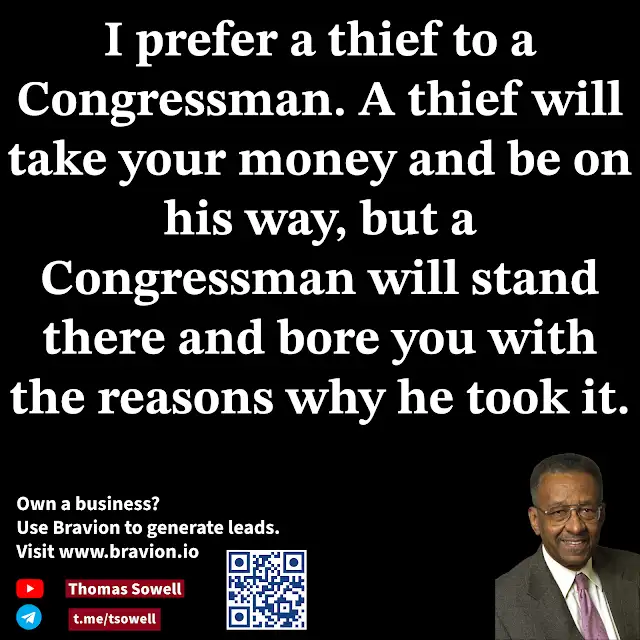
Thomas Sowell / Walter E. Williams on Congresspersons
Posted by M. C. on August 23, 2024
Posted in Uncategorized | Tagged: Congresspersons, Thomas Sowell, Walter E. Williams | Leave a Comment »
“Boeing LIED! NASA Finally Revealed What Exactly Happened with Boeing Starliner”
Posted by M. C. on August 23, 2024
Posted in Uncategorized | Leave a Comment »
The Taiwan Problem You (Probably) Don’t Know
Posted by M. C. on August 21, 2024
The foolish insistence of FDR that Taiwan be granted to Chiang’s crumbling ROC regime, then Harry Truman and Dwight Eisenhower’s determination to keep that regime in power, played an obviously critical role in creating the circumstances that prevail to the present day: a Chinese Civil War never concluded.
https://libertarianinstitute.org/articles/the-taiwan-problem-you-probably-dont-know/
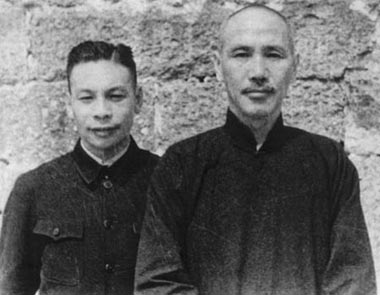
Taiwan is today lauded for its vibrant democracy, open economy, and progressive society. However, behind this shining exterior is a dark and brutal history that is frequently overlooked; or in the case of Washington and its loyal corporate mouthpieces, purposefully ignored.
For before its democratization in the 1990s, Taiwan was a harsh authoritarian police state under the rule of Chiang Kai-shek and his son Chiang Ching-kuo. This period, marked by severe repression and systemic terror, is an essential chapter in Taiwan’s history that Americans should know, particularly given the enduring resentment Washington’s vital support for the regime engendered and the purported reasons for the necessity of the island’s defense.
The roots of Taiwan’s authoritarianism can be traced back to the retreat of Chiang Kai-shek’s Nationalist government (Kuomintang, or KMT) to Taiwan after losing the Chinese Civil War to the Communists in 1949. The local population had already received more than an inkling of what awaited, the KMT authorities having already in 1947 brutally suppressed a popular protest against KMT corruption, mistreatment, and misrule on the island. Facing a precarious situation and the ever-looming threat of a Communist invasion, once arrived on the island Chiang established a regime that relied heavily on surveillance, repression, and brutality to maintain control.
Central to this regime was the role of Chiang Ching-kuo, Chiang Kai-shek’s son, who was instrumental in the creation and operation of Taiwan’s police state. Having spent formative years in Stalin’s Moscow, Chiang Ching-kuo learned from the Soviet Union’s tactics of surveillance, infiltration, and terror. Upon his return, he applied these methods to serve his father’s regime, becoming a formidable spy chief whose skills ensured the perpetuation of KMT rule in Taiwan.
Chiang Ching-kuo’s police force penetrated almost every facet of life in Taiwan. Officially, their task was to arrest enemies of the state, countering Communist subversion; in practice, this mission translated into the suppression of virtually any source of potential dissent, contributing to what became known as the White Terror.
Be seeing you
Posted in Uncategorized | Tagged: Chiang Ching-kuo, Chiang Kai-shek, Kuomintang, Taiwan | Leave a Comment »

