
Making progress is enough.
Be seeing you
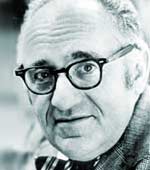
Enemy of the State-Read the Book-Know the Man
This is not a Safe Space but Baby, I don't care.

"I am not a number, I am a Free Man" - No. 6
 Information Liberation Alex Jones’ Prison Planet Gary North Specific Answers Antiwar The Daily Bell Tenth Amendment Center Economics Policy Journal The American Thinker The New American Lew Rockwell
Posted by M. C. on November 27, 2021
Posted in Uncategorized | Tagged: Seneca, stoicism | Leave a Comment »
Posted by M. C. on November 27, 2021
If Microsoft Bing, one day, should decide to apply Google-style censorship (or get forced to do so), sophisticated Western Internet users will either have to rely on Russian Yandex, or will finally have to create an independent, real and uncensored search engine.
https://www.zerohedge.com/technology/how-escape-google
 by Tyler Durden
Do you belong to the 94% of Internet users who have no clue?
Google Search has a US online search market share of about 70%, or even 94% if Google Images, Google Maps and Google-owned YouTube are added (see chart above).If you belong to these 94%, there is some bad news for you.As a well-known US podcaster recently discovered, Google is indeed “hiding information” from its users. This has actually been known for many years, but it has become especially obvious and serious during the coronavirus pandemic.In fact, censorship by Google has become so bad that nowadays, advanced Internet users are using Google primarily to monitor the current extent of censorship, not to actually search for anything. US researcher Dr. Robert Epstein termed it the Search Engine Manipulation Effect (SEME).Of note, Google censorship affects not just search results, but even search suggestions. In other words, Google is first manipulating what you search for, only to then additionally manipulate what results you will get. It is well worth trying this out yourself to appreciate the effect (see below).What is Google hiding from you? In short, they are hiding “non-authoritative sources”. In other words, they are hiding stuff those in power don’t want you to know or to even think of.This is not all that surprising, given that Google initially was a research and startup project funded and supported by US intelligence and the military to “retain information superiority”.
Be seeing you
Posted in Uncategorized | Tagged: Google glass, Search Engine Manipulation Effect | Leave a Comment »
Posted by M. C. on November 27, 2021
Even the media coverage is radically different to the kind of reporting we see in the wake of other forms of violence. It is passive, treating the massacre almost as a natural disaster. Or as the evil handiwork of the SUV itself. ‘Here’s what we know so far on the sequence of events that led to the Waukesha tragedy caused by [an] SUV’, said the Washington Post. Caused by an SUV.
https://www.spiked-online.com/2021/11/26/the-shameful-silence-on-the-waukesha-massacre/
Is silence still violence? If it is, then a whole lot of people, from the Hollywood set to the virtue-signalling left, are guilty of some serious violence right now. Their silence on the Waukesha massacre, on the slaughter of six innocents by a man wielding his SUV as a deadly weapon, is deafening. More than that, it is sinister. Dancing grannies, an eight-year-old boy, people singing and cheering at a Christmas parade, all mown down. Six killed, 62 injured, in what police are treating as a suspected act of intentional homicide. That is, mass murder. And yet there’s been nothing from Hollywood stars who normally love to hold forth on terrible acts of violence. Influencers seem to have been struck dumb. There are no blacked-out squares on Instagram. The big woke corporations aren’t pumping out pained, concerned press releases. It’s just tumbleweed, everywhere.
Be seeing you
Posted in Uncategorized | Tagged: Dancing grannies, Kyle Rittenhouse, Mass Murder, Waukesha massacre | Leave a Comment »
Posted by M. C. on November 27, 2021
Posted in Uncategorized | Leave a Comment »
Posted by M. C. on November 27, 2021
Fear of job loss.
Trust in the NIH and CDC. If it was a problem, the CDC would tell people. Telling people isn’t their job. Their job is to follow the direction set by the experts.
https://stevekirsch.substack.com/p/why-arent-healthcare-workers-speaking
It’s too hard to ignore all the vaccine injured kids showing up in the ER nowadays.
I just heard a story from a friend who went to the lab for a stress echocardiagram.
In the waiting room with her are 4 kids aged 7 to 10 years old with their moms. She talked to the moms. The kids were all suffering from tachycardia (heart rate that beats way too fast) and waiting to be tested.
Two important things you need to know:
There are close to 10,000 adverse event types elevated by the COVID vaccines. Here’s a list of the adverse events most elevated compared to “normal.” In the #2 position: heart rate, elevated by nearly 8,000 times normal.

So why aren’t we hearing about these stories from mainstream doctors?
Here are some reasons very few people are speaking out:
Be seeing you
Posted in Uncategorized | Tagged: adverse event, echocardiagram, Healthcare Workers, Vaccines | Leave a Comment »
Posted by M. C. on November 27, 2021
There was little way to escape the part-time slavery of the Inca Empire. There was no free travel. Government thugs were posted at every town and at bridges to make sure people did not leave without permission.
Sounds like Austria, Australia, TSA…
https://mises.org/wire/inca-empire-indigenous-leviathan-state
One of the realities that nullifies persistent interpretations of the European colonization of the Americas as a cataclysm of subjugation is the existence of state exploitation in the precontact New World. As I have recently shown, many common Indians lived in banal slavery to a political class—the same servitude that every “citizen” of a state lives under, compelled to labor for the benefit of others, albeit with its own unique packaging and set of justifications. What this means is that there were also many politicians in the precontact world, with the same base lust for power that drives so many contemporary rulers.
When the agents of European states dropped anchor off the American littoral and proceeded to survey the interior, many were welcomed by various political leaders. These politicians were not naïvely offering hospitality. Indeed, the lack of women and children on these expeditions was often a conspicuous red flag to tread lightly.1 Rather chiefs often had expansionist ambitions and knew that the strangers’ military support and trade goods could turn the local geopolitical tables in their favor.
So they strategically courted the newcomers, seeking alliances.2 Sixteenth- and seventeenth-century accounts of expeditions are peppered with reports of Indian leaders trying to extract political commitments from the leaders of the missions or otherwise trying to draw them into their military network.3 Europeans were not unilaterally repelled, not even when their mission was outright conquest, as in the case of the aptly named Spanish conquistadors, who were to claim land in the name of the crown, get the inhabitants to submit to the distant ruler’s “protection,” and baptize them to convert them into Catholics, a condition of their vassalage. (Hernán Cortés and his men, for example, gained many native allies as they marched to the Aztec imperial capital of Tenochtitlán in 1519.)
The related facts of precontact Indian states and the many diplomatic reconfigurations that followed contact are important, because in some cases they can offer insight on how native lands came under foreign rule. The political infrastructure of states—the reins—can make it easier for whoever can kill the head of state (the horseman) to jump in the saddle and rule (drive) the subject population (the horse). States, of course, can also be riven by internal strife, which can both aid and hinder an outside conquest. At the same time, politicians’ thirst for geopolitical gains can drive them to forge alliances that place their people’s future in the balance. And the larger and more centralized a state is, the more consequential a victory over it can be.
The Inca Empire is an excellent example of a Leviathan that brought about its own demise. Constituted in the 1430s, the empire had been continually expanding through conquest when Francisco Pizarro and his men came on the scene in 1530. It was a centralized state that extracted tribute and submission through a network of local control. Pizarro also found it wracked by a civil war that had begun in the mid-1520s, precipitated by a succession crisis. Not surprisingly, many subjugated peoples had taken the schism as an opportunity to reassert their autonomy as well, and fighting was widespread.4
As anthropologist Thomas C. Patterson explains, realizing what was going on, the agents of the Spanish crown “enmeshed themselves in the successional dispute, first supporting one faction and then another, and, more importantly, establishing close ties with powerful groups that were disenchanted with Inca rule.” Although the Spanish had come out on top by 1533, installing a puppet emperor, they were able to loot the locals only via the established Inca machinery of extortion. The fighting would continue into the 1570s, and only when it ceased were the Spaniards finally able to fully liquidate the structure of the Inca state and supplant it with their own.5
Without a state apparatus binding together the fates of many of the people in the Andean region and creating conflicting interests that could be taken advantage of, the people might never have been conquered (again) or it would have at least been a much taller order. But as things stood, the pattern of the Inca Empire was to subjugate neighboring groups and use their increased resources to repeat the process.6
The empire was divided into a number of corporate landholdings, panaqas and ayllus, whose members were related, internally ranked, and held joint use-rights to land, water, herds, labor, and other resources. The ruling class came from the panaqas, each of which was constituted by a founding patriarch and the property he had amassed to support his descendants (land and servants). Each Inca (emperor) had to found his own panaqa, and the sitting Inca’s panaqa was the top one, followed by his father’s, his grandfather’s, and proceeding in order of patrilineal proximity to the Inca. The people of the panaqas were considered Incas proper, and according to economist Louis Baudin, “most civil and military officials came from their ranks.” But each panaqa was connected to an ayllu in or near Cuzco, the imperial capital.7
The people of the Cuzco ayllus were “Incas by privilege,” or commoner Incas.8 These people supported the ruling class, providing mercenary services, filling midlevel bureaucratic posts, and acting as “retainers, henchmen, and friends to the lords, captains and servitors of the Inca” in exchange, of course, for a share of the rewards of imperial expansion. Accordingly, the Cuzco ayllus were exempt from tribute, along with the rest of the Inca class, and were part of the elite.9
Be seeing you
Posted in Uncategorized | Tagged: Inca Empire, leviathan state | Leave a Comment »
Posted by M. C. on November 27, 2021
Indeed, in 1923 Lenin’s communists released a propaganda pamphlet titled Down with the Private Kitchen. As recounted by Anya von Bremzen, the pamphlet explained how “the traditional domestic kitchen was branded as ideologically reactionary” and ineffectual. The Soviet authorities pushed residents toward government-run cafeterias known as stolovayas (dining rooms). This was believed to accelerate the process of conditioning Soviet citizens with communist propaganda. Eating became a political activity.
https://mises.org/wire/why-commies-hate-your-thanksgiving-dinner
Listen to the Audio Mises Wire version of this article.
The Thanksgiving holiday in the United States has a checkered past. Its more recent origins lie largely in government attempts at pushing propagandistic narratives. For example, Abraham Lincoln demanded Americans be thankful for “the advancing armies and navies of the Union” during the Civil War. George Washington instructed Americans to give thanks for the new constitution in 1789. While Andrew Jackson refused to boss around his constituents with days of mandatory gratitude, proclamations of prayer and thanksgiving have been used by many US presidents, especially during times of crisis.
In practice, however, what is now Thanksgiving Day involves mostly a celebration of domestic and family life, quite separate from any presidential imperatives. Moreover, Thanksgiving celebrations take place primarily within the private and commercial spheres of life. Preparing a Thanksgiving meal requires shopping for goods. Traveling to see friends and relatives often requires the purchase of various transportation-related goods and services. Enjoying the day is usually enhanced by consuming various forms of private sector entertainment.
These holiday activities and rituals are not fundamentally different, however, from what countless human beings enjoy on a regular basis: a meal and leisure activities with friends and family within a private home and domestic setting. These gatherings reinforce the status of the family as a fundamental building block of human society. They remind us that private meals like a Thanksgiving meal are something valuable and something distinct from public activities in public settings.
Historically, not everyone has been pleased by such things. In the Soviet Union, for example, there were concerted efforts to abolish the very concept of the domestic space and notions of “hearth and home” by consigning citizens to communal kitchens and communal living spaces. The goal was to abolish the “bourgeois” family, which was so often grouped around a private kitchen.
It should not shock us to learn that communist totalitarians once sought to eliminate domestic meals as a common aspect of civilized life. The destruction of the family as a bourgeois institution was explicitly listed among Marx’s priorities for implementing the communist revolution.
After the communists came to power in what became the Soviet Union in 1917, the new regime sought to address what were then common housing shortages by placing Russians in state-owned communal apartments—called kommunalki—where seven or more families were expected to share a single kitchen and bathroom.
Driven by both ideology and economic necessity, the communists viewed domestic meals and meal preparation as wasteful activities. Both men and women, it was believed, would be better off spending their time in factories and other settings where production of industrial goods could be maximized.
Indeed, in 1923 Lenin’s communists released a propaganda pamphlet titled Down with the Private Kitchen. As recounted by Anya von Bremzen, the pamphlet explained how “the traditional domestic kitchen was branded as ideologically reactionary” and ineffectual. The Soviet authorities pushed residents toward government-run cafeterias known as stolovayas (dining rooms). This was believed to accelerate the process of conditioning Soviet citizens with communist propaganda. Eating became a political activity.
In typical Soviet fashion, however, these new dining venues were anything but a pleasant respite and they were, in fact, “ghastly affairs.”
But from the Soviet perspective, it was all quite necessary.
“The most important part of kitchen politics in early Soviet time was they would like to have houses without kitchens,” says [Russian journalist Alexander] Genis. “Because kitchen is something bourgeois. Every family, as long as they have a kitchen, they have some part of their private life and private property.”
Many citizens, of course, continued to eat “at home” during the harshest decades of Soviet social engineering, but this process involved its own trials and dangers.
As NPR reported in 2014:
Kitchens became a source of tension and conflict.…”When relations between the neighbors were especially fierce, you could see locks on the cabinets.”
Families cooked in quick, staggered shifts. “They cooked in the kitchen but practically never ate there,” says Masha Karp, who was born in Moscow and worked as a Russian features editor for the BBC World Service from 1991 to 2009. “They would go with their pots along their corridor and eat in their room.”
With up to twenty families sharing a single kitchen, conflicts were sure to be common, and Genis concludes, “communal kitchen was a war zone.” But using the communal kitchen with other housemates present could also be a danger to life and limb. This was because any “disloyal” or “bourgeois” statements in casual conversation might end up being reported to the authorities. “People would report on each other,” Russian poet Edward Sehnderovich explains. “You would never know who would be reporting.”
Thus, in many cases, it was best to keep one’s mouth shut and retreat to one’s bedroom as quickly as possible.
All of this was part of the Leninist and Stalinist drive for greater production and the minimization of “unnecessary” consumption in the name of industrializing Soviet society. The communists sought to ensure Soviets were “liberated from fussy dining” so the “New Soviet Man” could be created more rapidly.1
By contrast, even a nineteenth-century American Thanksgiving meal would appear to the Leninist ideologue as both consumerist and bourgeois in the extreme. Things are even “worse” today. Moreover, most Thanksgiving meals take place in private living quarters, far from the prying eyes of police and other state enforcers. Rather than spend the day producing goods and services for “society,” countless millions of Americans instead spend the day consuming food and entertainment and enjoying leisure time. It’s difficult to imagine a scenario more unlike that imagined in Down with the Private Kitchen. That’s something to be thankful for.
[Read more: “Thanksgiving: A Celebration of Domestic Life” by Ryan McMaken
“Politicians Want Thanksgiving To Be Political. Ignore Them.” by Ryan McMaken]
Author:
Ryan McMaken is a senior editor at the Mises Institute. Send him your article submissions for the Mises Wire and Power and Market, but read article guidelines first.
Be seeing you
Posted in Uncategorized | Tagged: Commies, kommunalki, New Soviet Man, stolovayas, Thanksgiving Dinner | Leave a Comment »
Posted by M. C. on November 27, 2021
by Tyler Durden
Authored by Steve Watson via Summit News,
A town in California has declared itself a “constitutional republic,” independent of executive orders issued by the federal or state governments, in protest of lockdowns, mask mandates and compulsory vaccinations.
Appearing on Fox News, Oroville California’s vice-mayor Scott Thomson outlined the move, noting “I was sitting at City Hall, and the mandates continue to come. As you know it started with ‘two weeks to stop the—slow the curve,’ and it just seems like a carrot keeps being dangled in front of our faces of just a little more… and it seems like every mandate that comes down, it is a loss of freedom.”Thomson compared Oroville’s move to that of San Francisco declaring itself a ‘sanctuary city’.
“We’re a constitutional republic, and wanna declare that,” Thompson urged, clarifying “We’re not separating from California, but we’re just reminding the higher-ups in other cities we need to stand up for our rights. We still are a constitutional republic, which means we have rights endowed by our ‘creator,’ and our founders created a republic, which was genius, to separate powers.”
The vice-mayor further explained, “I believe that worldwide, but especially in California, that the very fabric of our nation is at a crossroads of how much authority we’ll let the government have,” comparing the struggle to a war.“I don’t believe that anybody wins when the government has more authority,” Thompson emphasised, adding and “every time that you lose freedom, usually it takes bloodshed to get it back.”“We’re getting threats of loss of money for our city, but for us, and especially for me, they can have their money; we want freedom in California, we want freedom in Oroville, and so that’s what we’re standing up for,” Thompson further urged.
Be seeing you
Posted in Uncategorized | Tagged: California, Covid Mandates, Dictatorship Powers, Oroville | Leave a Comment »
Posted by M. C. on November 27, 2021
https://thecolumn.substack.com/p/with-democrat-back-in-white-house
A review of MSNBC’s coverage from Nov. 3, 2020 to Nov. 22, 2021 shows MSNBC hasn’t run a single segment on the U.S.-backed war still raging in Yemen.
To the extent MSNBC did cover Yemen’s “civil war” during this time frame it was exclusively to pass along, without skepticism, claims last spring from Democrats that President Biden had “ended U.S. support for the war”—which turned out to not be true in any meaningful sense, a fact evident at the time but not met with any questioning from MSNBC reporters or pundits.
Since then, it’s become increasingly clear little has changed in the status quo. While the U.S. has halted some forms of assistance, like mid-air refueling of aircraft, other forms of vital participation remain, including: green-lighting of weapons transfers, maintaining spare parts for Saudi war planes, sharing some forms of intelligence, and training the Royal Saudi Navy, which is enforcing a catastrophic blockade on Yemen.
And then there is the political cover that the Biden administration is giving the Saudi-led coalition, a vital form of support that noted in September by Annelle R. Sheline and Bruce Riedel at The Brookings Institute—hardly a far-left bastion of anti-imperial polemic:
Biden’s broken promise on Yemen
…Unfortunately, Biden’s approach is fatally flawed. The president stated that he would “end U.S. support for offensive operations in Yemen.” Yet the Saudi-led war on Yemen by definition, is an offensive operation. Saudi Arabia is bombing and blockading another country: Between March 2015 and July 2021, the Saudis conducted a minimum of 23,251 air raids, which killed or injured 18,616 civilians. The Houthis, known formally as Ansarallah, launch missiles in retaliation but if Saudi airstrikes ceased, the Houthis would have little reason to provoke their powerful neighbor. As long as the U.S. materially and rhetorically backs the Saudis’ war of choice, Biden’s assertion that the U.S. would end support for offensive operations is a lie.
The second crucial flaw in Biden’s approach is that he did not call for an immediate end to the Saudi blockade of Yemen. The blockade primarily blocks fuel from entering the Houthi-controlled Hodeida port; the Saudis also prevent the use of Sanaa International Airport. Blockades cannot be defensive: they are offensive operations, and therefore U.S. involvement should have ended following Biden’s declaration in February. The U.S. tacitly cooperated with the blockade by not challenging it, and the U.S. Navy occasionally announces it has intercepted smuggled weapons from Iran, suggesting a more active role than the administration admits. Congress should investigate.
Just this week, the Biden White House and State Department announced the US will be selling another $650 million in weapons to Saudi Arabia, hiding behind the nonsensical talking point that the weapons are “purely defensive.”
There was a time when MSNBC media personalities did act like they cared about what the UN calls the “world’s worst humanitarian disaster,” which has killed almost a quarter of a million people.
MSNBC ignored the war almost completely during the Obama years and early Trump years. But after the Saudi coalition bombed a school bus in August 2018, and Saudi dictator Mohammad bin Salman ordered the killing of Washington Post columnist Jamal Khashoggi in October 2018, they—like much of the U.S. media—finally began reporting on the regime’s human rights abuses. For a while.
MSNBC ran multiple segments on the war in the second half of 2018 when it was considered very much Trump’s war.
After this spasm of concern in late 2018, the coverage largely died out. As I noted in FAIR at the time, when activist pressure to pass a resolution compelling an end to U.S. support for the war was at its most urgent in March 2019, MSNBC ignored the effort altogether. There was a brief aside about Trump’s veto of said Yemen war powers act by Rachel Maddow on April 16, 2019, but it amounted to little more than a passing mention.
The next—and it turns out last—time an actual segment aired on the Yemen war was on Morning Joe in July 2020. This report, by NBC News’ Keir Simmons, did mention the war and the U.S.’s role in it, with a focus on how Covid was killing Yemenis. But since the July 2020 Morning Joe report, there have been no segments aired on MSNBC about the U.S.-backed Saudi bombing of Yemen.
Be seeing you
Posted in Uncategorized | Tagged: MSNBC, Saudi Arabia, Yemen | Leave a Comment »

