


Get Ready for a Nationwide Eldercare Shortage as Biden Forces Mandatory Vaccines For Any Worker Paid by Medicare and Medicaid Money – The Last Refuge
Posted by M. C. on August 22, 2021
Posted in Uncategorized | Leave a Comment »
Fauci says he can’t rule out indefinite COVID booster shots but says one will hopefully suffice | Daily Mail Online
Posted by M. C. on August 22, 2021
By Adam Schrader For Dailymail.Com and Reuters
Dr. Fauci warns Americans may face having booster shots INDEFINITELY and says fully-vaccinated ‘breakthrough’ infections could still cause long COVID: FDA approves third dose for those with weakened immune systems
- Fauci said ‘there are a lot of factors’ that go into making decisions such as whether people will routinely have to get vaccinated against COVID-19
- He said researchers have already started conducting studies giving boosters to people who have already been full vaccinated
- Those studies have shown hopeful promise that future booster shots beyond a third jab may not be needed
- But Fauci said it was too early to say whether people would have to have the shots regularly, as many do with the annual flu jab
- Fauci said ‘the only way’ the public health officials will become certain whether continued booster shots will be needed will be by conducting further studies
Be seeing you
Posted in Uncategorized | Tagged: booster shots, breakthrough, Dr. Fauci, fully vaccinated, immune systems | Leave a Comment »
Despair in the Empire of Graveyards – LewRockwell
Posted by M. C. on August 22, 2021
https://www.lewrockwell.com/2021/08/fred-reed/despair-in-the-empire-of-graveyards/
Forty-six years ago in a previous comedy I was in Saigon, recently having been evacuated from Phnom Penh in an Air America—CIA—Caribou carrying, in addition to me, several ARVN junior officers and perhaps a dozen BUFEs (Big Ugly Fucking Elephants, the ceramic pachyderms much beloved of GIs). America had already embarked on its currently standard policy of forcing small countries into wars and then leaving them in the lurch. In Cambodia this led to the reign of Pol Pot, the ghastly torture operation at Toul Sleng, and a million or so dead. In the unending fight for democracy, casualties are inevitable.
At the time Saigon was tense because Ban Me Thuot had fallen and the NVA roared down Route One toward Saigon. To anyone with the brains of a doorknob, the American adventure in Vietnam was coming to an end, but the embassy was studiedly unconcerned. Embassies do not have the brains of a doorknob, but are keenly aware of public relations. Acknowledging the inescapable is not their way. As usual, Washington would rather lie than breathe, and did. As in Cambodia, so in Nam, and so later in Afghanistan.
Apparently a genius at State realized that a lot of gringo expats lived in Nam—the number six thousand comes to mind, but may be wrong—and that six thousand hostages taken when Saigon fell would be bad PR. So the embassy in Kabul—Saigon, I meant to say, Saigon—quietly announced that expats could fly out on military aircraft from Ton Son Nhut. They didn’t, or at least many didn’t. The NVA continued its rush toward Saigon.
The expats didn’t fly out because they had Vietnamese wives and families and were not going to leave them, period. These wives may not have had the trappings of pieces of paper and stamps and maybe snippets of ribbon. These things do not seem important in Asian war zones. But the expats regarded them as wives. Period. The family went, or nobody did. Period.
The embassy didn’t understand this because embassies are staffed by people from Princeton with names like Derek who wear pink shirts and don’t know where they are. The ambassador is usually a political appointee being rewarded for campaign contributions and probably doesn’t speak the language as few gringos spikka da Pushto or Vietnamese or Farsi or Khmer. For example, nobody at all in the embassy in Cambodia spoke Khmer. The rank and file of State are better suited to a high-end Rotarian barbecue than a Third World city teeming with strange people in funny clothes eating God knows what horrible things in winding frightening alleys. And so the State people could not understand why an American would marry one “of them,” as in the embassy I once heard a gringa put it. It was a good question. Why would a man marry a pretty, sleek, smart, self-reliant woman who wanted family and children? It was a great mystery.
The Taliban—NVA, I mean–NVA kept coming closer. A PR disaster loomed.
Meanwhile the PR apparatus insisted that the sky wasn’t really falling even as it did and no, no, no the US had not gotten its sit-down royally kicked by a ratpack of rice-propelled paddy maggots, as GIs described the opposition. Many in government seemed to believe this. This was an early instance, to be repeated in another part of Asia, of inventing a fairyland world and then trying to move into it.
Finally State faced reality, a novel concept. It allowed quietly that expats and their families could fly out, military. It was getting late, but better than nothing.
The comedic value of this goat rope grew, becoming more amusing by the hour. I was trying to get a young Vietnamese woman out as she had worked for the embassy and we suspected things might not go well with her under the NVA. Call her Linda. Linda and I took the bus to Tan Son Nhut. The Viet gate guards gave her a hard time, envying her for getting out while they could not, but we got in. I was going to tell the State people that we were married but that while I was in Can Tho, by then in VC hands, see, the marriage papers had slipped from my carrying case. This was obvious bullshit, but I guessed that if I made a huge issue of it they would bend rather than get in a megillah with a reporter, no matter how unimportant.
We found ourselves in a long line of expats with their families leading to the door of a Quonset hut, inside of which a State official was checking papers. Some of the expats had around them what appeared to be small villages of in-laws, brothers of wives, sisters, everything but the family dog. An official with a bull horn told us to write down all their names and the relationships on clipboards being passed around. Tran Thi Tuyet Lan, sister, for example.
Then a genius at the embassy or Foggy Bottom realized that something resembling a third of Viet Nam was about to come out, listed as in-laws. Policy changed, at least in Washington which was as usual blankly ignorant of reality on the ground. At Tan Son Nhut this meant telling men that they had to leave parts of their families behind, which they weren’t going to do. This would not look good above the fold in the Washington Post. Dozens of Americans taken captive because the State Department would not let their families out.” All was confusion because the US had spent years telling itself that the disaster couldn’t happen. What to do?
Be seeing you
Posted in Uncategorized | Tagged: Afghanistan, CIA, Empire of Graveyards, Kabul, NVA, Saigon | 1 Comment »
Two Percent Inflation Is a Lot Worse Than You Think | Mises Wire
Posted by M. C. on August 21, 2021
The deflationary effects of increased productivity can obscure the negative effects of monetary expansion, but inflation becomes much more visible when looking at relatively more scarce goods such as real estate, education, and equities. These are all things that are pivotal in our lives but severely underrepresented in CPI and becoming progressively harder for middle-class workers to obtain.
https://mises.org/wire/two-percent-inflation-lot-worse-you-think
With June 2021 CPI growth being at a thirteen-year high, inflation has been on a lot of people’s minds lately. You can’t blame them, seeing as over 23 percent of all dollars in existence were created in 2020 alone. Although future inflation is certainly an important concern, in this article I instead focus on the chronic inflation this country has faced for over a century.
Under normal circumstances, when most people think about inflation, they likely think of a gradual rise in prices averaging out to 2 percent per year. Most people think nothing of this inflation and simply consider it a part of life, or a necessary part of a growing economy. I am here to argue that not only is this 2 percent inflation number a lie, but also that a more harmful aspect of inflation is often ignored: the price deflation that never comes to be.
For the past few decades, the Fed has historically sought to achieve a 2 percent yearly inflation target. They measure this target through the Consumer Price Index (CPI), a weighted basket of consumer goods used to estimate overall price levels for the “average” consumer. There are several problems with using CPI as a metric.
First, the items composing CPI are by nature subjective and arbitrary, as there is no objective way to measure a single value of money, since money is necessarily expressed in terms of other goods. Additionally, the components of CPI comprise consumer goods people can afford, so if a good becomes too expensive for consumers to purchase, it will no longer be included in the CPI. This is called substitution bias. When the price of a good rises, people will find substitutes, meaning it is likely this good will be phased out of the CPI basket. This means the goods that are increasing in price at a substantial rate (and would indicate a higher inflation rate) are taken out of the weighting. Additionally, monetary expansion often leads to shrinkflation in goods, whereby the quantity or quality of a good is reduced in lieu of a price increase, rather than outright price increases. It is much harder for CPI to incorporate discrete changes in quality or quantity of a good compared with simply an increase in price.
Even if you were to ignore these issues and take CPI numbers at face value, it is still illuminating to look at the differences in price change in the different industries comprising CPI.
The following are a graph and table measuring percent price change by industry from 1997 to 2017. Overall CPI increased by approximately 43 percent over this period, but industries such as education, childcare, and medical care increased by far more, and industries such as software and TV decreased in nominal price over this period.

| Industry Price Changes, 1997–2017 | ||
| Industry | Total % Change | Avg. % Yearly Change |
| College Tuition | 170.1% | 8.5% |
| Education | 151.1% | 7.6% |
| Childcare | 110.2% | 5.5% |
| Medical Care | 99.7% | 5.0% |
| Household Energy | 68.4% | 3.4% |
| Housing | 58.0% | 2.9% |
| Food | 56.5% | 2.8% |
| New Cars | 2.1% | 0.1% |
| Clothing | –3.9% | –0.2% |
| Software | –67.2% | –3.4% |
| Toys | –68.9% | –3.4% |
| TVs | –96.0% | –4.8% |
| CPI | 42.9% | 2.1% |
Source: Bureau of Labor Statistics (BLS).
Although yearly CPI growth averaged 2.1 percent over this twenty-year period, college tuition increased at over four times this rate, at 8.5 percent per year. Prices in industries such as childcare and medical care also increased far faster than overall CPI.
What is interesting to note about the industries that saw decreased prices is that they are sectors where either increases in technology have caused huge growth in productivity or where the US has outsourced production to other countries such as China. Not only is inflation decreasing our overall purchasing power in a chronic fashion, but this overall CPI increase exists even despite the issue of substitution bias and the massive price deflation in certain industries. If CPI did not include these massively deflationary industries, we would better see the true harm from inflation.
The industries with large price increases are precisely the industries that have seen less growth in productivity, so they give better insight into the effects of monetary inflation. Education, childcare, and medical care are all well established, labor-intensive industries, meaning that an increase in capital and technology generally has less of a deflationary effect on the prices of their products. Compare these industries to the relatively new TV industry, where improvements in production are occurring at a rapid pace.
The question then arises: If CPI does not do an adequate job of measuring inflation, how should we measure it?
The original meaning of inflation, and the one that Ludwig von Mises used, was defined as an increase in the supply of money. This leads to a decrease in the purchasing power of money (PPM), but this decrease in PPM is a result of inflation, not inflation itself.
In Austrian theory we know that the purchasing power of money is determined by 1) the total demand for money to be held as cash balances and 2) the stock of money in existence. Based on this knowledge, measuring the change in the money supply can give us important insight into one of the two factors that determine PPM. In this case, M2 is used, which includes cash, checking deposits, and highly liquid money substitutes such as saving deposits and money market securities.
Using BLS data we find that the M2 money supply grew from $3.83 trillion in 1997 to $13.22 trillion in 2017, for an average yearly increase of 12.25 percent.
This 12.25 percent is far higher than the 2 percent inflation we are repeatedly told to believe is occurring. The large disparity between M2 growth and CPI inflation can be partially accounted for based on the increased productivity that comes about from an increase in capital per person and the existence of new technologies. These factors contribute to an increase in quality of life for all people in a progressing economy in the form of lower prices, but current monetary expansion not only stifles these positive deflationary forces, but also brings about nominal price inflation.
Additionally, since money is not neutral, new money entering the economy will not raise prices or wages uniformly. The recipients of new money creation benefit, while everyone else tends to lag behind. Empirical data support this conclusion, seeing as real wage rates of nonmanagement private sector workers have been practically stagnant since the 70s, even with large increases in productivity. Regardless, the Cantillon effect tells us that the first to receive and spend newly created money benefit at the expense of the rest of society, since they get to buy goods at their original prices and by the time this new money is received by others, the prices of goods have already increased.
Conclusion
In addition to causing distortion in the economic structure and setting off the boom-bust cycle, monetary expansion causes a tangible negative effect in the lives of all consumers. It harms saving, eliminates the increase in the purchasing power of money that would come from economic growth, and siphons resources away from the private sector.
The deflationary effects of increased productivity can obscure the negative effects of monetary expansion, but inflation becomes much more visible when looking at relatively more scarce goods such as real estate, education, and equities. These are all things that are pivotal in our lives but severely underrepresented in CPI and becoming progressively harder for middle-class workers to obtain.
We should avoid the misconception that inflation has largely been “mild” for the past several decades and realize the full consequences that central bank policy has in our everyday lives.
Author:
Be seeing you
Posted in Uncategorized | Leave a Comment »
Just One More Shot, Please | The American Conservative
Posted by M. C. on August 21, 2021
Don’t be confused. The original vaccine still works, says the New York Times. This supplementary injection is merely necessary to boost the good the first two shots are already doing. Of course, that’s just what an addict would say, isn’t it? The next fix is necessary. Vital. Non-negotiable.
https://www.theamericanconservative.com/state-of-the-union/just-one-more-shot-please/
The corporate media is addicted to the pandemic
I’m no expert, but I think I can tell an addict when I see one. By all the usual earmarks—erratic behavior, a different story every time you speak with them, and a trance-like fixation on the subject of their addiction—the corporate media is hooked on Covid-19.
Apparently, a double shot of the Covid-19 vaccine wasn’t enough to assuage their mania over a virus that is already an insignificant threat to most healthy people. When the Biden administration announced Wednesday it will roll out “booster shots” for the Covid vaccine in September, the media jumped to be the first in line for a fresh dose.
Don’t be confused. The original vaccine still works, says the New York Times. This supplementary injection is merely necessary to boost the good the first two shots are already doing. Of course, that’s just what an addict would say, isn’t it? The next fix is necessary. Vital. Non-negotiable.
The corporate media is a delicate creature. It gets a little cagey when you question it about its obsession—when you say things like, “I already have antibodies” or “why do I have to wear a mask if I’ve been vaccinated?” and “do I really need another shot?” It starts to sweat when it sees Covid-19 cases declining, is quick to insist this doesn’t mean the pandemic is over, and latches onto every viral variant the Greek alphabet has a letter for.
Experts have identified a phenomenon characteristic of an addict’s behavior: self-deception.
The American Addiction Centers writes:
Doublethink is a form of self-deception that involves the ability to believe and live contradictory beliefs. The term “doublethink” comes from George Orwell’s great novel, 1984. Simply put; doublethink is being able to tell deliberate lies while still believing them and forgetting any facts that are inconvenient. Doublethink isn’t just believing a contradiction (which never can be true) but having that contradiction drive actions and behavior. All of these tactics become necessary for living, according to Orwell.
How are these tactics necessary for living with an addiction? Firstly, they help to manufacture a reality in which one’s use is not disordered or addictive. Even if on some level a person believes she is becoming addicted, she can appeal to the always ready at hand belief that she is just fine.
We should pray for our brothers and sisters in their fight against this debilitating disease. They’ll be boosting the booster to their booster shot, with more stamps in their vaccine passports than their real ones, before they’ll accept the pandemic is done.
about the author
Carmel Richardson is the 2021-2022 editorial fellow at The American Conservative. She received her B.A. from Hillsdale College in political philosophy with a minor in journalism. She firmly believes that the backroads are better than the interstate, and though she currently resides in Northern Virginia, her home state will always be Tennessee.
Be seeing you
Posted in Uncategorized | Tagged: booster shots, corporate-media, Vaccine | Leave a Comment »
Watch “The Gary Burton Interview” on YouTube
Posted by M. C. on August 21, 2021
Posted in Uncategorized | Tagged: Gary Burton | Leave a Comment »
Ambrose Bierce
Posted by M. C. on August 21, 2021
Posted in Uncategorized | Tagged: Ambrose Bierce | Leave a Comment »
Watch “Talking About Stoicism 136 Seeing Each Object’s Essence” on YouTube
Posted by M. C. on August 21, 2021
Posted in Uncategorized | Tagged: Essence, Marcus Aurelius, stoicism | Leave a Comment »
US Investigates Moderna Jab After Data Show 2.5x Higher Risk Of Heart Inflammation | ZeroHedge
Posted by M. C. on August 21, 2021
 by Tyler Durden
The Internet’s social-media censors have been extremely vigilant at suppressing every tidbit of COVID vaccine “misinformation” that comes their way. So, as readers might imagine, drawing attention to publicly released data about the rare (but sometimes deadly) side effects associated with both mRNA and adenovirus-vector jabs has been…a challenge.
Hey @jack what happens to all those who were banned for warning about this?https://t.co/E9mFoFLqGS — zerohedge (@zerohedge) August 20, 2021
But let’s back up: over the past couple of months, health authorities in the US and Israel connected rare instances of myocarditis – that is, inflammation of the heart – to the mRNA jabs produced by Pfizer and Moderna. After a hurried secret meeting with its advisors in late June, the FDA reluctantly released a warning about a “likely association” between incidences of myocarditis and the new side effects.
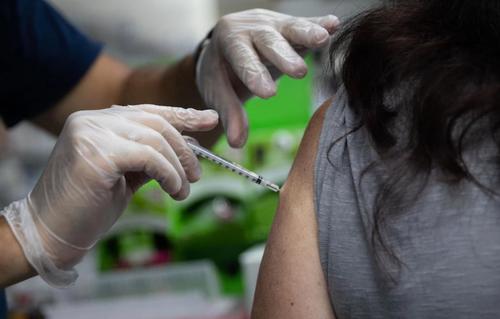
And now, a new twist: On Thursday evening, the Washington Post published a report claiming that the Moderna coronavirus vaccine may be associated with a higher risk of myocarditis in younger adults than previously believed. The report relies on new data from a Canadian study that has yet to be released.
How much more dangerous is the Moderna jab than the Pfizer? Well, the preliminary data leaked to WaPo show the risk of myocarditis might be as much as 2.5x higher for the Moderna jab.
The news represents the latest bump in the road for Moderna’s high-flying stock, as patients (especially younger men in their 20s and 30s deemed at highest risk to suffer the side effect) now have an incentive to prefer Pfizer’s jab over Moderna’s (if they still have any confidence in the mRNA jabs at all, that is).
WaPo’s sources stressed that the new research hasn’t yet been concluded, and that there’s still plenty of work to be done before the FDA decides whether to attach another warning label to the Moderna jabs. The sources also claimed that the new data “are not slam bang”.
The investigation, which involves the Food and Drug Administration and the Centers for Disease Control and Prevention, is focusing on Canadian data that suggests the Moderna vaccine may carry a higher risk for young people than the Pfizer-BioNTech vaccine, especially for males below the age of 30 or so. The authorities also are scrutinizing data from the United States to try to determine whether there is evidence of an increased risk from Moderna in the U.S. population.
The two people who described the investigation spoke on the condition of anonymity to discuss an ongoing review because they were not authorized to discuss it.
One of the people familiar with the review emphasized it is too early to reach a conclusion. The person said the agencies must do additional work before deciding whether to issue any kind of new or revised warning or recommendation about the situation. In June, the FDA added a warning label for the Pfizer and Moderna shots — both known as mRNA vaccines — about increased risk of myocarditis.
“We have not come to a conclusion on this,” one of the people familiar with the investigation said. “The data are not slam bang.”
The FDA and CDC both said they’re looking into the data. To be sure, WaPo notes that the side effects remain “extremely rare” – or at least “very uncommon.” Probably…
The myocarditis side effect is extremely rare and even if it is more likely in people receiving the Moderna vaccine, it probably is still very uncommon. Officials want to be careful not to cause alarm among the public, especially when officials are trying to persuade more people to be vaccinated amid a surge of cases fueled by the fast-moving delta variant.
So far, the FDA and CDC’s official position is that the threat posed by COVID is far worse than any threat posed by vaccine side effects, and that all Americans over the age of 12 should get the jab. But as with any recent scientific judgment, there are others in the community who disagree – some who believe that the risk of side effects for young people might just outweigh the risk of harm from contracting COVID, which – as we have reviewed before – is virtually nil.
“There might be a 2.5 times higher incidence of myocarditis in those who get the Moderna vaccine compared with Pfizer’s vaccine.” Any risk at all for young people under 17 is unacceptable https://t.co/vz1REfaaj8 — Sue Cook (@SueC00K) August 20, 2021
The Internet’s social-media censors have been extremely vigilant at suppressing every tidbit of COVID vaccine “misinformation” that comes their way. So, as readers might imagine, drawing attention to publicly released data about the rare (but sometimes deadly) side effects associated with both mRNA and adenovirus-vector jabs has been…a challenge.
Hey @jack what happens to all those who were banned for warning about this?https://t.co/E9mFoFLqGS
— zerohedge (@zerohedge) August 20, 2021
But let’s back up: over the past couple of months, health authorities in the US and Israel connected rare instances of myocarditis – that is, inflammation of the heart – to the mRNA jabs produced by Pfizer and Moderna. After a hurried secret meeting with its advisors in late June, the FDA reluctantly released a warning about a “likely association” between incidences of myocarditis and the new side effects.
And now, a new twist: On Thursday evening, the Washington Post published a report claiming that the Moderna coronavirus vaccine may be associated with a higher risk of myocarditis in younger adults than previously believed. The report relies on new data from a Canadian study that has yet to be released.
How much more dangerous is the Moderna jab than the Pfizer? Well, the preliminary data leaked to WaPo show the risk of myocarditis might be as much as 2.5x higher for the Moderna jab.
The news represents the latest bump in the road for Moderna’s high-flying stock, as patients (especially younger men in their 20s and 30s deemed at highest risk to suffer the side effect) now have an incentive to prefer Pfizer’s jab over Moderna’s (if they still have any confidence in the mRNA jabs at all, that is).
WaPo’s sources stressed that the new research hasn’t yet been concluded, and that there’s still plenty of work to be done before the FDA decides whether to attach another warning label to the Moderna jabs. The sources also claimed that the new data “are not slam bang”.
The investigation, which involves the Food and Drug Administration and the Centers for Disease Control and Prevention, is focusing on Canadian data that suggests the Moderna vaccine may carry a higher risk for young people than the Pfizer-BioNTech vaccine, especially for males below the age of 30 or so. The authorities also are scrutinizing data from the United States to try to determine whether there is evidence of an increased risk from Moderna in the U.S. population.
The two people who described the investigation spoke on the condition of anonymity to discuss an ongoing review because they were not authorized to discuss it.
One of the people familiar with the review emphasized it is too early to reach a conclusion. The person said the agencies must do additional work before deciding whether to issue any kind of new or revised warning or recommendation about the situation. In June, the FDA added a warning label for the Pfizer and Moderna shots — both known as mRNA vaccines — about increased risk of myocarditis.
“We have not come to a conclusion on this,” one of the people familiar with the investigation said. “The data are not slam bang.”
The FDA and CDC both said they’re looking into the data. To be sure, WaPo notes that the side effects remain “extremely rare” – or at least “very uncommon.” Probably…
The myocarditis side effect is extremely rare and even if it is more likely in people receiving the Moderna vaccine, it probably is still very uncommon. Officials want to be careful not to cause alarm among the public, especially when officials are trying to persuade more people to be vaccinated amid a surge of cases fueled by the fast-moving delta variant.
So far, the FDA and CDC’s official position is that the threat posed by COVID is far worse than any threat posed by vaccine side effects, and that all Americans over the age of 12 should get the jab. But as with any recent scientific judgment, there are others in the community who disagree – some who believe that the risk of side effects for young people might just outweigh the risk of harm from contracting COVID, which – as we have reviewed before – is virtually nil.
“There might be a 2.5 times higher incidence of myocarditis in those who get the Moderna vaccine compared with Pfizer’s vaccine.” Any risk at all for young people under 17 is unacceptable https://t.co/vz1REfaaj8
— Sue Cook (@SueC00K) August 20, 2021
Be seeing you
Posted in Uncategorized | Tagged: CDC, FDA, heart inflammation, Moderna, mRNA | Leave a Comment »
The Smart Money Has Already Sold – LewRockwell
Posted by M. C. on August 21, 2021
Generations of punters have learned the hard way that their unwary greed is the tool the Smart Money uses to separate them from their cash and capital. The tricks outlined in Reminiscences of a Stock Operator may have changed over time, but the game of selling at the top while stretching out the top to enable massive selling without moving markets is very much alive and well.
https://www.oftwominds.com/blogaug21/smart-money-sold8-21.html
Charles Hugh Smith
Generations of punters have learned the hard way that their unwary greed is the tool the ‘Smart Money’ uses to separate them from their cash and capital.
The game is as old as the stock market: the Smart Money recognizes the top is in, and in order to sell all their shares, they need to recruit bagholders to buy their shares and hold them all the way down. Once the catastrophic losses have been taken by the bagholders, then the Smart Money slowly builds up positions amidst the wreckage.
It’s easy to become a bagholder; all you need is greed. Been there, done that, for the siren songs luring bagholders to their ruin are compelling and numerous. The Smart Money doesn’t have to mislead anyone; all they do is let the strident super-Bulls talk up the riches to be had by all those who buy today and hold indefinitely, and human greed does the rest.
Siren songs to lure the unwary greedy include these classics:
1. The Fed has our back, i.e. the Fed will never let stocks go down, so there’s no risk in buying more shares today.
2. Innovation stocks can only go higher as they create new industries that are the future of the economy.
3. Institutional buyers are coming in, and that means prices can only go higher.
4. This is a new era, old measures of valuation no longer matter.
5. Over time, stocks only go higher, so buy and hold is the winning strategy.
The greatest ally of the Smart Money is buy the dip, as the bagholders trained to buy the dip will continue buying every dip on the way down until their capital is expended. Bagholders see every rally off a dip as proof buy the dip works, when every rally off a dip has been engineered to suck in bagholders.
Every rally is another opportunity to sell for the Smart Money.
The greatest hindrance to the Smart Money selling is low volume. The main point of selling is to dribble out shares in such modest doses that the price doesn’t move. If a big block of shares is dumped all at once, then the price collapses in low-volume markets. So the Smart Money sells slowly and methodically, transferring 100 million shares over time to a million bagholders who each buy 100 shares.
When questioned, the Smart Money prevaricates with generalities rather than show their hands. The market is “constructive” and “supportive of equities,” etc., meaningless terms intended to mask their steady selling and lull the bagholders into a false confidence in the Fed, innovation leaders, buy the dip, this time it’s different, etc.
The Smart Money can count on one thing: greed is sticky. Once a bagholder has decided that Innovation-XYZ is their one-way ticket to unearned wealth–just look at all the newly minted millionaires who did nothing but trade call options in Innovation-XYZ–then the Smart Money knows the bagholder will never let go of that belief until there’s no more money to throw into call options.
Generations of punters have learned the hard way that their unwary greed is the tool the Smart Money uses to separate them from their cash and capital. The tricks outlined in Reminiscences of a Stock Operator may have changed over time, but the game of selling at the top while stretching out the top to enable massive selling without moving markets is very much alive and well.

Be seeing you
Posted in Uncategorized | Tagged: bagholders, dip, Fed, greed, Smart Money | 1 Comment »


