MCViewPoint

Opinion from a Libertarian ViewPoint

Posts Tagged ‘Antiwar’

TGIF: “America First” Need Not Be Antiwar

Posted by M. C. on July 3, 2023

Right-wing populists, like their left-wing counterparts, seem to oppose the establishment’s foreign policy mostly because it consumes tax money they want the government to spend on domestic projects. That’s hardly comforting to anyone who wants the government to do less and thereby consume far fewer scarce resources, which after all are produced privately.

Much more could be said against America First, for example,  that the term national interest has long been a cover for collectivism and coercion. America First is no guarantee of nonintervention. What we need is a commitment not to America First but to individual liberty first.

https://libertarianinstitute.org/articles/tgif-america-first-not-antiwar/

by Sheldon Richman

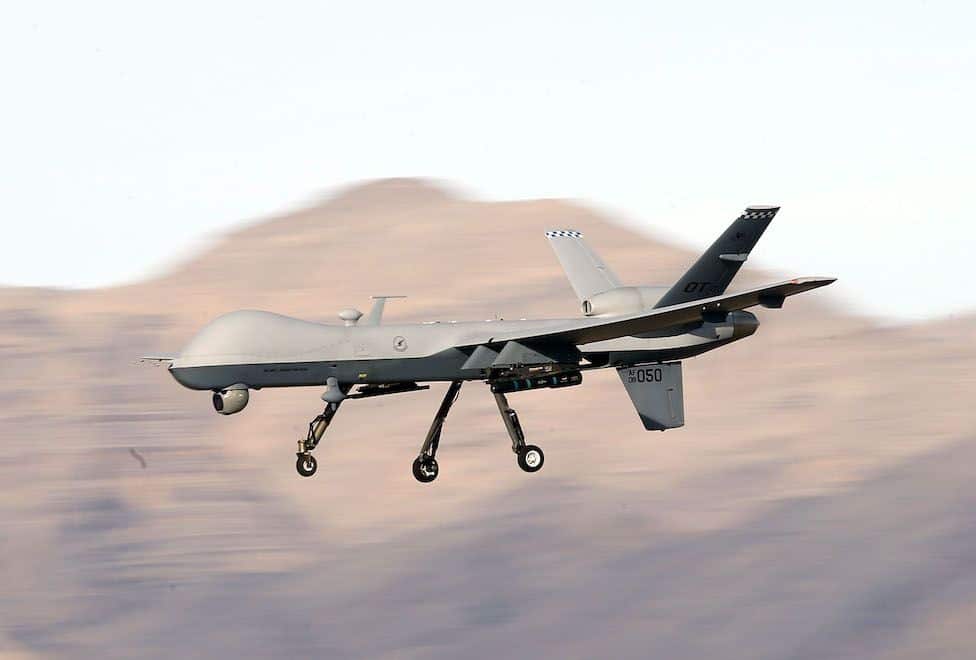
drone

Today’s Trump-inspired “America First” faction cannot be counted on to be consistently noninterventionist and antiwar. That it may lean that way because its chief rival faction is so enthusiastic about foreign adventurism is hardly a firm assurance that it will remain antiwar in the future.

We must beware of the assumption that an interventionist foreign policy is, in contrast to America First, by nature “Any Country But America First.” Admittedly, advocates of U.S. foreign adventurism often defend their policy choices in terms of the benefits to another population. But that’s not all they do. They also typically invoke the security interests of the American people. It’s a small world, after all, they say, and what protects others also protects us. How often have you heard interventionists agitate for war solely on behalf of foreigners? Sure, national self-sacrifice might not be good politics, but that doesn’t mean that people of the interventionist mindset don’t mean what they say.

My point is not that they are right, but only that they, or most of them, are sincere (though misguided). I doubt if George W. Bush’s disastrous invasion of Iraq was motivated solely by regard for the Iraqis or Israelis.  Not was Barack Obama’s bombing and regime change in Libya carried out on behalf of the Libyan people only. In both cases the key policymakers and their supporters believed that these actions were also good for the American people, who had been told for decades that Saddam Hussein and Muammar Qaddafi threatened them. The same can be said about the people who gave us the war in Vietnam. This is not to dismiss the malign influence of dishonest people who simply enjoy exercising power or who will profit from selling weapons to the government.  But I am suspicious of such single-factor explanations.

If I’m right about this, we must ask what today’s America Firsterism is defined in contrast to.

See the rest here

Be seeing you

Posted in Uncategorized | Tagged: , , | Leave a Comment »

Don’t Look to Militarists for an Antiwar Foreign Policy

Posted by M. C. on April 22, 2023

Rallying around a proven militarist as the vehicle for opposing war and empire is ridiculous, and continuing to do this in 2023 is discrediting.

Trump not only continued and escalated the wars he inherited, but when he was presented with the opportunity to end U.S. involvement in one of the most shameful wars in Yemen he refused.

https://daniellarison.substack.com/p/dont-look-to-militarists-for-an-antiwar

DANIEL LARISON

Matt Duss takes apart the silly attempts to paint Trump’s foreign policy as antiwar and anti-imperialist:

These pieces all rest heavily on the claim that Trump launched no new wars. That’s true as far as it goes. But it was certainly not for lack of trying. Trump might not have started any wars, but he massively inflamed existing ones—and came close to catastrophic new ones.

Some antiwar conservatives were inclined to give Trump the benefit of the doubt in 2015 and 2016 because he made some of the right noises about the Iraq war, but Trump’s foreign policy record once in office proved that they had made a serious mistake. As I have said before, Trump never opposed wars at the beginning when it matters, and it is only later after the war goes badly that he reinvents himself as a critic when there is no longer any political danger in opposing it. As he has shown once again with his calls for intervention in Mexico, he is not opposed to starting wars in the least.

It was a deeply regrettable error to think that Trump might have an antiwar agenda as president. After four years of seeing Trump wield the power of the presidency, there can be no excuse for persisting in that error. Rallying around a proven militarist as the vehicle for opposing war and empire is ridiculous, and continuing to do this in 2023 is discrediting.

If we are serious when we say that economic wars are wars, it’s also not true that Trump didn’t start any wars. His “maximum pressure” campaigns against Iran and Venezuela were attacks on the people of both countries. He also presided over the intensification of broad sanctions on North Korea and Syria. Broad sanctions are profound interventions in the affairs of other countries, and Trump’s Iran and Venezuela policies stand out for how crudely imperialistic they were. While the stated objectives were different, the basic contempt for the rights of other nations and the willingness to use collective punishment to compel their submission were the same. Trump’s foreign policy was the opposite of restraint.

Barry Posen had Trump’s number fairly early on. He recognized that Trump wasn’t a non-interventionist or “isolationist,” and he knew he definitely wasn’t a restrainer. Posen described the strategy behind Trump’s foreign policy as one of illiberal hegemony:

Breaking with his predecessors, Trump has taken much of the “liberal” out of “liberal hegemony.” He still seeks to retain the United States’ superior economic and military capability and role as security arbiter for most regions of the world, but he has chosen to forgo the export of democracy and abstain from many multilateral trade agreements. In other words, Trump has ushered in an entirely new U.S. grand strategy: illiberal hegemony.

See the rest here

Be seeing you

Posted in Uncategorized | Tagged: , , | Leave a Comment »

The Ron Paul Institute for Peace and Prosperity : Libertarian Terrorists?

Posted by M. C. on February 2, 2021

The idea that libertarianism creates terrorists is absurd. Libertarians support the non-aggression principle, so they reject using force to advance their political goals. They rely instead on peaceful persuasion.

Libertarianism is being attacked because it does not support just reforming a few government policies. Instead, it presents a formidable intellectual challenge to the entire welfare-warfare state.

The ultimate goal of those pushing for a crackdown on “domestic terrorism” is to make people unwilling to even consider “radical” ideas — to make people so afraid of certain ideas that they refuse to even give those ideas a fair hearing.

http://ronpaulinstitute.org/archives/featured-articles/2021/february/01/libertarian-terrorists/?mc_cid=1b5a6b8739

Written by Ron Paul

The Department of Homeland Security issued on Wednesday a nationwide terror alert lasting until April 30. The alert warns of potential terrorist attacks from Americans who are “ideologically motivated” and have “objections to the exercise of government authority and the presidential transition, as well as other perceived grievances fueled by false narratives.”

The language used in this alert suggests that millions of Americans are potential terrorists. Second Amendment supporting, antiwar, anti-tax, anti-politics, anti-militarization, pro-life, and anti-Federal Reserve activists certainly have “objections to the exercise of government authority.” They are certainly viewed by the political class and its handmaidens in big tech and the mainstream media as ideological extremists. Anyone who gets his news from sources other than mainstream media or big tech, or who uses certain “unapproved” social media platforms, is considered to have had his grievances “fueled by false narratives.” For something to be considered a false narrative, it need only contradict the “official” narrative.

The “domestic terrorist” alert is the latest sign that activities on January 6 on Capitol Hill, like the attacks of September 11, 2001, are being used to advance a long-standing anti-liberty agenda. Legislation expanding the federal government’s authority to use its surveillance and other unconstitutional powers against “domestic terrorists” is likely to soon be considered by Congress. Just as the PATRIOT Act was written years before 2001, this legislation was written long before January 6. The bill’s proponents are simply taking advantage of the hysteria following the so-called insurrection to push the bill onto the congressional agenda.

Former CIA Director John Brennan recently singled out libertarians as among the people the government should go after. This is not the first time libertarians have been smeared. In 2009, a federally-funded fusion center identified people who supported my presidential campaign, my Campaign for Liberty, or certain Libertarian and Constitution parties candidates as potentially violent extremists.

The idea that libertarianism creates terrorists is absurd. Libertarians support the non-aggression principle, so they reject using force to advance their political goals. They rely instead on peaceful persuasion.

Libertarianism is being attacked because it does not support just reforming a few government policies. Instead, it presents a formidable intellectual challenge to the entire welfare-warfare state.

The ultimate goal of those pushing for a crackdown on “domestic terrorism” is to make people unwilling to even consider “radical” ideas — to make people so afraid of certain ideas that they refuse to even give those ideas a fair hearing.

Progressives who are tempted to support what is being promoted as a crackdown on right-wing violence should consider the history of government harassment of progressive movements and leaders such as Martin Luther King, Jr. What do they think a future right-wing authoritarian would do if given power to go after “ideological extremists”?

All Americans who cherish the Bill of Rights should come together to stop this latest crackdown on liberty. My Campaign for Liberty will be mobilizing Americans to stop passage of any domestic terrorism legislation, while my Institute for Peace and Prosperity and my Liberty Report will provide Americans with the most up-to-date information about the continuing attempts to smear those who speak the truth about government lies.

(You can watch the Ron Paul Liberty Report live on YouTube Monday-Friday at noon, eastern time.)


Copyright © 2021 by RonPaul Institute. Permission to reprint in whole or in part is gladly granted, provided full credit and a live link are given.
Please donate to the Ron Paul Institute

Be seeing you

Posted in Uncategorized | Tagged: , , , , , , , , , , , | Leave a Comment »

Peering Into a Forever-War Crystal Ball – Antiwar.com Original

Posted by M. C. on January 22, 2021

The war in Afghanistan is hopeless and has long been failing by every one of the US military’s own measurable metrics, so much so that the Pentagon and the Kabul government classified them all as secret information a few years back.  

It hardly requires clairvoyance to offer such guesswork.  That’s because Biden basically is who he says he is and who he’s always been, and the man’s simply never been transformational.  One need look no further than his long and generally interventionist past record or the nature of his current national-security picks to know that the safe money is on more of the same.

https://original.antiwar.com/?p=2012341875

by Maj. Danny Sjursen, USA (ret.)

Originally posted at TomDispatch.

More than 19 years ago, the U.S. launched the air war that would become the ground invasion and “liberation” of Afghanistan. More than 17 years ago, Secretary of Defense Donald Rumsfeld declared “major combat” over in that country with just 8,000 US troops still stationed there. Approximately nine years after that, at the end of an Obama-era “surge,” US troop levels would reach around 100,000 (not counting contingents of NATO allies, as well as private contractors, CIA agents, and those involved in the American air war in that country). Today, those troop levels are finally down to 2,500 (plus, of course, those private contractors and that air power, which actually ramped up significantly in the Trump years). That, in other words, is how Donald Trump “ended” the American war in Afghanistan. Those remaining troops are supposed to be gone by May 1, 2021, but don’t count on it in the Biden era, since our new president (who, as vice president, had indeed been against the Obama-era troop surge) is seemingly committed to keeping some kind of “counterterror” force in that country.

In any case, 19-plus years after Washington put everything it had into Afghanistan except nuclear weapons (something Donald Trump threatened to do at one point), the Taliban is the very opposite of defeated. As the PBS NewsHour described the situation in an on-screen note introducing a recent report on developments there: “The Taliban is stronger in Afghanistan than at any point since 2001, occupying one-fifth of the country with around 60,000 full-time fighters.”

Isn’t it strange when you think about it that, other than some antiwar efforts by veterans of those conflicts, Americans have been so little concerned with nearly two decades of constant military failure across the globe for which we’ve squandered trillions of taxpayer dollars? Worst of all, those “forever wars” show every sign of continuing in the Biden years and possibly beyond, as former Army officer and TomDispatch regular Danny Sjursen, author most recently of Patriotic Dissent: America in the Age of Endless War, explains so vividly (and painfully) today. Sjursen, who has in the past been all too accurate in his expectations about American war-making, offers a little crystal-ball look at what all of us might expect in the next four years from the country that just won’t stop fighting and a citizenry that seems as if it could care less. ~ Tom


The Future of War, American-StyleBy Maj. Danny Sjursen (ret.)

Hard as it is to believe in this time of record pandemic deaths, insurrection, and an unprecedented encore impeachment, Joe Biden is now officially at the helm of the US war machine.  He is, in other words, the fourth president to oversee America’s unending and unsuccessful post-9/11 military campaigns.  In terms of active US combat, that’s only happened once before, in the Philippines, America’s second-longest (if often forgotten) overseas combat campaign. 

Yet that conflict was limited to a single Pacific archipelago. Biden inherits a global war – and burgeoning new Cold War – spanning four continents and a military mired in active operations in dozens of countries, combat in some 14 of them, and bombing in at least seven.  That sort of scope has been standard fare for American presidents for almost two decades now.  Still, while this country’s post-9/11 war presidents have more in common than their partisan divisions might suggest, distinctions do matter, especially at a time when the White House almost unilaterally drives foreign policy.

So, what can we expect from commander-in-chief Biden?  In other words, what’s the forecast for US service-members who have invested their lives and limbs in future conflict, as well as for the speculators in the military-industrial complex and anxious foreigners in the countries still engulfed in America’s war on terror who usually stand to lose it all? 

Many Trumpsters, and some libertarians, foresee disaster: that the man who, as a leading senator facilitated and cheered on the disastrous Iraq War, will surely escalate American adventurism abroad.  On the other hand, establishment Democrats and most liberals, who are desperately (and understandably) relieved to see Donald Trump go, find that prediction preposterous.  Clearly, Biden must have learned from past mistakes, changed his tune, and should responsibly bring US wars to a close, even if at a time still to be determined.

In a sense, both may prove right – and in another sense, both wrong.  The guess of this longtime war-watcher (and one-time war fighter) reading the tea leaves: expect Biden to both eschew big new wars and avoid fully ending existing ones.  At the margins (think Iran), he may improve matters some; in certain rather risky areas (Russian relations, for instance), he could worsen them; but in most cases (the rest of the Greater Middle East, Africa, and China), he’s likely to remain squarely on the status-quo spectrum.  And mind you, there’s nothing reassuring about that.

It hardly requires clairvoyance to offer such guesswork.  That’s because Biden basically is who he says he is and who he’s always been, and the man’s simply never been transformational.  One need look no further than his long and generally interventionist past record or the nature of his current national-security picks to know that the safe money is on more of the same.  Whether the issues are war, race, crime, or economics, Uncle Joe has made a career of bending with the prevailing political winds and it’s unlikely this old dog can truly learn any new tricks.  Furthermore, he’s filled his foreign policy squad with Obama-Clinton retreads, a number of whom were architects of – if not the initial Iraq and Afghan debacles – then disasters in Libya, Syria, West Africa, Yemen, and the Afghan surge of 2009.  In other words, Biden is putting the former arsonists in charge of the forever-war fire brigade.

There’s further reason to fear that he may even reject Trump’s “If Obama was for it, I’m against it” brand of war-on-terror policy-making and thereby reverse The Donald’s very late, very modest troop withdrawals in Afghanistan, Iraq, and Somalia.  Yet even if this new old hand of a president evades potentially existential escalation with nuclear Russia or China and offers only an Obama reboot when it comes to persistent low-intensity warfare, what he does will still matter – most of all to the global citizens who are too often its victims.  So, here’s a brief region-by-region flyover tour of what Joe’s squad may have in store for both the world and the American military sent to police that world.

The Middle East: Old Prescriptions for Old Business

It’s increasingly clear that Washington’s legacy wars in the Greater Middle East – Iraq and Afghanistan, in particular – are generally no longer on the public’s radar.  Enter an elected old man who’s charged with handling old business that, at least to most civilians, is old news.  Odds are that Biden’s ancient tricks will amount to safe bets in a region that past US policies essentially destroyed.  Joe is likely to take a middle path in the region between large-scale military intervention of the Bush or Obama kind and more prudent full-scale withdrawal. 

As a result, such wars will probably drag on just below the threshold of American public awareness, while avoiding Pentagon or partisan charges that his version of cutting-and-running endangered US security.  The prospect of “victory” won’t even factor into the equation (after all, Biden’s squad members aren’t stupid), but political survival certainly will.  Here’s what such a Biden-era future might then look like in a few such sub-theaters.

The war in Afghanistan is hopeless and has long been failing by every one of the US military’s own measurable metrics, so much so that the Pentagon and the Kabul government classified them all as secret information a few years back.  Actually dealing with the Taliban and swiftly exiting a disastrous war likely to lead to a disastrous future with Washington’s tail between its legs is, in fact, the only remaining option.  The question is when and how many more Americans will kill or be killed in that “graveyard of empires” before the US accepts the inevitable.  Toward the end of his tenure, Trump signaled a serious, if cynical, intent to so.  And since Trump was by definition a monster and the other team’s monsters can’t even occasionally be right, a coalition of establishment Democrats and Lincoln-esque Republicans (and Pentagon officials) decided that the war must indeed go on.  That culminated in last July’s obscenity in which Congress officially withheld the funds necessary to end it.  As vice president, Biden was better than most in his Afghan War skepticism, but his incoming advisers weren’t, and Joe’s nothing if not politically malleable.  Besides, since Trump didn’t pull enough troops out faintly fast enough or render the withdrawal irreversible over Pentagon objections, expect a trademark Biden hedge here.

Syria has always been a boondoggle, with the justifications for America’s peculiar military presence there constantly shifting from pressuring the regime of Bashar al-Assad, to fighting the Islamic State, to backing the Kurds, to balancing Iran and Russia in the region, to (in Trump’s case) securing that country’s meager oil supplies.  As with so much else, there’s a troubling possibility that, in the Biden years, personnel once again may become destiny.  Many of the new president’s advisers were bullish on Syrian intervention in the Obama years, even wanting to take it further and topple Assad.  Furthermore, when it comes time for them to convince Biden to agree to stay put in Syria, there’s a dangerous existing mix of motives to do just that: the emotive sympathy for the Kurds of known gut-player Joe; his susceptibility to revived Islamic State (ISIS) fear-mongering; and perceptions of a toughness-testing proxy contest with Russia.

When it comes to Iran, expect Biden to be better than the Iran-phobic Trump administration, but to stay shackled “inside the box.”  First of all, despite Joe’s long-expressed desire to reenter the Obama-era nuclear deal with Iran that Trump so disastrously pulled out of, doing so may prove harder than he thinks.  After all, why should Tehran trust a political basket case of a negotiating partner prone to significant partisan policy-pendulum swings, especially given the way Washington has waged nearly 70 years of interventions against Iran’s politicians and people?  In addition, Trump left Biden the Trojan horse of Tehran’s hardliners, empowered by dint of The Donald’s pugnacious policies.  If the new president wishes to really undercut Iranian intransigence and fortify the moderates there, he should go big and be transformational – in other words, see Obama’s tension-thawing nuclear deal and raise it with the carrot of full-blown diplomatic and economic normalization. Unfortunately, status-quo Joe has never been a transformational type.

Keep an Eye on Africa

See the rest here

Follow TomDispatch on Twitter and join us on Facebook. Check out the newest Dispatch Books, John Feffer’s new dystopian novel Frostlands (the second in the Splinterlands series), Beverly Gologorsky’s novel Every Body Has a Story, and Tom Engelhardt’s A Nation Unmade by War, as well as Alfred McCoy’s In the Shadows of the American Century: The Rise and Decline of U.S. Global Power and John Dower’s The Violent American Century: War and Terror Since World War II.

Danny Sjursen, a TomDispatch regular, is a retired U.S. Army major, contributing editor at Antiwar.com, senior fellow at the Center for International Policy, and director of the Eisenhower Media Network (EMN). He taught history at West Point and served tours in Iraq and Afghanistan. He is the author of Ghost Riders of Baghdad: Soldiers, Civilians, and the Myth of the Surge and Patriotic Dissent: America in the Age of Endless War. He co-hosts the “Fortress on a Hill” podcast.

Be seeing you

Posted in Uncategorized | Tagged: , , , , , | Leave a Comment »

What Was It All for For: Vets Have Finally Turned on America’s Endless Wars – Antiwar.com Original

Posted by M. C. on July 15, 2019

So consider this a plea to Congress, to the corporate media establishment, and to all of you: when even traditionally more conservative and martial military veterans raise the antiwar alarm – listen!

https://original.antiwar.com/danny_sjursen/2019/07/14/what-was-it-all-for-for-vets-have-finally-turned-on-americas-endless-wars/

It is undoubtedly my favorite part of every wedding. That awkward, but strangely forthright moment when the preacher asks the crowd for any objections to the couple’s marriage. No one ever objects, of course, but it’s still a raw, if tense, moment. I just love it.

I suppose we had that ubiquitous ritual in mind back in 2007 when Keith – a close buddy and fellow officer – and I crafted our own plan of objection. The setting was Baghdad, Iraq, at the start of the “surge” and the climax of the bloody civil war the U.S. invasion had unleashed. Just twenty three years old and only eighteen months out of the academy, my clique of officers had already decided the war was a mess, shouldn’t have been fought, and couldn’t be won.

Me and Keith, though, were undoubtedly the most radical. We both just hated how our squadron’s colonel would hijack the memorial ceremonies held for dead troopers – including three of my own – and use the occasion of his inescapable speech to encourage we mourners to use the latest death as a reason to “rededicate ourselves to the mission and the people of Iraq.” The whole thing was as repulsive as it was repetitive.

So it was that after a particularly depressing ceremony, perhaps our squadron’s tenth or so, that we hatched our little defiant scheme. If (or when) one of us was killed, the other promised – and this was a time and place where promises are sacred – to object, stand up, and announce to the colonel and the crowd that we’d listen to no such bullshit at this particular ceremony, not this time. “Danny didn’t believe in this absurd mission for a minute, he wouldn’t want his death to rededicate us to anything,” Keith would have said! Luckily it never came to that. We both survived, Keith left the army soon after, and I, well, toiled along until something snapped and I chose the road of public dissent. Still, I believe either of us would have actually done it – even if it did mean the end of our respective careers. That’s called brotherhood…and love.

I got to thinking on that when I read a story this week which was both disturbing, refreshing, and sickening all at the same time. A major opinion poll’s results were released which demonstrated that fully two-thirds of post 9/11 veterans now think the wars in Iraq and Afghanistan “weren’t worth fighting.” That’s a remarkable, and distressing, statistic and one that should give America’s president, legislators, media, and people as a whole, serious pause. Not that it will, mind you, but it should! It’s doubtful that US military combat vets – who are more rural, southern, and conservative than the population at large – have ever so incontrovertibly turned on a war, at least since the very end of Vietnam.

On one level I felt a sense of vindication for my longtime antiwar stances when I read about the study – in the Military Times no less. But that was just ego. Within minutes I was sad, inconsolably and completely melancholy. Because if, as a “filibuster-proof” majority of my fellow veterans (and maybe even our otherwise unhinged president) believes, the Iraq and Afghan wars weren’t worth the sacrifice, then consider the unsettling implications. It would mean, for starters, that the US flushed nearly $5.9 trillion in hard-earned taxpayer cash down the toilet. It means that 7,000 American soldiers and upwards of 244,000 foreign civilians needn’t have lost their ever precious lives. Hundreds of thousands more might not have been injured or maimed. 21 million people wouldn’t have become refugees. The world, so to speak, could’ve been a safer, better place.

Those ever-so-logical conclusions should dismay even the most apathetic American. They should make us all rather sad, but, more importantly, should inform future decisions about the use of military force, the role of America in the world, and just how much foreign policy power to turn over to presidents. Because if we, collectively, don’t learn from our country’s eighteen year, tragic saga, then this republic is, without exaggeration, finished, once and for all. Benjamin Franklin, that confounding Founding Father, wasn’t sure the American people could be trusted to “keep” the republic he and other elites formed. It’d be a devastating catastrophe to prove him right, especially in this time of rising right-wing, strongman populism in the Western world.

So consider this a plea to Congress, to the corporate media establishment, and to all of you: when even traditionally more conservative and martial military veterans raise the antiwar alarm – listen! And next time the American war drums beat, and they undoubtedly will, consider this article encouragement to do what Keith and I promised way back when. Object! Refuse to fight the next ill-advised and unethical war. Remember: to do so demonstrates brotherhood and love. Love of each other and love of country…

Be seeing you

steel helmet

Steel Helmet


Posted in Uncategorized | Tagged: , , , , | Leave a Comment »

Justin Raimondo, RIP (1951-2019) – Antiwar.com Original

Posted by M. C. on June 28, 2019

https://original.antiwar.com/antiwar_staff/2019/06/27/justin-raimondo-rip-1951-2019/

Justin Raimondo, former editorial director and co-founder of Antiwar.com, is dead at 67. He died at his home in Sebastopol, California, with his husband, Yoshinori Abe, by his side. He had been diagnosed with 4th stage lung cancer in October 2017.

Justin co-founded Antiwar.com with Eric Garris in 1995. Under their leadership, Antiwar.com became a leading force against U.S. wars and foreign intervention, providing daily and often hourly updates and comprehensive news, analysis, and opinion on war and peace. Inspired by Justin’s spirit, vision, and energy, Antiwar.com will go on.

Justin at 4 years old

Justin (born Dennis Raimondo, November 18, 1951) grew up in Yorktown Heights, New York and, as a teenager, became a libertarian. He was a fierce advocate of peace who hated war, and an early advocate of gay liberation. He wrote frequently for many different publications and authored several books. He was also politically active in both the Libertarian and Republican parties.

The Young Rebel

When Justin was six, he was, in his own words, “a wild child.” This will surprise no one who knows him. In “Cold War Comfort,” which he wrote for Chronicles Magazine, he tells how he dashed out of his first-grade class with his teacher chasing him. Because this was a daily occurrence, he writes, he was sent to a prominent New York psychiatrist named Dr. Robert Soblen. Just this decade, Justin got his hands on Soblen’s notes on his case and learned that Soblen had concluded that Justin was schizophrenic. Soblen’s reason? Justin was Catholic, claimed to have seen the Virgin Mary, and believed in miracles. Soblen recommended locking up young Justin in a state mental institution. The one Soblen had in mind was Rockland State Hospital, which, according to Justin, was the backdrop for the movie The Snake Pit.

Soblen was not just a psychiatrist. He was also a top Soviet spy and friend of Stalin who was tasked with infiltrating the American Trotskyist movement. He was ultimately convicted of espionage and sentenced to life imprisonment in 1961. Ultimately, in 1962, Soblen committed suicide after jumping bail, fleeing to Israel, and seeking asylum in the UK.

Justin at 10 years old

When Justin was 14 years old, he wrote an article on Objectivism, Ayn Rand’s philosophy, for a local New York newspaper. Rand’s lawyer, Henry Holzer, responded by sending him a “cease and desist” letter. Not long after, Justin went to a lecture at the Nathaniel Branden Institute and stood in line to get a book signed. He was identified, pulled out of line, and escorted to a private room. Soon Nathaniel Branden came in and gave Justin a resounding lecture. Shortly after this, Ayn Rand herself entered the room with her entourage. According to Justin, she seemed surprised that he was so young. When Justin told her that the editors of his piece had edited it and changed some of his meaning. Rand warmed up and said, “So you want to be a writer.”


Read the rest of this entry »

Posted in Uncategorized | Tagged: , , , , , | Leave a Comment »

They Shall Not Grow Old is a Superb Antiwar Film | Mises Wire

Posted by M. C. on May 27, 2019

The film invites all of us to reflect on the pettiness and minor irritations of our easy lives. It inspires us to recommit ourselves to peace, and to challenge those who advocate for endless US wars. Most of all, this great film will make you angry

https://mises.org/wire/they-shall-not-grow-old-superb-antiwar-film

I recently saw the documentary They Shall Not Grow Old, an account by English soldiers of their experiences in the Great War of 1914-1918. Culled from hundreds of hours of colorized actual wartime footage, it’s a beautiful and heart wrenching film. It’s also a superb antiwar film, simply through its graphic and accurate depiction of mass death and casualties across blood-soaked European battlefields.

Refreshingly, the film relies solely on audio transcripts from about 200 English soldiers who fought in World War I. There is no script, and no narration. The viewer simply hears the gravelly, aged voices of the soldiers themselves, never identified by name or rank. They are anonymous, but judging by the towns from which they hailed and the farm or factory jobs they left, most were enlisted men.

Though commissioned by the BBC, producer Sir Peter Robert Jackson has no political axe to grind. This is a story of men, of human beings and their oftentimes horrific experiences in perhaps the savagest of modern wars. It has little to say about particular battles, commanding officers, politicians, or any of the events surrounding the war. It stands apart from most war documentaries precisely because Jackson strenuously avoids any filter between the soldiers’ recollections and the viewer. Read the rest of this entry »

Posted in Uncategorized | Tagged: , , | Leave a Comment »